Category Archives: Travel

Fires damages Gamla Nature Reserve

The nature reserve at Gamla has been severely damaged, according to a Haaretz report here.

Israel’s nature and parks authority believed the blaze was started by a military tank, whose metal tracks gave off sparks when moving over rocks.

Gamla is an impressive fortress east of the Sea of Galilee. It is not mentioned in the New Testament, but Jewish zealots were defeated here by the Roman army about A.D. 66. Josephus describes the site in vivid terms:

for it was located upon a rough ridge of a high mountain, with a kind of neck in the middle: where it begins to ascend, it lengthens itself, and declines as much downward before as behind, insomuch that it is like a camel in figure, from where it is so named, although the people of the country do not pronounce it accurately. Both on the side and the face there are abrupt parts divided from the rest, and ending in vast deep valleys; yet are the parts behind, where they are joined to the mountain, something easier of ascent than the other; but then the people belonging to the place have cut an oblique ditch there, and made that hard to be ascended also. On its slope, which is straight, houses are built, and those very thick and close to one another. The city also hangs so strangely, that it looks as if it would fall down upon itself, so sharp is it at the top. (Wars of the Jews 4:5-7)

A view of the site while reading the description by Josephus will probably be helpful.
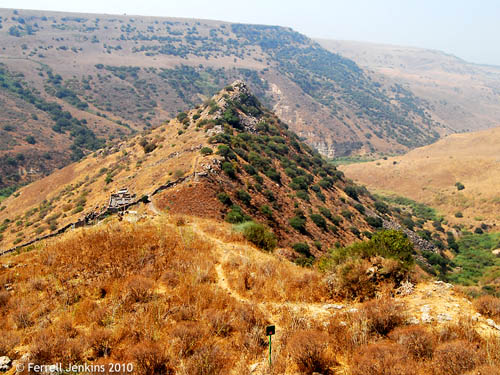
Gamla. Photo by Ferrell Jenkins.

Gamla. Photo by Ferrell Jenkins.

The photo below shows a canyon near the ancient site. From this concrete lookout tourists look for soaring eagles which are common in the reserve.
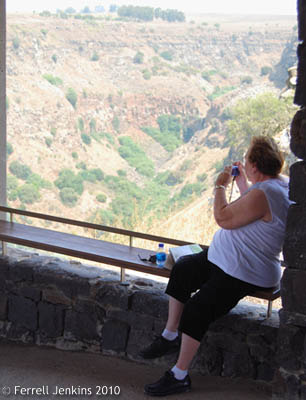
Viewing Gamla in 2008. Photo by Ferrell Jenkins.

Looking for Eagles in 2008.

The photo below from Haaretz shows the same concrete observation building after the fire. Be sure to check the article to see more photos of the damage caused by the fire.
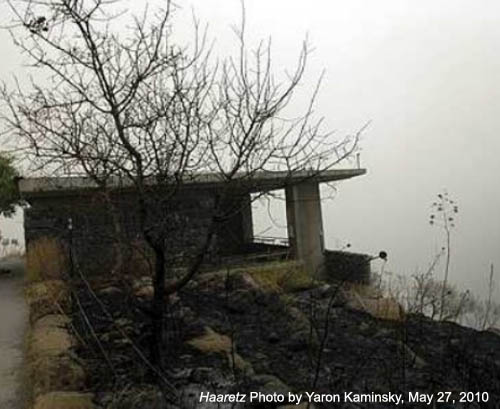
Gamla Nature Reserve Fire. Haaretz. May 27, 2010. Yaron Kaminsky.

Gamla Nature Reserve Fire. Photo: Haaretz, Yaron Kaminsky.

This photo will give you a good view of the area as we saw it from the lookout near the end of August, 2008.
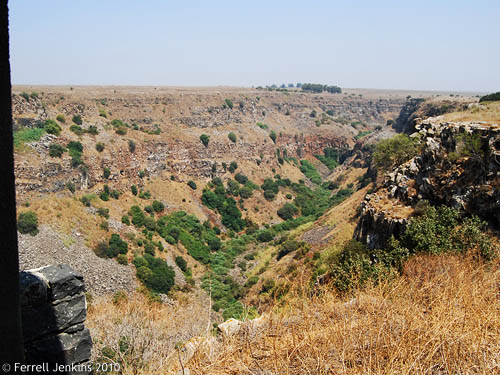
Gamla Nature Reserve. Photo by Ferrell Jenkins, Aug. 30, 2008.

Gamla Nature Reserve. Photo by Ferrell Jenkins, Aug. 30, 2008.

HT: Bible Places Blog.
Useful photo and information sites

Because I maintain the Biblical Studies Info Page, I don’t list a lot of links on this page. I suggest you check the Scholarly page, and then click on the Blogs and Photos. Here are a few sites dealing with archaeology and the Bible World that should be of special interest to readers of this blog. I am not listing the better known sites such as Bible Places Blog, Bible Places, and Holy Land Photos.

  • Through the Land of Israel III. Laju Paul is publishing hundreds of photos from all over Israel.
  • Photographs of Bible Lands. David Padfield, a friend who has traveled with me several times, has a great collection of photos available for download.
  • Leon’s Message Board. Leon Mauldin, a friend who has traveled with me several times, is posting good photos of the Seven Churches of the Book of Revelation and other places he has visited.
  • Bible Walks. Rotem, a young lady who lives in lower Galilee, has posted more than 2500 photos with maps, historical, and biblical information.
  • See the Holy Land. This site, the retirement work of a journalist in New Zealand, intends to serve as a guide to visitors of the Holy Places. (HT: Bible Places Blog)
  • Sacred Destinations. Religious and cultural sites around the world.
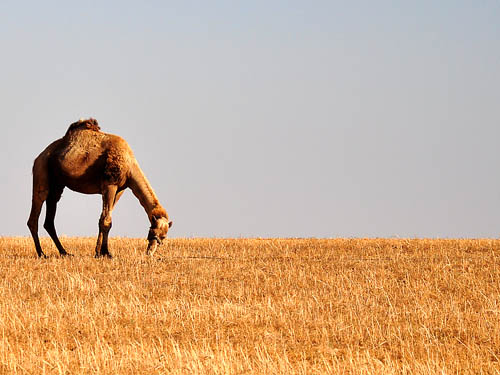
A camel along the road from Beersheba to Arad. Photo by Ferrell Jenkins.

A camel along the road from Beersheba to Arad. Photo by Ferrell Jenkins.

And for her sake he [Pharaoh] dealt well with Abram; and he had sheep, oxen, male donkeys, male servants, female servants, female donkeys, and camels. (Genesis 12:16 ESV)

Israel Museum set to open in two months

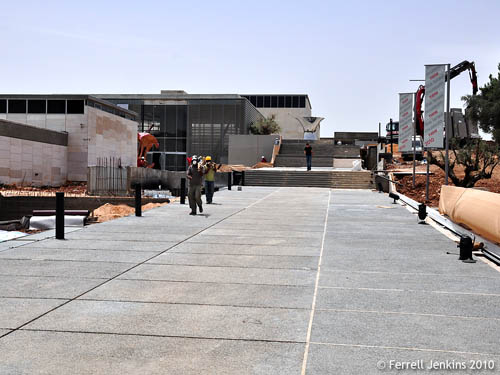
The Bible Places Blog reports here that the Israel Museum, after a lengthy and expensive renovation, is scheduled to reopen July 26. Twice, during the recent trip to Israel, I visited the grounds of the Israel Museum. The last visit to the Second Temple Model was ten days ago. At that time I made a few photos of the work going on outside the museum.

Construction at the Israel Museum - May 17, 2010. Photo by Ferrell Jenkins.

Construction at the Israel Museum - May 17, 2010. Photo by Ferrell Jenkins.

From the outside the Museum looks much the same as before, especially the long, uphill walk to get to the entrance.

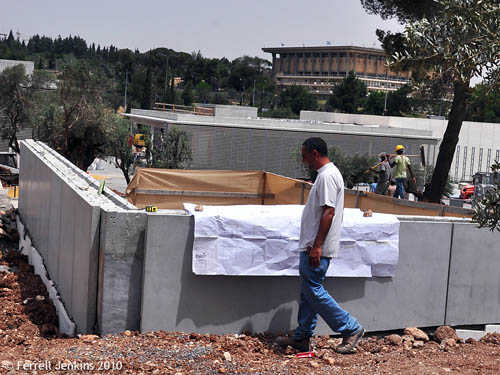
Reading the Blueprint at the Israel Museum - May 17, 2010. Photo by Ferrell Jenkins.

Reading the Blueprint at the Israel Museum - May 17, 2010. Photo by Ferrell Jenkins.

The already impressive location of the Museum campus with the Shrine of the Book, the Second Temple Model and the nearby Israeli Knesset building is sure to be even more impressive.

I look forward to my next visit to Jerusalem when I may again see the wonderful exhibits inside the Museum. The great museums of the world with biblical collections, the British Museum, the Louvre, the Metropolitan in New York, the Istanbul Archaeological Museum, the Oriental Institute of the University of Chicago, the University of Pennsylvania, the National Museum in Athens, and the Pergamum Museum in Berlin, allow photographs of their exhibits. It would be great to see the Israel Museum follow the practice of these outstanding museums. Then, only the museums in Amman, Cairo, and Damascus would be out of step.

HT: Bible Places Blog

Pictures of Ancient Egypt

A slide show of nearly photos of Ancient Egypt in Pictures is maintained at Fox News here. I have called attention to this before, but continue to receive the link from readers. In about two months the number of photos has increased from 47 to 58. I assume it may continue to grow as new discoveries are made.

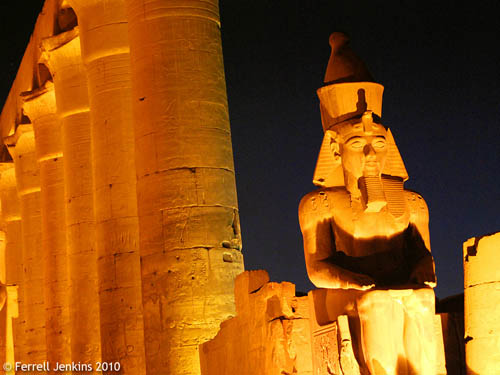
This gives me an opportunity to share a photo I made at Luxor in 2009.

Rameses at floodlight. Luxor Temple. Photo by Ferrell Jenkins.

Rameses by floodlight. Luxor Temple. Photo by Ferrell Jenkins.

Luxor was known as Thebes in Old Testament times. Both Jeremiah and Ezekiel prophesied the Lord’s judgment of the city. Jeremiah says,

The LORD of hosts, the God of Israel, says, ‘Behold, I am going to punish Amon of Thebes, and Pharaoh, and Egypt along with her gods and her kings, even Pharaoh and those who trust in him’” (Jeremiah 46:25; see also Ezekiel 30:14-16).

A visit to the ruined and unoccupied temples of Karnak and Luxor, where Amon (or Amun) was worshipped as a great god, certainly convinces us of the fulfillment of this prophecy. Shortly after the time of Jeremiah (about 586 B.C.), Egypt and Thebes began to decline as a world power.

HT: David Padfield (has 3 collections of Egypt photographs online); Brooks Cochran

Beth-shemesh from another vantage point

The weather changes every few days (or hours?) in Israel. One day may be hot and hazy, and another day may be cool and clear. The day our group went to the Sorek Valley and Beth-shemesh the sky was thick with haze. Two days later it was clear. Elizabeth and I went back to try to get a few photos to share with our group. We drove into the village (kibbutz) of Yishi to locate a good vantage point for the photo.

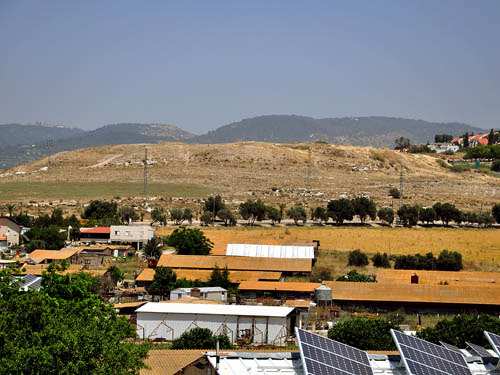
It’s true that there are a lot of rooftops in the foreground, but it still gives us a nice view of the mound.

Beth-shemesh from the west. Photo by Ferrell Jenkins.

Beth-shemesh from the west. Photo by Ferrell Jenkins.

The Israelites took the ark of the covenant from the tabernacle at Shiloh to the battle field at Ebenezer when they were fighting with the Philistines (1 Samuel 4). The ark was captured by the Philistines and taken to Ashdod, then to Gath, and finally to Ekron before they decided to get rid of it. The ark was returned to Beth-shemesh (Beth Shemesh, Bethshemesh; 1 Samuel 4-6).

Now the people of Beth-shemesh were reaping their wheat harvest in the valley, and they raised their eyes and saw the ark and were glad to see it. The cart came into the field of Joshua the Beth-shemite and stood there where there was a large stone; and they split the wood of the cart and offered the cows as a burnt offering to the LORD. (1 Samuel 6:13-14 NAU)

There is a small grain field between the row of trees and the first buildings of the kibbutz. This makes it easy enough to visualize the biblical event.

Back in the USA

Our flight from Tel Aviv to Atlanta on Delta was on time. The flight was routed over Turkey, Europe, and the UK. It was exactly 13 hours in length.

Soon we will board the final leg of our journey that began April 28. Now we get back home and tend to the yard, leaking pipes, sorting photos, etc. Life is an exciting adventure.

Pentecost morning at Nebi Samwil

Last evening at sundown the Jews began to celebrate their modern interpretation of  Pentecost (Shavu’ot). Christians know this from the Old Testament scriptures as the feast of weeks (Leviticus 23:15; Deuteronomy 16:9).

The church had it beginning with the preaching of the gospel in its fullness on the first Pentecost after the resurrection of Christ (Acts 2).

When we noticed that the sky was clear with a few nice clouds, we decided to go to Nebi Samwil (Prophet Samuel), a site suggested as the location of Mizpah by some scholars. Others suggest Tell en-Nasbeh, a mound located at Al Bira in the West Bank. I will have to postpone commenting further due to the fact that my flight will soon be called.

Samuel, the last judge of Israel, called all of the people of Israel to Mizpah and judged them (1 Samuel 7:5-6). Samuel also anointed Saul to be the first king of Israel at Mizpah (1 Samuel 10:1). Mizpah became the headquarters of Gedaliah as governor of Judah after the Babylonian destruction of Jerusalem  (2 Kings 25:23).

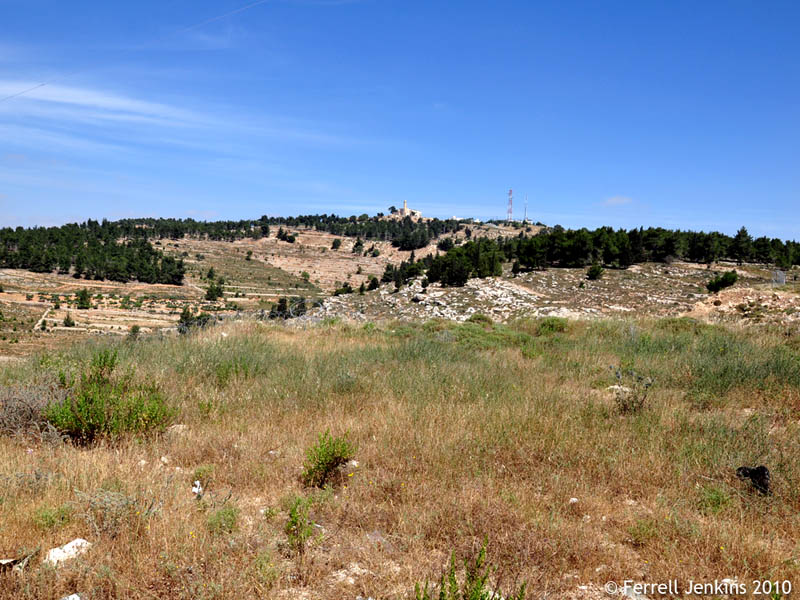
Back to Pentecost. Pentecost is celebrated in much the same way as a sabbath. I said all of that to say, there was very little traffic this morning as we made our way to Nebi Samwil. This distant photo shows how clear the view was on the southern side of the ridge where Nebi Samwil sits. The view on the north side of the territory of Benjamin was not quite as clear, but it was still nice.

Nebi Samwil on the Ridge. Photo by Ferrell Jenkins.

Nebi Samwil on the Ridge. Photo by Ferrell Jenkins

The lady in the photo below is my lovely wife of more than 55 years. She has been with me on numerous tours to Israel, but she has made two trips when it was just the two of us. I must say that she is not that much into tells. A day or two ago I took her to Tell Jerusalem Mall, and that made up for a lot. 🙂  We have had a great time these past 9 days since our group returned home.

Elizabeth at Nebi Samwil. Photo by Ferrell Jenkins.

Elizabeth at Nebi Samwil. Photo by Ferrell Jenkins.

Thanks for sharing this trip with us. Please continue to read the travel blog on a regular basis. If there is some particular photo you would like to see let me know by leaving a comment.

A view of Capernaum

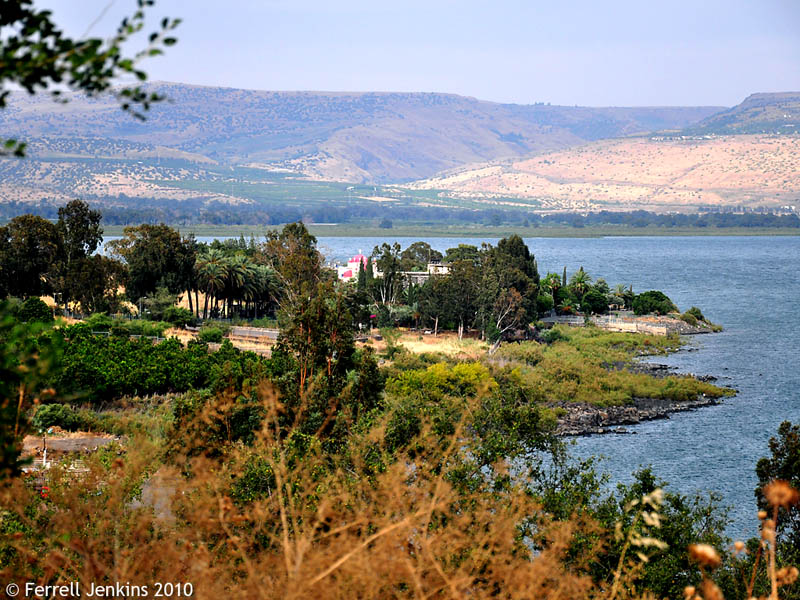
Looking back over the photos I have taken in the past three weeks, I noted this unusual one of Capernaum from the hill above, up toward the Mount of Beatitudes. This photos shows the northeast corner of the Sea of Galilee with a portion of the plain of Bethsaida visible.

Capernaum became the Galilean center for the ministry of Jesus.

And leaving Nazareth he went and lived in Capernaum by the sea, in the territory of Zebulun and Naphtali, (Matthew 4:13 ESV)

Capernaum from the Hill Above. Photo by Ferrell Jenkins.

Capernaum from the Hill Above. Photo by Ferrell Jenkins.

On this afternoon, May 15, the sky was fairly clear. The eastern shore of the Sea of Galilee is visible. Those are dried thistles in the foreground of the photo.

Tomorrow is our last day in Jerusalem. Perhaps we will be able to post something late in the day before departing for home.

Models can be valuable teaching aids

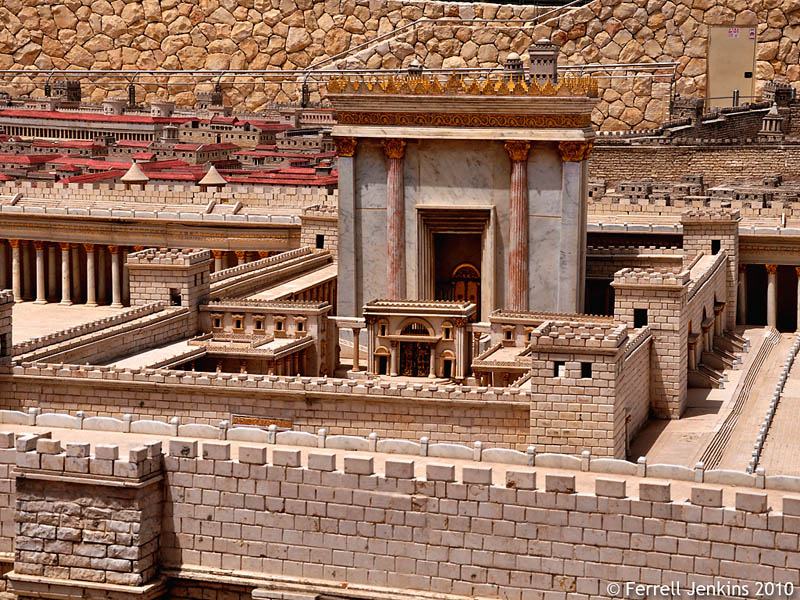
Model reconstructions can be helpful in teaching when the original is not available. Such is true of the temple of biblical times. Herod’s temple was a magnificent building, according to the disciples of Jesus.

And as he came out of the temple, one of his disciples said to him, “Look, Teacher, what wonderful stones and what wonderful buildings!” (Mark 13:1 ESV)

Jesus left the temple and was going away, when his disciples came to point out to him the buildings of the temple. (Matthew 24:1 ESV)

Using the hints from the New Testament, Josephus, and other Jewish sources, some scholars have made a model of the Second Temple (Herod’s Temple). For many years this model was located on the grounds of the Holyland Hotel, but recently has been moved to the grounds of the Israel Museum. Click for a larger image.

Second Temple Model at the Israel Museum. Photo by Ferrell Jenkins.

Second Temple Model at the Israel Museum. Photo by Ferrell Jenkins.

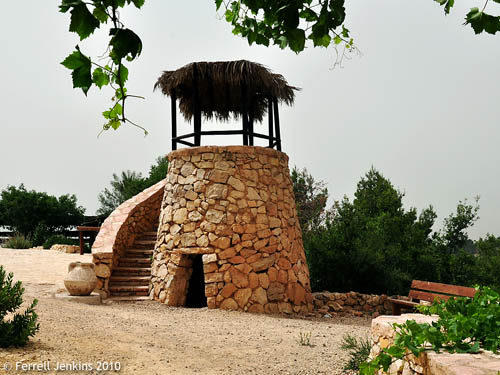
Watchtowers were used in vineyards (Isaiah 5:2; Luke 14:28; see here), and as lookout posts.

Then he who saw cried out: “Upon a watchtower I stand, O Lord, continually by day, and at my post I am stationed whole nights. (Isaiah 21:8 ESV)

The concept is used figuratively of the LORD’S care for His people.

for you have been my refuge, a strong tower against the enemy. (Psalm 61:3 ESV)

The name of the LORD is a strong tower; the righteous man runs into it and is safe. (Proverbs 18:10 ESV)

Yesterday afternoon we stopped by Yad Hashmona in the Judean Hills near Abu Ghosh (Kiriath-jearim) to visit the Biblical Village. Yad Hashmona operates a guest house and guiding center. Some readers will recognize it as the site of the campus of Master’s College IBEX program.

The Biblical Village provides a wonderful site for teaching, and photos of the reconstructions should be helpful too.

Watchtower, Biblical Garden, Yad Hashmona. Photo by Ferrell Jenkins.

Watchtower, Biblical Village, Yad Hashmona. Photo by Ferrell Jenkins.

Actually I wrote about this to provide Todd his regular fix of Israel while he is in exile in Texas. 🙂

Acco, Akko, Acre, Tell el Fukhar

Saterday afternoon we drove from Tiberias to Akko. On my previous tour I failed to get any photos of the ancient tel of Acco (also spelled Akko and Acre). The mound is known as Tell el Fukhar (hill of clay pottery) in Arabic.

Excavations by Prof. Moshe Dothan between 1973-1985 demonstrated that the site was first inhabited in the Early Bronze Age (about 3000 B.C.).

Tel Akko (Acco, Acre). Photo by Ferrell Jenkins.

Tel Akko (Acco, Acre). Photo by Ferrell Jenkins.

Acco is mentioned only once in the Bible. The city is within the territory originally allotted to the tribe of Asher, but the tribe was unable to conquer it.

Asher did not drive out the inhabitants of Acco, or the inhabitants of Sidon or of Ahlab or of Achzib or of Helbah or of Aphik or of Rehob, (Judges 1:31 ESV)

After about 100 B.C. the coastal city was known as Ptolemais (Acts 21:7). Paul spent one day with the brethren here on the return from his third journey.