Category Archives: Travel

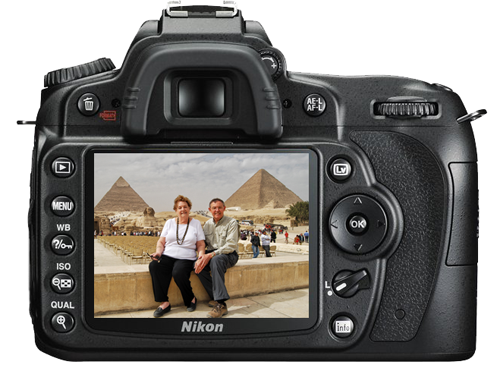
Group photo at the Pyramids

The first day of a tour is always a bit tiring. Travelers are getting over jet lag. In spite of that we had a good day with a visit to the Egyptian Museum and the great pyramids of Giza. The weather today was cool, but in the afternoon the sky cleared and provided a nice view. You can even detect the eastern ridge of the Nile Valley in the background.

At the moment I am having difficulty uploading the photo, and I am running out of time on my $28 investment. The entire Dashboard of WordPress is different from anything I have seen before.

Tomorrow we rise early and take a flight to Luxor. I will try to upload the photo from another place. Sorry.


Safe arrival in Cairo, Egypt

Our group arrived safely in Cairo this afternoon. We were actually about 50 minutes early. You may know that here, as in several other countries, the planes park a distance from the terminal and the passengers are bussed to the terminal.

The members of our group are certainly tired, but everyone seems in good condition. Perhaps tomorrow night we will be able to post a new photo or two.

Traveling to Egypt

The first biblical reference to Egypt is in Genesis 12:10.

There was a famine in the land, so Abram went down to Egypt to stay for a while because the famine was severe. (Genesis 12:10 NET)

Untold multitudes of people have traveled to Egypt before and after the time of Abram, and for a variety of reasons — to find food, to find refuge, to conquer, to search for treasures, to study history, to make photographs, naming just a few. Our purpose in going to Egypt is not only to enjoy the culture of Egypt, but to study the history at it relates to biblical history. In the next couple of weeks we will try to highlight some of these things. We hope you will travel with us through this blog.

We may not be able to post every day, and due to the time change, it may be at an unusual time of the day. Our non-stop flight is scheduled to depart from New York in less than two hours. The flight takes about 11 hours.

Traditional baptism site to open in Israel

The traditional site where John the Baptist baptized Jesus has been closed for more than four decades. In the past few years pilgrims and tourists have been able to visit the site known as Bethany Beyond the Jordan from the Jordanian side of the Jordan River.

In those days Jesus came from Nazareth of Galilee and was baptized by John in the Jordan. (Mark 1:9 ESV)

These things took place in Bethany across the Jordan, where John was baptizing. (John 1:28 ESV)

Now word comes, after a year’s delay, that the site will open on the Israeli side.

Kasr al-Yehud, the probable site where John the Baptist baptized his cousin Jesus of Nazareth, will be opened to the public with a special ceremony on January 18 after 42 years as a closed military zone which pilgrims could only visit after coordinating with the Civil Administration for Judea and Samaria. The site is located in the Jordan Valley in the West Bank, but starting on the 18th it will be operated by the jurisdiction of the Israel’s Nature and Parks Authority, after Israeli authorities invested millions of shekels to build facilities there to handle a large number of tourists. The 18th is significant because it is the traditional day when Greek and Russian Orthodox Christians make an annual pilgrimage to the site to celebrate the Feast of the Epiphany. Vice Premier Silvan Shalom, who was instrumental in the project, said he hoped Kasr al-Yehud would become a symbol for cooperation among Israel, Jordan and the Palestinian Authority, as it would be a major attraction for tourists who would also want to visit other Biblical sites in the area. (ICEJ news)

Last May my group visited the Jordan River at the Jordanian site that is suggested as Bethany beyond the Jordan. Construction of a visitor’s center on the Israeli side seemed to be almost finished. That day a group, perhaps mostly military, was at the site, but it was not open to the general public. You can see workers on the steps leading down to the water.
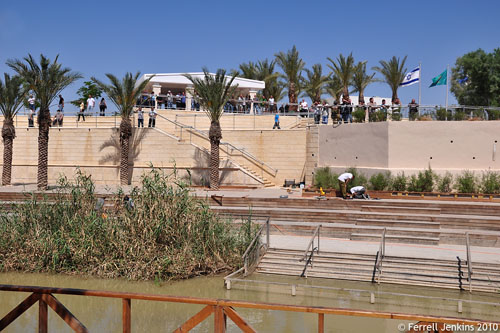
Jordan River baptism site. View from Jordan to the west. Photo by Ferrell Jenkins.

Jordan River baptism site. View from Jordan to the west. Photo by Ferrell Jenkins.

The Israeli visitor’s center is actually in the West Bank, but under Israeli control.

My first trip to the Bible Lands was in April and May of 1967. At that time the western side of the Jordan River was open to tourists. Of course, the site was still in Jordan at the time. Take a look at my group of 19 tour members. It is true that in those days most of the men wore suits, dress shirts and ties, even in the hot weather. The women wore dressy clothes, hosiery and other feminine attire no longer in use.

Just a flash from the past. Take a look at the old photo made on the western bank of the Jordan.
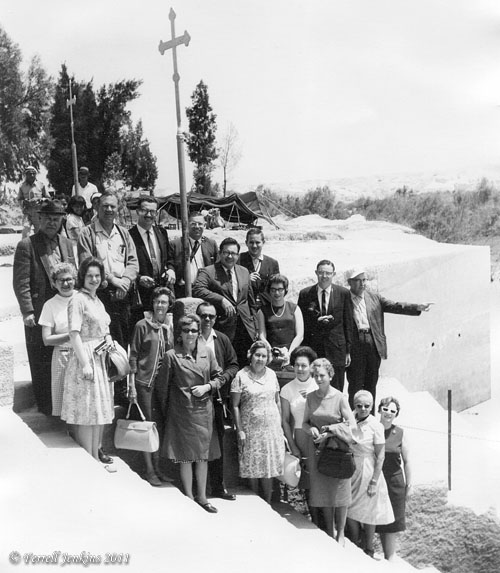
Ferrell Jenkins group at the traditional baptism site on the Jordan River.

1967 group at the traditional baptism site on the west bank of the Jordan River.

Did you notice those purses the women are carrying? In those days that was allowed as a carry-on on the airplanes. Many of the men carried a camera bag of similar size. That was it. No rolling suitcases. Oh, for the good ole days.

HT: BiblePlaces Blog.

Can you identify the hill in our new header?

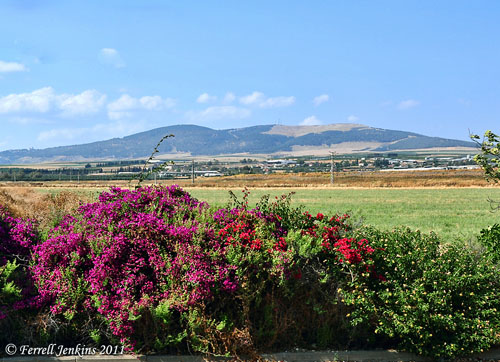
Have you noticed our new header photograph? Can you identify the location? It is a photo of the hill of Moreh mentioned in Judges 7.

I’m sure you know the story. The Israelites were oppressed by the Midianites who lived east of the Jordan River. In fact, the Midianites camped by the hill of Moreh in the Jezreel valley north of the Israelites (Judges 6:33). Gideon and his people camped beside the spring of Harod (Ein Harod). Our photo was made from Ein Harod, looking north toward the hill of Moreh.

Then Jerubbaal (that is, Gideon) and all the people who were with him, rose early and camped beside the spring of Harod; and the camp of Midian was on the north side of them by the hill of Moreh in the valley. (Judges 7:1 NAU)

The Hill of Moreh from En Harod. Photo by Ferrell Jenkins.

The Hill of Moreh from Ein Harod. Photo by Ferrell Jenkins.

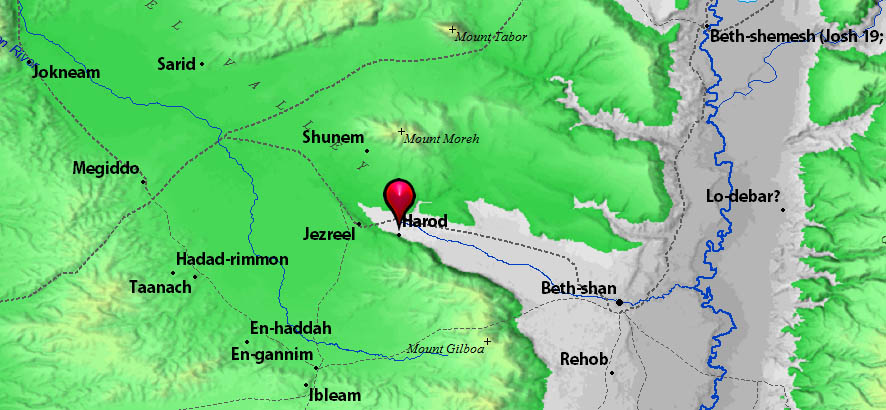
The map below from BibleAtlas.org will help you locate Ein Harod and the hill of Moreh (Mount Moreh). Click on the map for a larger image.

Map showing Ein Harod and Mount Moreh.

Map showing Ein Harod and Mount (hill of) Moreh. BibleAtlas.org

Repairing the ruins of ancient Babylon

The New York Times ran an article by Steven Lee Myers on the current efforts to save the ruins of Babylon.

On the hillside during one of his many visits to the ruins, Jeff Allen, a conservationist working with the World Monuments Fund, said: “All this is unexcavated. There is great potential at this site. You could excavate the street plan of the entire city.”

That is certainly years away given the realities of today’s Iraq. But for the first time since the American invasion in 2003, after years of neglect and violence, archaeologists and preservationists have once again begun working to protect and even restore parts of Babylon and other ancient ruins of Mesopotamia. And there are new sites being excavated for the first time, mostly in secret to avoid attracting the attention of looters, who remain a scourge here.

The entire article is available here. The article is accompanied by a nice 4:12 minute video of the restoration efforts here. According to the reports the reconstructions made by the Sadaam Hussein regime in the 1980s will probably be torn down.

Jim Davila adds this tip at Paleojudaica:

Related, also in the NYT: A Tour of Iraq’s Ancient Sites. Included are a video about the (traditional) tomb of Ezekiel … and a photo of Hebrew inscriptions at the (traditional) tomb of the prophet Nahum, as well as photos and videos of other sites of biblical and related interest.

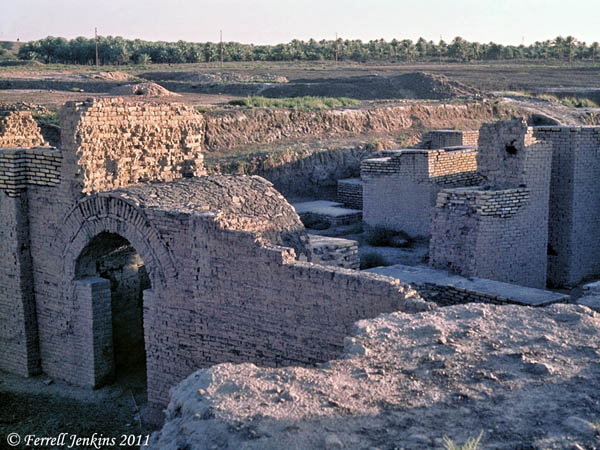
The photo below was made Tuesday, May 12, 1970, and still looks fairly good considering the time lapse and my camera equipment at the time.

Ruins of Ancient Babylon, 1970. Photo by Ferrell Jenkins.

Ruins of Ancient Babylon, 1970. Photo by Ferrell Jenkins.

The prophet Jeremiah spoke about the future of Babylon:

Babylon will become a heap of ruins. Jackals will make their home there. It will become an object of horror and of hissing scorn, a place where no one lives. (Jeremiah 51:37 NET)

We called attention to the UN report of US damage to ancient Babylon here.

HT: Ben Witherington III; Paleojudaica.

Where will you travel in 2011?

Many people never travel because they put it off. Some people plan to see a lot of the places in the United States before they travel to a foreign destination. And most of these people never travel anywhere much. I don’t know how many times I have told someone that there is no way to drive to Israel and the other Bible lands. Young couples spend money to take skiing trips and other vacations, but they never think about saving to travel to the Holy Land. Usually they do not go.

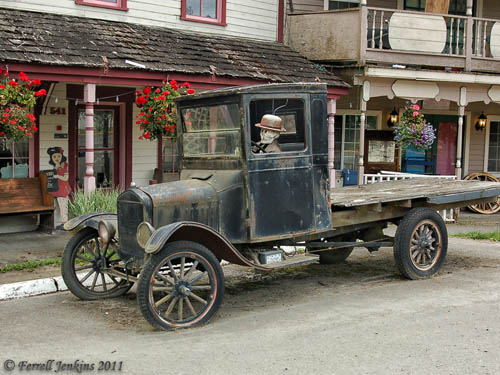
An old truck at Wilkeson, Washington. Photo by Ferrell Jenkins.

An old truck at Wilkeson, Washington. Photo by Ferrell Jenkins.

The Northern Pacific Railroad opened a sandstone quarry in Wilkeson, Washington, in the last quarter of the 19th century. The little town with a population of about 400 is now practically a ghost town and one of the entries near Mount Rainier. There are several old buildings and vehicles left from the last century or earlier.

Wilkeson shows us what can happen to a town, a church, a school, or other organization, or even an individual when we allow the life to ebb away. The guy in the old truck isn’t going anywhere.

Where are you going this year? I hope you will understand this in a spiritual way, as well as thinking about literal travel.

8 Owe no one anything, except to love each other, for the one who loves another has fulfilled the law.
9 For the commandments, “You shall not commit adultery, You shall not murder, You shall not steal, You shall not covet,” and any other commandment, are summed up in this word: “You shall love your neighbor as yourself.”
10 Love does no wrong to a neighbor; therefore love is the fulfilling of the law.
11 Besides this you know the time, that the hour has come for you to wake from sleep. For salvation is nearer to us now than when we first believed. (Romans 13:8-11 ESV)

Ancient Yarkon fortress with Greek and Assyrian connections?

The American Friends of Tel Aviv University have announced that Tel Aviv University researchers have connected Tel Qadadi, at the mouth of the Yarkon River in Tel Aviv, with the Greek island of Lesbos.

Tel Qudadi, an ancient fortress located in the heart of Tel Aviv at the mouth of the Yarkon River, was first excavated more than 70 years ago — but the final results of neither the excavations nor the finds were ever published. Now, research on Tel Qudadi by archaeologists at Tel Aviv University has unpeeled a new layer of history, indicating that there is much more to learn from the site, including evidence that links ancient Israel to the Greek island of Lesbos.

“The secrets of this ancient fortress are only beginning to be revealed,” Dr. Alexander Fantalkin and Dr. Oren Tal of Tel Aviv University’s Department of Archaeology say. Their new research was recently published in the Palestine Exploration Quarterly and BABESH: Annual Papers on Mediterranean Archaeology.

The release points out that it was thought in the past that the Tel Qadadi fortress was established in the 10th century B.C. by King Solomon.

The establishment of the fortress at Tel Qudadi was understood later as evidence of the existence of a developed maritime policy in the days of the United Monarchy in ancient Israel.

Another view was that the fortress belonged to the 9th century B.C. and should be attributed to the Kingdom of Israel. An amphora from the Greek island of Lesbos in the Aegean is said to provide evidence that the site should now be dated to the late 8th/early 7th century fortress “serving the Assyrian interests in the Levantine coast rather than part of the Israelite Kingdom.”

One could not possibly have anything dating to the time of Solomon within a potsherd’s throw of Tel Aviv University!

Read the entire news release here.

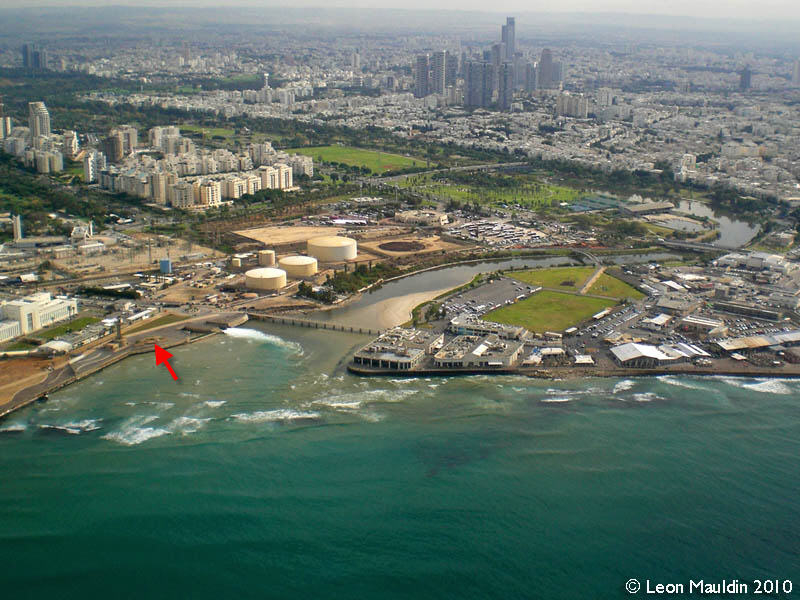
The AFTAU release included a small photo by my friend and co-traveler Leon Mauldin.  Leon has given me permission to post his photo here. It shows the mouth of the Yarkon River as it flows into the Mediterranean Sea. The river begins a few miles inland at the Old Testament site of Aphek (1 Samuel 4:1), known in Roman times as Antipatris (Acts 23:31). Click on the photo for a larger image.

Aerial view of mouth of the Yarkon River at Tel Aviv. Photo by Leon Mauldin.

Aerial view of mouth of the Yarkon River at Tel Aviv. Photo by Leon Mauldin.

The arrow points to the little tel on the north bank of the Yarkon.

There is another lesson in this press release. Scholars, including archaeologist, do not agree and they often change their minds. It is a mistake for one to build an “infallible” case on a fallible premise. We must work with the evidence we have at any given time.

You may see more of Leon’s photos at Leon’s Message Board.

HT: Joseph I. Lauer

Time for family and manatees

Monday and Tuesday we spent the time with our grandson. Last February we took him to the Manatee Viewing Center on Tampa Bay. Monday we went north of Tampa to Crystal River and the Chassahowitzka National Wildlife Refuge. My former student and friend, Michael Lusk, is the Refuge Manager. He took us into some areas not normally accessible to the public.

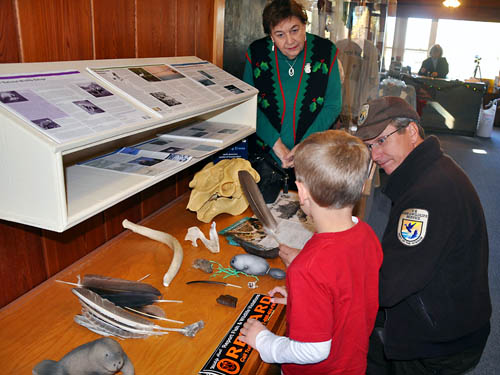
We started our visit at the Visitor’s Center, where we learned about the manatees and others animals that visit the refuge center or make it their home.

Visitors Center Chassahowitzka National Wildlife Refuge

Visitors Center at Chassahowitzka National Wildlife Refuge.

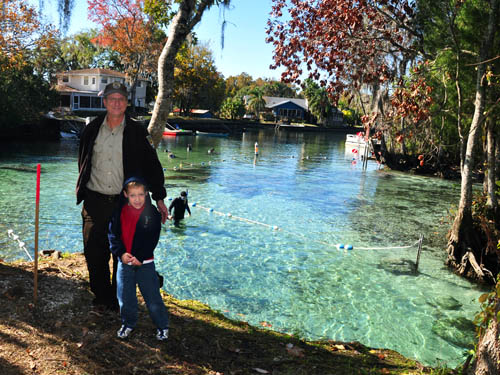
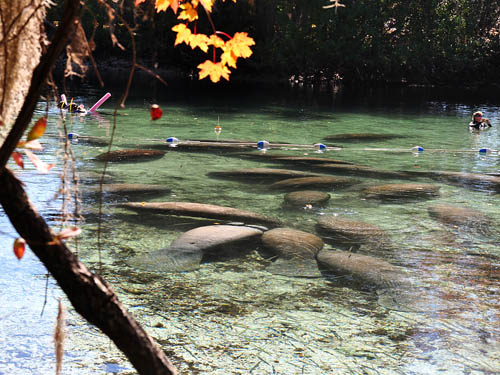
Because the water was at low tide it appears that the manatees are resting on the bottom of the inlet. People are allowed to swim with the manatees, but not in the roped off area.

Manatees at Chassahowitzka National Wildlife Refuge. Photo by Ferrell Jenkins.

Manatees at Chassahowitzka National Wildlife Refuge. Photo by Ferrell Jenkins

From another point we have a clearer view of the manatees.

Manatees at Chassahowitzka National Wildlife Refuge

Manatees at Chassahowitzka National Wildlife Refuge. Photo by Ferrell Jenkins.

We wrote about the manatees here, and called attention to the claim that they are related to the elephant and the hydrax.

“The closest animal relative to the manatee is the elephant and the hydrax (a small gopher-size mammal).”

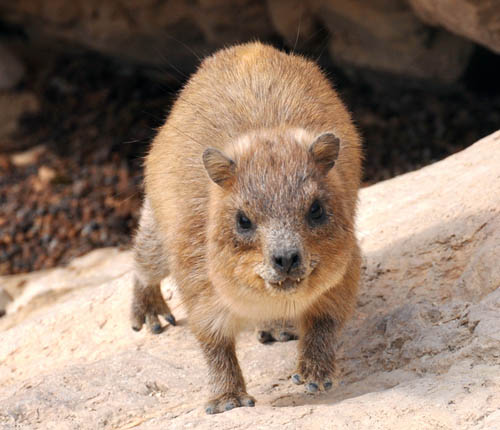
The hydrax or Rock Badger is mentioned in the book of Proverbs among things that are small, but exceedingly wise. There is a great lesson here. Even though they are not mighty, they build their homes in secure places. This is similar to the teaching of Jesus in Matthew 7:24-25. Notice the reading of  Proverbs 30:26 in a few of the English translations:

The shephanim are not mighty people, Yet they make their houses in the rocks; (NAU)

rock badgers are creatures with little power, but they make their homes in the crags; (NET)

the rock badgers are a people not mighty, yet they make their homes in the cliffs; (ESV)

hyraxes are not a mighty people, yet they make their homes in the cliffs; (CSB)

Rock Badger at En Gedi. Photo by Ferrell Jenkins.

Rock Badger at En Gedi. Photo by Ferrell Jenkins.

Another shipwreck in the Mediterranean

We see more reports of bad weather in the Mediterranean and the effect it is having on shipping. Note today’s report in Hürriyet, Turkey’s English Daily here.

Stormy weather in Antalya caused a cargo ship to run aground Thursday, leaving one person missing, and may also have contributed to the death of a woman whose body was found in the area.

The vessel, named “Seabright,” had been en route from the Tarsus Port in Adana province to Egypt with a crew of 18 people when it crashed into the rocks in a central part of the Mediterranean province of Antalya, the Anatolia news agency reported Friday.

Did you notice the references to Tarsus and Antalya? This brings to mind the work of the Apostle Paul. Tarsus in Cilicia was the home of Paul (Acts 9:11; 21:39; 22:3). Antalya is identified with Attalia, a coastal city a short distance west of Tarsus (Acts 14:25). Perga, mentioned in the same verse, is nearby.

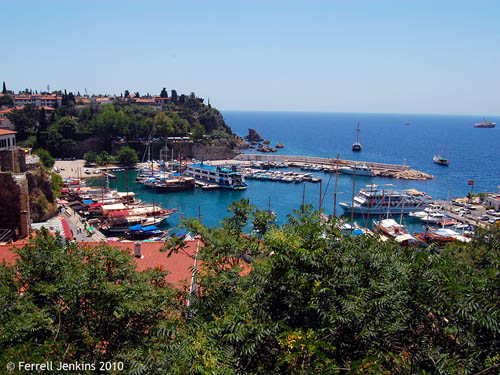
Pleasure harbor at Antalya, Turkey. Photo by Ferrell Jenkins.

Pleasure harbor at Antalya, Turkey. Photo by Ferrell Jenkins.

Mark Wilson writes of Antalya,

The modern city covers the ancient site so few ancient ruins are visible. Those remaining are around the harbor in the old city called Kaleiçi. (Biblical Turkey, 81).

When Paul sailed from Caesarea to Rome his ship went along the southern coast of Asia Minor, modern Turkey. Imagine the effect of this type of storm on a ship dependent on sails for its navigation.

Earlier in the week we noted the effect of dangerous storms in the Eastern Mediterranean. Scroll down for posts about Caesarea, Ashkelon, and Alexandria.