Category Archives: Photography

Appian Way mile marker

Mile markers were commonly used in the Roman world. Over the past forty years I have seen several in Israel and Jordan. Many of them have disappeared or have been taken to a secure place.

The marker here is the first one south of the city wall in Rome. Just as we have markers on our highways to indicate distances, so did the Romans.

Mile marker on the Appian Way in Rome. Photo by Ferrell Jenkins.

Mile marker on the Appian Way in Rome. Photo by Ferrell Jenkins.

Thebes in Bible Prophecy

Luxor was known as Thebes in Old Testament times. Both Jeremiah and Ezekiel prophesied the Lord’s judgment of the city. Jeremiah says,

“The LORD of hosts, the God of Israel, says, ‘Behold, I am going to punish Amon of Thebes, and Pharaoh, and Egypt along with her gods and her kings, even Pharaoh and those who trust in him’” (Jeremiah 46:25; see also Ezekiel 30:14-16)

A visit to the ruined and unoccupied temples of Karnak and Luxor, where Amon (or Amun) was worshiped as a great god, illustrates the fulfillment of this prophecy. Shortly after the time of Jeremiah (c. 586 BC), Egypt and Thebes began to decline as a world power.

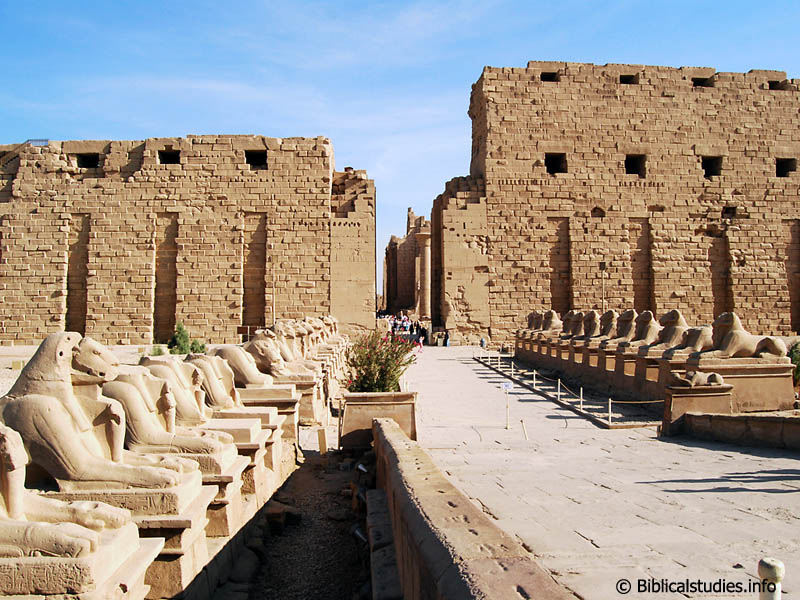
This photo of the avenue of the ram-headed sphinxes leads to the first pylon of the great temple of the god Amon (or Amun). The first pylon was the last part of the temple constructed (about 700 BC) and remains unfinished. This photo is large enough to be used in teaching presentations. Click on the photo for a larger image. I hope you will enjoy using it.

The avenue of ram-headed sphinxes and the first pylon at Karnak. Photo by Ferrell Jenkins.

The avenue of ram-headed sphinxes and the first pylon of the great temple of Amun at Karnak. Photo by Ferrell Jenkins.

In 663 BC the Assyrian king Ashurbanipal had already conquered Thebes (Hebrew, No Amon). The prophet Nahum, in prophesying the fall of Nineveh, calls attention to this event (3:8ff.).

Visiting the Bible Lands with Mother

I regretted that my Father never was able to visit the Bible lands with me, but Mother made two trips. The first in 1980, a year after my father died, and the second in 1993. I enjoyed having her as part of the group. She could walk faster and longer than anyone in the group, I think.

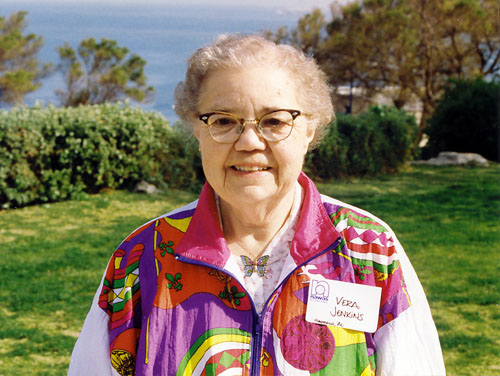
Vera Jenkins at Joppa in 1993. Photo by Ferrell Jenkins.

Vera Jenkins at Joppa in 1993. Photo by Ferrell Jenkins.

This has been one of my favorite pictures of Mother. I made it at ancient Joppa in Israel, March 13, 1993, with the Great Sea in the background.

Archeobus Tour on the Appian Way

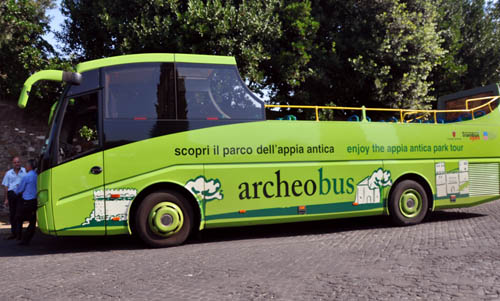
While visiting the Appian Way in Rome I noticed the archeobus. I assume there may have been a guide with the group at the Tomb of Caecilia Metella. That is a neat idea on a dry day.

The Archeobus Tour on the Appian Way. Photo by Ferrell Jenkins.

The Archeobus Tour on the Appian Way. Photo by Ferrell Jenkins.

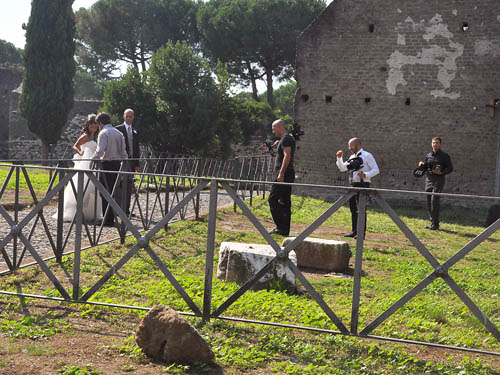
Perhaps the next time I am in Rome I will look into this tour. Photographers were utilizing the beautiful sunny day and the ancient ruins to photograph some newly weds (to be?).

Wedding photography on the Appian Way. Photo by Ferrell Jenkins.

Wedding photography on the Appian Way. Photo by Ferrell Jenkins.

I wondered if they knew that the Apostle Paul once passed this way (Acts 28).

Dan Brown’s novels: Fact or Fiction?

On the plane from Rome last week I noticed someone reading The Lost Symbol. I think the Today Show made a lot of the book a few weeks ago. I gave some attention to The Da Vinci Code here, but don’t plan to do the same for this new book.

The Telegraph, in an article by Tom Chivers, mentions 50 factual errors in the two books by Dan Brown.

Dan Brown’s new novel The Lost Symbol opens with a bold word: FACT. “All rituals, science, artwork, and monuments in this novel are real”, it says.

The Da Vinci Code, his previous bestseller, began in a similar fashion. “All descriptions of artwork, architecture, documents, and secret rituals in this novel are accurate”, Brown says before the prologue.

Chivers discusses the categories of History, Geography, Science, Symbols, Religion and Mythology, Language, and Miscellany.

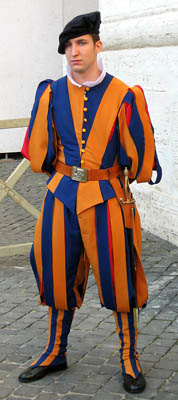
Swiss Guard at the Vatican. Photo by Ferrell Jenkins.

Swiss Guard at the Vatican. Photo by Ferrell Jenkins.

Here is one of the mistakes that would not matter much except for the fantastic claim that everything in the books are true.

Langdon says the Swiss Guard’s outfits were “designed by Michelangelo himself.” This is an urban myth: Michelangelo had nothing to do with them. The current uniforms were designed by Commandant Jules Repond between 1910 and 1921.

The Vatican’s official web site says,

The colours which make the uniform so attractive are the traditional Medici blue, red and yellow, set off nicely by the white of the collar and gloves. The blue and yellow bands give a sense of lightness as they move over the red doublet and breeches. The Guard’s every-day uniform is completely blue. With the passing centuries there have been a few minor changes, but on the whole the original dress has been maintained. It is commonly thought that the uniform was designed by Michelangelo, but it would seem rather that he had nothing to do with it. However, Raffaello certainly did influence its development, as he indeed influenced fashion in general in Italy in the Renaissance, through his painting.

I wondered how I would ever use this good photo of a Swiss Guard at the Vatican.

HT: Biblical Paths

Bok Tower in Florida

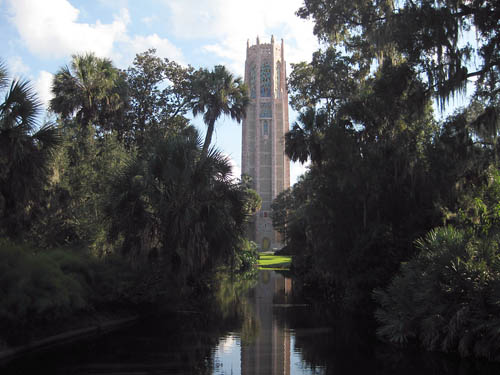
This week, through Wednesday, I am presenting a series of lectures at the Lake Wales (Florida) Church of Christ. When I drove into the parking lot yesterday morning I looked to a distant hill and saw Bok Tower. I recall visiting Bok Tower one time as much as 5 decades ago. It is certainly a place to remember.

The tower and gardens were envisioned in the 1920s by Dutch immigrant and humanitarian Edward W. Bok. This site, set among orange groves, is one of the highest spots in Florida. The National Historic Landmark was dedicated by President Calvin Coolidge in 1929. In the afternoon we went by Tower so I could capture a photo.

Bok Tower Gardens, Lake Wales, FL. Photo by Ferrell Jenkins.

Bok Tower Gardens, Lake Wales, FL. Photo by Ferrell Jenkins.

According to the brochure available at the entry this tower houses one of the world’s finest carillons. Concerts are presented daily.

A few practical comments about recent travel

Those who travel, or those would hope to travel outside of the United States, might find these comments valuable.

Weather changes. That is a statement. We visited Italy and Switzerland in September, 2001. I don’t recall any rain during that trip. Certainly there was not enough to affect adversely the photography. This year we had much rain. No planned sightseeing was affected, but for those who have a major interest in photography it was disappointing.

Flights. The equipment used by Delta flight from Atlanta to Zurich did not have enough room between seats for a 6 feet tall individual. The person ahead of me kept their seat fully reclined the entire trip. The equipment used on the flight from Rome to Atlanta had more space — maybe only a couple of inches. That makes a lot of difference on a flight exceeding 10 hours. So far as I could tell, all seats were filled on both flights. Monday is definitely not a good day to travel. If you have a choice choose the middle of the week when fewer people are likely to be traveling. The plane from Rome had TV screens at each seat. This was very helpful in passing the time.

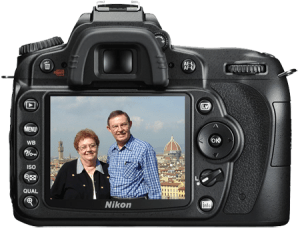
The Nikon D90 Failed Me.

The Nikon D90 Failed Me.

Camera. Earlier I spoke of the new Nikon D90 camera I was using for this trip. I probably lost only a dozen or so photos, but I had lots of trouble. Frequently my camera would not fire. I changed various settings, removed and replaced the SD card, removed and replaced the battery. Still I got the “Format” message. It means to format the card. Eventually I learned that by removing and replacing the battery I could continue to shoot. The photos were good, but sometimes I had to do this three or four times before continuing to shoot. Toward the end of the trip more photos were bad and I was getting the “Error” message. This is my fourth Nikon DSLR. It has been necessary to send each one back for repair. Not good! I’ll be heading for Best Buy as soon as I get unpacked, mail sorted, etc.

It is not the negatives that count. One’s trip should not be remembered by a few bad things that happened, or a few unpleasant experiences one had. Travel should be remembered by the places you have seen, the people you have met, and how these have enhanced your own understanding of man and the world. For those places specifically related to the Bible, the student may remember how this increases his/her understanding of the Scripture.

I asked Elizabeth to read this for content and errors. She added, “And, above all, that you returned home safely.”

The Brethren, the Roman Forum and the Palatine Hill

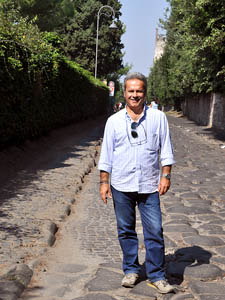
Stefano Corazza on the Appian Way

Stefano Corazza on the Appian Way

This morning I spoke again for La Chiesa di Christo in Rome. Stefano Corazzo translated my lesson on the subject “Can I trust my Bible?” I used PowerPoint slides with both English and Italian captions. Several of the brothers and sisters speak English at well as Italian.

Saturday and Sunday were beautiful sunny days in Rome. I tried to take advantage of the light to make some photos that would be helpful in teaching various New Testament subjects, especially pertaining to the book of Acts, the epistle to the Romans, the Prison Epistles (Ephessians, Colossians, Philemon, and Phillippians), and 2 Timothy, which seems to be the last prison epistle.

When I decided to return to the Roman Forum I did so at an entry with immediate access to the Palatine Hill. When I reached the ticket window I was told that tickets were free for Saturday and Sunday. Then I noticed that this included the Colosseum as well as the Palatine Hill and Forum. That was a saving of €12, about $18. My lucky day!

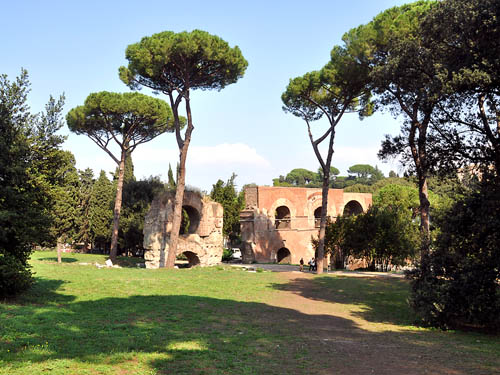
The Palatine Hill is a flat top hill of about 25 acres. Palatial residences of the emperors were built here during the Imperial period. Some of the structures date to a period after the time of Paul. Domitian (A.D. 81–96) modified the hill with new buildings. Two great complexes, called the House of Flavia and the House of Augustus grace the hill. A Stadium was used for minor games and entertainment.

The Palatine Hill in Rome. Photo by Ferrell Jenkins.

The Palatine Hill in Rome. Photo by Ferrell Jenkins.

The Roman Forum was the hub of Roman life — religious, political, economic, social. One structure of significance for the study of the life and work of Paul is the Julian Basilica — the seat of the tribunal of the centumiri, who judged civil cases. Here between the Palatine and Capitoline hills Paul probably stood trial before Caesar.

The Colosseum in Rome

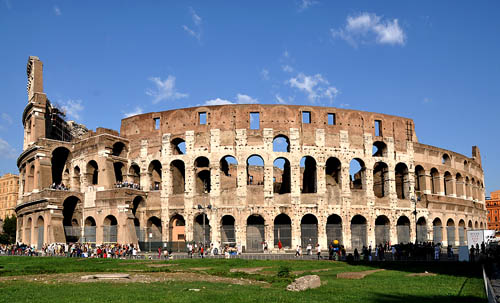
The Colosseum in Rome was built in A.D. 80 by the Emperor Titus. He used 10,000 of the slaves from Judea in this work. Titus was in command of the Roman army when Jerusalem was burned in A.D. 70.

I know that this photo will make some of our tour members jealous  🙂 , but I thought I would share a photo I made of the Colosseum Friday afternoon. You may recall that our group visited the Colosseum and Forum in the rain a week ago.

The Colosseum in Rome. Photo by Ferrell Jenkins.

The Colosseum in Rome. Photo by Ferrell Jenkins.

It is true that Christians were persecuted and even put to death in Rome, but there is no evidence that this occurred in the Colosseum. The persecution under Nero took place in the Circus of Nero. That is where St. Peter’s now stands. The persecution in the days of Claudius took place at least 30 years before the Colosseum was built. Luke describes Paul’s first visit to Corinth,

After these things he left Athens and went to Corinth.  And he found a Jew named Aquila, a native of Pontus, having recently come from Italy with his wife Priscilla, because Claudius had commanded all the Jews to leave Rome. He came to them,  and because he was of the same trade, he stayed with them and they were working, for by trade they were tent-makers. (Acts 18:1-3)

“And thus we came to Rome”

Luke records that he and Paul found some brethren at Puetoli and remained for seven days. By this time the prisoner on behalf of the Gentiles had made such a good impression that he is allowed considerable freedom. Then he says, “and thus we came to Rome” (Acts 28:14 NAU). He hastens to add that brethren from Rome came south to meet them.

And the brethren, when they heard about us, came from there as far as the Market of Appius and Three Inns to meet us; and when Paul saw them, he thanked God and took courage. When we entered Rome, Paul was allowed to stay by himself, with the soldier who was guarding him. (Acts 28:15-16 NAU)

Under considerably different circumstances we came back to Rome yesterday after being away for five days. The brethren here invited me to speak last Sunday and again on September 27.  Yesterday and today we had wonderful sunny weather for photographs. I will share a few of the photographs that we were able to make.

Rome was founded about 753 B.C. on the banks of the Tiber River. Here is one of the many views of the Tiber that one may see in Rome.
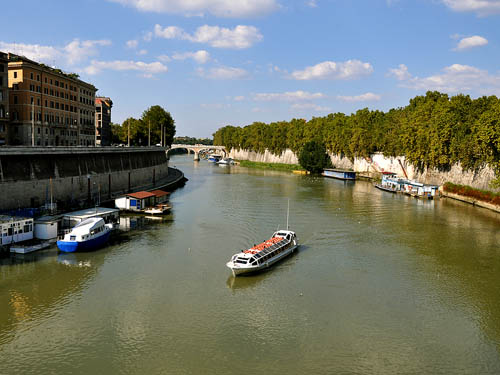
The Tiber River in Rome. Photo by Ferrell Jenkins.

The Tiber River in Rome. Photo by Ferrell Jenkins.

Rome once ruled the world. In the days of Caesar Augustus something happened in far away Palestine that would really change the Roman world and more.

Now in those days a decree went out from Caesar Augustus, that a census be taken of all the inhabited earth. (Luke 2:1 NAU)

Statues of Roman Emperors may be seen all over the city of Rome. This one shows Emperor Augustus across from the Roman Forum.
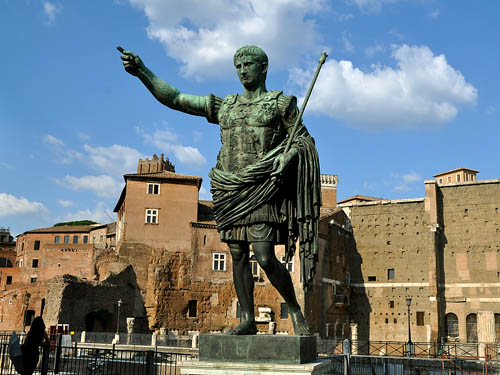
The Emperor Augustus. Photo by Ferrell Jenkins.

The Emperor Augustus. Photo by Ferrell Jenkins.

This morning I visited with my friend and former student,  Stefano, as we had opportunity to visit the Appian Way and a few other sites in Rome. Stefano grew up in Rome. He spoke about how, as a kid, he played ball beside the ancient walls of Rome with no thought of the historical importance of the ruins. Now, of course, it is different. We thought about the Apostle Paul and the difficulties he faced in coming to Rome. And we discussed the work of the Lord in Italy and in America. I had lunch with Stefano and his parents, Sandro and Elisabetta.

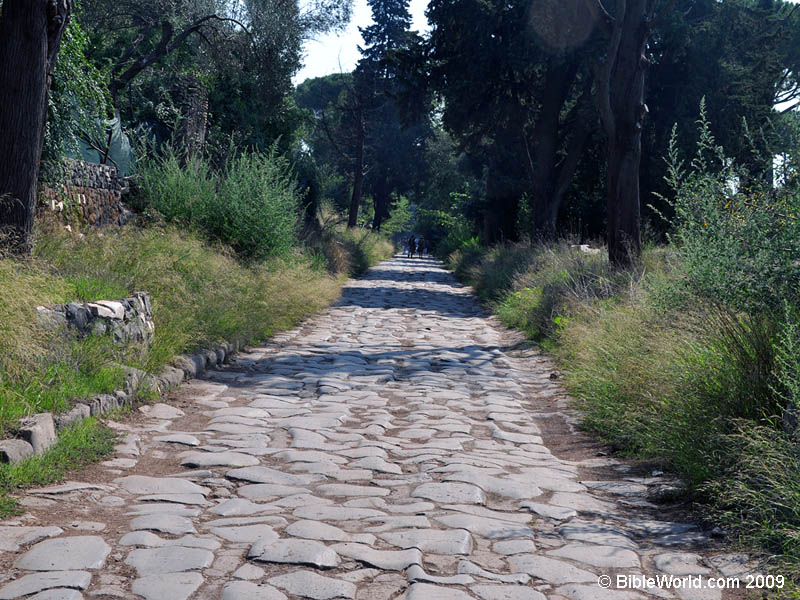
Here is a view of the Appian Way south of Rome. There is every reason to believe that Paul traveled this road. I have made this photo a little larger because I know that many teachers and preachers would like to use it in teaching the book of Acts. Just click on the photo for the larger version.
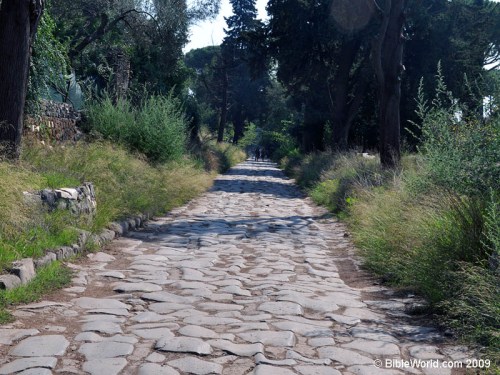
Paul traveled the Ancient Appian Way to get to Rome. Photo by Ferrell Jenkins.

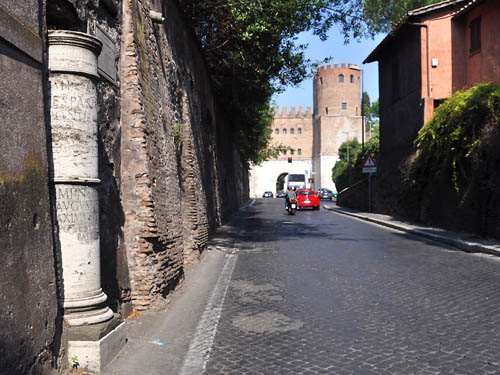
Paul traveled the Ancient Appian Way to get to Rome. Photo by Ferrell Jenkins.