Category Archives: Old Testament

Khirbet Qeifaya Inscription

Khirbet Qeifaya is a fortified site overlooking the Valley of Elah where the great battle between Israel and the Philistines (David and Goliath) took place. A broken shard of pottery bearing an inscription was discovered during the excavation this year. There have been a lot of teasers going around about what the inscription may say.

The best summarized updates on this inscription that I have seen are the ones posted by Todd Bolen at Bible Places Blog. I suggest you go there and scroll back to these postings during the last days of October. If you would like to go to the specific posts, here are the links:

Be aware that many newspaper articles about archaeological discoveries are often exaggerated. There are NO specifics about David and Goliath. We don’t even have a translation of the inscription at this point. And, by the way, Noah’s ark has not been found, either!

A Judean seal in Assyrian style

There is so much archaeological work going on in Jerusalem today that we are not surprised about the announcement of another seal discovery.

An excavation at the Western Wall plaza has uncovered a seal in a building belonging to the seventh century B.C. This is the time when Manasseh, Amon, and Josiah ruled over the House of David in Jerusalem (2 Kings 20:21 – 2 Kings 21).

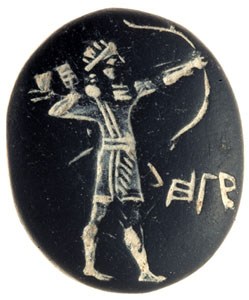
The seal is made of black stone and shows the image of an archer shooting a bow and arrow. The name in ancient Hebrew script reads LHGB (meaning for Hagab). Perhaps the most interesting thing about the seal is that it is decorated in Assyrian style. Here is what the Israel Antiquities Authority press release says about it.

The seal was sent for expert evaluation to Professor Benjamin Sass of the Tel Aviv University and Dr. Tali Ornan of the Hebrew University of Jerusalem. According to them the image of the archer was influenced by Assyrian wall reliefs in which archers are portrayed shooting bows and arrows – such as those that are known from the Lachish relief. The image of the archer appears in profile: he is standing in a firing position with his right foot in front of his left. His face is portrayed schematically but his body, his dress and especially the muscles of his arms and legs stand out prominently. He is barefoot. His attire includes a headband and a skirt that is wrapped around his hips. A quiver hangs from his back and its straps are drawn tightly across his exposed chest. He is holding a bow and arrow in his hands. His right hand is extended forward holding the bow while his left is pulled back grasping the arrow. The seal is quite unique since this is the first time that a private seal has been discovered that bears a Hebrew name and is decorated in the Assyrian style. The seal attests to the strong Assyrian influence that existed in Jerusalem in the seventh century BCE. It is usually assumed that the owner of private seals were individuals who held government positions. We can suggest that the owner of the seal – Hagab, who chose to portray himself as a Hebrew archer depicted in the Assyrian style – served in a senior military role in Judah.

The name Hagab is found among the list of Judean exiles who returned from Babylon to Jerusalem and Judah in 536 B.C. (Ezra. 2:46). The text says that his sons returned. We have no way of knowing whether there is any connection between the Hagab named in the Bible and the one named on the seal. The actual size of the seal is .04 inches by .55 inches.

Clara Amit, IAA.

Seal of Hagab in Assyrian style.Photo: Clara Amit, IAA.

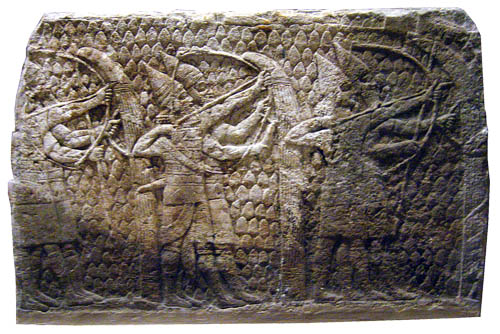
The photo below is one I made in the British Museum of the reliefs showing the siege of Lachish by the Assyrian King Sennacherib. It shows Assyrian archers behind shields with bows drawn and arrows ready to fly. This gives you an opportunity to see how the image on the seal compares with known images of Assyrian archers.

Assyrian archers at Lachish. British Museum. Photo by Ferrell Jenkins.

Assyrian archers at Lachish. British Museum. Photo by Ferrell Jenkins.

David used the figure of the archers metaphorically to describe the wicked.

For, behold, the wicked bend the bow, They make ready their arrow upon the string To shoot in darkness at the upright in heart. (Psalm 11:2)

Copper smelting in 10th century B.C. Edom

Several sources are reporting the discovery of copper smelting operations in Jordan dating to the 10th century B.C. This is the time of Solomon. The discovery was made at a site called Khirbat en-Nahas about 30 mile south of the Dead Sea on the eastern side of the Arabah. The photo below is by Thomas Levy, UC San Diego.
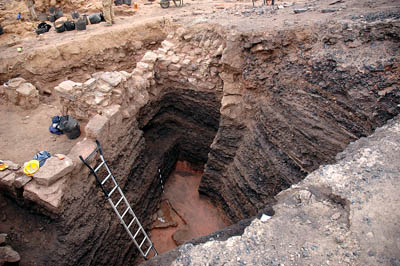
Industrial copper slag mound at Khirbat en-Nahas. Photo Thomas Levy.

Industrial copper slag mound at Khirbat en-Nahas. Photo Thomas Levy.

This is the ancient territory of Edom. Scholars have known for 30 or more years that there was metalworking there in the 7th century B.C. Researchers, led by Professor Thomas E. Levy of the Department of Anthropology at UC San Diego, and Mohammad Najjar of Jordan’s Friends of Archaeology, dug deeper into the site to find evidence of smelting from the 9th and 10th century.

Naysayers who seem frightened that some modern archaeological discovery might “confirm” the biblical record are already at work. Israel Finkelstein of Tel Aviv University is quoted as saying that the stories of the Old Testament “depict the concerns, theology and background of the time of the writers” which he says belong to the 5th century B.C. They cannot be accepted as factual according to Finkelstein.

From his study in Florida, Ferrell Jenkins said,

Instead of immediately linking a discovery such as this to a biblical character or event, would it not be better to think of the discovery in the terms of shedding light on the biblical record?

An Egyptian scarab from Tanis or the eastern delta and an amulet of the Egyptian goddess Mut caused Levy to suggest that these artifacts might be associated with the Egyptian pharaoh Sheshonq I. Pharaoh Sheshonq I is known as Shishak in the Bible. Here is a summary of the biblical references to Shishak.

  • Provided refuge to Jeroboam for a few years prior to the death of Solomon (1 Kings 11:40).
  • Invaded Israel (Canaan) in the fifth year of King Rehoboam (926 B.C.) and took away treasures from the temple in Jerusalem (1 Kings 14:25-26; 2 Chronicles 12:2-9).

Shishak left a record of his invasion of Canaan on the walls of the temple of Amum at Karnak (modern Luxor, Egypt). Here is a photo of the relief at Karnak showing Shishak holding lines to the 156 Canaanite cities he claims to have captured.
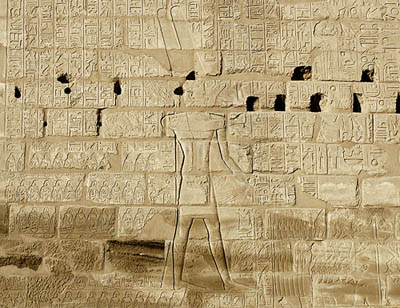
Pharaoh Shishak I of Egypt. Photo by Ferrell Jenkins.

Pharaoh Shishak I of Egypt. Photo by Ferrell Jenkins.

The Bible says that Israel would be able to dig copper from the hills of the country to which they were going (Deuteronomy 8:9). See also Job 28:1-2.

We have known for some time that copper was smelted by the Egyptians at Timna, about 25 miles north of Eilat. Here is a photo showing a reconstruction of the process for copper smelting there in the 13-12th century B.C.
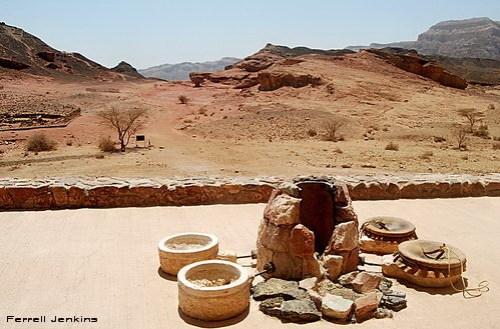
Model of copper smelting installation at Timna. Photo by Ferrell Jenkins.

Model of copper smelting installation at Timna. Photo by Ferrell Jenkins.

More details about this discovery may be found at the following sites: UC San Diego News Center. At the Los Angeles Times there is a nice 12 minute video about the discovery narrated by Thomas Levy.

HT: Joseph I. Lauer

Update [later in the day]: Todd Bolen has added three great photos taken at Khirbat en-Nahas at his Bible Places Blog.

Dog River in Lebanon

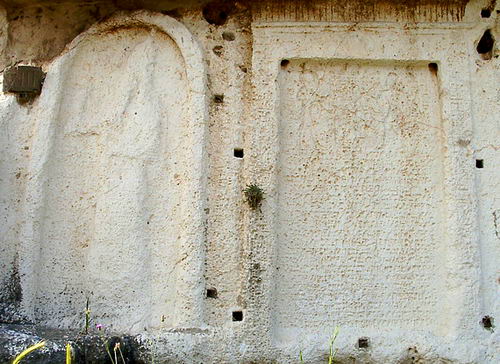
The Nahr el Kelb, the River of the Dog, flows into the Mediterranean Sea about nine miles north of Beirut, Lebanon. In antiquity the river was known as the Lycus. Many important armies have traveled through this pass in the Lebanon mountains leaving their inscriptions on the cliffs.

There are inscriptions or reliefs from the following ancient rulers:

  • Egyptian Pharaoh Ramses II.
  • Assyrian kings Shalmaneser III and Esarhaddon.
  • Babylonian king Nebuchadnezzar.

Shalmaneser III took tribute from Jehu, the king of Israel,  841 B.C. Wright says,

“The tribute was evidently received after Shalmaneser’s fifth attack on Damascus, following which he had marched his army into Phoenicia. While there he says that he received the tribute of Tyre, Sidon, and Jehu, and placed his portrait on the cliff of Ba’ lira’ si. This portrait, along with those of other kings, including Rameses II of Egypt…” is located at Dog River, north of Beirut. (Biblical Archaeology, 158-159).

Jehu was king of Israel in the 9th century B.C. (2 Kings 9). The Bible does not record this event, but the annals of Shalmaneser III record the following information:

“…I (also) marched as far as the mountains of Ba’li-ra’si which is a promontory (lit.: at the side of the sea) and erected there a stela with my image as king. At that time I received the tribute of the inhabitants of Tyre, Sidon and of Jehu, son of Ornri.” (ANET, 280)

This photo, made in 2002, shows the reliefs left by Salmaneser III and Ramses (right).

Reliefs of Shalmaneser III and Pharaoh Ramses at Dog River. Photo by Ferrell Jenkins.

Reliefs of Shalmaneser III and Pharaoh Ramses at Dog River. Photo by Ferrell Jenkins.

Byblos in Lebanon

Byblos is located on the Mediterranean Sea about 25 miles north of Beirut, Lebanon.The ancient Phoenician city of Gebal (modern Arabic Jbeil) was called Byblos by the Greeks because they saw scrolls there made from imported papyrus sheets. The Greek word byblos is translated book in our English versions of the Bible. In fact, our word Bible is derived from the work byblos.

The Gebalites worked with the builders of  Solomon and Hiram to fashion and prepare timber and stone to build the temple (1 Kings 5:17-18). The old men of Gebal are mentioned in the lamentation over Tyre.

The elders of Gebal and her skilled men were in you, caulking your seams; all the ships of the sea with their mariners were in you to barter for your wares. (Ezekiel 27:9 ESV)

Byblos is now designated as a UNESCO World Heritage Site. The history of Byblos is revealed in the excavated ruins.

  • Canaanite or Phoenician ruins as early as 3000 B.C.
  • Egyptian ruins from about 1300 B.C. Rib Addi, king of Byblos wrote letters to Pharaoh Amenophis III to request reinforcements against his neighbors. These letters are part of the collection of letters found at Amarna.
  • Roman ruins from the time of Pompey, about 65 B.C.
  • Crusader ruins from the 12th century A.D.

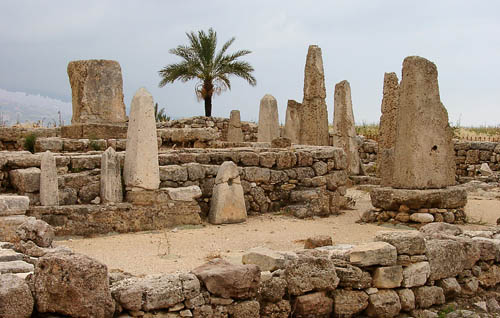
My last visit to Byblos was in 2002. This is a photo I took of the Egyptian Temple of Obelisks which was dedicated to the Egyptian god Reshef.

The Temple of Obelisks at Byblos. Photo by Ferrell Jenkins.

The Temple of Obelisks at Byblos. Photo by Ferrell Jenkins.

Zaccheus climbed up into a sycamore tree

The sycamore (Ficus sycomorus) is a type of tree growing only in the Jordan Valley and near the Mediterranean coast. The sycamore is pictured as growing in abundance in the shephelah (lowland, 1 Kings 10:27). This is in contrast to cedars which Solomon planted in Jerusalem.

The sycamore is not the same as the tree by that name that grows in North America. The sycamore tree belongs to the nettle family, like the mulberry and fig trees. The fruit looks like a fig, but the taste is unpleasant. It is eaten by the poor. See Fauna and Flora of the Bible, 179-81.

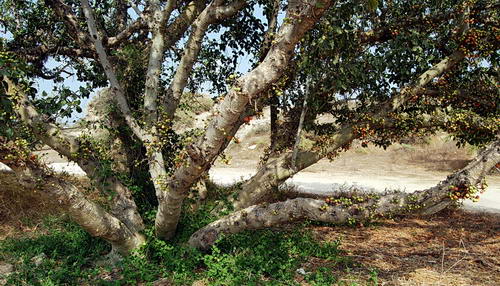
Zaccheus climbed up into a sycamore tree at Jericho (Luke 19:4). Here is a sycamore tree at Ashkelon that reminded me of Zacchaeus. The limbs are low. Even a child could climb into the tree to get a better view.

Sycamore tree at Ashkelon. Photo by Ferrell Jenkins.

Sycamore tree at Ashkelon. Photo by Ferrell Jenkins.

Amos the prophet, who lived at Tekoah on the edge of the Judean wilderness, spoke of working with the sycamore fruit.

Amos replied to Amaziah, “I was not a prophet by profession. No, I was a herdsman who also took care of sycamore fig trees. (Amos 7:14, NET Bible).

This photo shows the sycamore figs on the tree.

Sycamore figs. Photo by Ferrell Jenkins.

Sycamore figs. Photo by Ferrell Jenkins.

Ben Ezra Synagogue in Old Cairo

As the term implies, Old Cairo is the oldest section of Cairo, Egypt. It is sometimes called Coptic Cairo. Visitors may see the Coptic Museum where some of the Nag Hammadi Gnostic texts are displayed. The last time I was in Cairo, in 2005, the museum was closed for some restoration. I am hopeful this will not be the case the next time.

The Church of St. Sergius is located in the Coptic area. Legend has it that Joseph, Mary, and the infant Jesus stayed here when they fled from Herod the Great. The New Testament records all we really know about their stay in Egypt.

Now when they had departed, behold, an angel of the Lord appeared to Joseph in a dream and said, “Rise, take the child and his mother, and flee to Egypt, and remain there until I tell you, for Herod is about to search for the child, to destroy him.” And he rose and took the child and his mother by night and departed to Egypt and remained there until the death of Herod. This was to fulfill what the Lord had spoken by the prophet, “Out of Egypt I called my son.” (Matthew 2:13-15 ESV)

The Romans built a fortress in the area of Old Cairo called Babylon. Some remnants of the fortress can be seen.

Of special interest is the Ben Ezra Synagogue. It was here that the 140,000 Cairo Geniza fragments of Hebrew and Jewish literature were found. The collection of material dating back to as early as the 9th and 10th century A.D. is now housed in Cambridge, England. This link will take you to some good information about the collection. Until the discovery of the Dead Sea Scrolls these biblical fragments represented our oldest examples of the Hebrew biblical text.

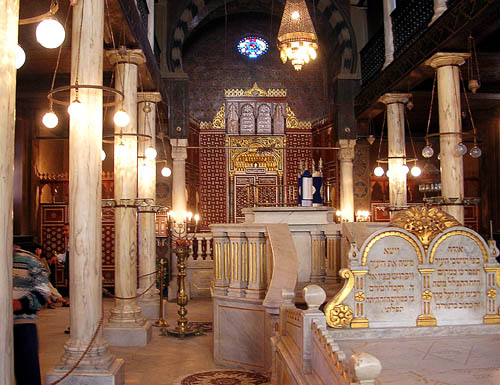
This photo shows the interior of the restored Synagogue. Of course, few Jews live in Egypt now.

Ben Ezra Synagogue after restoration. Photo by Ferrell Jenkins.

Ben Ezra Synagogue after restoration. Photo by Ferrell Jenkins.

Ask for the ancient path

The Bible, both Old Testament and New Testament, makes it clear that God’s people often depart from God’s way. There are numerous exhortation for His people who walk in the old paths.

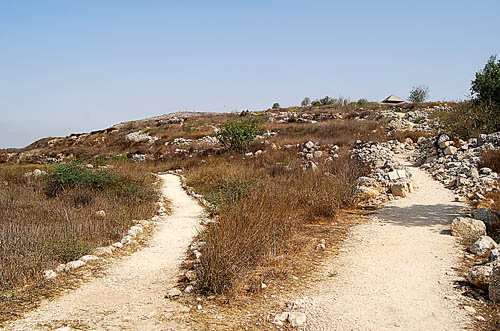
This scene showing two paths at the site of biblical Shiloh reminded me of the Lord’s plea through the prophet Jeremiah in the days of the Babylonian threat against Jerusalem and Judah. The tabernacle was located at Shiloh for many years after Israel entered the land of Canaan. I was just reading the first few chapters of 1 Samuel that tell of Samuel living there during his early years.

Two paths at Shiloh. Photo by Ferrell Jenkins.

Two paths at Shiloh. Photo by Ferrell Jenkins.

Thus says the LORD: “Stand by the roads, and look, and ask for the ancient paths, where the good way is; and walk in it, and find rest for your souls. But they said, ‘We will not walk in it.’ (Jeremiah 6:16)

To ask for the ancient path means to respect the revealed word of the Lord and follow it. This thought is similar to the teaching of Jesus in the Sermon on the Mount (Matthew 7:13-14).

The Rivers of Damascus

Naaman was the commander of the army of the king of Aram (Syria). The biblical text says he was “esteemed and respected by his master” because of the victories he had given the country. Great people often have great problems as well as great acclaim. Naaman was a leper. The term leper is used throughout the Old Testament of a serious skin disease without a cure. Read the full account in 2 Kings 5:1-18.

A young girl who had been taken captive from Israel during one of the raids made by the Arameans was serving as an attendant to Naaman’s wife. She knew of the prophet [Elisha] in Samaria and was confident he could cure Naaman of his leprosy.

When Elisha send a messenger to Naaman to tell him to “Go and wash in the Jordan seven times” the commander was furious. He said,

Are not Abana and Pharpar, the rivers of Damascus, better than all the waters of Israel? Could I not wash in them and be clean?” So he turned and went away in a rage. (2 Kings 5:12 ESV)

These rivers, Abana and Pharpar, flow from the Anti-Lebanon range eastward into the desert. Here is a photo that I made of the Nahr Barada river a short distance west of Damascus (on the outskirts of the city). The river continues to flow through the city of Damascus. The Nahr Barada is often identified with the Abana of the Bible.

The Abanah River near Damascus. Photo by Ferrell Jenkins.

The Abanah River near Damascus. Photo by Ferrell Jenkins.

Naamam was cured of his leprosy only after he dipped in the Jordan seven times. We should not elevate our judgment (opinion) to the point that we can argue with the Lord about what ought to be done. He is the Creator; we are the creature.

Aswan, Egypt

Aswan is the location of the first cataract of the Nile River. This made it an ideal location for the Aswan Dam which was built between 1898 and 1902. This created a small lake south of the dam, but it was nothing to compare with Lake Nasser which has been formed as a result of the building of the new high dam at Aswan between 1960 and 1971.

The new high dam was constructed at a time when the Soviet Union was providing technical, economic and military support to Egypt. I remember staying in a hotel in Egypt in 1973 filled with Soviet tourists. In the following years we saw none of them. Lake Nasser stretches south for more than 300 miles. Many of the Nubians who lived in this area had to be resettled by the Egyptian government.

Kitchener’s Island, shown below, was given to Lord Horatio Kitchener for his service in the Sudan Campaign. It now is owned by the state and is the site of a beautiful botanical garden. The Mausoleum of the Aga Khan is visible on the top of the hill in the photo below.

Some scholars identify the Arabic name Aswan with the Syene of Ezekiel 29:10 and 30:6. It may be identified with the Sinim of Isaiah 49:12.

Kitchener's Island at Aswan, Egypt. Photo by Ferrell Jenkins.

The Nile River at Aswan. Photo by Ferrell Jenkins.