Category Archives: Old Testament

Society of Biblical Literature in Boston

The annual meeting of the Society of Biblical Literature is being held in Boston this year. I have been attending these meetings for many years. I come in order to hear a few of the many valuable, and some not so valuable, presentations by scholars who are presenting their latest research on some particular topic.  When I was still actively teaching I often attended sessions that were related to the courses I was teaching. Now I tend to go to what is of interest.

These meetings attract more than 5000 members, most of whom are teachers in some field relating to biblical studies.

One of my favorite topics is archaeology and how it relates to biblical history. Many of the leading archaeologists make presentations or read papers telling about the most recent excavations. This, of course, puts me far ahead of the curve if one is waiting to read the information in a magazine or a book. In fact, I observe that many presentations given at SBL will eventually be a chapter in a volume published by the author some years later.

Saturday I heard Thomas Levy and other colleagues from the University of California San Diego tell about the recent work in southern Jordan dealing with the ancient Edomites and copper mining in the area. Levy has discovered that copper mining was common in the area from the 10th century B.C. I have already reported on this discovery, with photos, here, with a related post about mining at Timna here. I hope you will take time to read those reports.

In the afternoon I attended a session on the Wall of Jerusalem in the Persian Period. I suspect that the person making room assignments has no idea about some of the presenters. The most controversial of the speakers here was Israel Finkelstein of Tel Aviv University. He has been dubbed the father of minimalism. Actually he is currently the most prominent in a long line of those who devalue the biblical record. The room was full and overflowing. I sat on the floor in order to be able to see the screen and hear the speaker. The presentations by Ronny Reich, Alon de Groot,  and Wolfgang Zwickel were also informative. Evidence from the Persian period is limited, possibly because it was a significant but short period of biblical history. Here are some of the major events:

  • The Jews were allowed to return from Babylonian Exile in 536 B.C. because of the decree of Cyrus. Remember that only a remnant returned.
  • The temple was rebuilt in 520-516 B.C.
  • Ezra returned with a second group in 458 B.C.
  • Nehemiah returned to help rebuild the wall in 444 B.C.

The evidence presented regarding the number of inscriptions, pottery, jewelry, etc. from the Persian period indicated a small number of items in comparison to the much larger number from the Iron Age and the Hellenistic Age. This is really not surprising when we consider the the circumstances of the period, the possible reuse of materials by later builders, etc.

Everywhere one puts down a pick in Jerusalem there is evidence of earlier civilizations. Keep digging!

Before closing, let me add a little something Persian to this post. Here is a photo of the Cyrus Cylinder, now in the British Museum.
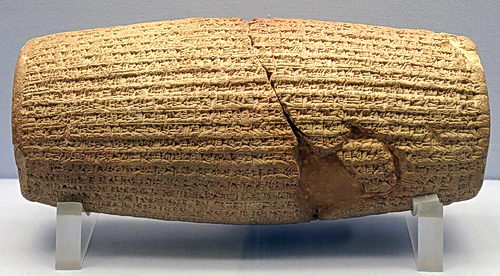
The Cyrus Cylinder. British Museum. Photo by Ferrell Jenkins.

The Cyrus Cylinder. British Museum. Photo by Ferrell Jenkins.

This document records that Cyrus allowed captive peoples to return to their homelands, build their temples and worship their gods. This is similar to the account given in 2 Chronicles 36 and Ezra 1 regarding the Judeans.

Now in the first year of Cyrus king of Persia– in order to fulfill the word of the LORD by the mouth of Jeremiah– the LORD stirred up the spirit of Cyrus king of Persia, so that he sent a proclamation throughout his kingdom, and also put it in writing, saying,  23 “Thus says Cyrus king of Persia, ‘The LORD, the God of heaven, has given me all the kingdoms of the earth, and He has appointed me to build Him a house in Jerusalem, which is in Judah. Whoever there is among you of all His people, may the LORD his God be with him, and let him go up!'” (2 Chronicles 36:22-23)
The Semitic Museum at Harvard

Friday afternoon I went with two of my former students, friends, and fellow-preachers to visit the Semitic Museum at Harvard. Tim Reeves preaches in Providence, RI. He offered to take Leon Mauldin and me to our hotel in Boston. I suggested going by the Museum before going to the hotel so Tim could visit also. I have been at the Museum before, but not since the new exhibit has been on view.

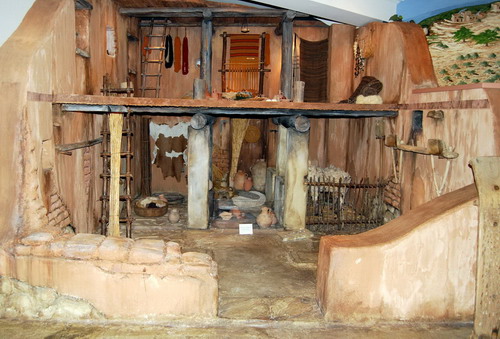
The Houses of Ancient Israel: Domestic, Royal, Divine is the featured exhibit at the Semitic Museum now. This exhibit traces the development and importance of the house in ancient Israel, from the family dwelling to the house of the king, and the house of the Lord (the temple). Here is a photo of the typical pillared “four-room” Israelite house that was common during the periods of the United and Divided Kingdoms.

Typical Iron Age (1200-586 B.C.) Israelite house. Photo by Ferrell Jenkins.

Typical Iron Age (1200-586 B.C.) Israelite house. Photo by Ferrell Jenkins

It would take several pages of writing to explain all of the items on display in the house. Their use could be illustrated with a variety of Bible verses. The research back of this house has been presented by Phillip J. King and Lawrence E. Stager in Life in Biblical Israel (Knox/Westminster, 2001). I highly recommend this book to all Bible teachers.

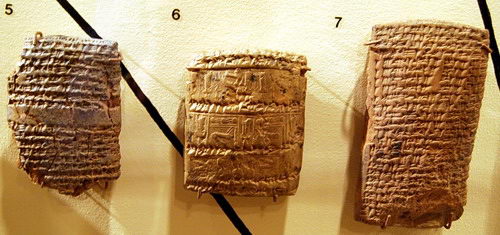
This is the only Museum I know about with displays of tablets from ancient Nuzi. About 4000 tablets in the Hurrian language were discovered by archaeologists in the early part of the twentieth century. Ancient Nuzi was not an important urban center, but these tablets reveal much about economic and domestic life from a period beginning about 2400 B.C. and continuing several centuries. It has been pointed out that several events associated with the biblical patriarchs, mentioned in the Book of Genesis, can better be illustrated  through an understanding of these documents.

Three Nuzi tablets at the Semitic Museum at Harvard. Photo by Ferrell Jenkins.

Three Nuzi tablets at the Semitic Museum at Harvard. Photo by Ferrell Jenkins.

For more information about the Semitic Museum at Harvard University check the web page here.

Medinet Habu in the Valley of the Kings

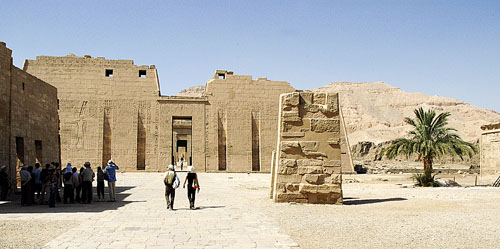
It is easy to bypass he temple at Medinet Habu when visiting the Valley of the Kings at Thebes (Luxor), Egypt. The site is definitely worth a visit.

Entrance to Medinet Habu temple. Photo by Ferrell Jenkins.

Entrance to Medinet Habu temple. Photo by Ferrell Jenkins.

Rameses III reigned from 1186 to 1155 B.C. Structures built by the Pharaoh to serve as an administrative complex and funerary temple may still be visited today at Medinet Habu. The most interesting aspects of the temple to me are the reliefs of the Sea Peoples that the king claims to have subjugated. We usually understand that the Philistines of the Old Testament were Sea People. The five major cities of the Philistines were Ashdod, Gaza, Ashkelon, Gath, and Ekron (1 Samuel 6:17).

This photo from the British Museum is a cast of one of the Sea Peoples (Philistines).

British Museum cast of one of the Sea People. Photo by Ferrell Jenkins.

British Museum cast of one of the Sea People. Photo by Jenkins.

118th Pyramid Found at Saqqara

A pyramid believed to be the tomb of Queen Sesheshet, the mother of Pharaoh Teti, has been discovered below 23 feet of sand near Saqqara. The pyramid, dating to about 2300 B.C., is the second pyramid found this year. It is the 118th pyramid discovered in Egypt.

Read a news release here. National Geographic News includes photos and a video here. Zahi Hawass, secretary general of Egypt’s Supreme Council on Antiquities is quoted as saying, “I always say you never know what the sands of Egypt might hide.”

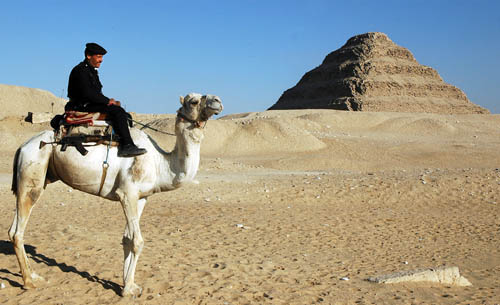
Tourists typically visit the Step Pyramid of Zoser (or Djoser) at Saqqara. This oldest freestanding stone building in the world is dated to about 2600 B.C., and is the work of the vizier and physican Imhotep.

Step Pyramid of Zoser at Saqqara. Photo by Ferrell Jenkins.

Step Pyramid of Zoser at Saqqara. Photo by Ferrell Jenkins.

These pyramids, and those of Giza, were built long before any of the biblical characters made their way to Egypt. It is conceivable that Joesph and Moses would have been familiar with these pyramids.

Then Pharaoh named Joseph Zaphenath-paneah; and he gave him Asenath, the daughter of Potiphera priest of On, as his wife. And Joseph went forth over the land of Egypt. (Genesis 41:45 NASB)

Moses was educated in all the learning of the Egyptians, and he was a man of power in words and deeds. (Acts 7:22 NASB)

Iron Age stele speaks of soul apart from body

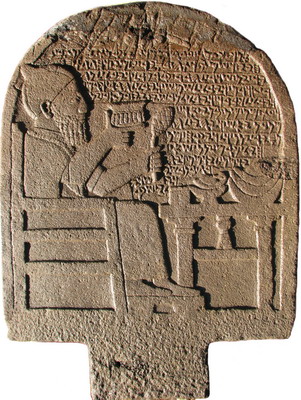
The New York Times reports here on the discovery of an interesting stele at Sam’al/ Zincirli (ZIN-jeer-lee), an ancient site in southeastern Turkey.

In a mountainous kingdom in what is now southeastern Turkey, there lived in the eighth century B.C. a royal official, Kuttamuwa, who oversaw the completion of an inscribed stone monument, or stele, to be erected upon his death. The words instructed mourners to commemorate his life and afterlife with feasts “for my soul that is in this stele.”
…..
“Normally, in the Semitic cultures, the soul of a person, their vital essence, adheres to the bones of the deceased,” said David Schloen, an archaeologist at the university’s Oriental Institute and director of the excavations. “But here we have a culture that believed the soul is not in the corpse but has been transferred to the mortuary stone.”

A translation of the inscription by Dennis Pardee, a professor of Near Eastern languages and civilization at Chicago, reads in part: “I, Kuttamuwa, servant of [the king] Panamuwa, am the one who oversaw the production of this stele for myself while still living. I placed it in an eternal chamber [?] and established a feast at this chamber: a bull for [the god] Hadad, a ram for [the god] Shamash and a ram for my soul that is in this stele.”

Here is a photograph of the stele provided by the University of Chicago.

University of Chicago.

Stele from Zincirli in which the king says that his soul is in this stone. Photo: University of Chicago.

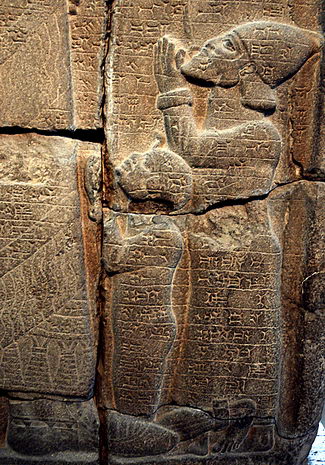
A well known monuments discovered at Zincirli in 1888 depicts the Assyrian king Esarhaddon holding ropes leading to Tirhakah, king of Egypt and Ethiopia [Cush], and Ba’alu of Tyre. Tirhakah is the kneeling figure with negroid features befriended King Hezekiah of Judah against the Assyrians (2 Kings 19:9). The photo below shows the two captives on the lower portion of the stele. It is now displayed in the Pergamum Museum in Berlin.

Esarhaddon stele showing Tirhakah and the king of Tyre. Photo by Ferrell Jenkins.

Esarhaddon stele showing Tirhakah and the king of Tyre. Photo by Ferrell Jenkins.

Archaeologist thinks he has located Shaaraim

To most folks this probably evokes a yawn. To me it is exciting. We have reported earlier here and here about the excavation at Khirbet Qeiyafa, a site overlooking the Elah Valley. The San Francisco Chronicle, in an article by Matthew Kalman, reports that Prof. Garfinkel will announce today that he has found the site of the biblical city of Shaaraim (this is the way popular English versions transliterate the Hebrew word).

For 3,000 years, the 12-foot high walls of an ancient city have been clearly visible on a hill towering above the Valley of Elah where the Bible says David slew Goliath.

But no one has ever linked the ruins to the city mentioned in the First Book of Samuel’s famous account of the legendary duel and the victory of the Israelites – until now. On Tuesday, Hebrew University archaeology Professor Yosef Garfinkel will present compelling evidence to scholars at Harvard University that he has found the 10th century biblical city of Sha’arayim, Hebrew for “Two Gates.” Garfinkel, who made his startling discovery at the beginning of this month, will also discuss his findings at the American Schools of Oriental Research conference hosted by Boston University on Thursday.

Garfinkel believes the city provides evidence that King David ruled a kingdom from his capital of Jerusalem. Some modern scholars have questioned the biblical account of David’s kingdom and even whether he existed. Although it is not clear how the Sha’arayim relates to David, Garfinkel says finding a Judean city along the ancient highway to Jerusalem that appears to have been a fortress on the western border with the Philistines indicates a kingdom with a developed political and military organization that was powerful enough to include a major fortified city.

The Bible makes reference to Shaaraim in the following verses:

  • Joshua 15:36 – a town of Judah.
  • 1 Samuel 17:52 -After David’s defeat of Goliath, “the wounded Philistines fell on the way from Shaaraim as far as Gath and Ekron” (ESV).
  • 1 Chronicles 4:31 – belonged to the descendants of Simeon until the reign of David.

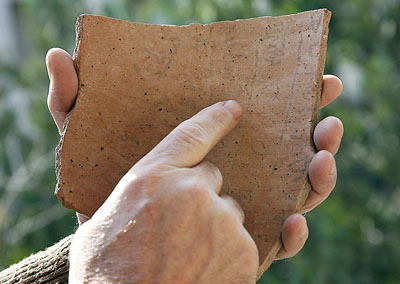
This photograph of the ostracon is found at the Qeiyafa Ostracon Chronicle web page. Only 10 of 50 words on the shard have yet been read.

Qeiyafa Ostracon. Photo by G. Laro.

Qeiyafa Ostracon. Photo by G. Laro.

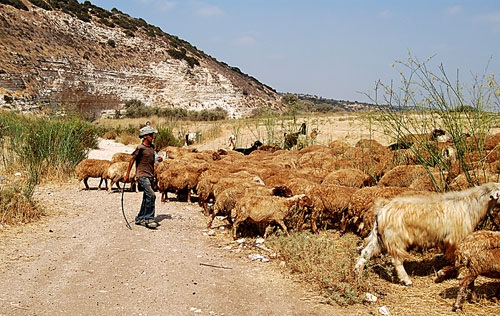
Check the Elah Fortress web page for a nice high res. promotional video. The video claims that the Bedouin who tend their sheep in the area call the ruin Khirbet Daoud (Ruin of David).

Bedouin shepherd in the Elah brook in the area below Khirbet Qeiyafa, Elah Fortress, or Khirbet Daoud. Photo by Ferrell Jenkins.

Bedouin shepherd in the Elah brook in the area below Khirbet Qeiyafa, Elah Fortress, or Khirbet Daoud. Photo by Ferrell Jenkins.

The Importance of Water in the Bible World

Dr. Claude Mariottini, Professor of Old Testament at Northern Baptist Seminary, has shared two good articles on the importance of water in the development of civilization. These are worthwhile post, and I urge you to take time to read both of them.

The first article is here.

The second article is here.

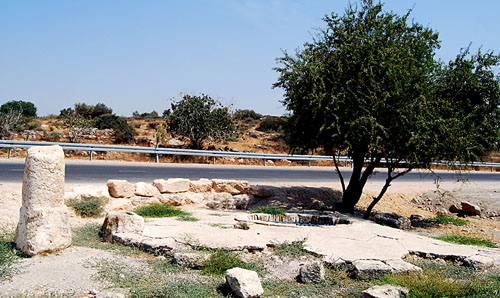
The photo below was made a Beit Guvrin (near Old Testament Mareshah). It shows a well for water, a tree for shade, and a milestone (which has been moved from the general area to this place.

A well, shade, and milstone at Beit Guvrin. Photo by Ferrell Jenkins.

A well, shade, and milstone at Beit Guvrin. Photo by Ferrell Jenkins.

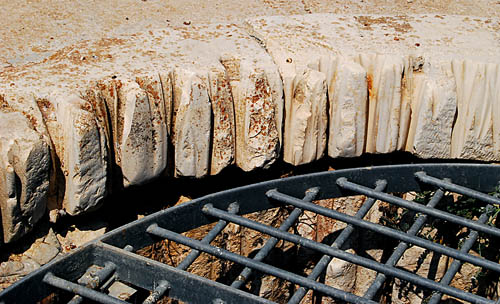
The next photo shows how ropes pulling water from the well cut grooves in the soft stone from which the curb was made.

Grooves cut in the well curb. Photo by Ferrell Jenkins.

Grooves cut in the well curb. Photo by Ferrell Jenkins.

There are many accounts in the Bible showing the importance of such a place as this. Note a few.

  • Hagar and Ishmael (Genesis 21:19).
  • David craved the water from the well at Bethlehem (2 Sam. 23:15-17).
  • The figurative use in Proverbs 5:15 and Song 4:15.
  • The Samaritan woman at Jacob’s well (John 4).

“Honor to whom honor” on Veteran’s Day

After a significant battle some of David’s men suggested that those who were not actually in the battle should not share any of the spoils that were recovered. David responded this way:

“You shall not do so, my brothers, with what the LORD has given us. He has preserved us and given into our hand the band that came against us.Who would listen to you in this matter? For as his share is who goes down into the battle, so shall his share be who stays by the baggage. They shall share alike.” (1 Samuel 30:23-24 ESV)

Our photo shows the latest in communication equipment used at Normandy in 1944.

Communications was important in World War II. Photo by Ferrell Jenkins.

Communications was important in World War II. Photo by Ferrell Jenkins.

New photo header

The new header shows one of the streets in the temple area at the ancient Hittite capital of Hattusas (now Bogazkale in Turkey). The Hittites are mentioned more than 40 times in the Old Testament.

Khirbet Qeifaya (Elah Fortress) summary

The Hebrew University of Jerusalem has posted a nice summary of the information about what they are calling the Elah Fortress at Khirbet Qeifaya here.

The article title is “Earliest Known Hebrew Text in Proto-Canaanite Script Discovered.” Every indication from this release is that the site is considered as a Judeah fortress. Here are three paragraphs from the release.

How do we know this is a Judean fortress?
The early Hebrew ostracon, Judean pottery similar to that found at other Israelite settlements, and the absence of pig bones among the animal bones found at the site all point to this fortress being a city of the Kingdom of Judea.

Elah Fortress proof of United Monarchy
The Elah Fortress archaeological site could prove the existence of the United Monarchy, which scholars often question ever existed. The artifacts found at the site thus far all indicate that there was most likely a strong king and central government in Jerusalem – earlier than any discovered until now – rather than a number of small villages scattered throughout Judea. This would verify descriptions and narratives found in Samuel and Chronicles.

Over 100 jar handles bear distinct impressions which may indicate a link to royal vessels. Such a large quantity of this feature found in one small locale is unprecedented.

Archaeo-politics run deep in Israel! I suggest you read the entire article.

HT: Joseph I. Lauer