Category Archives: New Testament

Men who honor themselves. Exhibit one: Absalom

Both Old Testament and New Testament provide illustrations of men who honor themselves, and the folly of doing so. The elder John wrote of a man named Diotrephes “who loves to be first” among his brethren (3 John 1:9).

In the Old Testament no case is more prominent than that of Absalom the rebellious son of David.

Now Absalom in his lifetime had taken and set up for himself a pillar which is in the King’s Valley, for he said, “I have no son to preserve my name.” So he named the pillar after his own name, and it is called Absalom’s Monument to this day. (2 Samuel 18:18 NAU)

In earlier times it was common for pilgrims to the Holy Land to be told that this or that structure belonged to a certain Biblical character or event.  I will show you one such example.

The photo below was made in the Kidron Valley with a view to the south. On the right you see the eastern wall of the Old City of Jerusalem. On the left of the photo, where the valley becomes narrow, you can see the top of the monument called Absalom’s Pillar. An image suitable for presentations is available here. This photo would look good in PowerPoint. There is room on the upper left side sky to include appropriate scriptures.
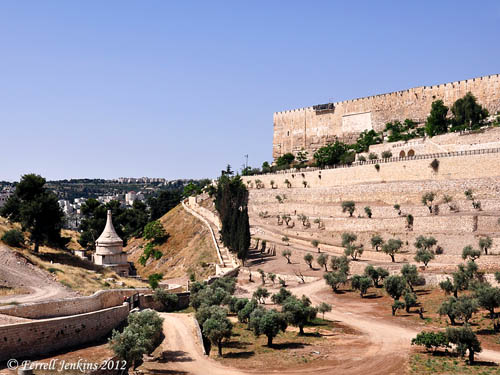
Kidron Valley View South. Absalom's Pillar on left. Wall of Jerusalem on right. Photo by Ferrell Jenkins.

Kidron Valley view to the south. Photo by Ferrell Jenkins.

In AD 1170 Benjamin of Tudela associated this monumentsin the Kidron Valley with the monument of Absalom. The monument actually belongs to the early first century B.C., and not to the time of Absalom. It is a funerary monument in front of an eight-chambered tomb.

A closeup view of the monument may be seen in the following photo.
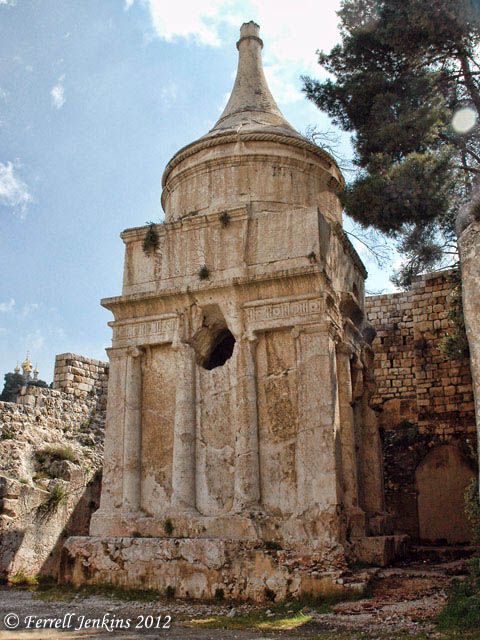
Absalom's Pillar. Photo by Ferrell Jenkins.

Absalom's Pillar. Photo by Ferrell Jenkins.

Soon I plan to explain what this monument might have to do with Zacharias, the father of John the Baptist.
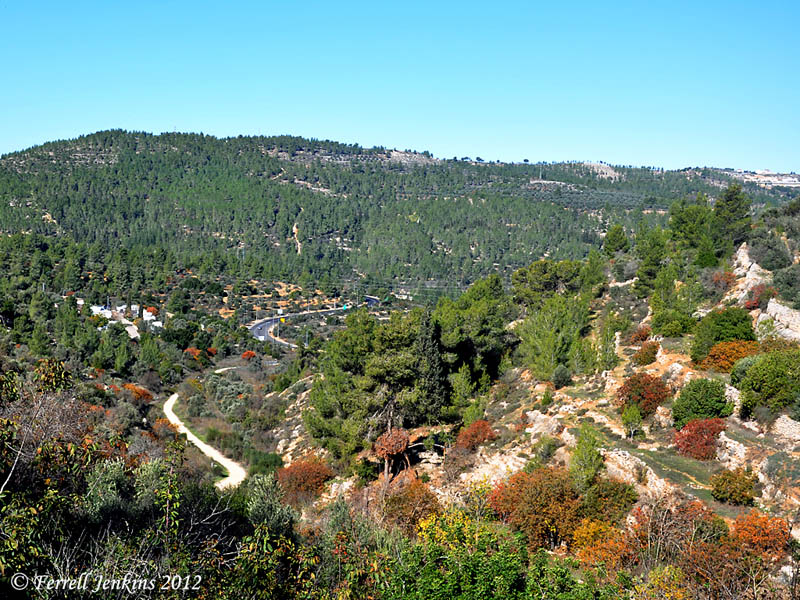
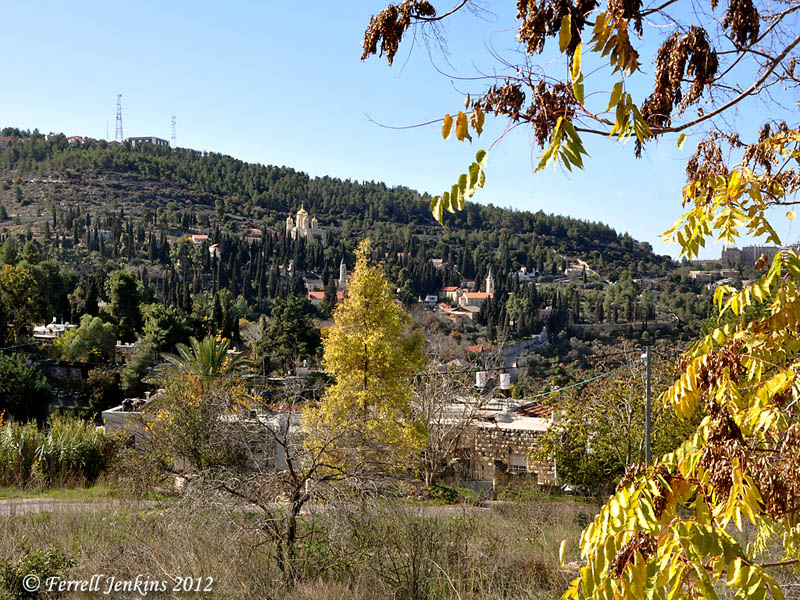
En Karem (Ain Karim) — traditional home of John the Baptist

Tradition has it that John the Baptist was born in En Karem (or Ain Karim) in the hill country of Judea. According to Shimon Gibson, the earliest document linking John to En Karem is a legendary account dated to A.D. 385-395 (The Cave of John the Baptist, 30). In that account En Karem is said to be “in the mountain” and with a “spring of water” (31). From the sixth to the eighth centuries the traditions multiply.

En Karem is about 5 miles west of Jerusalem. This photo shows a general view of the hill country of Judea. En Karem is in the valley below.

The vicinity of En Karem in the hill country of Judea. Photo by Ferrell Jenkins.

The vicinity of En Karem in the hill country of Judea. Photo by Ferrell Jenkins.

Luke provides the account of the announcement of the birth of John, Mary’s visit to Elizabeth the mother of John, and the birth of John (Luke 1). It is interesting that Luke prefaces the announcement of the birth to Zacharias by saying that it was “in the days of Herod, king of Judea” (Luke 1:5).

No specific town is mentioned, but Luke says that Mary visited Elizabeth in the hill country of Judah.

Now at this time Mary arose and went in a hurry to the hill country, to a city of Judah, and entered the house of Zacharias and greeted Elizabeth. (Luk 1:39-40 NAU)

The biblical text says that after the birth of John,

Fear came on all those living around them; and all these matters were being talked about in all the hill country of Judea. (Luke 1:65 NAU)

In the next view we see several churches. The one right of center with the single tower is known as the Church of St. John the Baptist. A church was built at this site as early as the 5th century A.D.

Several churches are visible in this view of En Karem. Photo by Ferrell Jenkins.

Several churches are visible in this view of En Karem. Photo by Ferrell Jenkins.

Free Ebook on Ephesians

Baker Academic announces a series of ebook shorts from Robert H. Gundry. Last week the Commentary on Mark was given away. Today only, the Commentary on Ephesians is available free. Baker Academic E-NOTES says,

Baker Academic is proud to announce new ebook shorts from Robert H. Gundry.

In these verse-by-verse commentaries taken from Commentary on the New Testament, Robert Gundry offers a fresh, literal translation and a reliable exposition of every book of the New Testament.

Students and scholars will welcome Gundry’s nontechnical explanations and clarifications, and readers at all levels will appreciate his sparkling interpretations. Priced from $1.99 to $5.99 these affordable and convenient resources are available wherever ebooks are sold.

As we celebrate the release of this series, Baker Academic will be making selected entries from this commentary series free for one day only.

This will be followed by other selections for free download on January 16th and 23rd.

Here is the direct link to the free ebook.

Do you need a Kindle? Click on the link below to check the selections.
Kindle Fire, Full Color 7″ Multi-touch Display, Wi-Fi.

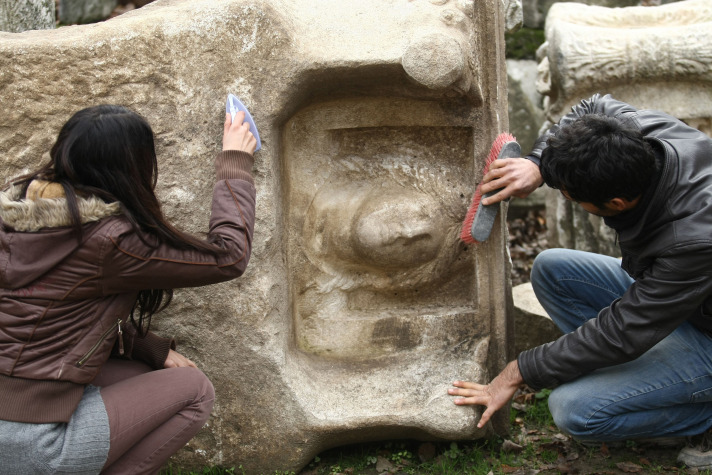
Bust of king from Hellenistic Period found in Turkey

The country of Turkey now occupies the territory of ancient Asia Minor. It is filled with Greek and Roman ruins — especially in the western area and along the Mediterranean coast. Archaeological excavations are active in the country.

Today’s Zaman, a Turkish newspaper, reported on January 4 the discovery of the relief bust of a king from the Hellenistic period. We are given no hint regarding the identity of the king. We know that Alexander of Macedon crossed Asia Minor in the 4th century B.C. From that time the Greeks had a great influence on the country. Later, in the Roman period this would be the territory visited by Paul on his preaching journeys.

Relief bust of Hellenistic king discovered in Turkish excavation.

Relief bust of Hellenistic king discovered in Turkish excavation. Today's Zaman.

Today’s Zaman says,

A 2,000-year-old relief bust of a king was discovered during excavations in ancient Stratonikeia in Muğla’s Yatağan district.

Dr. Bilal Söğüt, a professor of archeology at Pamukkale University and head of the excavations, told the Anatolia news agency that they found a street in the ancient city which began with a gate and was lined with columns. During their excavations, they also discovered the bust of a king dating back to the Hellenistic period. The bust, which is one-and-a-half meters tall and nearly two meters wide, features depictions of bull heads and the figure of a goddess, Söğüt said.

“The depictions of bull heads on the bust represent wealth and power. It was in this region that we previously found a racing chariot. The discovery of 1,500-year-old mosaics here was another welcome breakthrough for us,” he said.

Stratonikeia is located in the southwestern region of Turkey. The excavation is under the direction of professor from Pamukkale, a site known as Hierapolis in the New Testament (Colossians 4:13).

The entire article may be read here.

New theory on rare Second Temple “seal”

Recently we reported the discovery of a rare Second Temple inscription seal here. The original announcement said the inscription was inscribed with an Aramaic inscription which could be translated “Pure for G-d.”

Rare Second Temple Inscription Seal. IAA photo by Vladimir Naykhin.

Rare Second Temple Inscription Seal. IAA photo by Vladimir Naykhin.

It is not surprising to learn that not all scholars agree with the reading. The Israeli newspaper Ha’aretz calls attention to the theory of Prof. Shlomo Naeh, of the Hebrew University’s Talmud department, who says the inscription calls attention to the type of sacrifice purchased for offering.

Naeh also believes the object is related to Temple worship and purity, but reads the inscription differently, as “Dakar a Leyehoyariv.” Dakar in Aramaic means ram and a stands for aleph, the first day of the week, when the priestly order of Yehoyariv was on duty in the Temple.

Thus, the object was used in Temple worship, but not how Reich and Shukron believe it was, says Naeh. To ensure the purity of animal sacrifices offered in the Temple — and to maintain an economic monopoly, Naeh believes — pilgrims had to buy their offerings in the Temple courts. They gave money to a treasurer who would exchange it for a token inscribed with the type of sacrifice they had purchased and the date.

Like Reich and Shukron, Naeh supports his theory with a mishnaic verse citing the existence of such tokens. With regard to Reich and Shukron’s interpretation, he said: “Purity was very fluid; the touch of an impure person was enough to make the object impure, so it is unlikely such a seal existed.”

He also said the object could not be a seal because it lacked a hole for a thread or a handle to affix it to another object.

The full article in Ha’aretz may be read here.

Jesus and the funeral procession at Nain

The town of Nain is mentioned only once in the New Testament.

Soon afterward Jesus went to a town called Nain, and his disciples and a large crowd went with him. (Luke 7:11 NET)

In the full account, Luke (7:11-17) reports that as Jesus approached the town gate a funeral procession was in progress. When Jesus saw the widow He had compassion and told her to stop weeping. Luke, the physician (Colossians 4:14), reports that Jesus touched the bier and said, “Young man, I say to you, get up!” Then, as a simple matter of fact, Luke says,

So the dead man sat up and began to speak, and Jesus gave him back to his mother. (verse 15)

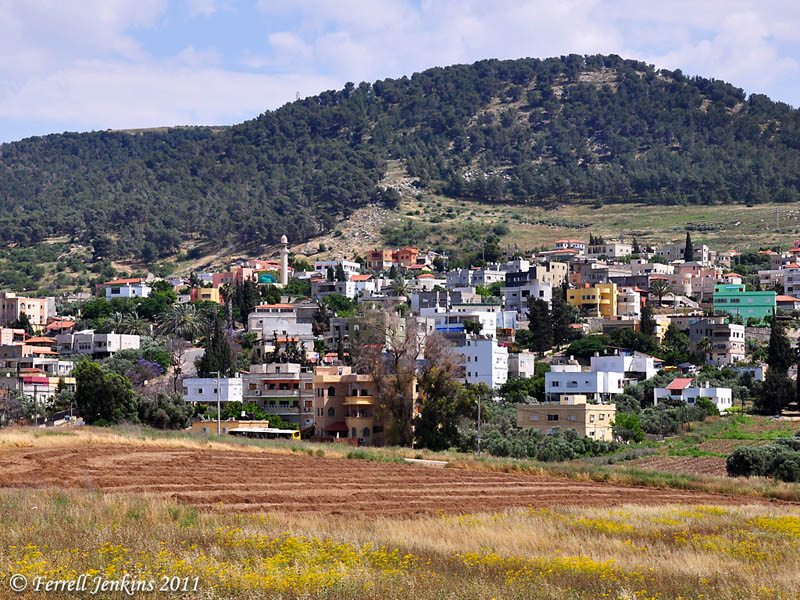
Nain is identified with the Arab village of Nein on the north slope of the Hill of Moreh. Nein is said to mean pleasant. Nain was a city of Issachar in Old Testament times. Here is a photo I made of the little Arab village last May.

The Village of Nain on the north slope of the Hill of Moreh. Photo by Ferrell Jenkins.

The Village of Nein on the north slope of the Hill of Moreh. Photo by Ferrell Jenkins.

Ralph Earle describes the pleasant location of Nain.

The town of Jesus’ day may have stood higher on the hill than the present village. It probably was named for the pleasant view that the site affords across the plain of Esdraelon. To the west one can see Mt. Carmel, and to the north the hills behind Nazareth stand out, about 9½ km [6 mi] away. To the northeast one can look past nearby Tabor (3 km [2 mi] away) to snowcapped Mt. Hermon in the distance. Southward lies Mt. Gilboa. (The International Standard Bible Encyclopedia, Revised, 3:480)

Our new header, which we will use for a while, is a 3-image panorama of Nain and the north side of the Hill of Moreh.

Five Day Bible Reading Program for 2012

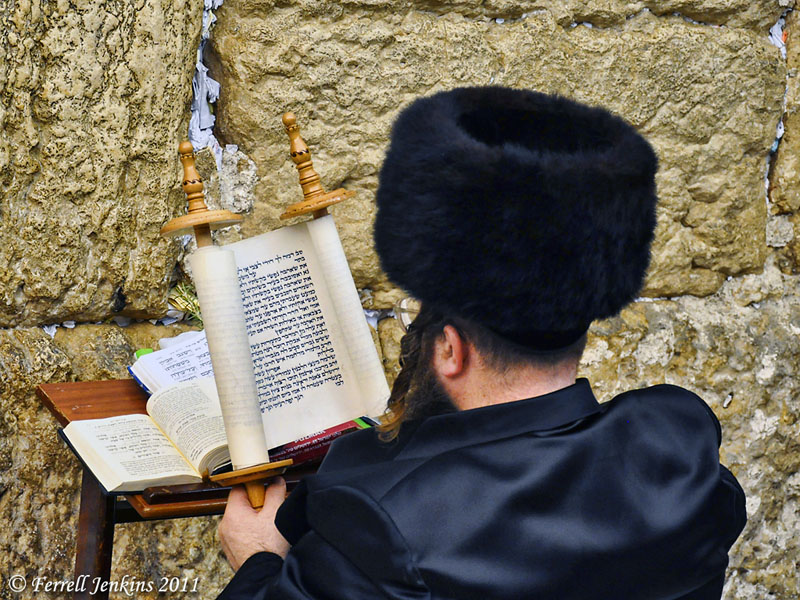
Mark Roberts (the Irving, TX one) is making his Five Day Bible Reading Program for 2012 available free of charge this year. This is an excellent program for reading through the entire Bible in a year. For a copy of the schedule that you can print on a single sheet of paper (front and back), click here.

Reading the Bible at the Western Wall. Photo by Ferrell Jenkins.

Reading the Bible at the Western Wall. Photo by Ferrell Jenkins.

A few Scriptures on the subject of Bible reading seem appropriate:

…and the scroll of the prophet Isaiah was given to him [Jesus]. He unrolled the scroll and found the place where it was written…, (Luke 4:17 NET)

…and [the Ethiopian court official] was returning home, sitting in his chariot, reading the prophet Isaiah. (Acts 8:28 NET)

You [Timothy], however, must continue in the things you have learned and are confident about. You know who taught you  and how from infancy you have known the holy writings, which are able to give you wisdom for salvation through faith in Christ Jesus.  Every scripture is inspired by God and useful for teaching, for reproof, for correction, and for training in righteousness,  that the person dedicated to God may be capable and equipped for every good work. (2 Timothy 3:14-17 NET)

The Reading Program is also available for the Kindle (or iPad) this year. Details are on the page linked above.

While you are in the neighborhood, take a look at some of the material at Mark’s BibleClassMaterial.com.

Was Jesus born in winter?

One of my readers left a comment on facebook saying the Bible indicates that Jesus was “born in winter.” She added, “That could be anytime between mid-October and mid-March.” Another reader said, ” I didn’t know the Bible said he was born in winter — I know shepherds were grazing their sheep when he was born…does this happen in winter in that part of the world?”

I am not aware of any suggestion in the Bible regarding the time of the year when Jesus was born. Luke tells us that shepherds were out in the field at the time.

And in the same region there were shepherds out in the field, keeping watch over their flock by night. (Luke 2:8 ESV)

Some writers have suggested that the birth was not likely in December. They say that shepherds did not watch flocks by night during December. In my outline study about Christmas, available here, I have a quotation by the late Dr. William Arndt, (of Bauer, Danker, Arndt, Gingrich fame) replying to this suggestion:

“Scholars have pointed out that the considerably lower altitude of the field may not be without significance, but may explain why even in winter shepherds would not find these fields too cold for their flocks.”  (From the Nile to the Waters of Damascus, p. 52)

In fact, when I first began traveling to Israel and Jordan in the mid-60s it was common for Bedouin shepherds to move with the seasons. In the summer we would see them in the mountains of Lebanon. In winter months they would move to warmer, desert areas. Today, we find many Bedouin shepherds watching their sheep on the eastern slopes year round, including the winter months.

The temperature around Jerusalem and Bethlehem is fairly temperate in the winter. Only a small amount of rain falls on the eastern slopes of the central mountain range. Both Jerusalem and Bethlehem are located on this ridge. We have written about the watershed ridge here and here.

The average monthly temperature for Jerusalem ranges from 47° to 56°. Rain can make it chilly.

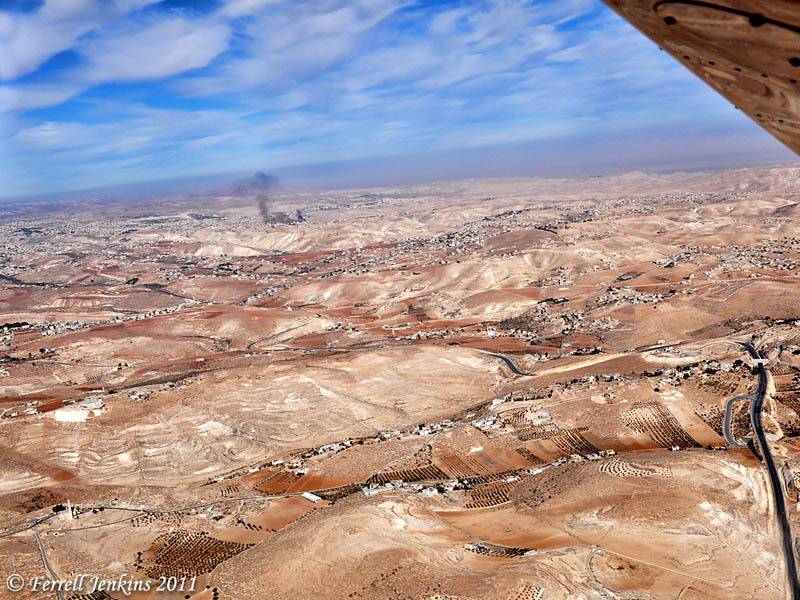
The photo below provides an aerial view from over the Herodium (about 3 miles east of Bethlehem). This illustrates the terrain where shepherds might care for their flocks.

View east toward the Dead Sea and the the land of Moab in Jordan from over the Herodium. Photo by Ferrell Jenkins.

View east toward the Dead Sea and the the land of Moab in Jordan from over the Herodium. Photo by Ferrell Jenkins.

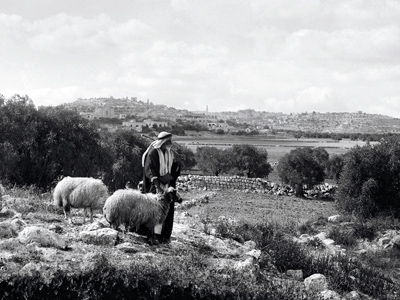
The American Colony and Eric Matson Collection of photos includes some photos of shepherds with their flocks in the Bethlehem area on Christmas day. (Information about the collection is available at LifeintheHolyLand.com.) The photo below was made sometime between 1898 and 1946. It was taken either by the American Colony Photo Department or its successor, the Matson Photo Service.

Shepherds with sheep on Christmas day. Bethlehem on the ridge. Photo: LifeintheHolyLand.com.

Shepherds with sheep on Christmas day. Bethlehem is on the ridge. Photo: LifeintheHolyLand.com.

I am not saying that Jesus was born in December. Only that the common misunderstanding about Bethlehem winters is based on our lack of knowledge about the local terrain.

Discovery of rare Second Temple inscription announced

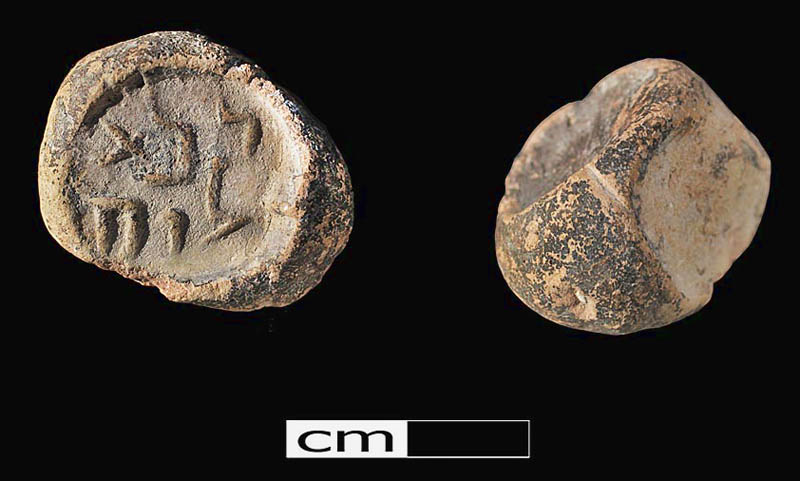
Announcement was made by the Israel Antiquities Authority in Jerusalem today of the recent discovery of an inscribed “seal” bearing a shortened version of the name of God (Yahweh).

The small fired clay object was discovered from the soil collected during the recent excavations at the southwest corner of the temple mount enclosure which we mentioned here about a month ago.

"Pure for G-d" Inscription Seal. IAA photo by Vladimir Naykhin.

"Pure for G-d" Inscription Seal. IAA photo by Vladimir Naykhin.

A portion of the press release by the IAA reads,

Layers of soil covering the foundations of the Western Wall, c. 15 meters north of the southwestern corner of the Temple Mount, were excavated beneath Robinson’s Arch in archaeological excavations of the Israel Antiquities Authority in the Jerusalem Archaeological Garden. On top of these layers, dating to the first century CE (the late Second Temple period), was paved the Herodian street which was the main road of Jerusalem at that time. From the very start of the excavations in this area the archaeologists decided that all of the soil removed from there would be meticulously sifted (including wet-sifting and thorough sorting of the material remnants left in the sieve). This scientific measure is being done in cooperation with thousands of pupils in the Tzurim Valley National Park, and is underwritten by the ʽIr David Association. It was during the sieving [sifting] process that a tiny object of fired clay, the size of a button (c. 2 centimeter in diameter [about 3/4 of an inch]) was discovered.

The Aramaic inscription, consisting of two lines, has the word for pure, a preposition and a shortened form of the word for G-d. Jews do not write the name of God. Many of our English versions of the Bible use the word LORD for the translation of the Tetragrammaton YHWH. The short form on this object has only YH.

The excavators, Elie Shukron and Ronny Reich, explain,

“The meaning of the inscription is “Pure for G-d”. It seems that the inscribed object was used to mark products or objects that were brought to the Temple, and it was imperative they be ritually pure. This stamped impression is probably the kind referred to in the Mishnah (Tractate Shekalim 5: 1-5) as a “חותם” (seal). To the best of our knowledge, this is the first time that such an object or anything similar to it was discovered in an archaeological excavation and it constitutes direct archaeological evidence of the activity on the Temple Mount and the workings of the Temple during the Second Temple period”.

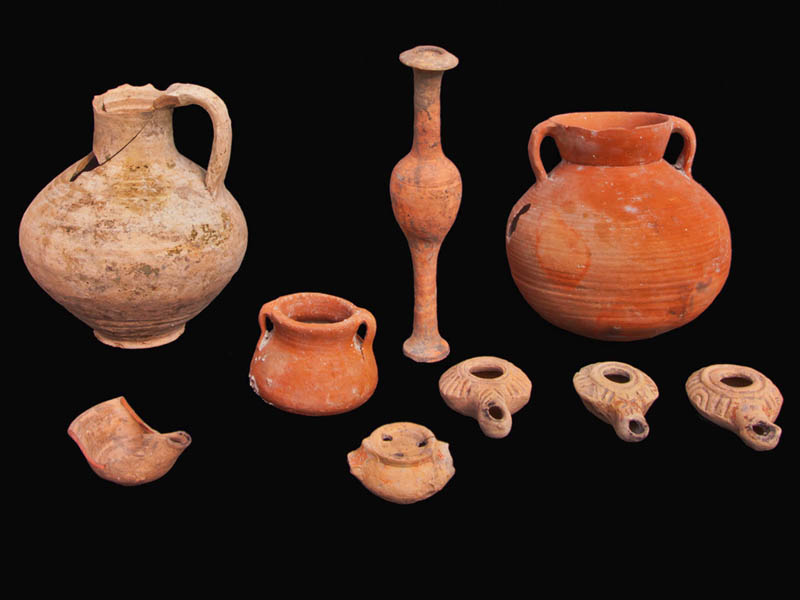
Other artifacts dating to the Second Temple period included some from the Hasmonean Period. In the photo below you will see “oil lamps, ceramic cooking pots and a fusiform juglet [the object in the top middle] that may have contained oils and perfume.” Coins minted in the days of Alexander Jannaeus (102-76 B.C.) and John Hyrcannus (135-104 B.C.) were also discovered.

The complete IAA Press Release may be read here.

Second Temple (Hasmonean Period) vessels. IAA photo by Vladimir Naykhin.

Second Temple (Hasmonean Period) vessels. IAA photo by Vladimir Naykhin.

Just a suggestion. Perhaps a seal such as the one mentioned above would have been used in the case mentioned by Jesus in the Sermon on the Mount.

So if you are offering your gift at the altar and there remember that your brother has something against you, leave your gift there before the altar and go. First be reconciled to your brother, and then come and offer your gift.  (Matthew 5:23-24 ESV)

HT: Joseph Lauer

Jesus visited Jerusalem during Hanukkah

The Gospel of John records more visits to Jerusalem by Jesus than any other of the Gospels. John is the only one to record the visit during the Feast of Dedication.

At that time the Feast of Dedication took place at Jerusalem. It was winter,  and Jesus was walking in the temple, in the colonnade of Solomon. (John 10:22-23 ESV)

BDAG translates the Greek term egkainia as “festival of rededication.” The feast is also known as Hanukkah and the Feast of Lights.

What is he Feast of Dedication? This feast, observed on the 25th of Kislev (roughly our December), had its origin in the period between the testaments. The desecration of the temple by the Seleucid ruler Antiochus Epiphanes took place in 168 B.C. The climax of the Maccabean revolt was the removal of all evidences of pagan worship from the temple. An eight day feast of dedication was observed in 165 B.C., and continued to be observed annually by the Jews.

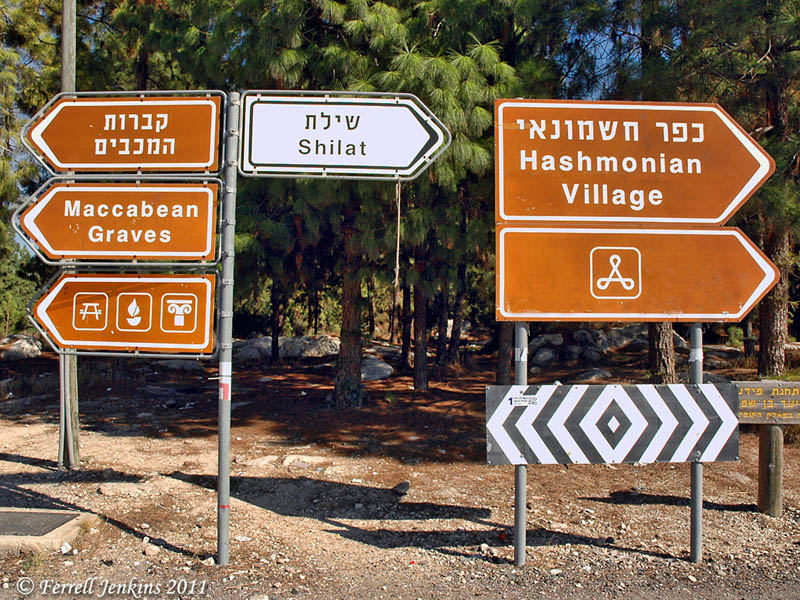
At Modin, a village north-west of Jerusalem, on the way from Jerusalem to Lod, the Syrians tried to force an old priest by the name of Mattathias to offer a pagan sacrifice. The priest refused but another Jew volunteered to offer the sacrifice. Mattathias killed his fellow Jew and the Syrian officer. As word spread, Mattathias became a national hero. He was of the family of Hasmon (or Asmoneus). Thus began the Hasmoneans.

The discovery of a burial cave at Modin thought to have been used by the Maccabees and/or their descendants was reported in November, 1995. There are Israeli scholars who argue that this is not the true grave of the Maccabees. A recent article in Haaretz says,

Amit Re’em, an archaeologist of the Israel Antiquities Authority says all the evidence points to the fact that these graves are of Christians and pagans and that this burial site actually belongs to an ancient monastery.

Read the Haaretz article here.

Near Modin, signs point to the Maccabean Graves. Photo by Ferrell Jenkins.

Near Modin, signs point to the Maccabean Graves. Photo by Ferrell Jenkins.

Even though the Feast of Dedication was not a feast authorized by the Mosaic Law, it became part of the Jewish heritage, and Jesus came to Jerusalem at that time — at least once.

Jesus cleansed the Temple on two distinct occasions. The first time is recorded in John 2:14-22. The second account is recorded in Matthew 21:12-13; Mark 11:15-18; and Luke 19:45-48.