Category Archives: Israel

Books for self and others # 2 – four from Carta Jerusalem

Recently I received two packages of books from Shay Hausman, president & CEO of Carta Jerusalem. Each package included two books I needed or wanted. Far back I have called attention to some of the excellent Carta publications. I will make a list to those posts at the bottom of this one.

R. Steven Notley wrote the New Testament portion of The Sacred Bridge, an excellent book too comprehensive and expensive for the average non-trained Bible student. The material was published in an abridged edition without all of the scholarly notes in a work entitled Carta’s New Century Handbook and Atlas of the Bible.

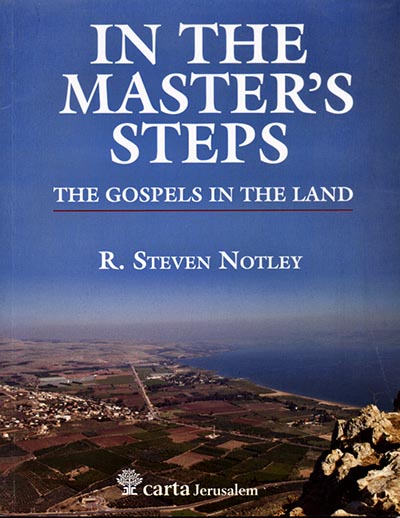
Now Carta has published some of the New Testament material is a new format. This book by R. Steven Notley is entitled In the Master’s Steps: The Gospels in the Land (The Carta New Testament Atlas). The book of 9 chapters plus preface and index covers the ministry of Jesus from His Birth to the Resurrection and Ascension. It has lavish drawings, photos, and maps to assist the Bible student. And it has print large enough for older readers to enjoy. (Just ask me!) Those who have visited the proposed site of Bethsaida may already know that Notley has taken exception to the identification of the site of et-Tell with the home of Peter, Andrew, and Philip (John 1:44). In this new work you will be able to examine his evidence and draw your own conclusions.  I am pleased to recommend this excellent paperback.

Notley, In the Master's Steps.

Notley, In the Master’s Steps: The Gospels in the Land.

The second new book by R. Steven Notley is Jerusalem: City of the Great King. This book of 112 pages has 10 chapters. The work begins with the Pre-Herodian History and develops the history of the city with the greater portion of the material being devoted to Jerusalem at the time of Christ. A short section that caught my attention deals with “The Myth of an Essene Quarter.”

I saw Prof. Notley browsing the book exhibits at the Society of Biblical Literature meeting in Atlanta a few weeks ago. Having met him at a previous annual meeting I spoke. He pulled a copy of this next book from his briefcase and showed it to me. When I asked if this was mostly the content of the larger atlas he said that they were criticized for not including enough material on Jerusalem. This book, he said, was to remedy that situation. He stated that there are more books to come.

This book is a good one for most anyone studying portions of the Bible with their setting in Jerusalem. It is especially helpful for those studying the ministry of Jesus.
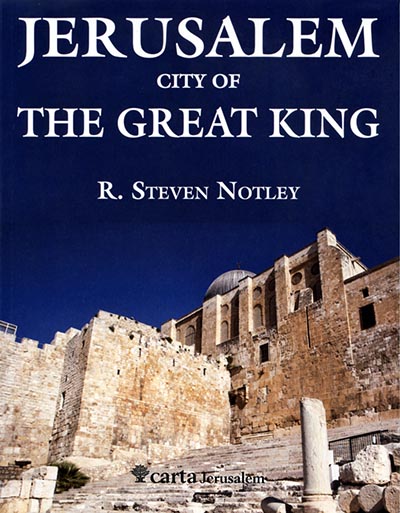
Notely, Jerusalem City of the Great King

Notely, Jerusalem City of the Great King

The next book is smaller, being only 40 pages. Understanding the Boat from the Time of Jesus: Galilean Seafaring is written by Shelley Wachsmann. Those who have seen the Roman-era boat uncovered from the Sea of Galilee in 1986 will revel in the story told by Wachsmann who directed the excavation of the 2000 year old fishing boat. The story of this discovery, the excavation, and preparation of this boat for display at Nof Ginnosar is a fascinating one.
Understanding the Boat from the Time of Jesus
Understanding the Boat from the Time of Jesus

Understanding the Alphabet

Understanding the Alphabet


The final of these four books is Understanding the Alphabet of the Dead Sea Scrolls by Ada Yardeni. This is a valuable book for those interested in the Dead Sea Scrolls, the Hebrew Bible, and the Hebrew language. It occurs to me that anyone involved in calligraphy might find the book interesting. The book is filled with illustrations showing how to draw the alphabet of various scrolls and inscriptions.

Earlier references to Carta Jerusalem books.

Ritmeyer, The Temple Mount – a Carta Guide Book

Carta’s New Century Handbook and Atlas of the Bible

The links I have provided go to Amazon. The books are not as easily located in the United States as some other books, but you may be able to locate them elsewhere.
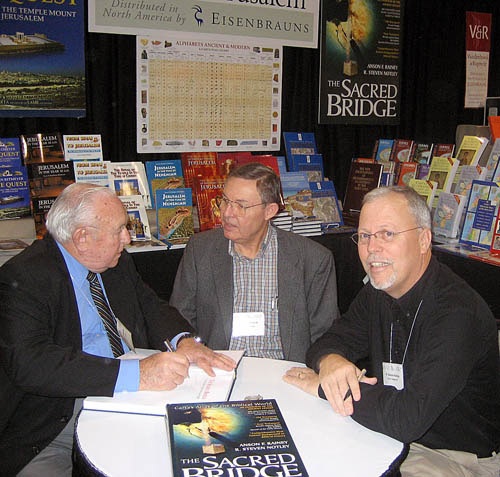
Anson Rainey, Ferrell Jenkins, and R. Steven Notley at SBL in 2006.

Anson Rainey (1930-2011), Ferrell Jenkins, and R. Steven Notley at SBL in 2006.

As mentioned above, these books were sent to me by the publisher. The comments represent my own opinion. Books purchased from Amazon through these links will net me a few cents per book. Nothing I think of as substantial. Happy reading.

Books for self and others — # 1

When you read good books and when you give good books to others, especially those who teach the Bible, you are doing a favor for several persons at one time.

During the past six months I have received several good books sent to me by authors or publishers who would like you to know about their publication. Normally I might have gotten to these publications much sooner, but due to two episodes of major disruptions to our home life I have gotten behind. One was the flooding of the house from a water line break resulting in disruption for three months. The other was due to a large fallen Laurel Oak limb that did considerable damage. We had two huge dying trees that had to be taken out. Add to that some family health issues and you will know my excuse for this delay.

Rather than writing a long review of each book I will list each with a few comments.

Make your Mark: Getting Right What Samson Got Wrong

The first book is Brad Gray’s Make Your Mark: Getting Right What Samson Got Wrong. Gray is a teaching pastor in Holland, Michigan, who has lived in Israel and traveled extensively in the Bible lands. I met him in Jerusalem back in May. This paperback of 194 pages deals with the four chapter of Judges (13-16) telling the story of Samson. Everyone who goes to Bible classes and church knows about Samson, but you will get a new understanding and appreciation of the episodes recorded here when you let Brad Gray explain the setting of the events.

Brad Gray, Make Your Mark.

Brad Gray, Make Your Mark.

The author’s acquaintance with the Bible lands, the relevant archaeological discoveries, and his engaging writing will help bring this section of Scripture to life.

Samson got a lot of things wrong, but author Gray says you can avoid his mistakes and get these things right in your life. This book is recommended for anyone teaching the book of Judges or anyone grappling with the serious issues of life.

Make Your Mark is published by Faith Words, which seems to be a division of Hachette (New York, Boston, Nashville), and is available in print and Kindle format.

This book was sent to be by the publisher at the request of the author. The comments here are my own.

Jesus in Jerusalem during Hanukkah

The Gospel of John records more visits to Jerusalem by Jesus than any other of the Gospels. John is the only one to record the visit during the Feast of Dedication.

At that time the Feast of Dedication took place at Jerusalem. It was winter,  and Jesus was walking in the temple, in the colonnade of Solomon. (John 10:22-23 ESV)

BDAG translates the Greek term egkainia as “festival of rededication.” The feast is also known as Hanukkah and the Feast of Lights.

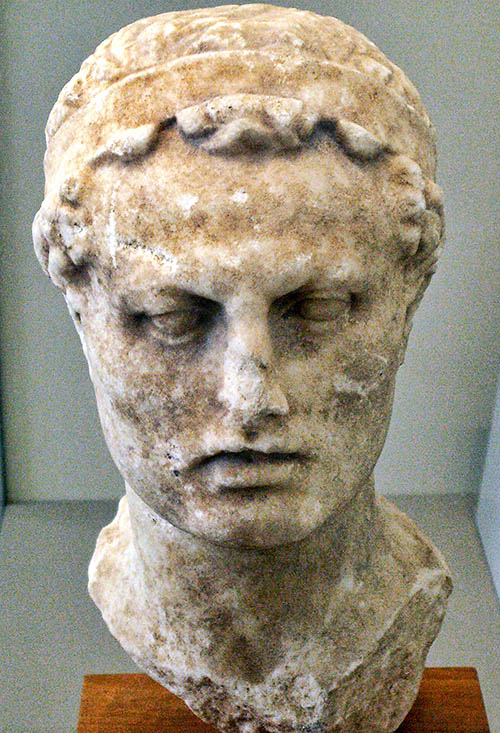
What is the Feast of Dedication? This feast, observed on the 25th of Kislev (roughly our December), had its origin in the period between the testaments. The desecration of the temple by the Seleucid ruler Antiochus Epiphanes took place in 168 B.C. The climax of the Maccabean revolt was the removal of all evidences of pagan worship from the temple. An eight-day feast of dedication was observed in 165 B.C., and continued to be observed annually by the Jews.

"Antiokhos IV" by Jniemenmaa (talk) 08:46, 20 July 2009 (UTC), own work. Licensed under CC BY-SA 3.0 via Commons - https://commons.wikimedia.org/wiki/File:Antiokhos_IV.jpg#/media/File:Antiokhos_IV.jpg

“Antiokhos IV” by Jniemenmaa (talk) 08:46, 20 July 2009 (UTC), own work. Licensed under CC BY-SA 3.0 via Commons – https://commons.wikimedia.org/wiki/File:Antiokhos_IV.jpg#/media/File:Antiokhos_IV.jpg

At Modin, a village north-west of Jerusalem, on the way from Jerusalem to Lod, the Syrians tried to force an old priest by the name of Mattathias to offer a pagan sacrifice. The priest refused but another Jew volunteered to offer the sacrifice. Mattathias killed his fellow Jew and the Syrian officer. As word spread, Mattathias became a national hero. He was of the family of Hasmon (or Asmoneus). Thus began the Hasmoneans.

Archaeologists working  with the Israel Antiquities Authority have been searching for the tomb of the Maccabeans at Modin in recent years. See the report here.

Antiquities “dealer” arrested with 3000+ coins

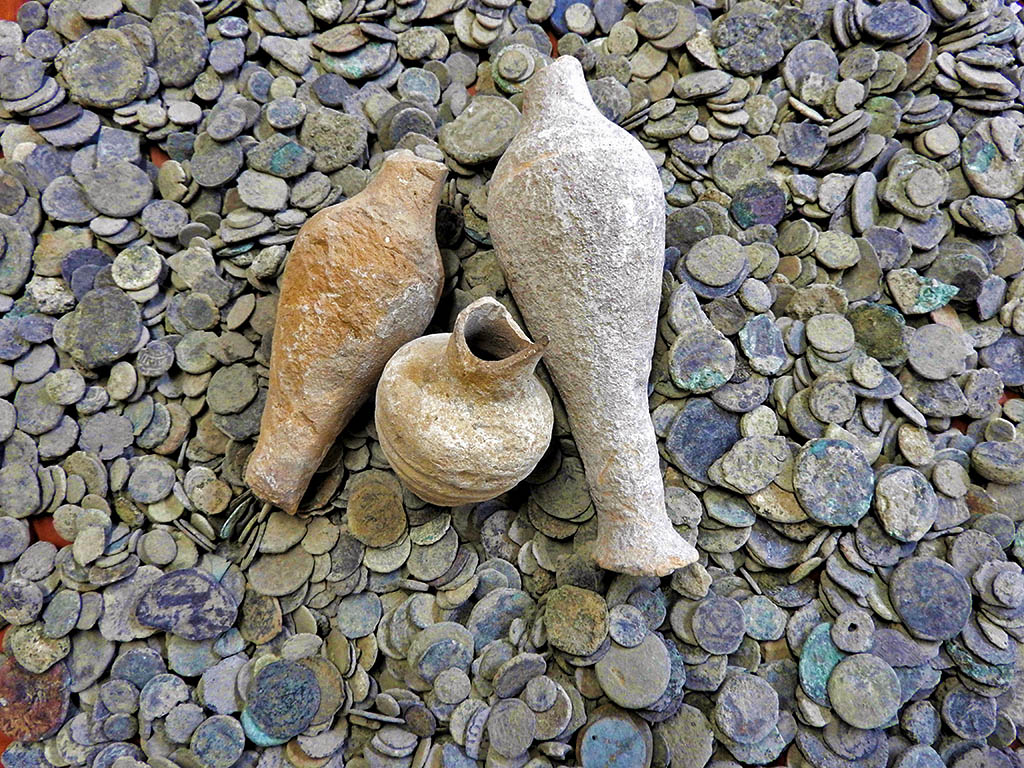
Earlier this week the Israel Antiquities Authority and the Police arrested a man living near Beit Shean (Bethshan) with some pottery and more than 3000 coins that he was illegally trying to sell. One report says the coins dated from the Roman period, the Bar Kochba revolt, the Byzantine period, and the Muslim period. The Roman coins included some from the time of the Roman destruction of Jerusalem in A.D. 70. These coins bear the title “Judaea Capta.”

Pottery and coins confiscated by the Israel Antiquities Authority near Beit Shean, Nov. 24, 2015. Photo: IAA.

Pottery and coins confiscated by the Israel Antiquities Authority near Beit Shean, Nov. 24, 2015. Photo: IAA.

The unnamed “dealer” had been digging up the coins and pottery in fields in the vicinity of Beit Shean. For additional information about Beit Shean see our post here.

There are legitimate dealers in antiquities, but there are others who take advantage of unsuspecting buyers. Many antiquities are destroyed by those who do not appreciate the value of the artifacts.

For a copy of the IAA Hebrew press release go here. For an informative English article with several photos see the article in The Times of Israel here.

HT: Joseph Lauer

Sunset from the eastern shore of Galilee

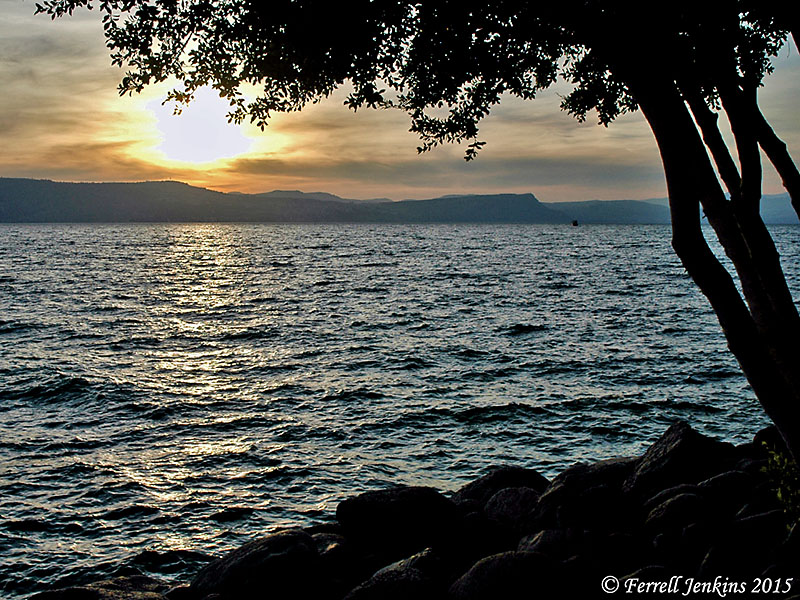
Over the past years I have posted several sunrise photos made from the western shore of the Sea of Galilee, but only a few sunsets from the eastern shore. I want to share this beautiful sunset view from En Gev.

Sunset from En Gev on the eastern shore of the Sea of Galilee. Photo by Ferrell Jenkins.

Sunset from En Gev on the eastern shore of the Sea of Galilee. Photo by Ferrell Jenkins.

If you look carefully you may see the Horns of Hattin and Mount Arbel on the western side. The sea is a little rough in this photo due to the afternoon wind that  comes in from the northwest.

Another mosaic uncovered at Lod

In the Old Testament Lod is listed as a town of the tribe of Benjamin (1 Chronicles 8:12), but it seems significant only after the return of the Jews from Babylonian exile (Nehemiah 11:25; Ezra 2:33).

In the New Testament the town is known as Lydda and the place where the Apostle Peter preached and healed a paralytic named Aeneas (Acts 9:31-35).

In modern times Lod is the location of Tel Aviv’s Ben Gurion International Airport.

You might enjoy this account by the Israel Antiquities Authority about the discovery of another impressive mosaic in Lod.

While building the visitor center for the Lod Mosaic, which was exposed in the past and is considered one of the most spectacular in the country, another impressive mosaic was discovered at the site

This week the Israel Antiquities Authority, in cooperation with the Lod municipality, invites the public for a unique opportunity to come see the new mosaic

An impressive mosaic revealed in archaeological excavations by the Israel Antiquities Authority in Lod will be open for the first time this week, specifically for visits by the public, in cooperation with the Lod municipality.

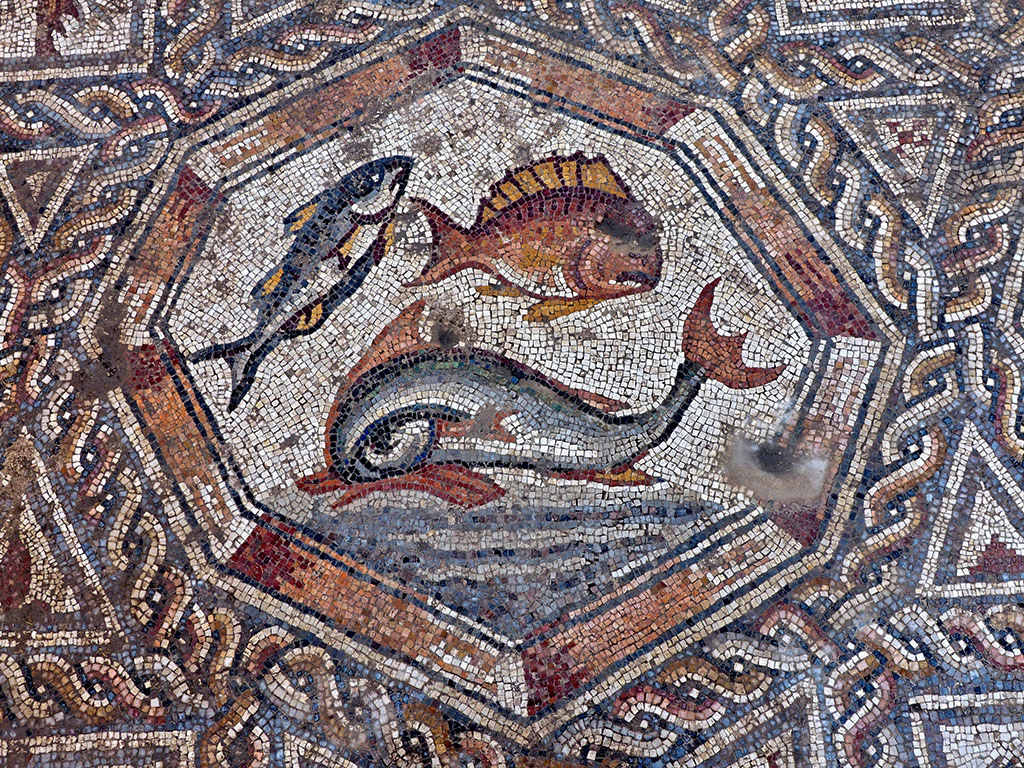
In June–November 2014 a team of archaeologists from the Israel Antiquities Authority directed a large excavation in the Neve Yerek neighborhood of Lod, in an area where a breathtaking mosaic that served as the living room floor in a villa some 1,700 years ago was previously exposed. The aim of the excavation was to prepare the ground for construction of a visitor center, to which the beautiful mosaic will be returned when it completes a series of exhibitions in museums around the world. Important artifacts were discovered in the new excavation, the most notable of which is another colorful mosaic (11 × 13 m) that was the courtyard pavement of the magnificent villa that had the famous mosaic in its living room.

A portion of the newly discovered Lod mosaic showing fish. Photo by Assaf Peretz, Israel Antiquities Authority.

A portion of the newly discovered Lod mosaic showing fish. Photo by Assaf Peretz, Israel Antiquities Authority

According to Dr. Amir Gorzalczany, excavation director on behalf of the Israel Antiquities Authority, “The villa we found was part of a neighborhood of affluent houses that stood here during the Roman and Byzantine periods. At that time Lod was called Diospolis and was the district capital, until it was replaced by Ramla after the Muslim conquest. The building was used for a very long time”.

The northern part of the complex, where the “Shelby White and Leon Levy Lod Mosaic Center” will be constructed, was exposed when the Israel Antiquities Authority was inspecting development work being carried out in the early 1990s prior to the construction of Highway 90. The mosaic, which was discovered and excavated at that time by the late Miriam Avissar, is among the most beautiful in the country, and has been exhibited in recent years in some of the world’s leading museums, including the Metropolitan, the Louvre and the State Hermitage etc. It is currently on display at the Cini Gallery in Venice, Italy, and in the future it will be housed in the main building to be erected in Lod.

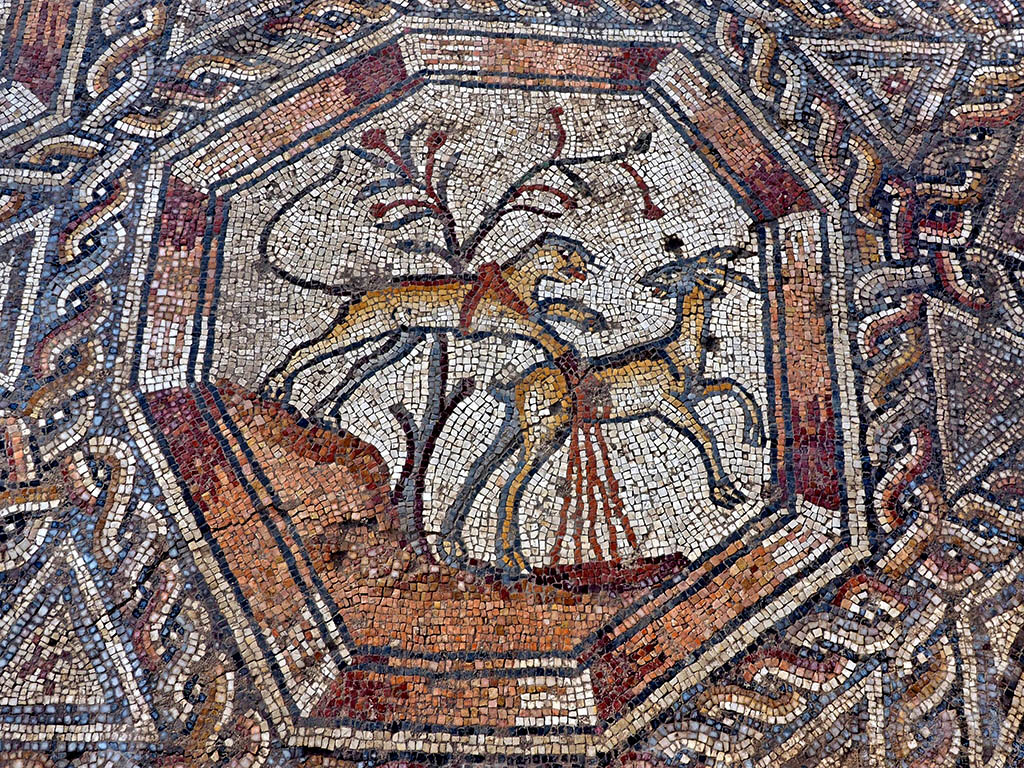
A portion of the newly discovered Lod mosaic showing fanimals. Photo by Assaf Peretz, Israel Antiquities Authority

A portion of the newly discovered Lod mosaic showing fanimals. Photo by Assaf Peretz, Israel Antiquities Authority

The southern part of the complex was exposed in the current excavations. Among other things, it includes a large magnificent courtyard that is paved with a mosaic and surrounded by porticos (stoas–covered galleries open to the courtyard) whose ceiling was supported by columns. According to Dr. Gorzalczany, “The eastern part of the complex could not be completely exposed because it extends beneath modern buildings in the neighborhood”. The scenes in this mosaic depict hunting and hunted animals, fish, flowers in baskets, vases and birds. Dr. Gorzalczany added, “The quality of the images portrayed in the mosaic indicates a highly developed artistic ability”. Numerous fragments of frescoes (wall paintings prepared on wet plaster) reflect the decoration and the meticulous and luxurious design, which are in the best tradition of the well-born of the period. In light of the new discoveries, this part of the villa will also be incorporated in the visitor center.

Archaeologists Hagit Torgë, Uzi ‘Ad, Eriola Jakoel and Yossi Elisha of the Israel Antiquities Authority participated in the excavation.

According to the press release: “Visiting hours: Tuesday–Wednesday, November 17–18: 8:00 to 16:00. Friday, November 20: 8:00 to 13:00. Driving directions: Come to Ha-Halutz Street in Lod, by way of Ginnaton Junction.”

HT: Joseph Lauer

Jesus rides a donkey from Bethphage to Jerusalem

Bethphage is mentioned in the New Testament in only one incident from the ministry of Jesus (Matthew 21:1, Mark 11:1; Luke 19:29).

And when he had said these things, he went on ahead, going up to Jerusalem.  When he drew near to Bethphage and Bethany, at the mount that is called Olivet, he sent two of the disciples,   saying, “Go into the village in front of you, where on entering you will find a colt tied, on which no one has ever yet sat. Untie it and bring it here.  If anyone asks you, ‘Why are you untying it?’ you shall say this: ‘The Lord has need of it.'”  So those who were sent went away and found it just as he had told them.  And as they were untying the colt, its owners said to them, “Why are you untying the colt?”  And they said, “The Lord has need of it.”  And they brought it to Jesus, and throwing their cloaks on the colt, they set Jesus on it. (Luke 19:28-35 ESV)

John records the event but does not mention Bethphage (John 12:12ff.).

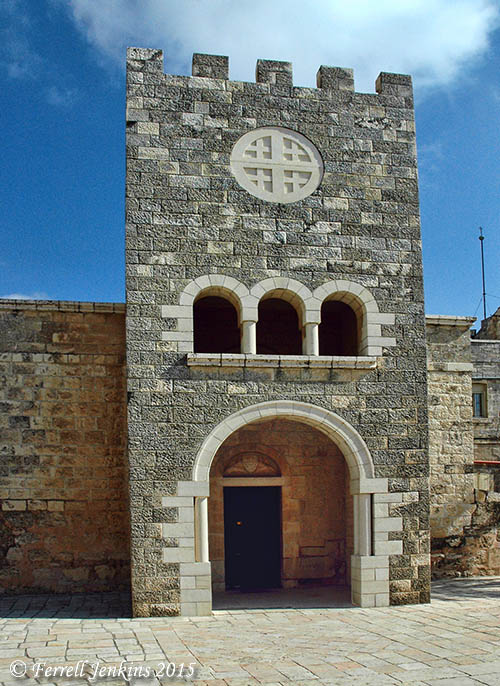
The exact site of Bethphage is not known, but it certainly was not far from Kefr et Tur, the place of Byzantine traditions. The present Franciscan chapel was built there in 1883.

Franciscan chapel at Bethphage. Photo by Ferrell Jenkins.

Franciscan chapel at Bethphage. Photo by Ferrell Jenkins.

The Roman road from Jericho to Jerusalem went over the Mount of Olives between Mount Scopus and the Mount of Olives. Before reaching the top of the mountain a spur or bypass turned south to Bethphage and Bethany.

A colt at Nazareth Village. Photo by Ferrell Jenkins.

A colt at Nazareth Village. Photo by Ferrell Jenkins.

In a 1975 article in Biblical Archaeologist (Vol. 38, No. 1), John Wilkinson wrote about “The Way from Jerusalem to Jericho.” He and his party tried to trace out known remnants of the old Roman road between the two cities. This 12½ mile trip from Jericho up to Jerusalem took 7 hours and forty-nine minutes.

Fishing all night and the Galilee sunrise

Sunrise on the Sea of Galilee (Lake Kinneret; Sea of Tiberias) evokes many memories of the ministry of Jesus and His disciples. No matter how many photos one takes, each one is unique.

I usually make these sunrise photos with two cameras, using multiple settings. The photo today is one that I especially like because I was able to catch the fisherman heading to harbor after a night of fishing.

Sunrise on the Sea of Galilee, May 17, 2015, 5:54 a.m. Photo by Ferrell Jenkins.

Sunrise on the Sea of Galilee, May 17, 2015, 5:54 a.m. Photo by Ferrell Jenkins.

Notice this text detailing the third appearance Jesus made to His disciples after the resurrection.

 1 After this Jesus revealed himself again to the disciples by the Sea of Tiberias, and he revealed himself in this way.
2 Simon Peter, Thomas (called the Twin), Nathanael of Cana in Galilee, the sons of Zebedee, and two others of his disciples were together.
3 Simon Peter said to them, “I am going fishing.” They said to him, “We will go with you.” They went out and got into the boat, but that night they caught nothing.
4 Just as day was breaking, Jesus stood on the shore; yet the disciples did not know that it was Jesus.
5 Jesus said to them, “Children, do you have any fish?” They answered him, “No.”  (John 21:1-5 ESV)

Read the rest of the story and the miraculous catch of fish in John 21:6-14.

Plans to excavate Tel Shimron

Tel Shimron is located in the ancient territory of the Israelite tribe of Zebulun. There are only two references to the site in the Bible, both in the book of Joshua.

  • When Jabin, king of Hazor, heard of the successes of Joshua in the south of Canaan he sent word to the kings of the region to form an alliance. The king of Shimron was included in the group (Joshua 11:1).
  • The other reference lists Shimron as one of the cities of Zebulun (Joshua 19:15).

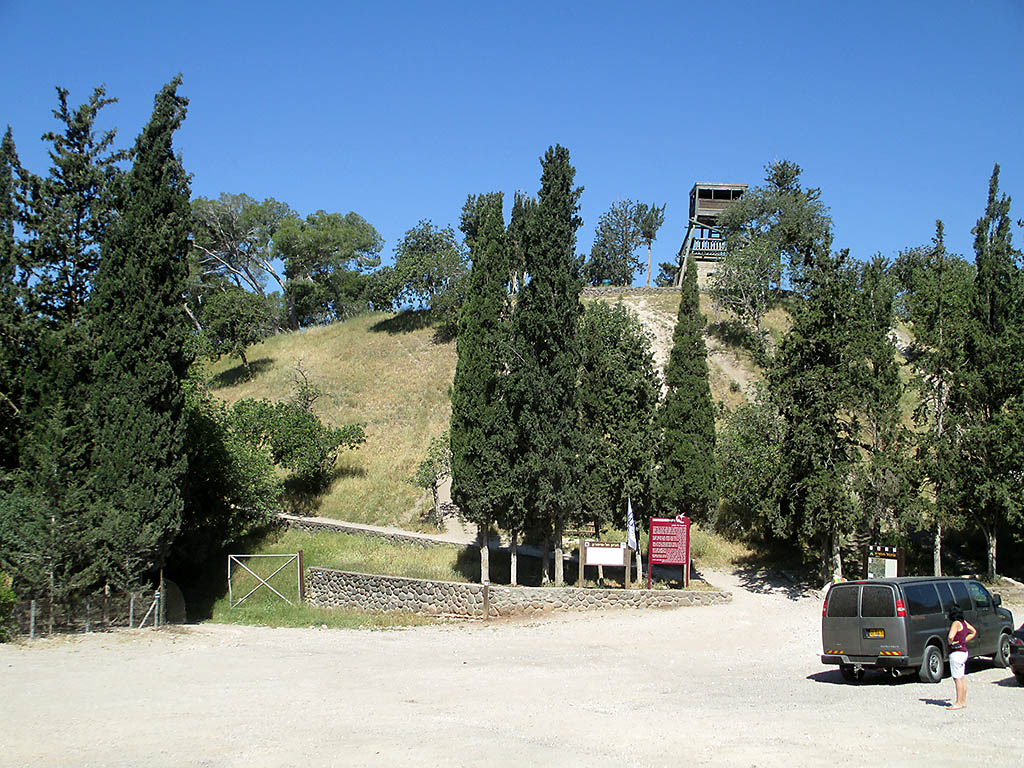
Location. Shimron is located about five miles due east of Nazareth at the intersection of highway 7626 with the main east-west highway 75. This is the NW side of the Jezreel Valley. The tel is 2.4 miles SE of Beit Lehem HaGelilit (Bethlehem of Galilee) which is also within the territory of Zebulun. See here and here.

Tel Shimron. Photo: Dr. Avishai Teicher, Pikiwiki Iserael.

Tel Shimron. Photo: Dr. Avishai Teicher, Pikiwiki Israel [CC BY 2.5 (http://creativecommons.org/licenses/by/2.5)%5D, via Wikimedia Commons.

Word comes, through a combination of sources, that the Museum of the Bible (scheduled to open in Washington, D.C., in the fall of 2017), the Israel Antiquities Authority, Wheaton College, and perhaps the Albright Institute, will be working together on this project. See the Museum of the Bible announcement here.

Wheaton College will still be working at Ashkelon in 2016, but will conduct an archaeological survey and a Ground Penetrating Radar (GRP) survey of Tel Shimron in 2016, with plans to begin an excavation in 2017. The program leaders are Dr. Daniel Master and Dr. Adam Miglio. More information here.

A brief YouTube video (here) featuring Cary Summers, president of the Bible Museum, with Matthew J. Adams, Dorot Director of the W. F. Albright Institute, talking about the significance of Tel Shimron at the site.

I have been close, but never to Tel Shimron. The Pictorial Library of Bible Lands has one photo of the mound in the disc on Galilee and the North. BibleWalks.com has a nice collection of photos as well as maps and historical information here.

HT: Trent and Rebekah Dutton

Sheaves in the field

Joseph had a dream in which he was elevated above his brothers. It involved something common in an agrarian society — binding sheaves in the field.

Now Joseph had a dream, and when he told it to his brothers they hated him even more. He said to them, “Hear this dream that I have dreamed: Behold, we were binding sheaves in the field, and behold, my sheaf arose and stood upright. And behold, your sheaves gathered around it and bowed down to my sheaf.” His brothers said to him, “Are you indeed to reign over us? Or are you indeed to rule over us?” So they hated him even more for his dreams and for his words. (Genesis 37:5-8 ESV)

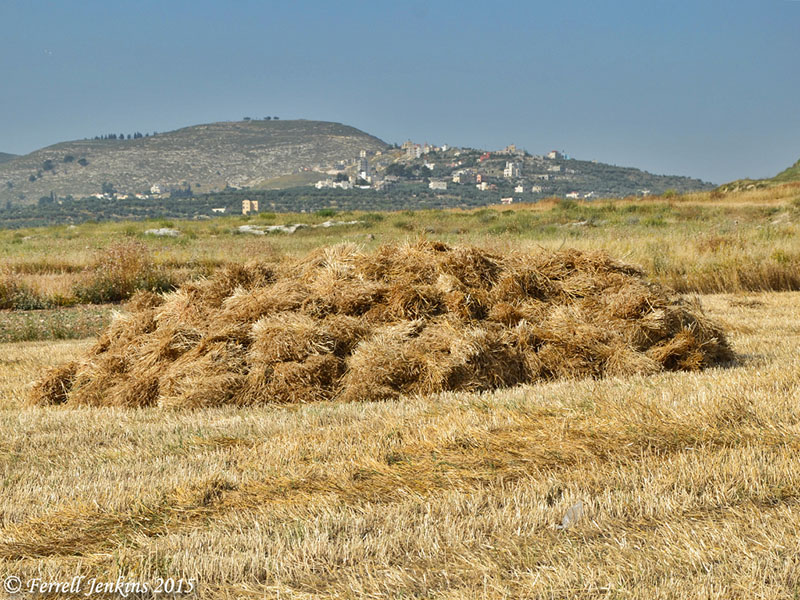
The following photos were made in the region of Samaria, and near the ancient city of Samaria. The first shows sheaves that have been gathered in the field.

Sheaves in the field near Samaria. Photo by Ferrell Jenkins.

Sheaves in the field near Samaria. Photo by Ferrell Jenkins.

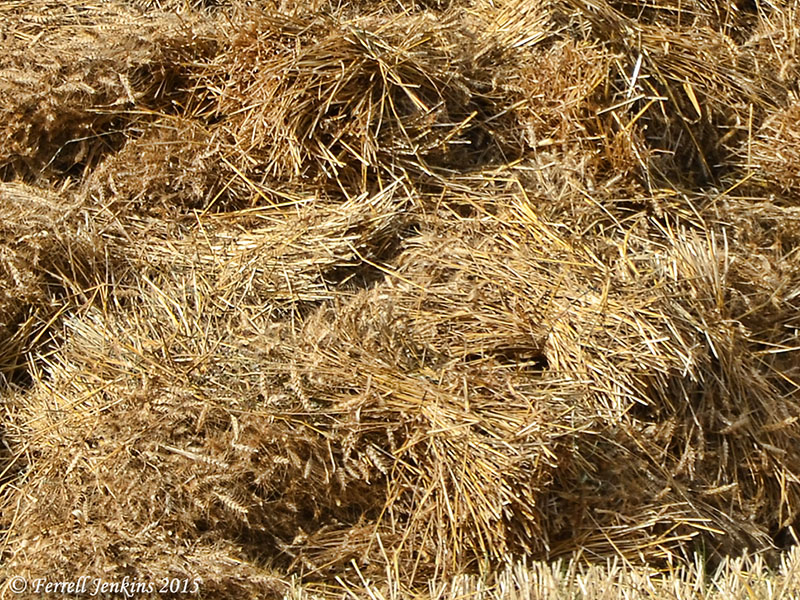
The next photo is a cropped closeup in which you can see the strings binding some of the sheaves.

Closeup to show the string around the sheaf of grain. Photo by Ferrell Jenkins.

Closeup to show the string around some of the sheaves. Photo by Ferrell Jenkins.

Possibly the best known instance of sheaves in the Bible is the story of the young Moabite woman named Ruth. She requested permission to pick up what was left after the reapers went through the field of Boaz.

She said, ‘Please let me glean and gather among the sheaves after the reapers.’ So she came, and she has continued from early morning until now, except for a short rest.” Then Boaz said to Ruth, “Now, listen, my daughter, do not go to glean in another field or leave this one, but keep close to my young women.
(Ruth 2:7-8 ESV)

And that’s how the story of King David begins…

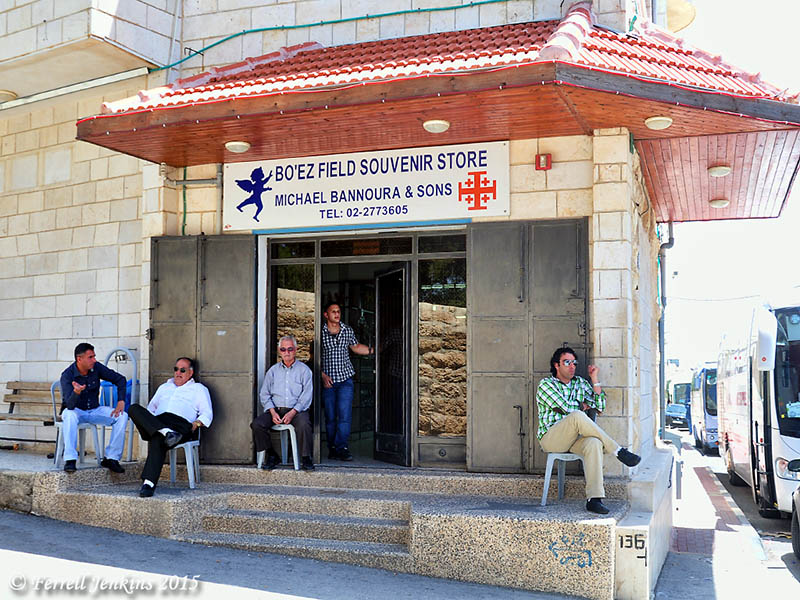
Entrepreneurs take advantage of the Biblical stories. This store, which I did not visit, is located in the vicinity of the traditional Shepherd’s fields near Bethlehem. The salesmen are just waiting for the next bus load of tourists.

Boaz Field store in Bethlehem. Photo by Ferrell Jenkins.

Boaz Field souvenir store near Bethlehem. Photo by Ferrell Jenkins.

Since childhood I have loved to sing Knowles Shaw’s spiritual song, “Bringing in the Sheaves.” By the time of my childhood we already had a mechanized way of baling the hay, but the lesson was easy to understand.