Category Archives: Israel

Traveling through the Wilderness of Zin

Yesterday we traveled from Eilat to Jerusalem with stops at Mitzpe Ramon, Avedat, and Ein Avedat.

The ancient Israelites wandered in the wilderness of Zin (Numbers 33:36), an area that included Kadesh Barnea and was the southern boundary for the tribe of Judah.

The land allotted to the tribe of Judah by its clans reached to the border of Edom, to the Wilderness of Zin in the Negev far to the south. (Joshua 15:1 NET)

We enjoyed a burger at the McDonald’s at Avedat, an important town along the Nabatean spice route between Petra and Gaza. Having been at Petra a few days earlier made this stop especially interesting.

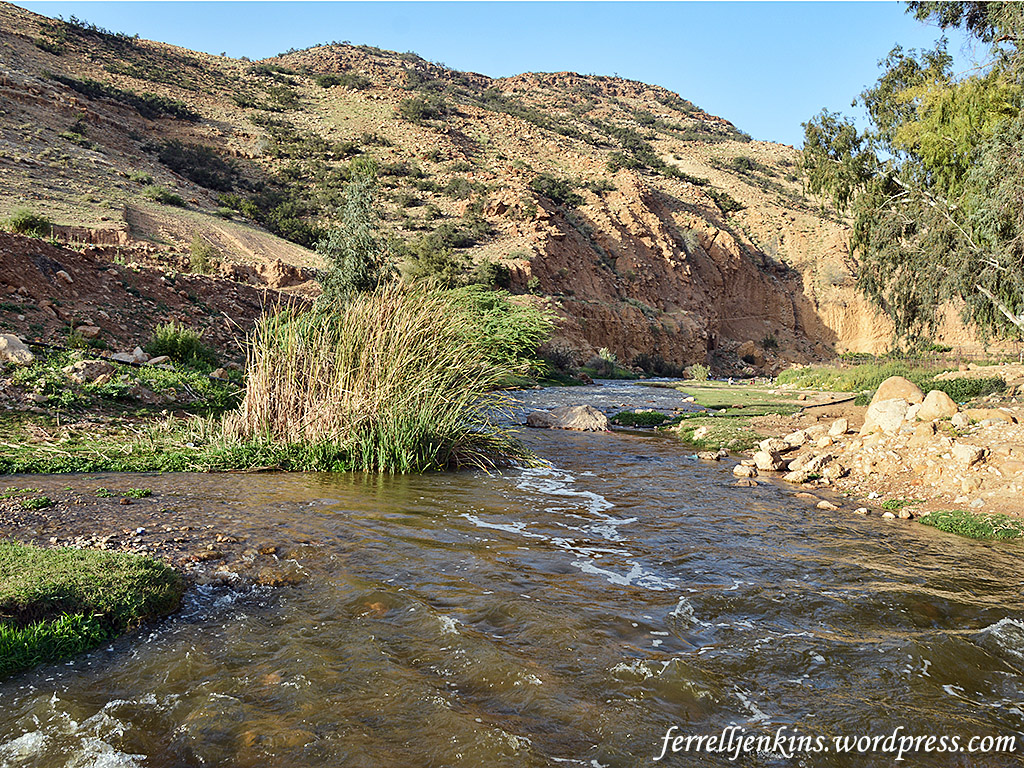
We walked to the cold water pool at Ein Avedat. As we drove to that area we stopped to make some photos of the wadi. Most wadis have less greenery, but this one receives some water from the spring. During the rainy season water would be rushing through it in abundance.

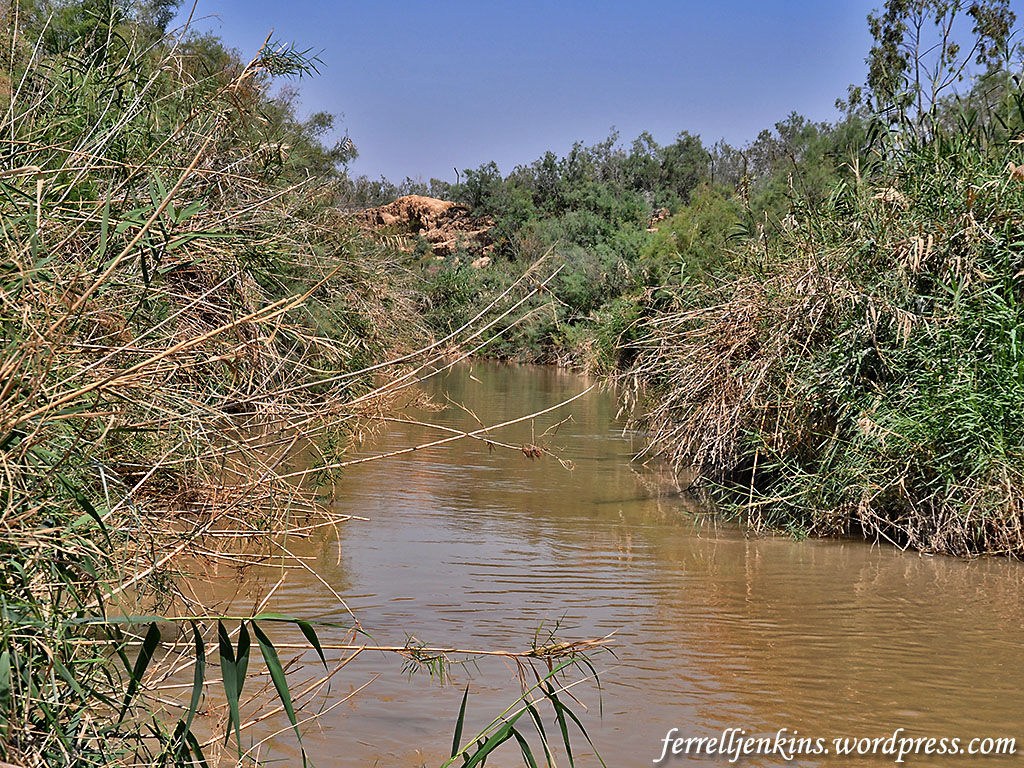
This photo shows a wadi in the wilderness of Zin at Ein Avedat. Photo by Ferrell Jenkins.

This photo shows a wadi in the wilderness of Zin at Ein Avedat. Photo by Ferrell Jenkins.

Scenes such as this must have been especially refreshing to the ancient Israelites.


An unusual sunrise on the Sea of Galilee

Those who have followed this blog for any length of time have probably seen several of my sunrise photos on the Sea of Galilee. We often stay at the Ron Beach Hotel which is situated on the west shore of the Sea on the north side of Tiberias. Sometimes I have been able to capture some great shots from my room. Yesterday, however, was one of those days when the was hidden from us by low, heavy clouds.

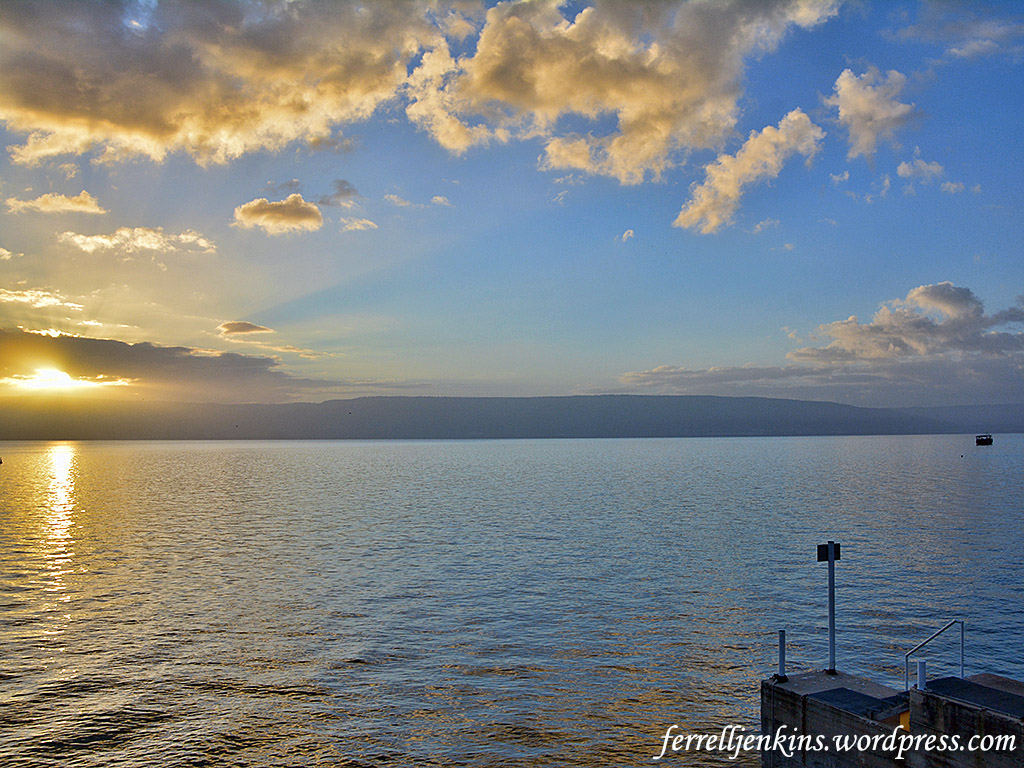
This morning there were low clouds on the eastern horizon. The sun only occasionally peeked through, but this did not affect the reflection of the sun on the clouds above.

When I realized what was happening I moved my camera to place the sun on the left side of my image in order to show the beautiful sky and clouds. I thought you might enjoy seeing this different sort of image.

Sunrise on the Sea of Galilee, March 25, 2018. Photo by Ferrell Jenkins.

Sunrise on the Sea of Galilee, March 25, 2018. Photo by Ferrell Jenkins. Click on the image for a larger image.

Tonight Leon Mauldin and I are on the Dead Sea at Ein Bokek.

The Sea of Galilee played a prominent role in the ministry of Jesus. Take this example, for example:

From that time Jesus began to preach, saying, “Repent, for the kingdom of heaven is at hand.”
While walking by the Sea of Galilee, he saw two brothers, Simon (who is called Peter) and Andrew his brother, casting a net into the sea, for they were fishermen. And he said to them, “Follow me, and I will make you fishers of men.” Immediately they left their nets and followed him. And going on from there he saw two other brothers, James the son of Zebedee and John his brother, in the boat with Zebedee their father, mending their nets, and he called them. Immediately they left the boat and their father and followed him. (Matthew 4:17-22 ESV)

Traveling in Jordan again

For the past week I have been traveling in Jordan with long-time traveling friend Leon Mauldin on a personal study trip. We enjoy these trips going to places that  we miss during regular tours. That is because some of the places are difficult to reach and would have little interest to the first-time traveler to the Bible Lands. It sometimes takes us half a day to locate a place and visit it.

The tourist folks in Jordan like to call their country “the other Holy Land.” Not only did Jesus visit this area but it was often the area of travel for the patriarchs, prophets, and kings of ancient Israel.

Today we visited the Jabbok River a few miles east of the Valley Road (Roman Perea) and Deir Allah. This is thought by some to be the place where Jacob met his brother Esau on the return from Padan Aram. See Genesis 32 for the full story). This photo will give you some idea of the terrain and the small river, now called the Zarka.

The Jabbok River east of the River Jordan. Near here Jacob a life-changing encounter with the LORD. Photo by Ferrell Jenkins.

The Jabbok River east of the River Jordan. Near here Jacob had a life-changing encounter with the LORD. Photo by Ferrell Jenkins.

Has the seal of Isaiah the prophet been found?

The discovery of a bulla (seal impression) possibly bearing the name of the prophet Isaiah is announced by Eilat Mazar in the current issue of Biblical Archaeology Review (44:2, March/April; May/June 2018). I am not sure if this article is available to non-members of the BAS Library, but you may try this link.

This discovery was made nearly 10 years ago in the Ophel area south of the Temple Mount. Mazar announced the discovery of a bulla bearing the inscription “Belonging to Hezekiah [son of] Ahaz king of Judah” in 2015, and we reported it here with a nice photograph of the seal impression.

Now, imagine the excitement when the researchers found the name Isaiah on a bulla. Mazar says that Isaiah was a common name, but with the possibility that this particular Isaiah is called the prophet, that is super exciting.

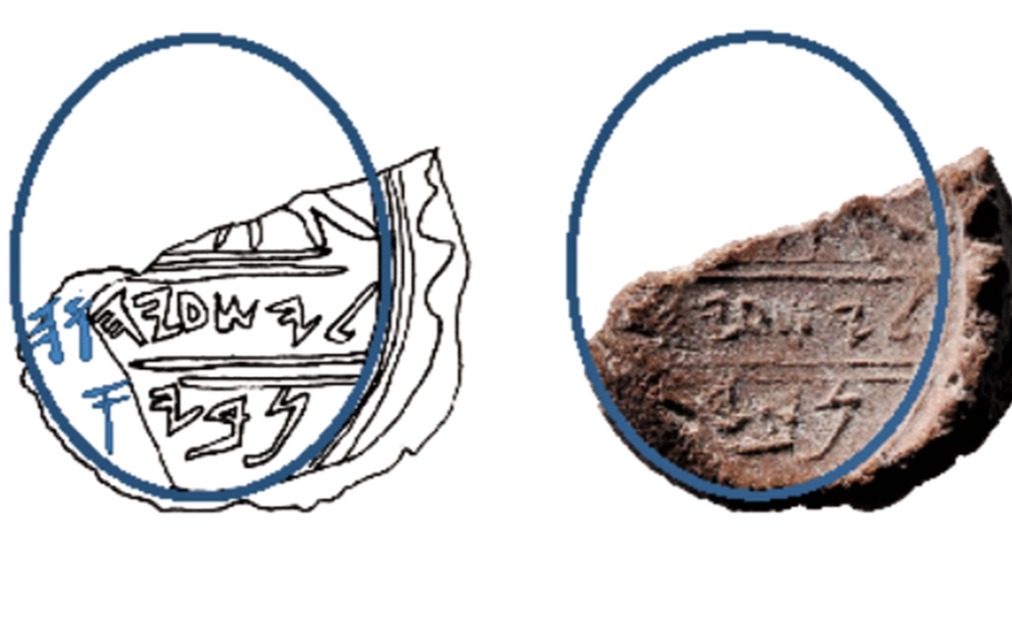
Just one problem. One, or possibly two letters, are missing from the word for prophet. A National Geographic article by Kristin Romey explains,

The seal is impressed in Old Hebrew script with the name Yesha‘yah[u] (the Hebrew name of Isaiah), followed by the word nvy.

Because the seal is damaged at the end of the word nvy, Mazar suggests that our reading may be incomplete. If nvy was originally followed by the Hebrew letter aleph, the result would be the word “prophet,” rendering the reading of the seal as “Belonging to Isaiah the prophet.”

Drawing by Reut Livyatan Ben-Arie of the Isaiah Bulla, a 2,700-year-old clay seal impression which potentially belonged to the biblical prophet Isaiah. (Illustration: Reut Livyatan Ben-Arie/© Eilat Mazar; Photo by Ouria Tadmor/© Eilat Mazar)

Drawing by Reut Livyatan Ben-Arie of the Isaiah Bulla, a 2,700-year-old clay seal impression which potentially belonged to the biblical prophet Isaiah. (Illustration: Reut Livyatan Ben-Arie/© Eilat Mazar; Photo by Ouria Tadmor/© Eilat Mazar)

Could this last word on the bulla be the name of the Novi family, or the name of a town (Nob, is suggested)?

The discovery of the bulla with the name of Isaiah just ten feet from the one bearing the name of Hezekiah is significant. Mazar is quoted as saying,

The names of King Hezekiah and the prophet Isaiah are mentioned in one breath 14 of the 29 times the name of Isaiah is recalled (2 Kings 19–20; Isaiah 37–39). No other figure was closer to King Hezekiah than the prophet Isaiah. (TOI)

The Trumpet has published a well-done YouTube 13 minute video that will be of interest to some readers. The article in The Trumpet contains photos and drawings of the bulla.

The article in today’s The Times of Israel contains several good photos here.

HT: Joseph I. Lauer, et al.

Clearing the landmines at Qasr al-Yahud baptism site

My first visit to the traditional site of the baptism of Jesus and the work of John the Baptist was in 1967 (see photo of the group here). After the Six Days War in June, 1967, it was not possible to visit the site until about 2011. My next visit to the site in Israel was in May, 2011. In the meanwhile I had already taken three groups to Jordan so we could visit the site, traditionally known there as Bethany Beyond the Jordan.
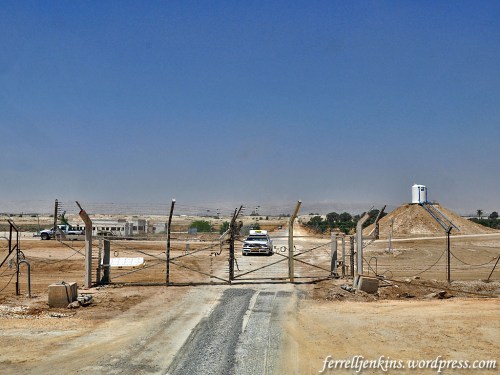
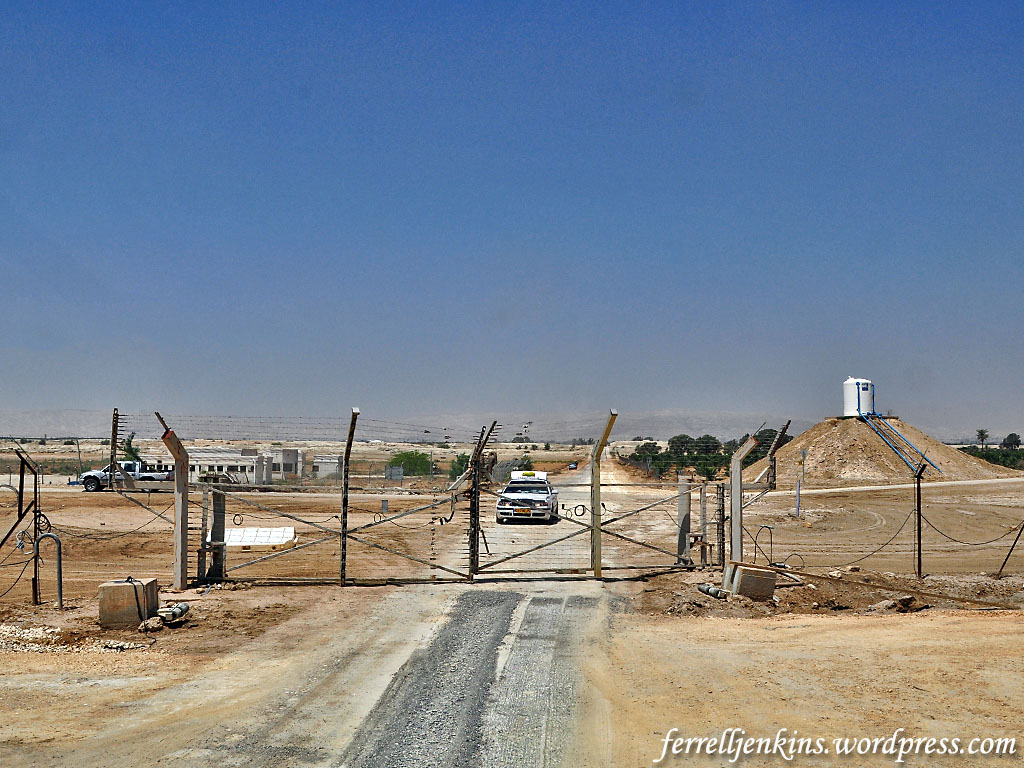
In May, 2011, we had to stop at this gate and wait for someone from the military to come and open the gate for the bus to enter. Photo by Ferrell Jenkins.

In May, 2011, we had to stop at this gate and wait for someone from the military to come and open the gate for the bus to enter. Photo by Ferrell Jenkins.

The expression “beyond the Jordan” in John 1:28 distinguishes this Bethany from the Bethany on the east slopes of the Mount of Olives, the home of Mary, Martha and Lazarus (cf. John 11:1). Jesus was with John “beyond the Jordan” (3:26), and went away to this region prior to his final work in Judea (10:40). The Greek word for beyond is peran, from which comes the geographical term Perea. Perea was on the east side of the Jordan River.

The NKJV follows late manuscripts in the reading Bethabara. There are textual variants on this point, but the earliest and best reading is Bethany in John 1:28.

One reason for the long delay in opening the site in Israel was that it was in a military area. Much of the area had been filled with landmines and anti-tank mines after the 1967 war to prevent Jordanian tanks from crossing it.

Seven churches had been constructed in the area during the British Mandate period in the 1930s. A drone video included in the The Times of Israel article (link below) shows ruins of the Franciscan Compound, the Ethiopian Church, the Syrian Church, and the Romanian Church. Greek Orthodox pilgrims were already allowed to visit the baptism site to celebrate Epiphany.

Now, the HALO Trust fund has begun raising money to rid the area of mines. The TOI article says the Israel Defense Ministry contributed funds as well.

I call the Jordan a shy river that seldom shows itself. One can drive through the Jordan Valley from Tiberias to the Dead Sea and rarely get a glimpse of this famous River. That is because of the depth of the Jordan Valley and the growth along the banks of the River.

The River no longer floods the valley as it once did, and it is no longer as wide as it once was. This is because the water is now being used by both Israel and Jordan for agriculture and to provide drinking water for the growing population.
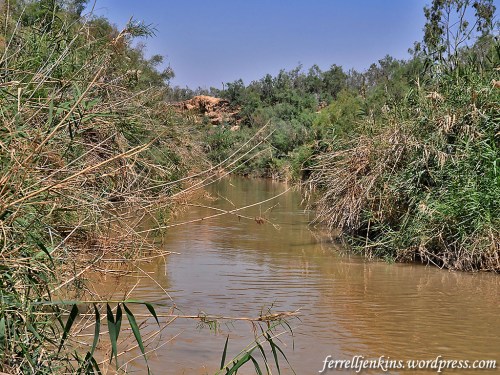
A view to the north of the Jordan River at Qasr al-Yahud. Photo by Ferrell Jenkins.

A view of the Jordan River to the north at Qasr al-Yahud. At this point the river is about 405 meters (1330 feet) below sea level. Photo by Ferrell Jenkins.

As we leave the River we stop to look back across the Ghor (depression) to the Zor (the thicket, shown as the green line) where the River flows. This is the view slightly north of the baptism site.
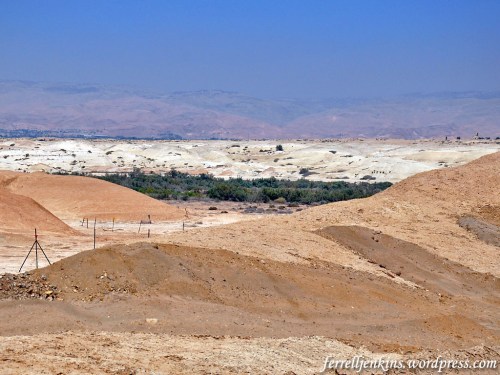
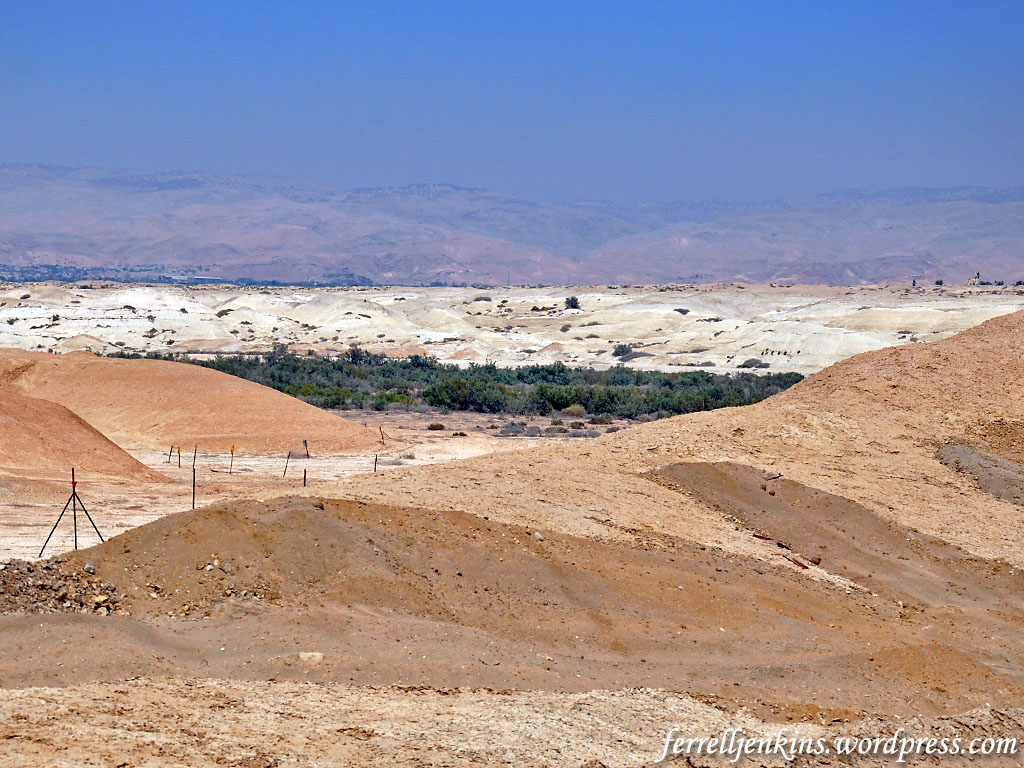
This photo shows the east side of the Jordan River in the foreground, the Ghor (depression) of the Jordan River, the Zor (thicket), the land of Perea on the east side of the Jordan and the mountains of Ammon. Photo by Ferrell Jenkins.

This photo shows the west side of the Jordan River in the foreground, the Ghor (depression) of the Jordan River, the Zor (thicket), the land of Perea on the east side of the Jordan, and the mountains of Transjordan in the haze. Photo by Ferrell Jenkins.

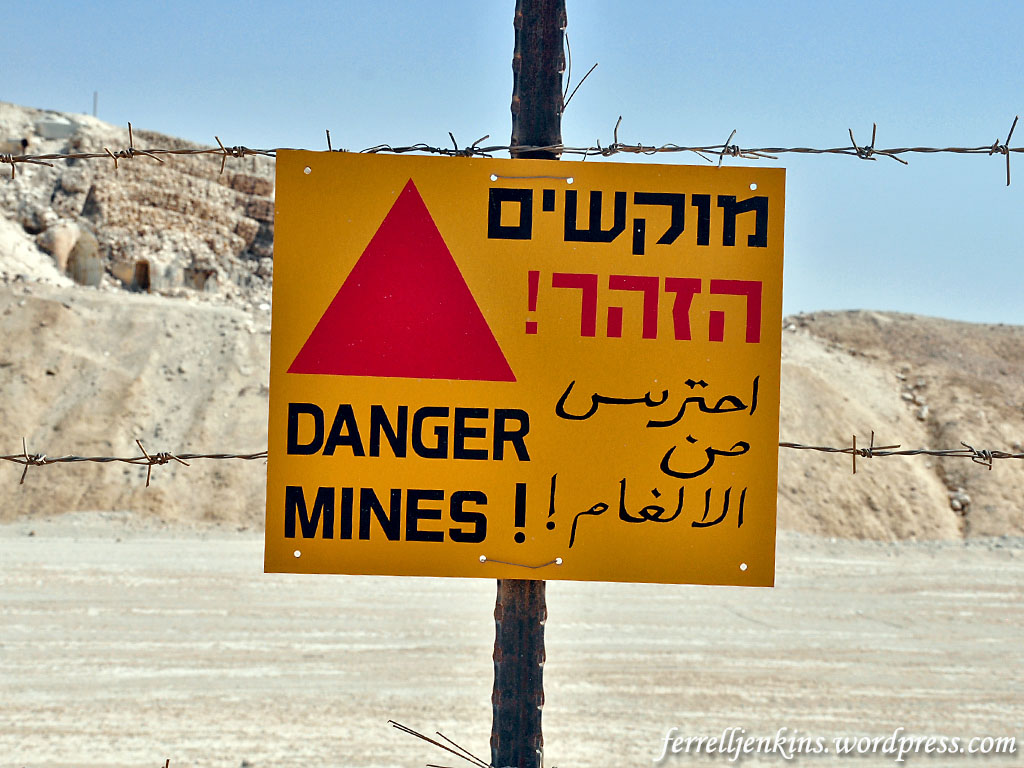
Barb wire and signs warn the adventurous from wandering off the dirt road leading back to Highway 90.
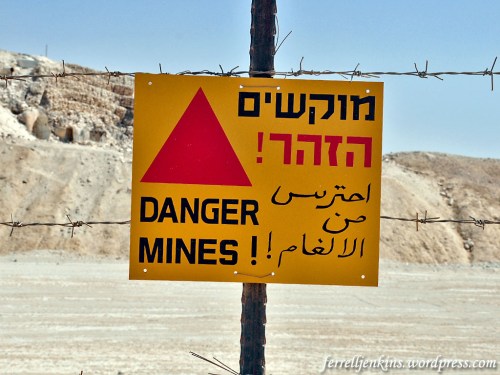
This is one of the signs warning of the landmines. We also see these in certain area of the Golan Heights. Photo by Ferrell Jenkins.

This is one of the signs warning of the landmines. We also see these in certain areas of the Golan Heights. Photo by Ferrell Jenkins.

Here are links to two recent articles from Israeli papers that I have enjoyed.

  • “Christian Pilgrims From Across the World Come to Israel to Visit This Site. There’s Just one Problem: It’s Sitting in a Minefield” (Haaretz).
  • “Israel will soon clear 4,000 landmines at Qasr al-Yahud baptism site” (Times of Israel).

In spite of many environmental warnings about the impurity of the water in the Jordan River at this site many groups continue to baptize there.

Seal impression mentioning “governor of the city” discovered near Temple Mount

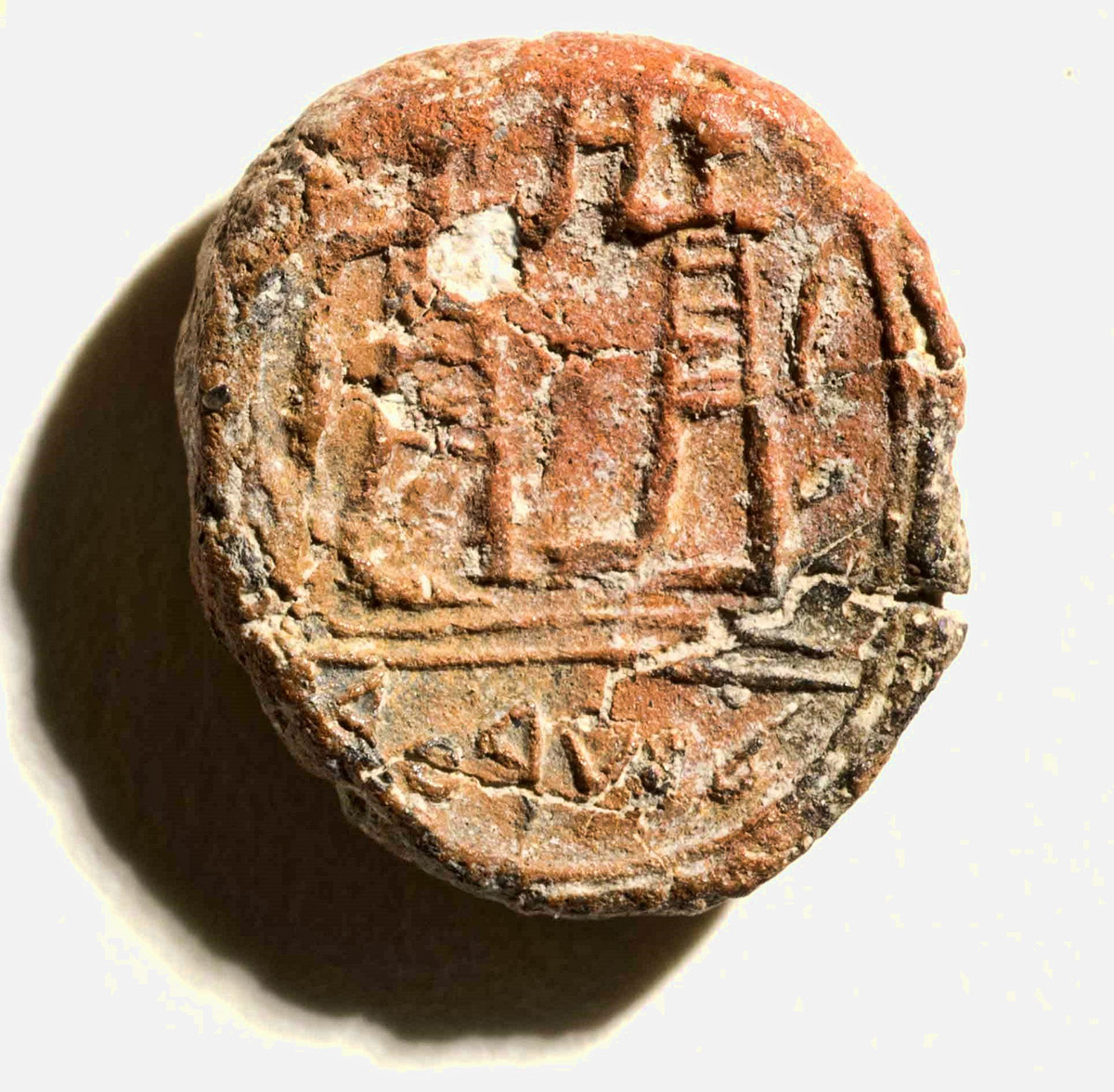
The Israel Antiquities Authority began the year with a great announcement yesterday. Many tourists to the Western Wall may have seen a covered area on the western side of the Western Wall Plaza. Here the archaeologists uncovered a 7th century B.C. four-room house. In it there was a seal impression which they refer to as a docket (also called a bulla) showing two men and a Hebrew inscription bearing the words translated as “governor of the city.”

Dr. Shlomit Weksler-Bdolah, excavator of the site located in the northwestern part of the western Wall Plaza, on behalf of the IAA, believes that “the sealing had been attached to an important transport and served as some sort of logo, or as a tiny souvenir, which was sent on behalf of the governor of the city.”

Seal impression showing two men and bearing the inscription "governon of the city." IAA photo by Clara Amit.

Seventh century B.C. seal impression showing two men and bearing the inscription “governor of the city.” IAA photo by Clara Amit.

Prof. Tallay Ornan of the Hebrew University, and Prof. Benjamin Sass of Tel Aviv University, studied the sealing and describe it thus: “above a double line are two standing men, facing each other in a mirror-like manner. Their heads are depicted as large dots, lacking any details. The hands facing outward are dropped down, and the hands facing inward are raised Each of the figures is wearing a striped, knee-length garment. In the register beneath the double line is an inscription in ancient Hebrew: לשרער, with no spacing between the words and no definite article. It denotes לשר העיר, i.e., “belonging to the governor of the city.” Prof. Ornan and Prof. Sass add, that “the title ‘governor of the city’ is known from the Bible and from extra-biblical documents, referring to an official appointed by the king. Governors of Jerusalem are mentioned twice in the Bible: in 2 Kings [23:8], Joshua is the governor of the city in the days of Hezekiah, and in 2 Chronicles [34:8], Maaseiah is the governor of the city in the days of Josiah.

The original seal that made this impression may have belonged to one of these men, or to some other person not named in Scripture.

This discovery is another in a long list of those illustrating the historical setting and accuracy of the Bible.

Todd Bolen reported on this discovery, including a different photo of the seal impression, and several interesting links here.

HT: Joseph Lauer

Gadara described as a town “without a soul.”

Ancient Gadara has been described by a former Jordanian villager who once lived there as a town “without a soul.”  The reason for his description is explained by Sunny Fitzgerald in a recent issue of BBC Travel.

In the 1960s, Jordan’s Department of Antiquities declared Gadara an archaeological site; it’s now awaiting consideration for Unesco World Heritage status.

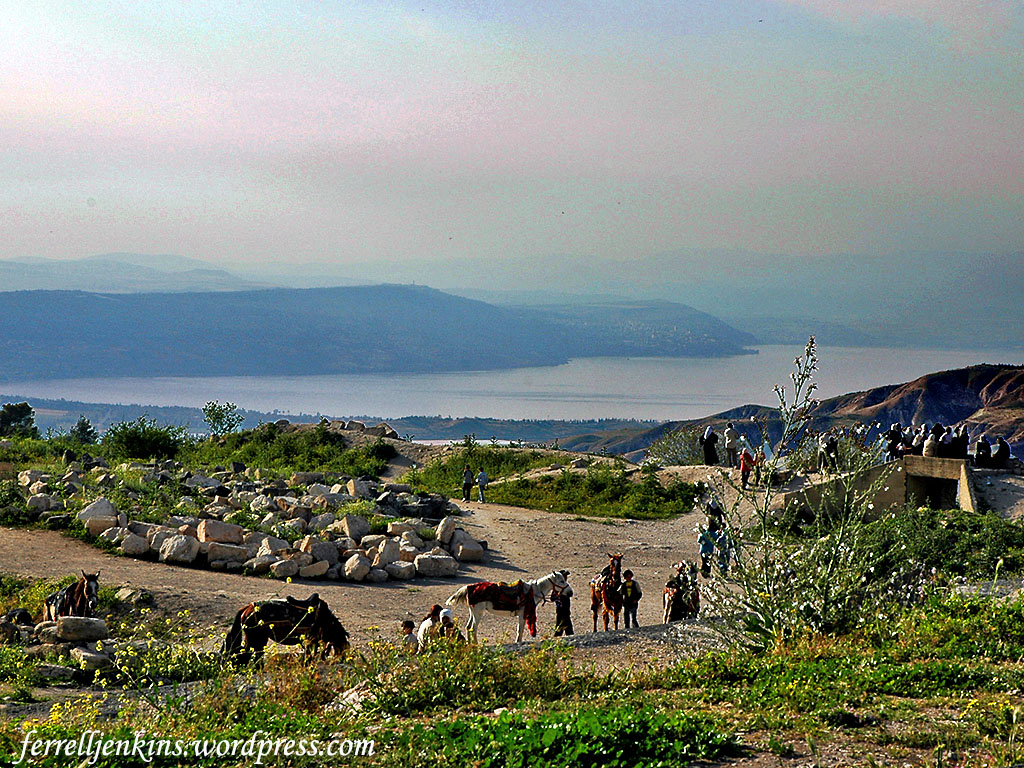
The local citizens were moved from the ancient site, but they still visit it for the beautiful scenes of the Sea of Galilee and the Yarmuk valley below Umm Qais.

View of the Sea of Galilee in the late afternoon from Umm Qais (Gadara). Notice the slight red sky showing through the haze. Photo by Ferrell Jenkins.

View of the Sea of Galilee in the late afternoon from Umm Qais (Gadara). Notice the slight red sky showing through the haze. Photo by Ferrell Jenkins.

Fitzgerald’s illustrated article is a fascinating one that I highly recommend that you read it.

Umm Qais (a common spelling; also Umm Qeis and Um Qays) is the site of Gadara, one of the cities of the Greco-Roman Decapolis. The late Mendel Nun discovered 16 ancient ports around the Sea of Galilee, including one for the city of Gadara. The port is located at Tel Samra on the southeast corner of the Sea of Galilee at the modern Ha-on Holiday Village (Mendel Nun. “Ports of Galilee.” Biblical Archaeology Review 25:04; July/Aug 1999).

From Umm Qais (Gadara) one has a great view of the Sea of Galilee and the Yarmuk River valley. We are told that Jesus visited the region of Decapolis.

Then he returned from the region of Tyre and went through Sidon to the Sea of Galilee, in the region of the Decapolis. (Mark 7:31 ESV)

The Gospel of Matthew informs us about the healing by Jesus of two demon-possessed men in the country of the Gadarenes (Matthew 8:28). Mark puts this event in the country of the Gerasenes (Mark 5:1-20). Luke adds that they “sailed to the country of the Gerasenes, which is opposite Galilee” (Luke 8:26).

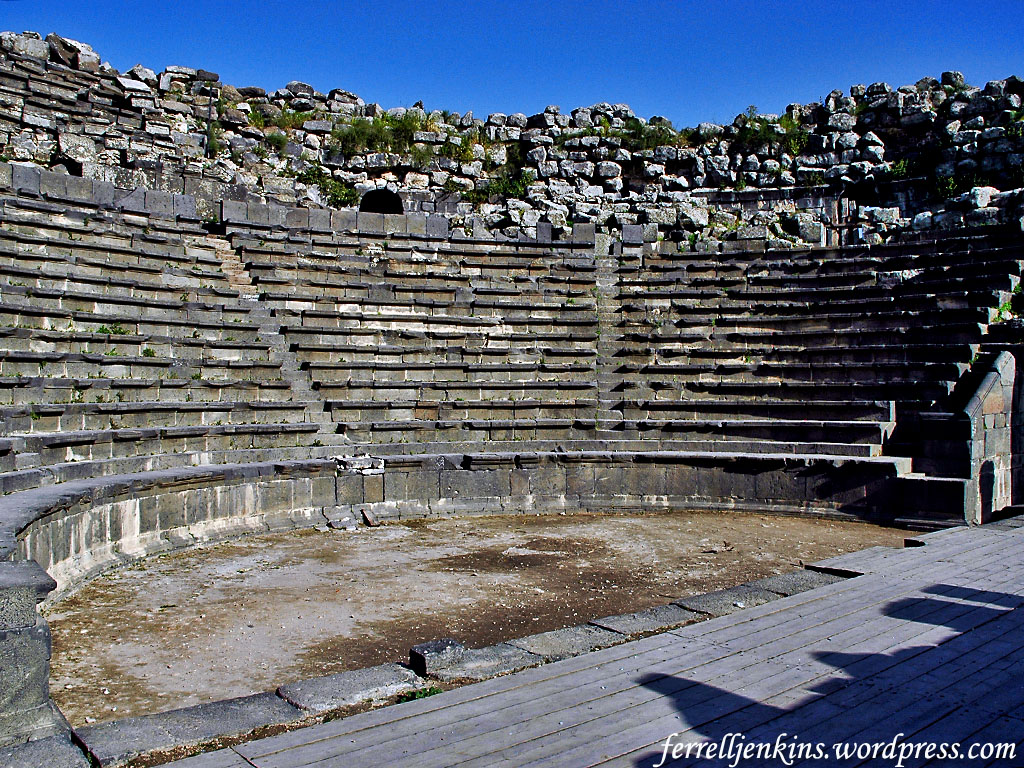
Umm Qais is made of the local basalt. Photo by Ferrell Jenkins.

The Roman theater at Umm Qais is made of the local basalt. Photo by Ferrell Jenkins.

The term Decapolis was used to describe a group of ten cities established by the Greeks. Many of them claimed to have been founded by Alexander the Great. The number of cities may have been ten at some time, but the exact number varies from list to list. The cities include Abila [Lysanias was tetrarch of Abilene, Luke 3:1], Gadara [Umm Qeis], Gerasa [Jerash], Hippos, Philadelphia [Amman], Scythopolis [Beth-shan], Pella, et al. These cities are located mostly south of the Sea of Galilee, and all except Scythopolis are east of the Jordan River. Damascus is included in some lists. In the first century A.D. they were part of the Roman province of Syria.

HT: Agade

Was this pillar intended for the Temple?

In the Jerusalem area we have evidence of numerous quarries from which stones and pillars (columns) were taken for the Biblical Temple and other buildings. Much of the area now covered by the Church of the Holy Sepulchre, including Golgotha, was once a quarry. In a series of post we discussed the so-called Solomon’s Quarries here and here.

It is also known that an area now referred to as the Russian Compound was a quarry in Biblical times. This is the location of the Russian Orthodox Cathedral of the Holy Trinity, the central police station and the law courts.

The area lies on the northwest corner of the Old City of Jerusalem, and us bounded on the south by Jaffa Road and the Street of the Prophets on the north. It is often referred to as the area of the Assyrian Camp, referencing the occasion when Sennacherib, king of Assyria from 704 to 681 B.C., sent two of his commanders with “a great army from Lachish to Jerusalem” (2 Kings 18:17).

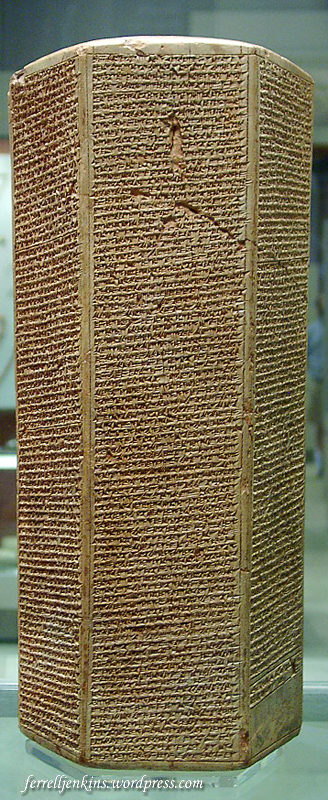
The Taylor Prism reports that Hezekiah was shut up in Jerusalem like a caged bird. Photo by Ferrell Jenkins.

The Taylor Prism reports that Hezekiah was shut up in Jerusalem like a caged bird. Photo by Ferrell Jenkins.

The Taylor Prism, found at Nineveh, and now displayed in the British Museum, claims that Hezekiah did not submit to his y0ke, but was “shut up in Jerusalem” like a caged bird.

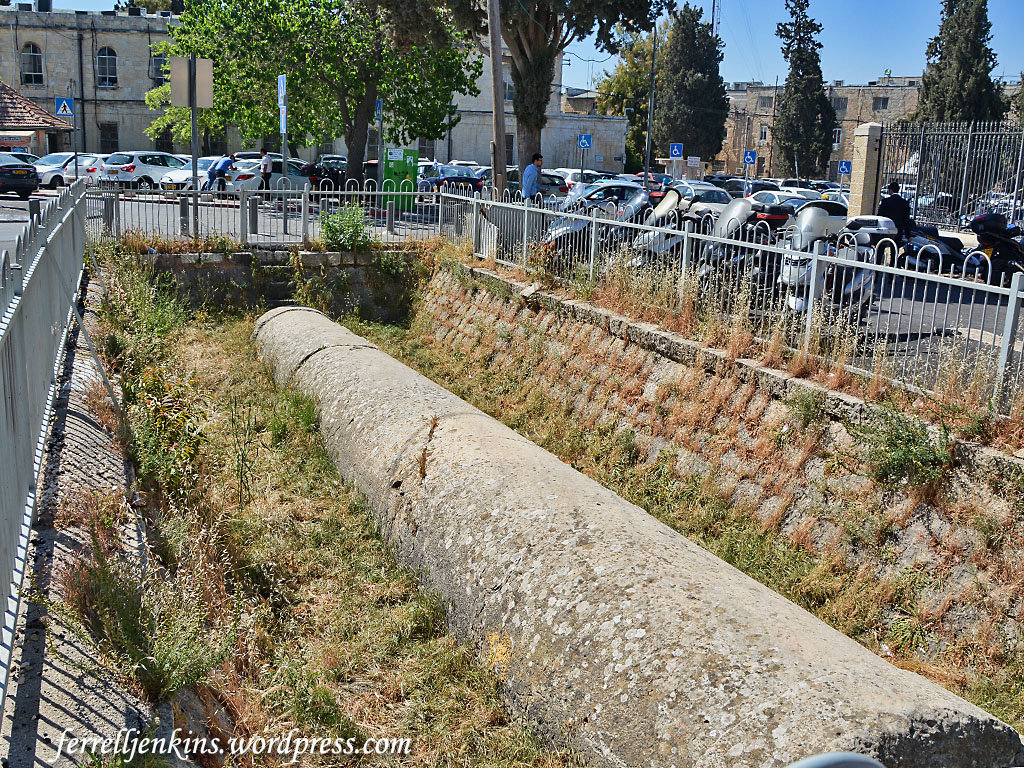
Only one column remains visible in the quarry of the Russian Compound. It is 12.15 meters (almost 40  feet) long and has a mean diameter of about 1.75 meters (5.74 feet). It is greater at the base than at the head.

Pillar left in the quarry at the Russian Compound, Jerusalem. Photo by Ferrell Jenkins.

Pillar left in the quarry at the Russian Compound. Photo by Ferrell Jenkins.

The Blue Guide Jerusalem says,

[The 19th century French scholar] Clermont-Ganneau suggested that the size agreed with that of the columns of the Royal Portico of the Temple of Herod the Great (1 C BC), and may have been one of the engaged columns placed adjacent to the wall.

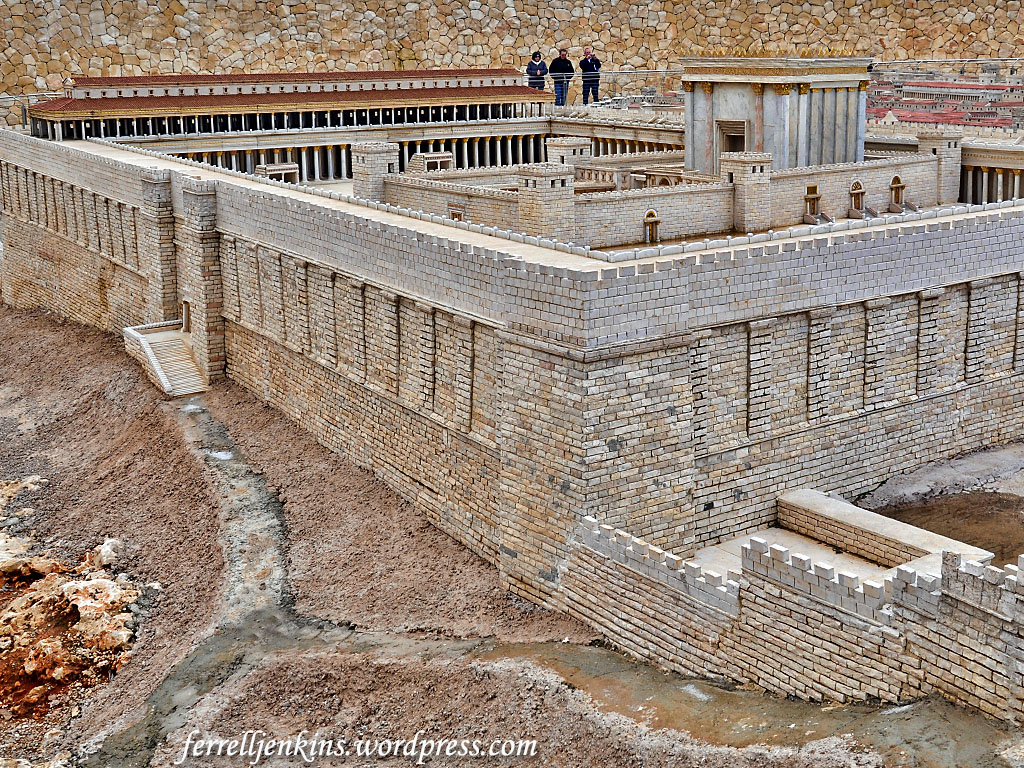
Our photo below shows a model of the Temple precinct built by Herod the Great with work continuing for many years (John 2:20) . The view is from the northeast. The three people viewing the model are standing at the southwest corner of the Temple precinct. The Royal Stoa is to their right on the south side of the model. They appear to be standing at the location of Robinson’s Arch, the stairway that provided entrance to the Royal Stoa.

The Herodian Temple in the Second Temple Model at the Israel Museum. Photo by Ferrell Jenkins.

The Herodian Temple in the Second Temple Model at the Israel Museum. Photo by Ferrell Jenkins.

Though we have here a pillar or column rather than a stone, I think we have a nice reminder of the prophecy of Psalm 118:22.

The stone that the builders rejected has become the cornerstone. (Psalm 118:22 ESV)

Jesus made reference to this text in His teaching (Matthew 21:42; Mark 12:10; Luke 20:17). The Apostle Peter cited the same text and applied it to Jesus.

This Jesus is the stone that was rejected by you, the builders, which has become the cornerstone. (Acts 4:11 ESV).

See also his extended discussion in 1 Peter 2:4-10, and think seriously about the consequences of rejecting the LORD’S chosen stone.

Jerusalem from the west

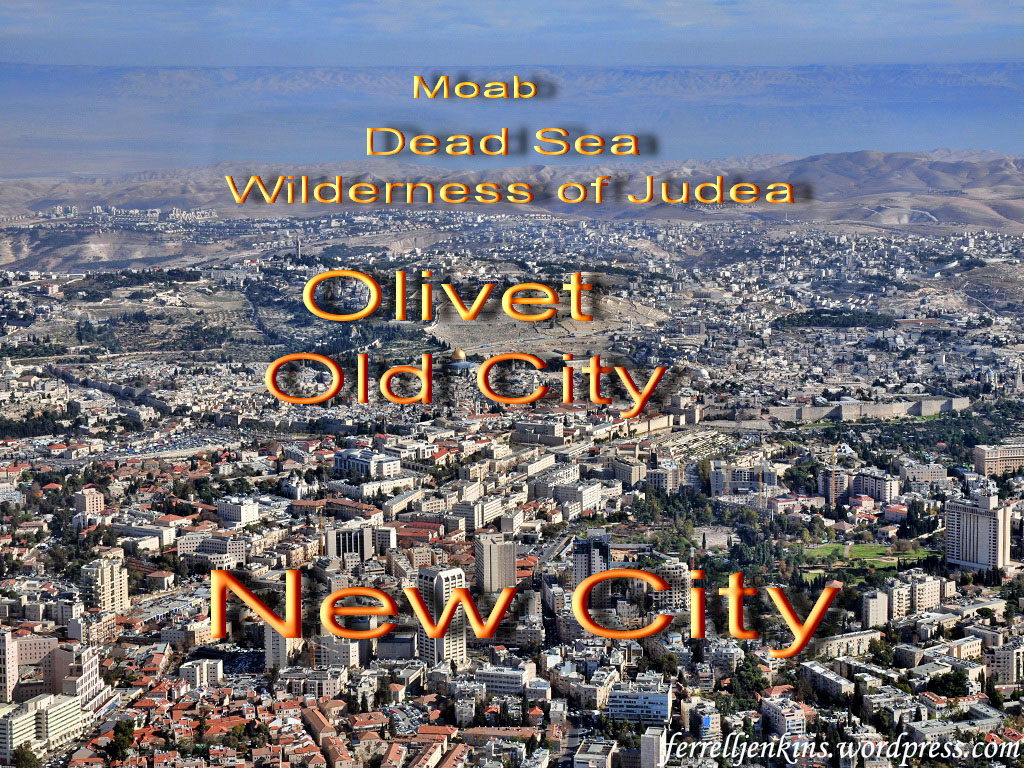
Earlier this week I was browsing through some of my aerial photos of Jerusalem and came across this one that I thought would be informative to good Bible students.

The photo is made while flying over the new (western) city of Jerusalem, some of which is shown in the bottom half of the photo. About mid-way of the photo (from bottom to top) you can see the entire Old (walled) City of Jerusalem. The Dome of the Rock, where the biblical Temple once stood, is almost in the center of the photo (sightly left of center).

The Kidron valley is lost at this angle and the new tombs on the Mount of Olive seem to touch the Old City.

Aerial view of Jerusalem from the west. This photo shows the new (west) city of Jerusalem, the Old City, the Mount of Olives, the wilderness of Judea, the Dead Sea, and the mountains of Moab (Transjordan plateau). Photo by Ferrell Jenkins.

Aerial view of Jerusalem from the west. This photo shows the new (west) city of Jerusalem, the Old City, the Mount of Olives, the wilderness of Judea, the Dead Sea, and the mountains of Moab (Transjordan plateau). Photo by Ferrell Jenkins.

Continuing east you will see a portion of the Wilderness of Judea, then the Dead Sea. At the extreme left of the Dead Sea a portion of the Jordan Valley is visible.

Beyond the Dead Sea the mountains of Moab are visible in the Transjordan Plateau.

The same photo labeled to identify the places discussed.

The same photo labeled to identify the places discussed.

— Postscript —

Leon Mauldin and I have made numerous personal study trips to the Bible Lands in addition to the tours we have led. We have included flights to photograph these places from the air. I think you will enjoy Leon’s blog. It was a coincident that just as I finished my article showing Jerusalem to Moab, I received Leon’s blog showing the rooftops of the Old City and the Mount of Olives.

Jesus was born in Bethlehem

Now after Jesus was born in Bethlehem of Judea in the days of Herod the king, behold, wise men from the east came to Jerusalem, saying, “Where is he who has been born king of the Jews? For we saw his star when it rose and have come to worship him.” When Herod the king heard this, he was troubled, and all Jerusalem with him; and assembling all the chief priests and scribes of the people, he inquired of them where the Christ was to be born. They told him, “In Bethlehem of Judea, for so it is written by the prophet: (Matthew 2:1-5 ESV)

Last April I visited Bethlehem hoping to see the refurbished Church of the Nativity, but the work was still in progress. However, I did see something new. In the courtyard of St. Catherine’s church, near the statue of Jerome, there was a very nice nativity display that I wish to share with our readers.

Nativity display in the courtyard of St. Catherine's church in Bethlehem. Photo by Ferrell Jenkins.

Nativity display in the courtyard of St. Catherine’s church in Bethlehem. Photo by Ferrell Jenkins.

You may recall that Jerome lived in Bethlehem from about 384 A.D. to 420 A.D. He is best known for translating the ancient Hebrew and Greek manuscripts into what would be called the Latin Vulgate. Our earliest (chronologically) English versions were translated from the Latin rather than from the Greek and Hebrew.

In the past couple of weeks there has been an uptick of interest in previous articles I have written about the birth of Jesus, Bethlehem, and Christmas.

We have compiled an Index of articles dealing with these subject here. Perhaps you will find both the articles and the photographs helpful in your study and teaching.