Category Archives: Egypt

A new Bible atlas

For the past three weeks I have had the opportunity to consult The New Moody Atlas of the Bible by Barry J. Beitzel.
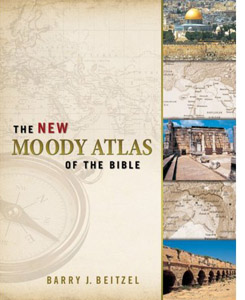
The New Moody Atlas of the Bible
This work is a revision of The Moody Atlas of the Bible, published in 1985. This edition is a worldwide co-edition organized and produced by Lion Hudson in Oxford, England. You surely have seen some of their beautiful work in other publications. The USA edition is published by Moody Publishers. Many high quality books today are printed in the Orient. This one was printed in China. Amazing, isn’t it.
I don’t intend this as a review, but I am impressed with the clarity with which Beitzel discusses controversial material. In “The Route of the Exodus” he clearly discusses the historical background, the geographical setting, searching for Mt. Sinai in Saudi Arabia/South Jordan, searching for Mt Sinai in the northern Sinai peninsula, and searching for Mt. Sinai in southern Sinai. Pros and cons of the various positions are briefly set forth. No, I won’t tell!
This atlas sells for $49.99. I wish the publisher would sell it for $50. Does that one cent difference make anyone think they are getting a bargain? Amazon currently has the book for $31.49 (there we go again) from this link: The New Moody Atlas of the Bible.
Beitzel, with degrees from Dropsie, Fuller, and the University of Pennsylvania, is professor of Old Testament and Semitic Languages at Trinity Evangelical Divinity School.
Ancient Egypt in Pictures

Ancient Egypt in Pictures is the title of a slide-show collection of 47 nice photos on the Fox News web site here. Archaeology is alive and well in Egypt these days.

Egypt is an important travel destination for students of ancient history and archaeology, as well as for those interested in background studies for the Bible.

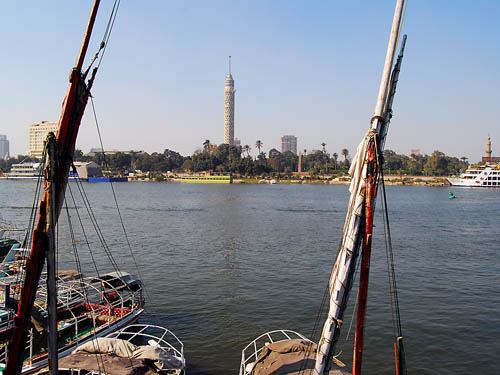
Nile River at Cairo. El Borg tower across river. Photo by Ferrell Jenkins.

Nile River at Cairo. El Borg tower across the river. Photo by Ferrell Jenkins.

HT: David Padfield

The fish of ancient Egypt and Ashkenazi Jews

A human interest story by Stephen Gabriel Rosenberg draws a connection between the fish eaten by the Israelites in ancient Egypt and the fish eaten by Ashkenazi Jews today during Passover (Pesach). The Ashkenazi Jews of Israel and America are those who descended from Jews living along the Rhine River in Germany. Because of their movement to other areas, we think of them as having come from central and eastern Europe. Non-Ashkenazi Jews are known as Sephardic Jews. We typically think of them as having lived in the Iberian peninsula and Yemin, among other places.

Rosenberg paints a fascinating history of the gefilte fish which is eaten on the Passover and as the Sabbath (Shabbat) afternoon meal. He cites the work of the late George Freudenstein of Riverdale, New York. He calls Freudenstein “an eminent nutritional scientist and Hebrew scholar.  Freudenstein was chief chemist of the Jewish food giant Rokeach for 50 years and also an ardent talmudist.”

IN ANCIENT Egypt fish was a staple diet for the workers, and that included the Hebrew slaves. Not satisfied with the manna, they complained to Moses, “We remember the fish that we ate in Egypt for nothing” (Numbers 11:5) and the Egyptian sources confirm that Rameses II, perhaps the pharaoh of the Exodus, gave his workers a free allowance of 10 kilos of salted fish each month. Under his descendent Rameses III, around 1150 BCE, it is recorded that the grave diggers requested an increase in this generous amount to compensate them for their heavy and unpleasant work.

In spite of the hot climate, Nile fish could be preserved by drying and salting, as evidenced by the discovery of a warehouse of dried fish at the Sun Temple of El-Amarna, in central Egypt.

Freudenstein quotes a German Egyptologist, who claims that the composition of the fish in the Nile Delta has hardly changed over the last five millennia and that there are 30 species still active from ancient times. These include carp, pike and mullet, and the species of Nile mullet is exactly the one that is in use for today’s gefilte fish, at least as produced by Rokeach.

Let it be noted that we do not concur that Rameses II was the Pharaoh of the Exodus, but that is for another time. Rosenberg’s fascinating article, “In praise of gefilte fish,”  may be read in its entirety here in the Jerusalem Post. We learn that Secretary of State Hillary Clinton “is engaged in diplomatic moves” to resolve a USA export/Israel import issue dealing with the gefilte.

We noted that the ancient Israelites longed for the fish of Egypt (Numbers 11:5). After the return from exile in Babylon, Nehemiah informs us that the men of Tyre sold imported fish in Jerusalem.

The people from Tyre who lived there were bringing fish and all kinds of merchandise and were selling it on the Sabbath to the people of Judah– and in Jerusalem, of all places! (Nehemiah 13:16 NET)

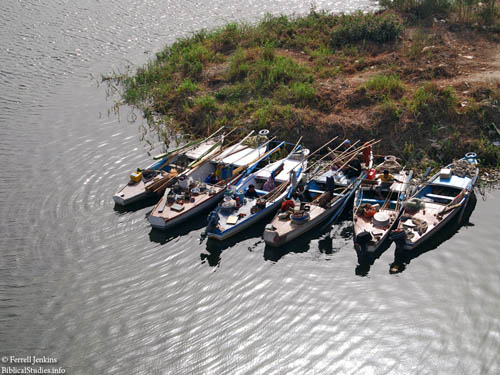
Our photo today shows the Nile River immediately south of Cairo where it divides to go around the islands, such as Roda Island, in the river. Fishermen get ready to go out for the day’s catch.

The Nile River near Cairo. Photo by Ferrell Jenkins.

The Nile River near Cairo where the river goes around the islands that are visible in the city. Photo by Ferrell Jenkins.

HT: Joesph I. Lauer

Flash floods in the Sinai peninsula

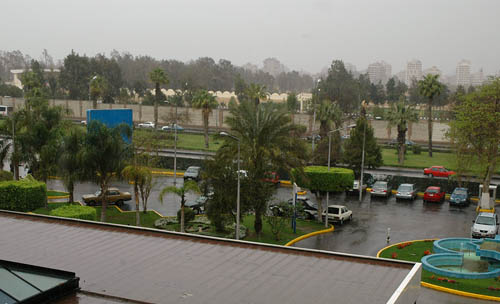
Travel in Egypt is sometimes hindered by small amounts of rain. In flat areas such as the delta an inch of rain can flood the area and make automobile travel impossible, or at least impractical. In early March, 2005, Elizabeth and I had remained in Egypt for a few days after the tour group returned home. We planned one day to go to Goshen. That morning when we looked from the hotel window in Heliopolis we observed rain. The guide scheduled to go with us on the excursion arrived, but explained that we would not be able to go due to the 1/2 to 1 inch of rain that had fallen during the night. The annual rainfall in the Cairo area is 1 1/2 to 2 inches. In Upper Egypt years may pass with no rainfall.

Rain in Cairo - March 9, 2005. Photo by Ferrell Jenkins.

Rain in Cairo - March 9, 2005. Photo by Ferrell Jenkins.

Egypt is less prepared for an inch of rain than many southern USA cities are for an inch of snow.

On another excursion we went to Jebel Musa, the traditional Mount Sinai, in the Sinai Peninsula. As we traveled through the Wadi el-Tor (el-Tur or al-Tur) shortly before arriving at Feiran, I noted that there had been a flash flood in the wadi. Our guide explained that this typically happened at least once each winter. He said that the asphalt paved road could be washed out by less than an inch of rain.

Wadi el Tor in the Sinai Peninsula after a flash flood. Photo by Ferrell Jenkins.

Wadi el Tor in the Sinai Peninsula after a flash flood. Photo by Ferrell Jenkins.

Rocks polished by the winter flood were strewn across the wadi. These stones show the different rocks found in the Sinai. The red stones indicate iron. The green is copper. The black is basalt, indicating a volcanic area.

Rocks in the Wadi el Tour in the Sinai Peninsula. Photo by Ferrell Jenkins.

Rocks in Wadi el Tor of the Sinai Peninsula. Photo by Ferrell Jenkins.

Let us recall that the normally dry wilderness (midbar, desert) once flowed with water for the Israelites.

“He led you through the great and terrible wilderness, with its fiery serpents and scorpions and thirsty ground where there was no water; He brought water for you out of the rock of flint. (Deuteronomy 8:15 NAU)

He split the rocks in the wilderness And gave them abundant drink like the ocean depths. (Psalm 78:15 NAU)

More on flash floods

Flash floods in the Negev caught the attention of several bloggers in January. We noted them here. Harriett called my attention to an article in Al-Ahram weekly online about the flash floods in Egypt the same day.

As the dawn mists began to lift on 18 January in the small village of Atef Al-Sadat in the governorate of Northern Sinai, newlyweds Himdan Khalil and his wife found their tiny home swamped with water. They left their belongings behind to flee as the water inside their mud-brick house continued to rise, reaching a metre and a half.

“We are used to these floods but the watercourses that drain the floodwater were blocked by newly built chalets and clubs which resulted in the overflow into our homes,” Khalil told Al-Ahram Weekly. “The entire village was swamped and most villagers are now homeless””

Khalil’s devastated house was one of 3,645 homes destroyed in the governorates of North Sinai, South Sinai and Aswan. The floods left 10 people dead, two missing and 40 injured, according to government estimates. Seventy-two roads were destroyed and 13,000 olive trees uprooted. Sewage treatment stations and Arish hospital were badly damaged and part of the ceiling of Hall No. 2 at Sharm El-Sheikh Airport collapsed. In the southern city of Aswan strong winds overturned 80 high- pressure electricity towers, disrupting power supplies. Initial assessments of the cost of the damage are LE400 million.

Read the full report here.

A photo from the northern Sinai town of Arish shows damages caused by the torrential rains. Remember that this wadi was dust-dry a few hours earlier.

Damages caused by torrential rains in Arish. Al-Ahram weekly online.

Damages caused by torrential rains in Arish. Al-Ahram weekly online.

Arish is located one the Wadi el-Arish, generally thought to be the River [nahar] of Egypt, the southern boundary of the land promised to Abraham.

On that day the LORD made a covenant with Abram, saying, “To your offspring I give this land, from the river of Egypt to the great river, the river Euphrates…” (Genesis 15:18 ESV)

The Wadi el-Arish is a few miles south of Gaza in the northern Egyptian Sinai.

Laju Paul posted many photos of the flash flood in the Negev at Through the Land of Israel III January 18. Scroll down to that date.

Fox News slideshow of recent archaeology

The slide show Digging Up History: The Latest Archaeology News at Fox News includes a several photos of discoveries of interest — including some we have mentioned in previous posts.

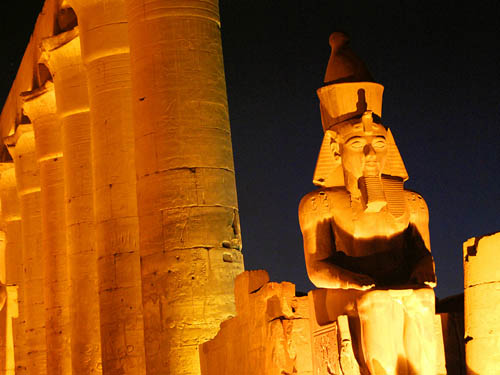
  • The Alley of Sphinxes at Luxor, Egypt, from the 12th century B.C. Work had just begun on this street connecting Karnak Temple with Luxor Temple when we visited in January, 2008.
  • Tombs of the Pyramid builders.
  • Ptolemaic temple of Bastet in Alexandria.
  • Restoration of the Monastery of St. Antony near Suez City, Egypt.
  • Stolen artifacts seized by police in Limassol, Cyprus. The report says the deal is estimated to be worth $15.5 million.

See the full show here.

Court of Rameses II in the Luxor Temple. Photo by Ferrell Jenkins.

Court of Rameses II in the Luxor Temple. Photo by Ferrell Jenkins.

HT: Brooks C.

Speaking at Florida College lectures

This is the week for the annual Bible lectures at Florida College in Temple Terrace, FL. Even though I retired from teaching in 2001, I have been invited to speak each year. Most of these have been lectures that do not require writing a manuscript for publication. That is my preference, of course.

Yesterday I spoke in Puckett Auditorium on Roads and Seas Less Traveled. For a 45 to 50 minute presentation I had to be very selective. I explained what I meant by the title. I was speaking of places (roads and seas) that tourists rarely visit. I limited myself to the land of Goshen and Malta.

Using a map, I showed the location of the land of Goshen in the eastern Nile Delta. This is where Jacob’s family settled when they went from Canaan to Egypt (Genesis 45:10), and where they grew to a nation and spent time in bondage. This area was also called the “land of Rameses.”

Then Joseph settled his father and his brothers and gave them a possession in the land of Egypt, in the best of the land, in the land of Rameses, as Pharaoh had commanded. (Genesis 47:11 ESV)

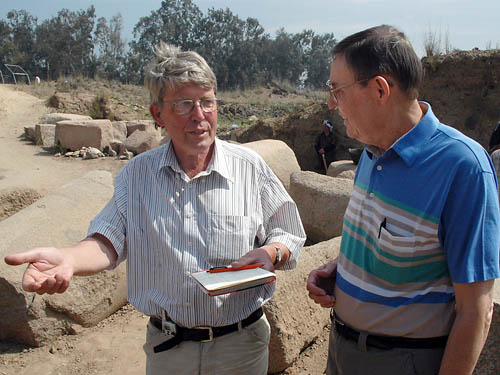
Dr. Manfred Bietek of the Austrian Institute in Cairo has excavated since the mid-1960s at Tell el-Dab’a, Ezbet Helmi, and Qantir. All of these sites are located a few miles north of modern Faqus in the eastern Delta. I have taken my tour group to visit sites in Goshen on two tours, but tourists are not allowed to visit Tell el-Dab’a. In fact we were not allowed to get off the bus to make photographs of the canal that follows the path of the ancient Pelusiac branch of the Nile. I have a friend in Egypt who knows the territory and offered to take me to visit some of these places. We went late in the afternoon. In fact, by the time we arrived at Tell el-Dab’a it was already dark.

Here is the original photo:

Tell el-Dab'a in the Eastern Nile Delta. Photo by Ferrell Jenkins.

Tell el-Dab'a in the Eastern Nile Delta. Original Photo by Ferrell Jenkins.

After a little work in Photoshop, the photo looks as if it were taken during a hazy day.

Tell el-Dab'a in the Eastern Nile Delta. Photo by Ferrell Jenkins.

Tell el-Dab'a in the Eastern Nile Delta. Photo by Ferrell Jenkins.

In the original larger photo it is easy to see shards of pottery scattered in the area.

The children of Israel once lived in this flat, fertile area of Egypt. In fact, if this is indeed the land of Rameses, the Israelites departed from this region for the promised land (Exodus 12:37).

A fuller discussion about the Land of Rameses may be read here.

A scholarly article by Dr. Bryant  G. Wood about New Discoveries at Rameses is available at the Associates for Biblical Research web site here. I also recommend the article on Israel in Egypt by Gary Byers at the same site (here).

Worship of Bastet extended to the Ptolemaic Period

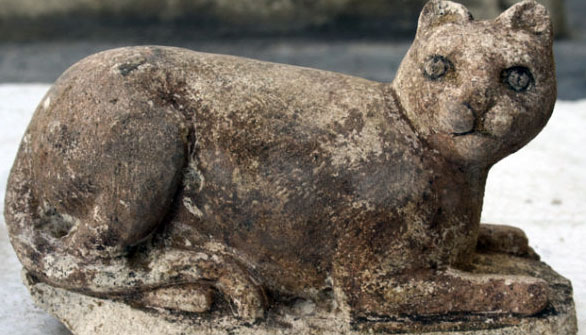
Fox News reported here recently on the discovery of a Greek temple dedicated to the Egyptian cat goddess Bastet.

Egyptian archaeologists unearthed the remains of an ancient Greek temple dedicated to Egyptian cat goddess Bastet in the Mediterranean city of Alexandria, the antiquities department said Tuesday.

The mission, led by Mohamed Abdel Maqsoud, head of Antiquities of Lower Egypt, discovered the remains of a temple of Queen Berenike, the wife of King Ptolemy III who ruled Egypt between 246 and 222 B.C., in the Kom al Dikka area in Alexandria.

“The discovered remains are 196 feet tall and 49 feet in width,” antiquities chief Zahi Hawass said in a statement. He said the temple was “subjected to destruction during later eras when it was used as a quarry, which led to the disappearance of many of its stone blocks.”

A group of 600 Ptolemaic statues were also unearthed during the routine excavations, including a large collection of icons depicting Bastet, goddess of protection and motherhood.

The discovery in Kom al Dikka is the first Ptolemaic temple discovered in Alexandria to be dedicated to the goddess Bastet, Abdel Maqsoud was quoted as saying in the statement.

“It indicates that the worship of the goddess Bastet continued in Egypt after the decline of the ancient Egyptian era,” he said.

The Ptolemaic period marks the Greek rule of Egypt from 305 B.C. until the Roman conquest in 30 B.C.

Alexandria became the capital city of Ptolemaic Egypt and thrived as the center of Greek culture and trade.

Bastet. Discovered at Alexandria. AP photo.

Image of Bastet, the cat goddess of Egypt, discovered at Alexandria. AP.

Egypt was noted for the worship of numerous gods. The plagues of Egypt were a judgment against “all the gods of Egypt” (Exodus 12:12). Later, in the time of the prophet Jeremiah, the LORD again warned of judgment upon the gods of  Egypt (Jeremiah 43:12-13).

Every time I read Paul’s discussion about the condition of the Gentiles I think of the gods of ancient Egypt.

Professing to be wise, they became fools,  and exchanged the glory of the incorruptible God for an image in the form of corruptible man and of birds and four-footed animals and crawling creatures. (Romans 1:22-23 NAU)

Bubastis in ancient Egypt was especially devoted to Bastet. The ruins of the city are now surrounded by the city of Zagazig in the Eastern Delta. It was mentioned by the prophet Ezekiel under the name Pi-beseth (Ezekiel 30:17).

Prof. Christian Tietze and a team of Egyptian archaeologists have been working at Tell Basta (Bubastis).

Prof. Christian Tietze and Ferrell Jenkins at Tell Basta, Egypt, 2005.

Prof. Christian Tietze and Ferrell Jenkins at Tell Basta, Egypt, 2005.

The new discovery from Alexandria in the Ptolemaic period shows that the worship of Bastet continued, and was more wide spread than commonly thought.

Pyramids built by free men?

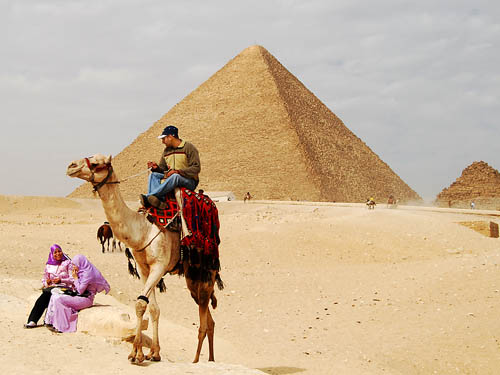
A recent article in Haaretz, and several other sources, says new information indicates that the great pyramids of Egypt were built by free workers, rather than slaves.

Tombs discovered in recent years near the Great Pyramids in Egypt may reveal that the builders of the famed monuments were free workers, rather than slaves, as is commonly thought. The discovery of the tombs also showed that the workers received pay, food and lodging near the construction site, the Egyptian Antiquities Ministry said yesterday.

Egyptian archaeologists said they found evidence of settlements near the pyramids of Khufu and Khare, at Giza near Cairo.

Popular culture has long depicted slaves toiling away in the desert to build the mammoth pyramids only to meet a miserable death at the end of their efforts. The new tombs, which are approximately 4,100 years old, may dispel these myths.

“These tombs were built beside the king’s pyramid, which indicates that these people were not by any means slaves,” Zahi Hawass, the chief archaeologist heading the Egyptian excavation team, said in a statement.

Hawass said evidence had been found showing that farmers in the Delta and Upper Egypt had sent 21 buffalo and 23 sheep to the plateau every day to feed about 10,000 builders.

The builders were rotated every three months and those who died on the job were buried in these tombs.

The full report is here.

The Giza Pyramids. Photo by Ferrell Jenkins.

The Giza Pyramids. Photo by Ferrell Jenkins.

HT: Biblical Paths.

Tirhakah (Taharqa) in the British Museum

In two previous posts we have mentioned the statue of Taharqa (English Bible: Tirhakah) recently discovered in Sudan. Tirhakah, king of Cush, is important in Bible study because he is mentioned in 2 Kings 19:9 (= Isaiah 37:9) as befriending Hezekiah, king of Judah.

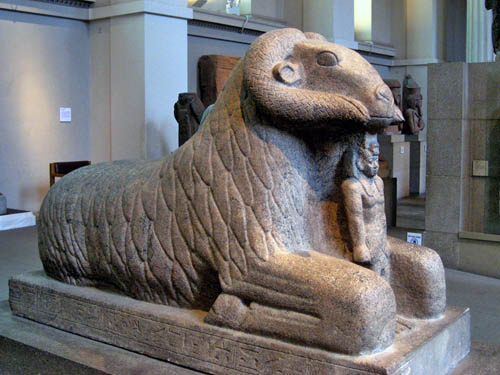
The British Museum displays a beautiful granite statute of Tirhakah showing the king standing under the protection of the god Amun shown as a recumbent ram. The gray granite sculpture, dating to about 675 B.C., was found at Karnak. This granite is typical of the Aswan area.

Tirhakah under the protection of the god Amun. British Museum photo by Ferrell Jenkins.

Tirhakah under the protection of the god Amun. Photo by Ferrell Jenkins.