Category Archives: Culture

Israel Museum now open

The Israel Museum has been closed to the public while undergoing a complete renovation. We have noted this with construction photos here.

The museum is once again open. Here are links to a couple of reports about the refurbished museum.

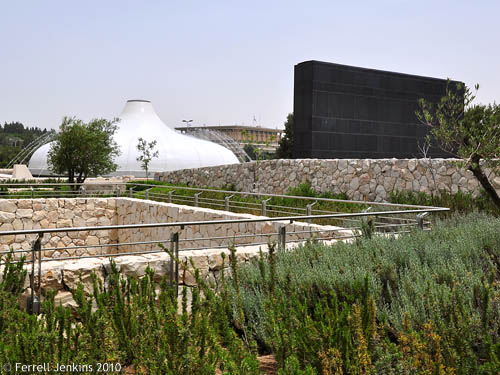
The already impressive location of the Museum campus with the Shrine of the Book, the Second Temple Model and the nearby Israeli Knesset building is sure to be even more impressive. I anticipate my next visit.

The Shrine of the Book at the Israel Museum. Photo by Ferrell Jenkins.

The Shrine of the Book at the Israel Museum. Photo by Ferrell Jenkins.

The Shrine of the Book and the Second Temple Model has been open during the museum renovation.

David … saw from the roof a beautiful woman bathing

Well, I suppose everyone who reads this blog knows the story. It is the story of David and Bathsheba. Perhaps some wonder how this could be possible. The terrain of Jerusalem tells the story. This photo shows the location of the City of David where the railing is at the top. One can easily envision King David looking down from his roof to houses below.

City of David from below. Photo by Ferrell Jenkins.

The City of David from below. Photo by Ferrell Jenkins.

In the spring of the year, the time when kings go out to battle, David sent Joab, and his servants with him, and all Israel. And they ravaged the Ammonites and besieged Rabbah. But David remained at Jerusalem. It happened, late one afternoon, when David arose from his couch and was walking on the roof of the king’s house, that he saw from the roof a woman bathing; and the woman was very beautiful. (2 Samuel 11:1-2 ESV)

Read the full account in 2 Samuel 11. A hi-res image is available by clicking on the photo.

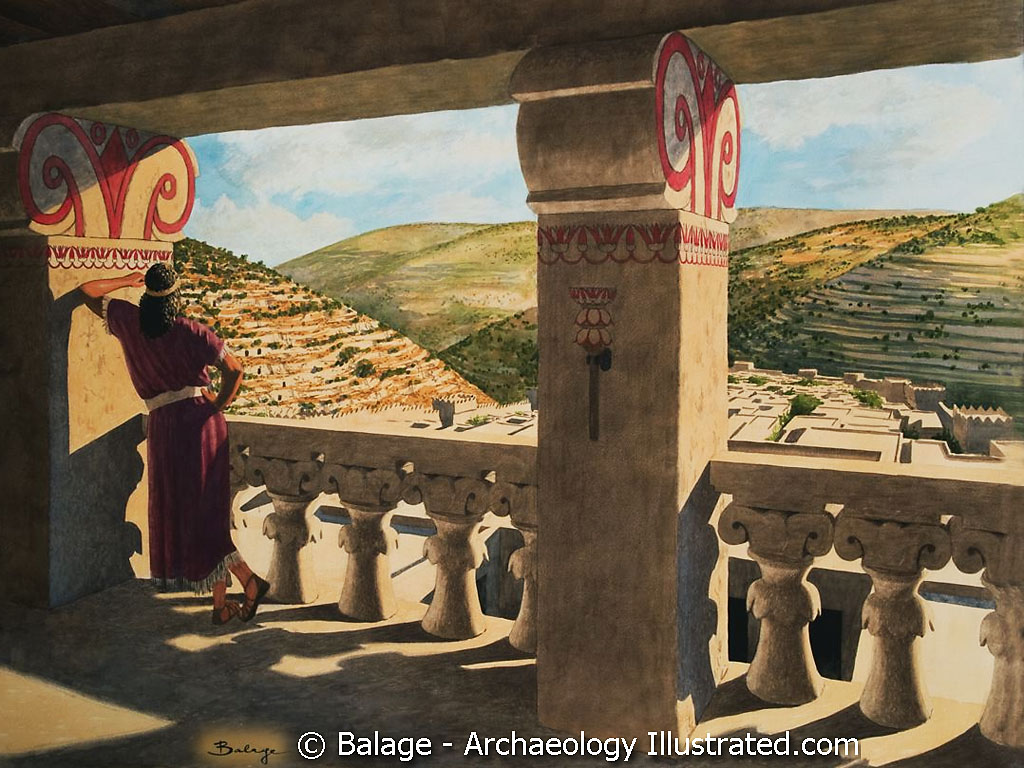
Artist Balage Balogh has illustrated this biblical story for us in the image below. Take a look at his work at Archaeology Illustrated.

King David on his balcony. Illustration by Balage Balogh.

King David on his balcony. Illustration by Balage Balogh.

3,500 year old bracelet found in upper Galilee

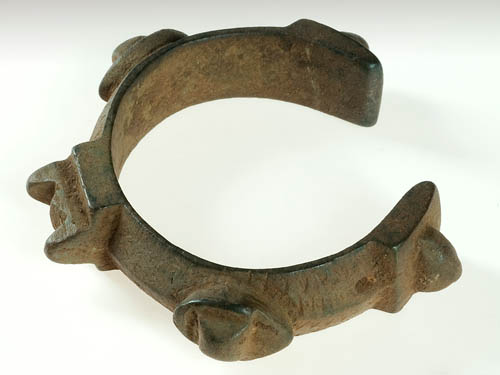
A bronze bracelet dating to the Late Bronze Age (ca. 1550–1200 BC) has been found during an excavation at Ramat Razim in the vicinity of Zefat (Tsefat, Safad). Karen Covello-Paran, director of the excavation, says,

“We discovered a wide rare bracelet made of bronze. The ancient bracelet, which is extraordinarily well preserved, is decorated with engravings and the top of it is adorned with a horned structure. At that time horns were the symbol of the storm-god and they represented power, fertility and law. The person who could afford such a bracelet was apparently very well off financially, and it probably belonged to the village ruler. It is interesting to note that in the artwork of neighboring lands gods and rulers were depicted wearing horned crowns; however, such a bracelet, and from an archaeological excavation at that, has never been found here.”

Rare bronze 3,500 year old bracelet. Photo: Clara Amit, courtesty IAA.

Rare bronze 3,500 year old bracelet. Photo: Clara Amit, courtesy of the Israel Antiquities Authority.

Large Canaanite cities, such as Megiddo and Hazor, have been excavated, but this is the first time a village of the Late Bronze Age has been excavated in the north of Israel. This site, Ramat Razim, is located southeast of Zefat, and is thought to have “constituted part of the periphery of Tel Hazor,” according to Covello-Paran.

The Late Bronze Age is the period of Moses, the Exodus, and the Conquest in biblical history.

The IAA news release may be read in its entirety here. A hi-res image is available here.

HT: Joseph I. Lauer

French to train Bethlehem museum staff

Ma’an News Agency reports here,

France and the Palestinian Authority Ministry of Tourism and Antiquities signed an agreement to build a museum in the city of Bethlehem, under a heritage preservation and promotion project.

The agreement, for some 700,000 Euro ($915,460 US), was signed on Wednesday in Bethlehem, and will finance the establishment of a national museum in the Old City of Bethlehem, the training of museographers in cooperation with French institutions including The Louvre and the French National Heritage Institution, as well as fund long-term planning and management.

The two year project is expected to begin this fall.

It has become difficult for tourists to visit Bethlehem. There are several reasons I can think of at the moment.

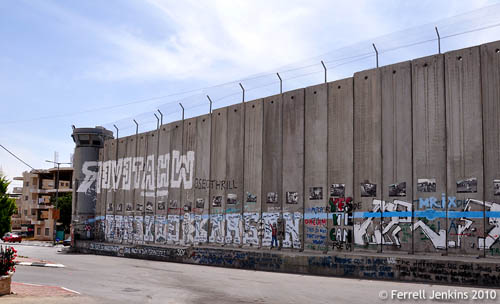
  • The security wall that Israel has built around Bethlehem. In order to visit Bethlehem the tour bus must pass from Israel into the Palestinian Authority controlled Bethlehem. Going in is often easier than coming out. Most of the time tourists are not required to leave the bus, but sometimes we must leave the bus and walk through the check point. Tourists probably only do this once or twice in their life, but honorable citizens of the PA must go through this every day they work in Israel.
  • The Palestinian Authority has not made it easy, either. Buses formerly parked in Manger Square near the Church of Nativity. I think it is good that they  now must park in a new parking garage. Drivers should be allowed to drive closer to the center of town to drop off passengers. Some older tourists find it difficult to climb the steep hill to visit the center.

Before I die I would like to see the wall that separates Bethlehem and Jerusalem dismantled and a portion of it placed in the Bethlehem museum as a reminder of the past. This requires an improvement in conditions now existing in the Middle East.

The Wall as seen in Bethlehem. Photo by Ferrell Jenkins.

The Security Wall as seen in Bethlehem. Photo by Ferrell Jenkins.

HT: Museum note, Joseph Lauer.

Philistine temple found at Tell es-Safi/Gath

We have commented several times about discoveries from the Tell es-Safi/Gath project. One reason for this is that Prof. Aren Maeir keeps us informed about significant developments  during the excavation season. He also posts good photos suitable for use in teaching.

Gath is important because of several significant biblical accounts.

  • The ark of the covenant was taken to this place by the Philistines – 1 Samuel 5:8.
  • It, along with Ashdod, Gaza, Ashkelon, and Ekron, was one of the five major cities of the Philistines – 1 Samuel 6:17.
  • Goliath was from Gath – 1 Samuel 17:4.

Prof. Maeir is now confident that he has found a Philistine temple. Let him tell the story:

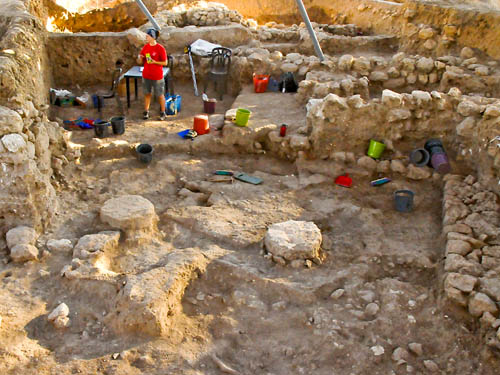
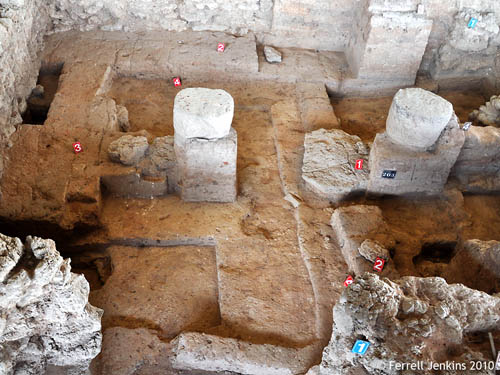
The first [photo] is a working view of the structure which I believe we can now firmly claim to be a temple! The structure, which has at its center two large pillar bases, and some of the exterior walls, had various cult related objects found in its vicinity. In addition, a metallurgical working area was found right next to it. It should be noted that it is located right under a cultic “corner” of St. A3 (9th cent. BCE). Of interest of course is the similarity to the Philistine temple at Qasile, St. X, with the two pillars in the center of the structure. As noted in the past, this floor plan might be reflected in the Samson story, where the architectural imagery of an Iron Age Philistine temple with two pillars might have served as the background for narrative of Samson standing between two pillars etc. And just to make sure that this is not mis-understood: 1) This does not mean that this story occurred here (in the Bible it occurs in Gaza); 2) And this in itself is not proof that the story happened! Rather, this might reflect a cultural awareness on the part of the biblical story of what a Philistine temple of the early Iron Age might have looked like.

I am including a small photo from the Tell es-Safi/Gath Excavation weblog. You may read the full report and find a hi-res photo here.

Tell es-Safi/Gath Philistine temple with pillar bases. Photo: Bar Ilan U.

The Philistine temple with pillar bases at Tell es-Safi/Gath. Photo: Bar Ilan University.

Perhaps, for the benefit of those who do not read much about archaeology, I should explain that the “St.” above refers to the stratum or layer in which the discovery was made. Stratum A3 is dated to the 9th century B.C.

The discovery of a Philistine temple is exciting because it may provide another illustration to help with a better understanding of the biblical account of Samson in the temple of Dagon at Gaza (Judges 16:23-31). Note these verses:

Samson took hold of the two middle pillars that supported the temple and he leaned against them, with his right hand on one and his left hand on the other. Samson said, “Let me die with the Philistines!” He pushed hard and the temple collapsed on the rulers and all the people in it. He killed many more people in his death than he had killed during his life. (Judges 16:29-30 NET)

We already have one illustration from Tel Qasile where three Philistine temples were found in the first excavation after the founding of the state of Israel. Tel Qasile is situated on the north side of the Yarkon River in Tel Aviv. These temple are said to belong to the 12th-11th centuries B.C. Here is a photo of a portion of the Philistine temple at Tel Qasile.

Philistine Temple at Tel Qasile - Eretz Israel Museum at Tel Aviv U.

Philistine Temple at Tel Qasile. Photo by Ferrell Jenkins.

This temple at Tel Qasile is located on the grounds of the Eretz Israel Museum at Tel Aviv University. More about Tel Qasile at a later time. A photo suitable for teaching is available here.

Hazor yields fragments of a law code

Two fragments of a cuneiform tablets containing portions of a law code have been recovered at Hazor, according to the excavators, Prof. Amnon Ben-Tor and Dr. Sharon Zuckerman. The report from Hebrew University says,

The text parallels portions of the famous Law Code of Hammurabi, and, to a certain extent even the Biblical “tooth for a tooth”. The team is presently working its way down towards a monumental structure dating to the Bronze Age, where more tablets are expected to be found.

A brief report with several photos may be read at Device Magazine.

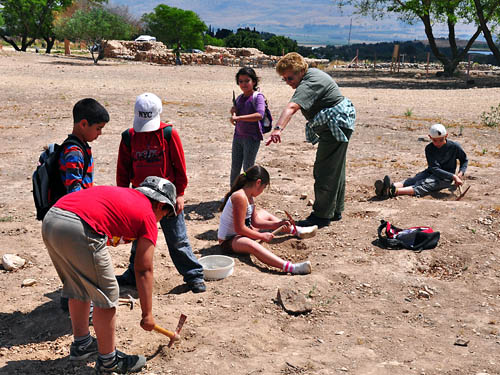
Earlier this year I noticed that a teacher had brought her students to dig at Hazor. I think the area had been salted so they would be sure to find some nice shards of pottery. We sometimes say that archaeology is the national pastime in Israel. These kids are learning early.

Kids learning about archaeology at Hazor. Photo by Ferrell Jenkins.

Kids learning about archaeology at Hazor. Photo by Ferrell Jenkins.

Notice the Hula Valley in the distance below the tell.

When Hazor was captured by Joshua and the Israelites it was a the head of all the kindgoms in the area.

And Joshua turned back at that time and captured Hazor and struck its king with the sword, for Hazor formerly was the head of all those kingdoms. (Joshua 11:10 ESV)

HT: Joseph I. Lauer; Bible Places Blog.

Passing through the grainfields

All three of the Synoptic Gospels record the incident of Jesus and His disciples passing through the grainfields on a Sabbath.

On a Sabbath, while he was going through the grainfields, his disciples plucked and ate some heads of grain, rubbing them in their hands. But some of the Pharisees said, “Why are you doing what is not lawful to do on the Sabbath?” (Luke 6:1-2 ESV)

I thought I would put together some photos to help you visualize what happened here. First, we have a photo of a wheat field below Mount Tabor. The photo is made looking north west from near the site of ancient En-dor. The area is famous as the home of the medium visited by King Saul (1 Samuel 28:7).

Wheat field below Mount Tabor. Photo by Ferrell Jenkins.

Wheat field with view NW to Mount Tabor. Photo by Ferrell Jenkins.

Now, imagine the disciples taking grain in their hands.

Picking heads of grain. Photo by Ferrell Jenkins.

Picking heads of grain. Photo by Ferrell Jenkins.

And then rubbing the heads to separate the grain from the chaff.

Rubbing grain to separate the head from the chaff. Photo by Ferrell Jenkins.

Rubbing grain to separate the head from the chaff. Photo by Ferrell Jenkins.

The last two photos were made in the vicinity of Mount Nemrut in eastern Turkey. Larger images, suitable for use in teaching, are available by clicking on the photos.

The Gate at Dan

The late Avraham Biran worked for several decades at the city of Dan. In addition to locating the massive city walls, the high place, and the house of David inscription, he found a pedestal or rostrum within the gate where it is thought the king would sit when he visited Dan. Here is a view of the pedestal as we see it today. Note the standing stone to the left of the podium. Click on the photo for an image large enough for use in presentations.
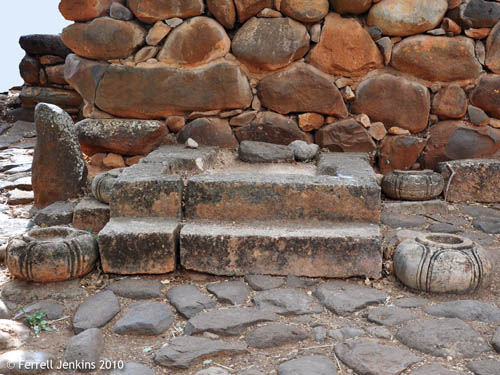
Rostrum inside the gate at Dan. Photo by Ferrell Jenkins.

Rostrum inside the gate at Dan. Photo by Ferrell Jenkins.

Prof. Carl Rasmussen has a photo showing a canopy built over the podium several years ago at Holy Land Photos. Just search for Dan, and you will also see some photos showing details of certain parts of the podium.

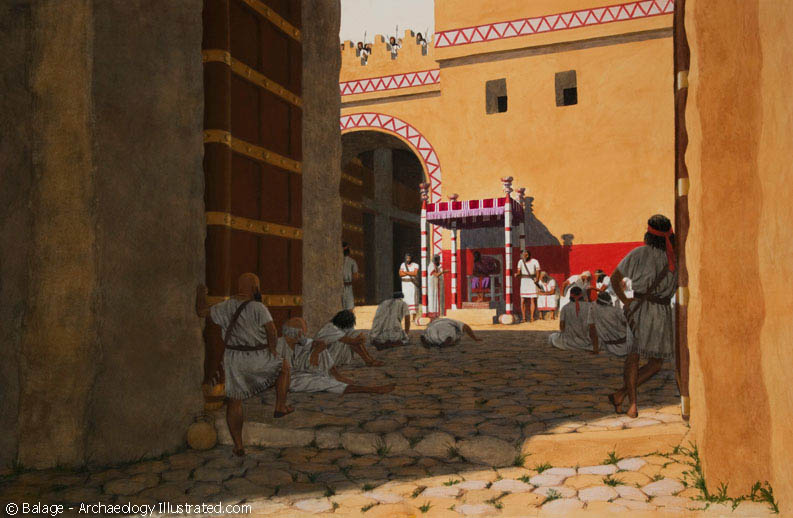
Balage Balogh has provided us with an illustration showing the way this area of the gate might have looked in biblical times. The illustration is based on information gleaned from the excavation at Dan. Take a look at other illustrations at Archaeology Illustrated. [At the moment this page is slow in loading. It is worth the wait.]
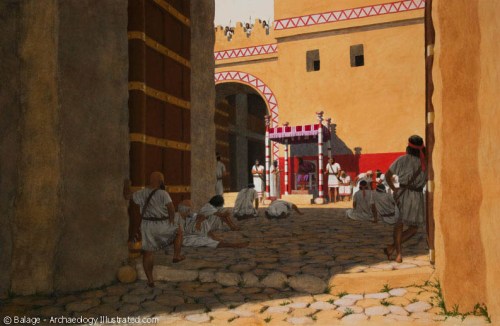
© Dan City Gate. Illustrated by Balage Balogh.

In several places in the Old Testament we have examples of the king sitting in the gate of a city. David sat in the gate at Jerusalem after the death of Absalom.

Then the king arose and took his seat in the gate. And the people were all told, “Behold, the king is sitting in the gate.” And all the people came before the king. Now Israel had fled every man to his own home. (2 Samuel 19:8 ESV)

The officials of the king of Babylon sat in the middle gate at Jerusalem.

Then all the officials of the king of Babylon came and sat in the middle gate: Nergal-sar-ezer, Samgar-nebu, Sar-sekim the Rab-saris, Nergal-sar-ezer the Rab-mag, with all the rest of the officers of the king of Babylon. (Jeremiah 39:3 ESV)

Eli, the judge, had a seat at the gate of Shiloh.

As soon as he mentioned the ark of God, Eli fell over backward from his seat by the side of the gate, and his neck was broken and he died, for the man was old and heavy. He had judged Israel forty years. (1 Samuel 4:18 ESV)

The king of Israel and the king of Judah sat at the entrance of the gate of Samaria.

Now the king of Israel and Jehoshaphat the king of Judah were sitting on their thrones, arrayed in their robes, at the threshing floor at the entrance of the gate of Samaria, and all the prophets were prophesying before them. (1 King 22:10 ESV)

I trust the photo and illustration with make these biblical texts more vivid when you read them in the future.

The Explorations in Antiquity Center at LaGrange, Georgia, has a wonderful display of the various aspects of the city gate. We reported on the Center along with two reviews by David Padfield here, and here, and here. the Explorations in Antiquity web site may accessed here. The photo is provided by David Padfield.
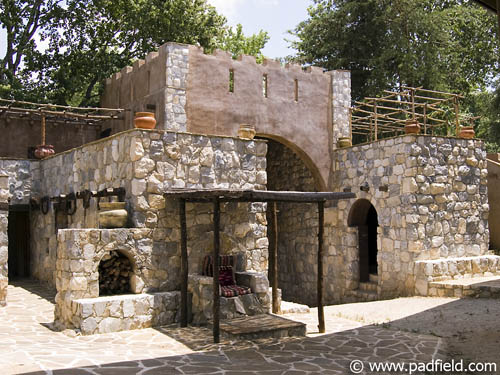
The city gate at the Exploration in Antiquity Center. Photo by David Padfield.

The city gate at the Exploration in Antiquity Center. Photo by David Padfield.

Archaeology Illustrated by Balage Balogh

His work has been featured on the Discovery Channel and in many scholarly books. A native Hungarian, Balage now creates images of ancient Israel, Egypt, Babylon, Greece, Rome, and other civilizations. He tell the story in these words:

I began working with archaeologists, scholars and experts in the field in the Department of Archaeology at the Hebrew University of Jerusalem, the Albright Institute, the Israel Museum, and universities throughout the United States.  My archaeological illustrations were published in National Geographic Hebrew edition,  A Guide to Jerusalem, The World of the New Testament, The World of the Old Testament, Excavating Jesus, and The Jesus Dynasty among others and many of my illustrations were part of exhibits at the Israel Museum, the Welcome Center in the City of David, Jerusalem, and permanently displayed in the Archaeology Department at the Hebrew University of Jerusalem.

Balage Balogh contacted me with the request that I offer some of his art free of charge on my web sites in exchange for a permanent link. Since I have more readers of the blog than of the web sites I decided to begin here. As time permits I will post a few more of his illustrations here and at the Biblical Studies Info Page and Bible World.

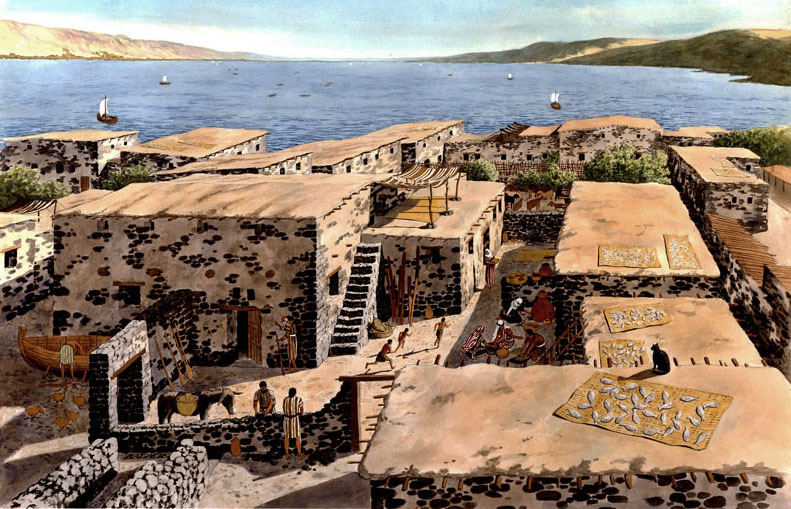
Here is a wonderful drawing of Capernaum at the time of Jesus. One need only know something about the archaeological discoveries of the first century to see the accuracy of this drawing. Notice the basalt stone and the way the roofs are constructed. A larger image is available by clicking on the drawing.

Capernaum at the time of Jesus. Art by Balage Balogh.

Capernaum at the time of Jesus. Art by Balage Balogh.

Take a look at Archaeology Illustrated. Balogh’s work may be purchased for use in presentations or publications. This illustration is © Balage Balogh 2010.

Reaching 400,000

Moments ago someone recorded hit number 400,000 for this blog. Your words of appreciation are greatly appreciated. In the past few weeks, while traveling on the West Coast, numerous people told me they found the posts helpful. The comments left on the blog, and the Emails received are also appreciated.

400,000 hits at ferrelljenkins.wordpress.com.

Ferrell's Travel Blog recorded his number 400,000 this evening.

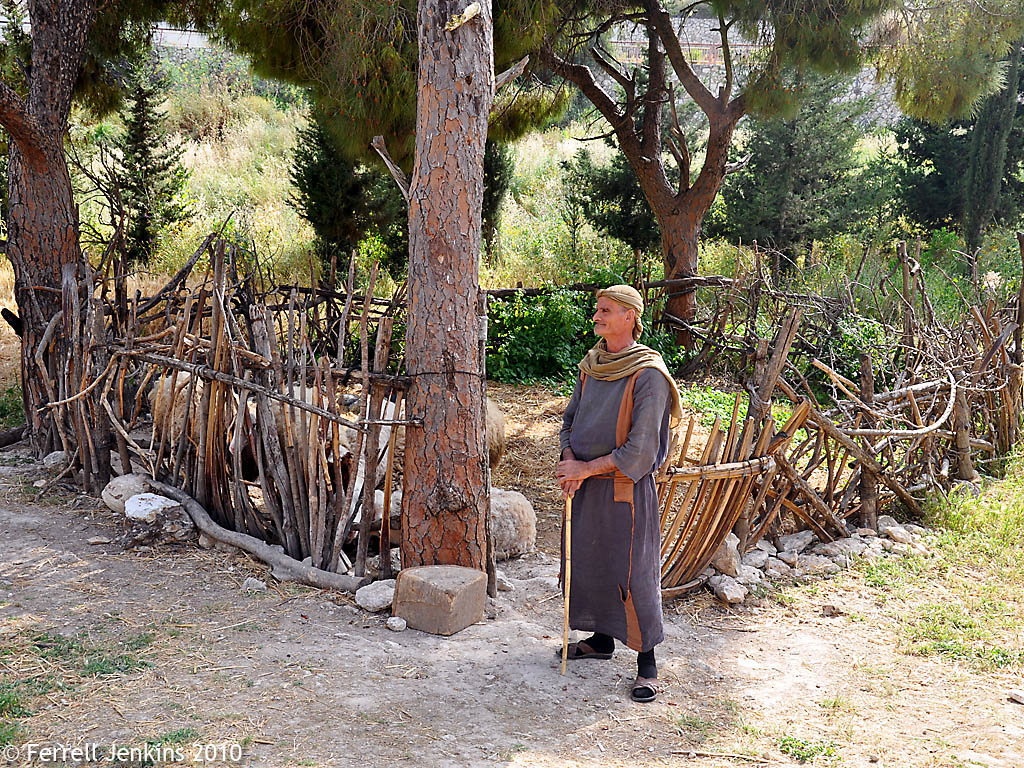
As a marker of this milestone I am posting a photo I think many of you will be able to use in the Bible classes you teach. Click on the photo for a larger image suitable for use in PowerPoint.

Shepherd and sheepfold at Nazareth Village. Photo by Ferrell Jenkins.

Shepherd and sheepfold at Nazareth Village. Photo by Ferrell Jenkins.

This photo might be used in teaching any of the texts mentioning the sheepfold (Genesis 49:14; Numbers 32:16; Judges 5:16; 1 Samuel 24:3; 2 Chronicles 32:28; Psalm 28:13; Psalm 78:70).

It provides a good illustration of the teaching of Jesus in John 10.

“Truly, truly, I say to you, he who does not enter by the door into the fold of the sheep, but climbs up some other way, he is a thief and a robber.  “But he who enters by the door is a shepherd of the sheep. “To him the doorkeeper opens, and the sheep hear his voice, and he calls his own sheep by name and leads them out. (John 10:1-3 NAU)