Category Archives: Culture

Follow-up on fake tomb stones

The following comment by Carl Rasmussen is being elevated to a more prominent place here.

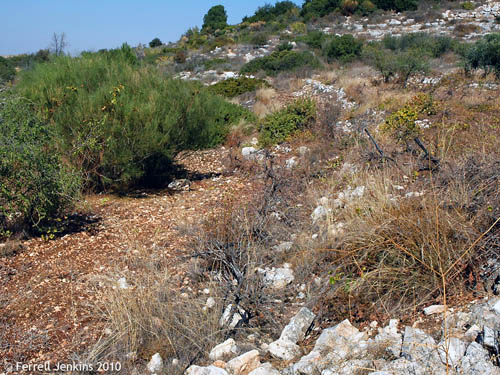
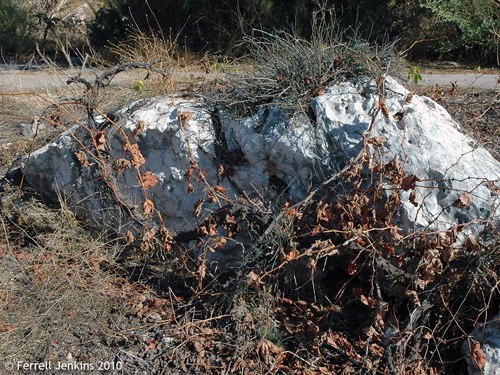
The “tombs” above the pool of Siloam are now labeled as “Children’s Cemetary!” Yes, something “fishy” is going on!

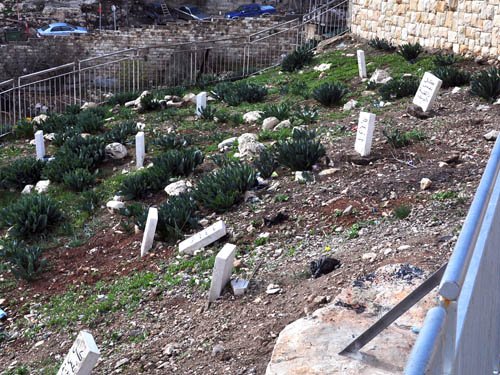
Leen Ritmeyer followed up on the subject here, and with several photos taken less than a month ago by his son Nathaniel here. It seems clear from some of the photos that the stones are not attached to any tomb. In fact there are no typical tombs at the site above the Pool of Siloam.

The final photo was taken 29 May 2009 when no tombs were visible.

A grave matter

Ancient burial places create serious problems for archaeologists. Ultra-Orthodox Jews often create a scene at digs when they know or suspect that there may be Jewish tombs in the area.

The cemeteries of the Holy Land have become a ground for religious and political skirmishes. Leen Ritmeyer reported on fake Arab tombs near the Temple Mount here.

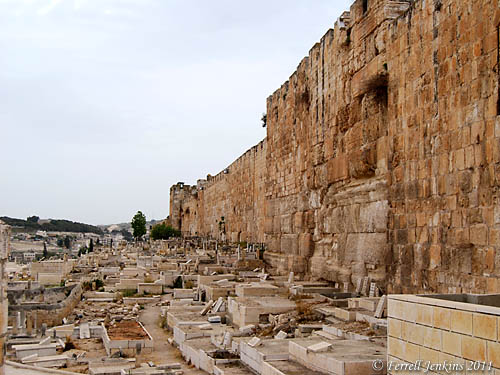
Muslim tombs have been on the eastern wall of the Old City for a long time. This photo was made looking south from outside the Lion’s Gate (or St. Stephens’ Gate). Perhaps every reader knows that this is across the Kidron Valley from the Mount of Olives which we mentioned in the previous post.

Muslim Cemetery along the East Wall of the Old City near Lion's Gate. Photo by Ferrell Jenkins.

Muslim Cemetery along the Eastern Wall of the Old City of Jerusalem near Lion's Gate. Photo by Ferrell Jenkins.

In early February I noticed a large number of new tombstones with Arabic inscriptions in a small plot above the Pool of Siloam. Suspicious, to say the least.

New Tombstones above the Pool of Siloam. Photo by Ferrell Jenkins.

New Tombstones above the Pool of Siloam. Photo by Ferrell Jenkins.

Later, if not sooner, all of these matters will become obvious.

“Do not marvel at this; for an hour is coming, in which all who are in the tombs will hear His voice, and will come forth; those who did the good deeds to a resurrection of life, those who committed the evil deeds to a resurrection of judgment. (John 5:28-29 NAU)

Cemetery on the Mount of Olives

The Washington Post reports here on US and Israeli efforts to end the desecration of Jewish graves on the Mount of Olives. Both religious and political considerations are mentioned.

It is amazing to view the Mount of Olives and see how much of the mountain is now covered with graves. This aerial view may help you to visualize the situation.The cemetery under discussion is shown in the lower right quarter of this photo.

Jerusalem - the Old City and the Mount of Olives. Photo by Ferrell Jenkins.

Jerusalem - the Old City and the Mount of Olives. Photo by Ferrell Jenkins.

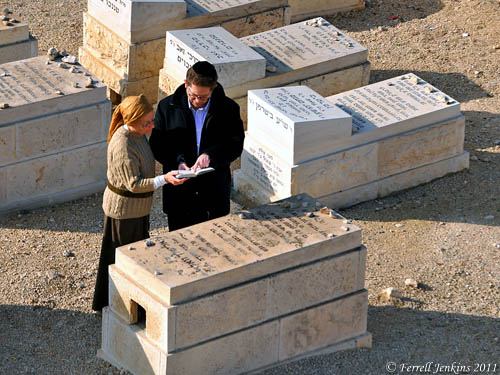
Sometimes when we look at the big picture we miss some important details. The next photo puts a human face and emotion on the situation.

Cemetery on the Mount of Olives. Photo by Ferrell Jenkins.

Cemetery on the Mount of Olives. Photo by Ferrell Jenkins.

At the time of Absalom’s rebellion, David crossed the Mount of Olives as he fled Jerusalem.

But David went up the ascent of the Mount of Olives, weeping as he went, barefoot and with his head covered. And all the people who were with him covered their heads, and they went up, weeping as they went. (2 Samuel 15:30 ESV)

HT: Paleojudaica.

They removed the roof above Jesus

The following paragraph by M. J. Selman in the New Bible Dictionary, 3rd ed., provides a good summary about houses in Bible times.

Many houses had two storeys, though, since no building in ancient Israel has yet been preserved with a complete roofed ground floor or ceiling, the original height of a building is not always certain. Upper rooms were reached by stairs or ladders. These rooms provided the main living and sleeping accommodation (cf. 2 Ki. 9:13, 17), and guests could also be looked after there (1 Ki. 17:19; 2 Ki. 4:10-11).

Roofs were constructed from beams covered with branches and a thick layer of mud plaster, though the rafters were sometimes supported by a row of pillars along the middle of the room. Cylindrical stone rollers about 60 cm. [23.6 inches] long were used to keep the roofs flat and waterproof, though roofs needed to be re-plastered annually prior to the rainy season to seal cracks which had developed during the summer heat.

The family would often sleep on the roof in summer or use it to dry raisins, figs, flax, etc., in the sun. A parapet was to be built as a safety precaution according to Dt. 22:8. Vaulted roofs were certainly in use in Palestine by the Persian period, while the tiled roof also appeared before NT times. The rooftop was also a place of worship, either for Baal and especially the host of heaven (Je. 19:13; Zp. 1:5), or for the true God (Acts 10:9).

The first photo shows a portion of a roof made from wood and mud. You will also notice a roof roller on the roof. After the winter rains it was necessary to roll the roof.

Typical roof from NT times with roof roller. Nazareth Village. Photo by Ferrell Jenkins.

Typical roof from NT times with roof roller. Nazareth Village. Photo by Ferrell Jenkins.

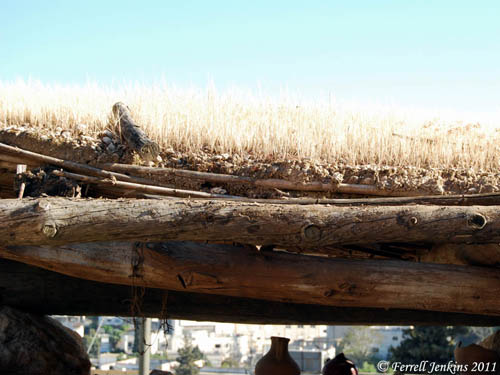
The next photo shows the roof a little later in the year after grass has grown on the roof and died under the summer heat.

Typical of a roof from NT times with grass growing on it. Nazareth Village. Photo by Ferrell Jenkins.

Typical of a roof from NT times with grass growing on it. Nazareth Village. Photo by Ferrell Jenkins.

From the inside of the house the ceiling might look something like this.

Ceiling of roof made of timber and reeds. Nazareth Village. Photo by F. Jenkins.

Ceiling of roof made of timber and reeds. Nazareth Village. Photo by F. Jenkins.

Notice the New Testament texts implying such a roof.

When they were not able to bring him in because of the crowd, they removed the roof above Jesus. Then, after tearing it out, they lowered the stretcher the paralytic was lying on. (Mark 2:4 NET)

The account of Luke, a gentile physician, adds an interesting point that creates a small problem in interpretation.

But since they found no way to carry him in because of the crowd, they went up on the roof and let him down on the stretcher through the roof tiles right in front of Jesus. (Luke 5:19 NET)

Did you notice the reference to roof tiles? One of the Translator’s Notes in the NET Bible discusses this problem.

There is a translational problem at this point in the text. The term Luke uses is keramos. It can in certain contexts mean “clay,” but usually this is in reference to pottery (see BDAG 540 s.v. 1). The most natural definition in this instance is “roof tile” (used in the translation above). However, tiles were generally not found in Galilee. Recent archaeological research has suggested that this house, which would have probably been typical for the area, could not have supported “a second story, nor could the original roof have been masonry; no doubt it was made from beams and branches of trees covered with a mixture of earth and straw” (J. F. Strange and H. Shanks, “Has the House Where Jesus Stayed in Capernaum Been Found?” BAR 8, no. 6 [Nov/Dec 1982]: 34). Luke may simply have spoken of building materials that would be familiar to his readers.

There are other possible interpretations, but I hope this information with the photos will help you better understand the biblical text.

Impressions about the “new” Israel Museum

Many groups visit the campus of the Israel Museum. There are now three areas of interest:

  • The Israel Museum
  • The Shrine of the Book where some Dead Sea Scrolls are displayed
  • The Second Temple Model

We wrote about the planned reopening of the Israel Museum here, and about the opening here. The Shrine of the Book remained open during the time the Museum was closed, and the Second Temple Model has been open since it was moved from the grounds of the Holyland Hotel in the middle of 2008. See here.

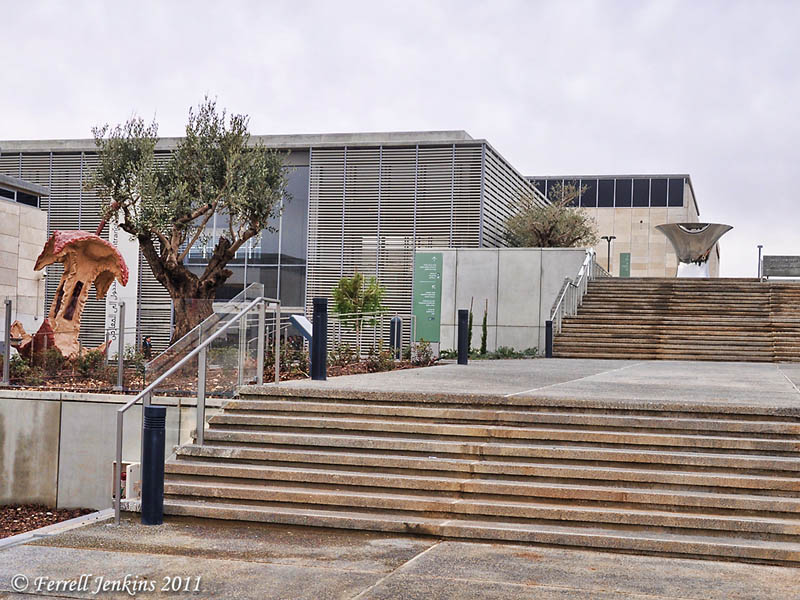
The  galleries devoted to archaeology remain in the same place as before, but there is a significant difference from before. The entrance to the galleries is not at the top of the steps, but about half way up by the apple core sculpture. There is a small cafe with snacks and drinks at the entrance. Tickets are purchased down below at the entrance to the entire complex.
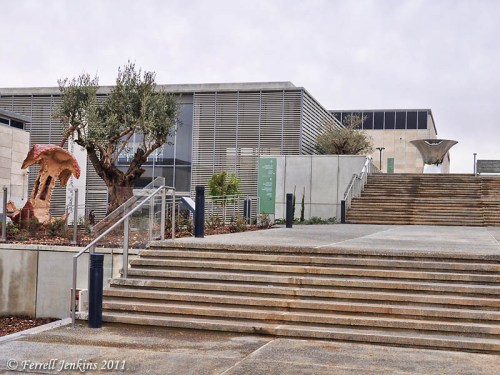
Entrance to Israel Museum. Photo by Ferrell Jenkins.

Entrance to Israel Museum. Photo by Ferrell Jenkins.

Once inside the galleries entrance, the archaeology section is on the left. One is greeted by a display of seven standing anthropoid clay coffins from Deir el-Balah, a site south of Gaza city excavated by Trude Dothan in 1972. These coffins which bear the evidence of Egyptian influence date to the 13th century B.C.
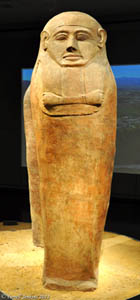
Clay coffin (sarcophagus) from Deir el-Balah.

Clay coffin from Deir el-Balah

In the March, 1976, issue of Biblical Archaeology Review, Hershel Shanks closed an article about the discovery of these sarcophagi this way:

We may close on a Biblical note. “Aron”, or coffin, is used only once in the Bible (Genesis 50:26)—in connection with Joseph’s burial. Joseph, a high-ranking minister in the Egyptian government was naturally buried in accordance with Egyptian rites, including mummification and a coffin. It is likely that his coffin resembled the anthropoid coffins unearthed at Deir el-Balach.

Many sections of the archaeology section remains much the same as before. I will list a few of the items that I think are extremely important to biblical study.

  • The Tel Dan “House of David” Inscription (Isaiah 22:22, et al.)
  • The cult shrine from Hazor.
  • A few pieces of ivory from Samaria (1 Kings 22:39; Amos 3:15; 6:4).
  • Ekron inscription found at Tel Miqne, naming the city and five of its rulers (1 Samuel 6:17).
  • Silver plaques inscribed with the priestly blessing (Numbers 6:23-26). Also known as the Ketef Hinnom discovery.
  • The “Holy of Holies” from the temple at Arad.
  • The Edomite Shrine from biblical Tamar (aka Ein Hazevah).
  • The basalt stele showing a stylized figure of a horned bull from Geshur (aka New Testament Bethsaida).
  • Sennacherib’s siege of Lachish. The original is in the British Museum, but the replica in the Israel Museum has been enhanced to better show the scene (2 Chronicles 32:9).
  • Lachish Ostracon. I only saw one of the letters on display.

And much more…. My time was limited, but I look forward to returning for a longer visit in a few months.

A few things I had seen before, but did not see this time. (It may be that I missed some of these items.)

  • The broken inscription from Ashdod naming Sargon (Isaiah 20:1).
  • The inscribed ivory pomegranate mentioning donations for the priests of the house of the [LORD]. The Israel Museum declared the inscription a forgery in late 2004. There are scholars who believe it to be genuine.

General comments. The display are beautiful and the halls are spacious. Many of the artifacts are displayed in the open (without glass). Visitors are allowed to enter the museum with their cameras. In the past cameras had to be checked. I saw no signs about photography. Shortly after making my first photos I was admonished by one of the docents.

Information about location, hours, tickets, etc. is available at the museum website here.

In another post I will make reference to some of the items of importance to New Testament study.

Pyramids closed to tourists

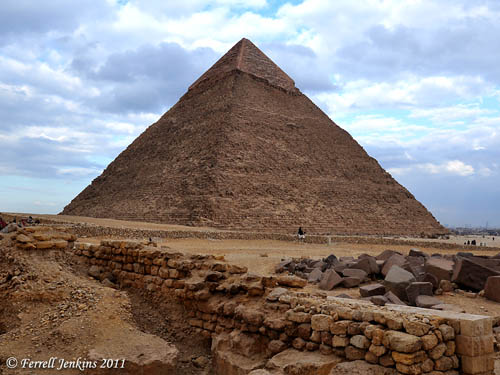
The only TV news source I have at my hotel in Tiberias is the British SkyNews. One of the reports on Egypt mentioned that the Great Pyramids of Giza were closed to tourists. Not surprising. Various governments, like Britain and the USA, are encouraging their citizens not to travel to Egypt. This will be a tremendous blow to many Egyptian companies.

The Pyramid of Chephren. Photo by Ferrell Jenkins.

In Beersheba we enjoyed Fox News. At Eilat we had CNN international which is much different from the CNN in the USA.

SkyNews showed a few photos of damage to cases and artifacts in the Egyptian Museum. Todd Bolen has more info on this at the Bible Places Blog.

Life in the wilderness of Zin

Yesterday we drove north from Eilat to Beersheba (Be’er Sheva). Beersheba, the ancient home of the patriarch Abraham, is the heart of the Negev (the Southland in some English versions).

In the wilderness of Zin, where the ancient Israelites wandered (Numbers 33:36), we saw two female shepherds bringing their large flock of sheep and goats across the main highway 40. This photo shows them after they had crossed the highway on their way to their community of Bedouin. We saw the tents in the distance a little further south.

If you can not see the photo click here.

Sheep in the Wilderness of Zin. Photo by Ferrell Jenkins.

Sheep in the Wilderness of Zin. Photo by Ferrell Jenkins.

The wilderness of Zin included Kadesh Barnea and was the southern boundary for the tribe of Judah.

The land allotted to the tribe of Judah by its clans reached to the border of Edom, to the Wilderness of Zin in the Negev far to the south. (Joshus 15:1 NET)

We enjoyed a Big Mac at the McDonald’s at Avdat, an important town along the Nabatean spice route between Petra and Gaza.

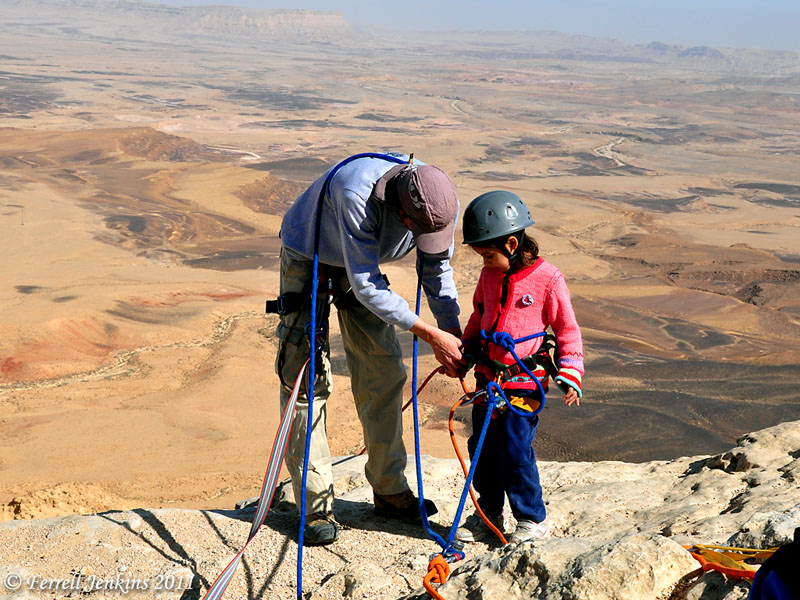
We continued along the way north to Makhtesh Ramon Crater. This crater, about fifty miles south of Beersheba, is said to be the largest crater in the world. We went to the observation point to take a look at the crater. Several people were preparing to rappel the cliff. The most interesting one was a little girl who was not quite six years old. After watching her be instructed in how to handle the rope, we saw her begin down the cliff. We went down to a lower point to see her. By the time we got there she was almost at the bottom and was being helped by (possibly) her mother who had come down before her.

(I am having a little problem uploading photos. If the photo below does not show, click here link to see it.)

Young girl gets ready to rappel at Makhtesh Ramon Crater. Photo by Ferrell Jenkins.

Young girl gets ready to rappel at Makhktesh Ramon Crater. Photo by Ferrell Jenkins.

The one with the fringe on the top

One of our stops today along the Nile River was the site of Edfu. There is a large ancient temple from the period of the Ptolemies about 200 B.C.
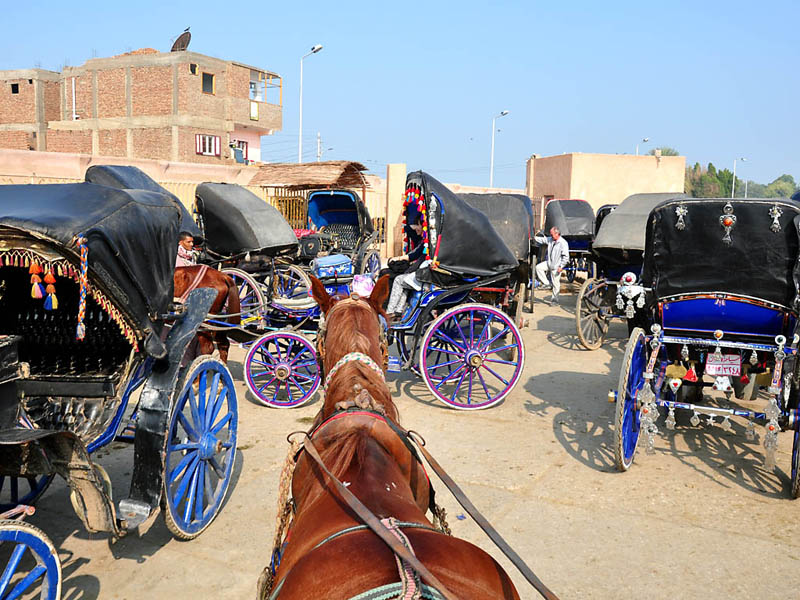
From the cruise boat to the temple we took the local carriages. The carriage parking lot looked like our shopping mall parking lots on the day after Thanksgiving.

Horses and carriages at Edfu. Photo by Ferrell Jenkins.

Horses and carriages in the crowded parking lot at Edfu. Photo by Ferrell Jenkins.

I would like to be posting more info on some of the sites we are visiting, but time and conditions for working on the photos and using the Internet is not permitting. More soon, hopefully. Thanks for stopping by.

The vineyard of the man lacking sense

I passed by the field of the sluggard And by the vineyard of the man lacking sense, And behold, it was completely overgrown with thistles; Its surface was covered with nettles, And its stone wall was broken down. When I saw, I reflected upon it; I looked, and received instruction. “A little sleep, a little slumber, A little folding of the hands to rest,” Then your poverty will come as a robber And your want like an armed man. (Proverbs 24:30-34 NAU)

Neglected vineyard at Neot Kedumim. Photo by Ferrell Jenkins.

Neglected vineyard at Neot Kedumim. Photo by Ferrell Jenkins.

A broken stone wall of the vineyard. Photo by Ferrell Jenkins.

A broken stone wall of the vineyard. Photo by Ferrell Jenkins.

These images might also provide some insight into the statement of the Shulammite girl.

Do not stare at me because I am swarthy, For the sun has burned me. My mother’s sons were angry with me; They made me caretaker of the vineyards, But I have not taken care of my own vineyard. (Song of Solomon 1:6 NAU)

Many worthwhile applications may be drawn from the Scriptural truth illustrated by these photos. I hope you will take a little time today to meditate on these things.

Larger photos suitable for use in sermons and Bible classes are available by clicking on the image.

Repairing the ruins of ancient Babylon

The New York Times ran an article by Steven Lee Myers on the current efforts to save the ruins of Babylon.

On the hillside during one of his many visits to the ruins, Jeff Allen, a conservationist working with the World Monuments Fund, said: “All this is unexcavated. There is great potential at this site. You could excavate the street plan of the entire city.”

That is certainly years away given the realities of today’s Iraq. But for the first time since the American invasion in 2003, after years of neglect and violence, archaeologists and preservationists have once again begun working to protect and even restore parts of Babylon and other ancient ruins of Mesopotamia. And there are new sites being excavated for the first time, mostly in secret to avoid attracting the attention of looters, who remain a scourge here.

The entire article is available here. The article is accompanied by a nice 4:12 minute video of the restoration efforts here. According to the reports the reconstructions made by the Sadaam Hussein regime in the 1980s will probably be torn down.

Jim Davila adds this tip at Paleojudaica:

Related, also in the NYT: A Tour of Iraq’s Ancient Sites. Included are a video about the (traditional) tomb of Ezekiel … and a photo of Hebrew inscriptions at the (traditional) tomb of the prophet Nahum, as well as photos and videos of other sites of biblical and related interest.

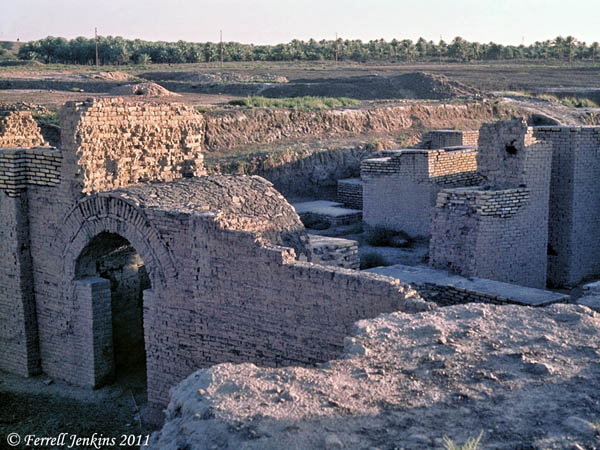
The photo below was made Tuesday, May 12, 1970, and still looks fairly good considering the time lapse and my camera equipment at the time.

Ruins of Ancient Babylon, 1970. Photo by Ferrell Jenkins.

Ruins of Ancient Babylon, 1970. Photo by Ferrell Jenkins.

The prophet Jeremiah spoke about the future of Babylon:

Babylon will become a heap of ruins. Jackals will make their home there. It will become an object of horror and of hissing scorn, a place where no one lives. (Jeremiah 51:37 NET)

We called attention to the UN report of US damage to ancient Babylon here.

HT: Ben Witherington III; Paleojudaica.