Category Archives: Church History

Christmas, St. Nicholas, and Myra

Christmas is approaching. I would like to call your attention to an article I have written about Christmas. You may read it here. A more detailed outline, The Truth About Christmas, giving both biblical and historical information is available in PDF at BibleWorld.com. You are welcome to duplicate these articles for your own use. Please do not make changes in them.

Even by the end of the first century the church was beginning to move away from the apostolic pattern. One of the earliest departures was in church government. Instead of each church having a plurality of elders (bishops, overseers, pastors) (Acts 14:23; Philippians 1:1), it became popular to elevate one man to the position of Bishop over the elders.

In the fourth century there was a bishop at Myra, by the name of Nicholas, who was benevolent to those in need. From this historical person there arose the legend of Saint Nicholas, eventually Santa Claus.

Myra was a town of Lycia about 85 miles from Antalya, Turkey (biblical Attalia, Acts 14:25). The town is located a few miles away from the Mediterranean, but has a port. When Paul was being escorted by a Roman centurion from Caesarea Maritima to Rome, the ship sailed along the coast of Cilicia and Pamphylia, and landed at Myra in Lycia (Acts 27:5). There they found an Alexandrian ship sailing for Italy.

Whether Paul was close enough to see any of Myra we do not know. There are several interesting things that could have been seen. I have only visited Myra once, in 1987. I mention this to say that it was before the days of digital photos. Here is a photo of the house-type tombs in the cliffs at Myra dating from the 4th century B.C.
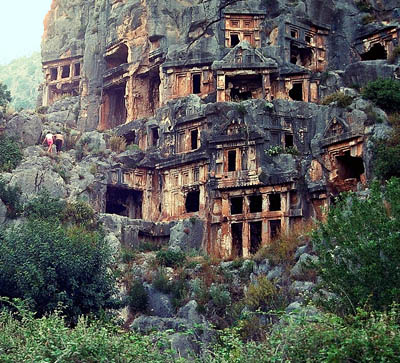
Rock Cut Tombs at Myra in Lycia

The theater at Myra dates from the 2nd century B.C., and had a capacity of 10,000 spectators. The following photo comes from the Wikipedia entry on Myra.
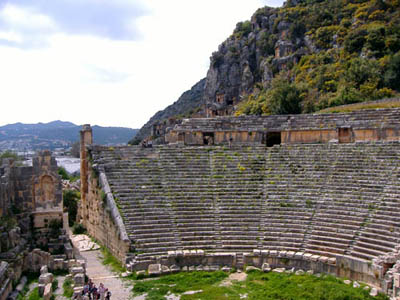
Theater at Myra in Lycia

Ruins of the Church of Saint Nicholas can be seen at nearby Demre. Here is a photo I made of the statue of St. Nicholas in 1987.
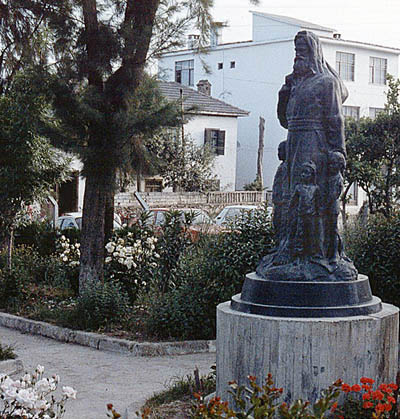
St. Nicholar at Demre (Myra) in Lycia

And that’s how legend grows!
The Reformation and Restoration in Scotland

For those with an interest in Church History, Scotland provides many links. Scotland was influenced by the work of both Martin Luther and John Calvin, who were already advancing the Reformation principles in the early part of the 1500s. Sixteenth century Scottish leaders, who began their work a few years later, included George Wishart and John Knox.

Those of us with a background in the Restoration Movement in America find ourselves in agreement with many of the principles of the Reformation, but not with all of them. Thomas and Alexander Campbell came to America from Northern Ireland. In that area the people “were predominantly Anglo-Scottish in blood and Protestant in religion” (West). Thomas Campbell came to America in 1807. In 1808, when Alexander set out for America he was shipwrecked on the rugged shores of Scotland. Alexander entered Glasgow University where his father has studied earlier. He studied Greek, Logic, and Experimental Philosophy. He came in contact with several independent movements and was especially influenced by James and Robert Haldane. John Glas and Robert Sandeman influenced the young Campbell also. Their churches were congregational in government with a plurality of elders and deacons. They rejected human creeds, advocated weekly observance of the Lord’s Supper. See West, The Search for the Ancient Order, I:36-52.

In America, Barton W. Stone and the Campbells rejected the Calvinistic doctrines of inherited depravity, the direct operation of the Holy Spirit, etc. They determined that the New Testament was the standard of authority for Christians, and that baptism for forgiveness of sins is immersion. Infants did not need to be baptized because they are not sinners.

Writings of some of the Restoration leaders are available online at the Restoration Movement Page.

King James VI (James Stuart) of Scotland was King of Scots, King of England, and King of Ireland. He “authorized” the translation of the Bible that we still know as the King James Bible (1611). King James was born in Edinburgh Castle. The finished product was largely the work of William Tyndale whose New Testament was printed in 1525. His work on the Old Testament was completed by Miles Coverdale and the entire English Bible was first printed in 1535. Tyndale was strangled and burned at the stake in 1536. A nice time line on the Reformation can be studied at the Friends of Tyndale page.

Prior to the work of Tyndale in Scotland, Martin Luther was pushing the Reformation in Germany. Zwingli was at work in eastern Switzerland., and John Calvin was working with Theodore Beze in Geneva, Switzerland.

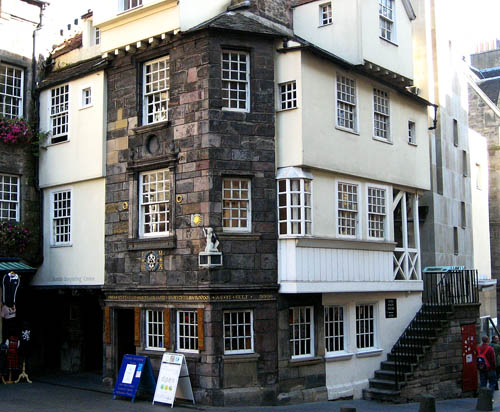
This beautiful and sunny morning I visited the John Knox house in Edinburgh. It is a house dating to the time of Knox and has been sparsely furnished in period furniture. It serves as a museum of the work of Knox. There are several printed volumes (including the Geneva Bible) of the time on display. The Knox house is located on the Royal Mile.

John Knox House, Edinburgh, Scotland.

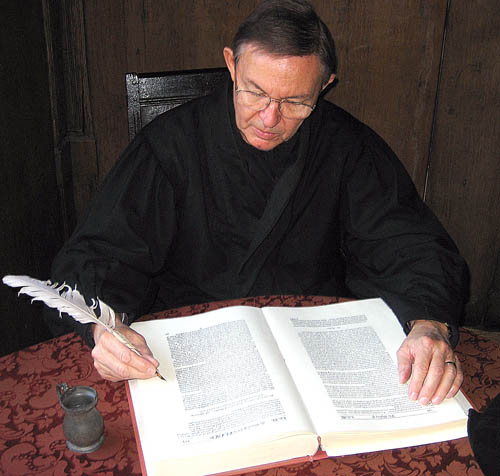
This modern scribe, sitting at a table in the Knox house, is thinking about correcting some of the Calvinistic ideas advanced by Knox.

Modern Scribe in the John Knox House in Edinburgh.

I believe these men failed in some regards, but I am grateful for the work they did to bring us this far. To paraphrase the words of Bernard of Clairvaux, “If we can see further it is because we are standing on the shoulders of giants.”

“Let us therefore, as many as are perfect, have this attitude; and if in anything you have a different attitude, God will reveal that also to you; however, let us keep living by that same standard to which we have attained. Brethren, join in following my example, and observe those who walk according to the pattern you have in us.” – The Apostle Paul, Philippians 3:15-17.

Visiting Edinburgh

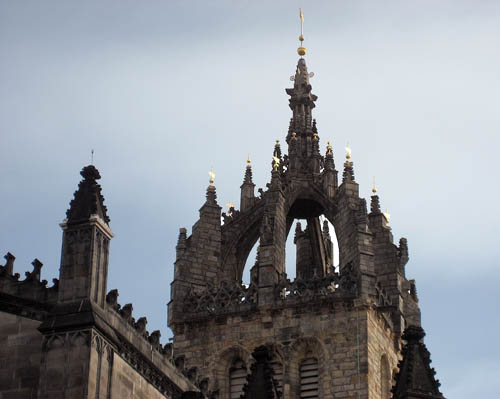
This morning we did the typical sightseeing of Edinburgh. This included Princes Street , the Royal Mile, a visit to St. Giles Cathedral, and the mighty Edinburgh Castle. St. Giles was built as a Roman Catholic church in about A.D. 1124. John Knox began preaching at St. Giles in 1559. Of course, by that time it was a church of the Reformation. Knox had been a friend of Wishart. After spending some time in Geneva with John Calvin he returned to Edinburgh. He is considered the father of the Socttish Reformation. This photo shows the crown of St. Giles, a dominant feature of the Edinburgh skyline.

St. Giles, Edinburgh, Scotland. Photo by Ferrell Jenkins.

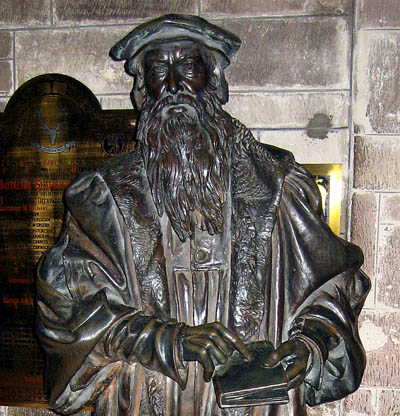
There is a nice statue of John Knox in the building. The most impressive thing about the Reformation is that it pointed men to the Scriptures, rather than to the authority of Rome. Notice that Knox is holding the Bible in one hand and pointing to it with the other. With this we are certainly in agreement.

John Knox in St. Giles. Photo by Ferrell Jenkins.

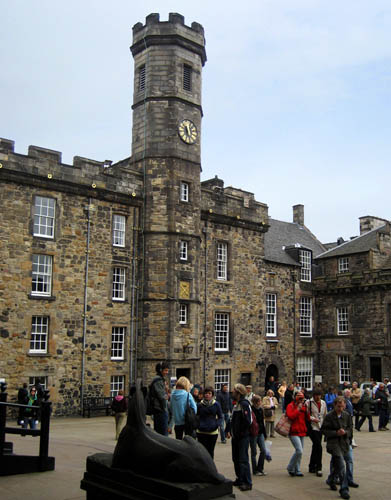
Some parts of the massive Edinburgh Castle date to the 12th century. The photo below is of the 15th century palace where Mary, Queen of Scots, gave birth to James VI, later to become King James I of England. He is the King James of the King James Version of the Bible (the “authorized” version) of 1611.

Edinburgh Castle. Photo by Ferrell Jenkins.

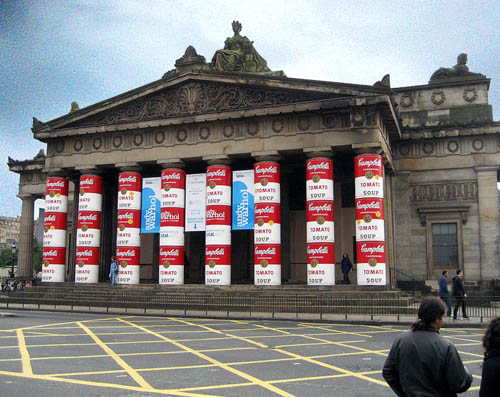
The afternoon was free of planned activity so that the tour members could spend time as they wished. Elizabeth and I visited the National Galleries of Scotland to see a special exhibition of Andy Warhol stuff. The front of the building was decorated with Campbell Soup cans. Someone we love works for Campbell Soup so we wanted to get a photo for him. His initials are very similar to mine! It was cold and windy today, and the sky was drab. I must confess to enhancing the sky a bit (lot).

National Galleries of Scotland, Warhol Exhibition. Photo by Ferrell Jenkins.

After seeing the Warhol Exhibition I decided to try my hand at such tomfoolery. I thought about placing a Dr. Pepper on a table, but decided against it.

From the Highlands to the Lowlands

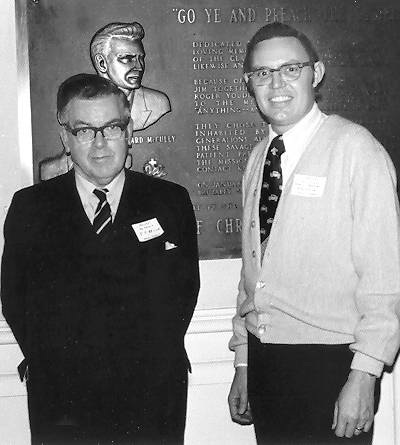
We left Inverness about 8 a.m. this morning headed south for Edinburgh. I began to notice road signs pointing to Elgin. This was the birth place of the late New Testament scholar, F. F. Bruce (1910-1990). He taught at Edinburgh, Leeds, Sheffield, and closed his academic career as Rylands Professor of Biblical Criticism and Exegesis at the University of Manchester. I have been greatly helped by the writings of Bruce, and was delighted to have the opportunity to meet him at a professional meeting in 1975. He was very gracious to an insignificant young teacher, and I have since appreciated that meeting.

F. F. Bruce and Ferrell Jenkins in 1975.

Elgin, Scotland, has a nice web page with a list of Famous Children. Alexander Graham Bell is listed among the famous from Elgin. (Poor guy never had to drive in front of a teenage girl with a cell (mobile  here) phone to her ear!). But F. F. Bruce, author of more than 30 books, is not listed among the Famous Children. Perhaps that will be corrected.

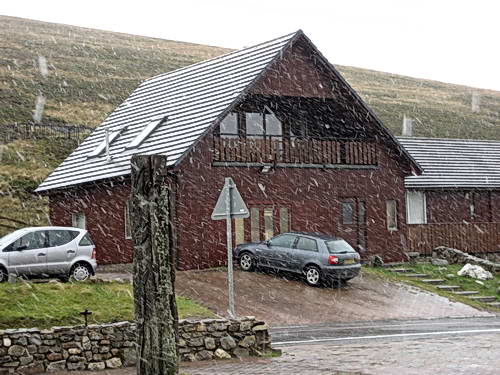
By the time we reached the area around Balmoral, summer residence of Queen Elizabeth and the Royal Family, the weather was very cold and windy. About the time we stopped at a ski lift snow flakes began to fall. The workers in the restaurant said it was the first snow of the season. Here is a photo I took. What appears to be white strips are actually snow flakes that were falling close to the camera.

Snow in the area of Balmoral. Sept. 17, 2007. Photo by Ferrell Jenkins.

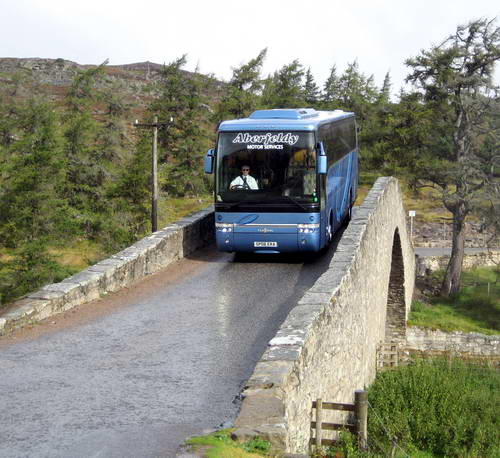
Because the Queen is at Balmoral we were not permitted to visit the estate. We did visit the Presbyterian church where the Queen, head of the Church of England, attends when she is in Scotland. Not enough time to tell you about this. If you saw The Queen, staring Helen Mirren, you saw scenes typical of this region. Here is a photo of our coach coming over a one lane bridge.

Coach coming over bridge near Balmoral. Photo by Ferrell Jenkins.

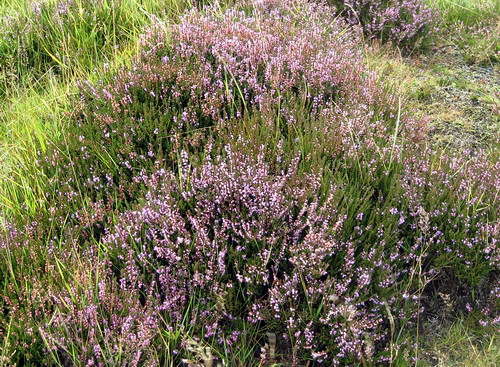
Heather is in abundance on the hills of the Highlands. Here is a close up.

Heather near Balmoral. Photo by Ferrell Jenkins.

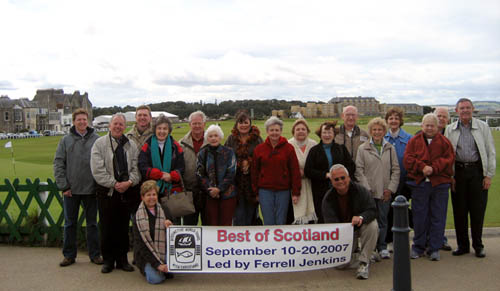
After lunch in Braemor we continued to St. Andrews, famous to all golfers as the birthplace of golf. We made a group photo here. The 18th hole is to the left.

Best of Scotland Group Led by Ferrell Jenkins.

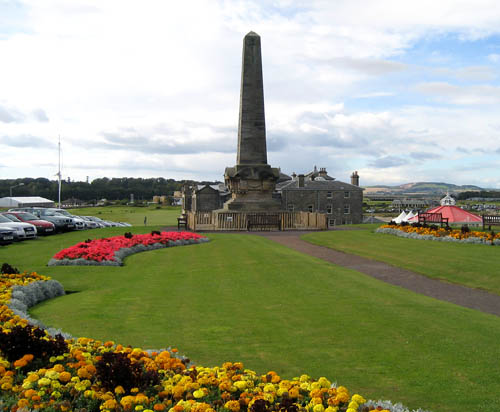
St. Andrews is home to one of the oldest universities. One of the blogs I read regularly is PaleoJudaica, a weblog by Jim Davila of St. Andrews University. St. Andrews has an important place in the Reformation Movement. John Knox preached here. At least four leaders of the Reformation, including Patrick Hamilton and George Wishart, were martyred in St. Andrews. I suspect that not many people who visit the Old Course know that the monument on the hill overlooking the course is a Martyrs Monument.

Martyrs Monument at St. Andrews. The Old Course in the distance. Photo by Ferrell Jenkins.

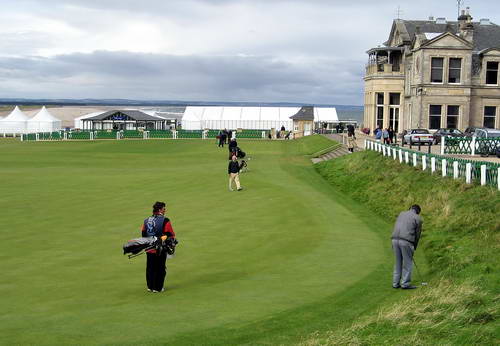
This golfer was having a little problem with the rough. That’s the North Sea in the distance. We had sun most of the time while here, but the wind was high and cold.

In the Rough at St. Andrews. Photo by Ferrell Jenkins.

We arrived in Edinburgh by 6:30 p.m. after an eventful day of beautiful scenery and unusual weather.

From Oban to Iona (and back)

This morning we left Oban on the ferry for the Isle of Mull. It took about 50 minutes. From there we drove about 1 1/2 hour on a single track road with pull over area to the end of the island. There we took another ferry for a few minutes to Iona in the Atlantic Ocean. These islands are part of the Inner Hebrides.
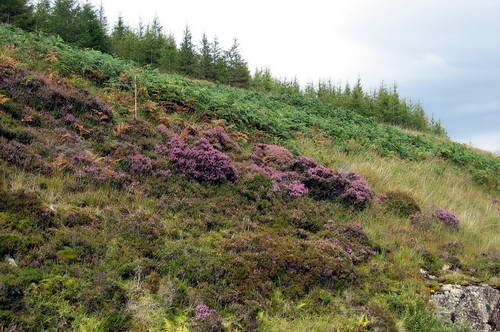
Along the way we had nice sunny weather. One of the beautiful sights was the lush pastures and contented sheep. Another was the heather growing along the roadside — the heather on the hill. In Brigadoon, one of the songs goes like this:

Can’t we two go walkin’ together, out beyond the valley of trees?
Out where there’s a hillside of heather, curtsyin’ gently in the breeze.
That’s what I’d like to do: see the heather–but with you.
The mist of May is in the gloamin’, and all the clouds are holdin’ still.
So take my hand and let’s go roamin’ through the heather on the hill.

Heather on the Hill. Photo by Ferrell Jenkins.

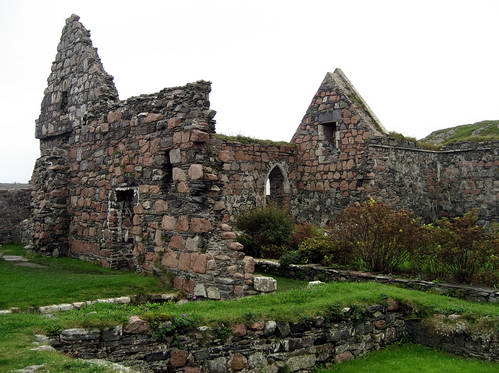
When we reached Iona it was windy and a bit chilly. In 597 A.D. Saint Columba came from Ireland to Iona to spread Christianity. From here Columba prepared the famous Book of Kells, an illuminated Gospels, now displayed in the Trinity College Library in Dublin, Ireland. It is not certain that anything remains on the island from the time of Columba, but there are numerous medieval ruins. Here is a photo of the ruins of the Iona Nunnery.

Iona Nunnery. Photo by Ferrell Jenkins.

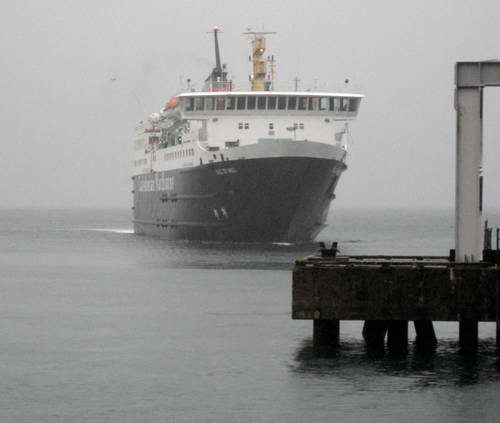
By the time we left the island the rain had begun. This is the way it looked when our ferry arrived at the Isle of Mull to take us back to Oban.

The Oban-Mull Ferry in the rain. Photo by Ferrell Jenkins.


Arrival in Glasgow, Scotland

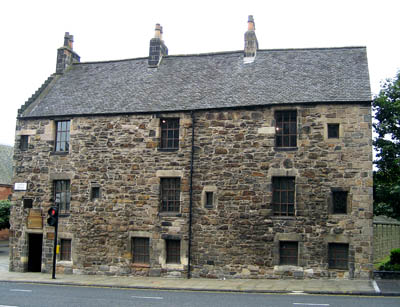
We had an on time flight from Newark to Glasgow on Continental Airlines. Glasgow, Scotland’s largest city, was founded by St. Mungo in A.D. 550. We visited the old area of the city around the Cathedral. The photo below is of the oldest building in the city. It was constructed in A.D. 1471. This University of Glasgow was in this area in previous times. It is here that both Thomas and Alexander Campbell attended university, and where they began their break with the Presbyterian church. They would become leaders in what we call the Restoration Movement in America.

Oldest House in Glasgow, Scotland. Photo by Ferrell Jenkins

You notice that there is no beautiful sky in the background. It even drizzled a little this morning. In the afternoon there were some beautiful periods of bright, sunny skies.

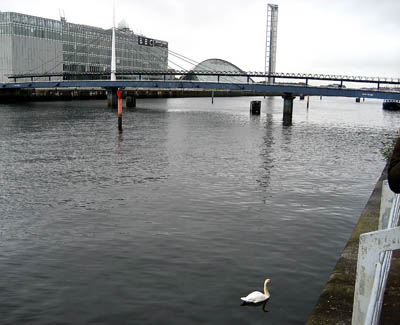
Glasgow was founded on the Clyde River. The swan adds a nice touch in this photo of the river. Glasgow was the home of Professor William Barclay, whose word studies have proved valuable to many preachers

Clyde River in Glasgow, Scotland. Photo by Ferrell Jenkins.

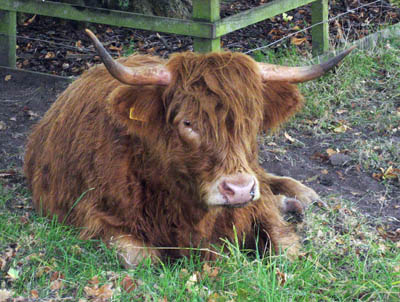
In the afternoon we visited The Burrell Collection, a nice museum in a beautiful natural setting in the outskirts of Glasgow. It holds the private collection of Sir William Burrell. Some Scottish long hair coos (we say cows) were on display in fields around the museum.

Scotland long hair coo (cow) at the Burrell Museum, Glasgow, Scotland.

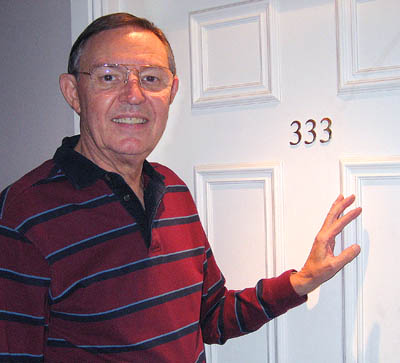
Out hotel tonight is north of Glasgow at Cumbernauld. It is a resort hotel with a beautiful golf course. This photo outside my room tonight shows that I am only half bad, contrary to what some have said!

Ferrell at Room 333. Westerfield Hotel, Cumbernauld, Scotland

Everyone in the group is doing well. Every piece of luggage arrived with us, and we are enjoying the cooler weather.


Van to Batman

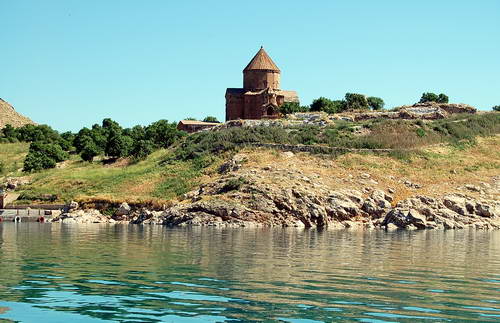
We left Van this morning and drove along the lake to the place where we could take a boat to Akdamar Island in Lake Van. This is where we find an early 10th century Armenian church. The church has undergone an expensive restoration and reopened by the Turkish government a little over two months ago as a museum. Too much to explain about the Armenians and this church at this time. There are some marvelous paintings and carvings of Bible stories inside and outside the church. Here is a photo I made this morning as we approached the island.

Akdamar Armenian Church on an island in Lake Van. Photo by Ferrell Jenkins.

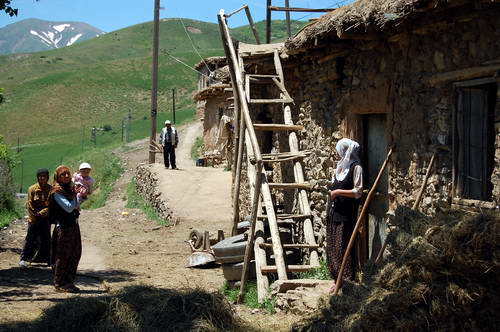
Later we enjoyed one of those unexpected moments when we saw a group of men adding a room to a typical (of the area southwest of Van) stone house. There are many similarities between this house and those of Bible times in Israel. This photo shows the steps (ladder) going up to the roof that is made of timbers covered with earth. The people here were absolutely thrilled that we stopped to visit a while.

House south of Lake Van in Turkey. Photo by Ferrell Jenkins.

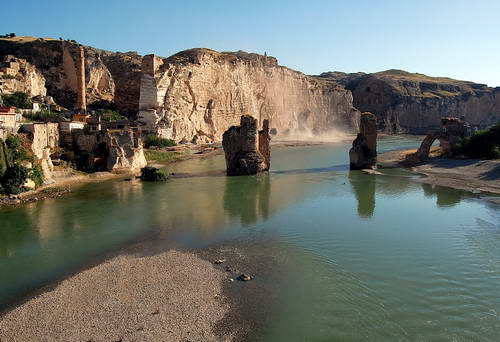
We arrived at Batman by about 4 p.m. and headed south to Hasankeyf. This is the area of Southeast Anatolia. Batman is a center of oil production. It is a thriving Kurdish town. Our hotel is probably 3-star. It is nice and clean and the staff is very helpful. There is a new mall across the street with a large grocery, and Burger King, and several other stores. Hasankeyf has a history associated with the Seljuks and the Ottoman Empire. I still need to spend some time studying about the site. There are old cave dwellings similar to those one sees in Cappadocia.The guard at one of the archaeological sites told me that Hasankeyf is an Arab town. He said that Batman (only about 20 miles away is a Kurdish town. My main interest in the old city is that it is built on the Tigris River (call Dicle in Turkish). The Tigris begins in the mountians of ancient Ararat and flows into the Persian Gulf. The Tigris is mentioned twice in the Bible. It is said to be the third of the rivers flowing out of the garden of Eden. It flows on the east side of Assyria (Genesis 2:14). The river is also mentioned in Daniel 10:4. The prophet stood beside “the great river, the Tigris.” This likely would have been far south of here. Ancient Nineveh was built on the Tigris.

Hasankeyf on the Tigris (Dicle) River in southeastern Turkey. Photo by Ferrell Jenkins.

The building of a dam on the Tigris threatens the existence of Hasankeyf. It is difficult to stop “progress,” but it is a shame to see history like this flooded. It has happened to other sites in Turkey such as Zugma on the Euphrates.

Tomorrow we head for Sanliurfa and Harran.