
Category Archives: Book of Acts

Acts 11 & 13 — Photo Illustrations

Antioch was founded on the Orontes River by Seleucus I Nicator in 300 B.C. The city is about 18 miles from the sea and is the most famous of 16 Antiochs built by Seleucus and named for his father Antiochus. Four of these cities are mentioned in the New Testament (Antioch of Syria, Pisidian Antioch, Seleucia, and Laodicea). Antioch continues today as Antakya, Turkey, with a population of more than 200,000.
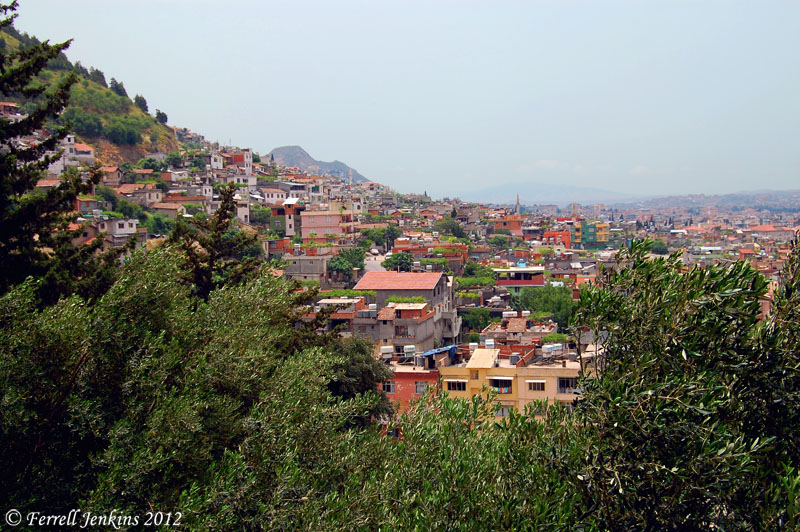
Antakya, Turkey (biblical Antioch of Syria). View south from slopes of Mt. Silpius. Photo by Ferrell Jenkins.

Antakya, Turkey (biblical Antioch of Syria). View south from slopes of Mt. Silpius. Photo by Ferrell Jenkins.

The Romans came in 64 B.C. and put an end to Seleucid rule. Antioch became the capital of the new province of Syria. It became the third greatest city of the Roman empire after Rome and Alexandria. Some have estimated that in New Testament times the population of the city neared a half million. Even Herod the Great assisted Augustus and Tiberias in beautifying the city.

Seleucus I Nicator, King of Syria (358-280 B.C.). Louvre. Photo by Ferrell Jenkins.

Seleucus I Nicator, King of Syria (358-280 B.C.). Seleucus was the founder of Antioch. Displayed in the Louvre. Photo by Ferrell Jenkins.

After Jerusalem, Antioch was the second great center of Christianity in New Testament times. When the disciples were scattered from Jerusalem after the stoning of Stephen, some came to Antioch from Cyprus and Cyrene (area of modern Lybia) and preached to Greeks as well as Jews (Acts 11:19-21). Nicolas, a proselyte of Antioch, had been one of the seven chosen to serve in Jerusalem (Acts 6:5). When the church at Jerusalem, some 300 miles away, heard of the new work they sent Barnabas. When the work became too much for him he left for Tarsus to look for Saul. The two of them labored at Antioch for a whole year and the disciples of Christ were called Christians first at Antioch (Acts 11:22-26).
Acts 10 & 11 — Photo Illustrations

Cornelius was the first Gentile convert to the faith. This case illustrates clearly that morality alone is not adequate to save one. It was necessary for Cornelius to hear and obey the word of God (Acts 11:14).

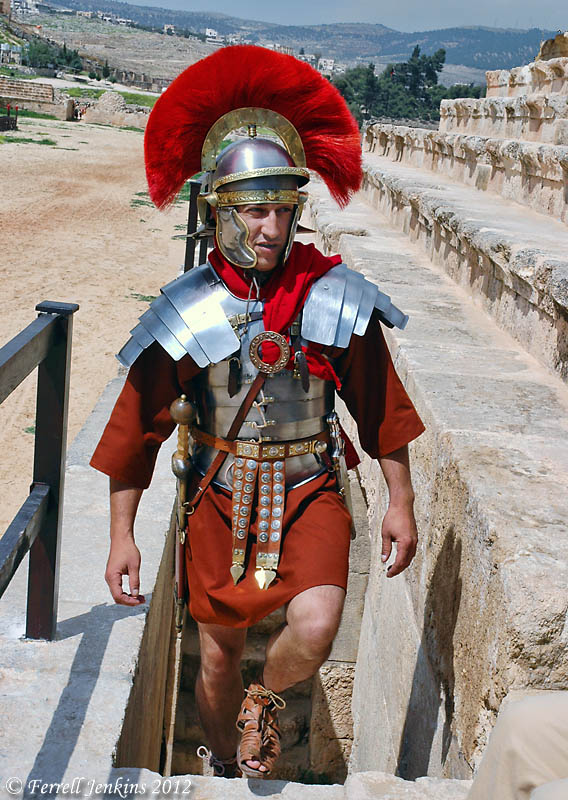
A centurion enters the hippodrome. An actor in the RACE show at Jerash, Jordan. Photo by Ferrell Jenkins.

An actor playing the role of a centurion in the RACE show at Jerash, Jordan, enters the hippodrome. Photo by Ferrell Jenkins.

A centurion in the Roman army normally had charge of 100 men (= to Army captain). A regular cohort was one tenth of a legion and had a paper strength of 600 men. An auxiliary cohort was usually comprised of 1,000 men. Cornelius was of the Italian cohort. There is inscriptional evidence for the “Italian cohort” from Syria (See Bruce, The Book of Acts in NICNT, 215). When Paul set sail from Caesarea for Rome he was accompanied by a centurion of the Augustan cohort named Julius (Acts 27:1).

The centurions mentioned in the New Testament make a favorable impression:

  • At Capernaum – Matthew 8:5-13; Luke 7:2-10
  • At the crucifixion – Luke 23:47.

This was not true of soldiers generally (Luke 3:14).

Acts 9 & 11 — Photo Illustrations: Tarsus in Cilicia – home of Saul (Paul)

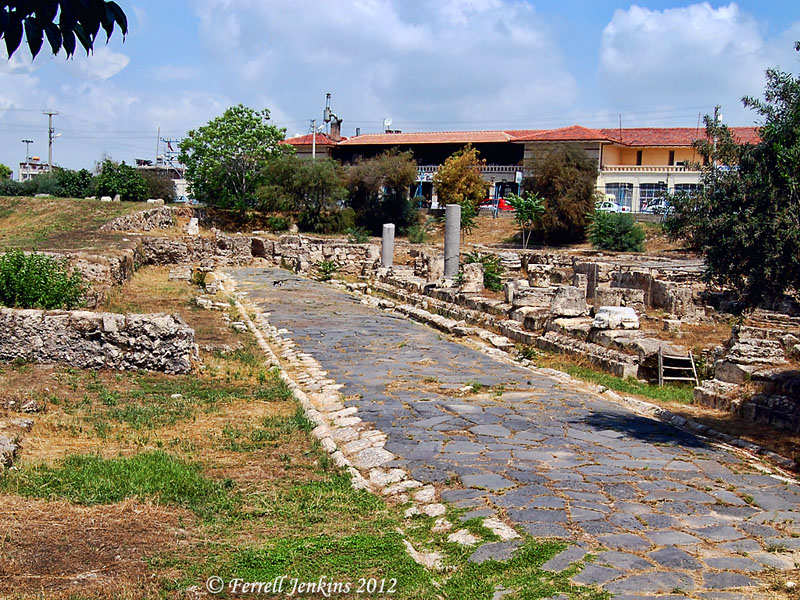
Tarsus in Cilicia was Paul’s native home, described as “no insignificant city” (Acts 9:11; 21:39; 22:3). The city had been important historically. Located near the Mediterranean on the River Cydnus, about 30 miles from the famous Cilician Gates, it was a fortified city and trade center as early as 2000 B.C. It had been captured by the Assyrian kings, Shalmaneser III (833 B.C.) and Sennacherib (698 B.C.), and had seen the likes of Alexander the Great and Cleopatra.

Roman Road at Tarsus in Cilicia. Photo by Ferrell Jenkins.

Roman Road at Tarsus in Cilicia. Photo by Ferrell Jenkins.

Tarsus was important commercially. Ancient writers mention the linen woven here from flax which grew in the fertile plain. A material called cilicium was woven from goat’s hair and used to make coverings which would protect against cold and wet. The city was also culturally important. Strabo describes the people as being avid in the pursuit of culture. Tarsus was a university town and noted as the home of several well-known philosophers, especially of the Stoic school. Barclay says:

“If a man was destined to be a missionary to the world at large, there was no better place in all the east for him to grow to manhood than in Tarsus” (The Mind of Paul, 25-26).

After Hellenistic Jews in Jerusalem sought to put Saul to death, the brethren sent him off to Tarsus.

And he was talking and arguing with the Hellenistic Jews; but they were attempting to put him to death. But when the brethren learned of it, they brought him down to Caesarea and sent him away to Tarsus. (Acts 9:29-30 NAU)

When Barnabas was overwhelmed in the work at Antioch, he went to Tarsus to look for Saul. Saul came to Antioch with Barnabas and they taught a large number of people (Acts 11:25-26).