Category Archives: Bible Places

A day in Galilee

is is the way I began the day by viewing the sunrise over the Sea of Galilee from my hotel window at Tiberias. This is always a beautiful view. It brings to mind many of the teaching of Jesus in the Galilee area. Jesus met his disciples on the shores of Galilee after His resurrection. John 21:12 records that Jesus prepared breakfast for the disciples.

Sunrise on the Sea of Galilee. Photo made from Tiberias by Ferrell Jenkins. April 3, 2008.

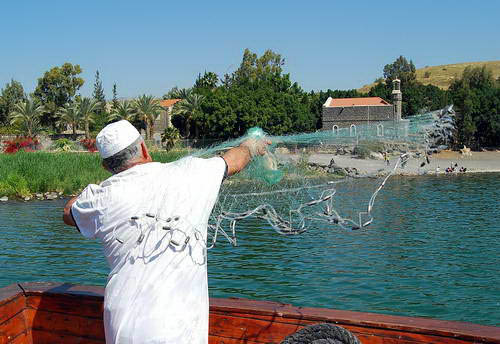
We always include a boat ride on the Sea of Galilee as part of ou tour. One of the men on our boat showed how nets were cast in bible times. This was in the area where Jesus appeared to the disciples. Here is the account in the Gospel of John:

But when the day was now breaking, Jesus stood on the beach; yet the disciples did not know that it was Jesus. 5 So Jesus said to them, “Children, you do not have any fish, do you?” They answered Him, “No.” 6 And He said to them, “Cast the net on the right-hand side of the boat and you will find a catch.” So they cast, and then they were not able to haul it in because of the great number of fish. (John 21:4-6).


Fisherman casting a net on the Sea of Galilee. Photo by Ferrell Jenkins.

We visited Capernaum, Tabgha, the Mount of Beatitudes, and Bethsaida. We drove along the eastern side of th Sea of Galilee and saw the area where the swine ran down the steep cliff into the sea.(Matthew 8:32). We stopped at En Gev and made a photo of the tell of Hippos. We made a few photos at the new excavations at Tiberias. In December excavations were renewed at Magdala. We stopped at the site, but the entire area is locked and it was practically impossible to make any decent photos of the site due to the fencing around the site. Perhaps in future years the site will be open to the public. Magdala was the home of Mary Magdalene.

Everyone in the group seems to be having a good time learning more about the land of Jesus.

Two of our ladies are publishing blogs that are very informative and are filled with human interest. We learned that the 3rd grade class at Athens Bible School is following our tour as one of their projects. There are four women on our tour who are grandmothers of children in the class. Here are the links to the other blogs.

gowithjo.blogspot.com

Caesarea Maritima, Mount Carmel, and Nazareth

After a good night of rest along the beautiful Mediterranean we left Netanya and headed a few miles north to Caesarea Maritima. Caesarea was a first century Roman capital and seaport. The gospel was first preached to the Gentiles here when Peter came from Joppa to Caesarea to tell Cornelius words by which he could be saved (Acts 10, 11).

Herod the Great built a city on the site of Strato’s Tower and named it Caesarea in honor of Caesar Augustus. It became a certer of Roman provincial government in Judea. The city had a harbor and was located on the main caravan route between Tyre and Egypt. This city is called Caesarea Maritima (on the sea) to distinguish it from Caesarea Philippi.

Paul used the harbor at Caesarea several times. He was imprisoned here for two years before departing for Rome (Acts 24:27; 27:1). This photo shows the area of Herod’s Palace with the replica of the Pilate inscription. This inscription was found in the theater in 1961. Pilate was the Roman procurator of Judea from A.D. 26-36.

Caesarea. Palace of Herod. Pilate Inscription. Photo by Ferrell Jenkins.

After visiting other sites of the city we continued north to Mount Carmel to visit the site associated with Elijah and the prophets of Baal (1 Kings 18). We crossed the Valley of Jezreel (the Armageddon of Rev. 16:16), and came to Nazareth, the boyhood home of Jesus. One of the highlights of the day was a visit to the Nazareth Village. This is a wonderful place to see authentic illustrations of life in the time of Jesus.

Nazareth Village is built on the site of a first century farm. We saw a wine press cut into rock, a watchtower, a carpenter at work a woman spinning wool, a reconstructed synagogue, etc. I would encourage anyone coming to this area to visit Nazareth Village. I keep a link to their web site at Biblical Studies Info Page. Here is a direct link to Nazareth Village. This beautiful photo shows the shepherd with his sheep.

Nazareth Village - Sheperd with sheep. Photo by Ferrell Jenkins.

Tonight we are at Tiberias on the shores of the Sea of Galilee.

Landing amid snipper fire!

About the time we were ready for landing the pilot began what seemed link some diversionary tactics, first turning to the left, and then to the right. We knew that this was an area that had seen conflict for several millennial.

When the pilot had the plane safely on the tarmac we all jumped out and hunkered down to avoid the sniper fire from all sides. The greeting that had been planned for us had to be cancelled.

So much for April fool’s day! (I haven’t heard anything about the presidential campaigns since leaving the USA.)

We made the trip safely, but several pieces of luggage were missing. Once these reports had been filed we left the airport and went to Joppa.

Joppa is located on the Mediterranean Sea. Joppa is now part of Tel Aviv-Yaffo. The site is associated with several important evens from biblical times. Solomon traded wheat, barley, oil, and wine to Hiram of Tyre for the timber of Lebanon to be used in Solomon’s building projects, including the temple.

“Now then, let my lord send to his servants wheat and barley, oil and wine, of which he has spoken. We will cut whatever timber you need from Lebanon and bring it to you on rafts by sea to Joppa, so that you may carry it up to Jerusalem.” (2 Chroinicles 2:15-16).

Jonah took a ship from Joppa toward Tarshish in a feeble attempt disobey the Lord (Johan 1:3). Peter raised Dorcas (Tabitha) at Joppa (Acts 9:36-43). While in the city, Peter received messengers from Cornelius of Caesarea (Acts 10-11). Part of the account in Acts reads this way:

“And he reported to us how he had seen the angel standing in his house, and saying, ‘Send to Joppa and have Simon, who is also called Peter, brought here; and he will speak words to you by which you will be saved, you and all your household.” (Acts 11:13-14).

Our photo today is made from the site of Joppa, looking toward the modern city of Tel Aviv. We plan to see Caesarea tomorrow.

Tel Aviv from the site of ancient Joppa. The Mediterranean Sea. Photo by Ferrell Jenkins.

The Corinth Canal

The city of Corinth is located about two miles south of the narrow isthmus which forms the land bridge, and controlled access, between the main land mass of Greece and the Peloponnesus.

The isthmus is less than five miles wide. In ancient times small ships were dragged across the isthmus on a paved road called the diolkos. Small portions of the diolkos may still be seen. Larger ships unloaded their cargo which was carried across and reloaded. This avoided the long 200 mile journey around the Peloponnesus. Nero abandoned his attempts to dig a canal across the isthmus (A. D. 67).

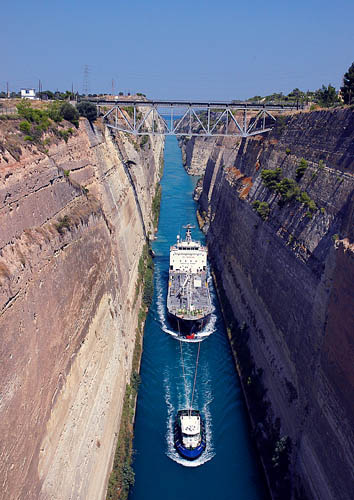
A canal was constructed between 1881 and 1893. Here is a photo of that canal with a tug boat pulling a ship through the canal.

Corinth Canal. Photo by Ferrell Jenkins.

The apostle Paul likely came to Corinth about A.D. 51, during the reign of the Roman Emperor Claudius, and remained there for eighteen months (Acts 18). The book of Acts records the success of that work:

Crispus, the leader of the synagogue, believed in the Lord with all his household, and many of the Corinthians when they heard were believing and being baptized. (Acts 18:8).

Archaeological excavations have been conducted at the ancient city of Corinth since 1896 by the American School of Classical Studies in Athens.

The popularity of inspirational religious tours

USA Today has an article about “Inspirational religious tours” about the variety of tours available to people who wish to follow the steps of this or that religious person. Here are some comments about Israel and Jordan that you might find interesting.

Kevin Wright says the volatile political situation in the Middle East can present challenges for religious-themed tour operations. “The perception of violence is always the number one challenge for tour operators and travel providers selling trips to the Holy Land,” he explains. “However, any violence that takes place in the Middle East is typically far removed from the traditional tourist sites. Hence, the biggest challenge for travel companies selling the Holy Land is overcoming the misperceptions of violence in tourist areas.”

Lately, that perception hasn’t slowed visitation to Israel and Jordan—both countries had record numbers of visitors last year. Israel hosted more than half a million Americans in 2007, an all-time high, (according to the country’s tourism commissioner), and Jordan’s Tourism Board said the country’s tourism revenues increased by more than 13% in 2007.

Is they have for millennia, the world’s holy sites continue to exert a powerful draw over the faithful and the curious. These days, with modern transportation and updated standards of travel, it’s getting easier to walk in the footsteps of the holy ones, with much less of that ancient travail.

Read the entire article here.

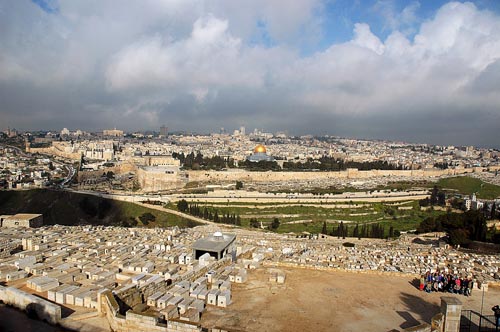
The tours I direct are study tours, but almost everyone who travels with us finds the tour inspirational. Most of those who travel with us do so in an effort to increase their understanding of the Bible. This view of Jerusalem from the Mount of Olives is inspirational to a lot of people.

Jerusalem From the Mount of Olives. Photo by Ferrell Jenkins.

A Day in Capernaum

I just ran across the third edition of A Day in Capernum by Franz Delitzsch. Yes, the Delitzsch of the famous Keil and Delitzsch 19th century commentaries on the Old Testament. The book was written in 1870, but the third edition was published in 1892. In the days before motorized vehicles, visitors had to travel by foot or horseback. This had a distinct value in allowing more time to meditate and understand the importance of the travel routes, etc. The writer visits some of the other places around the Sea of Galilee and tells how long it took to move from one place to another.

Works of this kind are of value because they reflect the scholarship and understanding of the time. You may read the work online, or download it in PDF from Google Book Search. Here is the directly link to A Day in Capernaum.

Google Book Search is a wonderful place to find many older works in their entirety. Some pages of many newer works are also availalbe.

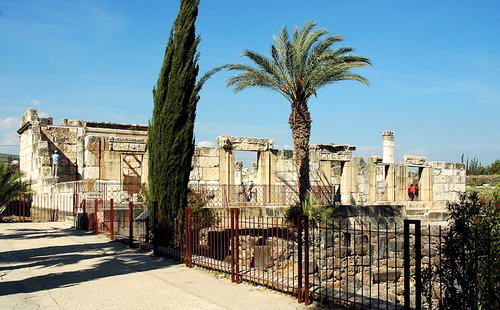
Things have changed a lot at Capernaum since Delitzsch was there. We believe the foundation of the synagogue from the time of Jesus is known. The synagogue from the late 4th or early 5th century A.D. has been partially reconstructed mainly by the late archaeologist Stanislao Loffreda. The photo shows how it looks today.

Reconstructed Capernaum synagogue from 4th or 5th century A.D. Photo by Ferrell Jenkins.

The most important thing about Capernaum is that Jesus came and settled in the city and that it was the scene of much of His ministry and miracles (Matthew 4:13; 11:23).

Gath or Not Gath?

There is some discussion over at the Tel es-Safi/Gath site about the correct identification of the photo from 1969 which I identified as Gath here.

Based on my recollection of the location of the tel, I think those who have identified it as Tel Erani are correct. Here is a comment I have left on the Tel es-Safi/Gath page.

Sorry to be the center of a controversy. I think this photo was made very near Qiryat Gat. I have only been in this area a few times and was having a hard time identifying this tel with the photos of Tell es-Safi. Todd is probably correct in saying this was still the identification given by a guide back in 1969.
I am away from home for a couple of days but what I have been able to locate on the Internet indicates that the photo is of Tel Erani.
My recollection is that this tel is on the north side of the road leading from Bet Guvrin and Lachish to Ashkelon.

My plans are to be back in Israel in a month, but I won’t have the opportunity to check these places. Maybe later in the year!

Rivers in the Desert

Todd Bolen, over at BiblePlaces Blog, calls attention to an article in the Jerusalem Post about an American tourist who was killed in a Flash Flood at En Gedi. He calls attention, in one of the links, to some photos I made April 2, 2006 of a flash flood in the Wilderness of Judea. Afterwards I wrote an article about it for Biblical Insights. Read Todd’s blog and then read my article below. Todd also includes a beautiful photo of Nahal David at a more tranquil time.

————————————

Rivers in the Desert is the title of Nelson Glueck’s 1959 history of the Negev. These rivers also may be seen in the Judean wilderness and in the Sinai. Thomas Levy followed up on some of Glueck’s research in a Biblical Archaeology Review article in 1990.
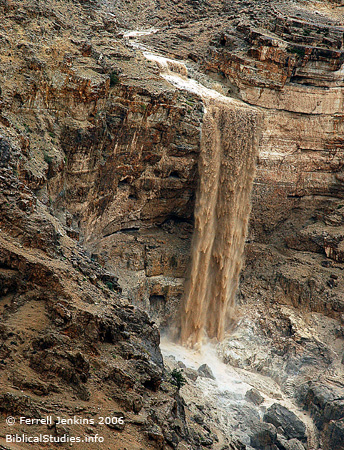
Wilderness of Judea Waterfall - April 2, 2006. Photo by Ferrell Jenkins.

If one travels in the desert during the summer months he will see a dry, desolate bad land with only an isolated tamarisk tree or shrub where the last water of the winter rain flowed. In the winter it can be different. Israel has two dominant seasons: winter and summer. The summer is dry and the winter is wet. The early rains begin about mid-October and continue till the late rains of early April. See Deuteronomy 11:14 and Joel 2:23.

he wilderness of Judea receives very little rain, but the area is affected by the rains that fall in the central mountain range (Jerusalem and the Mount of Olives; Bethlehem; Hebron). We sometimes describe the road that runs along that range as the water parting route. The rain that falls must seek its lowest level. From an elevation of about 2500 feet above sea level the water flows east through the wadis to an elevation of more than 1300 feet below sea level at the Dead Sea.

Levy reminds us that “Nahal, incidentally, is Hebrew for a dry river bed or valley that flows at most a few times a year. In Arabic, the word is wadi. The two words are used interchangeably in Israel today.” The wadi is similar to the arroyo of the American southwest.
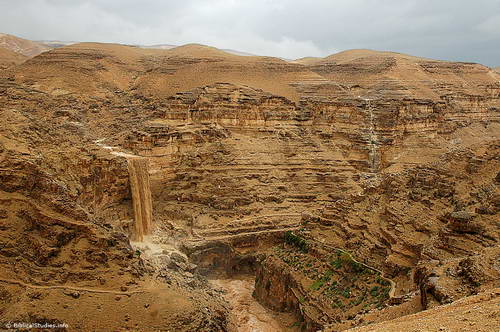
Wilderness of Judea Waterfall - April 2, 2006. Photo by Ferrell Jenkins.

Several members of my group told me of being awakened during the morning of April 2 by the severe storms in Jerusalem. At breakfast I explained to the group that this would be no problem for our planned sightseeing; we would just go to the Dead Sea and Masada. Eli, our guide, told the group that when we came out of the new tunnel that now cuts through the mountain between Mount Scopus and the Mount of Olives, it would probably be dry. In fact it was still raining on us almost all the way to the Jordan Valley.

Our driver decided to pull off the highway onto the old road that overlooks the Wadi Kelt (Qilt) on the way down to Jericho. On the south side of the wadi there is an overlook allowing a view of the Monastery of Saint George of Koziba. There we saw one of the most fascinating sights that can be imagined. It rained an astounding 4.41 inches in Jerusalem. This is about three times what the city normally gets for the entire month of April.

In this normal desert land there was a tremendous waterfall pouring down the side of the cliff into the wadi. Our guide said, and another experienced guide is reported to have told his group, that he had never seen it like this. That evening Todd Bolen and his wife were my guests for dinner at the hotel. Todd has lived and taught in Israel for the past ten years. He has provided us with excellent photos in his Pictorial Archive of Bible Lands (see bibleplaces.com). He was excited about the photos I had taken that day and included three of them on his blog. He was headed for Galilee the next day. He reported seeing hail at En Gev on the Sea of Galilee. The Jerusalem Post ran a photo of the flooded road at the Megiddo junction, and reported that five people had died as a result of the heavy rains.

Not only could we not get to Masada that day, but we could not go to Qumran on the shores of the Dead Sea. A couple of days later when we visited these sites we saw the damage to the road in multiple places where the wadis descended to the Dead Sea. Debris could be seen in the Dead Sea.
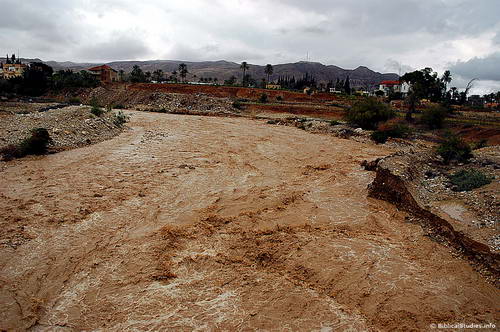
Wadi Qelt (Kelt) in the Wilderness of Judea. Photo by Ferrell Jenkins.

In forty years of travel in the Bible Lands, this was one of my most exciting days for photography. I am delighted to share it with you.

The photo below is of a typical dry wadi in the Wilderness of Judea.
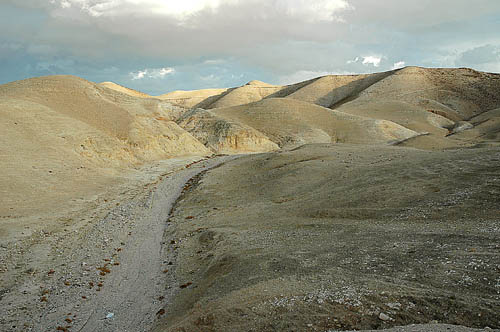
A dry wadi in the Wilderness of Judea. Photo by Ferrell Jenkins.
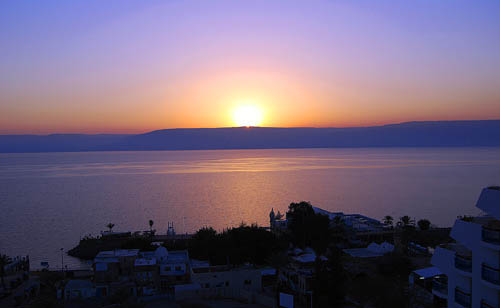
Photo for the 20,000 winner

And the winner is Jennifer!

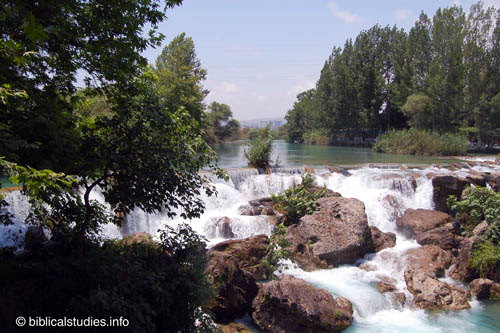
Back on January 30th we announced the winner of the digital photo for being the twenty thousandth visitor to the site. The winner has asked for a surprise photo from Turkey. So, I have decided to send her a photo of the waterfalls on the outskirts of Tarsus in Cilicia, the hometown of Saul (Paul, the Apostle). Here is a small copy of the image I am sending to the winner.

Waterfalls at Tarus in Cilicia, home of the apostle Paul. Photo by Ferrell Jenkins.

Tarsus was important historically. Because of its position on the River Cydnus near the Mediterranean about 30 miles below the Cilician Gates, Tarsus in Cilicia served as one of the great crossroads of history. Paul described his hometown as “no insignificant city” (Acts 21:39; 9:11; 22:3). It was a fortified city and trade center as early as 2000 B.C. It was captured by the Assyrian kings Shalmaneser III (833 B.C.) and Sennacherib (698 B.C.), and had seen the likes of Alexander the Great and Cleopatra.

Tarsus was commercially important. Ancient writers mention the linen woven here from flax which grew in the fertile plain. A material called cilicium was woven from goat’s hair and used to make coverings which would protect against cold and wet .

The city was culturally important. Strabo describes the people as being avid in the pursuit of culture. Tarsus was a university town, and was noted as the home of several well-known philosophers, especially of the Stoic school. Barclay says,

If a man was destined to be a missionary to the world at large, there was no better place in all the east for him to grow to manhood than in Tarsus” (The Mind of St. Paul, 25-26).

It is not difficult to imagine that famous leaders and armies stopped by this waterfall to be refreshed before (or after) making their way through the Cilician Gates. And it is easy to imagine that young Saul and his friends often visited the site.

March/April edition of BAR online

Biblical Archaeology Review announced today that the entire March/April edition is available online. Certainly this is to gain subscribers. Nonetheless it is a good opportunity for those who have not read the magazine to take a look.

Subjects include an article about a seal bearing the name Jezebel. Does it belong to the wicked Phoenician Queen, wife of Ahab?

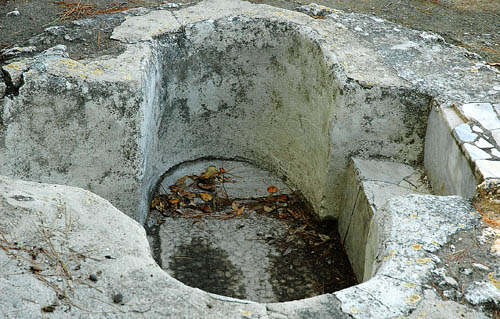
Another article is about Emmaus, or Emmaus-Nicopolis, where Jesus met with some disciples after his resurrection (Luke 24:13ff.). Here is a photo I made of the fifth century baptistry at Emmaus in 2005.

Baptistry in 5th century church at Emmaus. Photo by Ferrell Jenkins.

BAR has a photo of this baptistry, but calls it a “baptismal font.” The article says,

Two steps lead down into the basin where the penitent would stand when the priest poured water over him (the basin is not large enough for total immersion).

Of course, I must disagree with BAR. Many a preacher has baptized in a bathtub or some other small vessel when nothing else was available. In New Testament times baptism was immersion, as the word indicates, and as history records. The first known instance of the pouring of water as a substitute for immersion is the case of Novation in A.D. 251. It may well have been that pouring was practiced by the 5th century at Emmaus, but it is a departure from the New Testament (Romans 6:3-4). Baptism is commonly called a washing in the New Testament (Acts 22:16; 1 Corinthians 6:11; Ephesians 5:26; Titus 3:5; Hebrews 10:22).

Anyway, go online and read these and other articles from the current issue of BAR. Here is the link.