Category Archives: Archaeology

A day in the Shephelah

Today proved to be an exciting and profitable one for Larry Haverstock and me. We traveled south along highway 60 from Jerusalem, past Bethlehem, and almost to Hebron before turning back and heading west to the Elah Valley. On the way to Hebron one sees many examples of terraced farming, and vineyards in wadis.

In the Elah Valley vicinity we stopped at Socoh, the Brook Elah, and the Elah Fortress at Khirbet Qeiyafa. We also had a nice view of Azekah. This area is associated with the events of 1 Samuel 17 (David and Goliath).

The photo below shows the Iron Age, four chamber gate at the Elah Fortress. This is the northern gate which faces Azekah. This scene is reminiscent of the reference to the worthy woman in Proverbs 31.

Her husband is known in the gates when he sits among the elders of the land. (Proverba 31:23 ESV)
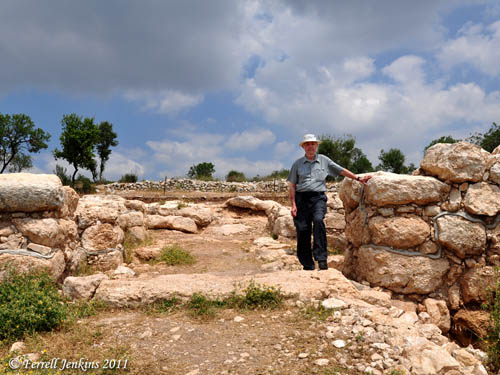
Ferrell Jenkins in the Gate at Elah Fortress at Khirbet Qeiyafa

Ferrell Jenkins in the Gate at Elah Fortress at Khirbet Qeiyafa.

Next we went to the Midras Ruins to see the Roman period tomb with a rolling stone. This is the tomb that was vandalized more than 15 years ago. (At the moment the photo below is not showing when I preview it, but it is visible when I click on the link.)
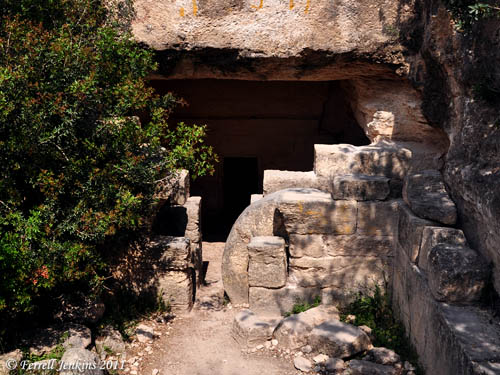
Roman Period Tomb at Midras Ruins in the Shephelah. Photo by Ferrell Jenkins.

Roman Period Tomb at Midras Ruins in the Shephelah. Photo by Ferrell Jenkins.

The Midras Ruins (Horvat Midras) in Israel are part of the Adulam Grove Nature Reserve east of Hwy 38 between the Elah Valley and Beit Guvrin. According to the Parks department sign at the site, the ruins are part of an ancient settlement including caves, pits, and other installations. The Carta touring atlas says the area was continuously inhabited from the time of the Kings of Judah to the Roman period.

For a more complete discussion of the Midras Ruins tomb, along with links to photos before the tomb was vandalized, read here.

We made a few photos of Tel Burna. This tel is often identified with Moresheth Gath, the home of the prophet Micah. The current excavators think it may prove to be biblical Libnah. One of the significant events that took place at Libnah is recorded here:

The Rabshakeh returned, and found the king of Assyria fighting against Libnah, for he heard that the king had left Lachish. (2 Kings 19:8 ESV)

The Tel Burna Archaeological Excavation is under the direction of Itzhaq Shai and Joe Uziel. Check their web site here.

Our last stop was for a photo of nearby Tel Zayit. The archaeologists who have worked there suggest that it may be Libnah or Ziklag. Hopefully we will learn something more definitive in the years to come. Ron E. Tappy is director of the Zeitah Excavations. Check their web site here.

We visited Lachish and Gath last Friday with our group. All in all, it was a wonderful day.
The joy of hidden treasures

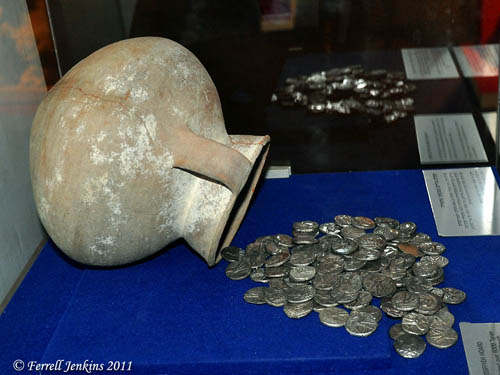
It doesn’t happen every day, but hoards of coins are sometimes found in archaeological excavations and other places by chance. The photo below shows a small portion of the Ussfiyeh Hoard of coins now displayed in the Erezt Israel Museum, Tel Aviv University, Israel. I think Ussfiyeh is a Druze town on Mount Carmel, but I have found nothing else about the site. If a reader knows more, please share.

Ussfiyeh Hoard of Tyrian Shekels & Other Coins. Eretz Israel Museum.

Ussfiyeh Hoard of Tyrian Shekels & Other Coins. Eretz Israel Museum.

The information sign with the display reads as follows:

The Ussfiyeh hoard originally contained 6000 Tyrian shekels, half-shekels and Augustaean denarii. Although Temple shekels bore pagan designs, they were accepted as Temple taxes in Jerusalem. The hoard probably represents a delivery of Temple tax intercepted and hidden away due to the events of the Jewish War which broke out in 66 C.E.

Jesus used an illustration related to a treasure found in a field.

The kingdom of heaven is like treasure hidden in a field, which a man found and covered up. Then in his joy he goes and sells all that he has and buys that field. (Matthew 13:44 ESV)

Click on the photo for a larger image suitable for use in teaching.

Carchemish after a century

The ancient site of Carchemish was identified by George Smith in 1876, and later excavated by the British Museum beginning in 1911. The various directors included Hogarth, Thompson, Wooley, and Lawrence. Many remains of Assyrian and Neo-Hittite periods were uncovered.

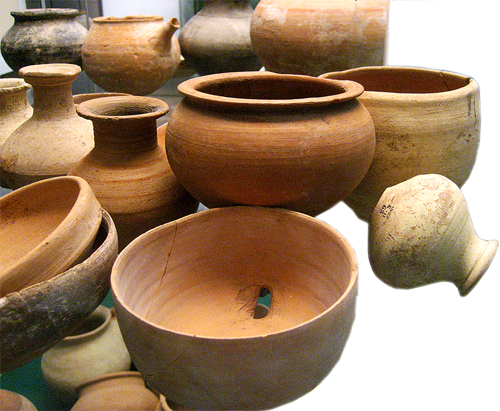
Surveys of the vicinity around Carchemish revealed tombs, pottery and weapons from the Middle Bronze Age. The photo shows one such collection displayed in the British Museum.

Pottery found near Carchemish between 1911-1914. Photo by Ferrell Jenkins.

Pottery found near Carchemish between 1911-1914. Photo by Ferrell Jenkins.

The sign that accompanies this display of pottery says,

During the course of the British Museum’s excavations at Carchemish in north Syria between 1911 and 1914, the field directors, Leonard Wooley and T. E. Lawrence, made regular visits to various sites in the vicinity. One such site was Amarneh and it was from here that Wooley acquired large numbers of objects which had been looted from the associated ancient cemetery. The majority of the finds, consisting of pottery vessels and metal weapons, date to the third and early second millennnium BC. Although it is impossible to reconstruct the early tomb groups, it is clear from Lawrence’s notes and sketches that they were large, collective chambers, lined and roofed over with stone slabs, each tomb containing several individuals and hundreds of pots.

The border between Syria and Turkey is now immediately south of Carchemish. The tell is now in Turkey.

New excavations at Carchemish

Carchemish is mentioned only a few times in the Bible, but it was one of the most significant cities in the ancient Bible world.

  • Isaiah made a reference to Carchemish (Isaiah 10:9). The city had been sacked by Sargon II in 717 B.C.
  • Pharaoh Necho of Egypt went up to Carchemish on the Euphrates to assist the Assyrians against the Babylonians in 609 B.C. (2 Chronicles 35:20; Jeremiah 46:2). King Josiah of Judah tried to stop him, but was killed.

One of the Babylonian Chronicles says that Nebuchadnezzar “crossed the river to go against the Egyptian army which lay in Carchemish.”

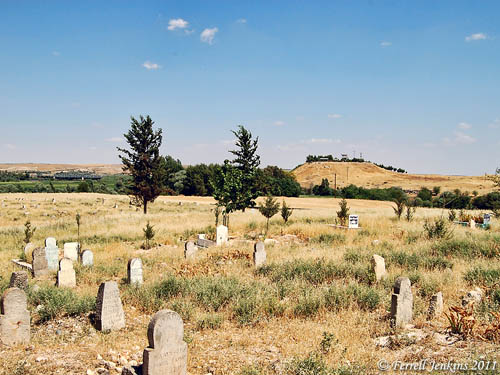
Our photo shows the tell in the distance. The tell is in Turkey today. In the far left of the photo you may see a bridge over the Euphrates River. The bridge crosses into Syria.

Cemetery at Carchemish, Tell in the distance. Photo by Ferrell Jenkins.

Cemetery at Carchemish, Tell in the distance. Photo by Ferrell Jenkins.

We are informed that a new excavation will begin at Carchemish this year. The area has been cleared of 1200 land mines. A few details, along with a photo of some of the land mines, may be viewed here.

HT: Bible Places Blog.

Lead books or lead balloons?

In the past 24 hours I have received a couple of Emails about the “new” “ancient” lead codices. The best photos I have seen are in the Mail Online here. The account from Yahoo News is here. Put a few words in Yahoo or Google and you will have numerous links.

First Impressions. My first impression, based on the limited information, is that this may be another of those spectacular claims with no substance. I was busy with appointments earlier today and was delighted when I had time to check the blogs to see that Todd Bolen had written a good summary of information at the Bible Places Blog here. There is no reason for me to try to rehash this material. I urge you to take a look at Todd’s summary. He says, “Personally I am inclined to believe that this find is genuine.” My first inclination leans the other way. I know it is not much of a argument, but this report lacks the “ring of truth.” I remember that F. F. Bruce said that second thoughts are best. With more information my thoughts may change. Let’s be patient.

The Sealed Book in Revelation. There is no reason at this point to  link these lead books with the sealed book of Revelation 5-7. Revelation is an apocalyptic book of symbols. Other ancient sealed books have been found in modern times. Examples: some of the Elephantine papyri, a papyrus document from Wadi Daliyeh near Jericho had seven seals still in place (Jenkins, Studies in the Book of Revelation, 18).

Jim Davila has posted numerous notes about the lead codices at Paleojudaica over the past few weeks. Follow all of Todd Bolen’s links and you will know about as much as can be known for the moment.

Libya and the Bible — more than you think

UNESCO: respect historical sites in Libya

According to an article in M & C here, UNESCO has called for Libyan and allied forces to protect six specified historical sites in Libya.

Libya’s sites on the World Heritage List include the archaeological site of Cyrene, which was established as a Roman province in 74 BC; and the site of Leptis Magna, which was founded in the first millennium BC.

Cyrene is located near Al Bayda in eastern Libya.

The Biblical Connection

When Jesus was being led to the place of crucifixion, Simon of Cyrene was compelled to bear his cross. He was the father of Alexander and Rufus, to people apparently known to Mark’s audience (Mark 15:21).

As they were going out, they found a man from Cyrene named Simon, whom they forced to carry his cross. (Matthew 27:32 NET)

The fifth station of the cross along the traditional Via Dolorosa in Jerusalem marks the spot where Simon took up the cross. Photos of the Catholic chapel at the spot may be viewed at Holy Land Photos here. Just search for Cyrene. Or check the photos at Bible Walks here.

  • Jews from the district of Libya around Cyrene were present in Jerusalem on Pentecost (Acts 2:10).
  • Some men from Cyprus and Cyrene were responsible for the first preaching to Gentiles at Syrian Antioch (Acts 11:20).
  • Lucius of Cyrene was one of the prophets or teachers at Antioch (Acts 13:1).

Galen Frysinger has a collection of older photos of Cyrene on his website here.

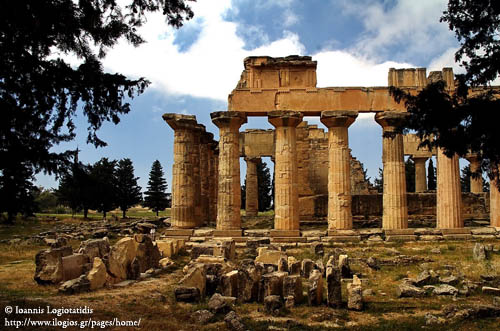
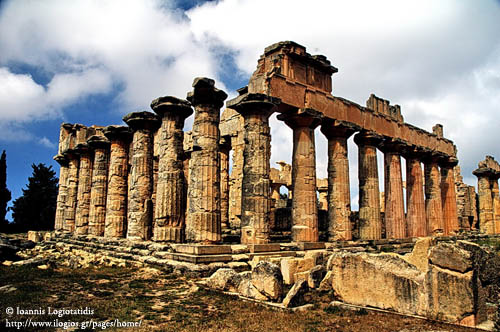
Ioannis Logiotatidis has some of the best photos I have found for Cyrene. He has kindly granted permission for me to share a couple of these with our readers. Both of are the Temple of Zeus. This temple was built originally in the 5th century B.C., but has been destroyed and rebuilt several times over the centuries.

Temple of Zeus at Cyrene, Libya. Photo by Ioannis Logiotatidis.

Temple of Zeus at Cyrene, Libya. Photo by Ioannis Logiotatidis.

Check out more of Ioannis’ newer artistic photographs at his web site here.

Temple of Zeus at Cyrene, Libya. Photo by Ioannis Logiotatidis.

Temple of Zeus at Cyrene, Libya. Photo by Ioannis Logiotatidis.

You may notice a strong resemblance between this temple and the Temple of Apollo at Corinth.

The Alexander (son of Simon) Ossuary

Sukenik and Avigad discovered an ossuary in 1941 bearing the inscription “Alexander (son) of Simon.”

Tom Powers, a guide in Israel, has written two articles about the ossuary for BAR. You may access them here. He concludes in the second article that this ossuary could be the ossuary of both Alexander and Simon.

Another article about ossuaries and Jesus contains photographs and a brief mention of the Alexander-Simon ossuary. Click here.

Paul’s Shipwreck on the Voyage to Rome

Libya is not mentioned, but the Syrtis is mentioned in the account of Paul’s voyage to Rome.

Running under the lee of a small island called Cauda, we managed with difficulty to secure the ship’s boat. After hoisting it up, they used supports to undergird the ship. Then, fearing that they would run aground on the Syrtis, they lowered the gear, and thus they were driven along. (Acts 27:16-17 ESV)

You will notice that the Syrtis Major and the Syrtis Minor are located on the Mediterranean coast of Libya. This was a dangerous place for a ship in a storm.

Gordon Franz recently posted an article asking “Why were the sailors afraid of the Syrtis Sands?” here.

In the map below you will note the location of Cyrene. Simon had a long trip to Jerusalem. Notice also the location of the Syrtis Major in relation to the suggested route of Paul’s ship. Click on the map for a clearer image. (I am still struggling to learn the Bible Mapper program and how to export maps.)

Paul's Voyage to Rome. Map by BibleMapper.

Paul's Voyage to Rome. Map by BibleMapper.

The pot may be calling the kettle black

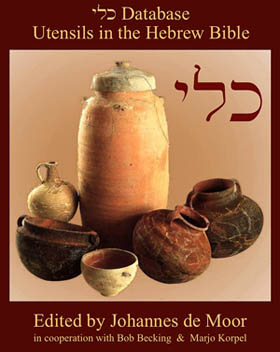
KLY Website - Dutch society for Old Testament Studies.The Dutch society for Old Testament study (OTW), after ten years of planning and work, has put online a research project to “elucidate the names of utensils in biblical Hebrew making methodical use of partially new approaches.”

The new web site, KLY, is written in the Dutch language, but there is an introduction in English. Here is a portion of it:

The problem with identifying utensils in the Hebrew Bible is that their common everyday use made it superfluous to provide detailed descriptions of the vessels or implements in written form. Everyone knew from experience what was meant. As a result dictionaries of biblical Hebrew often have to content themselves with non-descript generalizations like “bowl”, “jar”, “pot”, “knife”. Mostly the shape and purpose of a given utensil can not be established on the basis of context alone because the number of occurrences is too low. Archaeology has brought to light large quantities of pottery and implements, but in many cases we do not know which word in ancient Hebrew was used for the object unearthed.

Meanwhile the possibilities for resolving such problems have increased dramatically. Not only archaeology, but also comparative linguistics, iconography, anthropology, improved understanding of the ancient versions of the Bible have enhanced our chances to come closer to the precise nature of the objects.

Some knowledge of Hebrew will be helpful, but English-only readers will be able to go to the KLY database, click on a Hebrew letter, and see the terms considered with the English usage. From there you can move to the dictionary entry on the term. The entries are in Hebrew and English. Distribution of each term in the Torah (Law), Nebiim (Nevi’im, prophets), and Ketubim (Writings) is given.

As a future project, an English Index could make this an extremely valuable  project for many more readers.

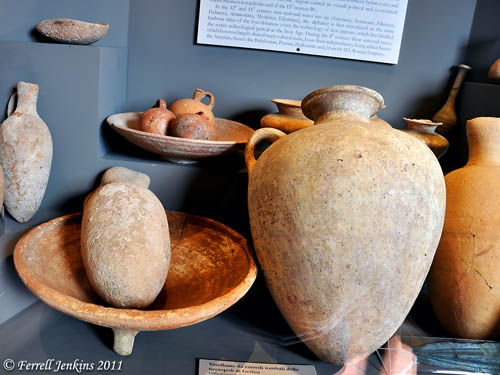
MB2 Pottery from Jericho. Vatican Museum. Photo by Ferrell Jenkins.

MB2 Pottery from Jericho. Vatican Museum. Photo by Ferrell Jenkins.

It would be possible for an energetic person to download all of the PDF entries and compile them into one document. This would make for easy searching.

If our Dutch friends and colleagues miss the English idiom used as a title for this blog, the definition is given here.

Idiom Meaning — Accusing a person of a misdemeanour whilst the accuser is guilty of the same thing.

I am using the title to suggest we may be using the wrong term for certain biblical pots and pans. The KLY Database of Utensils in the Hebrew Bible will help us not to make the mistake again.

Thanks for the help.

: J.P. van de Geissen, Aantekeningen bij de Bijbel

A grave matter

Ancient burial places create serious problems for archaeologists. Ultra-Orthodox Jews often create a scene at digs when they know or suspect that there may be Jewish tombs in the area.

The cemeteries of the Holy Land have become a ground for religious and political skirmishes. Leen Ritmeyer reported on fake Arab tombs near the Temple Mount here.

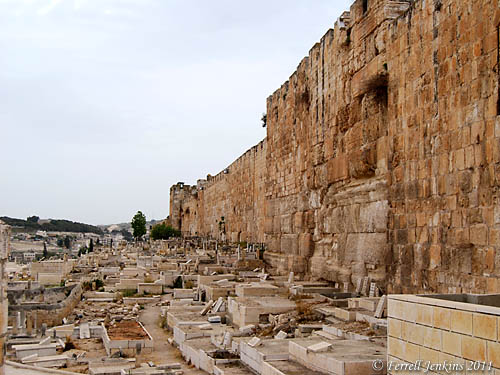
Muslim tombs have been on the eastern wall of the Old City for a long time. This photo was made looking south from outside the Lion’s Gate (or St. Stephens’ Gate). Perhaps every reader knows that this is across the Kidron Valley from the Mount of Olives which we mentioned in the previous post.

Muslim Cemetery along the East Wall of the Old City near Lion's Gate. Photo by Ferrell Jenkins.

Muslim Cemetery along the Eastern Wall of the Old City of Jerusalem near Lion's Gate. Photo by Ferrell Jenkins.

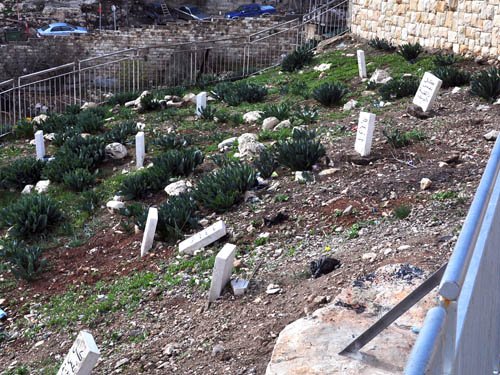
In early February I noticed a large number of new tombstones with Arabic inscriptions in a small plot above the Pool of Siloam. Suspicious, to say the least.

New Tombstones above the Pool of Siloam. Photo by Ferrell Jenkins.

New Tombstones above the Pool of Siloam. Photo by Ferrell Jenkins.

Later, if not sooner, all of these matters will become obvious.

“Do not marvel at this; for an hour is coming, in which all who are in the tombs will hear His voice, and will come forth; those who did the good deeds to a resurrection of life, those who committed the evil deeds to a resurrection of judgment. (John 5:28-29 NAU)

Speaking in North Georgia

The Mountain View Church of Christ, Cumming, Georgia, has invited me to speak on Bible History and Archaeology at the North Georgia Bible Forum in Cumming, Georgia, March 20-25. Stop by if you happen to be in the area. Full details are available here.

Here and there in biblical blogdom

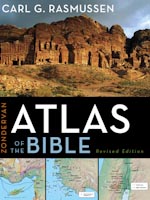
Dr. Carl Rasmussen, the name back of those great photos at Holy Land Photos (now more than 3100) and author of the excellent Zondervan Atlas of the Bible (Revised edition), recently started a blog under the title HolyLandPhotos’ Blog. I think you will enjoy following it here. The blog discusses “Sites, Peoples, and Events Related to the Bible, Ancient Near East, and Classical Studies.” Click Zondervan Atlas of the Bible to buy this book at Amazon for $26.39 (post paid). That is a saving of 34%.

Wayne Stiles (blog is here) has an article about the “Historical marvels at Tel Dan” in a recent Jerusalem Post here.

Luke Chandler calls attention to a fascinating BBC 2010 article on the British Museum which says the 80,000 object on display amount to just 1% of the eight million artifacts in the Museum collection. See Luke’s comments and the link at Luke Chandler’s Blog here.

If you plan a trip to London, I suggest you take a copy of my seven page paper on Some Biblically Related Artifacts in the British Museum. Get it in PDF here.

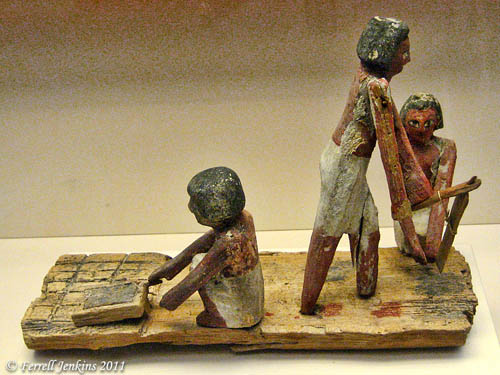
The photo below is of an Egyptian Brick Making Model. That leaves 79,999 more (+/-).

“Don’t continue to supply the people with straw for making bricks, as before. They must go and gather straw for themselves. (Exodus 5:7 CSB)

Egyptian Brick Making Model. British Museum. Photo by Ferrell Jenkins.

Egyptian Brick Making Model. British Museum. Photo by Ferrell Jenkins.

Leon Mauldin is traveling in Israel. Read his reports at Leon’s Message Board here.

Prof. Aren Maeir reports on the availability for download of old reports on the excavations at Megiddo by the Oriental Institute of the University of Chicago.

The Oriental Institute of the University of Chicago announces the online publication of four older titles. Internet publication of these books was made possible through the generous support of Misty and Lewis Gruber.

  • OIC 9. New Light from Armageddon: Second Provisional Report (1927-29) on the Excavations at Megiddo in Palestine. By P. L. O. Guy. Oriental Institute Communications 9. Originally published in 1931.
  • OIP 26. Material Remains of the Megiddo Cult. By Herbert Gordon May. Oriental Institute Publications 26. Originally published in 1935.
  • OIP 32. The Megiddo Water System. By Robert S. Lamon. Oriental Institute Publications 32. Originally published in 1935.
  • SAOC 17. Notes on the Megiddo Pottery of Strata VI-XX. By Geoffrey M. Shipton. Studies in Ancient Oriental Civilization 17. Originally published in 1939.

Dr. Leen Ritmeyer writes about the Jordanian-financed restoration of the Dome of the Rock, including a video, here.