Author Archives: Ferrell Jenkins

The acacia tree

Today we drove along the entire length of the Dead Sea on the western shore. Even places like the terrain of the wilderness of Judea and the Dead Sea have a beauty all their own.

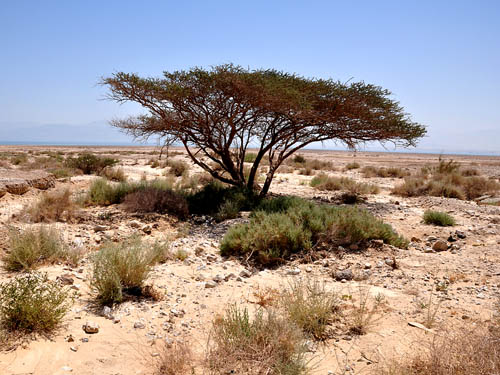
The acacia is one of the few trees seen along the shore of the Dead Sea and in the wilderness of Judea, and in the Sinai.

A lone acacia tree on the shore of the Dead Sea. Photo by Ferrell Jenkins.

A lone acacia tree on the shore of the Dead Sea. Photo by Ferrell Jenkins.

You doubtless recall that the tabernacle was constructed while Israel dwelt in the Sinai wilderness. Many of the pieces of furniture, including the ark of the covenant, were made of acacia wood.

Bezalel made the ark of acacia wood. Two cubits and a half was its length, a cubit and a half its breadth, and a cubit and a half its height. And he overlaid it with pure gold inside and outside, and made a molding of gold around it. (Exodus 37:1-2 ESV)

Tonight we are on the shore of the Sea of Galilee on the north side of Tiberias.

From Jerusalem to the Dead Sea

We got a late start this morning from Jerusalem. Our evening destination was the southern end of the Dead Sea (near Sodom) at En Boqeq. We took the long way to get here by traveling south around Bethlehem, then west to the Elah Valley, Bethshemesh, and Gath. Eventually we got on Highway 6, a wonderful toll road named in honor of the late Prime Minister Yitzhak Rabin. The road runs south ending a few miles north of Beersheba. From there we went down past Arad to the Dead Sea.

We saw numerous camels along the way. This is the region known in the Bible as the Negeb (Negev, South).

And Abram journeyed on, still going toward the Negeb. Now there was a famine in the land. So Abram went down to Egypt to sojourn there, for the famine was severe in the land. (Gen 12:9-10 ESV)

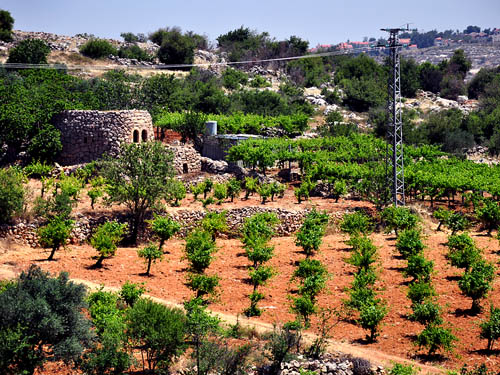
There are nice vineyards a few miles southwest of Bethlehem that remind me of Isaiah 5 and Matthew 21:33-46.

Let me sing for my beloved my love song concerning his vineyard: My beloved had a vineyard on a very fertile hill. He dug it and cleared it of stones, and planted it with choice vines; he built a watchtower in the midst of it, and hewed out a wine vat in it; and he looked for it to yield grapes, but it yielded wild grapes. And now, O inhabitants of Jerusalem and men of Judah, judge between me and my vineyard. (Isaiah 5:1-3 ESV)

Vineyard with a Watchtower SW of Bethlehem. Photo by Ferrell Jenkins.

Vineyard with a Watchtower SW of Bethlehem. Photo by Ferrell Jenkins.

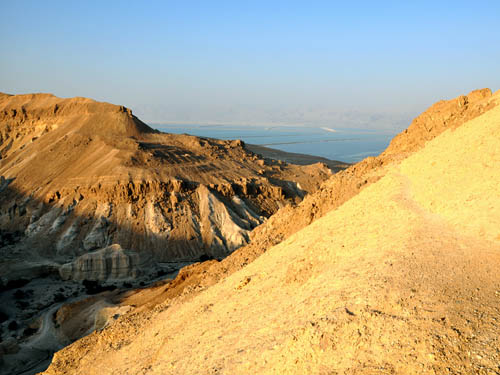
The sun was low as we approached the Dead Sea. This is the view from the Sodom-Arad Road. The rugged bad lands (the wilderness of Judea) begins a few miles north of Jericho and continues south until it finally blends with the Sinai peninsula.

The Dead Sea from the Sodom-Arad Road

The Dead Sea from the Sodom-Arad Road. Photo by Ferrell Jenkins.

Ketef Hinnom excavation

In order to reach the Ketef Hinnom excavation one must enter through the Menachem Begin Heritage Center. Jewish Ideas Daily reported May 6th about the neglect of the excavation.

Interestingly, the Heritage Center also hosts an actual biblical site: Ketef Hinnom, or the “Shoulder of Hinnom.” This is a chain of Jewish burial chambers that were carved out of the rock in the 7th century B.C.E.  In 1979, a dig conducted by the archaeologist Gabriel Barkay yielded one of the most significant finds in Israel’s history: tiny rolled-up silver scrolls on whose inner surface is inscribed the Priestly Blessing—”The Lord bless you and keep you . . .” (Numbers 6:24-26)—in ancient Hebrew. These are the oldest surviving texts of the Bible—older than the Dead Sea Scrolls by roughly a half-millennium. Barkay speculates that the scrolls were originally worn “as amulets to give their wearers protection against evil.”

Ketef Hinnom is thus one of the most important sites in the history of biblical archeology. Yet it suffers from serious neglect. The burial chambers lie hidden behind the Heritage Center’s courtyard; you won’t even find a sign pointing you in the right direction. More troublingly, the site is completely exposed to the elements, and in winter months some of the chambers are filled with standing rainwater. Trash is strewn between the graves; unattended foliage grows over the stone.

Read the article in its entirety here.

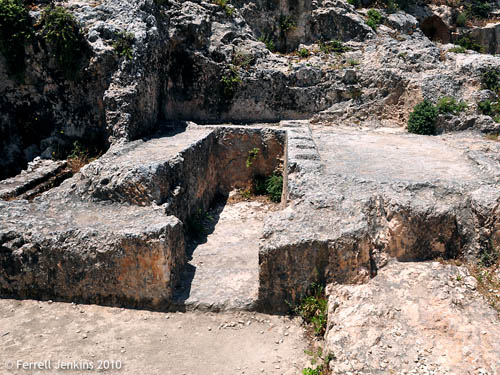
This morning I went to the Begin Heritage Center to visit the Ketef Hinnom excavation. It is true that no signs direct one to the site. In December, and again today, the receptionist pointed me in the right direction.

Ketef Hinnom Iron Age Tomb. Photo by Ferrell Jenkins.

Ketef Hinnom Iron Age Tomb. Photo by Ferrell Jenkins.

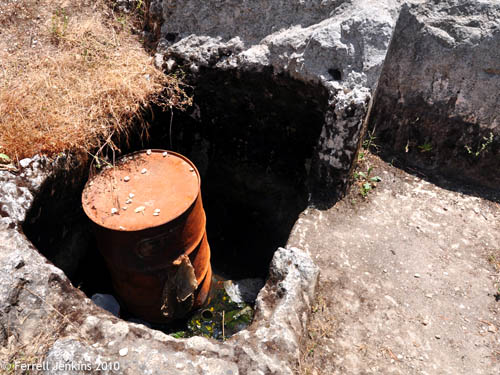
The site was somewhat as described by the Jewish Ideas Daily article.  This photo shows standing water, a rusty drum, and trash only feet from the area shown in the previous photo.

Trash in the Ketef Hinnom Excavation. May 11, 2010. Photo by F. Jenkins.

Trash in the Ketef Hinnom Excavation. May 11, 2010. Photo by F. Jenkins.

HT: PaleoJudaica

The long way home

Members of our group are reporting a safe, long trip home. Olen says,

Went north of Iceland, and I’m sure north of the Arctic Circle. Interesting, but dark.

Dan says,

The flight home was a little long but we flew far enough north that we were able to see the sun coming over the north side of the earth. this gave some wonderful views of ice and the mountains around Greenland.

James says,

We are back “after a scenic trip around the Arctic Circle.”

Nice to get a little something extra from the airline, isn’t it?

Our group heads for home

Our tour of Israel and Jordan came to an end this evening as the group went to the Ben Gurion International Airport for departure to the United States.

We visited a variety of sites today, but spent most of our time in the Shephelah (lowlands).  We are informed in 2 Chronicles about the activity of King Uzziah (792–740 B.C.) in the  Shephelah.

And he built towers in the wilderness and cut out many cisterns, for he had large herds, both in the Shephelah and in the plain, and he had farmers and vinedressers in the hills and in the fertile lands, for he loved the soil. (2 Chronicles 26:10 ESV)

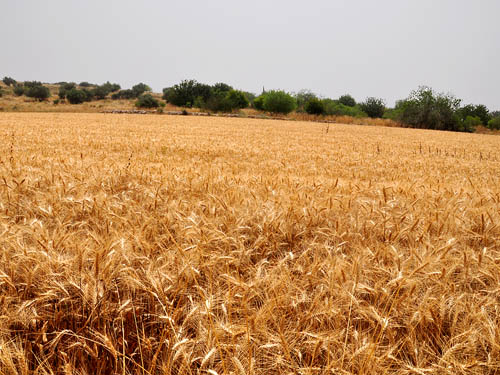
Wheat fields are in abundance in the Shephelah today.

A Wheat Field in the Shephelah. Photo by Ferrell Jenkins.

A Wheat Field in the Shephelah. Photo by Ferrell Jenkins.

Elizabeth and I said goodbye to our tour group and turned to Jerusalem. We plan to visit several more sites in Israel before returning home. By now the group should have begun their 13 hour flight home.

— ♦ —

Update: May 11. Last evening before going to bed I began tracking the flight of our friends returning home. When I checked it this morning I noticed that they have been routed north across Turkey, Eastern Europe, and north of Iceland. The flight continued across Greenland. Now they are headed south over Canada toward the Great Lakes area. The flight is delayed by 2 hours. This is because of the Iceland Volcano. A friend returning from Greece to the USA told me a similar story about his flight.

Here and there in Jerusalem

Today we visited the Temple Mount, presently the site of the Dome of the Rock and the Al-Aksa Mosque. This site is thought to be the place where Abraham made preparations to offer Isaac.

He said, “Take your son, your only son Isaac, whom you love, and go to the land of Moriah, and offer him there as a burnt offering on one of the mountains of which I shall tell you.” (Genesis 22:2 ESV)

The temple of the LORD was constructed by Solomon on Mount Moriah.

Then Solomon began to build the house of the LORD in Jerusalem on Mount Moriah, where the LORD had appeared to David his father, at the place that David had appointed, on the threshing floor of Ornan the Jebusite. (2 Chronicles 3:1 ESV)

The Babylonians destroyed Solomon’s temple in 586 B.C. After the Jews returned from Babylonian Exile, the temple was rebuilt. In the days of Herod the Great the temple was virtually reconstructed beginning in about 20 B.C. (John 2:20). The temple was destroyed by the Romans in 70 A.D.

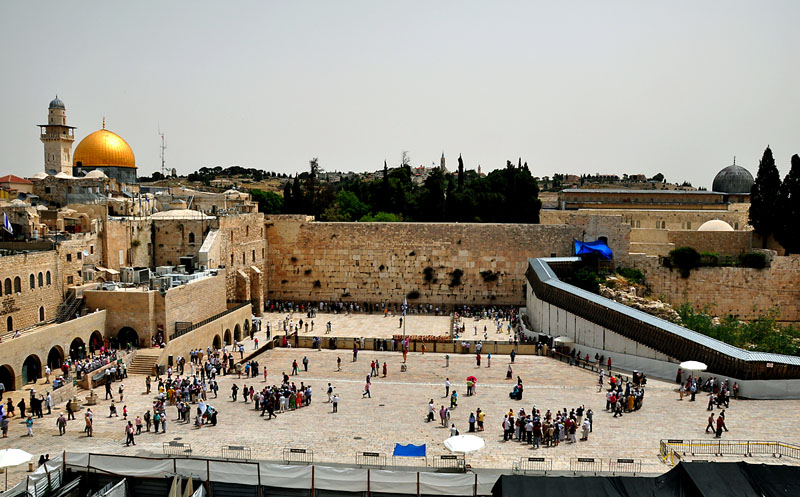
The photo today shows the Western Wall which served as the retaining wall built by Herod the Great around the Temple Mount. On the temple platform you will see the Dome of the Rock and the Al-Aksa Mosque. The Mount of Olives is in the distance to the east of Jerusalem.

Western Wall Plaza. Photo by Ferrell Jenkins.

Western Wall Plaza. Photo by Ferrell Jenkins.

Click on the photo for a larger image.

We visited several other sites in the Old City of Jerusalem, the Shrine of the Book and the Second Temple Model at the Israel Museum.

A beautiful backdrop for a photo

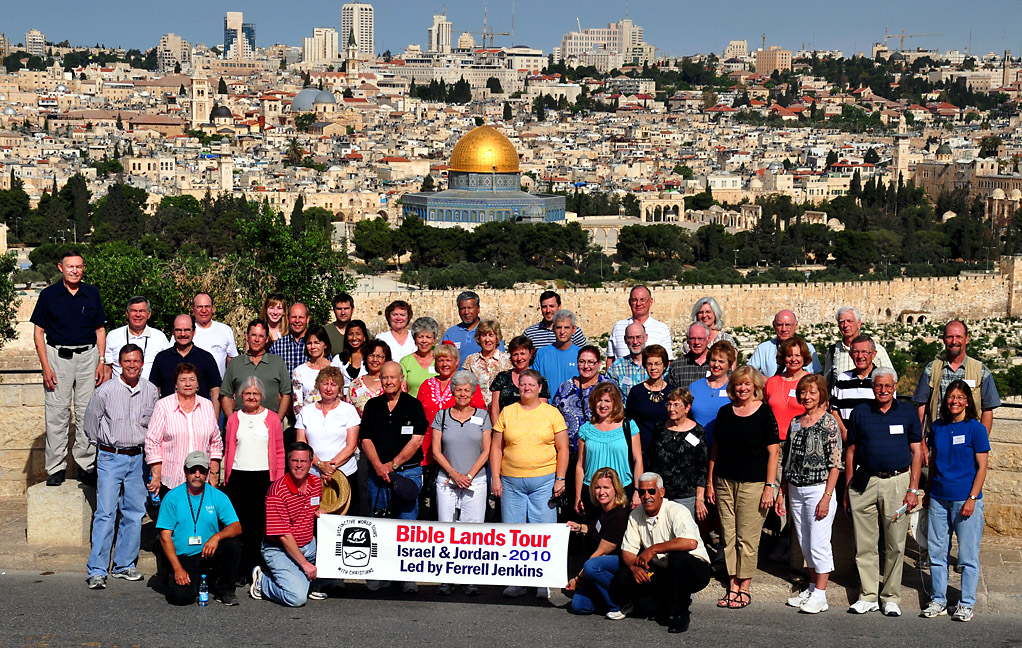
The city of Jerusalem provides a beautiful backdrop for a group photo. We almost always have a photo made of the group from the Mount of Olives with the city of Jerusalem in the background.
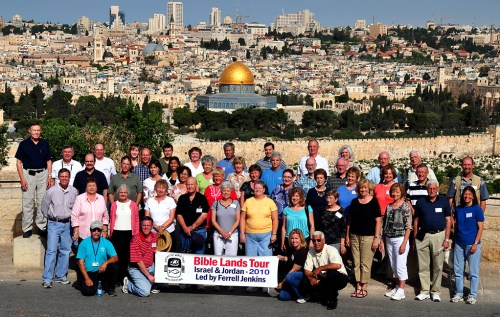
Bible Land Tour Group in Jerusalem - May 8, 2010.

Bible Land Tour Group in Jerusalem - May 8, 2010.

At this time of year there are no clouds to be seen, but the sky is clear. Click on the photo of our group of 46 travelers, plus our guide and driver, for a larger image. This will allow you to pick out any of the persons you may know. These folks are from numerous states ranging from the Northwest to Florida and Southern California to the Midwest.

We crossed out of Israel into the region controlled by the Palestinian Authority to visit Bethlehem. There we visited the Church of the Nativity and (one of) the Shepherd’s Fields. Tourists always enjoy shopping in Bethlehem. Specialties include olive wood carvings, mother of pearl, and jewelry. In the past I have enjoyed visiting a store operated by two brothers, but in the years of the Second Intifada they closed the store and moved to the USA where they had gained citizenship.

Today we visited a shop with some history — the Kando Store. One does not have to read very much about the early history of the Dead Sea Scrolls to encounter the name Kando. He was the shopkeeper who bought some of the original scrolls from the bedouin. In those years he operated a store directly across from the American Schools of Oriental Research (now the Albright Institute) in East Jerusalem (then in Jordan). I think it was 1969 (or 1970 or 1971) when Melvin Curry and I went to Kando’s antiquities shop and purchased about $1,000 worth of antiquities for Florida College. Those antiquities are now displayed in the Chatlos Library on the campus in Temple Terrace, FL.  They have been used in the Bible and Archaeology class many times. Today $1,000 would buy only about 4 good Herodian lamps, but we got a nice collection back then.

Kando was a Syrian Christian whose full name was Khalil Iskander Shahin. His name appears many times on the page describing the Dead Sea Scrolls in the Schøyen Collection. His family now operates the Kando Store in Bethlehem. All of the scrolls, and things pertaining to the scrolls, that came to the hands of Kando, have now been disposed of except for the original jar in which the Temple Scrolls was found.

I was pleased to meet Shibly, the grandson of Kando, and have my photo made with him. You can see the original jar in the case between us.
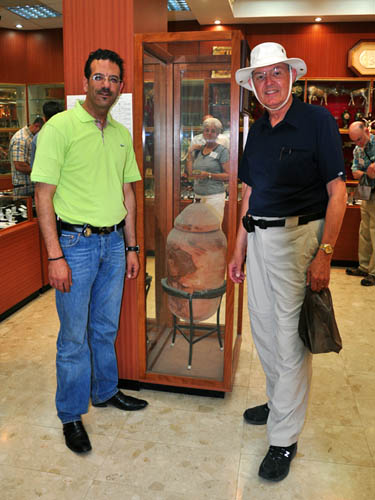
Shibly, grandson of Kando, the Temple Scroll Jar, and Ferrell Jenkins.

Shibly, grandson of Kando, the Temple Scroll Jar, and Ferrell Jenkins.

It was 1956-57 when I began reading about the Dead Sea Scrolls. Being in the Kando Store today was an added excitement to any already great day of touring.

A full day in Jerusalem

Our visits today included the City of David excavations. What a tremendous work has been done here. After visiting the work done by Eilat Mazar, of what she thinks is the palace of David (many think this is an overstatement of the evidence), we visited the work done by Yigal Shiloh from 1978 to 1985, walked through the Canaanite water system, visited the Pool of Siloam, then left the area along steps leading up toward the Temple Mount. At some point along the way we were in the sewer of ancient Jerusalem until exiting on the street. We walked completely around the City of David.

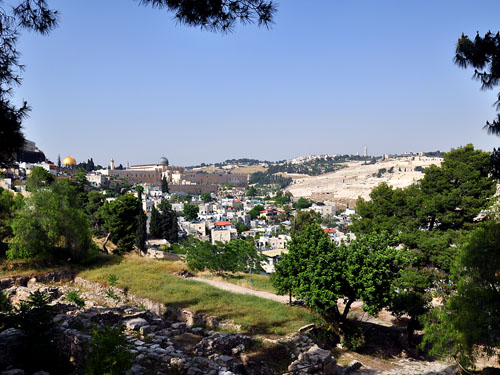
For a photo today I want to share a view of the Temple Mount area to the Mount of Olives. This photo was made from St. Peter in Gallicantu, the supposed house of Caiaphas and Annas.

View of theTemple Mount and Mount of Olives.

View of the Temple Mount and the Mount of Olives. Photo by Ferrell Jenkins.

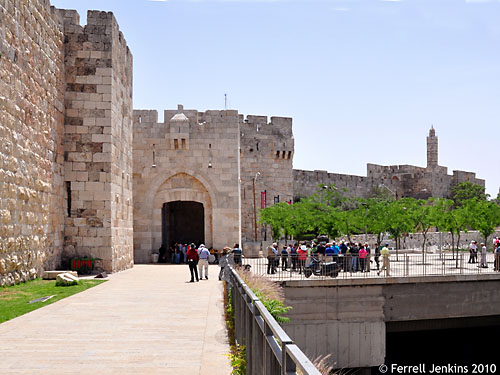
We also visited Jaffa Gate and saw the newly renovated gate.  Here is how it looks today. Nice, I think.

Jaffa Gate - Newly renovated 2010. Photo by Ferrell Jenkins.

Newly renovated Jaffa Gate, 2010. Photo by Ferrell Jenkins.

After visiting the Church of the Holy Sepulcher, the Pool of Bethesda, other sites along the way, and St. Peter in Gallicantu, we returned to the comfort of our hotel.

Back in Israel from Jordan

Yesterday we visited Petra and enjoyed the evening on the shores of the Dead Sea in Jordan. I did not have a good connection at the Dead Sea hotel, so I was unable to post anything.

This morning we crossed back into Israel. These crossings always take a bit of time. We left our hotel at 8 a.m. and arrived at the border before 9:00 a.m. It probably took an hour or more to complete the procedures.

We visited Masada, Qumran, and Jericho. I am sure that I will later want to tell you some things about Jericho, but it will have to wait. After I take care of some of the details of the tour with a group of 46 persons it doesn’t leave a lot of time or energy for blogging.

Everyone in our group is doing well. I don’t think there is anyone who is not enjoying this travel experience.

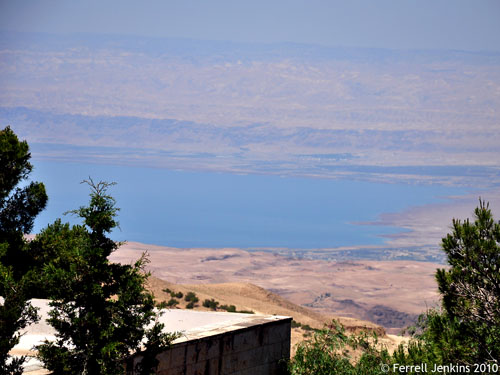
Tuesday we went to Mount Nebo. From there it is possible to see the northern end of the Dead Sea. I think the view was the clearest I have ever seen, and I have been there numerous times since 1967.

The Dead Sea as seen from Mount Nebo. Photo by Ferrell Jenkins.

The Dead Sea as seen from Mount Nebo. Photo by Ferrell Jenkins.

Mount Nebo is the place from which Moses viewed the land that the LORD had promised to Abraham’s seed (Deuteronomy 34:1-8).

Some of the other members of our group are posting interesting material. Scroll down to May 2 for a post containing the links.

The Jordan River today

Today we returned to the Jordan Valley (Roman Perea) to a site designated Bethany Beyond the Jordan in the country of Jordan. Enough evidence was presented to easily convince various religious orders to build new churches in the area. The site on the west bank of the Jordan that I visited in 1967 has been closed to the general public since June of 1967 I think.

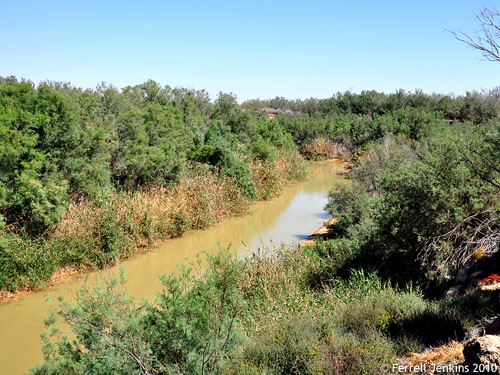
You will see by the photo that I made this morning that the river is extremely low. Just last evening I read the article from The Jerusalem Post by way of the Bible Places Blog about the study that says the river will be dry by next year.

Jordan River at Bethany Beyond the Jordan. Photo by Ferrell Jenkins.

Jordan River at Bethany Beyond the Jordan. Photo by Ferrell Jenkins.

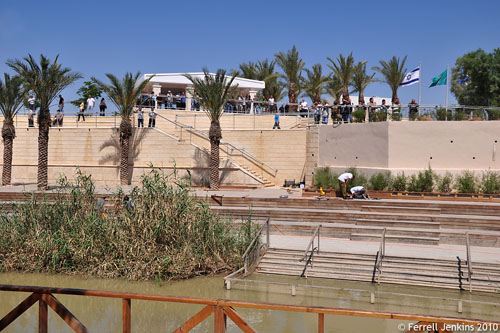
Now that Jordan is seeing many tourists come to the eastern side of the river, Israel is preparing to open the site on the western side of the river. There were several people on the Israel side today where construction continues.

Jordan River Baptism Site in Israel and Jordan. Photo by Ferrell Jenkins.

Jordan River Baptism Site in Israel and Jordan. Photo by Ferrell Jenkins.

In spite of the fact that the river water is reported to be mostly sewage, several were being baptized, or dipping themselves, in the water when we were there.

These things took place in Bethany beyond the Jordan, where John was baptizing. (John 1:28 NAU)

We also visited Mount Nebo and Madaba before traveling south about 4 hours to Petra for the night.