Monthly Archives: July 2023

Cedars of Lebanon in 1969

My first trip to Lebanon was in May, 1968. At that time I was able to visit several of the historic places that I had read about in the Bible and other sources. These included Tyre and Sidon, Byblos, and the Cedars of Lebanon.

The Cedars are about 75 miles north of Beirut on a mountainous road and not included on my second Bible Lands Tour. But we had a half day free to visit as we wished. My wife Elizabeth and I were joined by Louis and Margie Garret, co-workers at Florida College, and Joe Corley who had come all the way from Lethbridge, Alberta, Canada to join the tour. We had met Joe and his family earlier when I preached there a year or two earlier. We crowded into a taxi willing to take us to the Cedars.

A couple of days ago I located a slide I made on Agfachrome film during that visit. I hope you will enjoy it about half as much as I enjoyed seeing it again.
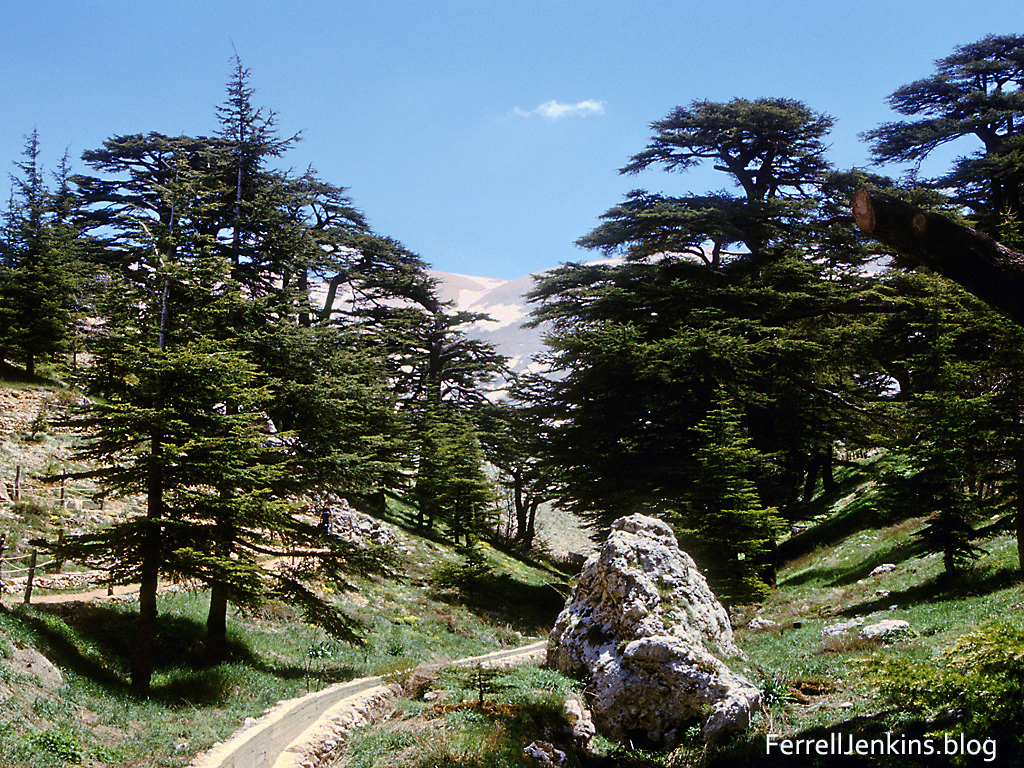
There are numerous biblical references to the cedars, but I wanted to mention just one reference today.

About 1040 BC King Solomon, the new king of Israel, requested cedars from King Hiram of Tyre in Lebanon for use in building the temple in Jerusalem. If you have visited Israel or read about the buildings you know that most of them are made of stone. Wood for various purposes had to be brought from other places.

Now therefore command that cedars of Lebanon be cut for me. And my servants will join your servants, and I will pay you for your servants such wages as you set, for you know that there is no one among us who knows how to cut timber like the Sidonians” (1 Kings 5:6 ESV).

Over the years we have posted several articles about the Cedars of Lebanon. To access these just put Cedars of Lebanon in the Search box. Think of the blog as a mini-dictionary where you can find information about various Bible places and customs.
Continue reading

They tried to kill Jesus

True. It happened more than once. Here I have in mind the event at Nazareth at the beginning of His ministry (Luke 4:16-30). Jesus read a portion of Isaiah 61 in the synagogue and claimed that He fulfilled that scripture. His teaching outraged those present. They took Jesus to the brow of the hill on which their city was built, intending to throw him down the cliff. Jesus passed through the crowd and left Nazareth to go down to Capernaum, a town that would become the headquarters for His earthly ministry.

Nazareth is located in the hills of Lower Galilee, where the elevation is about 2000 feet above sea level. These hills lie on the north side of the Valley of Jezreel (Esdraelon, or Megiddo). The hill of precipitation overlooks the Jezreel valley.

The Mount of Precipitation at Nazareth. Photo by Ferrell Jenkins.
The Mount of Precipitation at Nazareth.

Vineyards at Lachish Then and Now

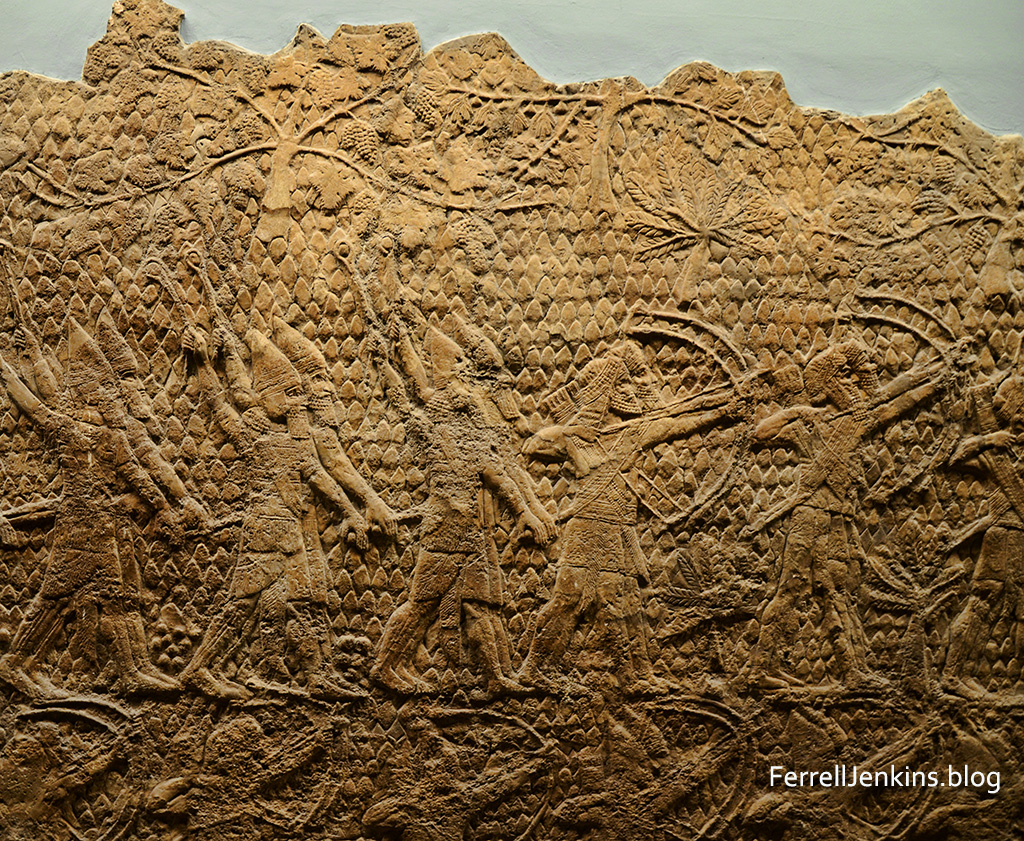
After Sennacherib, king of Assyria (704-681 BC), defeated the Judeans who lived at Lachish he tried to capture Jerusalem but was unsuccessful. Back home in Nineveh the king left a limestone relief of the siege of Lachish on his palace wall. The original is now in the British Museum. There is a replica in the Israel Museum.

The panel below shows the landscape around Lachish with palm trees and vineyards. Here is a small section of the relief. Notice especially the upper left corner of the relief.

A portion of the battle scene from Sennacharib's palace relief. British Museum. Photo by Ferrell Jenkins.

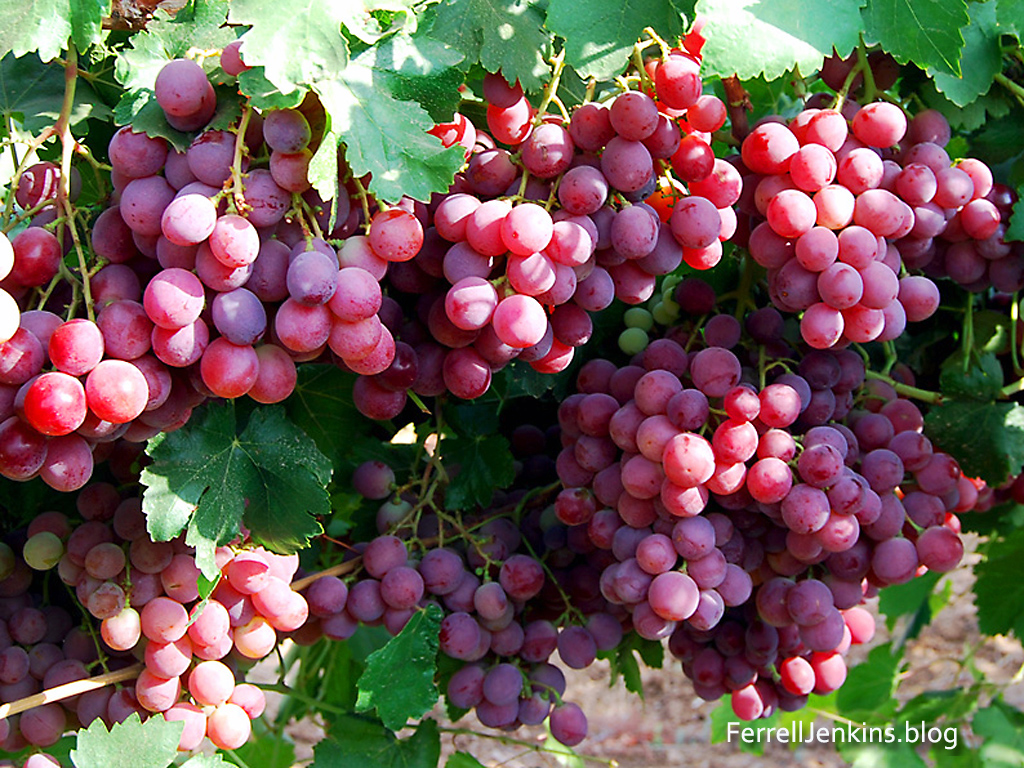
In resettling the land of Biblical Israel, the modern settlers tried to plant the same plants known in Bible times. The Sennacherib relief shows clearly that date palms and vineyards were in abundance in the region. Our next photo which I made in the Lachish area in the month of August shows grapes for eating in abundance.

Grapes growing in abundance in the area of Lachish, Israel.

Click on the images to see a larger photo suitable for use in your teaching.

The Eastern View of the Mount of Olives

Today’s photo shows the Mount of Olives from the east. The tall tower on the peak is the traditional place of the ascension of Jesus (Acts 1:9-11).

Luke’s account of the ascension says Jesus took the disciples as far from Jerusalem as Bethany where he was taken up (Luke 24:59-51). Both Bethphage and Bethany are located on the eastern slope of the Mount of Olives. Bethphage is nearest to the tower of ascension with Bethany being a short distance further to the south (left in the photo).

The Mount of Olives is about 200 feet higher in elevation than the ridge on which the city of Jerusalem is built. The city of Jerusalem is not visible from the east until one is on the Olivet ridge, or Mount Scopus further to the north (right). This is the view of the Mount of Olives Jesus and others would have seen when walking from Jericho to Jerusalem.

You may download the photo and use it in your teaching of the Bible. Please maintain our credit logo which shows in the lower right corner.


Luke the Physician Records a Resurrection at Nain


Only one of the Gospel accounts of the ministry of Jesus records a visit by Jesus to the town of Nain. Strangely it is Luke who wrote two volumes (Luke and Acts of the Apostles) to a man known as Theophilus (Luke 1:3; Acts 1:1).

John, who was a personal eyewitness to the ministry of Jesus, included only seven miraculous signs of Jesus in his gospel. He exaggerated for the sake of emphasis, “Now there are also many other things that Jesus did. Were every one of them to be written, I suppose that the world itself could not contain the books that would be written” (John 21:25 ESV). In addition to the resurrection of Jesus, John included the account of the resurrection of Lazarus in John 11.

I find it intriguing that Luke mentions this account of the resurrection of a young man as his mother was on the way to bury him. Luke was a physician who became what we might call the primary physician of the apostle Paul (Colossians 4:14; 2 Timothy 4:11; see also the “We” sections of Acts where Luke is traveling with Paul.

Scholars have written about the medical language of Luke used in his two volumes.

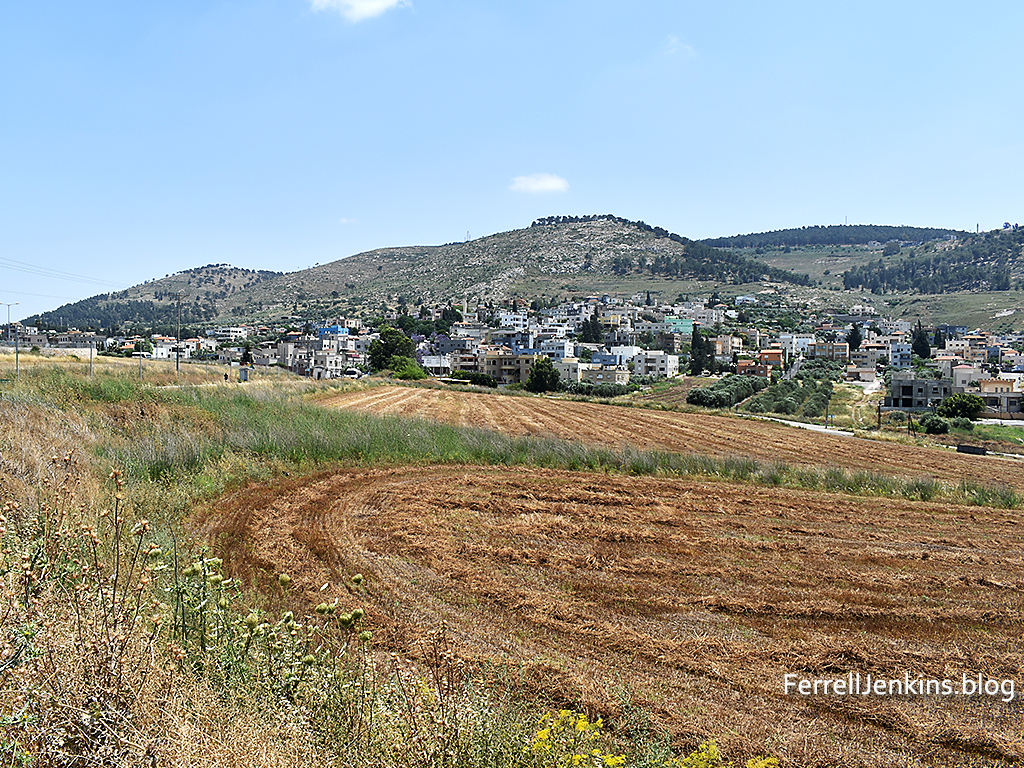
On our visit to Israel earlier this year I stopped to make a new photo of the town of Nain on the north side of the the Hill of Moreh.

The town of Nain on the northern slopes of the Hill of Moreh.

Did Paul visit Adramyttium?

Adramyttium is mentioned only once in the New Testament. In Acts 27:2 we are informed that the ship used to transport Paul to Rome for his appeal before Caesar was “a ship of Adramyttium” (Acts 27:1-2). Paul continued in this ship as far as Myra in Lycia (Acts 27:5-6) where he was transferred to an Alexandrian ship.

But there is still a chance that Paul stopped at Adramyttium on the return from his second preaching journey. Luke provides us with a detailed account of the stops along the way. He says, “And when he met us at Assos, we took him on board and went to Mitylene. And sailing from there we came the following day opposite Chios; the next day we touched at Samos; and the day after that we went to Miletus” (Acts 20:14-15 ESV).

Notice the reference to Chios. When we check a variety of versions we come up with some interesting results.

  • The ESV says “we came…opposite Chios.”
  • ASV, NKJ: “over against Chios”
  • NAS, NAU: “opposite Chios”
  • CSB: “off Chios”
  • NIV, NET: “off Chios”
  • NLT: “past the island of Kios”

The Greek word used here is antikpus and usually means off or opposite. Mark Wilson suggests that “Paul probably passed near Adramyttium on his second journey to Troas, if the southern route below Mysia is reckoned (Acts 16:8). He also probably passed through the city following his departure from Ephesus while traveling up the coast to Troas (Acts 20:1-2; 2 Corinthians 2:12).” (15

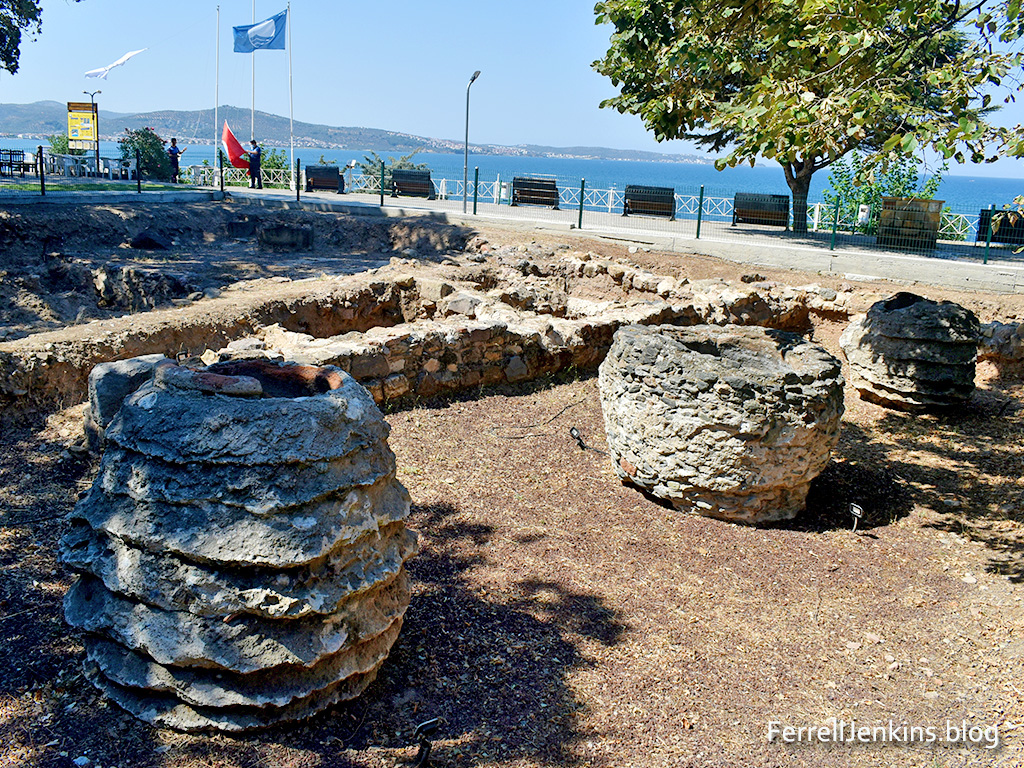
So, whether or not, here is a photo from ancient Adramyttium in the modern Turkish town of Ören in the Mersin district of Turkey.

Some of the ruins of Adramyttium at the modern site of Oren.This area of excavation is under some large trees causing
the dark spots in some places.

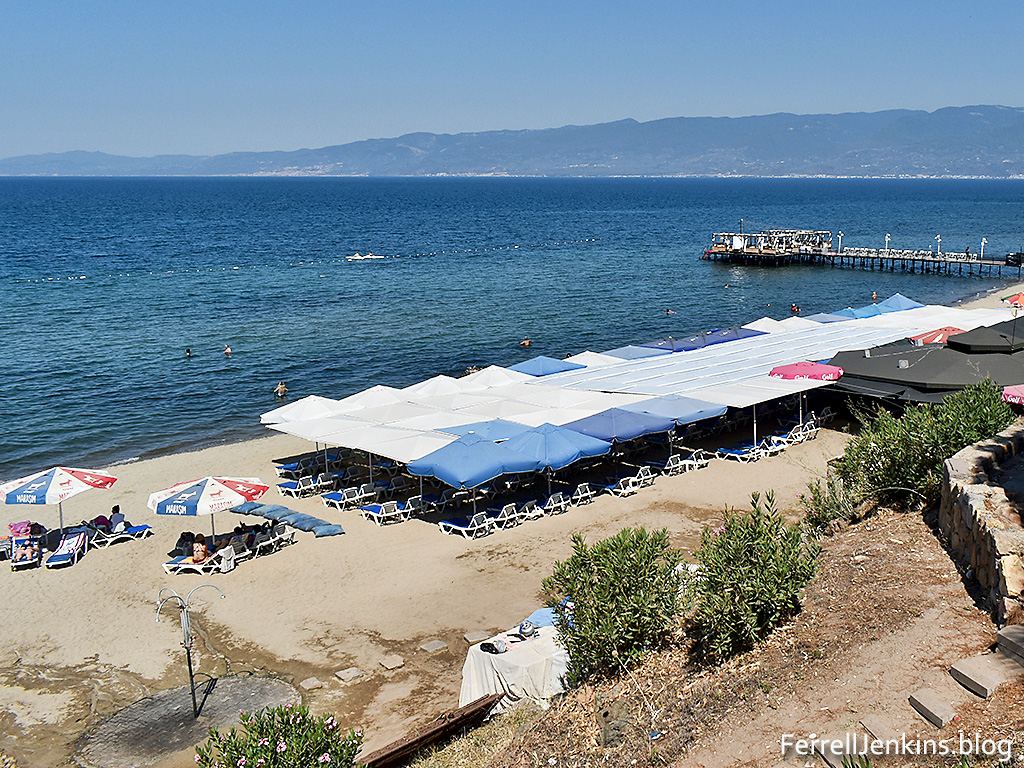
The next photo shows the beautiful beach at Ören.

Source: Williams, Mark. Biblical Turkey. 4th ed., Yayinlari, 2020, pp. 185-87.