Yearly Archives: 2012

Thanksgiving today and everyday

Paul’s letter to the saints at Colossae emphasizes that thanksgiving should be a part of continual prayer to God.

Continue steadfastly in prayer, being watchful in it with thanksgiving. At the same time, pray also for us, that God may open to us a door for the word, to declare the mystery of Christ, on account of which I am in prison– that I may make it clear, which is how I ought to speak. (Colossians 4:2-4 ESV)

The wonderful thing about our national day of Thanksgiving is that it is an 0pportunity for families to be together and reflect on the blessings of life. I trust that your day will be a good one.

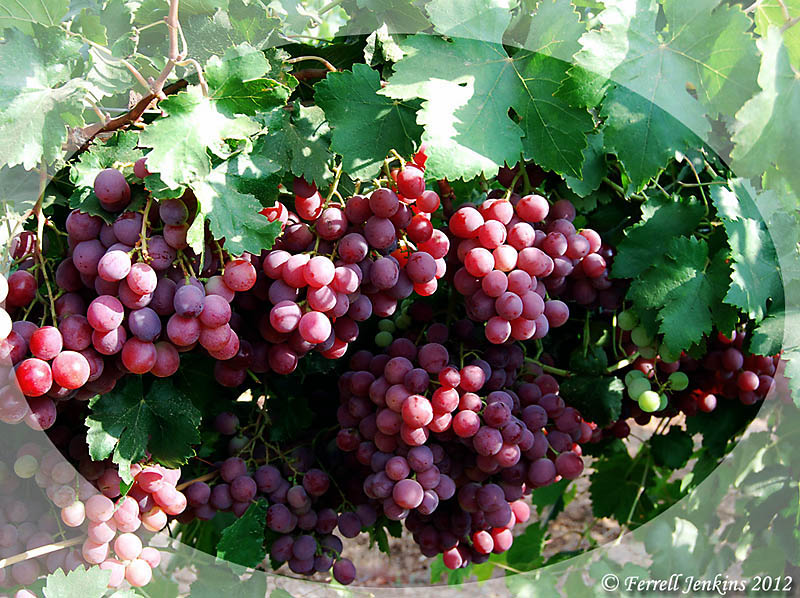
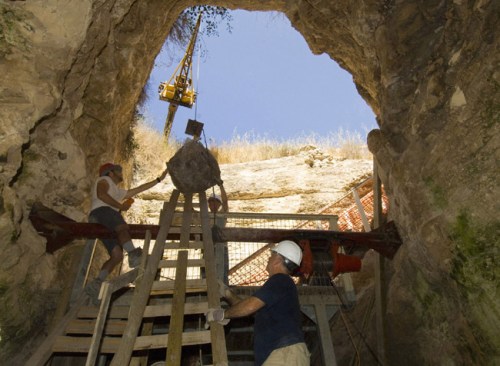
Abundance of the Vineyards at Lachish. Photo by Ferrell Jenkins.

The Abundance of the Vineyards at Lachish. Photo by Ferrell Jenkins.

The Annual Meetings # 3 (SBL)

The annual meetings of the American Academy of Religion and the Society of Biblical Literature were held this year at the McCormick Place Convention Center in Chicago. I think McCormick Place is the largest facility of this type that I have ever been in. Much walking was required to move between sessions. Fortunately there is a good system of escalators to move between levels of the facility.

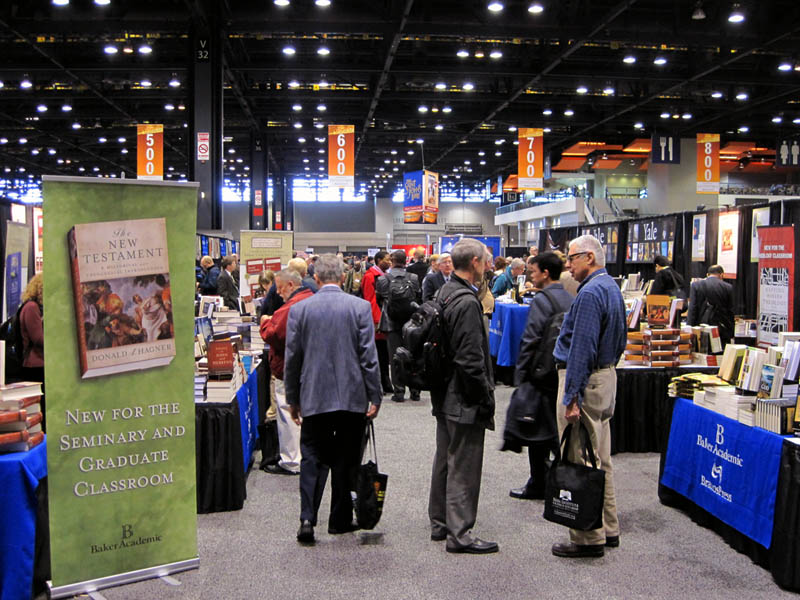
With the two scholarly organizations meeting together the book exhibit is extremely large. It is impossible to show it all from floor level. Here is a little glimpse of the Baker Academic section.

The AAR/SBL book exhibit, Chicago, 2012. Photo by Ferrell Jenkins.

The AAR/SBL book exhibit, Chicago, 2012. Photo by Ferrell Jenkins.

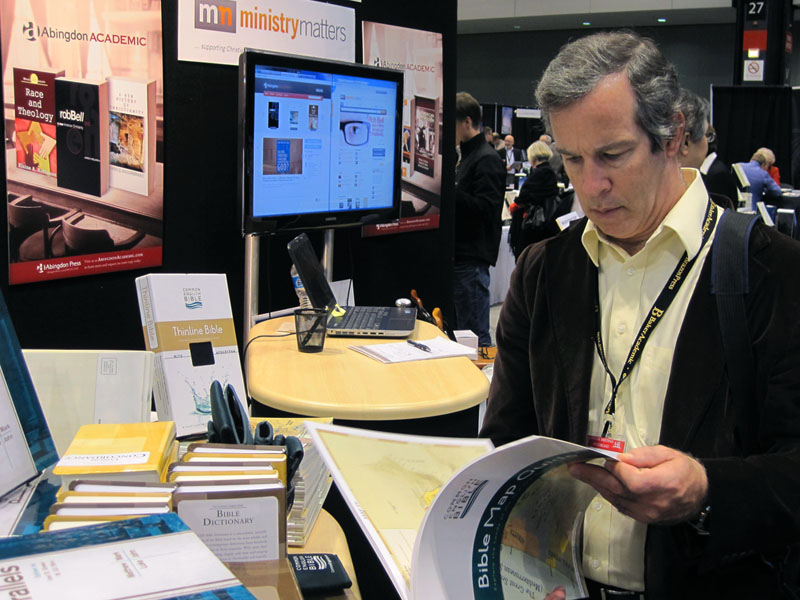
David McClister, my former student and colleague at Florida College, looks over one of the map books on display in the exhibit hall.

Dr. David McClister looks over a map book at AAR/SBL 2012. Photo by Ferrell Jenkins.

Dr. David McClister looks over a map book at AAR/SBL 2012. Photo by Ferrell Jenkins.

I spent my time at the SBL sessions dealing with Places in the Bible World. I attended the session on Polis and Ekklesia: Investigations of Urban Christianity Consultation. The theme for the five speakers this year was Roman Corinth.

The Biblical Lands and Peoples in Archaeology and Text Section covered a number of subjects including Moab, Ammon, the Philistines, first century priestly house in Jerusalem (Shimon Gibson), the possibility of a priestly order at Migdal-Gennesar (Richard Notley), et al.

One session consisted of archaeological reports on the new excavations at Azekah (Oded Lipschits, Yuval Gadot), the ongoing work at Khirbet Qeiyafa (Michael Hasel, Yosef Garfinkel, and Madeleine Mumcuoglu), and the new work at Jezreel (Norma Franklin).

Another session featured studies on the Egyptian invasion of the Sea Peoples (James Hoffmeier), Tell Tayinat (Tim Harrison), Tel Dor (Elizabeth Bloch-Smith), Ashkelon (Daniel Master), and Gath (Aren Maeir). There were a couple of other reports on the Philistines that I did not hear. It is always good to hear these reports first hand, long before the reports find their way into journals and books.

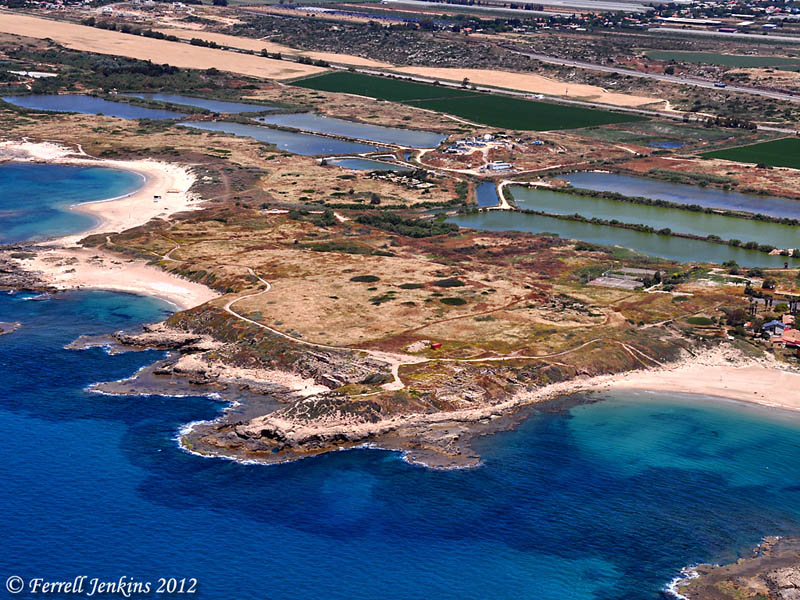
Aerial view of Tel Dor. Photo by Ferrell Jenkins.

Aerial view of Tel Dor on the Mediterranean Coast. Photo by Ferrell Jenkins.

Dor has a long history extending from the Canaanite period around the 20th century B.C. It was also controlled by the Phoenicians, the Sea People, the Israelites, the Assyrians, the Babylonians, the Persians, the Greeks, and the Romans. Dor was abandoned in the third century A.D. (Biblical Archaeology Review, Nov./Dec. 2002).

For Biblical references to Dor, see here.

It is nice to be back home with on time flights.

The Annual Meetings # 2 (NEAS)

Attending the annual meetings of professional organizations allows one to keep up with the latest scholarly efforts of various scholars. When I was teaching I attended sessions dealing with the subjects I was teaching. I have always attended sessions dealing with archaeology because these help be to keep abreast of the field. On my tours, I am often able to tell the guides about discoveries that they have not yet learned about.

Some affiliated smaller organizations meet under the auspices of the larger one. The NEAS (Near East Archaeological Society) meets with ETS. I attended most of the sessions of the NEAS. Let me give you some idea about what I heard.

Charles Ailing, Did Moses Learn His Monotheism From Akhenaten? Mostly likely not. According to the Biblical chronology, Moses was earlier than Akhenaten.

Douglas Petrovich, Identifying the Tower of Babel and (Re-)Locating the Site of Its Construction. He suggested Eridu. Doug began his paper with a prayer in which he said, “Thank you for the thrill of learning, and thank you for the truth.”

Randall Price reported on “the Final Season of Excavation on the Qumran Plateau.” I did not hear his presentation about the search for Noah’s Ark. Seth Rodriquez looked at how archaeology provides insights into Psalm 144.

Morten Jensen, from Denmark, spoke about “Religious Motivation in the Archaeological Record of First-century Israel.” A paper on Metallurgy was read for a scholar who was unable to arrive from Germany.

We had two presentations by excavators at Gezer. Steven Ortiz spoke about the recent excavations. Daniel Warner spoke about the fabulous new find of the Gezer Water System. See our earlier report on this water system here.

Gezer Water System

Excavating Gezer Water System. Photo: Art Beaulieu. Courtesy BP & NOBTS.

The sessions last about three hours and have at least five presenters in each. One session was devoted to Wheaton College’s Contribution to Biblical Archaeology from Joseph P. Free to the Present. Alfred J. Hoerth, who served as chair of the department of archaeology, spoke of the contributions from Free to the present. Other speakers, all of whom attended and/or taught at Wheaton included Daniel Master (Ashkelon), John Monson, and Tom Davis. This was an extremely worthwhile session.

Free is known for his book about archaeology, but also for his excavation of the biblical site of Dothan. One interesting tidbit: Free purchased the tell of Dothan from the Jordanian landowner. I think this would be impossible today.

Dothan is known as the place where Joseph’s brothers sold him into slavery (Genesis 37:12-36).

Perhaps I can get to a few comments about the SBL meeting after I return home.

ETS Plenary Sessions Online

Charles Savelle reports that the video of the plenary sessions at the recent ETS meeting are available online here Individual links are listed below. Zondervan Academic, the provider of the videos, includes advertising that you may skip to get directly to the lecture.

The general theme of the 2012 annual meeting was Caring for Creation. In these four lectures you will find four competent scholars presenting differing views on a subject that is important to each of us.

Calvin Beisner “Creation Care and Godly Dominion: The Search for a Genuinely Biblical Earth Stewardship”

Russell Moore “Heaven and Nature Sing: How Evangelical Theology Can Inform the Task of Environmental Protection, and Vice-Versa”

Richard Bauckham “Reading the Bible in the Context of the Ecological Threats of our Time”

Douglas J. Moo “Biblical Theology and Creation Care”

HT: Charles Savelle @ Bible X

The Annual Meetings # 1

Each year in November professional meetings pertaining to the field of biblical studies are held in a major U.S. city. The largest meeting is the SBL/AAR meeting. That is the Society of Biblical Literature and the American Academy of Religion. Together these organizations attract maybe eight thousand persons who are involved in teaching and researching in the fields of Biblical Studies and Religious Studies.

ASOR, the American Schools of Oriental Research, meets separately a few days ahead of the other meeting. This organization attracts those who are teaching and active in the field of Near Eastern archaeology.

The Evangelical Theological Society (ETS) currently meets at the same time as ASOR. I think in some recent years as many as 2000 members attend ETS. This organization attracts scholars who are admittedly conservative in their approach toward the Scriptures. Most of them teach in seminaries or religious schools.

Some international scholars attend each of these meetings.

From time to time I have someone ask me why I attend. I will suggest a couple of reasons based on the current ETS meeting, and these reasons will be true of both meetings.

Books, Books, Books. I do not buy as many books as I once did, but I still like to see what is being published. The ETS book exhibit has grown from a few tables several years back to a large exhibit hall this year. Many of the major religious publishers offer deep discounts to the members. They know that these teachers may use their books, or at least recommend them, in their classes. Only members with the proper ID are allowed in the exhibit hall.
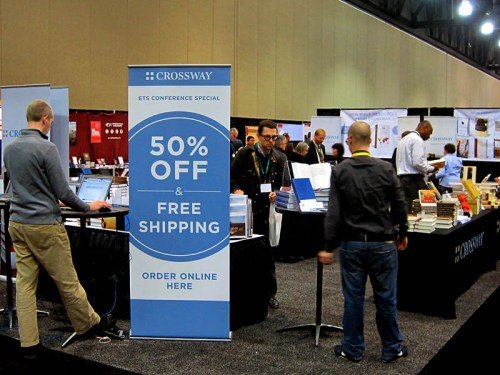
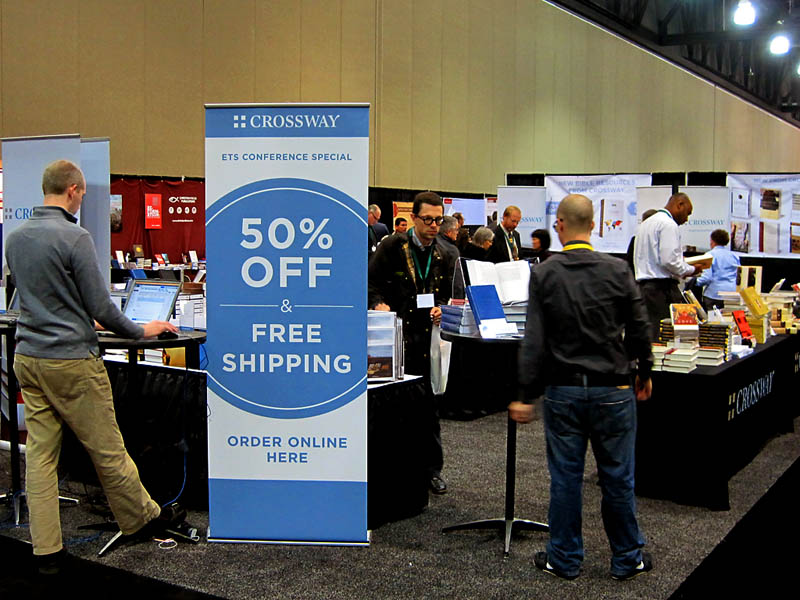
The Crossway display. Crossway is the publisher of the ESV bible.

The Crossway display. Crossway is the publisher of the ESV bible.

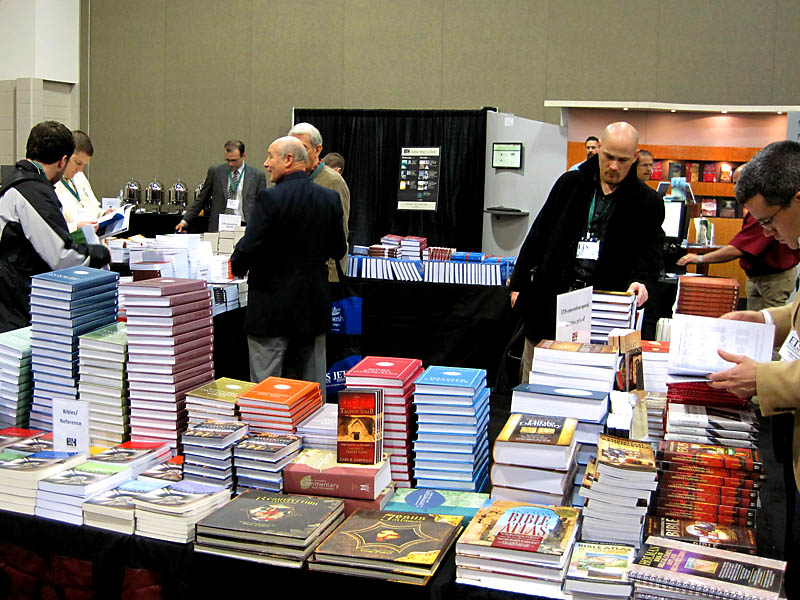
The books on display are mainly the current publications along with a few of the previous best sellers.
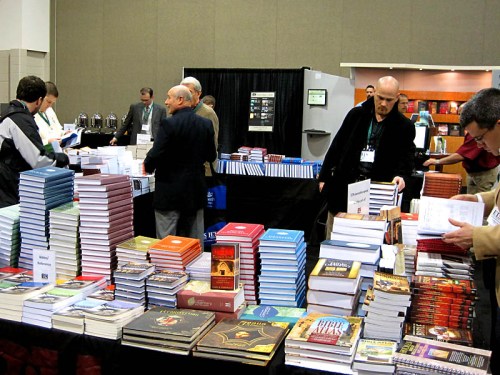
A portion of the B&H display.

A small portion of the B&H display.

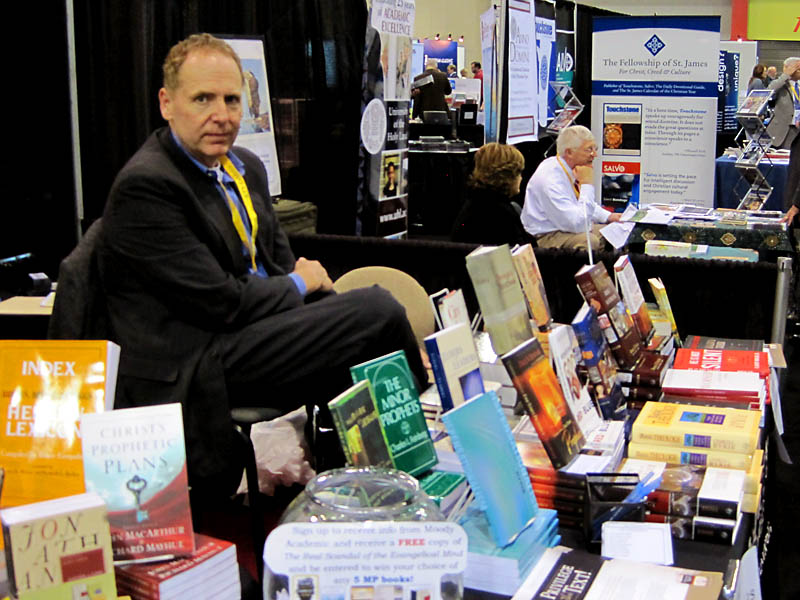
Friends. Another reason I attend the meetings to to see old friends and make new ones. Jack is now a freelance representative. This week he was working for Moody Press.
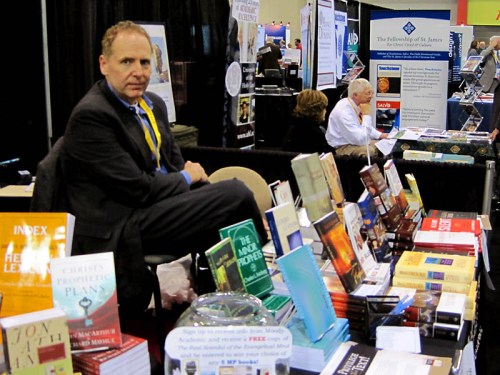
Promoting Moody Press books at the ETS meeting.

Promoting Moody Press books at the ETS meeting.

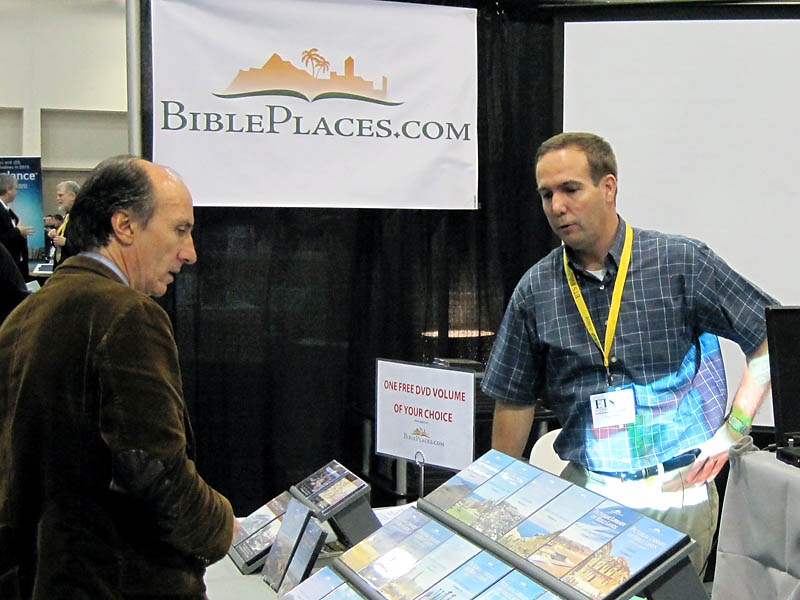
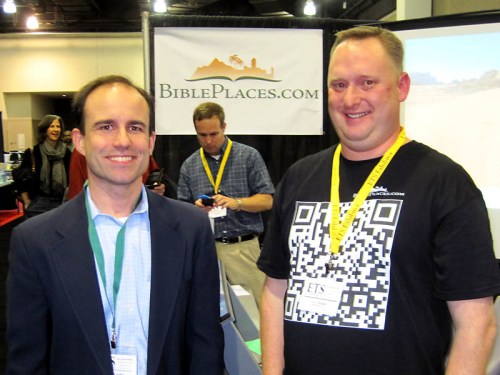
For the first time, Todd Bolen had a display of his Pictorial Library of the Bible Lands. We have written about this series here.
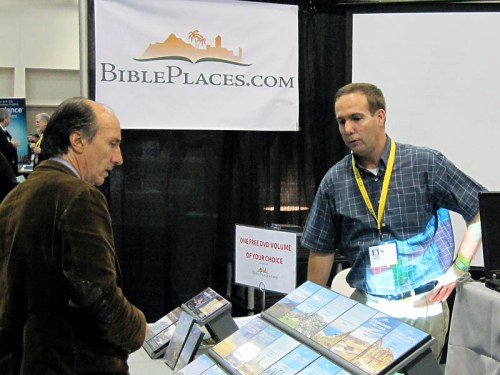
Todd Bolen, Bible Places.com, talks with a customer.

Todd Bolen (right), Bible Places.com, talks with a customer.

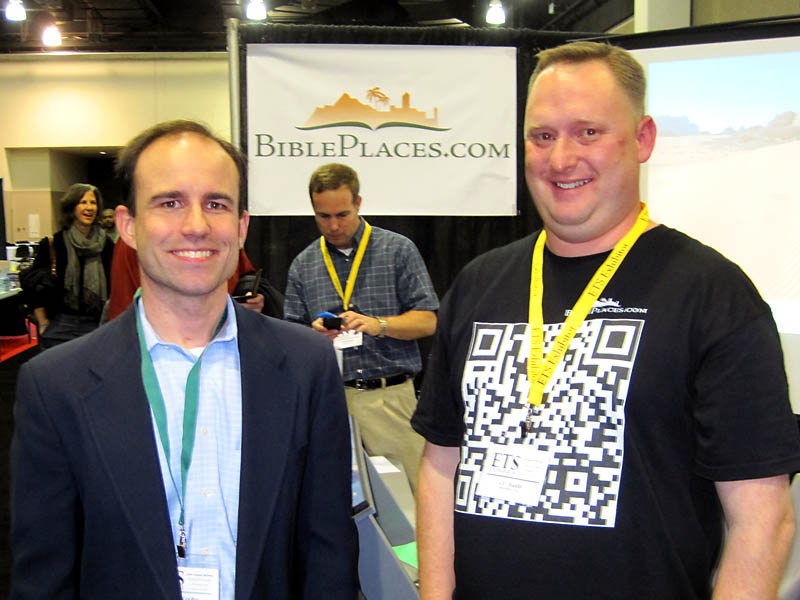
A. D. Riddle made new maps for the revised PLBL. He was helping at the booth. A customer is on the right. Bolen is in the background. This was my first time to meet A. D., he has been helpful to me several times via correspondence.
A.D. Riddle, who supplied new maps for the revised series.

A.D. Riddle (right), who supplied new maps for the revised series, takes a break from talking with an ETS member about the PLBL series.

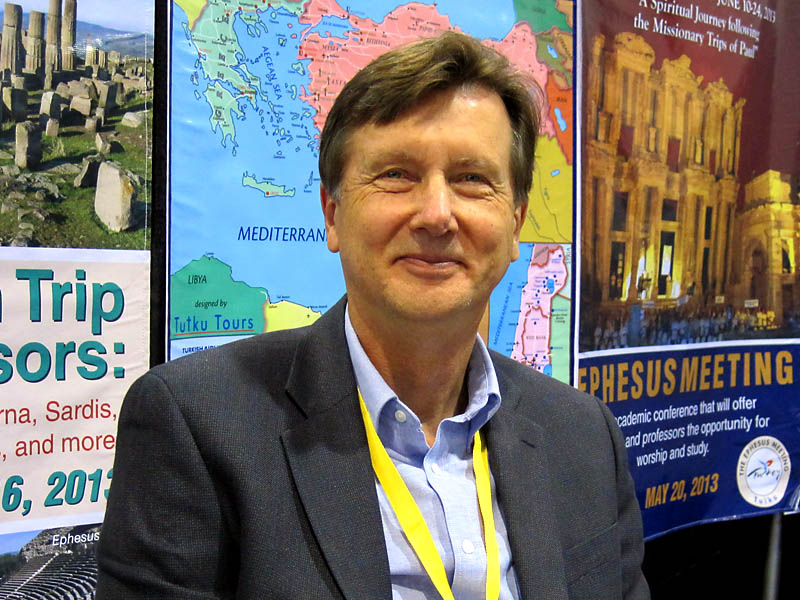
I ran across Mark Wilson, author of Biblical Turkey: A Guide to the Jewish and Christian Sites of Asia Minor. Mark lives in Turkey part of each year, and has spoken to one of my groups. Everyone who plans a trip to Turkey, or who just wants to know more about the Biblical places in Turkey, should have this book.
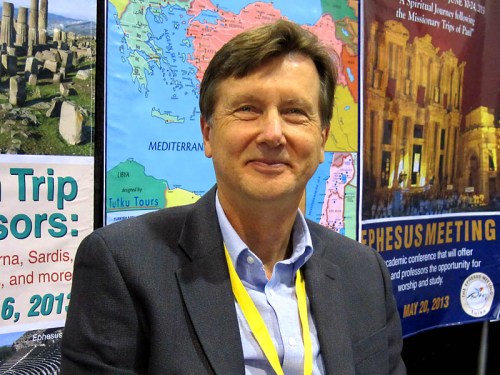
Mark Wilson mans the Tutku Travel booth.

Mark Wilson mans the Tutku Travel booth.

Other friends I saw included Steve Wolfgang, former students Rusty Taylor and Randy Murphy.

In another post I will mention some of the papers I heard.

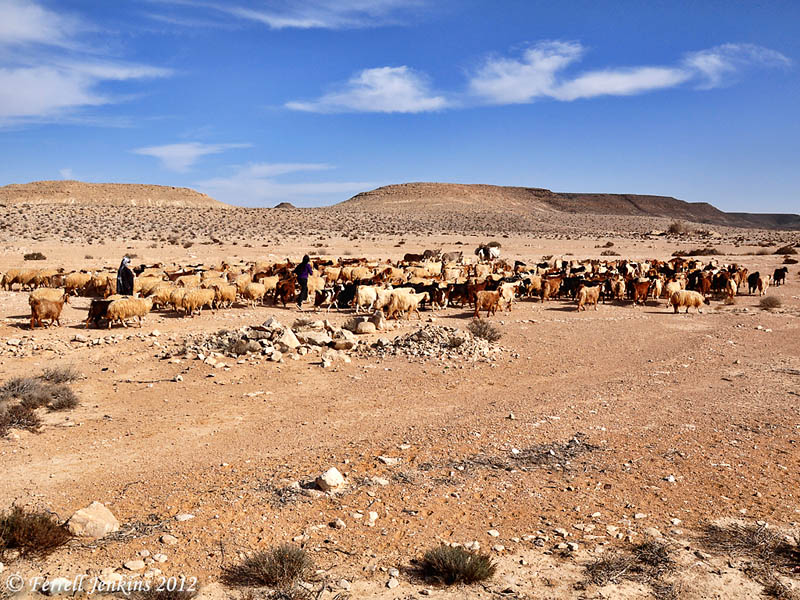
He “guided them in the wilderness like a flock.”

The Psalmist describes the LORD’S care for His people under the figure of a shepherd and his sheep.

But He led forth His own people like sheep And guided them in the wilderness like a flock;  He led them safely, so that they did not fear; But the sea engulfed their enemies.  So He brought them to His holy land, To this hill country which His right hand had gained. (Psalm 78:52-54 NAU)

Shepherds south of Avedat in the Wilderness of Zin. Photo by Ferrell Jenkins.

Shepherds south of Avedat in the Wilderness of Zin. Photo by Ferrell Jenkins.

The photo above was made a few miles south of Avedat, Israel, in the Wilderness of Zin. The Israelites lived in this wilderness (or desert) prior to entry into the land that the LORD promised to the seed of Abraham (Genesis 12:7).

Acts 22 — Photo Illustrations — the Antonia

As a result of the unjustified beating of Paul by the Jews in the temple precinct, Paul was rescued by the commander of the Roman cohort. Orders were given for Paul to be bought into the barracks. The KJV and the NKJV use the word castle. The CEB use of military headquarters probably conveys the correct idea. (Acts 21:27-40). The parembole served as headquarters for the Roman troops in Jerusalem (BDAG).

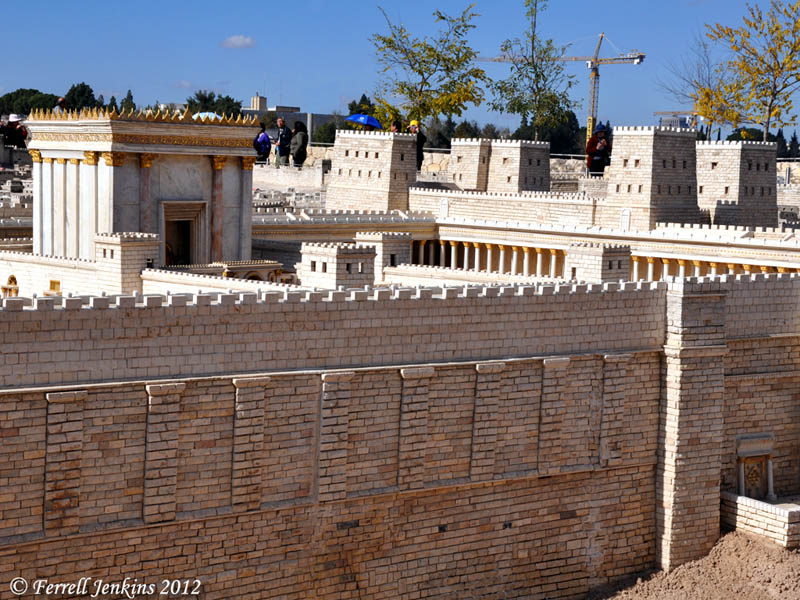
The building under consideration in Acts 21 is the Fortress of Antonia. The massive structure was built by Herod the Great and named in honor of Mark Anthony. Murphy-O’Connor says the fortress “both protected and controlled the Temple” (The Holy Land, 34). The temple was surrounded by the Kidron Valley on the east, the Tyropean Valley on the west, and a steep decline on the south. The area needing special protection was the northwest corner.

Second Temple Model, Jerusalem. The Fortress of Antonia stands on the northwest corner of the temple precinct. Photo by Ferrell Jenkins.

Second Temple Model, Jerusalem. The Fortress of Antonia stands on the northwest corner of the temple precinct. Photo by Ferrell Jenkins.

Josephus describes the “tower of Antonia” in the Wars of the Jews.

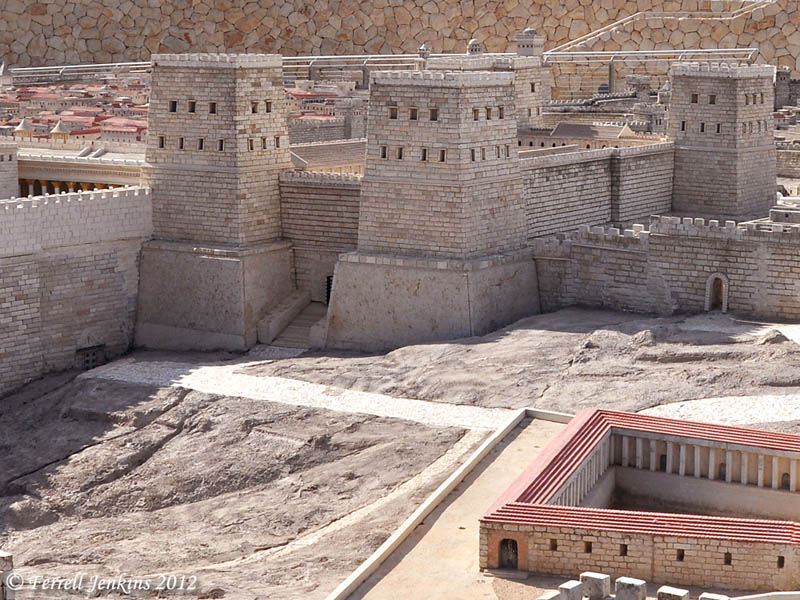
238 Now, as to the tower of Antonia, it was located at the corner of two cloisters of the court of the temple; of that on the west, and that on the north; it was erected upon a rock of fifty cubits in height, and was on a great precipice; it was the work of King Herod, wherein he demonstrated his natural magnanimity.  239 In the first place, the rock itself was covered over with smooth pieces of stone, from its foundation, both for ornament, and that anyone who would either try to get up or to go down it might not be able to hold his feet upon it.  240 Next to this, and before you come to the edifice of the tower itself, there was a wall three cubits high; but within that wall all the space of the tower of Antonia itself was built upon, to the height of forty cubits.  (JW 5:238-240)

Fortress of Antonia in the Second Temple Model. Photo by Ferrell Jenkins.

Fortress of Antonia in the Second Temple Model. Photo by Ferrell Jenkins.

The photo above shows the Tower of Antonia built on the natural rock foundation at the northwest corner of the temple precinct. A portion of the Pool of Bethesda (John 5) is visible on the right.

Paul’s speech recorded in Acts 22 took place on the stairs leading up from the temple platform into the fortress. When the crowd drowned out Paul, the commander ordered that he be brought into the fortress (22:24). After Paul’s nephew informed the Roman officers about a planned conspiracy to kill Paul, he was sent to Caesarea where he would remain for two years (23:23; 24:27).

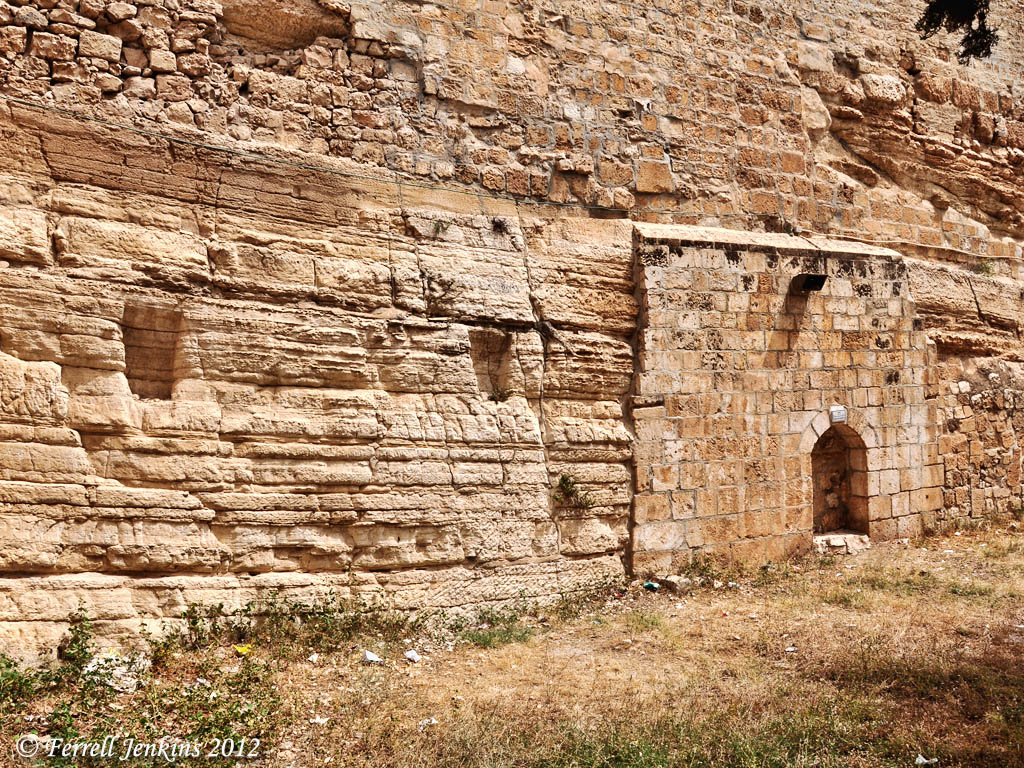
The photo below was made from inside the temple precinct. It shows the natural rock scarp in the northwest corner on which the Fortress of Antonia was built. See Leen Ritmeyer’s post about this, and his drawing showing the location of the steps mentioned in Acts 21. Ritmeyer sells digital images of his drawings.

The natural rock scarp at the NW corner of the Temple Mount. Photo by Ferrell Jenkins.

The natural rock scarp at the NW corner of the Temple Mount. Photo by Ferrell Jenkins.

Veterans Day and the Memphis Belle

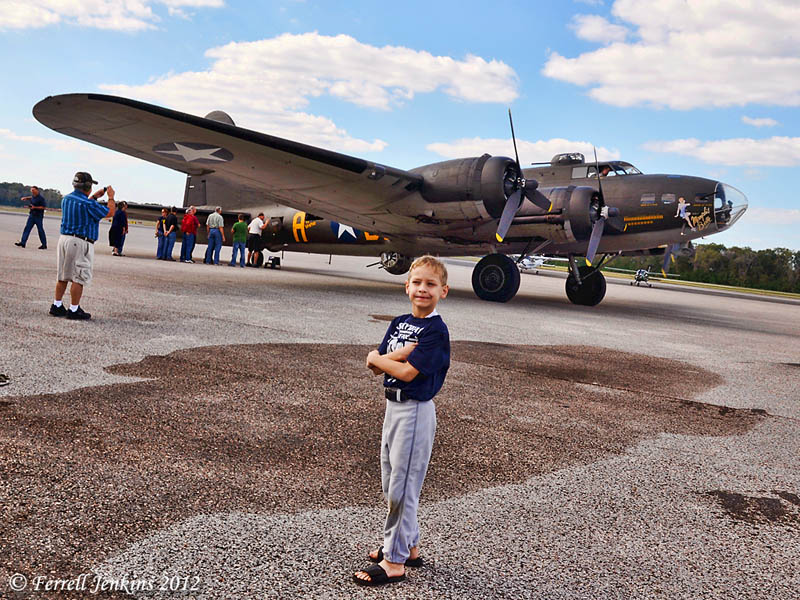
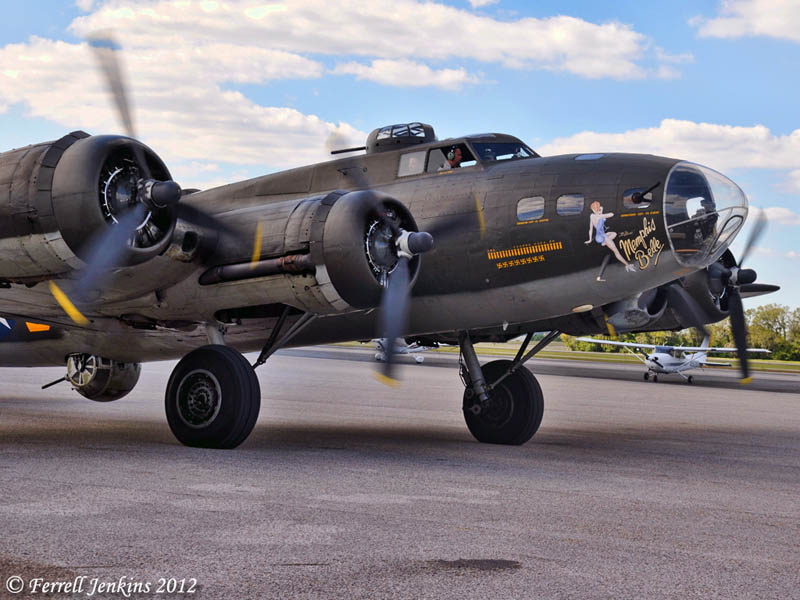
The Memphis Belle, a B-17 bomber built in 1945, is at the Tampa Executive Airport near us Saturday and Sunday. A recent promotional article at TBO.com tells some about the significance of the plane.

“The B-17 is the iconic World War II bomber,” he said. Between 1935 and 1945, nearly 13,000 B-17s were built.

“About 4,300 of them went down and each carried a 10-man crew,” he said. “We are quite honored to fly this airplane.”

Our grandson had a baseball game near us Saturday morning. At lunch I told him about the Memphis Belle. I told him that Grandmother and I were about his age when the plane was built, and that I would like for him to see it.

It was a beautiful day in Tampa, and we enjoyed seeing the B-17 land and take off while we were at the airport.

Passengers line up to take a short $450 ride on the Memphis Belle. Photo by Ferrell Jenkins.

Passengers line up to take a ride on the Memphis Belle. Photo by Ferrell Jenkins.

An older gentleman who was a gunner on the B-17 during WWII was among the visitors at the airport while we were there. There may have been others.

Memphis Belle - B-17 - at Tampa Executive Airport. Photo by Ferrell Jenkins.

Memphis Belle – B-17 – at Tampa Executive Airport. Photo by Ferrell Jenkins.

Seeing the Memphis Belle was a good reminder of the historic importance of the B-17 “flying fortress” in the history of our country, and of the men who have served.

This plane was featured in the 1990 movie by the same name.

Portions of Bond 007 Skyfall filmed in Turkey

An article at MI6 (here) about the Istanbul premier of Skyfall mentions Turkish sites used in the film.

Turkey has felt a noticeable increase in tourist enquiries. “Skyfall” showcases the famous rooftops and the Grand Bazaar of Istanbul, as well as the more rural and rugged landscapes of southern Turkey as the film’s second unit shot extensively in Adana.

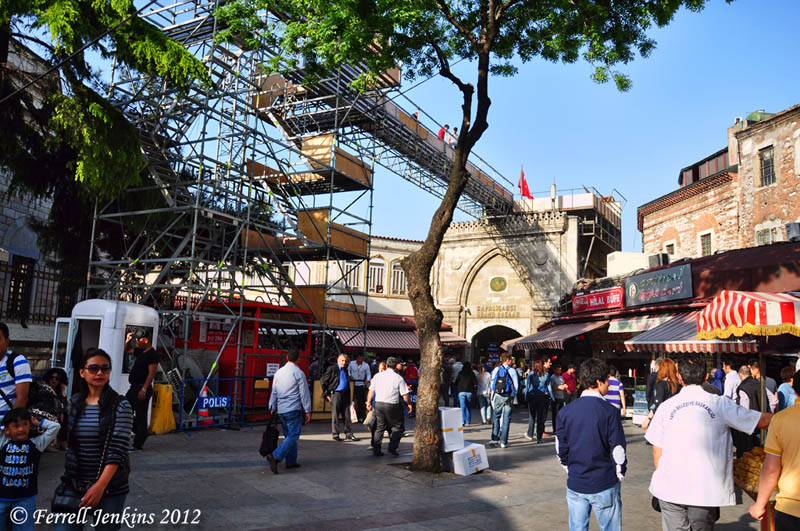
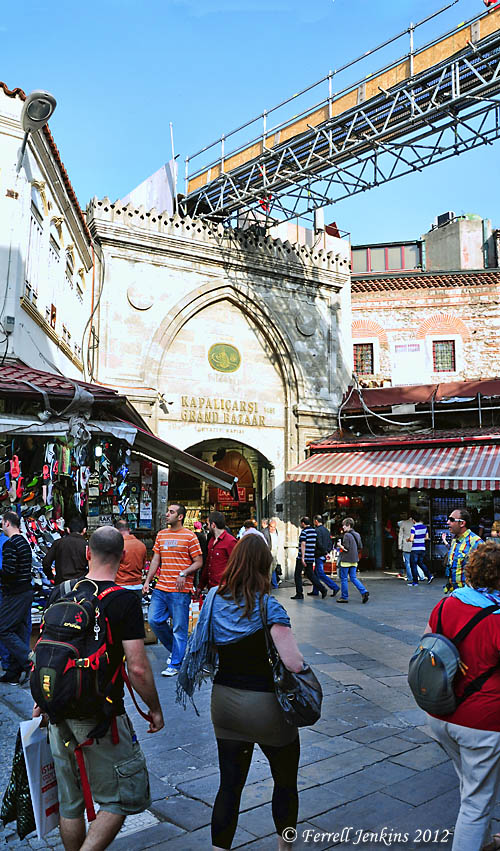
Almost every group that visits Turkey makes a stop in Istanbul. On our recent Steps of Paul and John Tour we also made a brief visit to the Grand Bazaar. At one entry to the Bazaar the scaffolding was in place for the filming of some of the scenes in the new Bond 007 Skyfall movie.

Istanbul Grand Bazaar set for the Bond 007 Skyfall movie. Photo by Ferrell Jenkins.

Istanbul Grand Bazaar set for the Bond 007 Skyfall movie. Photo by Ferrell Jenkins.

One of the reasons many people have enjoyed the Bond movies is for the opportunity to see many beautiful and exotic places that served as settings.

Skyfall scaffolding above the Grand Bazaar in Istanbul. Photo by Ferrell Jenkins.

Adana is located about 30 miles east of Tarsus, the native home of the Apostle Paul in the region of Cilicia.

But Paul said, “I am a Jew of Tarsus in Cilicia, a citizen of no insignificant city; and I beg you, allow me to speak to the people.” (Acts 21:39 NAU)

Acts 21 # 2 — Photo Illustrations – Tyre

Luke records the journey from Patara to Tyre in these words:

 2 and having found a ship crossing over to Phoenicia, we went aboard and set sail.  3 When we came in sight of Cyprus, leaving it on the left, we kept sailing to Syria and landed at Tyre; for there the ship was to unload its cargo.  4 After looking up the disciples, we stayed there seven days; and they kept telling Paul through the Spirit not to set foot in Jerusalem.  5 When our days there were ended, we left and started on our journey, while they all, with wives and children, escorted us until we were out of the city. After kneeling down on the beach and praying, we said farewell to one another.  6 Then we went on board the ship, and they returned home again.  7 When we had finished the voyage from Tyre, we arrived at Ptolemais, and after greeting the brethren, we stayed with them for a day.  (Acts 21:2-7 NAU)

Tyre was well known to the Old Testament writers, especially the prophet Ezekiel. In Ezekiel 26-28 you will find a proclamation against Tyre, a prophetic lamentation over the fall of the city, and a proclamation against the king of Tyre.

The ministry of Jesus took Him to the district of Tyre and Sidon (Matthew 15:21).

The disciples, with wives and children, escorted Paul and his companions out of the city. The group kneeled and prayed on the beach before saying farewell to one another.

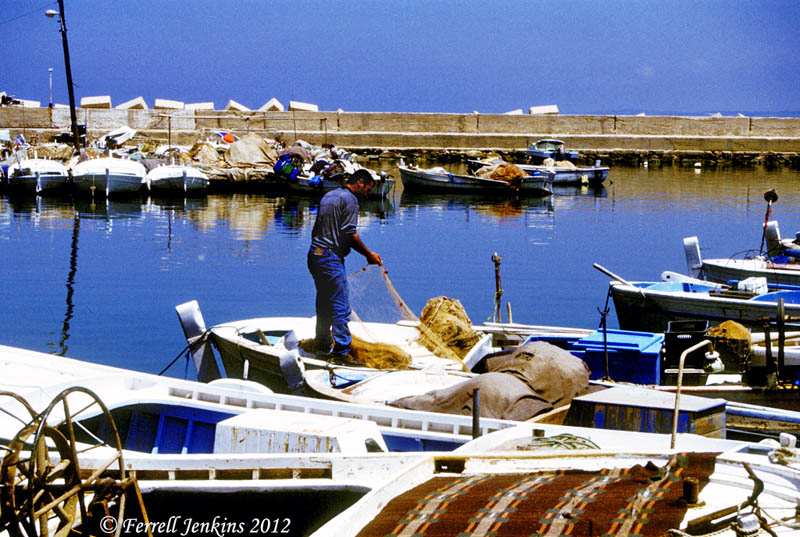
Tyre was once an important Phoenician city, but is now a small town known as Sur in Lebanon. It has a small fishing port that you see in the photograph below.

A fisherman works with his nets in the small harbor of Tyre. Photo by Ferrell Jenkins.

A fisherman works with his nets in the small harbor of Tyre. Photo by Ferrell Jenkins.