Monthly Archives: August 2009

A unique panorama from Tell es-Safi/Gath

Prof. Aren Maeir has posted a unique panoramic photo by Gal Avraham of Area A at Tell es-Safi/Gath. It appears to be made from at least 7 different photographs. See them here.
Reaching 200,000 hits

Overnight we registered our 200,000th hit on this blog. Our first post was May 2, 2007. Since that time we have covered two trips to Israel, two trips to Turkey, a trip to Greece and the Greek islands, a trip to Egypt, and a trip to Scotland. In addition we have reported on numerous archaeological developments and posted info on many biblical places and customs.

Actually we passed the 200,000 mark more than a week ago. Back in May we reported here on losing 3380 hits on our counter overnight.

Thanks should be extended to several people.

  • Thanks to WordPress for making this wonderful opportunity available at no cost. I would like to encourage everyone who thinks they have something worthwhile to say to get a blog and begin writing.
  • Thanks to our readers. The number has grown consistently in the past two years. We are delighted that you continue to check our blog. It has been fun to watch the increase of the traffic ranking at Alexa.
  • Thanks to everyone who has sent tips about items of interest that you think we should cover. Most of these come from acquaintances by email rather than as comments to the blog.
  • Thanks to Todd Bolen at blog.bibleplaces.com and BiblePlaces.com for his link to our page. Todd has called attention to this page several times and it has helped to increase the number of our readers.
  • Thanks to my wife for proofing many of the posts. I always appreciate her help.
  • Technological thanks to Nikon, Canon, and Adobe PhotoShop.

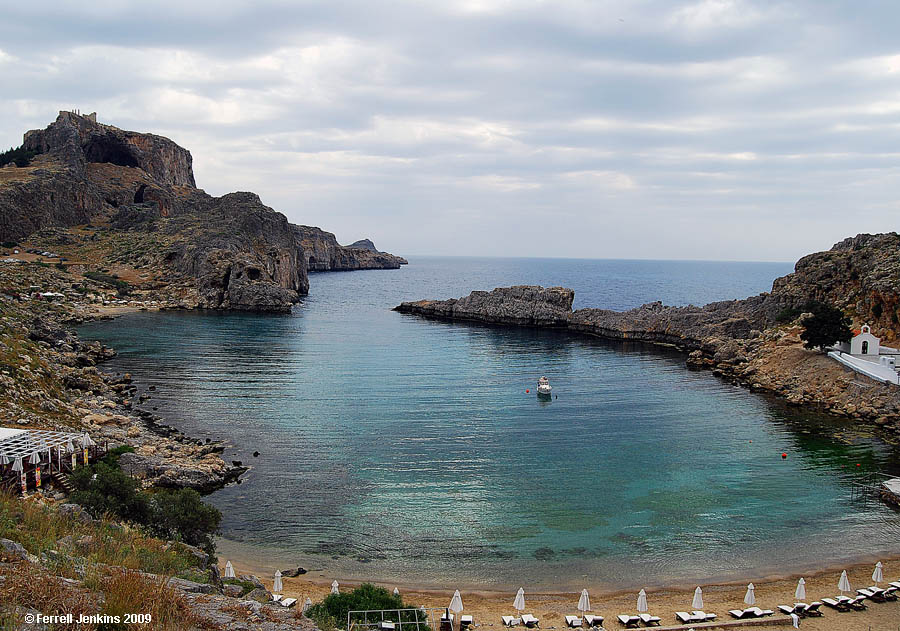
I would like to share a photo that is large enough to be of use to those who use visuals in teaching. This is a picture of St. Paul’s Bay on the island of Rhodes. Click on the photo for a larger image. For information about the place check our post for May 17, 2008.

St. Paul's Bay at Lindos, Rhodes. Photo by Ferrell Jenkins.

St. Paul's Bay at Lindos, Rhodes. Photo by Ferrell Jenkins.

Podcast on Tell es-Safi/Gath excavation

A brief report about the Tell es-Safi/Gath excavation has been posted on the ABC (Australian Broadcasting Company) here. A transcript is included for those who prefer to read.

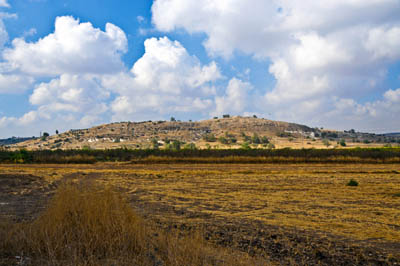
Prof. Aren Maer has posted a great photo of the tell from ground level.

Tell es-Safi/Gath. Photo by Richard Wiskin.

Tell es-Safi/Gath. Photo by Richard Wiskin.

Check the web site here for a hi-res photo. Gath is the town named as the home of Goliath in the Bible.

Then a champion came out from the armies of the Philistines named Goliath, from Gath, whose height was six cubits and a span. (1 Samuel 17:4 NAU)

I wrote this post yesterday and waited till today to post it. Others have called attention to the podcast since that time.

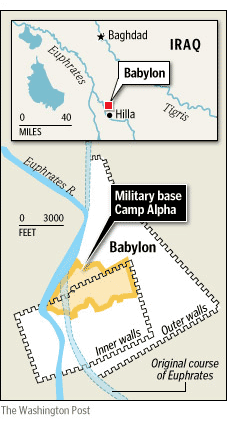
UN reports Babylon damaged by US troops

According to a report on CNN.com U.S. troops are accused by a United Nations report of damaging ancient Babylon. Well, surprise!, surprise! I think its called war.

The troops and their contractors caused “major damage” by digging, cutting, scraping and leveling while they were revamping the site to meet military standards, the U.N. cultural agency, UNESCO, said in a report.

“Key structures that were damaged include the Ishtar Gate and the Processional Way,” the report added.

The Ishtar Gate, an entrance to the northern part of the city, is decorated with animals that portray the symbol of the god of the city of Babylon.

“Damage to the gate includes smashed bricks on nine of the bodies of the animals adorning the gate,” according to the report.

To those of us interested in the past this damage is to be regretted. Babylon is important in Biblical history. The report goes on to say that local residents had contributed to the damage through development. One could fill a book with accounts of this happening at important historic sites.

The report introduces another aspect.

During colonial times, archaeologists hauled off Babylon’s artifacts to Europe. Some of those artifacts can be seen in a museum in Berlin, Germany.

babylon-diagram-washingtonpostYes. Thankfully the German archaeologists excavated the Ishtar Gate and the Procession Street and took those things to Berlin for preservation and restoration. It is now possible to visit the Museum of the Ancient Near East (Vorderasiatisches Museum), also called the Pergamum Museum, and see the Ishtar Gate and the Procession Street. I note that the Museum site now has some small, but nice photos online here. You may also see panels from the Procession Street at other great museum of the world including several in the United States.

We have previously written about Babylon, with photos, here, here, and here.

We commented on those dreaded colonial archaeologists here.

Check these reports: The Irish Times; The Washington Post. I do not doubt damage, but the photos show the site much the same as it was in 1970 when I visited.

HT: Harriet; Biblical Paths.

Aerial views of Gath

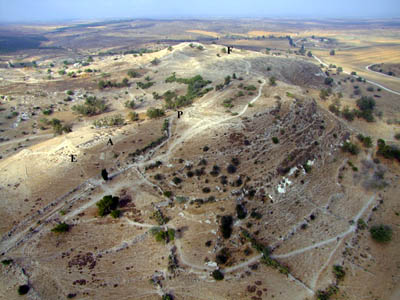
Prof. Aren Maeir has posted a great aerial photo of Tell es-Safi/Gath on his blog here. He also has a photo showing the air balloon with a remote camera used to make the photo. I am taking the liberty to post a small copy of the aerial photo in an effort to encourage you to look at the hi-res one on his blog. In this photo you can see the Mediterranean Sea in the distance. This illustrates clearly the terrain of the Shephelah and the coastal plain (of Philistia). The areas worked this summer are indicated by the letters E, A, P and F.

Aerial view of Tell es-Safi/Gath looking SW.

Aerial view of Tell es-Safi/Gath looking SW. Tell es-Safi/Gath Blog.

Aren promises to offer final reports on the accomplishments of the season shortly. We look forward to those.

Over the years I have encountered people who think ALL of the archaeological work has been done. When you see a large mound like Tell es-Safi/Gath from the air you begin to understand that there is still work to be done.

Here are a few of the interesting things we know about Gath from the Bible:

  • Gath was one of the five major cities of the Philistines (1 Samuel 6:17).
  • The ark of the covenant was brought here by the Philistines after being capture in battle with the Israelites (1 Samuel 5:8).
  • Goliath was from Gath (1 Samuel 17).
  • David once sought refuge from Achish king of Gath (1 Samuel 21).
  • When Saul and Jonathan died, David did not want it to be published among the Philistines. He said, “Tell it not in Gath, Proclaim it not in the streets of Ashkelon, Or the daughters of the Philistines will rejoice, The daughters of the uncircumcised will exult” (2 Samuel 1:20).
  • King Uzziah broke down the wall of Gath, and other Philistine cities, and built Judean cities (2 Chronicles 26:6).