Memorial Day 2012

Memorial Day, originally called Decoration Day, is a day of remembrance for those who have died in our nation’s service. There are many stories as to its actual beginnings, with over two dozen cities and towns laying claim to being the birthplace of Memorial Day. (Memorial Day History)

When I was a kid, growing up in the American South, the day we now call Memorial Day was called Decoration Day. Families went to the local cemeteries to clean up the grave sites of relatives and leave fresh flowers. If it was known that there were no family members left in the community, those graves also were cleaned. I don’t recall when I first began to hear, or think, that the day was intended to honor those fallen in war.

Like many holidays, the original purpose has changed. Memorial Day, Independence Day, Labor Day, Christmas, Easter, and other holidays, have become times for picnics, trips, vacations, and assorted non-related practices. Every holiday has become a time for stores to have sales.

I like the idea of Memorial Day. I am pleased to join in the remembrance of troops fallen in battle, and all of the dead who have played a significant role in my life.

The photo below is one I made at the funeral of a long-time friend, earlier this year.
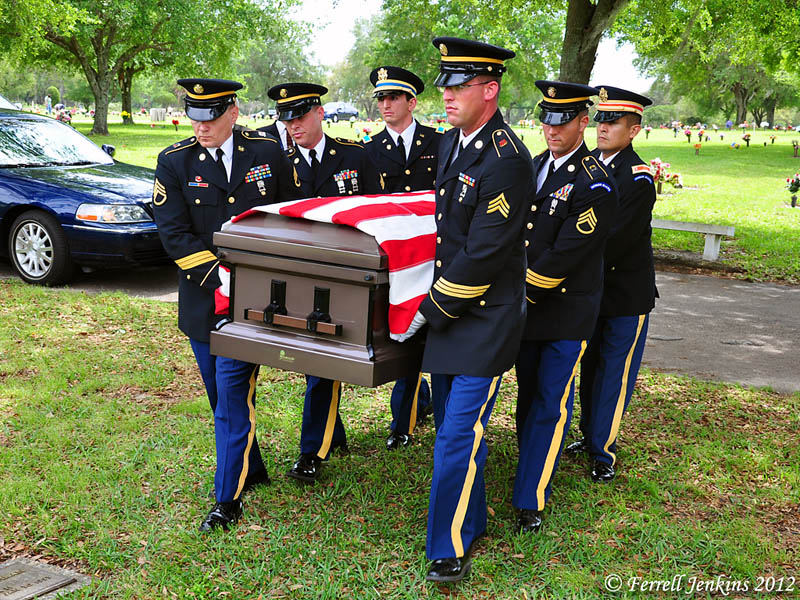
Military Honor Guard Funeral of B. R. Baker. Photo by Ferrell Jenkins.

Military Honor Guard Service for Barney Ross Baker, SSGT, U.S. Army (Retired), Tampa, Florida, March 31, 2012. Photo by Ferrell Jenkins.

The beginning comments are repeated from 2010 and 2011.

The Man of Galilee available in Kindle format for 99¢

DeWard Publishing Company announces today that Atticus G. Haygood’s The Man of Galilee in available in Kindle format for 99¢. This, in my judgment, is one of the finest books written, apart from the Bible, to direct people to a proper understanding of Jesus..

The Man of Galilee by Atticus G. Haygood.
I don’t know how long it will be available for this incredibly low price, but I suggest you get it now from this link.

Eisenbrauns 2012 Mug announced

Scholarly book publisher Eisenbrauns announces the Eisenbrauns 2012 Mug.

Eisenbrauns 2012 Mug

Eisenbrauns 2012 Mug
A Hittite Proverb

Eisenbrauns, Forthcoming June 2012
14 ounces, Hittite and English
Ceramic
Your Price: $7.50
www.eisenbrauns.com/item/EISMUG2012

If you want to know what the Hittite proverb says, click on the link to Eisenbrauns.

Just something on the lighter side for you to enjoy while I make my way across the Atlantic.

Black Sea coastal town of Sinop

We drove the 100 miles from Samsun to Sinop today. The distance on the road map is deceptive. about one half of the distance is in serious mountain territory. The drive took three hours each way. We had a 6:15 p.m. flight from Samsun to Istanbul, so our time was limited. The drive was educational and helped us to understand some things we had only read about before.

I don’t have the time to explain the reasons for going to this town, except to say that it is in the region of the ancient Roman province of Pontus (1 Peter 1:1).

Later I hope to show you some photos and explain the importance of the town to the study of Peter’s epistles.

Homeward bound tomorrow after a great (nearly) four weeks in Turkey, Greece, and Cyprus.

Pontus and Peter’s Epistles

Pontus is mentioned only three times in the New Testament.

  • Devout Jews were present in Jerusalem from Pontus on the day of Pentecost (Acts 2:9). Some of these individuals who accepted the message of Peter on Pentecost might later have been the recipients of his letters.
  • Aquila was a native of Pontus. He had moved to Rome, but being ordered to leave by the Emperor Claudius he came to Corinth where he, along with his wife Priscilla, met Paul (Acts 18:2).
  • Peter addressed his epistles to Christians residing in five different Roman provinces, including Pontus.

Peter, an apostle of Jesus Christ, To those who reside as aliens, scattered throughout Pontus, Galatia, Cappadocia, Asia, and Bithynia, who are chosen (1 Peter 1:1 NAU)

Scholars suggest that the order of the Roman provinces is indicative of the order in which Peter’s epistle was delivered by the messenger. Colin Hemer argues for Amasus (Amisos) as the starting point on the Black Sea coast for the messenger. Amisos is now identified with the Turkish city of Samsun, a prosperous town of over half a million inhabitants (“The Address of 1 Peter.” Expository Times, 89:239-243). Mark Wilson agrees (Bibical Turkey, 338).

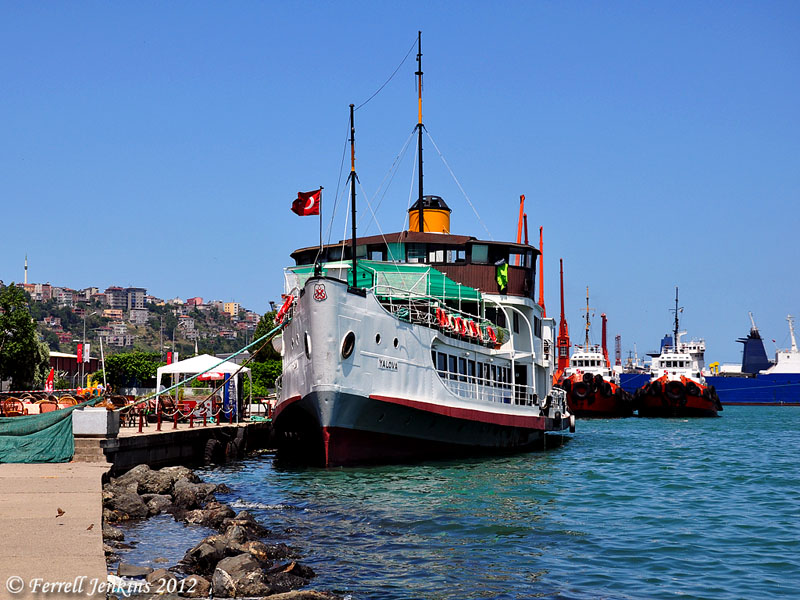
The photo below was made from the harbor of Samsun. The hill in the distance marks the ancient acropolis of Amisos.

Harbor at Samsun with acropolis of ancient Amisos. Photo by Ferrell Jenkins.

Harbor at Samsun with acropolis of ancient Amiisos, Photo by Ferrell Jenkins.

Even the Romans brought their armies to this region of Asia Minor through the ancient port city of Amisos. This was much easier than traveling overland.

Amisos is mentioned under the same Sampsames in the Apocrypha book of 1 Maccabees 15:23 (RSV).

Tomorrow we hope to visit the Pontic city of Sinop (Sinope), about 100 miles west of Amisos.

On the Black Sea coast of Turkey

We did a lot of traveling today. Drove from Patara to Antalya to make our flight. Arrived at Samsun on the Black Sea coast of Turkey (Roman Pontus).

The flight from Istanbul was delayed quite a bit. Then when we arrived in Samsun one of the bags was missing. It was my snack bag. Doesn’t sound too serious, but for a person with hypoglycemia it is a serious imposition. Bag has been located and we hope to have it tomorrow morning.

That’s it for tonight. Thanks for checking by.

P.S. several people are writing me, and apparently expecting that I am home and should answer immediately. Wish they read the blog.

Myra in Lycia, and other places

Myra was a town of Lycia about 85 miles from Antalya, Turkey (biblical Attalia, Acts 14:25). The town is located a few miles away from the Mediterranean, but has a port at nearby Andriake. When Paul was being escorted by a Roman centurion from Caesarea Maritima to Rome, the ship sailed along the coast of Cilicia and Pamphylia, and landed at Myra in Lycia (Acts 27:5). There they found an Alexandrian ship sailing for Italy.

Whether Paul was close enough to see any of Myra we do not know. There are several interesting things that could have been seen. My only previous visit to Myra was in 1987. I mention this to say that it was before the days of digital photos. One of the reasons to come back was to make digital photos.

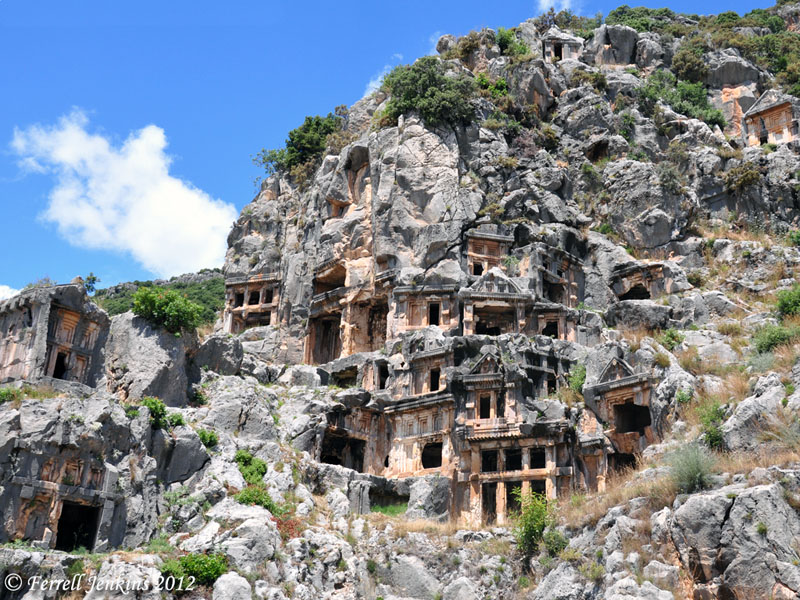
Here is a photo of the house-type tombs in the rock cliffs at Myra dating from the 4th century B.C.

Fourth century rock cut tombs at Myra, Turkey. Photo by Ferrell Jenkins.

Fourth century rock cut tombs at Myra, Turkey. Photo by Ferrell Jenkins.

In the past two days we have also visited Patara, Bodrum (the Mausoleum of King Mausolus of Caria), and Xanatos. In addition, we have learned much more about the travel conditions on sea and land during our travels.

Last evening we were unable to access the Internet, but tonight we have a nice signal at our hotel near Patara. Tomorrow will be a traveling day as we move from the Mediterranean coast to the Black Sea coast of Turkey.

From Cyprus to Pamphylia

Today we took a flight from Ercan Airport in the Turkish Republic of Cyprus to Turkey. Flying from Greece to Cyprus it was necessary to fly to Larnaca on the southern coast. Flights from Larnaca do not go to Turkey, and flights from Ercan do not go to Greece. Let’s put that aside for now.

The flight from Cyprus to Antalya (biblical Attalia) took about 45 minutes. I thought some about how Paul, Barnabas, and John Mark made their way from Paphos on Cyprus to Perga in Pamphylia (a few miles from the Antalya airport). The distance in a straight line is 185 miles. Here is Luke’s account of the journey.

Now Paul and his companions set sail from Paphos and came to Perga in Pamphylia. And John left them and returned to Jerusalem,  but they went on from Perga and came to Antioch in Pisidia.  (Act 13:13-14a ESV)

There are impressive Hellenistic and Roman ruins at Perga. Most of the Roman structures date to the second century A.D. This is where John Mark turned back from the work (Acts 13:13-14; 15:37-39). The text indicates that Perga was only a beginning point for work further north. On his return from the first journey, Paul spent some time preaching here (Acts 14:25).

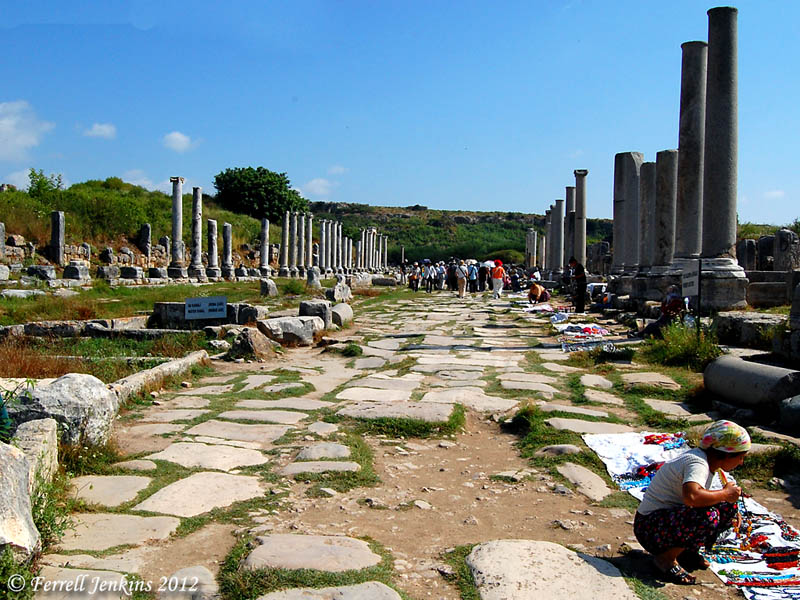
Our plans do not include revisiting sites that we have recently visited, but here is a photo of the North-South street in the Agora of Perga. The view is toward the fountain at the head of the street. A local vendor spreads out her jewelry on the ancient street.

Perga in Pamphylia. N-S street in the Agora with a view toward the fountain. Photo by Ferrell Jenkins.

N-S street in the Perga agora with view toward the fountain. Photo by Ferrell Jenkins.

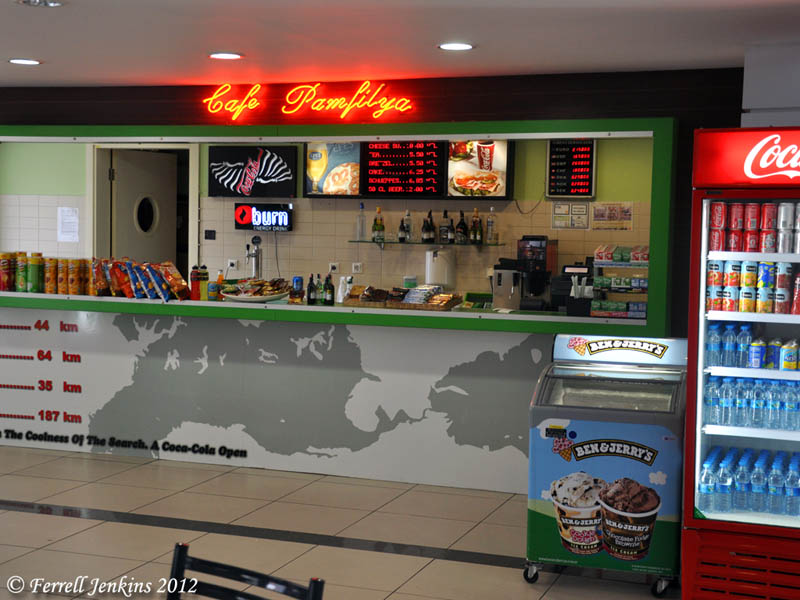
When we arrived at the Antalya International Airport I soon realized that we had come to the right place. The snack stand was named Cafe Pampilya. How appropriate.

Cafe Pamfilya in the Antalya International Airport. Photo by Ferrell Jenkins.

Cafe Pamfilya in the Antalya International Airport. Photo by Ferrell Jenkins.

Tonight we are staying on the Mediterranean Sea on the west side of Antalya (Acts 14:25). Antalya is the modern name for Attalia which served as the port of entry from Egypt and Syria to the interior of Asia. From here Paul sailed back to Antioch (Acts 14:25).

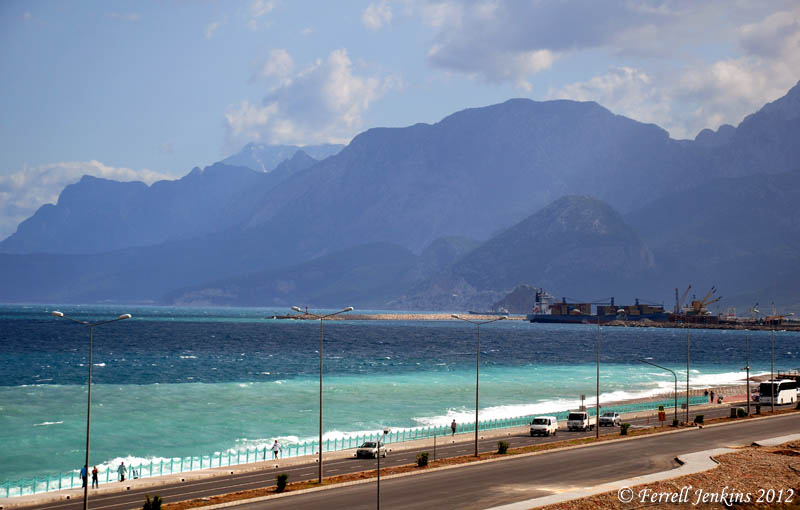
We have a nice view of the Lycian Mountains from our hotel balcony. Tomorrow we plan to drive along the coast to Myra (Acts 27:5) and other points west.

Lycian Mountains west of Antalya, Turkey. Photo by Ferrell Jenkins.

Lycian Mountains west of Antalya, Turkey. Photo by Ferrell Jenkins.

Two week ago when I was in Turkey with the group, it was about 5-7 degrees warmer than usual. Today it has rained and the wind is cool.

A post I wrote about Perga and Attalia in 2007, in the early days of this blog, may be read here.

Salamis was the first stop for Barnabas and Saul

Barnabas and Saul were sent out by the Holy Spirit from Antioch. Their first stop after leaving the port of Seleucia was Salamis on the eastern coast of Cyprus. Here is Luke’s account.

When they arrived at Salamis, they proclaimed the word of God in the synagogues of the Jews. And they had John to assist them. (Act 13:5 ESV)

It is interesting to note that there are no accounts of conversions at Salamis. The city had a large Jewish population during the Roman period.

Why go to Cyprus? These facts might provide some suggestions.

  • Well, it was east of Antioch, and a first step toward going to the Gentiles.
  • It was also the home of Barnabas (Acts 4:36).
  • After the stoning of Stephen some had traveled to Cyprus preaching to the Jews (Acts 11:19).
  • Some men of Cyprus had come to Antioch preaching to the Hellenists (Greeks) (Acts 11:20).

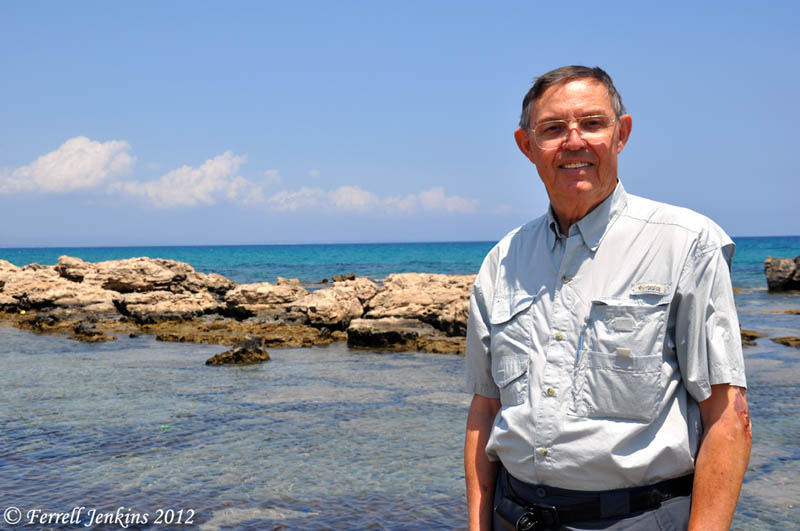
Salamis is now located in the the Turkish Republic of Northern Cyprus, or as the folks in the south say, “the occupied territory.” This photo shows some of the foundation stones of the harbor where Barnabas, Saul, and John Mark landed. Breakwaters extend for some distance into the sea.

Ferrell Jenkins at the ancient port of Salamis.

Ferrell Jenkins at the ancient port of Salamis. Photo by Leon Mauldin.

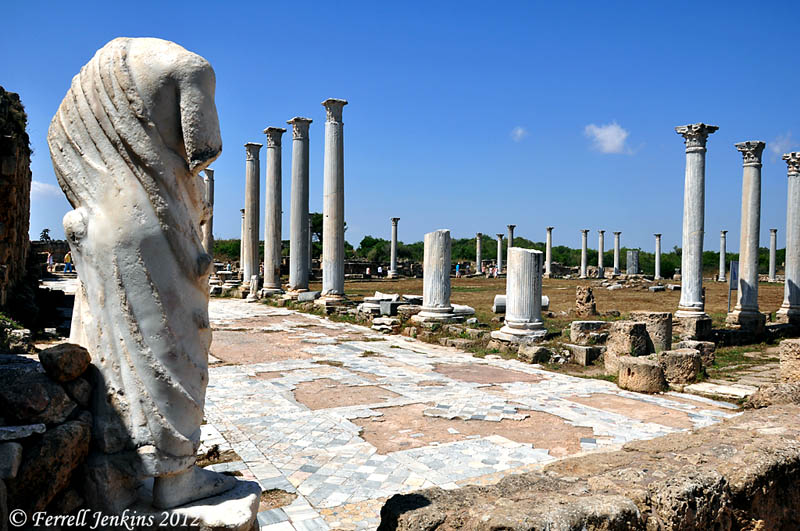
We visited the gymnasium. Not to workout. Our workout came from walking over the large site. This gym was build in the time of the Roman Emperor Augustus.

Salamis Roman gymnasium built in the time of Roman Emperor Augustus. Photo by Ferrell Jenkins.

Salamis Roman gymnasium built in the time of Roman Emperor Augustus. Photo by Ferrell Jenkins.

When I see one of these gymnasiums or palestras (exercise areas) I am reminded of what Paul wrote to Timothy:

for while bodily training is of some value, godliness is of value in every way, as it holds promise for the present life and also for the life to come. (1 Timothy 4:8 ESV)

A short distance from Salamis is the Church of St. Barnabas. The church is now a museum of icons. Many traditions have grown up in Cyprus about Barnabas.

In the afternoon we returned to Nicosia and made a stop at the Cyprus (Archaeology) Museum. They have a nice collection of artifacts, including some of the statues from Salamis, but photos are not allowed. Museum’s often do not allow photographs in hope of selling more books in the gift shop. Allowing photos provides an opportunity for teachers and others to talk about their visit with others. It actually encourages others to visit the museum. Too bad they don’t agree with me.

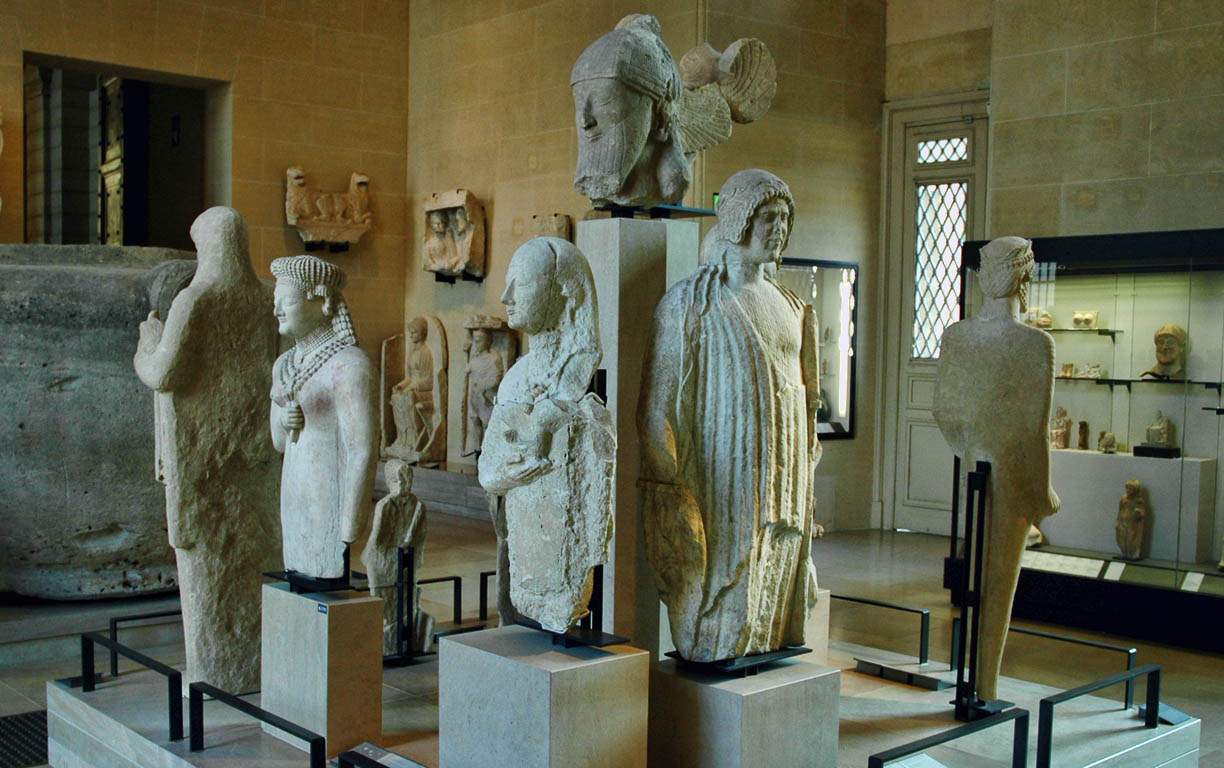
This photo is a collection of statues from Cyprus in the Louvre.

Cyprus collection from the fifth century B.C. in the Louvre. Photo by Ferrell Jenkins.

Cyprus collection from the fifth century B.C. displayed in the Louvre, Paris. Photo by Ferrell Jenkins.

It was a good day.

Saul came to be known as Paul at Paphos, Cyprus

On the first missionary journey, Barnabas, Saul, and John Mark, traveled through Cyprus from Salamis to Paphos on the southwestern coast of Cyprus. The following events involving these men took place there (Acts 13:6-13)

  • They found a Jewish magician, a false prophet, named Bar-Jesus, meaning Elymas. He tried to turn Sergius Paulus away from listening to Saul and Barnabas.
  • Paul resisted the efforts of Elymas to turn aside Sergius Paulus from the faith. Elymas was blinded.
  • Sergius Paulus, an intelligent man who served as proconsul, believed the Word.
  • Saul also came to be known as Paul. This is the name he would use throughout his ministry to the Gentiles.
  • From this time on, Paul became the lead man in the work that was being done.
  • Paul and his companions set sail for Perga in Pamphylia.

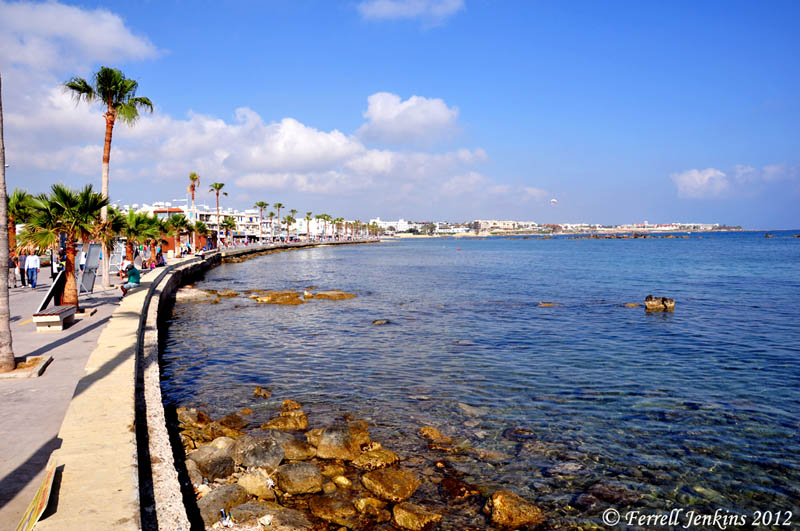
Tuesday afternoon and evening, and Wednesday morning, I visited Paphos. The harbor used by Paul and Barnabas is today a harbor used for pleasure boats and fishing boats. Tuesday afternoon the town was filled with tourists. I though a lot about the events we have listed above.

The harbor at Paphos. Photo by Ferrell Jenkins.

The harbor at Paphos. Photo by Ferrell Jenkins.

The archaeological park is large, but only a small portion of it has been excavated by archaeologists.

The most impressive items at the site are the numerous houses with elaborate mosaics. These houses began to be built in the 2nd century A.D. and continued in use until the 7th century.

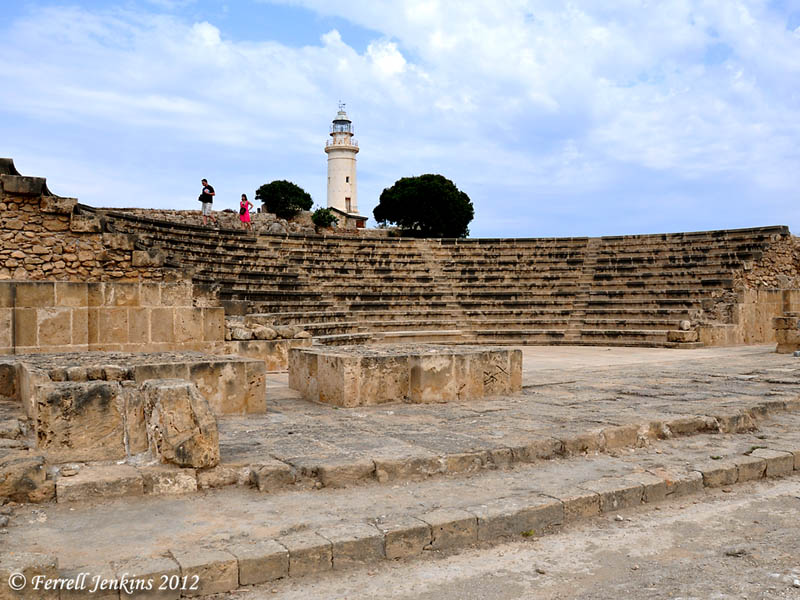
Paphos was an important city during the Hellenistic period., and into the Roman period. The few structures dating to the time of Paul (or earlier) include the Asklepion, the odeion, and the Roman agora which still needs to be excavated.

The photo below shows the odeion. The lighthouse of Paphos in the background is of recent origin, but is built upon Roman foundations.

The Odeion at Paphos. Photo by Ferrell Jenkins.

The Odeion at Paphos. Photo by Ferrell Jenkins.

My friend, Leon, was able to join me by this afternoon. Tonight we are in Nicosia, Cyprus.