Category Archives: Travel

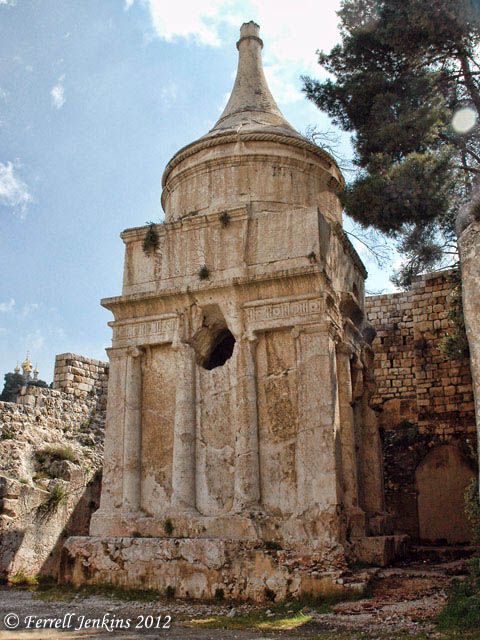
Men who honor themselves. Exhibit one: Absalom

Both Old Testament and New Testament provide illustrations of men who honor themselves, and the folly of doing so. The elder John wrote of a man named Diotrephes “who loves to be first” among his brethren (3 John 1:9).

In the Old Testament no case is more prominent than that of Absalom the rebellious son of David.

Now Absalom in his lifetime had taken and set up for himself a pillar which is in the King’s Valley, for he said, “I have no son to preserve my name.” So he named the pillar after his own name, and it is called Absalom’s Monument to this day. (2 Samuel 18:18 NAU)

In earlier times it was common for pilgrims to the Holy Land to be told that this or that structure belonged to a certain Biblical character or event.  I will show you one such example.

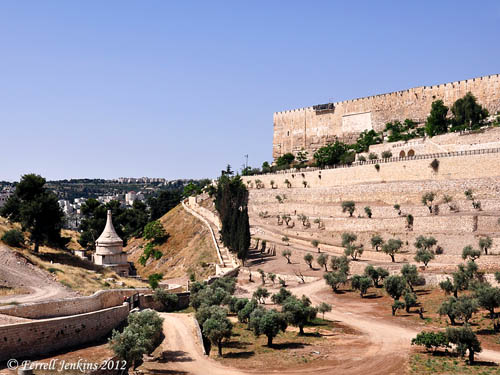
The photo below was made in the Kidron Valley with a view to the south. On the right you see the eastern wall of the Old City of Jerusalem. On the left of the photo, where the valley becomes narrow, you can see the top of the monument called Absalom’s Pillar. An image suitable for presentations is available here. This photo would look good in PowerPoint. There is room on the upper left side sky to include appropriate scriptures.

Kidron Valley View South. Absalom's Pillar on left. Wall of Jerusalem on right. Photo by Ferrell Jenkins.

Kidron Valley view to the south. Photo by Ferrell Jenkins.

In AD 1170 Benjamin of Tudela associated this monumentsin the Kidron Valley with the monument of Absalom. The monument actually belongs to the early first century B.C., and not to the time of Absalom. It is a funerary monument in front of an eight-chambered tomb.

A closeup view of the monument may be seen in the following photo.

Absalom's Pillar. Photo by Ferrell Jenkins.

Absalom's Pillar. Photo by Ferrell Jenkins.

Soon I plan to explain what this monument might have to do with Zacharias, the father of John the Baptist.

En Karem (Ain Karim) — traditional home of John the Baptist

Tradition has it that John the Baptist was born in En Karem (or Ain Karim) in the hill country of Judea. According to Shimon Gibson, the earliest document linking John to En Karem is a legendary account dated to A.D. 385-395 (The Cave of John the Baptist, 30). In that account En Karem is said to be “in the mountain” and with a “spring of water” (31). From the sixth to the eighth centuries the traditions multiply.

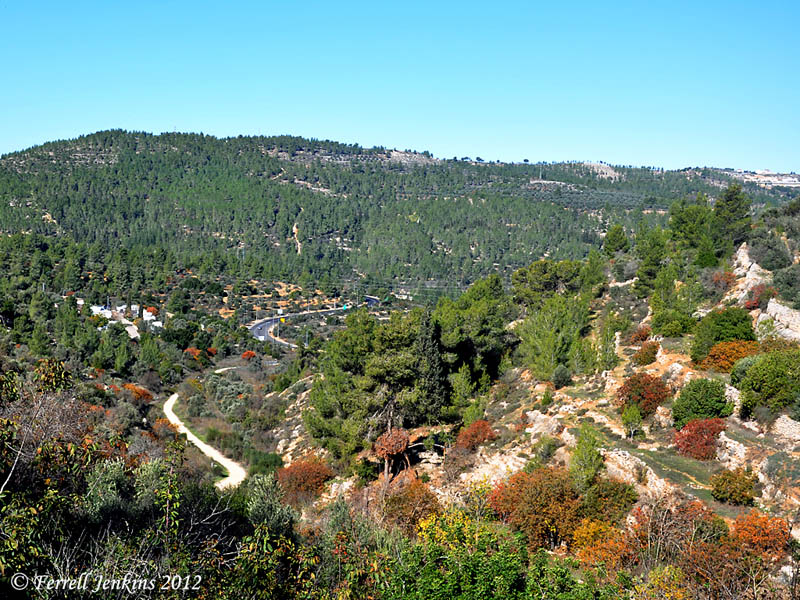
En Karem is about 5 miles west of Jerusalem. This photo shows a general view of the hill country of Judea. En Karem is in the valley below.

The vicinity of En Karem in the hill country of Judea. Photo by Ferrell Jenkins.

The vicinity of En Karem in the hill country of Judea. Photo by Ferrell Jenkins.

Luke provides the account of the announcement of the birth of John, Mary’s visit to Elizabeth the mother of John, and the birth of John (Luke 1). It is interesting that Luke prefaces the announcement of the birth to Zacharias by saying that it was “in the days of Herod, king of Judea” (Luke 1:5).

No specific town is mentioned, but Luke says that Mary visited Elizabeth in the hill country of Judah.

Now at this time Mary arose and went in a hurry to the hill country, to a city of Judah, and entered the house of Zacharias and greeted Elizabeth. (Luk 1:39-40 NAU)

The biblical text says that after the birth of John,

Fear came on all those living around them; and all these matters were being talked about in all the hill country of Judea. (Luke 1:65 NAU)

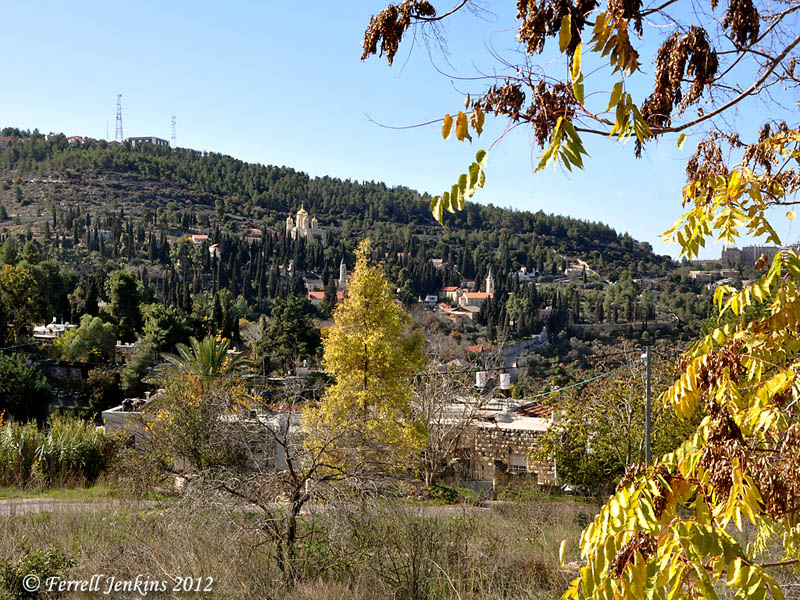
In the next view we see several churches. The one right of center with the single tower is known as the Church of St. John the Baptist. A church was built at this site as early as the 5th century A.D.

Several churches are visible in this view of En Karem. Photo by Ferrell Jenkins.

Several churches are visible in this view of En Karem. Photo by Ferrell Jenkins.

Jesus and the funeral procession at Nain

The town of Nain is mentioned only once in the New Testament.

Soon afterward Jesus went to a town called Nain, and his disciples and a large crowd went with him. (Luke 7:11 NET)

In the full account, Luke (7:11-17) reports that as Jesus approached the town gate a funeral procession was in progress. When Jesus saw the widow He had compassion and told her to stop weeping. Luke, the physician (Colossians 4:14), reports that Jesus touched the bier and said, “Young man, I say to you, get up!” Then, as a simple matter of fact, Luke says,

So the dead man sat up and began to speak, and Jesus gave him back to his mother. (verse 15)

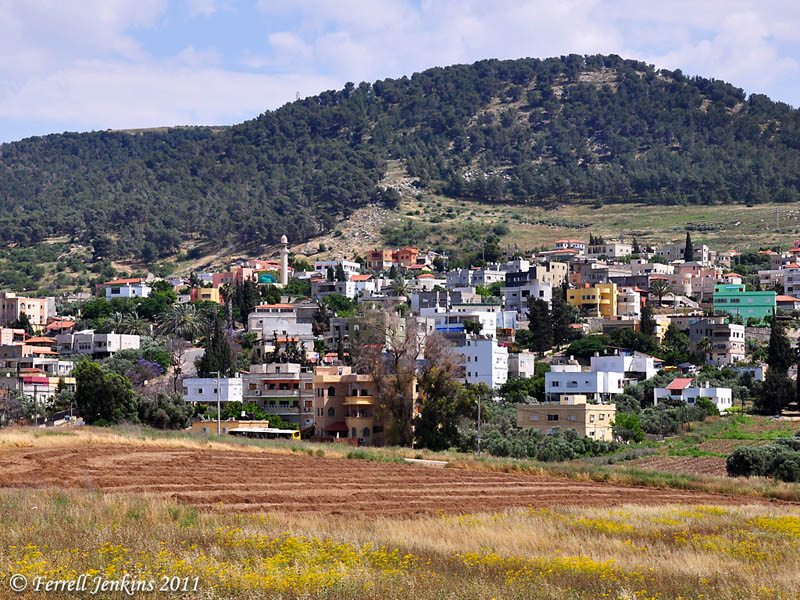
Nain is identified with the Arab village of Nein on the north slope of the Hill of Moreh. Nein is said to mean pleasant. Nain was a city of Issachar in Old Testament times. Here is a photo I made of the little Arab village last May.

The Village of Nain on the north slope of the Hill of Moreh. Photo by Ferrell Jenkins.

The Village of Nein on the north slope of the Hill of Moreh. Photo by Ferrell Jenkins.

Ralph Earle describes the pleasant location of Nain.

The town of Jesus’ day may have stood higher on the hill than the present village. It probably was named for the pleasant view that the site affords across the plain of Esdraelon. To the west one can see Mt. Carmel, and to the north the hills behind Nazareth stand out, about 9½ km [6 mi] away. To the northeast one can look past nearby Tabor (3 km [2 mi] away) to snowcapped Mt. Hermon in the distance. Southward lies Mt. Gilboa. (The International Standard Bible Encyclopedia, Revised, 3:480)

Our new header, which we will use for a while, is a 3-image panorama of Nain and the north side of the Hill of Moreh.

The New Leaf (for a New Year)

There have been several searches of this blog in recent days looking for the poem below. I think it is worth bringing it forward from January 4, 2009.

The New Leaf

He came to my desk with quivering lip –
The lesson was done.
“Dear Teacher. I want a new leaf he said,
“I have spoiled this one.”
I took the old leaf, stained and blotted
And gave him a new one, all unspotted,
And into his sad eyes smiled;
“Do better now, my child!”

I went to the Throne with a quivering soul –
The old year was gone.
“Dear Father, hast Thou a new leaf for me?”
“I have spoiled this one.”
He took the old leaf, stained and blotted
And into my sad heart smiled:
“Do better now, my child!”

This poem has been among my sermon notes for many years. It is one of those numerous good illustrations that have come down to us from Anonymous or Author Unknown.

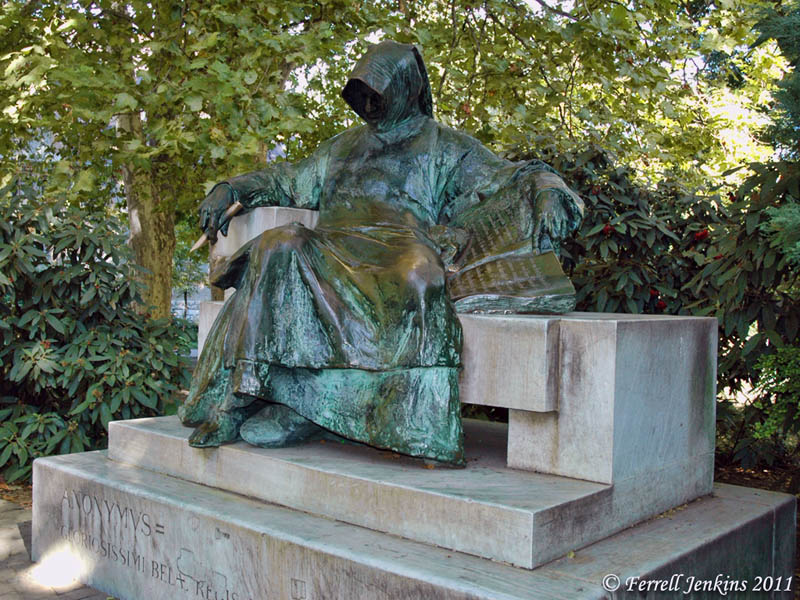
In Budapest, Hungary, near the entrance of Vajdahunyad Castle, there stands a statue of Anonymous by Miklos Legeti. The statue commemorates a 12th or 13th century unknown chronicler of one of the several rulers named King Bela.

Statue of Anonymous in Budapest. Photo by Ferrell Jenkins.

Statue of Anonymous in Budapest. Photo by Ferrell Jenkins.

Note. Don’t use this as an excuse for using other people’s material without attribution.

Five Day Bible Reading Program for 2012

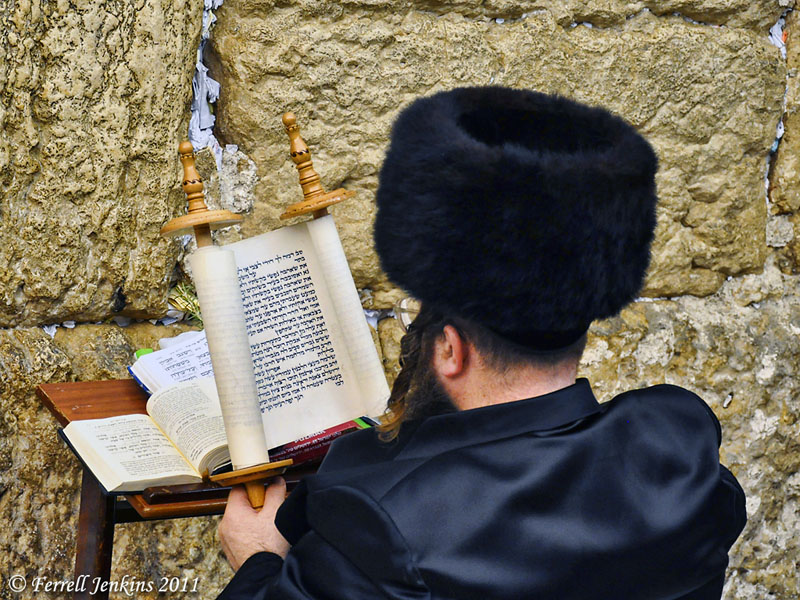
Mark Roberts (the Irving, TX one) is making his Five Day Bible Reading Program for 2012 available free of charge this year. This is an excellent program for reading through the entire Bible in a year. For a copy of the schedule that you can print on a single sheet of paper (front and back), click here.

Reading the Bible at the Western Wall. Photo by Ferrell Jenkins.

Reading the Bible at the Western Wall. Photo by Ferrell Jenkins.

A few Scriptures on the subject of Bible reading seem appropriate:

…and the scroll of the prophet Isaiah was given to him [Jesus]. He unrolled the scroll and found the place where it was written…, (Luke 4:17 NET)

…and [the Ethiopian court official] was returning home, sitting in his chariot, reading the prophet Isaiah. (Acts 8:28 NET)

You [Timothy], however, must continue in the things you have learned and are confident about. You know who taught you  and how from infancy you have known the holy writings, which are able to give you wisdom for salvation through faith in Christ Jesus.  Every scripture is inspired by God and useful for teaching, for reproof, for correction, and for training in righteousness,  that the person dedicated to God may be capable and equipped for every good work. (2 Timothy 3:14-17 NET)

The Reading Program is also available for the Kindle (or iPad) this year. Details are on the page linked above.

While you are in the neighborhood, take a look at some of the material at Mark’s BibleClassMaterial.com.

“Gibeon, for the king” bulla discovered

The Temple Mount Sifting Project, Jerusalem, announced yesterday the discovery of a clay bulla bearing the name of the biblical city of Gibeon. The name of Gibeon (GB’N) occurs with LMLK (for the king).
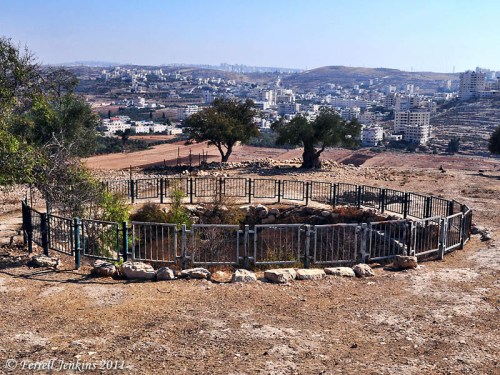
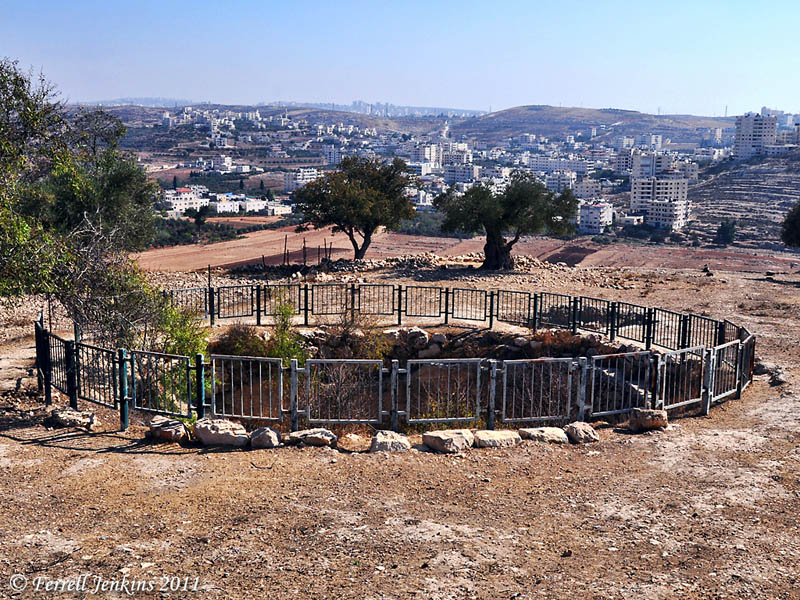
The Pool of Gibeon. Photo by Ferrell Jenkins in 2011.

The Pool of Gibeon at El-Jib. Photo by Ferrell Jenkins in 2011.

Gabriel Barkay summarizes his report of this discovery.

A small fragment of a clay bulla was discovered in the wet sifting carried out at Tzurim Valley National Park, the site of the Temple Mount Sifting Project. The bulla carries an Ancient Hebrew inscription: “[g]b’n/lmlk“, i.e. “Gibeon, for the King”. The bulla originates from the eastern slope of the Temple Mount, descending into the Kidron Valley. The bulla belongs to a group of bullae which were called by N. Avigad “Fiscal Bullae”.

Presently we know more than 50 bullae of this type. They comprise two groups, one with names of cities in the kingdom of Judah, and the other with names of royal officials. All the fiscal bullae known until now come from the antiquities market, and our bulla is the first one to come from a controlled archaeological project. This bulla enables us to fully illuminate and discuss the entire phenomenon of the fiscal bullae.

Barkay says the known bullae,

include names of 19 different cities of Judah, and dates of the reign of one of the Judean kings, usually in hieratic numerals, as well as the particle lmlk, “for the king”.

He says,

The fiscal bullae represent a taxation system from the different Judean cities, based on yearly taxes, which probably replaced the previous one, reflected in the royal Judean jars and their seal impressions, from the time of King Hezekiah.

The discovery of the fiscal bulla with the name of Gibeon from the slope of the Temple Mount, authenticates all the other fiscal bullae, and enables us to study a variety of subjects connected to the history of Judah in the 7th century BCE.

Two brief reports on the Project may be read here.

Name of Gibeon is not new. This is not the first time the name of Gibeon has been discovered from the past. During the excavations conducted by James Pritchard for the Museum of the University of Pennsylvania and the Church Divinity School of the Pacific between 1956 and 1962, over 25 inscription were found with the name Gibeon. In fact, this is how Pritchard first knew with certainy that the Arab town El Jib was to be identified as Gibeon.

Some of the inscribed jar handles discovered by Pritchard’s excavation at El Jib are displayed at the University of Pennsylvania Archaeological Museum in Philadelphia.

Gibeon is an important town in Biblical history. The first Biblical reference is in Joshua 9.

Recently I have been scanning a few slides I made at Gibeon in 1970 and 1976. Hopefully I will be able to provide some comparison photos for you to see the vast difference between then and now.

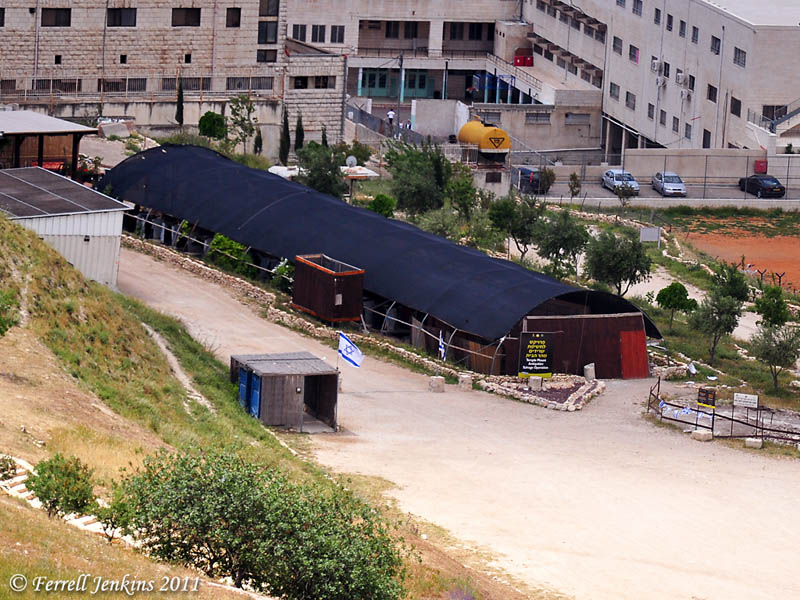
The Temple Mount Sifting Project began after it was discovered that the Moslems in control of the Temple Mount, where the Dome of the Rock is located, were dumping debris from work they were doing on the Temple Mount. This project has been underway for more than two years. A temporary building has been erected in Tzurim Valley National Park for the sifting project.

The photo below was made from Mount Scopus. Here we see the temporary building of the Temple Mount Sifting Project in the foreground. The slope of the Mount of Olives is on the left (east). The Kidron Valley begins to the right of the buildings in the center of the photo and continues south under the eastern wall of the Old City of Jerusalem which you can see clearly in this photo. Click on the photo for a larger image.
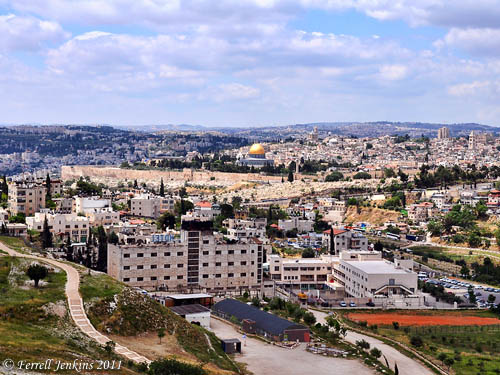
Jerusalem from Mount Scopus. The Temple Mount Sifting Project building is in the foreground. Photo by Ferrell Jenkins.

Jerusalem from Mount Scopus. The Temple Mount Sifting Project building is in the foreground. Photo by Ferrell Jenkins.

The next photo is a closeup of the building used by The Temple Mount Sifting Project. Some wonderful pieces have been discovered from the first temple period, as well as other periods, as a result of the work done here.
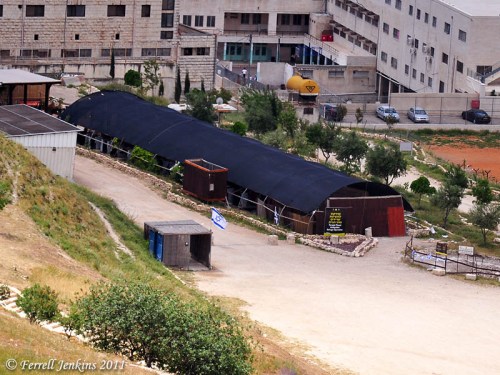
View from Mount Scopus of the Temple Mount Sifting Project building. Photo by Ferrell Jenkins.

View from Mount Scopus of The Temple Mount Sifting Project building. Photo by Ferrell Jenkins.

Gordon Franz has an interesting article by Stephanie Hernandez about participation in the TMSP on his Life and Land site here.

Perhaps in the days to come we will be favored with a photo of the new bulla with the name of Gibeon on it. In the mean time, see how many times you can find the word Gibeon or Gibeonite/s in the Bible.

Was Jesus born in winter?

One of my readers left a comment on facebook saying the Bible indicates that Jesus was “born in winter.” She added, “That could be anytime between mid-October and mid-March.” Another reader said, ” I didn’t know the Bible said he was born in winter — I know shepherds were grazing their sheep when he was born…does this happen in winter in that part of the world?”

I am not aware of any suggestion in the Bible regarding the time of the year when Jesus was born. Luke tells us that shepherds were out in the field at the time.

And in the same region there were shepherds out in the field, keeping watch over their flock by night. (Luke 2:8 ESV)

Some writers have suggested that the birth was not likely in December. They say that shepherds did not watch flocks by night during December. In my outline study about Christmas, available here, I have a quotation by the late Dr. William Arndt, (of Bauer, Danker, Arndt, Gingrich fame) replying to this suggestion:

“Scholars have pointed out that the considerably lower altitude of the field may not be without significance, but may explain why even in winter shepherds would not find these fields too cold for their flocks.”  (From the Nile to the Waters of Damascus, p. 52)

In fact, when I first began traveling to Israel and Jordan in the mid-60s it was common for Bedouin shepherds to move with the seasons. In the summer we would see them in the mountains of Lebanon. In winter months they would move to warmer, desert areas. Today, we find many Bedouin shepherds watching their sheep on the eastern slopes year round, including the winter months.

The temperature around Jerusalem and Bethlehem is fairly temperate in the winter. Only a small amount of rain falls on the eastern slopes of the central mountain range. Both Jerusalem and Bethlehem are located on this ridge. We have written about the watershed ridge here and here.

The average monthly temperature for Jerusalem ranges from 47° to 56°. Rain can make it chilly.

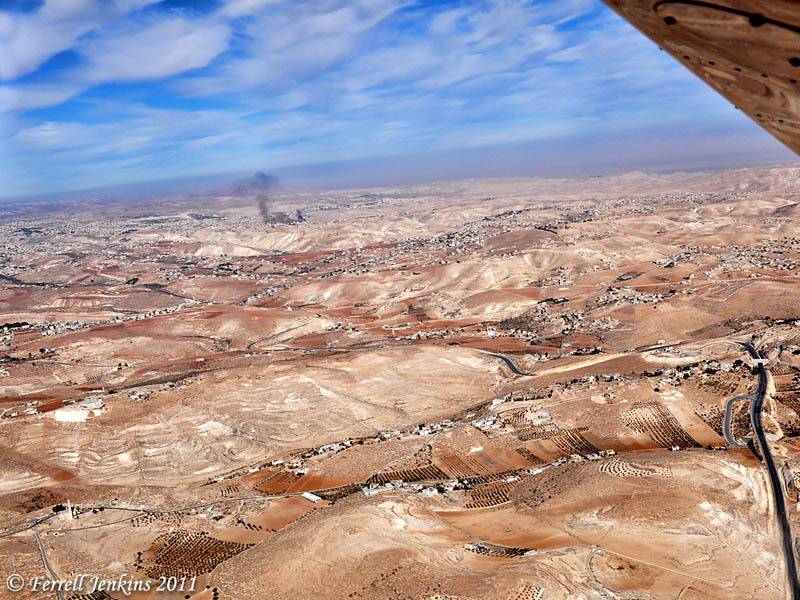
The photo below provides an aerial view from over the Herodium (about 3 miles east of Bethlehem). This illustrates the terrain where shepherds might care for their flocks.

View east toward the Dead Sea and the the land of Moab in Jordan from over the Herodium. Photo by Ferrell Jenkins.

View east toward the Dead Sea and the the land of Moab in Jordan from over the Herodium. Photo by Ferrell Jenkins.

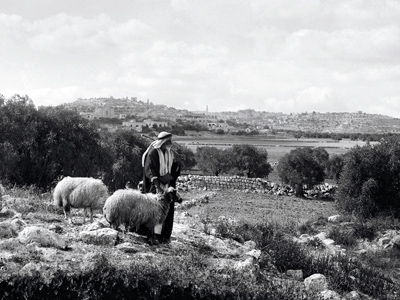
The American Colony and Eric Matson Collection of photos includes some photos of shepherds with their flocks in the Bethlehem area on Christmas day. (Information about the collection is available at LifeintheHolyLand.com.) The photo below was made sometime between 1898 and 1946. It was taken either by the American Colony Photo Department or its successor, the Matson Photo Service.

Shepherds with sheep on Christmas day. Bethlehem on the ridge. Photo: LifeintheHolyLand.com.

Shepherds with sheep on Christmas day. Bethlehem is on the ridge. Photo: LifeintheHolyLand.com.

I am not saying that Jesus was born in December. Only that the common misunderstanding about Bethlehem winters is based on our lack of knowledge about the local terrain.

Jesus visited Jerusalem during Hanukkah

The Gospel of John records more visits to Jerusalem by Jesus than any other of the Gospels. John is the only one to record the visit during the Feast of Dedication.

At that time the Feast of Dedication took place at Jerusalem. It was winter,  and Jesus was walking in the temple, in the colonnade of Solomon. (John 10:22-23 ESV)

BDAG translates the Greek term egkainia as “festival of rededication.” The feast is also known as Hanukkah and the Feast of Lights.

What is he Feast of Dedication? This feast, observed on the 25th of Kislev (roughly our December), had its origin in the period between the testaments. The desecration of the temple by the Seleucid ruler Antiochus Epiphanes took place in 168 B.C. The climax of the Maccabean revolt was the removal of all evidences of pagan worship from the temple. An eight day feast of dedication was observed in 165 B.C., and continued to be observed annually by the Jews.

At Modin, a village north-west of Jerusalem, on the way from Jerusalem to Lod, the Syrians tried to force an old priest by the name of Mattathias to offer a pagan sacrifice. The priest refused but another Jew volunteered to offer the sacrifice. Mattathias killed his fellow Jew and the Syrian officer. As word spread, Mattathias became a national hero. He was of the family of Hasmon (or Asmoneus). Thus began the Hasmoneans.

The discovery of a burial cave at Modin thought to have been used by the Maccabees and/or their descendants was reported in November, 1995. There are Israeli scholars who argue that this is not the true grave of the Maccabees. A recent article in Haaretz says,

Amit Re’em, an archaeologist of the Israel Antiquities Authority says all the evidence points to the fact that these graves are of Christians and pagans and that this burial site actually belongs to an ancient monastery.

Read the Haaretz article here.

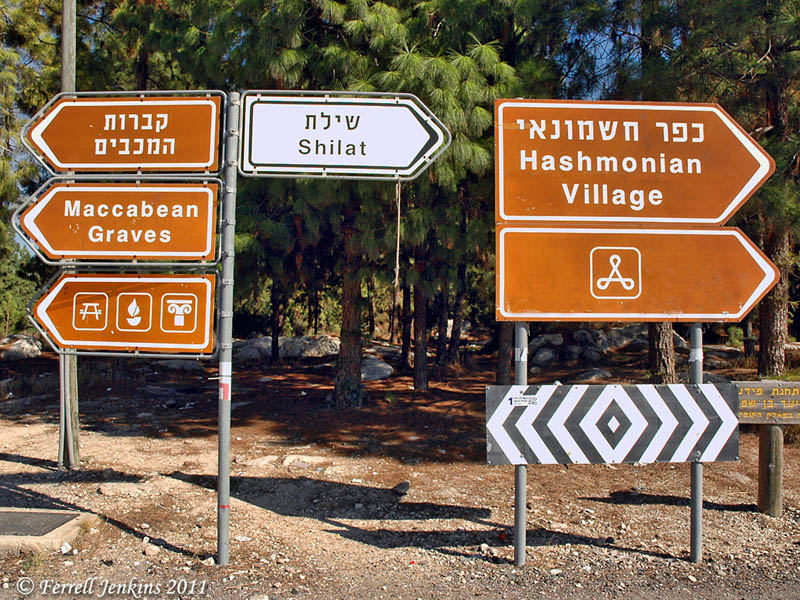
Near Modin, signs point to the Maccabean Graves. Photo by Ferrell Jenkins.

Near Modin, signs point to the Maccabean Graves. Photo by Ferrell Jenkins.

Even though the Feast of Dedication was not a feast authorized by the Mosaic Law, it became part of the Jewish heritage, and Jesus came to Jerusalem at that time — at least once.

Jesus cleansed the Temple on two distinct occasions. The first time is recorded in John 2:14-22. The second account is recorded in Matthew 21:12-13; Mark 11:15-18; and Luke 19:45-48.

Interesting Nativity Scenes

It is true that no date for the birth of Jesus is given in the New Testament. The celebration of his birth arose centuries after the actual birth. Many traditions have arisen as men seek to honor Christ. The Nativity Scene is one of those traditions.

Earlier this week my wife and I enjoyed a few days at the Gaylord Palms hotel in the Disney World area with our grandson. We took him to see the ICE creations and the Dream Works Experience.

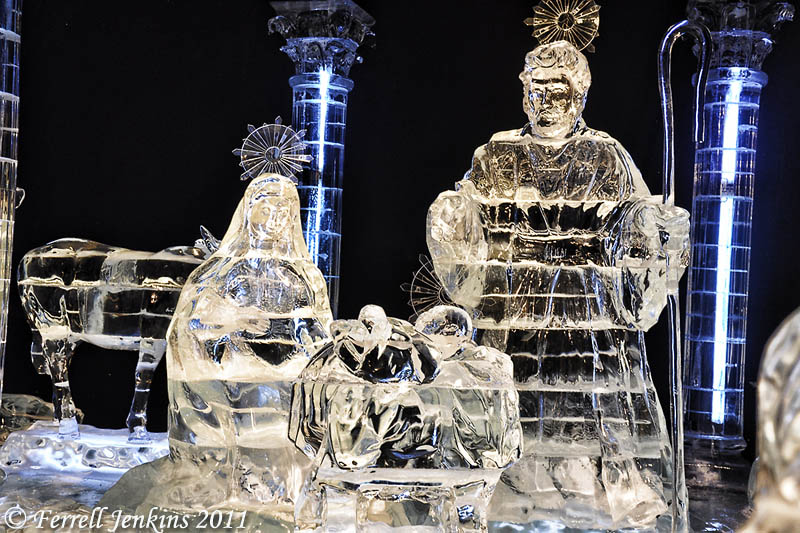
In addition to the Dream Works characters (Shrek, Fiona, Donkey, Alex, Julian, Po, et al.) carved in ICE, we were surprised to see a large nativity scene of ICE. I thought you might enjoy seeing a small portion of the scene. To see all of the characters, animals, etc., you must visit ICE.

Portion of the Nativity Scene at ICE, Gaylord Palms. Photo by Ferrell Jenkins.

Portion of the Nativity Scene at ICE, Gaylord Palms. Photo by Ferrell Jenkins.

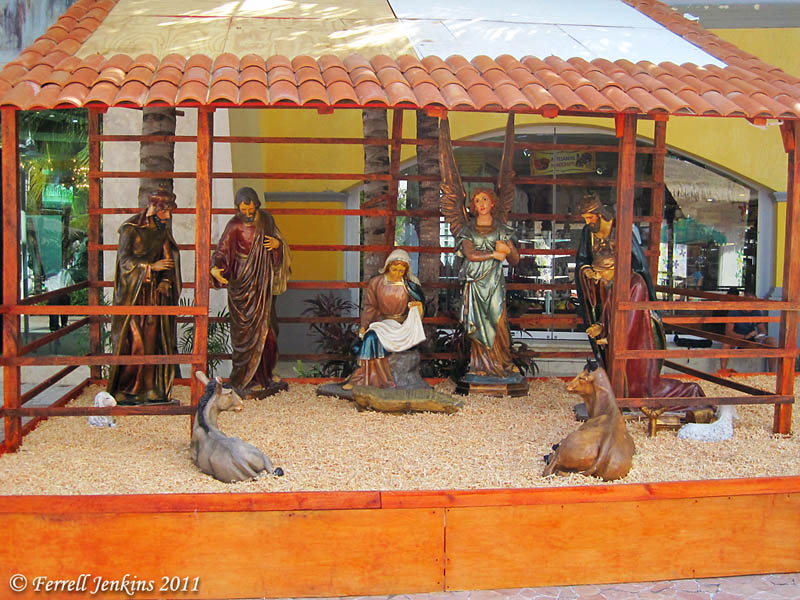
Last month my wife and I took a cruise in celebration of our 57th wedding anniversary. The Nativity Scene was already displayed in the market square at Cozumel, Mexico.

Nativity Scene at Cozumel. Photo by Ferrell Jenkins.

Nativity Scene at Cozumel. Photo by Ferrell Jenkins.

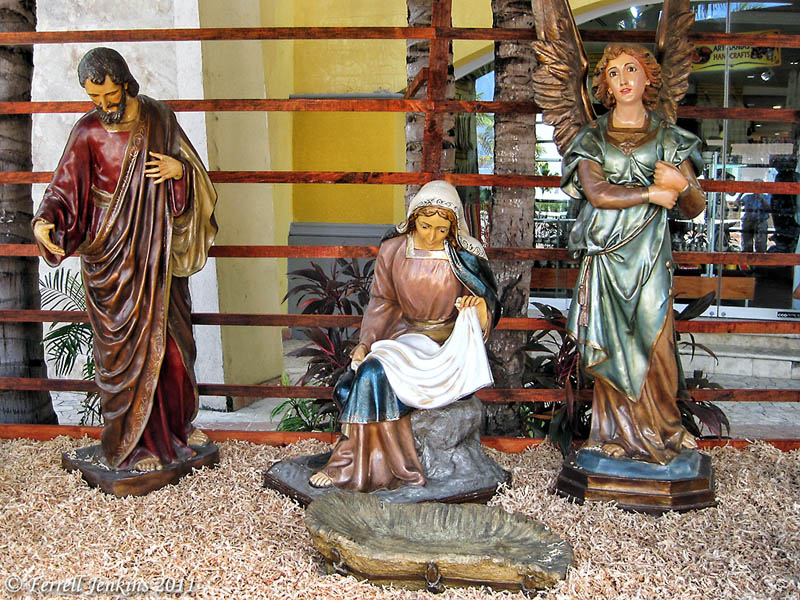
Do you detect anything wrong in the traditional scene? Take a closer look.

Cozumel Nativity Scene. Photo by Ferrell Jenkins.

Cozumel Nativity Scene without Jesus. Photo by Ferrell Jenkins.

Perhaps they got the account of the birth of Jesus (Luke 2: 1-20) confused with Jesus being left behind in the temple (Luke 2:41-52). Or, maybe it was just vandalism by a modern day Herod.

The specific date (month and day) for the birth of Jesus is not important. The Apostle Paul stated the importance of His birth in the Epistle to the Galatians.

But when the fullness of time had come, God sent forth his Son, born of woman, born under the law,  to redeem those who were under the law, so that we might receive adoption as sons. (Galatians 4:4-5 ESV)

Herod the Small

It is true that we refer to him as Herod the Great because of the power he exerted, his long reign, the sons he appointed as rulers, and the massive buildings and fortresses he constructed.

In character he was small or little.Notice the account of the birth of Jesus in Matthew 2, and Herod’s reaction to the news of the wise men from the east.

 1 Now after Jesus was born in Bethlehem of Judea in the days of Herod the king, behold, wise men from the east came to Jerusalem,  2 saying, “Where is he who has been born king of the Jews? For we saw his star when it rose and have come to worship him.”  3 When Herod the king heard this, he was troubled, and all Jerusalem with him;  4 and assembling all the chief priests and scribes of the people, he inquired of them where the Christ was to be born.  5 They told him, “In Bethlehem of Judea, for so it is written by the prophet:  6 “‘And you, O Bethlehem, in the land of Judah, are by no means least among the rulers of Judah; for from you shall come a ruler who will shepherd my people Israel.'” 7 Then Herod summoned the wise men secretly and ascertained from them what time the star had appeared.  8 And he sent them to Bethlehem, saying, “Go and search diligently for the child, and when you have found him, bring me word, that I too may come and worship him.” (Matthew 2:1-8 ESV)

When Herod learned that he had been tricked he was outraged, and made plans to kill not only Jesus but all of the male children in the Bethlehem region that were under two years of age.

Then Herod, when he saw that he had been tricked by the wise men, became furious, and he sent and killed all the male children in Bethlehem and in all that region who were two years old or under, according to the time that he had ascertained from the wise men. (Matthew 2:16 ESV)

I have found it ironic that one of the most important of Herod’s building programs was the fortress known as the Herodium built within sight of Bethlehem. Nonetheless, this king feared an infant. Little men always fear those who threaten their power.

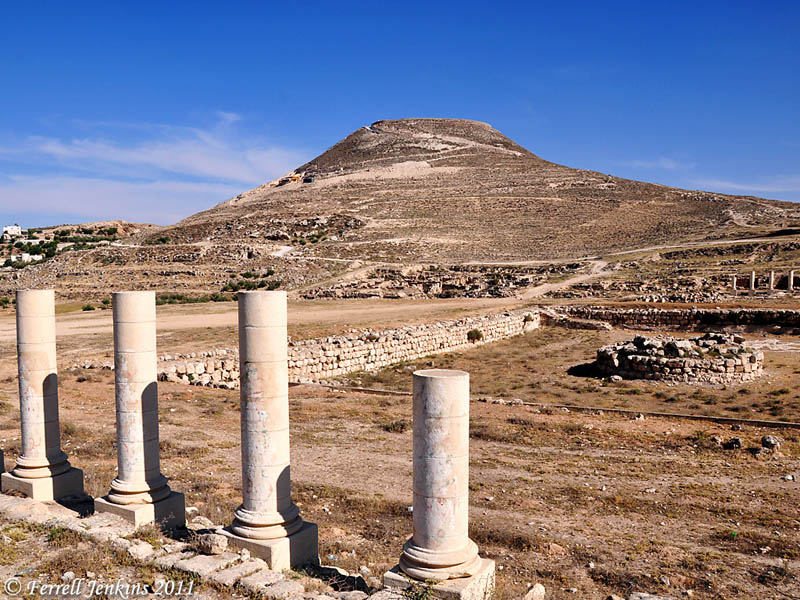
Here is a photo of the Herodium with some of the ruins of the lower Herodium in the foreground.

The Herodium with ruins of Herodia in the foreground. Photo by Ferrell Jenkins.

The Herodium with ruins of lower Herodium in the foreground. Photo by Ferrell Jenkins.

The artificial conical structure was built by Herod as one of his fortresses. This fortress is located about 8 miles south of Jerusalem, 3 1/2 miles east of Bethlehem, on the western edge of the Wilderness of Judea.

The tomb of Herod the Great was discovered about half way up the north side in 2007 by the late Prof. Ehud Netzer. You may use the search box to locate other articles about the Herodium, including some aerial photos.

A few years ago I called attention to a psychological study of Herod. I see the review of the scholarly book is still available at Haaretz here. If you have thought or read that he was cruel, just wait till you read this.