Category Archives: Travel

Visualizing Isaiah 25: “on this mountain”

Isaiah continues the apocalyptic description of the judgment of the LORD and the return from captivity. The city that will be destroyed by the Babylonians will become a place of great feasting for all nations.

On this mountain the LORD of hosts will make for all peoples a feast of rich food, a feast of well-aged wine, of rich food full of marrow, of aged wine well refined.(Isaiah 25:6 ESV)

Early in the book Isaiah has informed us that “the mountain of the LORD” would become a place for blessing all men through the word which would go forth from Jerusalem.

It shall come to pass in the latter days that the mountain of the house of the LORD shall be established as the highest of the mountains, and shall be lifted up above the hills; and all the nations shall flow to it, and many peoples shall come, and say: “Come, let us go up to the mountain of the LORD, to the house of the God of Jacob, that he may teach us his ways and that we may walk in his paths.” For out of Zion shall go the law, and the word of the LORD from Jerusalem. (Isaiah 2:2-3 ESV)

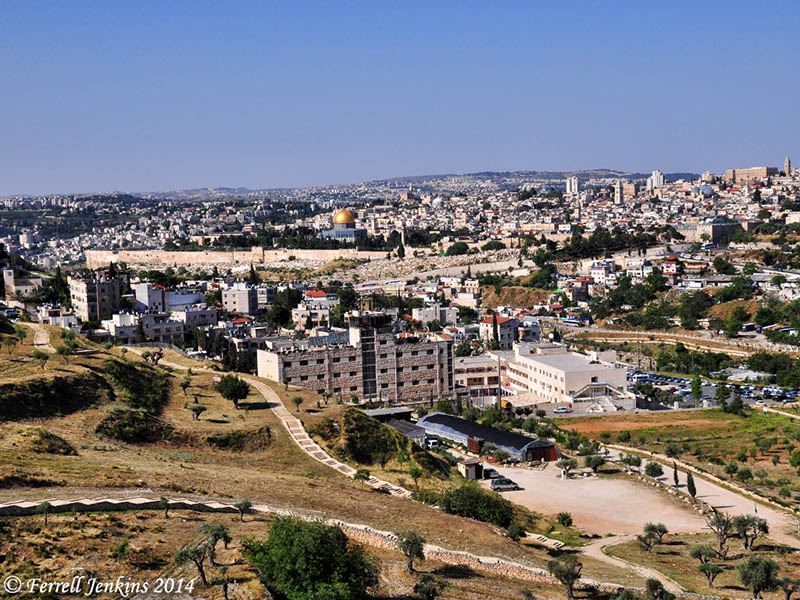
Jerusalem is not directly on the top of the central mountain range that runs from the north to the south in the land of Canaan/Israel. It is situated on the eastern slope of the mountain ridge. Even then there are mountains that are higher. In the photo below you see the Old City of Jerusalem, where the Temple of Solomon once stood. But you see that Mount Scopus and the Mount of Olives are higher than Jerusalem. In God’s plan Jerusalem would become the highest of all. We see the fulfillment of this in Acts 2.
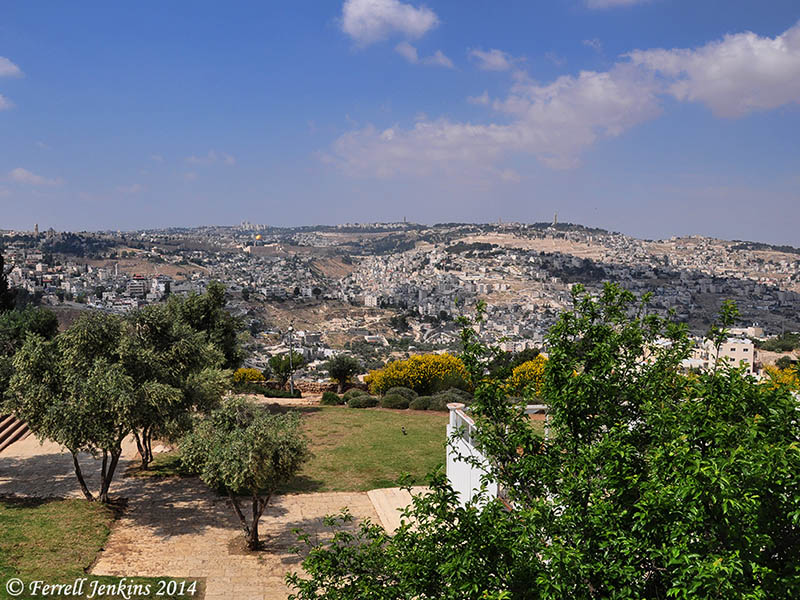
Notice Jerusalem in the mountains. Photo by Ferrell Jenkins.

Notice Jerusalem in the mountains. Photo by Ferrell Jenkins.

The photo above was taken from the Haas Promenade south of Jerusalem. Click on the photo for a larger image and a better view of the city.
Visualizing Isaiah 24: the tambourines

In the apocalyptic account of the LORD’S judgment upon the earth, Isaiah says…

The wine mourns, the vine languishes, all the merry-hearted sigh. The mirth of the tambourines is stilled, the noise of the jubilant has ceased, the mirth of the lyre is stilled. No more do they drink wine with singing; strong drink is bitter to those who drink it. (Isaiah 24:7-9 ESV)

The normal activities of life will cease when the judgment of God comes upon Judah.

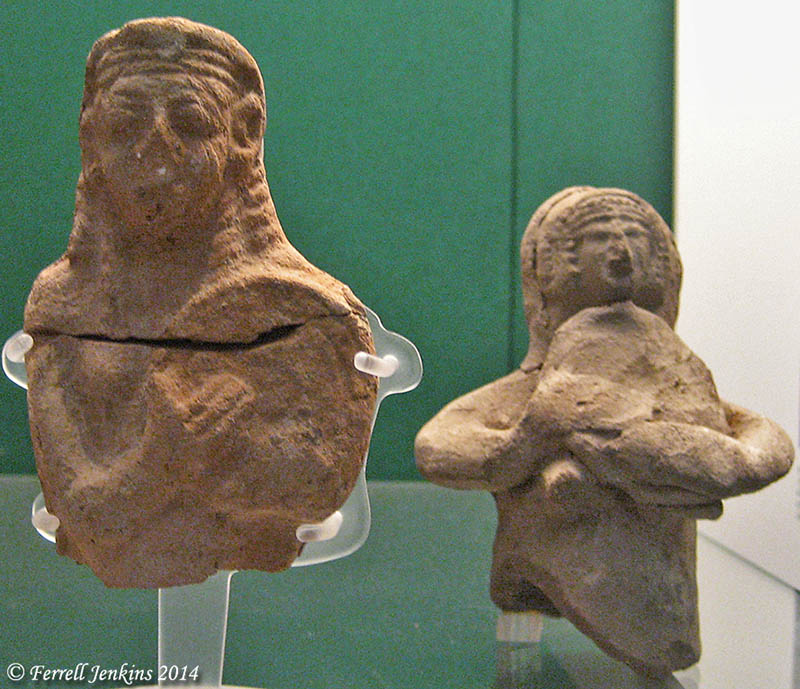
The photo below shows clay images of women playing tambourines. These items are part of the Bethlehem Group of mostly pillared figurines, now displayed in the British Museum.

Musicians from Bethlehem. British Museum. Photo by Ferrell Jenkins.

Female musicians from Bethlehem. British Museum. Photo by Ferrell Jenkins.

Donkey sacrifice?

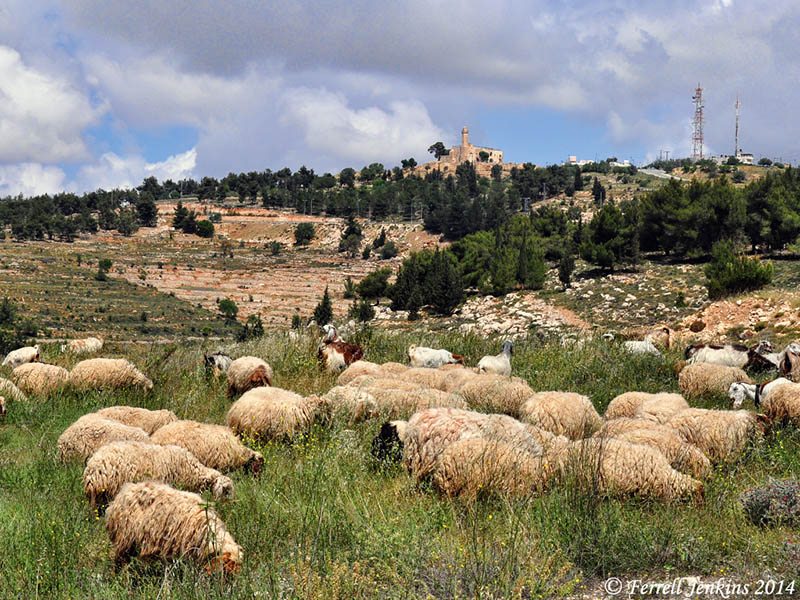
A rabbi and his student were arrested for trying to kill a donkey as a sacrifice for sins, according to a report in The Jerusalem Post here. The article says this took place “near the Tomb of Samuel the prophet which is located in the West Bank north of Jerusalem.” I assume the reference is to Nebi Samwil, the traditional burial place of the prophet Samuel. Nebi Samwil is easily accessible within Israel, but is located on the border of the West Bank. The site overlooks the Benjamin Plateau. You can see the Arab town of El Jib, biblical Gibeon, from Nebi Samwil.

The photo below shows Nebi Samwil from the south.

Nebi Samwil from the south. Photo by Ferrell Jenkins.

Nebi Samwil from the south. Photo by Ferrell Jenkins.

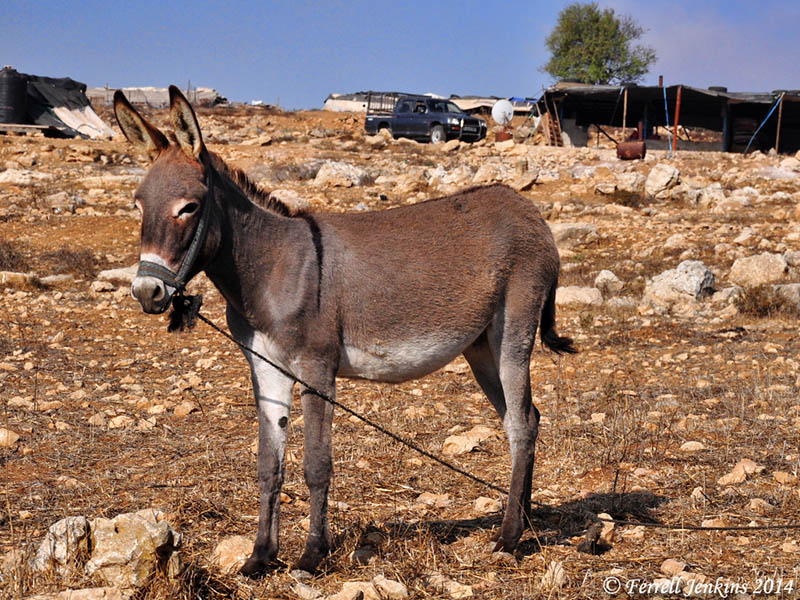
A short distance north of Nebi Samwil, within the West Bank, some Bedouin have settled with their tents, donkeys, trucks, and satellite dishes.

Donkey north of Nebi Samwil. Photo by Ferrell Jenkins.

Donkey north of Nebi Samwil. Photo by Ferrell Jenkins.

Read more: “The donkey: beast of burden” here, and “Don’t underestimate the donkey” here.

The sacrificial system of the Mosaic law required grain, drink, or animal offerings. The prescribed animals include lambs (male, female), goats (male, female), bulls, pigeons, and turtledoves (Exodus 29:38-42; Numbers 28:3-8; 15:22-26, et al.). Donkeys are not among the animals accepted for sacrifice during the Mosaic period.

Christians believe what the writer of Hebrews says about these Mosaic sacrifices.

For since the law has but a shadow of the good things to come instead of the true form of these realities, it can never, by the same sacrifices that are continually offered every year, make perfect those who draw near. Otherwise, would they not have ceased to be offered, since the worshipers, having once been cleansed, would no longer have any consciousness of sins? But in these sacrifices there is a reminder of sins every year. For it is impossible for the blood of bulls and goats to take away sins. (Hebrews 10:1-4 ESV)

We believe that Jesus, as the lamb of God (John 1:29), made a single offering for the sins of those who respond to Him.

For Christ has entered, not into holy places made with hands, which are copies of the true things, but into heaven itself, now to appear in the presence of God on our behalf. Nor was it to offer himself repeatedly, as the high priest enters the holy places every year with blood not his own, for then he would have had to suffer repeatedly since the foundation of the world. But as it is, he has appeared once for all at the end of the ages to put away sin by the sacrifice of himself. (Hebrews 9:24-26 ESV)

If we seek the forgiveness of the LORD Almighty we must comply with His requirements.

Viewing Jerusalem from Paul Emile Botta Street

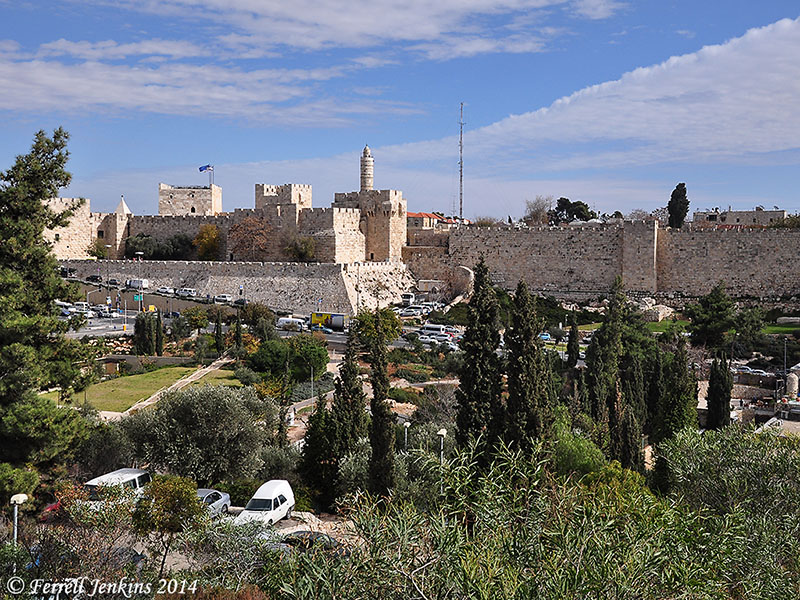
The photo below shows a portion of the western wall of the Old City of Jerusalem. There are ruins here belonging to the time of John Hyrcanus (2nd century B.C.), but most of what we see belongs to the Turkish construction from the 16th century A.D. The large structure is known as the Citadel. Jaffa Gate is out of sight on the left side of the photo.

View of the Citadel and the Tower of David. Photo by Ferrell Jenkins.

View of the Citadel and the Tower of David. Photo by Ferrell Jenkins.

Our photo was made from Paul Emile Botta Street near the King David Hotel. The French excavator Botta is known for his discovery of the palace of Sargon at Khorsabad in northern Iraq.

Reading the Blogs # 4

Do you rob temples?

You who say that one must not commit adultery, do you commit adultery? You who abhor idols, do you rob temples? (Romans 2:22 ESV)

Charles Savelle has a helpful chart at BibleX on Romans 2:22. What does the text mean? The chart allows the student to see various interpretations at a glance, with observations to enhance understanding.

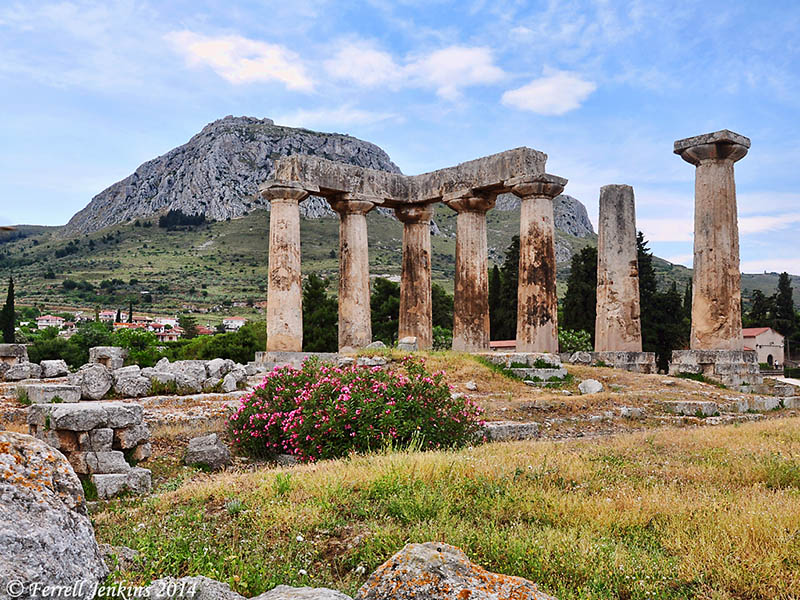
Ruins of the temple of Apollo at Corinth. Photo by Ferrell Jenkins.

Ruins of the temple of Apollo at Corinth. Photo by Ferrell Jenkins.

— • —

God’s fellow-workers. Daniel B. Wallace responds, on his blog, to the question, “What Does ‘We are God’s fellow-workers’ in 1 Corinthians 3:9 Really Mean”. Dr. Wallace says,

The King James Version in 1 Cor 3.9 reads, “we are labourers together with God…” This unambiguously suggests that Paul and Apollos were considered in some sense on the same level with God. Of course, ‘in some sense’ covers a multitude of possibilities, but there nevertheless seems to be an underlying tone of synergism and mutual credit.

After discussing 38 works (translations and commentaries), Wallace provides a “Table of Interpretations and Translations of 1 Cor 3:9.” The three views of the meaning of this verse are,

  1. Paul and Apollos are co-workers with God.
  2. The statement is ambiguous, tending toward the first view.
  3. Paul and Apollos are co-workers with each other in the service of God.

Then Greek-language illustrations from writers such as Josephus, Philo, and Justin Martyr are provided along with other Biblical references that might shed light on the subject.

Wallace concludes that the “co-workers” are the ministers who belong to God.

Too many Bible classes overlook the difficult passages of Scripture without any explanation. Dr. Wallace provides a good illustration of how to deal with these verses. Tables and charts usually help the teacher and the student.

— • —

“The Authenticity of the James Ossuary” is a technical article on the archaeometric analysis of the James Ossuary from the Open Journal of Geology. The article by Rosenfeld, Feldman, and Krumbein is scholarly and technical, but may be of interest to some readers.  Download the PDF here.

— • —

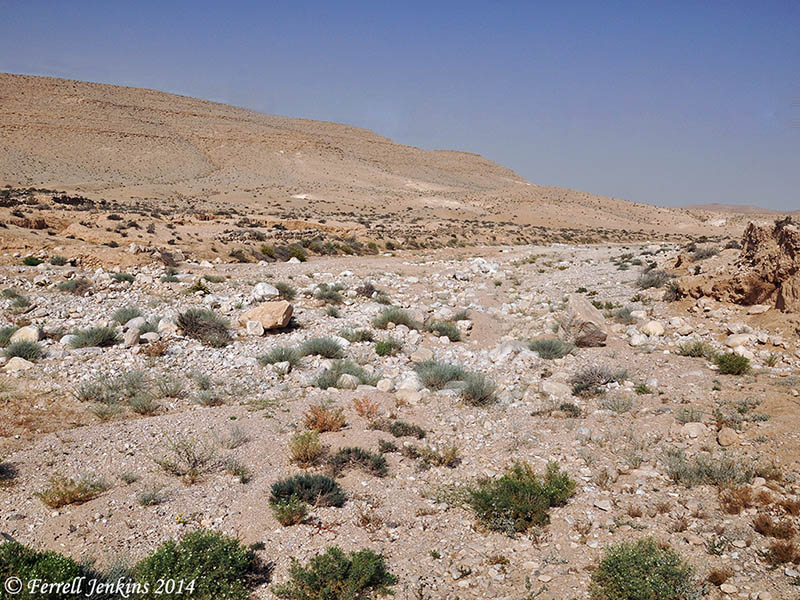
Wadi Zin comes to life. “The  river doesn’t flow every year, and it has been several years since it last came to life.” The Times of Israel includes a short video showing the wadi (nahal, brook) coming to life in a powerful way. See it here. See the same video at examiner.com.

A dry wadi in the wilderness of Zin. Photo by Ferrell Jenkins.

A dry wadi in the wilderness of Zin. Photo by Ferrell Jenkins.

The Israelites wandered in the Wilderness of Zin (Deuteronomy 32:51). See more here.

Places to look out over Jerusalem

The Times of Israel has a nice illustrated article today entitled “Five Glorious places from which to look out over Jerusalem.” Aviva and Shmuel Bar-Am show photographs from the following five places. Click here for the complete article.

  1. Haas-Sherover Promenade
  2. Confederation House Overlook
  3. Mount Zion Promenade and Overlooks
  4. Mount Scopus Observation Decks
  5. Gandhi Overlook (many will recall this as the lookout from the Mount of Olives)

Our photo below slows the modern view of Jerusalem from the Mount Scopus overlook.

View of Jerusalem from the Mount Scopus Overlook. Photo by Ferrell Jenkins.

View of Jerusalem from the Mount Scopus Overlook. Photo by Ferrell Jenkins.


Visualizing Isaiah 23: Tyre is laid waste

Isaiah 23 is an oracle concerning the famous Phoenician port city of Tyre. The Mediterranean world of Egypt, Tarshish, Cyprus, and the neighboring city of Sidon, would be affected by the fall of Tyre.

More details about the prophecy concerning Tyre are given in Ezekiel 26-28. Nebuchadnezzar is named as one of the kings who will bring about the fall of Tyre. He besieged Tyre for 13 years (585-572 B.C.), immediately after the destruction of Jerusalem. The people of Tyre fled from their mainland city to the island about ½ mile offshore. But Tyre was to be destroyed by many nations. Alexander the Great came to Tyre in 332 B.C. Most of the cities in his path surrendered, but the people of Tyre prepared to resist him. The more powerful Greeks used the debris of the desolate mainland city to build a causeway to the island. Alexander’s army captured the island city in seven months.

Ezekiel says the city “will be built no more” (Ezekiel 26:14). The mainland city has never been rebuilt. From my first visit to Tyre in 1967, I continued to visit the city until 1975, and then again in 2002. Political and military conditions have made it impossible to visit more times.

The diagram below hopefully will help to explain what we have briefly explained here. It was prepared by my friend Steven Sebree of Moonlight Graphic Works for one of my books which is currently out of print.

The mainland has not been rebuilt since the destruction by Nebuchadnezzar and the Babylonians (585-572 B.C.).

The mainland city has not been rebuilt since the destruction by Nebuchadnezzar and the Babylonians (585-572 B.C.). The causeway to the island was built by Alexander the Great in 332 B.C.

By 315 B.C. the island city was rebuilt, but was populated by Carians from SW Asia Minor. The present city of Tyre occupied the island and the causeway. The photo below shows a view to the west of a Roman arch built over the causeway built by the Greeks. The island city is visible beyond the arch.

A Roman arch built on the causeway built by Alexander the Great. View West. Photo by Ferrell Jenkins.

A Roman arch on the causeway built by Alexander the Great. The view is to the west and the modern island city. There is no city on the mainland. Photo by Ferrell Jenkins.

Visualizing Isaiah 22: Shebna cut a tomb for himself

Shebna, the steward over the household of David, is to be replaced by Eliakim the son of Hilkiah. He will have the key of the house of David with power to open and shut. Consider the use of this text by Jesus in Revelation 3:8.

Thus says the Lord GOD of hosts, “Come, go to this steward, to Shebna, who is over the household, and say to him: What have you to do here, and whom have you here, that you have cut out here a tomb for yourself, you who cut out a tomb on the height and carve a dwelling for yourself in the rock? Behold, the LORD will hurl you away violently, O you strong man. He will seize firm hold on you and whirl you around and around, and throw you like a ball into a wide land. There you shall die, and there shall be your glorious chariots, you shame of your master’s house. I will thrust you from your office, and you will be pulled down from your station. In that day I will call my servant Eliakim the son of Hilkiah, and I will clothe him with your robe, and will bind your sash on him, and will commit your authority to his hand. And he shall be a father to the inhabitants of Jerusalem and to the house of Judah. And I will place on his shoulder the key of the house of David. He shall open, and none shall shut; and he shall shut, and none shall open. And I will fasten him like a peg in a secure place, and he will become a throne of honor to his father’s house. (Isaiah 22:15-23 ESV)

D. J. Wiseman comments on this text and a discovery possibly related to it.

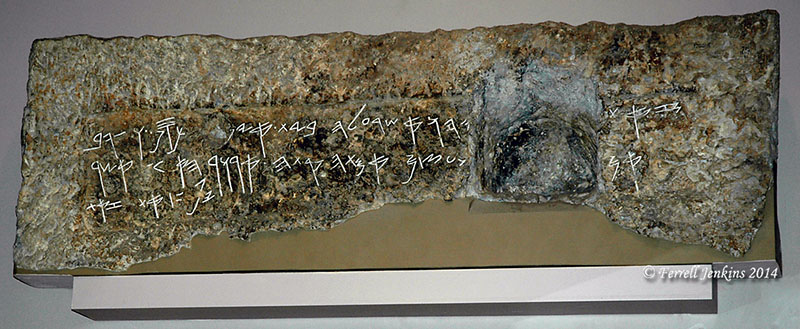
The historical background of the prophecies of Isaiah is provided by a number of contemporary records. One inscription, on a rock lintel from a tomb, was read by Avigad in 1953: ‘This is the (the sepulcher of Shebna) yahu who is over the house. There is no silver or gold here, but only (his bones) and the bones of his slave-wife with him. Cursed be the man who breaks this open.’ (Illustrations from Biblical Archaeology, 60)

Shebna inscription from a tomb. British Museum. Photo by Ferrell Jenkins.

Shebna inscription from a tomb in Silwan. British Museum. Photo by Ferrell Jenkins.

This tomb inscription was discovered in 1870 by Charles Clermont Ganneau in the village of Silwan. Following the 1967 war David Ussishkin and Gabriel Barkay examined numerous tombs in Silwan. For more information about the inscription, see Lost Treasures of the Bible by Fant and Reddish (154-157).

Visualizing Isaiah 21: a watchtower

Isaiah 21 contains oracles concerning Babylon, Edom, and Arabia. The watchman is to describe what he sees. From his watchtower where he stood day and night he was able to announce the fall of Babylon.

For thus the Lord said to me: “Go, set a watchman; let him announce what he sees. When he sees riders, horsemen in pairs, riders on donkeys, riders on camels, let him listen diligently, very diligently.” Then he who saw cried out: “Upon a watchtower I stand, O Lord, continually by day, and at my post I am stationed whole nights. (Isa 21:6-8 ESV)

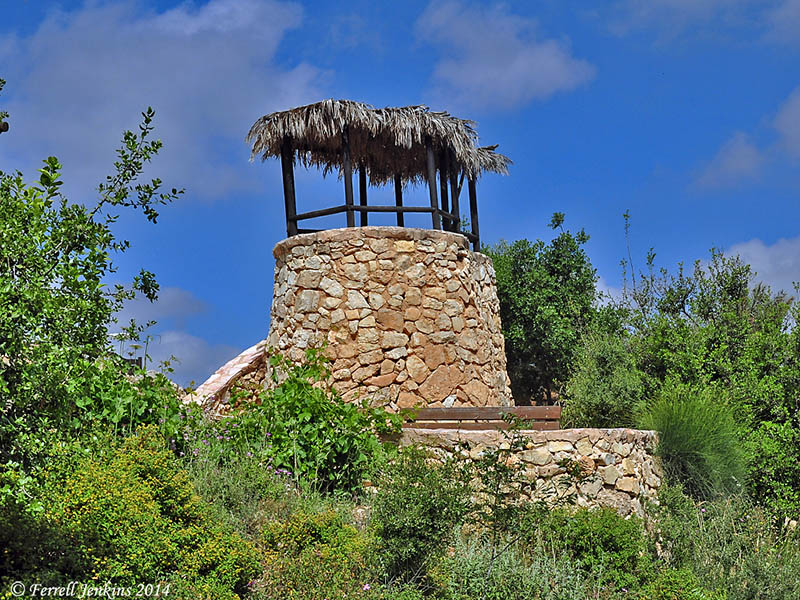
More information about the role of the watchman may be found in Ezekiel 3 and 33. The photo below shows a watchtower reminiscent of Biblical times.

Watchtower at the Ibex Garden, Yad Hashmona. Photo by Ferrell Jenkins.

Watchtower at the Ibex Garden, Yad Hashmona. Photo by Ferrell Jenkins.

Visualizing Isaiah 20: Sargon the king of Assyria

For many years there was no reference to Sargon II (722-705 B.C.) in the available Assyrian records. Yet, the prophet Isaiah, writing at the time of the Assyrian captivity of the northern kingdom of Israel, mentions Sargon’s campaign against Ashdod.

In the year that the commander in chief, who was sent by Sargon the king of Assyria, came to Ashdod and fought against it and captured it– (Isaiah 20:1 ESV)

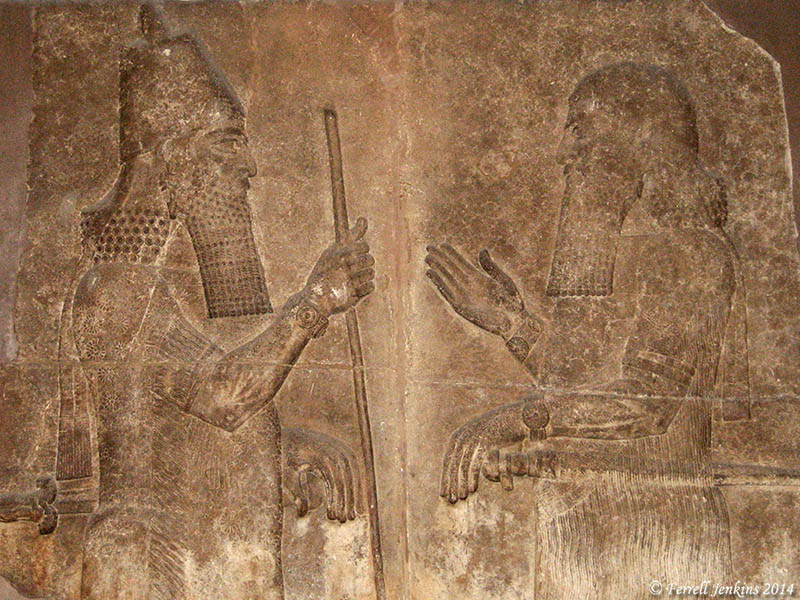
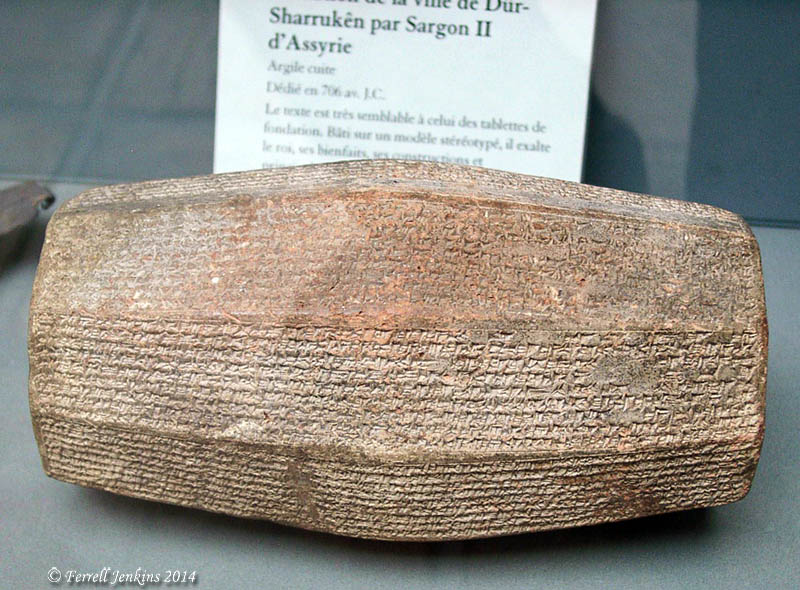
The palace of Sargon was discovered by Emile Botta at Khorsabad in 1843. This was the period of “monumental” discoveries in archaeology. Both the British Museum and the Louvre have impressive artifacts from the palace of Sargon. The photo below shows Sargon (on the left) receiving one of  his ministers.

Sargon II received a minister. British Museum. Photo by Ferrell Jenkins.

Sargon II receives a minister. British Museum. Photo by Ferrell Jenkins.

D. J. Wiseman explains the historical context of what happened at Ashdod.

In 716 bc Sargon sent his army commander (turtan; the *‘tartan’) to war against the Arabs in Sinai. This led to the reception of tribute from the pharaoh Shilkanni (Osorkon IV) of Egypt and from Samsi, queen of the Arabs. Despite these Assyrian successes, the people of Ashdod displaced their Assyrian-nominated ruler, Ahimetu, by a usurper Iadna (or Iamani) who initiated yet another Syro-Palestinian league against Assyria, doubtless relying on Egyptian help. In 712 bc the same turtan was sent to conquer Ashdod (Is. 20:1), which was reduced to the status of an Assyrian province. Since Azaqa (’Azeqah or Tell es-Zakariye) on the Judaean border near Lachish surrendered in this campaign, it will be seen how narrowly independent Judah escaped a further invasion. Iamani fled to Nubia for refuge, only to be extradited to Nineveh by the ruler Shabaka. (The New Bible Dictionary, 3rd edition)

One hundred twenty years after the discovery of Sargon’s palace, archaeologists working at Ashdod discovered fragments of a cuneiform stele of Sargon II at Ashdod. For more information about the discovery and a photograph of it see “Sargon II, Ashdod, and Isaiah 20:1” here.

This inscription tells of the building of Sargon's palace. Louvre. Photo by Ferrell Jenkins.

This inscription tells of the building of Sargon’s palace. Louvre. Photo by Ferrell Jenkins.