Category Archives: Travel

Honoring Dr. Jack P. Lewis

Dr. Jack P. Lewis was honored March 6 at a dinner hosted by Faulkner University, Montgomery, Alabama, during their annual Bible lectureship. I was pleased that I could attend the lectures one day and be present for the dinner honoring Dr. Lewis.

Lewis is Professor Emeritus at the Harding Graduate School of Religion in Memphis. Among several good teachers that I had, Lewis was unique. He holds two earned doctorates, a Ph.D. in New Testament from Harvard, and a Ph.D. in Old Testament from Hebrew Union. He was the most demanding teacher I had, and one of a few from whom I learned the most.

After the high school years at Athens Bible School, and four years of Bible at Florida Christian College (now Florida College), with teachers such as Homer Hailey, I had a good general knowledge of the Bible. I think I had about 60 hours of Bible at FCC. The graduate work was not too difficult, it was just on a higher level.

It was part of the graduate program generally, but Lewis taught the importance of using primary sources where possible and the importance of thorough preparation. He entered the class room, called the roll, and began lecturing. As a student I made notes the best I could, then spent hours after each class verifying the names, dates, and facts presented. Different from the students I had in college, we would never imagine asking “How do you spell that?” He taught us the importance of using up-to-date sources in our research.

Jack Lewis was my first teacher who had spent a considerable amount of time studying the land of the Bible. He had worked in the archaeological excavation at Arad, and had spent a year as a fellow at the American Schools of Oriental Research in Jerusalem (now the Albright Institute).

In one of the classes with Dr. Lewis I did a paper on “Authentic First Century Remains in Palestine.” Soon afterward I began to prepare for my own visit to the Bible lands. I might have gone anyway, but I must credit Dr. Lewis, and his unique insight into the land of the Bible, for spurring my interest in traveling to this part of the world. The other day, as we visited, he said something like this: “There is nothing as valuable as seeing the places you study about.” So, now you know one of the major motivations in my travels to Bible lands over all these years since the first trip in 1967. I still learn on every trip, and in the preparation for the trip.

Dr. Lewis is a prolific writer. His many books included The History of the English Bible from the KJV to the NIV, The Interpretation of Noah and the Flood in Jewish and Christian Literature, Historical Backgrounds to Bible People, a two volume commentary on the Gospel of Matthew. There are also books on the prophets and other areas of biblical studies.

Several Faulkner faculty members spoke of what Lewis had meant to them. These included Dr. Cecil May, Jr., Dr. Carl Cheatham, and Dr. Ed Hicks. Dr. Jim Howard, from Memphis, was also on the program. Carl and Jim were at HGSR when I was there. Cecil and I spoke on the same topic at both the Nashville and Dallas meetings of institutional and non-institutional brethren a few years back. It was a pleasure to see them.

In the afternoon, Dr. Lewis had presented a lecture on “The Battle for the Integrity of the Bible.” In his typical rapid-fire manner, he surveyed the battles that have been won in demonstrating the integrity of the Bible. It was just a survey, but he seemed as sharp as in those classes on The History of the English Bible and on Archaeology and the Bible from which I profited so much.

Today Dr. Jack Pearl Lewis is 89 years old. Happy birthday, Dr. Lewis.
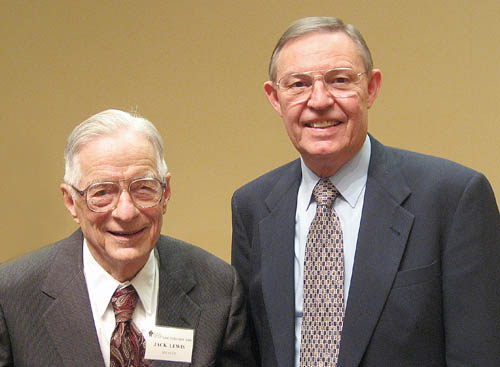
Dr. Jack P. Lewis and Ferrell Jenkins. Photo by Leon Mauldin.

This photo was made March 6 after the lecture on “The Battle for the Integrity of the Bible.”
The popularity of inspirational religious tours

USA Today has an article about “Inspirational religious tours” about the variety of tours available to people who wish to follow the steps of this or that religious person. Here are some comments about Israel and Jordan that you might find interesting.

Kevin Wright says the volatile political situation in the Middle East can present challenges for religious-themed tour operations. “The perception of violence is always the number one challenge for tour operators and travel providers selling trips to the Holy Land,” he explains. “However, any violence that takes place in the Middle East is typically far removed from the traditional tourist sites. Hence, the biggest challenge for travel companies selling the Holy Land is overcoming the misperceptions of violence in tourist areas.”

Lately, that perception hasn’t slowed visitation to Israel and Jordan—both countries had record numbers of visitors last year. Israel hosted more than half a million Americans in 2007, an all-time high, (according to the country’s tourism commissioner), and Jordan’s Tourism Board said the country’s tourism revenues increased by more than 13% in 2007.

Is they have for millennia, the world’s holy sites continue to exert a powerful draw over the faithful and the curious. These days, with modern transportation and updated standards of travel, it’s getting easier to walk in the footsteps of the holy ones, with much less of that ancient travail.

Read the entire article here.

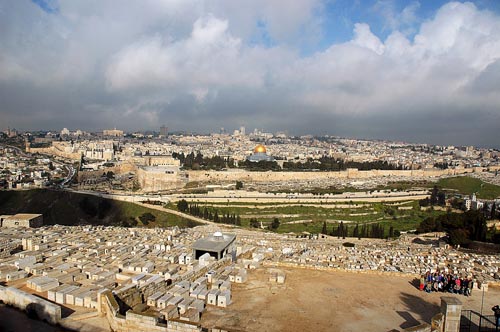
The tours I direct are study tours, but almost everyone who travels with us finds the tour inspirational. Most of those who travel with us do so in an effort to increase their understanding of the Bible. This view of Jerusalem from the Mount of Olives is inspirational to a lot of people.

Jerusalem From the Mount of Olives. Photo by Ferrell Jenkins.

Writing in the Snow in Bowling Green

The temperature might reach 36 degrees today. There was enough snow overnight that the schools were closed today. I took advantage of the back window of my rental car to do a little writing.

“Drew” in Snow. Photo by Ferrell Jenkins.

Rivers in the Desert

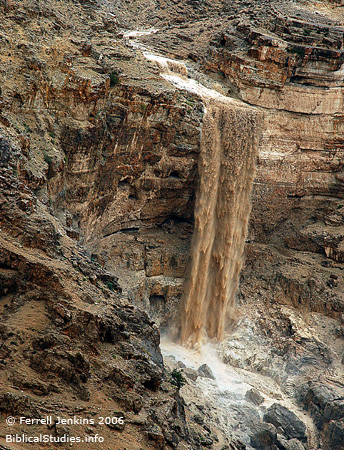
Todd Bolen, over at BiblePlaces Blog, calls attention to an article in the Jerusalem Post about an American tourist who was killed in a Flash Flood at En Gedi. He calls attention, in one of the links, to some photos I made April 2, 2006 of a flash flood in the Wilderness of Judea. Afterwards I wrote an article about it for Biblical Insights. Read Todd’s blog and then read my article below. Todd also includes a beautiful photo of Nahal David at a more tranquil time.

————————————

Rivers in the Desert is the title of Nelson Glueck’s 1959 history of the Negev. These rivers also may be seen in the Judean wilderness and in the Sinai. Thomas Levy followed up on some of Glueck’s research in a Biblical Archaeology Review article in 1990.

Wilderness of Judea Waterfall - April 2, 2006. Photo by Ferrell Jenkins.

If one travels in the desert during the summer months he will see a dry, desolate bad land with only an isolated tamarisk tree or shrub where the last water of the winter rain flowed. In the winter it can be different. Israel has two dominant seasons: winter and summer. The summer is dry and the winter is wet. The early rains begin about mid-October and continue till the late rains of early April. See Deuteronomy 11:14 and Joel 2:23.

he wilderness of Judea receives very little rain, but the area is affected by the rains that fall in the central mountain range (Jerusalem and the Mount of Olives; Bethlehem; Hebron). We sometimes describe the road that runs along that range as the water parting route. The rain that falls must seek its lowest level. From an elevation of about 2500 feet above sea level the water flows east through the wadis to an elevation of more than 1300 feet below sea level at the Dead Sea.

Levy reminds us that “Nahal, incidentally, is Hebrew for a dry river bed or valley that flows at most a few times a year. In Arabic, the word is wadi. The two words are used interchangeably in Israel today.” The wadi is similar to the arroyo of the American southwest.

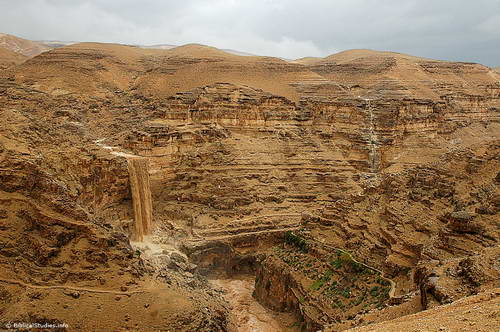
Wilderness of Judea Waterfall - April 2, 2006. Photo by Ferrell Jenkins.

Several members of my group told me of being awakened during the morning of April 2 by the severe storms in Jerusalem. At breakfast I explained to the group that this would be no problem for our planned sightseeing; we would just go to the Dead Sea and Masada. Eli, our guide, told the group that when we came out of the new tunnel that now cuts through the mountain between Mount Scopus and the Mount of Olives, it would probably be dry. In fact it was still raining on us almost all the way to the Jordan Valley.

Our driver decided to pull off the highway onto the old road that overlooks the Wadi Kelt (Qilt) on the way down to Jericho. On the south side of the wadi there is an overlook allowing a view of the Monastery of Saint George of Koziba. There we saw one of the most fascinating sights that can be imagined. It rained an astounding 4.41 inches in Jerusalem. This is about three times what the city normally gets for the entire month of April.

In this normal desert land there was a tremendous waterfall pouring down the side of the cliff into the wadi. Our guide said, and another experienced guide is reported to have told his group, that he had never seen it like this. That evening Todd Bolen and his wife were my guests for dinner at the hotel. Todd has lived and taught in Israel for the past ten years. He has provided us with excellent photos in his Pictorial Archive of Bible Lands (see bibleplaces.com). He was excited about the photos I had taken that day and included three of them on his blog. He was headed for Galilee the next day. He reported seeing hail at En Gev on the Sea of Galilee. The Jerusalem Post ran a photo of the flooded road at the Megiddo junction, and reported that five people had died as a result of the heavy rains.

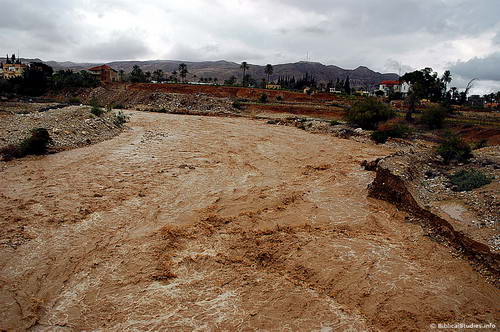
Not only could we not get to Masada that day, but we could not go to Qumran on the shores of the Dead Sea. A couple of days later when we visited these sites we saw the damage to the road in multiple places where the wadis descended to the Dead Sea. Debris could be seen in the Dead Sea.

Wadi Qelt (Kelt) in the Wilderness of Judea. Photo by Ferrell Jenkins.

In forty years of travel in the Bible Lands, this was one of my most exciting days for photography. I am delighted to share it with you.

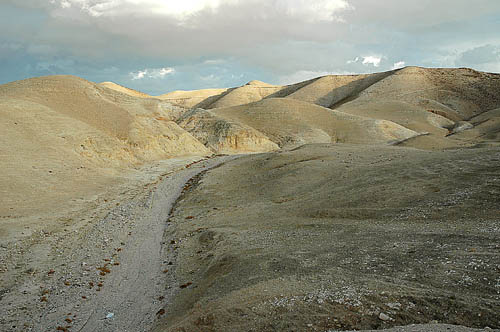
The photo below is of a typical dry wadi in the Wilderness of Judea.

A dry wadi in the Wilderness of Judea. Photo by Ferrell Jenkins.

Sunset at the Dead Sea

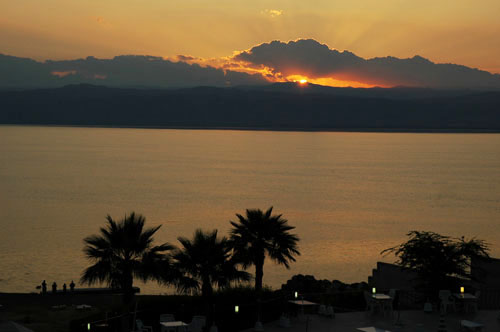
Here is a photo that I made at sunset on the shores of the Dead Sea in Jordan. The view looks west over the sea and the mountains of Judea between Bethlehem and Jerusalem. The Dead Sea is called the Salt Sea in the Bible (Genesis 14:3; Numbers 34:3, 12). The width of the sea at this point is about 11 miles. The level of the Dead Sea is now almost 1400 feet below [Mediterranean] sea level. This northern end of the Dead Sea is about 1300 feet deep.

Sunset at the Dead Sea, looking toward the mountains of Judea. Photo by Ferrell Jenkins.

Mount Nemrut in Commagene

Today I have posted an article on Mount Nemrut at biblicalstudies.info. I think you will find the article of interest.

The Kingdom of Commagene was important in the first century B.C., and has connections with Alexander the Great and Darius, and with one of the characters mentioned in the New Testament. I think you will enjoy it.

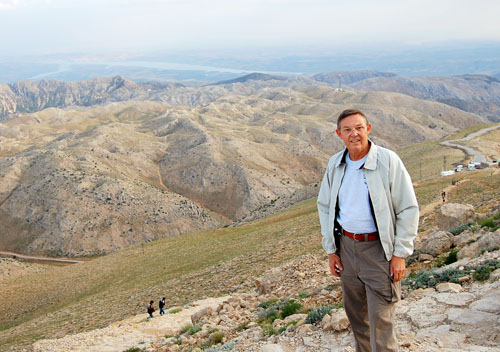
This photo shows the approach to the top of Mount Nemrut in Eastern Turkey. The Euphrates River valley is far below in the haze.

Approach the top of Mount Nemrut with the Euphrates Valley below.

Biblical Sites in Eastern Turkey

For the past two weeks I have been working on a presentation for a class at the Florida College Annual Lectures (February 5, 2008 at 9 a.m. in Puckett Auditorium). I plan to make a similar presentation at the Citrus Park Church of Christ, 5105 W. Ehrlich Road, Tampa, FL, Sunday evening January 27 at 5 p.m. If you live in the Tampa Bay area I would be pleased to have you present for this lesson.

I have visited biblical sites all over Turkey for many years. Two personal study trips have been made to the eastern part of the country, one in 1995, and another in June, 2007. Check the June archives for those blogs.

Our presentation will cover the land of Urartu (biblical Ararat), Mount Ararat, Mesopotamia, the Tigris and Euphrates Rivers, Harran, Carchemish, and a few other places. We will be looking at the biblical, historical, and geographical information that makes these places important in Bible history.

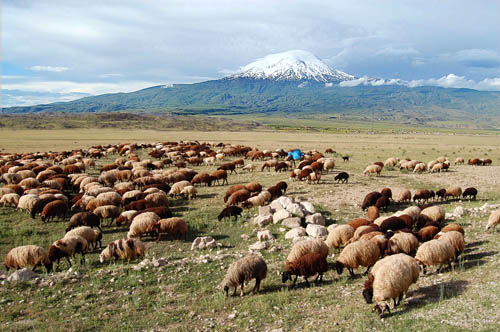
Here is a photo of Mount Ararat from June, 2007. The mountain is located near the Turkish border with Iran and Armenia, and many think it was the landing place of Noah’s ark (Genesis 6-9).

Mount Ararat in Eastern Turkey. Photo by Ferrell Jenkins

“An amazing experience”

An Associated Press report by Anne Gearan is headlined “Bush Visits Biblical Holy Sites.” You may read the entire article here. The article says,

Bush retraced the steps of Jesus and his disciples in the ancient town of Capernaum and gazed out on the nearby Sea of Galilee, where the Bible says Jesus walked on water and calmed a sudden storm by commanding the wind and waves to cease. The waters were crystal blue and calm when Bush visited, leaning in to listen as a brown-robed friar narrated his tour with New Testament passages.

“An amazing experience,” Bush happily said later.

It is an amazing experience for anyone with an interest in the Bible and Jesus. Bush is reported to have said, “I came as a pilgrim.” Many people make pilgrimages to worship at a particular holy site. There is, perhaps, a higher purpose for visiting these sites. On our tours we seek to demonstrate the accuracy of the Bible in describing the Bible land. This involves learning about the geography and topography of the land that help one to better understand the important events that transpired there.

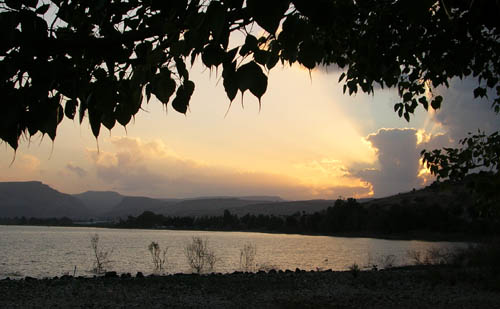
Sunset at Dalmanutha (Mark 8:10) at the northwest corner of the Sea of Galilee. Photo by Ferrell Jenkins.

Sunset at Dalmanutha

The photo above was made at sunset from the site known as Dalmanutha, near the Mount of Beatitudes. Dalmanutha is mentioned only once in the New Testament. After the feeding of the 4000, Mark records that Jesus immediately “entered the boat with His disciples and came to the district of Dalmanutha” (Mark 8:10). In the distance, on the left, you can see the silhouette of Mount Arbel. Then, just to the right of that is the Via Maris (the way to the Mediterranean Sea) from Galilee. The saddle-shaped hill is an extinct volcano known as the Horns of Hattin.

It is “an amazing experience” to visit this land and contemplate these great events.

Resources on the Book of Revelation

Yesterday I received an Email from Dr. Georg S. Adamsen in Denmark, asking that I change the link to his Revelation Resources page on my Biblical Studies Info Page. First, let me say I appreciate his notifying me of the change. Many individuals ask to include a link but never notify us when they close down the page.

Revelation Resources is now presented in blog format. Adamsen describes the blog this way:

Revelation Resources – about 250 hand-picked references on valuable resources for the study of the Book of Revelation. Many topics have separate introductions…

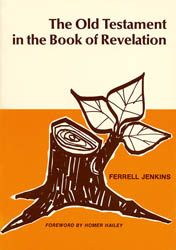
My Old Testament in the Book of Revelation has been included at Revelation Resources for several years. I was pleasantly surprised this evening when I was checking the URL to see that the book is featured on this page (January 7).

Because the current publisher of the book does not have a marketing strategy many people think the book is out of print. You may secure a copy from the Florida College Bookstore. I wasn’t able to locate the book on the website, but you can send an Email to bookstore@floridacollege.edu for information. I think the book now sells for $4.95. I saw a used copy on Amazon recently for $59.96!

Jenkins, The Old Testament in the Book of Revelation

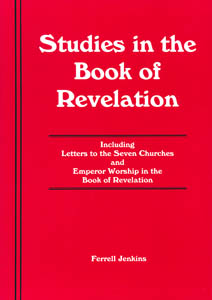
Florida College also recently reprinted my Studies in the Book of Revelation. It sells for $5.99. In my judgment this is an excellent source for a class study of the Revelation.

Jenkins, Studies in the Book of Revelation

Studies in the Book of Revelation (90 page paperback) is composed of these sections.

Introducing the Book at the End of the Bible
Worthy Is the Lamb
Saints Victorious
Does Revelation Teach Premillennialism?
Letters to the Seven Churches
Emperor Worship in the Book of Revelation

If you prefer to call Florida College Bookstore and speak to one of the friendly staff, use their toll free number (1-800-423-1648).

What does this have to do with travel, you wonder. The Revelation was written to the seven churches of Asia, the Roman province of Asia Minor, in the late first century A.D. The seven cities were Ephesus, Smyrna, Pergamum, Thyatira, Sardis, Philadelphia, and Laodicea. Several of them have significant ruins that can be visited. We have included them on several study tours we call Steps of Paul and John, including Turkey, Greece, and the Aegean Islands. During the course of this tour we spend some time lecturing on the setting of the Book of Revelation. We plan to do that in May when we again visit these and other cities associated with Paul and John.

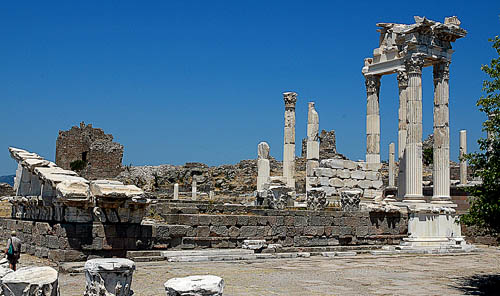
Temple of Roman Emperor Trajan at Pergamum. Photo by Ferrell Jenkins.

This photo shows the reconstruction of the Temple of (Roman Emperor) Trajan ( A.D. 98-117). This was the second temple in Pergamum dedicated to the Emperor. The first temple in all of Asia was erected to Augustus in 29 B.C. Altogether Pergamum had three imperial temples.

January 3rd in (my) History

I am sure that many significant things have happened on January 3rd, but the one most important to me was my birth on this day. One day I was looking for some photos of the old cotton mills from Huntsville, Alabama, and ran across a site that also had a vintage post card of the City Hospital. This is the way I remember the hospital when I was a kid.

Huntsville, AL, city hospital on an old postcard.

My parents lived in the New Hope area when I was born. About three years later we moved to Harvest, a rural community with a population of about 200. I attended a four-room school for the first 8 years of schooling. There were 2 grades in each room with one teacher. When I was about 10 years of age I was back in the hospital overnight to have a tonsillectomy.

Little could I have imagined in those formative years that I would be able to travel around the world (1995), and to many diverse and exotic places. I don’t even remember when I first learned about China or Egypt or Russia. There was no State of Israel back then, only a Zionist dream. My first remembrance of hearing about Japan was on December 7, 1941, the day of the infamous attack on Pearl Harbor.

I wish my Mother, now 94, could still remember this day in our history.