Category Archives: Travel

Group headed for home

Our group, all healthly and happy, left the hotel a short time ago for the Cairo International Airport.  The flight isn’t until 12:30 p.m. (Cairo time), but we have been staying near the Giza Pyramids. With nearly 20 million people in Cairo one never knows how long the normally 1 hour trip to the airport will take.

Elizabeth and I are remaining for a few days to visit some other sites we have not seen or been able to photograph.

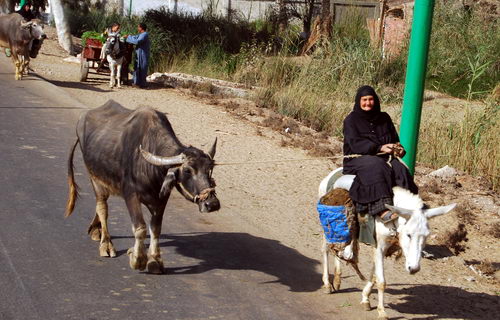
Yesterday I had a photo ready that I wanted to share. It was made at Memphis and is typical of so much of what we see in Egypt. Don’t get the wrong impression. There are many affulent people in this country, but the vast majority seem to eek out a living day by day.

Moving the "herd" near ancient Memphis. Photo by Ferrell Jenkins.

Moving the "herd" near ancient Memphis. Photo by Ferrell Jenkins.

Yesterday our group used a long day to visit the Eastern Delta of
Egypt. Biblically we know that land as Goshen. Few travelers are able to go into this area of Egypt. Over the next few weeks I will try to share a few photos and thoughts about the area.

You might enjoy reading a first person account of the tour written by one of our tour members. This would be especially true if you know some of the folks who have been traveling with us. Click on Picture This.

Memphis in Egypt

This morning, after a period of worship, we visited the ruins of ancient Memphis. The prophet Ezekiel has this to say about Memphis.

This is what the sovereign LORD says: I will destroy the idols, and put an end to the gods of Memphis. There will no longer be a prince from the land of Egypt; so I will make the land of Egypt fearful.  (Ezekiel 30:13)

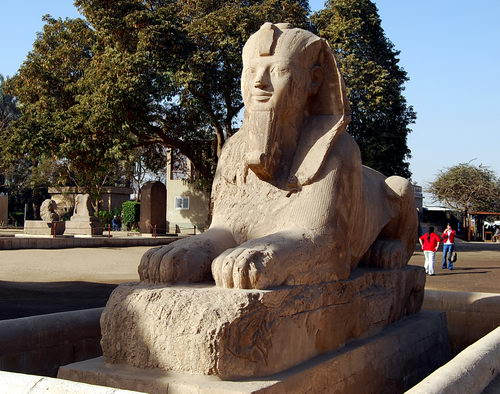
The alabaster sphinx of Rameses II  (13th century B.C.) is one of the nicest pieces on display at the site. It is also one of the few artifacts to be seen. The prophecy has surely come to pass.

Alabaster sphinx of Rameses II at Memphis. Photo by Ferrell Jenkins.

Alabaster sphinx of Rameses II at Memphis. Photo by Ferrell Jenkins.

Next we moved to the edge of the desert to visit the tomb of a Nobleman dating to about 2400 B.C., and the Step Pyramid of Zoser.

After lunch we returned to Old Cairo to spend some time in the Coptic Museum and the Abu Sarga church. This is the church associated with the visit of Mary, Jopseph, and Jesus to Egypt (Matthew 2).

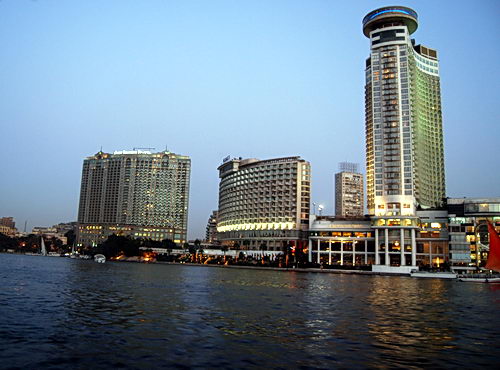
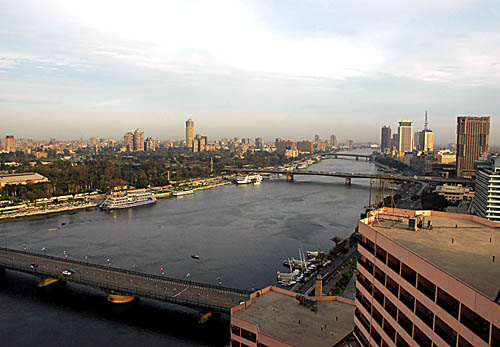
The last event of the day, and of the tour, was a felucca ride on the Nile River. The large buildings of down town Cairo are beautiful after sunset.

Cairo on the Nile at Night. Photo by Ferrell Jenkins.

Cairo on the Nile at Night. Photo by Ferrell Jenkins.

Visiting the Valley of the Kings

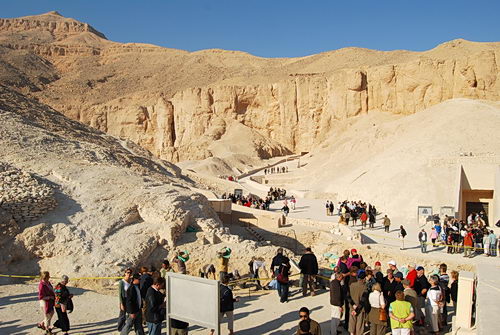
While at Luxor we visited the Valley of the Kings. This is where the Pharaoh’s of the New Kingdom Period of Egyptian history are buried. There are no pyramids during this periods, but at least sixty four tombs are known in the Valley of the Kings. Our group visited two or three.

The Valley of the Kings is located on the West Bank of the Nile River a short distance from the Nile valley.

The Valley of the Kings. Photo by Ferrell Jenkins.

The Valley of the Kings. Photo by Ferrell Jenkins.

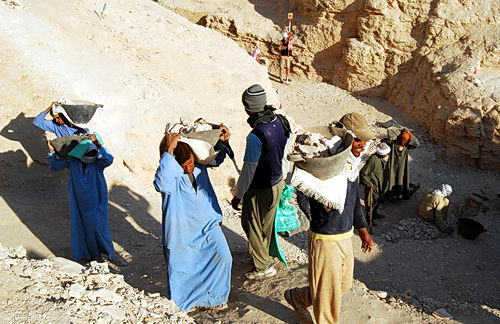
New archaeological excavations continue in the Valley of the Kings. It was fascinating to see workers carrying buckets filled with debris. This is reminiscent of old photos of workers in Mesopotamia or Palestine in the early nineteenth century. Beginning with the excavation of Masada by Yigal Yadin, volunteers are used. Students often pay their own transportation, room and board, to work on a dig. It is a form of educational slavery, one might say.

Workers at archaeologicaly site in the Valley of the Kings. Photo by Ferrell Jenkins.

Workers at archaeological site in the Valley of the Kings. Photo by Ferrell Jenkins.

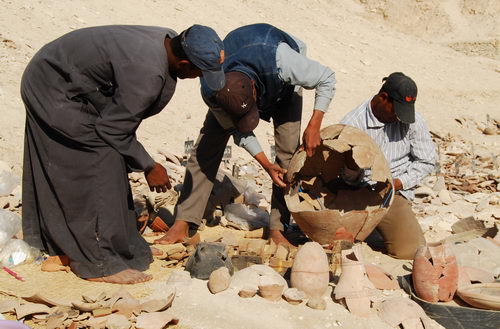
Some archaeologists were busy surveying. Others were photographing small items. I saw four individuals washing and restoring broken pottery.

Pottery reconstruction in the Valley of the Kings. Photo by Ferrell Jenkins.

Pottery reconstruction in the Valley of the Kings. Photo by Ferrell Jenkins.

Travel can be exciting and educational.

The Giza Pyramids

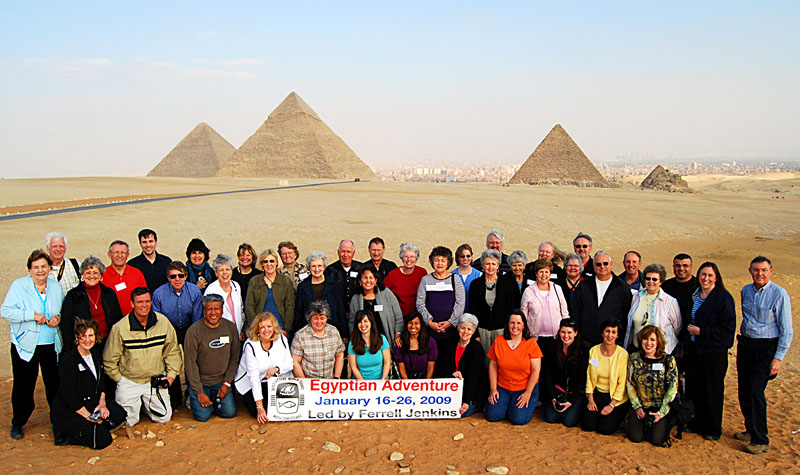
Today has been a long and busy day. Our group visited the Cairo Museum and the Giza Pyramids. This photo of the group was made on the west side of the Pyramids. In the distance you see some of the buildings of Cairo in the Nile Valley.

Egyptian Adventure Group at the Giza Pyramids.

Egyptian Adventure Group at the Giza Pyramids.

Click on the photo for a larger copy.

Tomorrow morning we have a flight scheduled for Luxor. There, after visiting the Luxor and Karnak Temples, we will begin a four day cruise on the Nile with stops along the way to visit important historical sites.

I am not sure if I will be able to have a good Internet connection during most of that time. Keep checking back.

For a more personal outlook on the tour I urge you to see Picture This at http://scenewithsharon.blogspot.com.

Egypt and the Bible

The land of Egypt is an important part of the Bible world, and the country played an important role in biblical history. Egypt is mentioned more than 600 times in the Bible. One may add to this numerous reference to the various cities, such as Alexandria, On, and Pi-beseth, that are mentioned where the word Egypt is not used.

Cairo on the Nile River. Photo by Ferrell Jenkins.

Cairo on the Nile River. Photo by Ferrell Jenkins.

A number of significant Bible stories take their setting in Egypt. Abraham sojourned there (Genesis 12:10). During Joseph’s stay in Egypt he went throughout the land storing grain (Genesis 41:46-48). Moses was born there, adopted by the daughter of a Pharaoh, and trained in all the wisdom of the Egyptians (Acts 7:20-22).

We have every reason to think that these men would have seen the pyramids and other “antiquities” of their time. The Step Pyramid of Djoser, located at Saqqara, was built about 2640 B.C. Shortly thereafter in the twenty-sixth century B.C. came the famous Giza pyramids. Modern man stands in awe of these ancient tombs. This was during the Old Kingdom period of Egyptian history (2800 to 2250 B.C.).

Neither Abraham, Joseph, nor any of the Israelites had anything to do with the building of the pyramids. The pyramids of Giza had been standing more than 500 years when Abraham visited Egypt.

Except for Danny and Sara, who came a day earlier, everyone in our group was tired from the long flight and the loss of seven or more hours. We still made good use of the time by visiting the Citadel and the Mohammed Ali Mosque. Then we went to Old Cairo to visit a Coptic church and the Ben Ezra Synagogue. These churches are built within what has been called Fort Babylon. Hopefully we will get back to visit the church associated with Joseph, Mary, and Jesus, and the Coptic Museum.

See the earlier post about the Ben Ezra Synagogue.

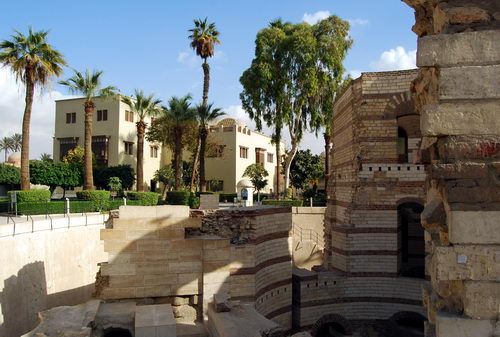
This photo shows a portion of what is marked as a Roman Fort. In the past there have been signs with the phrase Fort Babylon. This ruin (on the right of the photo) is part of the Roman fort that was known as Fort Babylon in Roman times. At that time the Nile River flowed beside the Fort, but has since changed its course. The buildings to the left are part of the newly restored Coptic Museum.

Roman Tower (Fort Babylon, on right) and the Coptic Museum. Photo by Ferrell Jenkins.

Roman Tower (Fort Babylon, on right) and the Coptic Museum. Photo by Ferrell Jenkins.

Headed for Egypt

In a few hours we plan to be on a non-stop flight to Cairo. We have a good group of fellow-travelers who join us in exploring the ancient culture of Egypt.

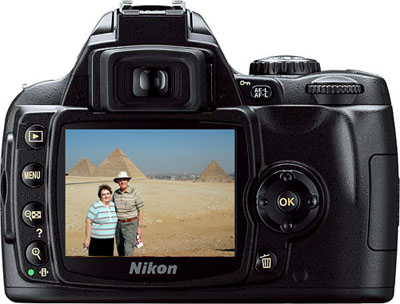
nikon-pyramids-t1

Our main purpose for tours like this is to better understand the culture in which so many Bible events took place. We will be joined by a competent Egyptian guide who is well versed in Egyptian history and also understands its relation to the Bible. My job will be to teach the biblical account on the spot. That is a little better than doing so back home with a photo! Not everyone can visit these places, and we are delighted to share a few of our experiences and understanding with you.

I consider these tours of the Bible lands, and this blog, an important part of my teaching ministry. Many of the men and women who travel with me do so in an effort to improve their teaching in the churches where they serve.

My last trip to Egypt was in 2005. I began using WordPress in 2007, and have not determined if we will be able to make proper contact with WordPress to publish our posts. As a backup I have set up an account on Blogger. After we have a day or two to get settled in Egypt, if you don’t see a new post here go to the Blogger site: fjtours.blogspot.com.

We have come to expect Jane to write a blog during our tours, but she and Olen are not able to be with us due to the recent heart surgery for Olen’s father. Jane tells us that Sharon will be writing. We encourage you to check her blog regularly at scenewithsharon.blogspot.com. She is a good photographer and I am sure you will find it of interest.

A New Year’s poem by my favorite author

The New Leaf

He came to my desk with quivering lip —
The lesson was done.
“Dear Teacher. I want a new leaf he said,
“I have spoiled this one.”
I took the old leaf, stained and blotted
And gave him a new one, all unspotted,
And into his sad eyes smiled;
“Do better now, my child!”

I went to the Throne with a quivering soul —
The old year was gone.
“Dear Father, hast Thou a new leaf for me?”
“I have spoiled this one.”
He took the old leaf, stained and blotted
And into my sad heart smiled:
“Do better now, my child!”

This poem has been among my sermon notes for many years. It is one of those numerous good illustrations that have come down to us from Anonymous or Author Unknown.

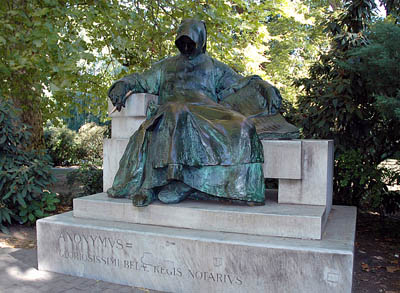
In Budapest, Hungary, near the entrance of Vajdahunyad Castle, there stands a statue of Anonymous by Miklos Legeti. The statue commemorates a 12th or 13th century unknown chronicler of one of the several rulers named King Bela.

Statue of Anonymous in Budapest. Photo by Ferrell Jenkins.

Statue of Anonymous in Budapest. Photo by Ferrell Jenkins.

The next time you quote him you will do so with knowledge of what he looked like.

Satellite imagery reveals Egyptian ruins

CNN has a report on the use of satellites to help unearth ancient Egyptian ruins. Read the full article here. The report features the work of Sarah Parcak, an archaeologist at the University of Alabama at Birmingham.

In our society we tear down anything that is a decade or more old in order to build a new structure. Except, of course, for our historical districts. It wasn’t that way in the ancient world. If a structure was destroyed or ravaged, the conquerors might build a new one in the same place. They would build over and utilize any walls still standing.

Building in ancient Egypt was along the Nile River and in the Delta. Much of what shows as Egypt on a modern map is not currently habitable. Eighty two million people live in this small space, according to the CNN report. When I took my first group to Egypt in 1967 we were told that the population was 40 million. Even then it seemed crowded; now it is terrible.

Here are a few comments about Parcak’s work:

In this field, Parcak is a pioneer. Her work in Egypt has yielded hundreds of finds in regions of the Middle Egypt and the eastern Nile River Delta.

Parcak conducted surveys and expeditions in the eastern Nile Delta and Middle Egypt in 2003 and 2004 that confirmed 132 sites that were initially suggested by satellite images. Eighty-three of those sites had never been visited or recorded.

In the past two years, she has found hundreds more, she said, leading her to amend an earlier conclusion that Egyptologists have found only the tip of the iceberg.

“My estimate of 1/100th of 1 percent of all sites found is on the high side,” Parcak said.

And here are some comments made by Parcak about the value of the satellite images:

“We can see patterns in settlements that correspond to the [historical] texts,” Parcak said, “such as if foreign invasions affected the occupation of ancient sites.

“We can see where the Romans built over what the Egyptians had built, and where the Coptic Christians built over what the Romans had built.

“It’s an incredible continuity of occupation and reuse.”

The flooding and meanders of the Nile over the millennia dictated where and how ancient Egyptians lived, and the profusion of new data has built a more precise picture of how that worked.

“Surveys give us information about broader ancient settlement patterns, such as patterns of city growth and collapse over time, that excavations do not,” said Parcak, author of a forthcoming book titled “Satellite Remote Sensing and Archaeology.”

In every town along the Nile in Upper Egypt (the south) buildings crowd the river. This scene is from Edfu.
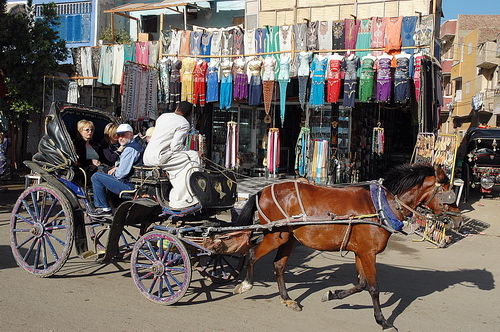
Shops at Edfu in Upper Egypt. Photo by Ferrell Jenkins.

Shops at Edfu in Upper Egypt. Photo by Ferrell Jenkins.
Travel is fun

One of the perils of travel is dealing with the hawkers. There is the guy who approaches a person with a Nikon Digital SLR trying to sell him postcards of the monument he just photographed. I remember a boy in Damascus in 1967 hawking those little inlaid boxes for “Just one lousy American dollar.” We were on a boat taking the canal tour in Bangkok when suddenly a boy comes up out of the dirty water into the moving boat.

Egypt is probably the worst place for hawkers. One thing is for sure. If you ever take an item in your hand it will be difficult to get rid of it. You may say, “I don’t need that.” He say, “Why you no need this?”

I like this refreshing sign in a shop at Ephesus. No doubt here!

Genuine fake watches in a shot at Ephesus. Photo by Ferrell Jenkins.

Genuine fake watches in a shop at Ephesus. Photo by Ferrell Jenkins.
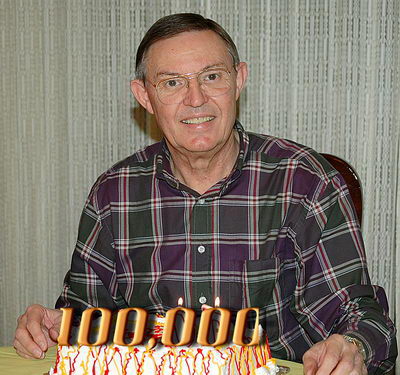
Celebrating 100,000 visitors; a gift for you

Thanks for visiting Ferrell’s Travel Blog. This afternoon our Blog Stats moved above 100,000. I think when we began the blog we only had in mind that families of some of our tour members could follow our route of travel. Then I began to write about other places I had visited. Well, here we are today.

As my wife and I looked at the stats I said, “Well, we have reached a millstone, if not a milestone.” She said, “Yes, it is a millstone.” I must admit it has become addictive. But when I realize that I am reaching a large number of people each day/week/month with something that may be beneficial in Bible study and teaching, I am delighted.

Ferrell Jenkins celebrating 100,000 visitors.

Ferrell Jenkins celebrating 100,000 visitors.

I want to share a gift that may be of benefit to those who use PowerPoint presentations in teaching. During the life of the blog, more people have visited our pages on the Euphrates River than any other. Here is a photo of the Euphrates at Birecik, Turkey. Click on the small photo below and it will take you to a high resolution photo that you may download and use. We request that you not publish the photo without permission. A digital copyright notice is embedded in the image.

The Euphrates River at Birecik, Turkey. Photo by Ferrell Jenkins.
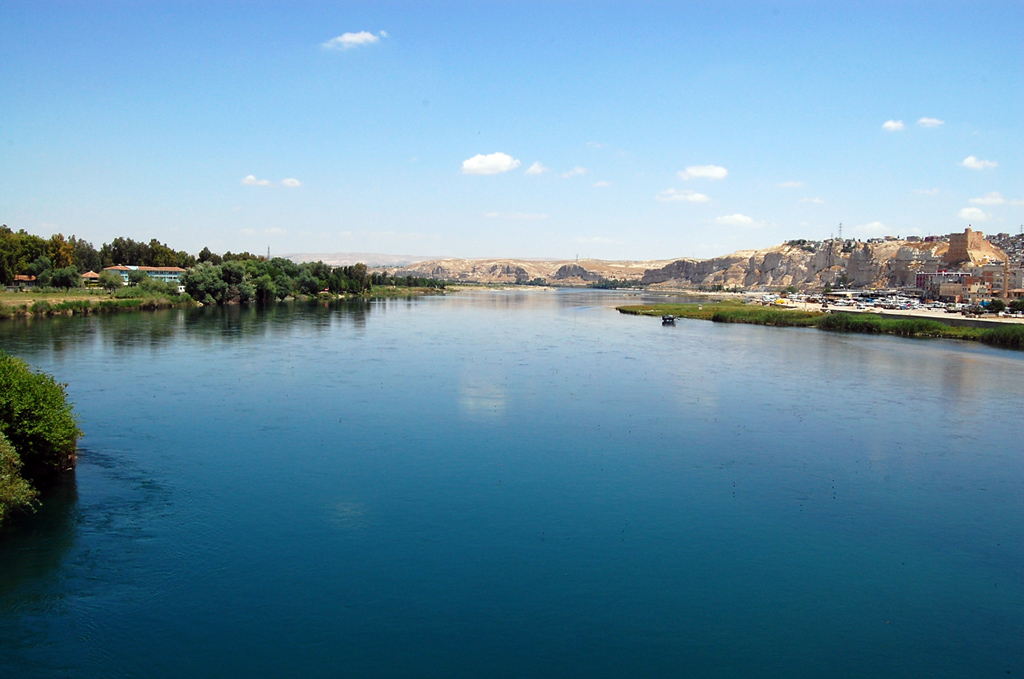
The Euphrates River at Birecik, Turkey. Photo by Ferrell Jenkins.

The Euphrates is the largest, longest and most important river of Western Asia. It is nearly 1800 miles long and was the northeastern boundary of the land promised to Abraham (Gen. 15:18). The empires of Assyria and Babylon, the greatest enemies of Israel, were east of the Euphrates. The Old Testament prophets often put the Euphrates by metonomy for these countries to designate the place from which the punishment of God would come (Isa. 7:20; 8:7; Jer. 46:10). For more information on the Euphrates River read the article here.