Category Archives: Travel

A real Word Press

Monday I visited the Ulster-American Folk Park in County Tyrone, Northern Ireland. This is a marvelous open-air museum with old houses, some of which have been moved from their original place to the Park for preservation. One of the houses belonged to Judge Thomas Mellon,  founder of the Pittsburgh banking dynasty.

One of the houses that caught my attention was the house of a common (poor) family of about 1790. I wrote about it in a different blog here.

The park traces the movement of immigrants from Ireland to America. Having been interested in printing since taking a course in letter press printing during my Junior year in high school, I found the print shop of interest.

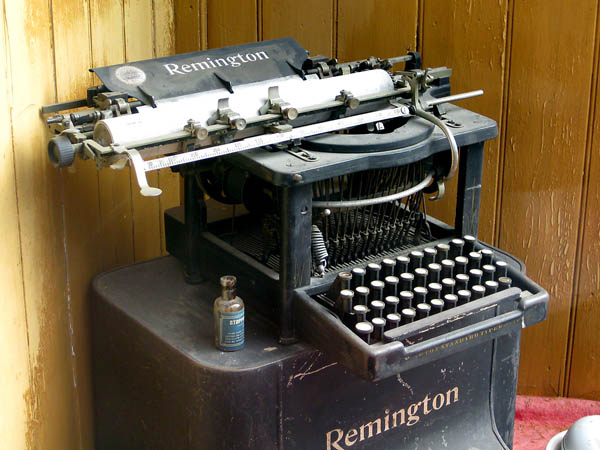
There was an old Remington typewriter in the window of the print shop.

Typewriter at Ulster-American Folk Park

Typewriter at Ulster-American Folk Park. Photo by Ferrell Jenkins.

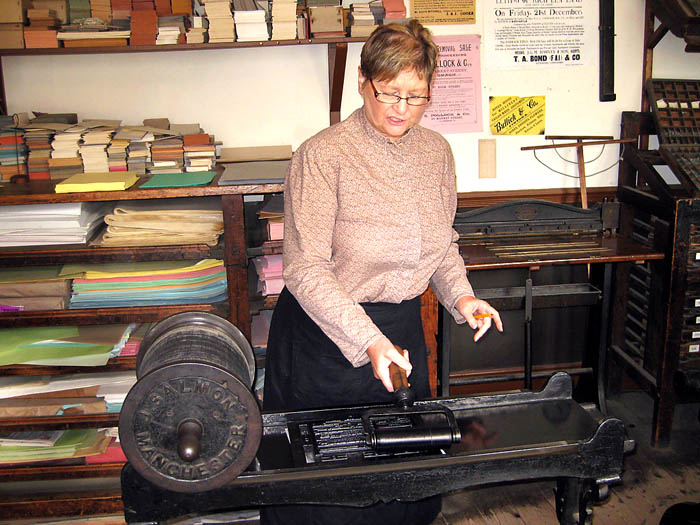
The lady printer is operating a proof press. She actually printed a contract of passage for me to board a ship and sail for the New World.

Proof press at ulster-American Folk Park. Photo by Ferrell Jenkins.

Proof press at Ulster-American Folk Park. Photo by Ferrell Jenkins.

Now that’s a real Word Press.

The ziggurat at Ur

The pyramids of Egypt are fairly well known to students in the Western world. Some study is made of them in the elementary grades. The ziggurats of Mesopotamia (mostly present day Iraq) are not as well known. In Egypt we have some pyramids, like the great pyramids of Giza, which are still standing to almost their original height. Having been made of stone, they have been fairly well preserved.

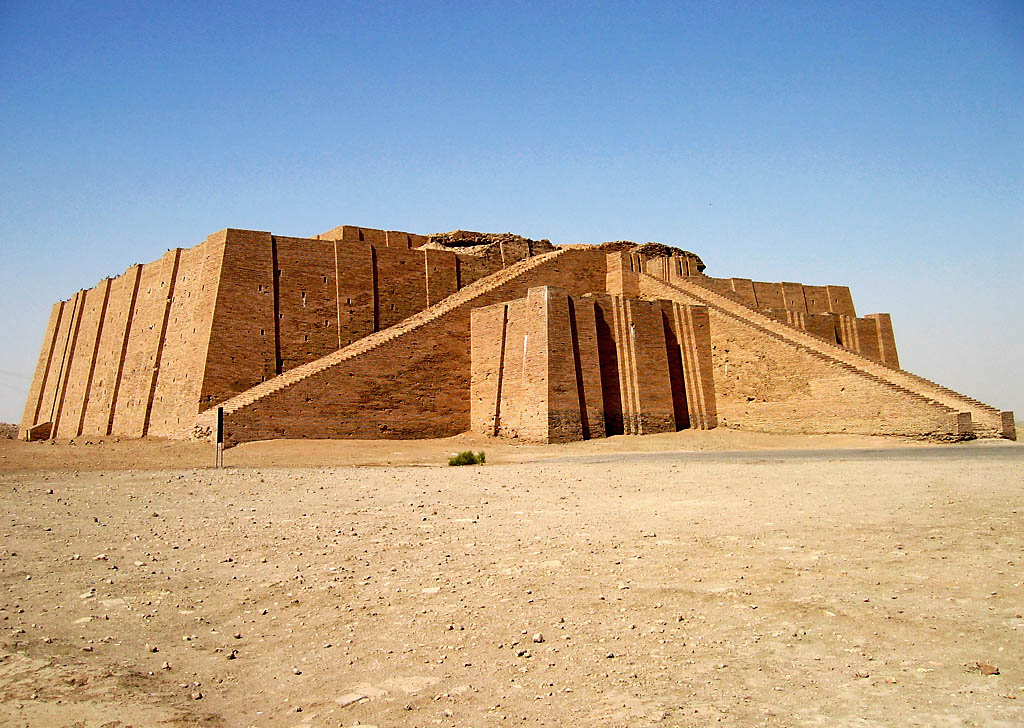
The ziggurats of Mesopotamia were made of baked bricks. Over the centuries they have tended to become piles of mud. The only one I saw during my only visit to Iraq in May, 1970, that had any semblance of a defined shape was the ziggurat at Ur. That was because it had been reconstructed up to about the fourth story.

The ziggurat was a staged temple tower. The temple at the top of the tower was considered the dwelling place of the particular god worshiped at a site. The kings of Ur are thought to have built the first ziggurat about the 27th century B.C., though some may have been erected on older structures going back to about 3100-2900 B.C. (The Middle East, Hachette World Guides, 1966). A model, like the one below from the Pergamum Museum in Berlin gives us a good impression of the original appearance of the ziggurats.

Ziggurat Model at the Pergamum Museum, Berlin. Photo by Ferrell Jenkins.

Ziggurat Model at the Pergamum Museum, Berlin. Photo by Ferrell Jenkins.

Every now and then I search the Internet for photos of Iraq. Sometimes I locate a nice photo made by a soldier who has been stationed there. One day I came across a really great photo on Flickr made by Josh McFall. It took a while to track down Josh and ask his permission to use the photo on the web site. He enthusiastically grated permission, only asking that I comply with the attached Creative Commons license. That, I was pleased to do. The Creative Commons license on this photo requires Attribution, Non-commercial Use, and No Derivative works. Josh, I am sure many of my readers thank you.

The ziggurat at Ur is attributed to the third dynasty of Ur (2124-2015 B.C.).
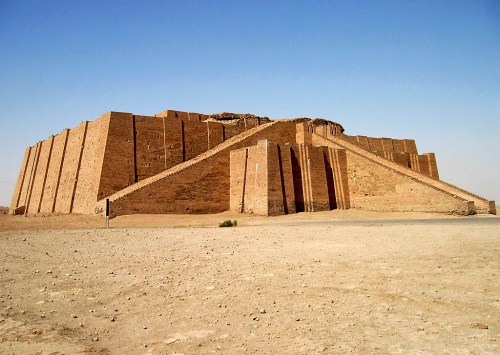
Ziggurat at Ur in Iraq. Photo by Josh McFall.

Reconstructed Ziggurat at Ur in Iraq. Photo by Josh McFall.

Perhaps we should think of something like the ziggurats when we study the account of the building of the tower of Babel in Genesis 11.

Then they said, “Come, let us build ourselves a city and a tower with its top in the heavens, and let us make a name for ourselves, lest we be dispersed over the face of the whole earth.” (Genesis 11:4 ESV)

And it might help with the understanding of what Jacob saw in his dream at Bethel.

And he dreamed, and behold, there was a ladder set up on the earth, and the top of it reached to heaven. And behold, the angels of God were ascending and descending on it! (Genesis 28:12 ESV)

When John calls attention to this scene he says the angels were ascending and descending on the “Son of Man” (John 1:51).

Both photos are available in presentation size for those who would like to use them. Just click on the image.

The potter’s right over the clay

In arguing that God has the right to do whatever He chooses, Paul uses the illustration of the potter and the clay.

But who are you, O man, to answer back to God? Will what is molded say to its molder, “Why have you made me like this?” Has the potter no right over the clay, to make out of the same lump one vessel for honorable use and another for dishonorable use? (Romans 9:20-21 ESV)

Potter molding a vessel at Avanos in Anatolia. Photo by Ferrell Jenkins.

Potter molding a vessel at Avanos in Anatolia. Photo by Ferrell Jenkins.

Our photo shows a potter molding a vessel, according to his own choosing, at Avanos in Turkey. Avanos, a town north of the region of Cappadocia, is famous for its potters. I am told that many homes have a potter’s wheel and the residents make some of the family income through pottery making.

The words of the LORD through the prophet Jeremiah are fitting:

Then the word of the LORD came to me: “O house of Israel, can I not do with you as this potter has done? declares the LORD. Behold, like the clay in the potter’s hand, so are you in my hand, O house of Israel. (Jeremiah 18:5-6 ESV)

We have included an image suitable for presentations for those who wish to use it in teaching.

Remembering 9/11

A few days ago we visited the Waterford Crystal Factory to see the various stages involved in the making special Waterford pieces.

Perhaps everyone remembers the famous ball dropped in Times Square on New Years’ Eve, and the special sports trophies made by Waterford. Another piece at the factory caught my attention. At this time I want to share this one special piece.

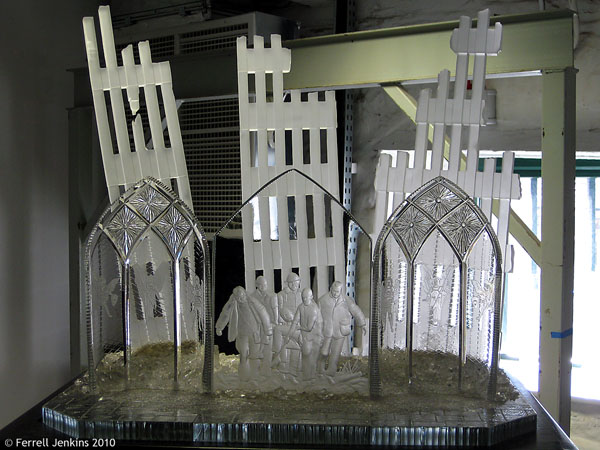
Waterford Crystal - Dedicated to 9-11 Rescue Workers

Waterford Crystal - Dedicated to 9-11 Rescue Workers

The plaque below this poignant piece says, “This piece was made in remembrance of Fr. Mychal Judge, who was one of the 343 FDNY, 37 PAPD & 23 NYPD Officers who lost their lives on September 11th 2001 while trying to save others.” The final line says,

This piece is dedicated to all the Rescue Workers.

The tragic events of 9/11 should never be forgotten by Americans or any other peace loving peoples. We remember all, whether rescue workers or not, who lost their lives on that day.

Israel Museum now open

The Israel Museum has been closed to the public while undergoing a complete renovation. We have noted this with construction photos here.

The museum is once again open. Here are links to a couple of reports about the refurbished museum.

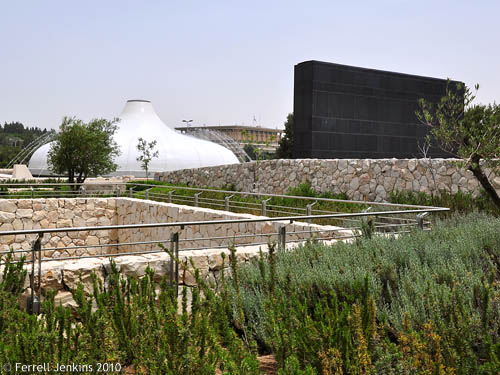
The already impressive location of the Museum campus with the Shrine of the Book, the Second Temple Model and the nearby Israeli Knesset building is sure to be even more impressive. I anticipate my next visit.

The Shrine of the Book at the Israel Museum. Photo by Ferrell Jenkins.

The Shrine of the Book at the Israel Museum. Photo by Ferrell Jenkins.

The Shrine of the Book and the Second Temple Model has been open during the museum renovation.

French to train Bethlehem museum staff

Ma’an News Agency reports here,

France and the Palestinian Authority Ministry of Tourism and Antiquities signed an agreement to build a museum in the city of Bethlehem, under a heritage preservation and promotion project.

The agreement, for some 700,000 Euro ($915,460 US), was signed on Wednesday in Bethlehem, and will finance the establishment of a national museum in the Old City of Bethlehem, the training of museographers in cooperation with French institutions including The Louvre and the French National Heritage Institution, as well as fund long-term planning and management.

The two year project is expected to begin this fall.

It has become difficult for tourists to visit Bethlehem. There are several reasons I can think of at the moment.

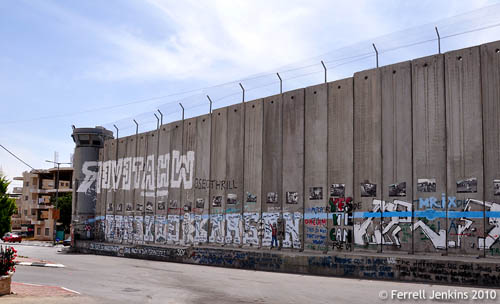
  • The security wall that Israel has built around Bethlehem. In order to visit Bethlehem the tour bus must pass from Israel into the Palestinian Authority controlled Bethlehem. Going in is often easier than coming out. Most of the time tourists are not required to leave the bus, but sometimes we must leave the bus and walk through the check point. Tourists probably only do this once or twice in their life, but honorable citizens of the PA must go through this every day they work in Israel.
  • The Palestinian Authority has not made it easy, either. Buses formerly parked in Manger Square near the Church of Nativity. I think it is good that they  now must park in a new parking garage. Drivers should be allowed to drive closer to the center of town to drop off passengers. Some older tourists find it difficult to climb the steep hill to visit the center.

Before I die I would like to see the wall that separates Bethlehem and Jerusalem dismantled and a portion of it placed in the Bethlehem museum as a reminder of the past. This requires an improvement in conditions now existing in the Middle East.

The Wall as seen in Bethlehem. Photo by Ferrell Jenkins.

The Security Wall as seen in Bethlehem. Photo by Ferrell Jenkins.

HT: Museum note, Joseph Lauer.

Italy seeks sponsors for Colosseum repair

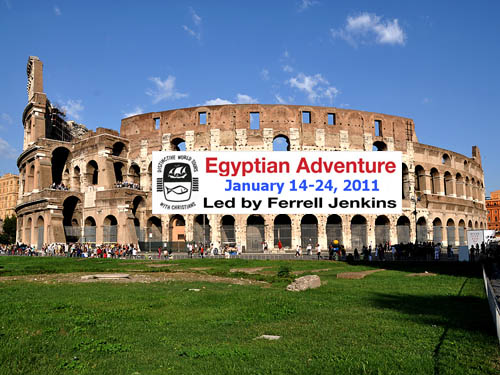
The news sources are reporting that Italian officials are seeking $32 million in funds to repair the crumbling Colosseum. This is in exchange for advertising rights. I have been trying to envision how it might look.

Thinking about how it would look with advertising.

This is how the Colosseum might look with advertising. Photo by Ferrell Jenkins.

Passing through the grainfields

All three of the Synoptic Gospels record the incident of Jesus and His disciples passing through the grainfields on a Sabbath.

On a Sabbath, while he was going through the grainfields, his disciples plucked and ate some heads of grain, rubbing them in their hands. But some of the Pharisees said, “Why are you doing what is not lawful to do on the Sabbath?” (Luke 6:1-2 ESV)

I thought I would put together some photos to help you visualize what happened here. First, we have a photo of a wheat field below Mount Tabor. The photo is made looking north west from near the site of ancient En-dor. The area is famous as the home of the medium visited by King Saul (1 Samuel 28:7).

Wheat field below Mount Tabor. Photo by Ferrell Jenkins.

Wheat field with view NW to Mount Tabor. Photo by Ferrell Jenkins.

Now, imagine the disciples taking grain in their hands.

Picking heads of grain. Photo by Ferrell Jenkins.

Picking heads of grain. Photo by Ferrell Jenkins.

And then rubbing the heads to separate the grain from the chaff.

Rubbing grain to separate the head from the chaff. Photo by Ferrell Jenkins.

Rubbing grain to separate the head from the chaff. Photo by Ferrell Jenkins.

The last two photos were made in the vicinity of Mount Nemrut in eastern Turkey. Larger images, suitable for use in teaching, are available by clicking on the photos.

Elisha’s Fountain at Jericho

When we think of the Old Testament prophets, we likely think first of the literary prophets such as Isaiah, Daniel, Jeremiah, Amos, et al. We may also think of Elijah and Elisha, two of the oral prophets. These two men served the Lord in the last part of the ninth century B.C.

The first reference to Elisha is when Elijah is told to anoint Elisha as his successor (1 Kings 19:16-21). Elisha is plowing with oxen when Elijah comes by and throws his mantle over him, a symbolic way of showing that Elisha was being called to serve in the prophetic office. Elisha’s sacrifice of his oxen shows that he accepted the call.

The next reference to Elisha does not come until the time when Elijah is taken into heaven (2 Kings 2). Elijah’s mantle (cloak) is used this time to strike the Jordan River. The waters were divided and the two prophets crossed into Transjordan on dry ground, just as the Israelites had crossed in the opposite direction centuries earlier.

When it becomes clear that Elisha will see Elijah no more, he returned and stood on the bank of the Jordan. He took Elijah’s mantle and struck the waters. They were divided and Elisha crossed back to the west bank.

The men of Jericho came to Elisha and explained the situation of their city. They said, “the situation of this city is pleasant…but the water is bad and the land is unfruitful” (2 Kings 2:19). The prophet asked for a jar. He told the men to put salt in it. He threw salt in the waters and they were purified. The writer says they have been purified to this day.

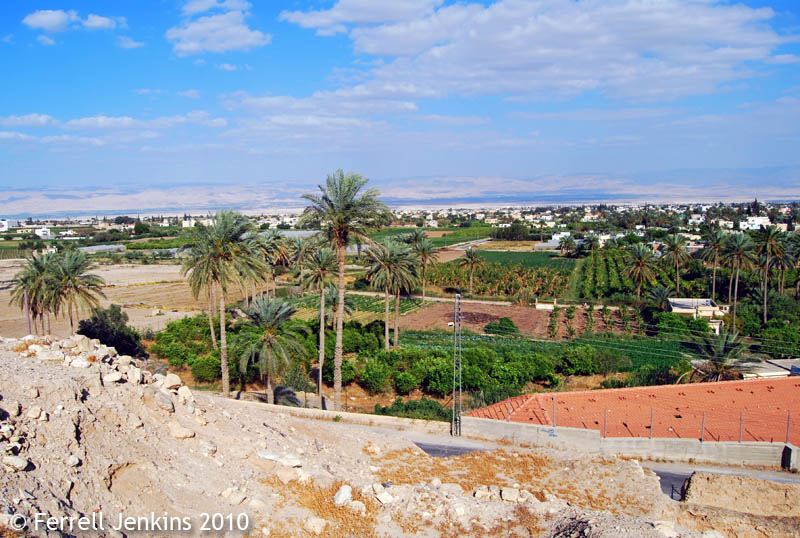
View east from Tell es-Sultan/Jericho. Photo by Ferrell Jenkins.

View east from Tell es-Sultan/Jericho. Photo by Ferrell Jenkins.

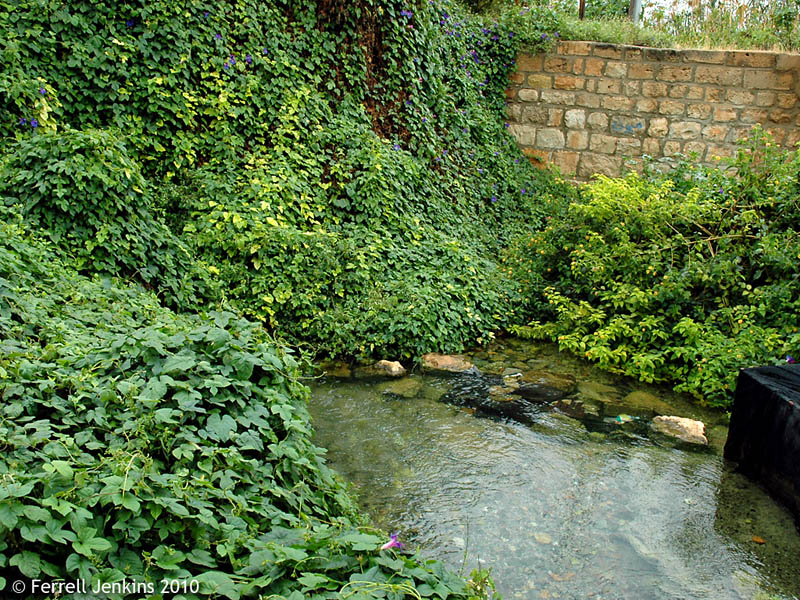
Jericho is still a city of palm trees (Deuteronomy 34:3). Below the ancient mound (Tell es-Sultan) to the east there is a spring called Elisha’s Fountain. The photo above was made from the tell with a view to the east. The mountains of Transjordan can be seen in the distance. Close to the tell there is a building with a red tile roof. This is the pumping station that provides water for modern Jericho. The next photo shows the spring as it exits the ground [at the present time]. Perhaps this is the same spring mentioned in the Bible.

Elisha's Fountain at Jericho. Photo by Ferrell Jenkins.

Elisha's Fountain at Jericho. Photo by Ferrell Jenkins.

This article was published in Biblical Insights, August, 2009.

Fragment of Cuneiform tablet found in Jerusalem

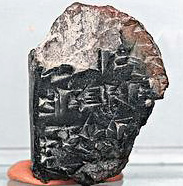
The Jerusalem Post reports here the discovery of a fragment of a cuneiform tablet in Jerusalem.

Cuneiform fragment. Photo: Jer.Post.

Cuneiform fragment. Photo: Jerusalem Post.

Hebrew University excavations recently unearthed a clay fragment dating back to the 14th century BCE, said to be the oldest written document ever found in Jerusalem.

The tiny fragment is only 2 cm. by 2.8 cm. in surface area and 1 cm. thick and appears to have once been part of a larger tablet. Researchers say the ancient fragment testifies to Jerusalem’s importance as a major city late in the Bronze Age, long before it was conquered by King David.

The minuscule fragment contains Akkadian words written in ancient cuneiform symbols. Researchers say that while the symbols appear to be insignificant, containing simply the words “you,” “you were,” “them,” “to do,” and “later,” the high quality of the writing indicates that it was written by a highly skilled scribe. Such a revelation would mean that the piece was likely written for tablets that were part of a royal household.

The cuneiform fragment was discovered during wet sifting of the excavation. Prof. Eilat Mazar, director of the dig, said information was not released until last week “because researchers wanted to wait until analysis of the piece was complete so as to be absolutely certain of the details of the find.”

Duane Smith reports that the fragment is published in the current Israel Exploration Journal by Mazar, Horowitz, Oshima, and Goren. The fragment has been dubbed “Jerusalem 1.” The suggestion is made that this fragment may be related to the Amarna tablets sent by rulers of ancient Canaan to the Pharaoh of Egypt in the 14th century B.C.. Smith discusses the fragment in relation to the scribes of the Late Bronze Age Jerusalem here.

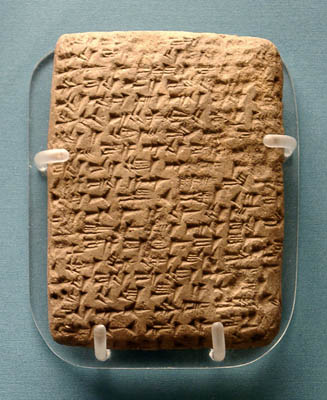
Several museums have examples of the Amarna tablets on display. Here is a photo of the letter from Yapahu, king of Gezer. In it he “begs pharaoh for help in defending his city against raids by the Hapiru.”

Amarna Tablet from Gezer. British Museum. Photo: F. Jenkins.

Amarna Tablet from Gezer. British Museum. Photo: F. Jenkins.

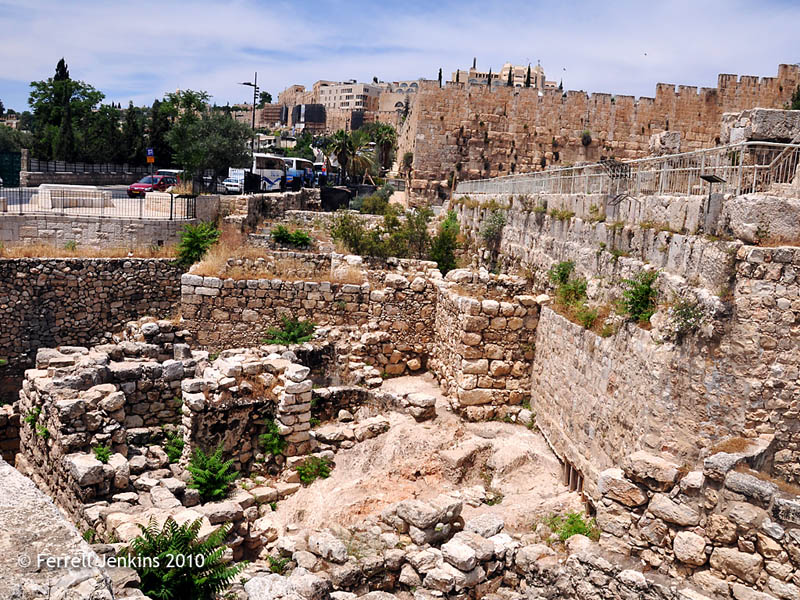
We discussed Mazar’s Ophel Excavation February 23 here. Since that time I have visited Jerusalem and am delighted to share a photo of the area under consideration. Click on the photo for a larger image.

Mazar's Ophel Excavation Area. Photo by Ferrell Jenkins.

Mazar's Ophel Excavation Area. Photo by Ferrell Jenkins.

HT: Joseph I. Lauer; See the Bible Places Blog for more analysis.