Category Archives: Travel

Jesus visited Bethany often

The crowds of pilgrims who had come to Jerusalem for Passover overloaded the system. Many of them likely slept in the open on the Mount of Olives and other places near the city. On Monday evening,

And he entered Jerusalem and went into the temple. And when he had looked around at everything, as it was already late, he went out to Bethany with the twelve. (Mark 11:11 ESV)

Luke tells us that it was His custom to do so.

And he came out and went, as was his custom, to the Mount of Olives, and the disciples followed him. (Luke 22:39 ESV)

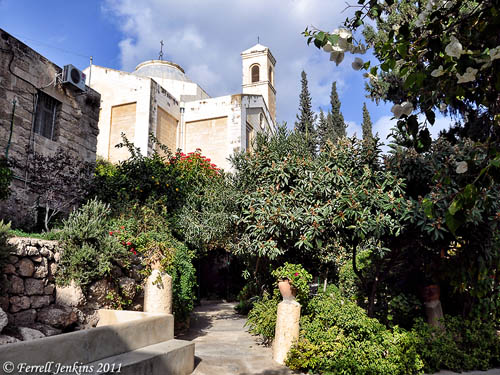
Bethany, the village of Mary, Martha and Lazarus (John 11:1), was located on the eastern slope of the Mount of Olives about two miles from Jerusalem (John 11:1, 18). The photo below shows the Church of St. Lazarus at Bethany. The walk from the main street goes through a pleasant garden. This was the Jerusalem-Jericho road before the building of the tunnel and the new highway.

Church at Bethany. Photo by Ferrell Jenkins.

Church at Bethany on eastern slope of Mount of Olives. Photo by Ferrell Jenkins.

Here on the eastern slope of Olivet we find the traditional tomb of Lazarus. In the time of Jesus the mountain was likely filled with olive trees.  Jerusalem may be seen only after one reaches the crest of the mountain.

Jesus also visited in the home of Simon the leper at Bethany, where a woman anointed his head with oil as He reclined at the table (Matthew 26:6-7).

Tradition places the ascension of Jesus on the top of the Mount of Olives, but Luke says it took place at Bethany (Luke 24:50-51).

Early morning view across the Sea of Galilee

The photo below shows an early morning scene across the Sea of Galilee from Tiberias. Perhaps we should say across “the Sea of Tiberias” as John does.

After these things Jesus went away to the other side of the Sea of Galilee (or Tiberias). (John 6:1 NAU)

After these things Jesus manifested Himself again to the disciples at the Sea of Tiberias, and He manifested Himself in this way. (John 21:1 NAU)

The view is from the Caesar hotel in Tiberias across the roof tops of some of the older buildings of Tiberias to the north east. The northern shore is clearly visible, as well as the area of biblical Bashan and of the Geshurites to the east (Joshua 12:5; 13:11).

NE view across the Sea of Galilee from Tiberias. Photo by Ferrell Jenkins.

NE view across the Sea of Galilee from Tiberias. Photo by Ferrell Jenkins.

The photo was made January 30, 2011, a time when the heavy clouds might be expected. Notice the shallow water in the lower right corner of the photo.

The mosaics of the Antakya Museum

Yesterday’s post about Antakya, Turkey (biblical Antioch of Syria, Acts 11), was highly popular. We had more than 1400 hits. Thanks for your interest. We hope you will find other entries of interest as well.

Take a look at the two good comments on the previous post. One from Balagebalogh calls attention to the mosaics from Antakya that are in the Baltimore Museum of Art and to his illustration of Antioch, and another from TBrinley calling attention to the mosaics in the Antakya Museum. I haven’t had the opportunity to visit the Baltimore museum, but I have been to the Antakya Museum a few times.

I thought I would share just one of the many mosaics displayed in the Antakya Museum. These mosaics typically date to the fourth or fifth century as I recall. (I am away from home and do not have access to my usual sources.)

Our photo shows a beautifully preserved mosaic displayed on a large wall. I am taking the liberty of copying info about it from Sacred Destinations, a site we have recommended before. Regarding this mosaic the site says,

Detail of mosaic from the floor of the 5th-century Bath of Apolausis, a small suburban bath uncovered in the Antioch excavations on the slopes of Mount Silpios, east of the city. The woman depicted in the middle is Soteria (Salvation) who formed a pair with Apolausis (Enjoyment). Soteria and Apolausis were minor deities who had the power to deliver people from danger and were popularly associated in late antiquity with baths, whose warm waters could give pleasure and soothe pain. Antakya Museum.

Antakya Museum mosaic displayed on wall. Photo by Ferrell Jenkins.

Antakya Museum mosaic displayed on wall. Photo by Ferrell Jenkins.

Beautiful, isn’t it? Turkey is filled with similar mosaics. I recall especially those from Zeugma displayed in the Gaziantep Museum.

Antioch of Syria, or is that Turkey?

Antioch of Syria on the Orontes River was founded by Seleucus I Nicator in 300 B.C. Antioch became a Roman city in 64 B.C. and capital of the new province of Syria. It became the third largest city of the Roman Empire after Rome and Alexandria.

After Jerusalem, Antioch was the second great center of Christianity in New Testament times and where the disciples of Christ were first called Christians (Acts 11:19-30; 13:1-3; 14:26-28; 15:1-41; 18:22-23; Gal. 2).

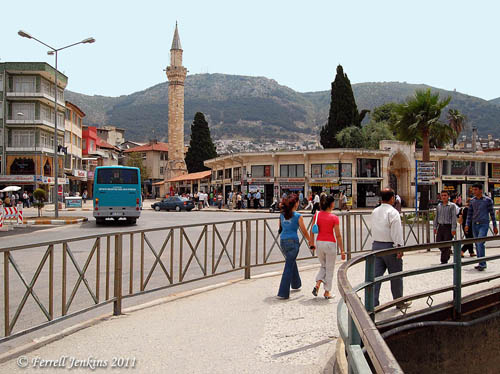
Antioch is now called Antakya and is part of the HatayProvince of Turkey, but is near the border with Syria. The area became part of Turkey in 1939.

The photo below was made from the bridge crossing the Orontes River with a view east toward Mount Silipius. Click on the photo for an image suitable for use in presentations.

Antakya, Turkey. Antioch of Syria of the New Testament. Photo by Ferrell Jenkins.

View east toward Mount Silpius from the Orontes River. Photo by Ferrell Jenkins.

A church called the Cave Church of St. Peter honors Peter’s visit to the city (Gal. 2). This is a late Roman Catholic addition to the city, having become a Catholic church in 1946. Not the best choice, I think. Peter’s association with Antioch did not turn out too well. At first he ate with the new Gentile converts, but under pressure from James of Jerusalem played the hypocrite and withdrew from the Gentiles.

But when Cephas came to Antioch, I opposed him to his face, because he stood condemned. For before certain men came from James, he was eating with the Gentiles; but when they came he drew back and separated himself, fearing the circumcision party. And the rest of the Jews acted hypocritically along with him, so that even Barnabas was led astray by their hypocrisy. (Galatians 2:11-13 ESV)

I suggest you read Galatians 1 and 2, for a more complete account of this event.

From here the great journeys of Paul to take the Gospel to the Gentile world began (Acts 13:1-2).

Homemade in the Golan Heights

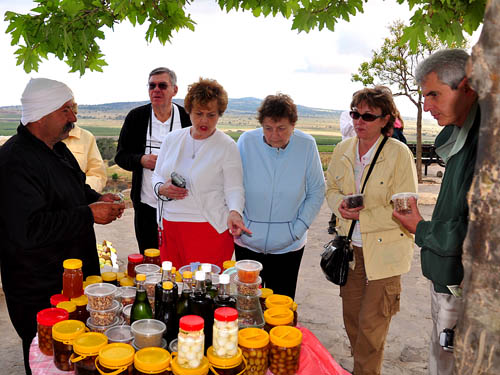
Today I am traveling, but I thought I would share a photo that illustrates one of the educational and sometimes fun things about travel in cultures other than our own. This Arab peddler has set up his table in the Golan Heights at the overlook from Israel into Kuneitra (Quneitra), Syria.

He seems to have a nice variety of the local goodies: olives, olive oil, nuts, and various fruits. Are those pickled eggs? He has already made two sales and it appears he is about to make a third. It can be really chilly in the Golan Heights, even in early May. Some of the potential customers would probably more quickly buy a sweat shirt.

Peddling homemade goodies in the Golan Heights. Photo by Ferrell Jenkins.

Peddling homemade goodies in the Golan Heights. Photo by Ferrell Jenkins.

New excavations at Carchemish

Carchemish is mentioned only a few times in the Bible, but it was one of the most significant cities in the ancient Bible world.

  • Isaiah made a reference to Carchemish (Isaiah 10:9). The city had been sacked by Sargon II in 717 B.C.
  • Pharaoh Necho of Egypt went up to Carchemish on the Euphrates to assist the Assyrians against the Babylonians in 609 B.C. (2 Chronicles 35:20; Jeremiah 46:2). King Josiah of Judah tried to stop him, but was killed.

One of the Babylonian Chronicles says that Nebuchadnezzar “crossed the river to go against the Egyptian army which lay in Carchemish.”

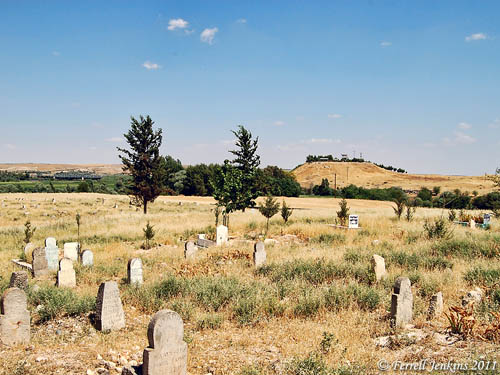
Our photo shows the tell in the distance. The tell is in Turkey today. In the far left of the photo you may see a bridge over the Euphrates River. The bridge crosses into Syria.

Cemetery at Carchemish, Tell in the distance. Photo by Ferrell Jenkins.

Cemetery at Carchemish, Tell in the distance. Photo by Ferrell Jenkins.

We are informed that a new excavation will begin at Carchemish this year. The area has been cleared of 1200 land mines. A few details, along with a photo of some of the land mines, may be viewed here.

HT: Bible Places Blog.

“You offspring of vipers…”

When the Pharisees and Sadducees came to John the Baptist for baptism, John said,

”You offspring of vipers! Who warned you to flee from the coming wrath? (Matthew 3:7 NET; cf. Luke 3:7)

Jesus used the same language of the Scribes and Pharisees.

You snakes, you offspring of vipers! How will you escape being condemned to hell? (Matthew 23:33 NET; cf. 12:34)

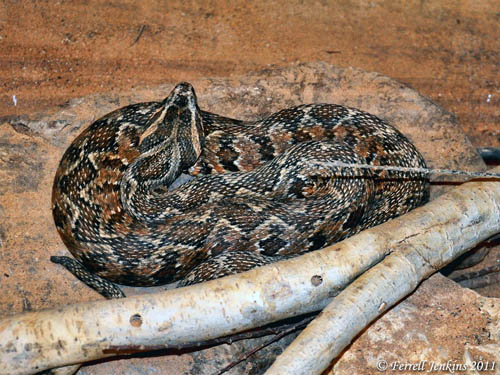
The photo below shows the Palestinian Viper (behind tough plastic!) at the the Hai Bar Animal and Nature Reserve, north of Eilat, Israel.

Palestinian Viper at the HaiBar Reserve near Eilat, Israel. Photo by Ferrell Jenkins.

Palestinian Viper at the HaiBar Reserve near Eilat, Israel. Photo by Ferrell Jenkins.

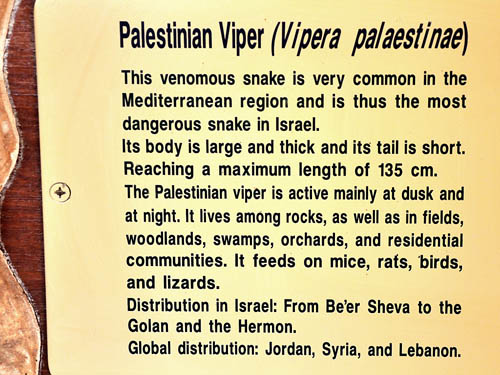
The sign at the Reserve gives some explanation about this poisonous viper.

Description of the Palestinian Viper at HaiBar Reserve.

A visit to Hai Bar is a wonderful experience. The kids will love it, too.

Libya and the Bible — more than you think

UNESCO: respect historical sites in Libya

According to an article in M & C here, UNESCO has called for Libyan and allied forces to protect six specified historical sites in Libya.

Libya’s sites on the World Heritage List include the archaeological site of Cyrene, which was established as a Roman province in 74 BC; and the site of Leptis Magna, which was founded in the first millennium BC.

Cyrene is located near Al Bayda in eastern Libya.

The Biblical Connection

When Jesus was being led to the place of crucifixion, Simon of Cyrene was compelled to bear his cross. He was the father of Alexander and Rufus, to people apparently known to Mark’s audience (Mark 15:21).

As they were going out, they found a man from Cyrene named Simon, whom they forced to carry his cross. (Matthew 27:32 NET)

The fifth station of the cross along the traditional Via Dolorosa in Jerusalem marks the spot where Simon took up the cross. Photos of the Catholic chapel at the spot may be viewed at Holy Land Photos here. Just search for Cyrene. Or check the photos at Bible Walks here.

  • Jews from the district of Libya around Cyrene were present in Jerusalem on Pentecost (Acts 2:10).
  • Some men from Cyprus and Cyrene were responsible for the first preaching to Gentiles at Syrian Antioch (Acts 11:20).
  • Lucius of Cyrene was one of the prophets or teachers at Antioch (Acts 13:1).

Galen Frysinger has a collection of older photos of Cyrene on his website here.

Ioannis Logiotatidis has some of the best photos I have found for Cyrene. He has kindly granted permission for me to share a couple of these with our readers. Both of are the Temple of Zeus. This temple was built originally in the 5th century B.C., but has been destroyed and rebuilt several times over the centuries.
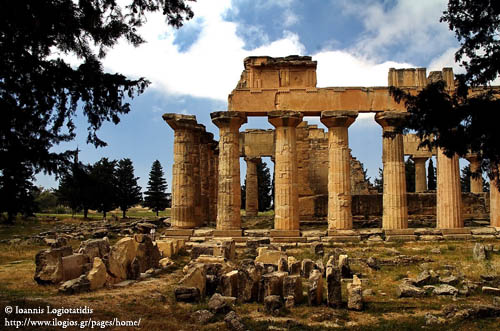
Temple of Zeus at Cyrene, Libya. Photo by Ioannis Logiotatidis.

Temple of Zeus at Cyrene, Libya. Photo by Ioannis Logiotatidis.

Check out more of Ioannis’ newer artistic photographs at his web site here.
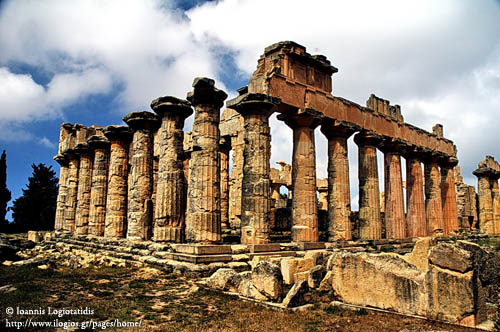
Temple of Zeus at Cyrene, Libya. Photo by Ioannis Logiotatidis.

Temple of Zeus at Cyrene, Libya. Photo by Ioannis Logiotatidis.

You may notice a strong resemblance between this temple and the Temple of Apollo at Corinth.

The Alexander (son of Simon) Ossuary

Sukenik and Avigad discovered an ossuary in 1941 bearing the inscription “Alexander (son) of Simon.”

Tom Powers, a guide in Israel, has written two articles about the ossuary for BAR. You may access them here. He concludes in the second article that this ossuary could be the ossuary of both Alexander and Simon.

Another article about ossuaries and Jesus contains photographs and a brief mention of the Alexander-Simon ossuary. Click here.

Paul’s Shipwreck on the Voyage to Rome

Libya is not mentioned, but the Syrtis is mentioned in the account of Paul’s voyage to Rome.

Running under the lee of a small island called Cauda, we managed with difficulty to secure the ship’s boat. After hoisting it up, they used supports to undergird the ship. Then, fearing that they would run aground on the Syrtis, they lowered the gear, and thus they were driven along. (Acts 27:16-17 ESV)

You will notice that the Syrtis Major and the Syrtis Minor are located on the Mediterranean coast of Libya. This was a dangerous place for a ship in a storm.

Gordon Franz recently posted an article asking “Why were the sailors afraid of the Syrtis Sands?” here.

In the map below you will note the location of Cyrene. Simon had a long trip to Jerusalem. Notice also the location of the Syrtis Major in relation to the suggested route of Paul’s ship. Click on the map for a clearer image. (I am still struggling to learn the Bible Mapper program and how to export maps.)
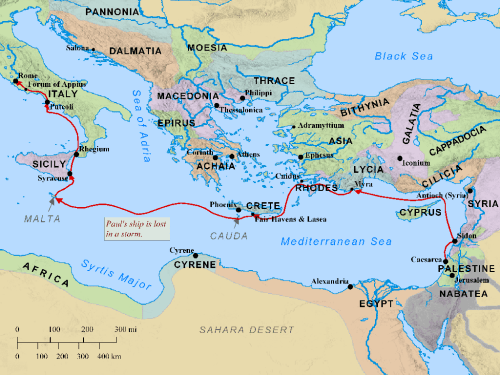
Paul's Voyage to Rome. Map by BibleMapper.

Paul's Voyage to Rome. Map by BibleMapper.

Nahal Dan — strongest source of the Jordan

Israel National Parks and Nature Reserves, by Azaria Alon, is a must book for those who plan to visit more than the popular few of the parks and reserves in Israel.  It is published by Carta (Jerusalem), and distributed by Eisenbraun’s in the USA. Click on the link here to go directly to the description and order info.

Here is Alon’s description of the Nahal Dan (Nahr el-Leddan; River Dan):

Nahal Dan is situated in the heart of an area known as “the land of streams and rivers,” and indeed, in the Nahal and along its margins, water and vegetation are present in abundance. The Nahal has a single principal source but it is also fed by dozens of smaller springs. Walking in this environment one has the feeling of springs emerging everywhere. All this water has its origin from the winter snows on Mt. Hermon. The snow melts slowly, seeps into the sponge-like earth of the mountain, and emerges in the foothills. The water flows quietly from the springs, but it continues down an ever-increasing slope, turning into a torrent and generating standing waves and foam. When the stream emerges from the nature reserve, it splits into several rivulets which rejoin when it encounters Nahal Hermon to form the Jordan River.

Nahal Hermon is more commonly known as the Nahr Banias which begins at the site of Caesarea Philippi.

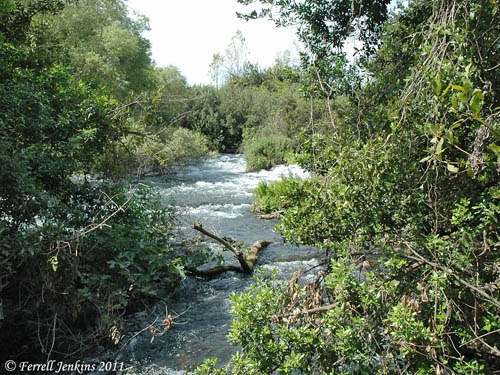
Here is a view of the Nahal Dan within the Tel Dan Nature Reserve.

Nahal Dan in the Tel Dan Nature Reserve. Photo by Ferrell Jenkins.

Nahal Dan in the Tel Dan Nature Reserve. Photo by Ferrell Jenkins.

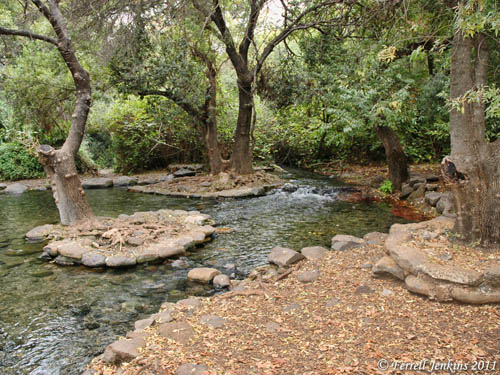
And here is one of the springs. This one is located immediately below the northwest corner of Tel Dan.

A spring in the Tel Dan Nature Reserve. Photo by Ferrell Jenkins.

A spring in the Tel Dan Nature Reserve. Photo by Ferrell Jenkins.

Dan is Israel’s northernmost city (Judges 18:29).

Something Irish

Many Americans have Irish backgrounds. Something Irish may be appropriate today.

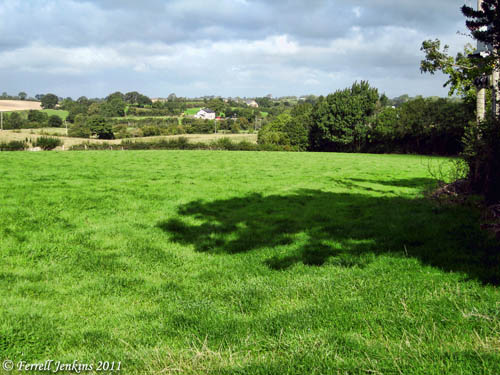
This photo of gently rolling hills of northern Ireland is typical of the northern part of Ireland. The closest large town is Armagh, but it is between Rich Hill and Ahorey.

Farm land near Ahorey Church, near Rich Hill, N. Ireland. Photo by Ferrell Jenkins.

Farm land near Ahorey Church, North Ireland. Photo by Ferrell Jenkins.

Students of the Restoration Movement will recognize this area as the home of Thomas and Alexander Campbell in the early 1800s, prior to their departure for America.

Some time I would like to post several photos of Irish sites associated with the Campbells.