Category Archives: Photography

Sabbath in Jerusalem

Jerusalem is an interesting city for many reasons. At the moment I will limit myself to some cultural reasons. Friday evening and Saturday our hotel was filled with Jews who are “observing” Shabat (Sabbath). Instead of preparing food in advance at home, many register in a local hotel and let someone else prepare everything.

But when I went to East Jerusalem I saw kids on the way to/from school, shops open, and people moving about doing their shopping. If they took a weekly holiday, it was Friday.

When I walked from Damascus Gate to Jaffa Gate and Zion Gate, I found all of the Moslem and Christian shops open and bustling with activity. Many Christian shops will be closed Sunday.

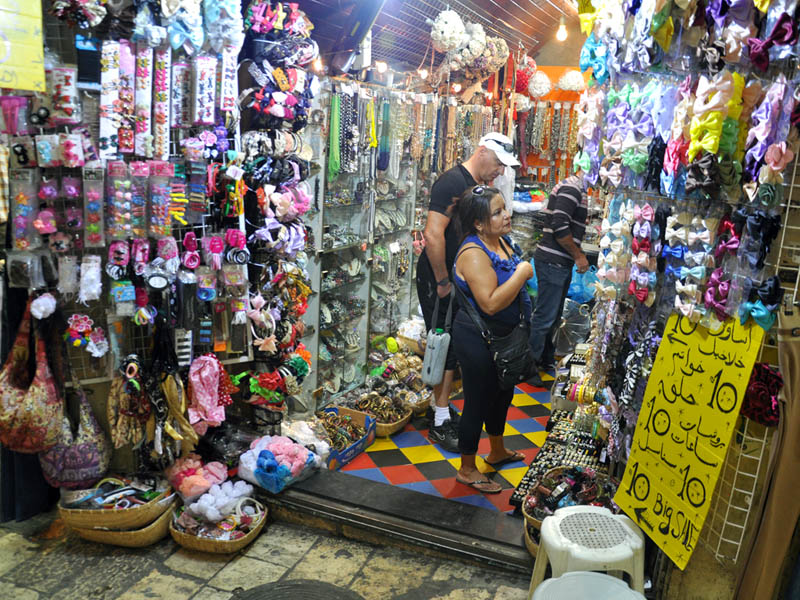
Colorful shop in the Moslem Quarter of Jerusalem. Photo by Ferrell Jenkins.

Colorful shop in the Moslem Quarter of Jerusalem. Photo by Ferrell Jenkins.

During the day I visited Damascus Gate, Zedekiah’s Cave (Solmon’s Quarry), the Russian Excavations, Jaffa Gate area, the roof of the Petra Hotel to see Hezekiah’s Pool, the Armenian Cathedral of St. James, “Mount Zion”, and maybe a few other places I don’t recall.

We get Fox News at our hotel. Several times we have seen reports about the anti-American riots and demonstrations in 21 countries including Israel (Tel Aviv and East Jerusalem). I am not saying it did not happen somewhere, but I was out all day and saw on indication of any such unrest. Perhaps the cameras had already left by the time I got out!

The Shephelah and the Coastal Plain

Today was an easy day of travel, but an extremely important one.We left Jerusalem headed for the Shephelah (lowland; Deuteronomy 1:7). We made a brief stop at Beth-shemesh where the ark of the covenant was returned from the Philistines to Israel (1 Samuel 6). This was also the territory of Samson (Zorah and Esthaol (Judges 13).

We drove through the Valley of Elah (1 Samuel 17) and called attention to the sites located in the area (Socoh, Azekah, and Khirbet Qeiyafa). We made a stops at Tel Goded, Maresha, Tel Burna, Lachish, and Tell es-Safi/Gath for photographs.

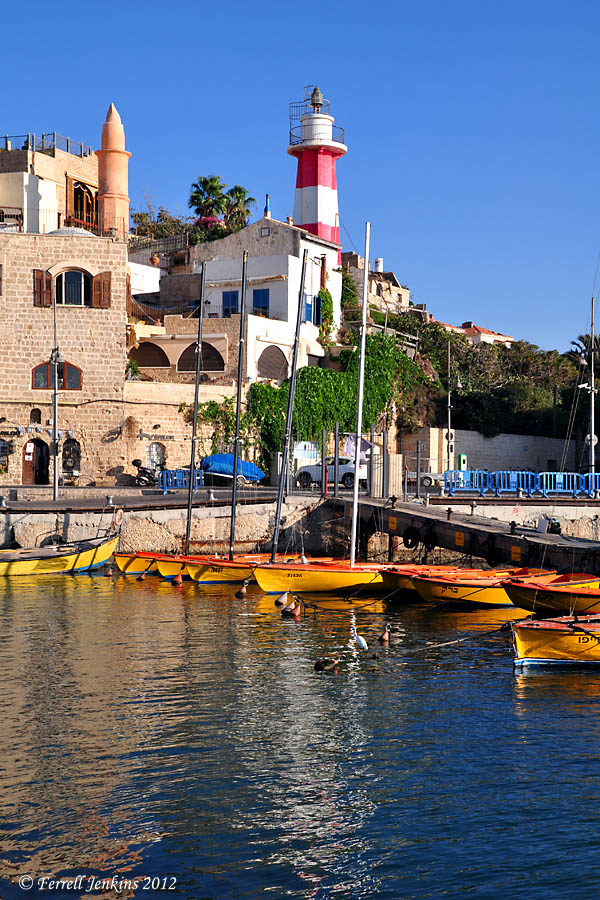
Our final stop was at Joppa (Yaffo). This is the site we intended to begin with, but our flight was delayed leaving New York and we were not able to go there on the first day of the tour. The photo below is of the fishing port and lighthouse at Old Joppa.

The fishing port and lighthouse at Old Joppa. Photo by Ferrell Jenkins.

The fishing port and lighthouse at Old Joppa. Photo by Ferrell Jenkins.

Joppa is located in the Plain of Sharon and served as the seaport for Jerusalem which is about 35 miles away. The city is now called Jaffa, or Yafo. Joppa was a walled town as early as the reign of Pharaoh Thutmose III (1490-1435 B.C.) who mentions Joppa in his town lists.

Here are a few of the biblical highlights for Joppa.

  • Joppa was assigned to the tribe of Dan, but was not controlled by the Israelites till the time of David (Joshua 19:46).
  • Hiram of Tyre floated cedar from Lebanon to Joppa for Solomon’s Temple (2 Chronicles 2:16).
  • Jonah sought a ship for Tarshish at Joppa to avoid going to Nineveh (Jonah 1:3).
  • Cedars from Lebanon again were floated to Joppa for the rebuilding of the temple (520-516 B.C.; Ezra 3:7). The port of the city is behind St. Peter’s Church.
  • Tabitha (Dorcas) lived in Joppa. When she died the disciples sent for Peter who was a Lydda. He came to Joppa and raised Dorcas (Acts 9:36-42). (Acts 10:6).
  • Peter stayed many days in Joppa with Simon the tanner (Acts 9:43). His house was by the sea (Acts 10:6). A house near the port is shown as the house of Simon, but there is no way to know this with certainty.
  • Peter received the housetop vision and learned that he was to go to Caesarea to preach the gospel to the Gentiles at the house of the Roman centurion Cornelius (Acts 10:23).

Benjamin plateau, Israel Museum, and the Garden Tomb

This morning we went out to Nebi Samwil [prophet Samuel], a site suggested as the location of Mizpah by some scholars. Others suggest Tell en-Nasbeh, a mound located at Al Bira in the West Bank. (See Jeffrey Zorn, “Mizpah: Newly Discovered Stratum Reveals Judah’s Other Capital.” BAR 23:05 (Sep/Oct 1997).

  • Samuel, the last judge of Israel, called all of the people of Israel to Mizpah and judged them (1 Samuel 7:5-6).
  • Samuel also anointed Saul to be the first king of Israel at Mizpah (1 Samuel 10:1).
  • Mizpah became the headquarters of Gedaliah as governor of Judah after the Babylonian destruction of Jerusalem  (2 Kings 25:23).

From the hill, we were able to look north to the Benjamin plateau. Both King Saul and Saul of Tarsus (Paul) were from the tribe of Benjamin. El Jib, the tell of Gibeon, is also visible from Nebi Samwil.

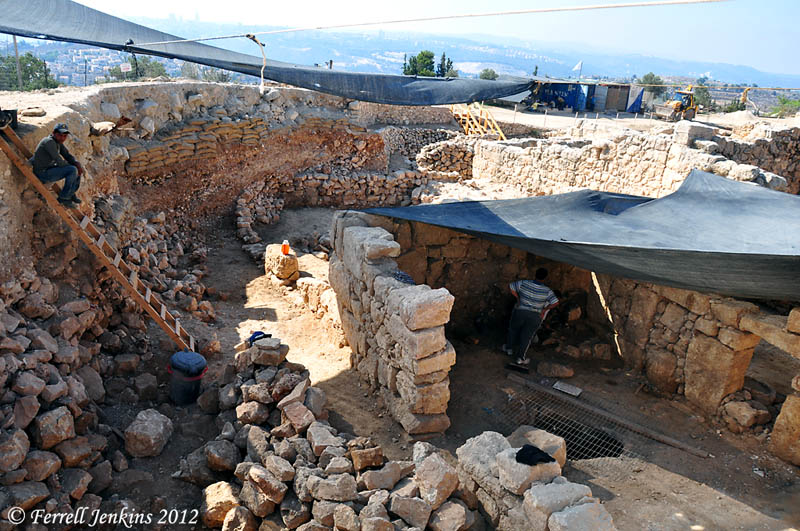
Some new excavations were underway under the direction of the National Parks Authority. We were told that Hasmonean ruins has been excavated, and there was some evidence from the Persian and Babylonian periods.

Excavations at Nebi Samwil - Sept. 13, 2012. Photo by Ferrell Jenkins.

Excavations at Nebi Samwil – Sept. 13, 2012. Photo by Ferrell Jenkins.

After Nebi Samwil we went to the Israel Museum campus for a visit of the Second Temple Model, the Shrine of the Book, and the Israel Museum. This is the first time I have been in the Museum since photos (without flash) have been allowed.

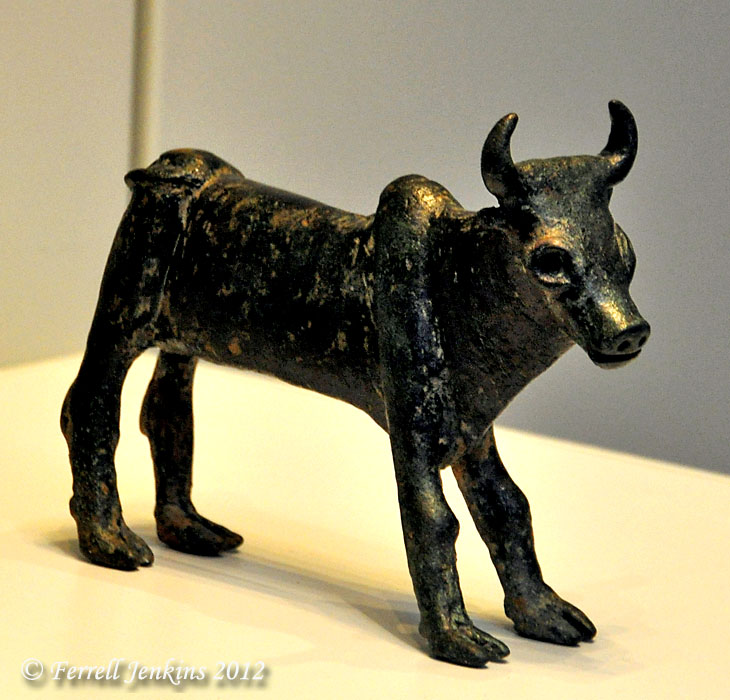
I will share one photo that I am pleased to have in my collection. It shows a bronze bull, dating to the 12th century B.C., found in the Samaria region.

Bronze Bull from Samaria Region - Israel Museum. Photo by Ferrell Jenkins.

Bronze Bull from Samaria Region – Israel Museum. Photo by Ferrell Jenkins.

This bull, and others those that have been found at Ashkelon and Hazor, remind us of the calf at Sinai (Exodus 32:24) and the calves set up by Jeroboam at Dan and Bethel (2 Kings 10:29).

The information posted with the statuette says,

Canaanite in inspiration, it attests to Israelite adoption of Canaanite motif. For the Israelites it may have symbolized God, or the pedestal of an unseen God.

Thank you, Israel Museum, for allowing photos.

In the late afternoon we visited The Garden Tomb. While this tomb is clearly not the tomb of Jesus, it provides a good illustration in a natural setting — far different from the Holy Sepulcher.

Visiting the Old City of Jerusalem

We left the hotel this morning at 7:15 in order to be at the security line going to the Temple Mount platform as soon as it opened. After that visit we followed the traditional Via Dolorosa. After a visit to the Church of the Holy Sepulchre we went to the Jewish Quarter to see the Broad Wall, the Burnt House (from A.D. 70), and the Herodian Mansion (or perhaps the house of priests).

We came down to the Western Wall Plaza to visit the Western Wall, then the Davidson Center excavations.

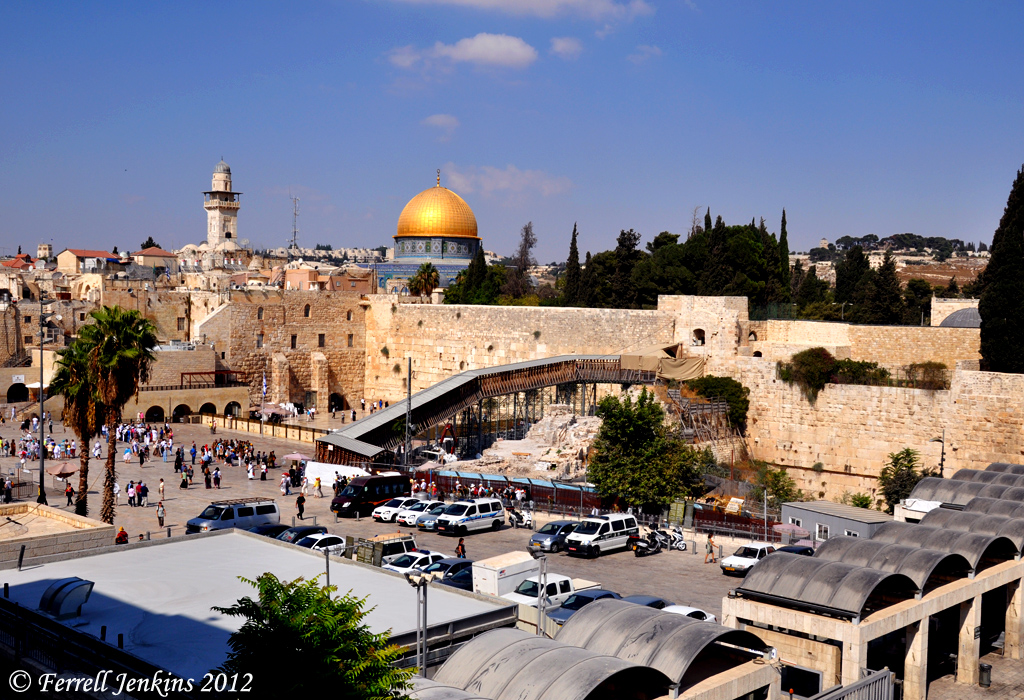
This photo of the Western Wall and Temple Mount platform was made from the southwest. You can see a portion of the Western Wall, the Mughrabi (temporary) Bridge, and the Dome of the Rock (where the biblical Temple once stood).

Temple Mount in Jerusalem from the SW. Photo by Ferrell Jenkins.

Temple Mount in Jerusalem from the SW. Photo by Ferrell Jenkins.

On the right side of the photo, in the distance, can be seen the hill between Mount Scopus and the Mount of Olives. I think this is where the Augusta Victoria Hospital is located.

It was a full day.

Visiting the Jordan River

Israel has opened access to the Jordan River at the traditional site of the baptism of Jesus.

Bible students enjoy visiting this site for several reasons.

  • Ancient Israel crossed the Jordan to enter the promised land (Joshua 3).
  • Elijah and Elisha crossed the river (2 Kings 2).
  • John baptized in the Jordan (Matthew 3:6ff.; Mark 1:5-9; John 1:28; 10:40).
  • Jesus was baptized in the Jordan (Matthew 3:13).
  • Naaman dipped in the Jordan at a site further north (2 Kings 5).

We were able to visit the site this morning.

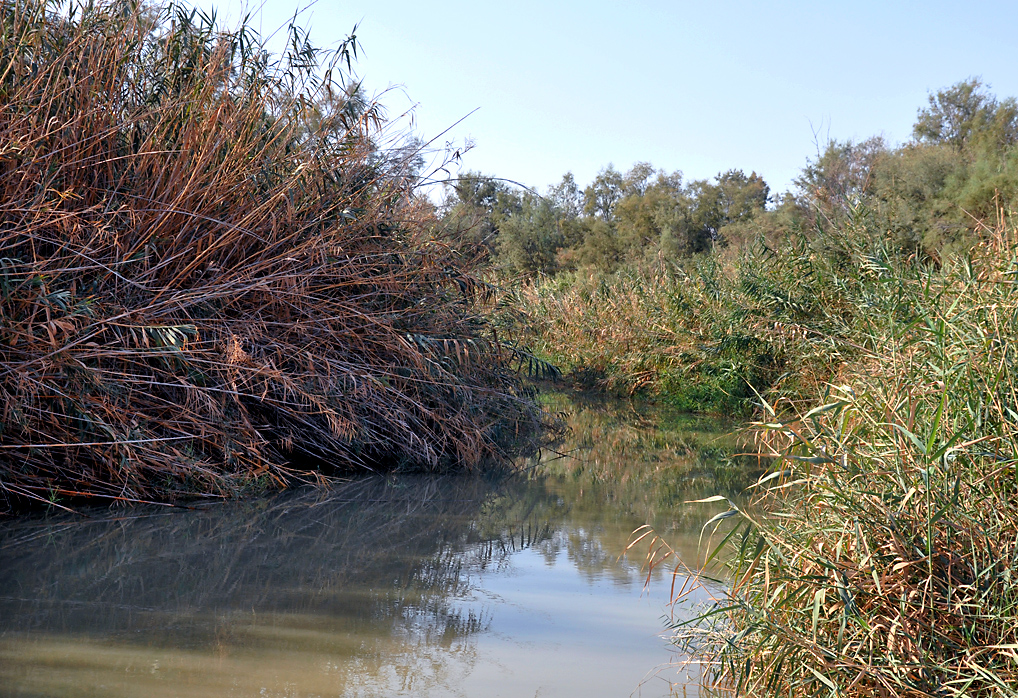
The Jordan River at the site of the baptism of Jesus. View south. Photo by Ferrell Jenkins.

Jordan River at the site of the baptism of Jesus. View south. Photo by Ferrell Jenkins.

We also visited Masada, Qumran, and Jericho.

The traditional group photo

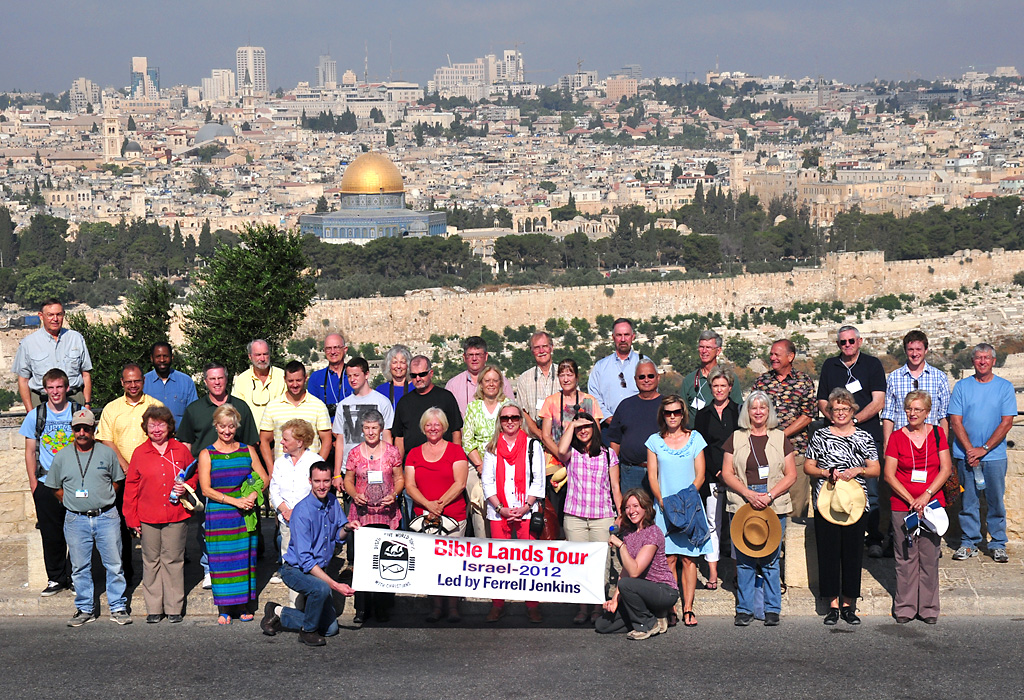
On each tour we try to have at least one group photo made as a souvenir of the tour. Today our photo was made on Mount of Olives with Jerusalem in the background. Three tour members were absent for the photo.

Click on the image for a photo large enough to identify your friends who may be on the tour.

Jenkins Israel 2012 Group Photo from Mount of Olives.

Israel 2012 tour group photo from the Mount of Olives.

The following tour members are posting more photos and information. I encourage you to take a look.

Steven Braman — Braman’s Wanderings
http://bramanswanderings.wordpress.com

Barry Britnell — Exploring Bible Lands
http://exploringbiblelands.com

Trent and Rebekah
http://www.trentandrebekah.com

Jacob’s Well — from Jacob to Jesus

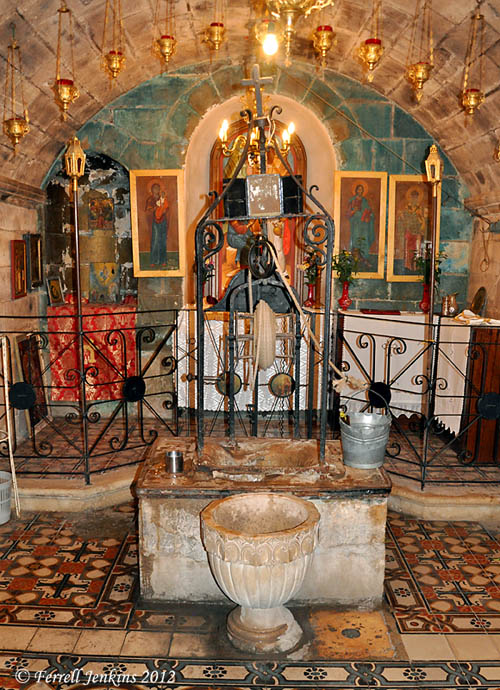
Jesus came to Sychar, a city of Samaria, near the piece of land Jacob had owned (John 4:5; Genesis 33:19). The territory was apportioned to the descendants of Joseph, and Joseph was buried there at Shechem (Joshua 24:32). It was a place of great historic importance.

We are not able to speak with certainty regarding the location of Sychar. Some scholars associate the site with Shechem; others think it should be identified with the village of Askar which is located a short distance north. The traditional Jacob’s Well is located at Shechem in the valley between Mount Gerizim and Mount Ebal. The modern town of Nablus now fills this valley.

André Parrot says,

“Of all the ‘holy places’ of Palestine, none has more reason to be considered authentic than Jacob’s well. Indeed, there is no reason why its authenticity should be questioned” (Land of Christ 65).

Parrot describes the water as “cool and pleasant-tasting…drawn from a depth of 128 feet.” I have drunk the water several times, but in the past couple of decades my guides have advised against it due to pollution in the area.

The Samaritan woman said, “the well is deep” (John 4:11). Parrot reports the well is 128 feet deep. Murphy-O’Connor says it is 22.5 meters deep (about 74 feet). McGarvey cites several measurements mentioned in 19th century writers and reminds us that the well became filled with stones cast in by travelers trying to hear how long it would take a stone to hit the bottom (Lands of the Bible 283). He reports that the well was often dry.

There are numerous springs in the area of Shechem. Jacob, as a late-comer to the region, might have found it necessary to dig a well to assure water for his family and cattle.

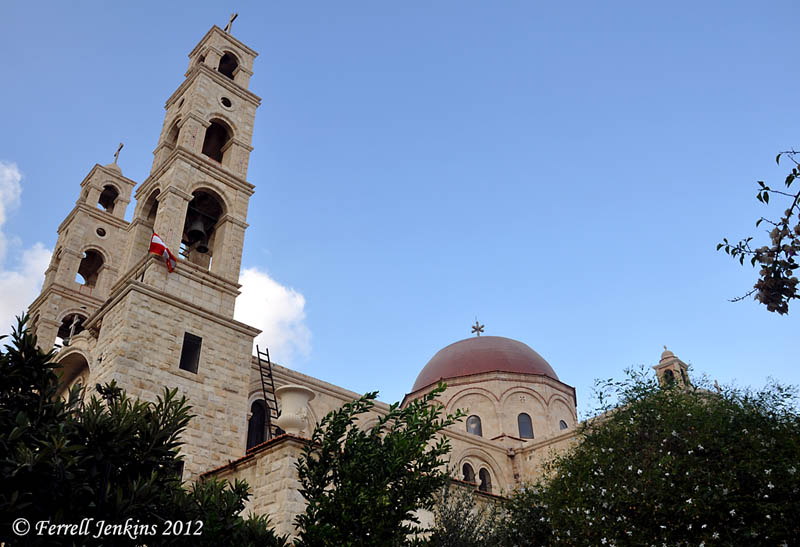
A church was erected over the well about A.D. 380. The Crusaders built another church on the site in the 12th century. The property came under the control of the Greek Orthodox church in 1860. By the end of the 19th century the Greeks began a new church, but construction was halted during World War I. The new building was completed in 2007. This photo shows the towers and dome of the church today.

New Greek Orthodox Church covering Jacob's Well. Photo by Ferrell Jenkins.

New Greek Orthodox Church covering Jacob’s Well. Photo by Ferrell Jenkins.

It has been difficult for groups to visit Jacob’s Well in recent years due to the situation in Nablus and the West Bank. Today we were able to visit the church and make photos.

Jacob's Well. Photo by Ferrell Jenkins.

Jacob’s Well. in a Greek Orthodox Setting. Photo by Ferrell Jenkins.

We had a nice day visiting Beth Shean, Spring of Harod (it was dry); Jezreel, Samaria, as well as Jacob’s Well.

Around the Sea of Galilee

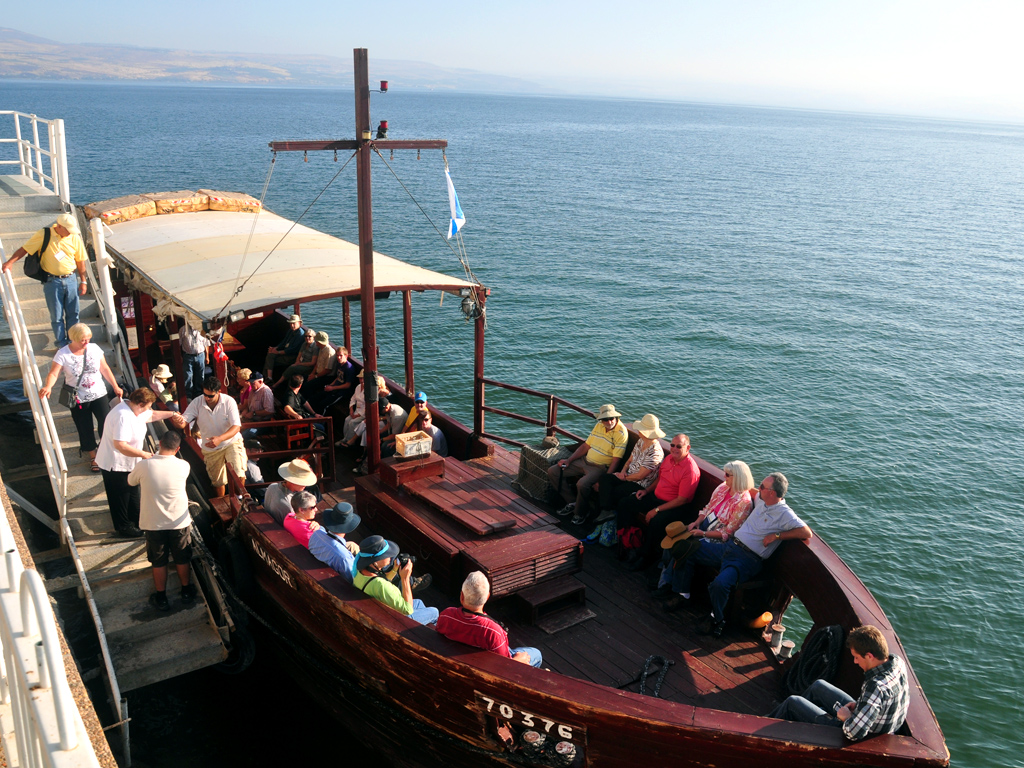
Our great little hotel in Tiberias, the Ron Beach, has its own boarding dock. I was delighted when I learned that the water level was high enough that this could be done. This morning we stepped out of our rooms and walked a few yards to boarded our boat for a ride on the Sea of Galilee.

We board our boat from the Ron Beach Hotel in Tiberias. Photo by Ferrell Jenkins.

We board our boat from the Ron Beach Hotel in Tiberias. Photo by Ferrell Jenkins.

After an orientation from the Sea, we visited major sites around the Sea of Galilee. These included the Roman Boat, Magdala (we actually entered the site, but were not allowed to make photos of the new excavations; it is not ready for tourist yet), Chorzain, Capernaum, the Mount of Beatitudes, the Cove of the Sower, Bethsaida/Geshur, Kursi, and a view of Hippos.

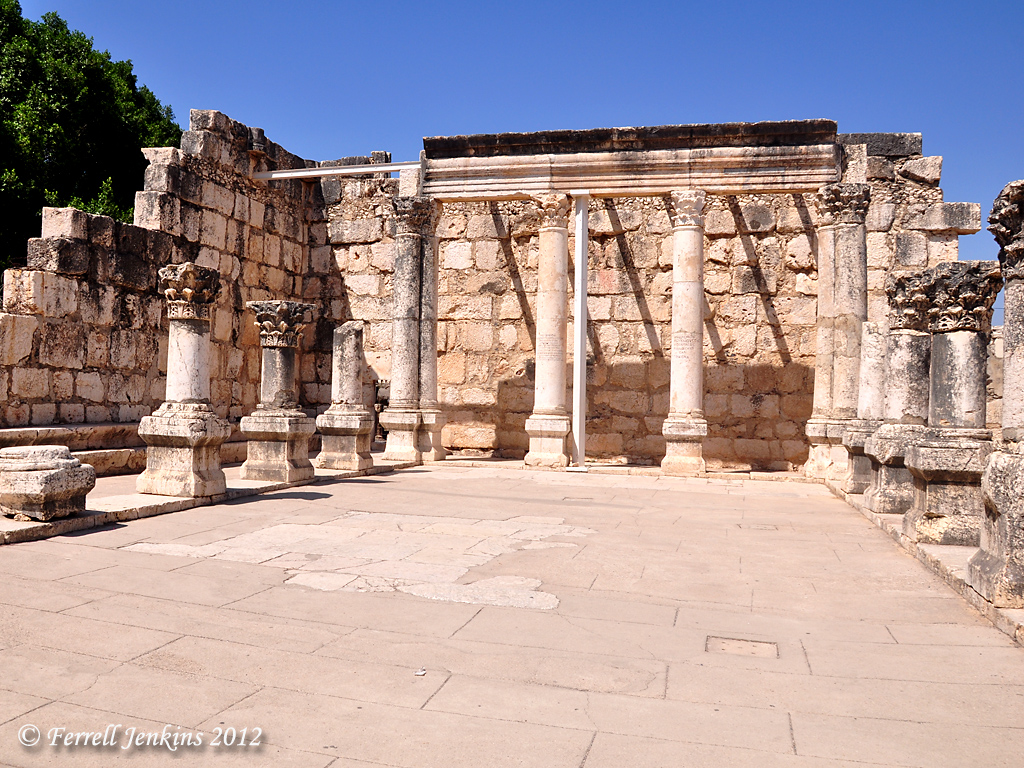
At Capernaum I waited with patience until I was able to get this photo of the interior of the 4th century (reconstructed) synagogue without a tourist in attendance. Not easy, I can tell you.

Interior of the Capernaum Synagogue. Photo by Ferrell Jenkins.

Interior of the Capernaum Synagogue. Photo by Ferrell Jenkins.

To my knowledge everyone in our group is well and enjoying this wonderful educational and spiritual experience.

Peter confesses Jesus to be “the Christ” at Caesarea Philippi

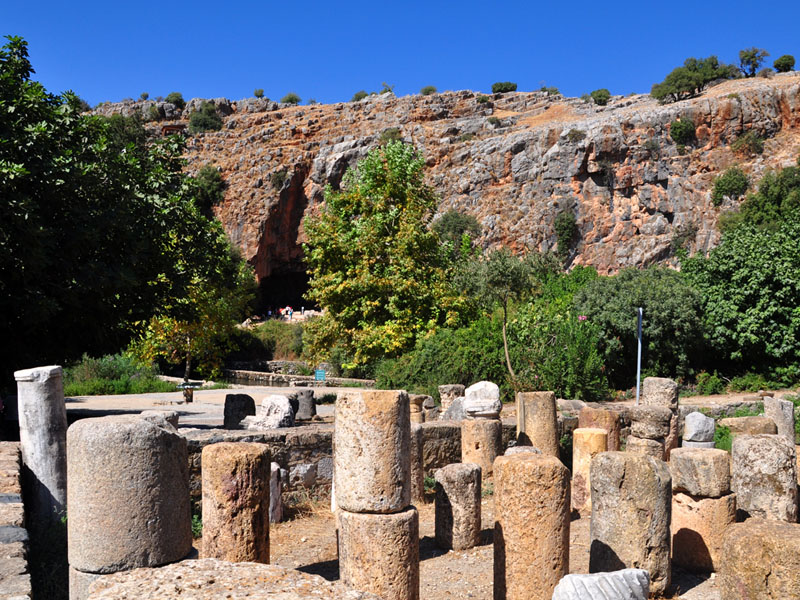
The major sites we visited today included Hazor, Dan, Caesarea Philippi, the Golan Heights, and the Jordan River. Here is a new photo I made at Caesarea Philippi. In the foreground there are broken columns discovered in the excavations at the site. The Banias (or Hermon) River, a major source of the Jordan River,  is hidden by the plants in this photo.

Caesarea Philippi. Photo by Ferrell Jenkins.

Caesarea Philippi. Photo by Ferrell Jenkins.

The Caesarea Philippi of the ministry of Jesus is also known as Banias (Matthew 16:13-19).

Caesarea Philippi is located on the eastern side of the Beka or Hula Valley.  The valley is called the Beka in Lebanon, and a little further south the Hula Valley. The elevation is about 1150 feet above sea level in the foothills of Mount Hermon.

Matthew uses the term district or region to describe the area Jesus visited with His disciples (Matthew 16:13). The King James Version coasts is misleading. Mark’s term is villages (Mark 8:27). It was not far from here that Jesus was confessed as the Christ by Peter.

Jesus went out, along with His disciples, to the villages of Caesarea Philippi; and on the way He questioned His disciples, saying to them, “Who do people say that I am?”  They told Him, saying, “John the Baptist; and others say Elijah; but others, one of the prophets.” And He continued by questioning them, “But who do you say that I am?” Peter answered and said to Him, “You are the Christ.” (Mark 8:27-29 NASB; also read Matthew’s account)

First Temple Public Water Reservoir Exposed in Jerusalem

We have enjoyed a good day visiting in Israel, but I want to share word of this amazing discovery announced today by the Israel Antiquities Authority.

— • —

A Public Water Reservoir Dating to the First Temple Period has been Exposed for the First Time next to the Western Wall

According to Eli Shukron, excavation director on behalf of the Israel Antiquities Authority, “It is now absolutely clear that the Jerusalem’s water consumption during the First Temple period was not solely based on the output of the Gihon Spring, but that it also relied on public reservoirs”

The find will be presented to the public today (Thursday) in the “City of David Studies” conference that will be held in Jerusalem

Massive reservoir discovered near Western Wall in Jerusalem.. Photo by IAA.

Massive reservoir discovered near Western Wall in Jerusalem.. Photo by IAA.

A large rock-hewn water reservoir dating to the First Temple period was discovered in the archaeological excavations that are being conducted in the Jerusalem Archaeological Garden at the foot of Robinson’s Arch. The excavations at the site are being carried out by the Israel Antiquities Authority, underwritten by the ʽIr David Foundation and in cooperation with the Nature and Parks Authority.

The impressive reservoir will be presented today (Thursday) together with other finds from this past year at the 13th annual conference on the “City of David Studies of Ancient Jerusalem” to be held in Jerusalem.

The excavation, during the course of which the reservoir was discovered, is part of an archaeological project whereby the entire drainage channel of Jerusalem dating to the Second Temple period is being exposed. The channel runs north along the City of David spur, from the Siloam Pool to a point beneath Robinson’s Arch. The route of the channel was fixed in the center of the main valley that extends from north to south the length of the ancient city, parallel to the Temple Mount. In his description of Jerusalem in the Second Temple period, Josephus refers to the valley by its Greek name “Tyropoeon”, which scholars believe means “Valley of the Cheese-makers”. Another interpretation identifies the valley with the “Valley of the Decision”, mentioned in the Book of Joel.

It became apparent while excavating the channel that during the construction of this enormous engineering enterprise its builders had to remove earlier structures that were situated along the route of the channel and “pass through” existing rock-hewn installations that were located along it. An extraordinary installation that was exposed in recent weeks is a large water reservoir treated with several layers of plaster, which probably dates to the First Temple period.

The reservoir has an approximate capacity of 250 cubic meters [66,043 U.S. gallons] and is therefore one of the largest water reservoirs from the First Temple period to be discovered so far in Jerusalem, and this was presumably a reservoir that was used by the general public.

According to Eli Shukron, the excavation director on behalf of the Israel Antiquities Authority, “While excavating beneath the floor of the drainage channel a small breach in the bedrock was revealed that led us to the large water reservoir. To the best of our knowledge this is the first time that a water reservoir of this kind has been exposed in an archaeological excavation. The exposure of the current reservoir, as well as smaller cisterns that were revealed along the Tyropoeon Valley, unequivocally indicates that Jerusalem’s water consumption in the First Temple period was not solely based on the output of the Gihon Spring water works, but also on more available water resources such as the one we have just discovered.

According to Dr. Tvika Tsuk, chief archaeologist of the Nature and Parks Authority and an expert on ancient water systems, “The large water reservoir that was exposed, with two other cisterns nearby, is similar in its general shape and in the kind of plaster to the light yellow plaster that characterized the First Temple period and resembles the ancient water system that was previously exposed at Bet Shemesh. In addition, we can see the hand prints of the plasters left behind when they were adding the finishing touches to the plaster walls, just like in the water reservoirs of Tel Be’er Sheva, Tel Arad and Tel Bet Shemesh, which also date to the First Temple period”. Dr. Tsuk says, “Presumably the large water reservoir, which is situated near the Temple Mount, was used for the everyday activities of the Temple Mount itself and also by the pilgrims who went up to the Temple and required water for bathing and drinking”.

The exposure of the impressive water reservoir that lies below Robinson’s Arch joins a series of finds that were uncovered during recent excavations in this region of the city, indicating the existence of a densely built-up quarter that extended across the area west of the Temple Mount and predating the expansion of the Temple Mount. It seems that with the expansion of the Temple Mount compound to the west and the construction of the public buildings and the streets around the Temple Mount at the end of the Second Temple period, the buildings from the First Temple period and early Second Temple period were dismantled in this region and all that remains of them is a series of rock-cut installations, among them the hewn water reservoir.

According to Dr. Yuval Baruch, archaeologist in charge of the Jerusalem Region of the Israel Antiquities Authority, “Upon completion of the excavations along the route of the drainage channel, the IAA will examine possibilities of incorporating the impressive water reservoir in the planned visitors’ path”.

Click here to download high resolution photographs of the reservoir.

HT: Joseph Lauer