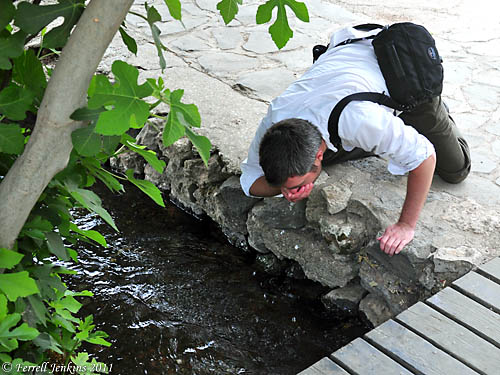
Category Archives: Photography

Antioch of Syria, or is that Turkey?

Antioch of Syria on the Orontes River was founded by Seleucus I Nicator in 300 B.C. Antioch became a Roman city in 64 B.C. and capital of the new province of Syria. It became the third largest city of the Roman Empire after Rome and Alexandria.

After Jerusalem, Antioch was the second great center of Christianity in New Testament times and where the disciples of Christ were first called Christians (Acts 11:19-30; 13:1-3; 14:26-28; 15:1-41; 18:22-23; Gal. 2).

Antioch is now called Antakya and is part of the HatayProvince of Turkey, but is near the border with Syria. The area became part of Turkey in 1939.

The photo below was made from the bridge crossing the Orontes River with a view east toward Mount Silipius. Click on the photo for an image suitable for use in presentations.
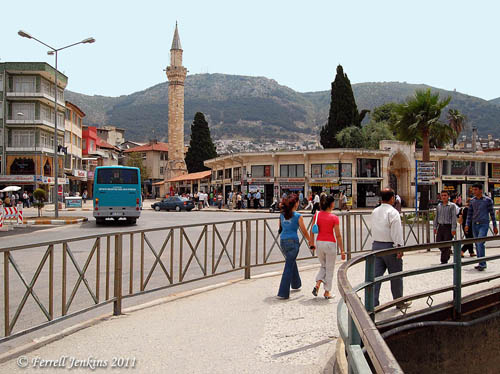
Antakya, Turkey. Antioch of Syria of the New Testament. Photo by Ferrell Jenkins.

View east toward Mount Silpius from the Orontes River. Photo by Ferrell Jenkins.

A church called the Cave Church of St. Peter honors Peter’s visit to the city (Gal. 2). This is a late Roman Catholic addition to the city, having become a Catholic church in 1946. Not the best choice, I think. Peter’s association with Antioch did not turn out too well. At first he ate with the new Gentile converts, but under pressure from James of Jerusalem played the hypocrite and withdrew from the Gentiles.

But when Cephas came to Antioch, I opposed him to his face, because he stood condemned. For before certain men came from James, he was eating with the Gentiles; but when they came he drew back and separated himself, fearing the circumcision party. And the rest of the Jews acted hypocritically along with him, so that even Barnabas was led astray by their hypocrisy. (Galatians 2:11-13 ESV)

I suggest you read Galatians 1 and 2, for a more complete account of this event.

From here the great journeys of Paul to take the Gospel to the Gentile world began (Acts 13:1-2).
Homemade in the Golan Heights

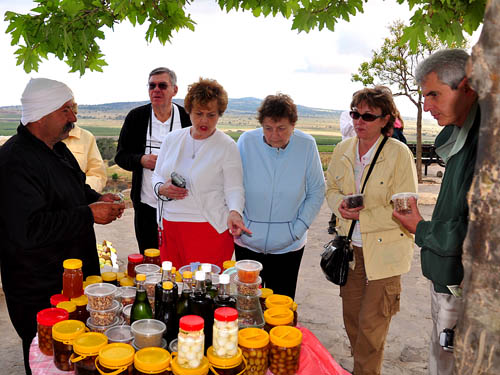
Today I am traveling, but I thought I would share a photo that illustrates one of the educational and sometimes fun things about travel in cultures other than our own. This Arab peddler has set up his table in the Golan Heights at the overlook from Israel into Kuneitra (Quneitra), Syria.

He seems to have a nice variety of the local goodies: olives, olive oil, nuts, and various fruits. Are those pickled eggs? He has already made two sales and it appears he is about to make a third. It can be really chilly in the Golan Heights, even in early May. Some of the potential customers would probably more quickly buy a sweat shirt.

Peddling homemade goodies in the Golan Heights. Photo by Ferrell Jenkins.

Peddling homemade goodies in the Golan Heights. Photo by Ferrell Jenkins.

New excavations at Carchemish

Carchemish is mentioned only a few times in the Bible, but it was one of the most significant cities in the ancient Bible world.

  • Isaiah made a reference to Carchemish (Isaiah 10:9). The city had been sacked by Sargon II in 717 B.C.
  • Pharaoh Necho of Egypt went up to Carchemish on the Euphrates to assist the Assyrians against the Babylonians in 609 B.C. (2 Chronicles 35:20; Jeremiah 46:2). King Josiah of Judah tried to stop him, but was killed.

One of the Babylonian Chronicles says that Nebuchadnezzar “crossed the river to go against the Egyptian army which lay in Carchemish.”

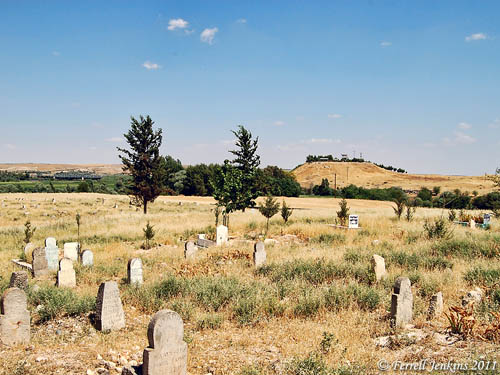
Our photo shows the tell in the distance. The tell is in Turkey today. In the far left of the photo you may see a bridge over the Euphrates River. The bridge crosses into Syria.

Cemetery at Carchemish, Tell in the distance. Photo by Ferrell Jenkins.

Cemetery at Carchemish, Tell in the distance. Photo by Ferrell Jenkins.

We are informed that a new excavation will begin at Carchemish this year. The area has been cleared of 1200 land mines. A few details, along with a photo of some of the land mines, may be viewed here.

HT: Bible Places Blog.

“You offspring of vipers…”

When the Pharisees and Sadducees came to John the Baptist for baptism, John said,

”You offspring of vipers! Who warned you to flee from the coming wrath? (Matthew 3:7 NET; cf. Luke 3:7)

Jesus used the same language of the Scribes and Pharisees.

You snakes, you offspring of vipers! How will you escape being condemned to hell? (Matthew 23:33 NET; cf. 12:34)

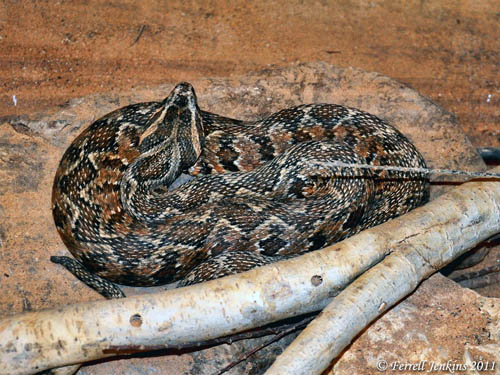
The photo below shows the Palestinian Viper (behind tough plastic!) at the the Hai Bar Animal and Nature Reserve, north of Eilat, Israel.

Palestinian Viper at the HaiBar Reserve near Eilat, Israel. Photo by Ferrell Jenkins.

Palestinian Viper at the HaiBar Reserve near Eilat, Israel. Photo by Ferrell Jenkins.

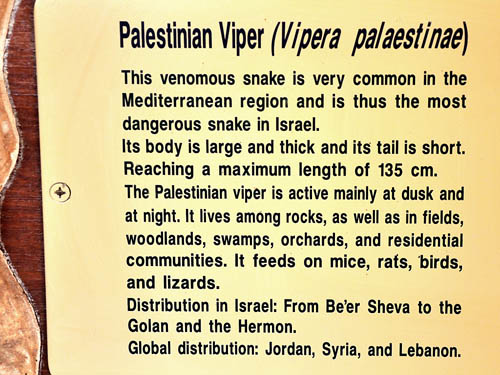
The sign at the Reserve gives some explanation about this poisonous viper.

Description of the Palestinian Viper at HaiBar Reserve.

A visit to Hai Bar is a wonderful experience. The kids will love it, too.

The pot may be calling the kettle black

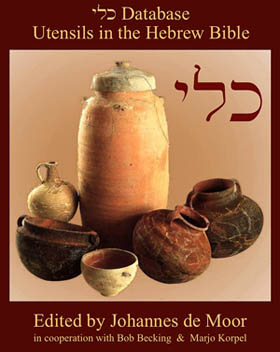
KLY Website - Dutch society for Old Testament Studies.The Dutch society for Old Testament study (OTW), after ten years of planning and work, has put online a research project to “elucidate the names of utensils in biblical Hebrew making methodical use of partially new approaches.”

The new web site, KLY, is written in the Dutch language, but there is an introduction in English. Here is a portion of it:

The problem with identifying utensils in the Hebrew Bible is that their common everyday use made it superfluous to provide detailed descriptions of the vessels or implements in written form. Everyone knew from experience what was meant. As a result dictionaries of biblical Hebrew often have to content themselves with non-descript generalizations like “bowl”, “jar”, “pot”, “knife”. Mostly the shape and purpose of a given utensil can not be established on the basis of context alone because the number of occurrences is too low. Archaeology has brought to light large quantities of pottery and implements, but in many cases we do not know which word in ancient Hebrew was used for the object unearthed.

Meanwhile the possibilities for resolving such problems have increased dramatically. Not only archaeology, but also comparative linguistics, iconography, anthropology, improved understanding of the ancient versions of the Bible have enhanced our chances to come closer to the precise nature of the objects.

Some knowledge of Hebrew will be helpful, but English-only readers will be able to go to the KLY database, click on a Hebrew letter, and see the terms considered with the English usage. From there you can move to the dictionary entry on the term. The entries are in Hebrew and English. Distribution of each term in the Torah (Law), Nebiim (Nevi’im, prophets), and Ketubim (Writings) is given.

As a future project, an English Index could make this an extremely valuable  project for many more readers.

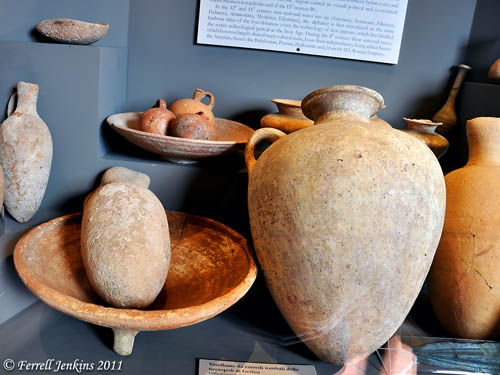
MB2 Pottery from Jericho. Vatican Museum. Photo by Ferrell Jenkins.

MB2 Pottery from Jericho. Vatican Museum. Photo by Ferrell Jenkins.

It would be possible for an energetic person to download all of the PDF entries and compile them into one document. This would make for easy searching.

If our Dutch friends and colleagues miss the English idiom used as a title for this blog, the definition is given here.

Idiom Meaning — Accusing a person of a misdemeanour whilst the accuser is guilty of the same thing.

I am using the title to suggest we may be using the wrong term for certain biblical pots and pans. The KLY Database of Utensils in the Hebrew Bible will help us not to make the mistake again.

Thanks for the help.

: J.P. van de Geissen, Aantekeningen bij de Bijbel

Follow-up on fake tomb stones

The following comment by Carl Rasmussen is being elevated to a more prominent place here.

The “tombs” above the pool of Siloam are now labeled as “Children’s Cemetary!” Yes, something “fishy” is going on!

Leen Ritmeyer followed up on the subject here, and with several photos taken less than a month ago by his son Nathaniel here. It seems clear from some of the photos that the stones are not attached to any tomb. In fact there are no typical tombs at the site above the Pool of Siloam.

The final photo was taken 29 May 2009 when no tombs were visible.

A grave matter

Ancient burial places create serious problems for archaeologists. Ultra-Orthodox Jews often create a scene at digs when they know or suspect that there may be Jewish tombs in the area.

The cemeteries of the Holy Land have become a ground for religious and political skirmishes. Leen Ritmeyer reported on fake Arab tombs near the Temple Mount here.

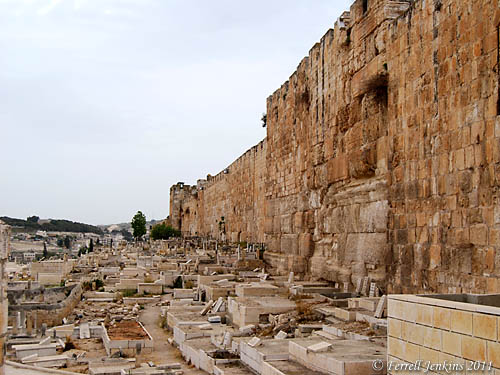
Muslim tombs have been on the eastern wall of the Old City for a long time. This photo was made looking south from outside the Lion’s Gate (or St. Stephens’ Gate). Perhaps every reader knows that this is across the Kidron Valley from the Mount of Olives which we mentioned in the previous post.

Muslim Cemetery along the East Wall of the Old City near Lion's Gate. Photo by Ferrell Jenkins.

Muslim Cemetery along the Eastern Wall of the Old City of Jerusalem near Lion's Gate. Photo by Ferrell Jenkins.

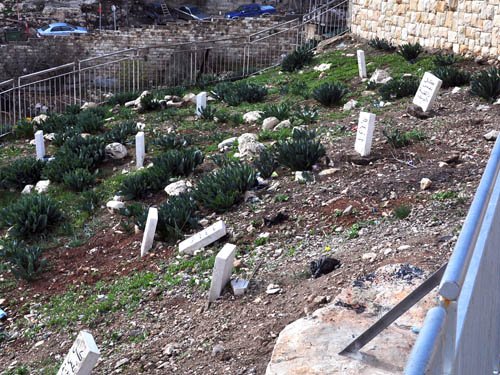
In early February I noticed a large number of new tombstones with Arabic inscriptions in a small plot above the Pool of Siloam. Suspicious, to say the least.

New Tombstones above the Pool of Siloam. Photo by Ferrell Jenkins.

New Tombstones above the Pool of Siloam. Photo by Ferrell Jenkins.

Later, if not sooner, all of these matters will become obvious.

“Do not marvel at this; for an hour is coming, in which all who are in the tombs will hear His voice, and will come forth; those who did the good deeds to a resurrection of life, those who committed the evil deeds to a resurrection of judgment. (John 5:28-29 NAU)

Cemetery on the Mount of Olives

The Washington Post reports here on US and Israeli efforts to end the desecration of Jewish graves on the Mount of Olives. Both religious and political considerations are mentioned.

It is amazing to view the Mount of Olives and see how much of the mountain is now covered with graves. This aerial view may help you to visualize the situation.The cemetery under discussion is shown in the lower right quarter of this photo.

Jerusalem - the Old City and the Mount of Olives. Photo by Ferrell Jenkins.

Jerusalem - the Old City and the Mount of Olives. Photo by Ferrell Jenkins.

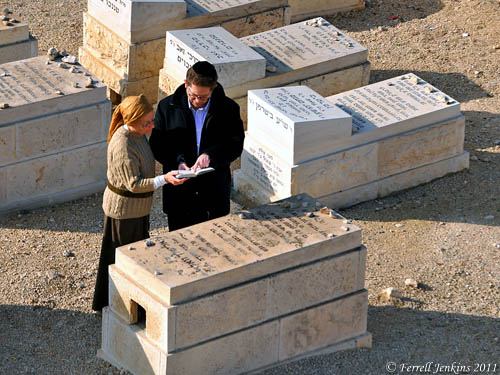
Sometimes when we look at the big picture we miss some important details. The next photo puts a human face and emotion on the situation.

Cemetery on the Mount of Olives. Photo by Ferrell Jenkins.

Cemetery on the Mount of Olives. Photo by Ferrell Jenkins.

At the time of Absalom’s rebellion, David crossed the Mount of Olives as he fled Jerusalem.

But David went up the ascent of the Mount of Olives, weeping as he went, barefoot and with his head covered. And all the people who were with him covered their heads, and they went up, weeping as they went. (2 Samuel 15:30 ESV)

HT: Paleojudaica.

Ancient lands and thousand of years of history

U.S. Army Colonel Doug Wheelock has been posting fabulous photos from space on his Twitter account under the name Astro_Wheels. You must begin a Twitter account in order to see all of the high resolution photos. Several of the photos could be helpful in teaching and understanding the Bible world.

NASA says that Whitlock,

flew aboard the Soyuz TMA-19 spacecraft to serve as an Expedition 24 flight engineer and commander of Expedition 25 on the International Space Station. In 2007, Wheelock visited the station as an STS-120 mission specialist and conducted three spacewalks.

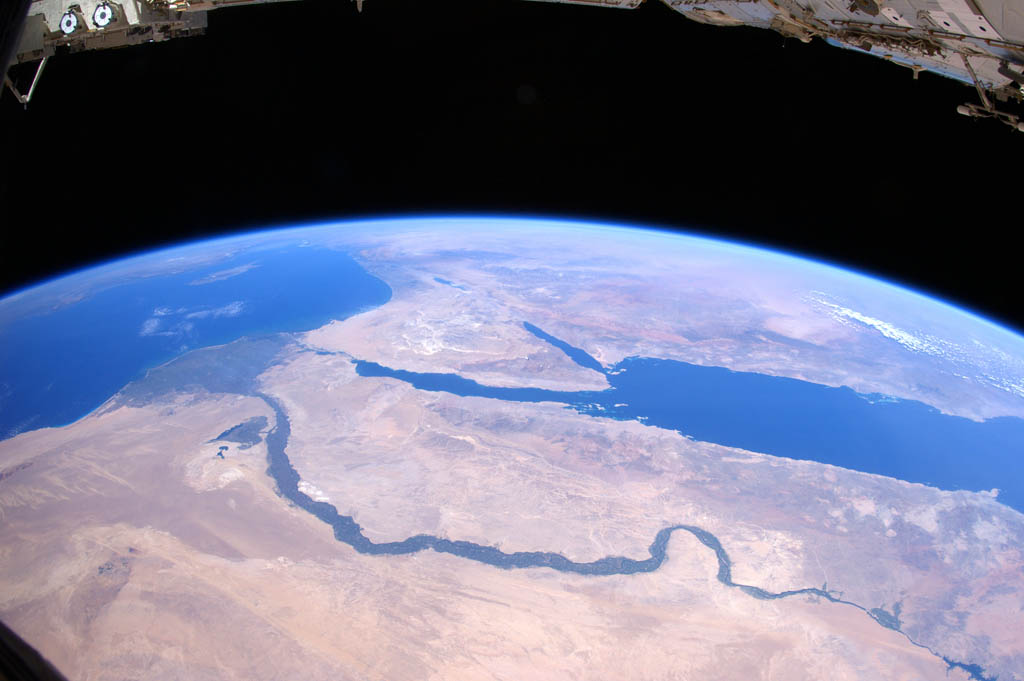
The photo below was made over the Shaara Desert. For the high resolution photo click here.

Over the Sahara Desert from space. Doug Wheelock. NASA.

Over the Sahara Desert from space. Doug Wheelock. NASA.

Here is the description of the photo given by Wheelock on Twitpic:

Over the Sahara Desert approaching ancient lands and thousands of years of history. The Nile River flowing through Egypt past the pyramids of Giza up to Cairo in the delta; the Red Sea, Sinai Peninsula, Dead Sea; Jordan River; and the Sea of Galilee are visible, as are the island of Cyprus in the Mediterranean Sea and Greece coming over the horizon.

It is difficult to see the Sea of Galilee in the small photo, but you can see it if you look at the largest resolution available at the Twitpic site.

Many of Wheelock’s photos are available on various web sties that have taken the time to download and post them. Just search Google for something like “Wheelock space photos.”

Might as well enjoy these photos. If you are a USA citizen you helped pay for them.

HT: John Gresham

Banias — easternmost source of the River Jordan

The Nahr (River) Banias is the easternmost source of the River Jordan. The source of the Banias is located at a site we know as Caesarea Philippi in the New Testament. It is well known to those who study the ministry of Jesus (Matthew 16:13-19).

Banias is located on the eastern side of the Beka or Hula Valley.  The valley is called the Beka in Lebanon, and a little further south the Hula Valley. The elevation is about 1150 feet above sea level in the foothills of Mount Hermon.

The photo below shows the place where the water emerges from the earth. Perhaps you are reminded of the text from the prophet Jeremiah:

for my people have committed two evils: they have forsaken me, the fountain of living waters, and hewed out cisterns for themselves, broken cisterns that can hold no water. (Jeremiah 2:13 ESV)

Getting a drink at the source. River Banias, Caesarea Philippi.

Getting a drink at the source. River Banias, Caesarea Philippi. Photo by Ferrell Jenkins.

Other posts about this site are listed below. Check them all.

Three other rivers we have recently mention, Flea River, the Senir, and the Dan, join with the Banias to form the River Jordan.