Category Archives: Old Testament

Searching for Sodom — in the sea and on the land

The search for the city of Sodom has become as elusive and controversial as the search for Noah’s ark. From Genesis to Revelation the Bible calls attention to the city of Sodom. It is first mentioned in Genesis 10:19; the last reference is in Revelation 11:8. The wickedness and destruction of the city became a symbol of final destruction throughout the Bible. Isaiah spoke concerning Judah and Jerusalem:

If the LORD of hosts had not left us a few survivors, we should have been like Sodom, and become like Gomorrah. (Isaiah 1:9 ESV)

The apostle Paul picks us the same theme in Romans 9:29.

The emphasis on Sodom, and the inability to visit a specific site only heightens the curiosity.

Dr. Steven Collins, Dean, College of Archaeology, Trinity Southwest University, thinks that Tall el-Hammam is the site of Sodom. Info about the excavation project may be located here. Other scholars suggest that Tall el-Hammam is the site of Abel-shittim (Numbers 33:49; Shittim, Numbers 25:1), in the plains of Moab. See Rainey and Notley, The Sacred Bridge, 125. The Israelite spies went out from here to view the promised land, especially Jericho (Joshua 2:1).
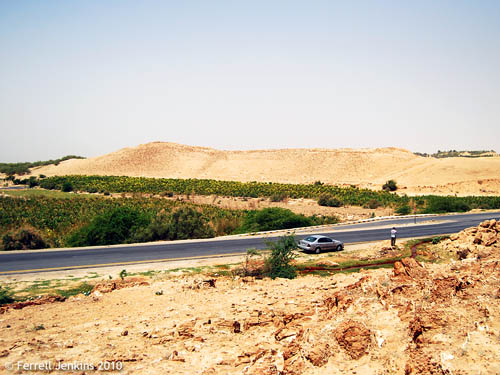
Tall el-Hammam in the Jordan Valley of Jordan. Photo by Ferrell Jenkins.

Tall el-Hammam in the Jordan Valley of Jordan. Photo by Ferrell Jenkins.

Earlier in the month the media reported (here, for example) that a Russian team was planning to begin an underwater exploration of the northeast portion of the Dead Sea — that is, on the Jordan side of the Dead Sea.

In the past it has been common for scholars to suggest that Sodom were located in (or at) the southern end of the Dead Sea at Bab edh-Dhra.

The excavation at Tall el-Hammam is now in progress. Dr. David Graves has been working there for several years. He has also been looking for the Roman site of Livius. I wish to call attention to several things Graves has mentioned recently on his Deus Artefacta blog.

  • A video of Dr. Collins setting forth his argument for the location of Sodom and Gomorrah at Tall el-Hammam. Click here.
  • The front team for the current season of excavation. Click here.
  • Someone from the Russian team was to visit Tall el-Hammam.
  • Season Six Begins at Tall el-Hammam video. Click here.
  • Gary Byers, Assistant Dig Director, on December 23 reported more details about the Russian proposal. Read the entire report here. It appears that the Russian team is making claims greater than the reality.

The site marked Abel-Shittim on the map below is known today as Tall el-Hammam. You may see a larger map at BibleAtlas.org.
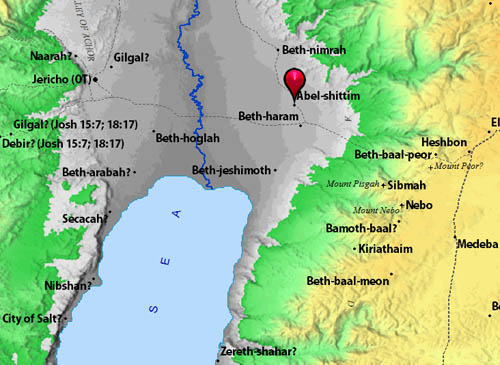
Site of Abel-Shittim in the Jordan Valley. BibleAtlas.org.

Site of Abel-Shittim in the Jordan Valley. BibleAtlas.org.

I’m not convinced yet, but I’ll continue to watch.

Bethlehem — home of David and Jesus

A little more than two years ago we wrote about Bethlehem as the birthplace of Jesus here. We will follow the example of Paul, Peter and Jude to remind our readers of some things we already know (Romans 15;15; 1 Corinthians 4:17; 2 Timothy 2:14; 2 Peter 1:12; Jude 1:5; et al.).

  • During the Patriarchal period the town we know as Bethlehem was called Ephrath (Genesis 48:7; 35:9-27).
  • Later, as part of the territory allotted to the tribe of Judah, it was the home of Ruth and Boaz and became the birthplace and early home of David (1 Samuel 17:12, 15).
  • The town was sometimes called the “city of David” (Luke 2:4, 11), but is most famous as the birthplace of Jesus (Micah 5:2; Luke 2:4-15; Matthew 2:1-16).

When one visits the Bible lands today he must realize that 2,000 years of history, involving both repeated building and the destruction of what has been built, has left nothing to remind one of the original place where Jesus was born. Justin Martyr (ca. A.D. 160) said Joseph “took up his quarters in a certain cave near the village.” Origen (mid-third century) said the cave where Jesus was born was being shown and even the enemies of the faith were talking of it. Jerome, a resident of Bethlehem (A.D. 386-420), tells how the birthplace of Jesus and other places associated with the ministry of Jesus were defiled from the time of Hadrian to the reign of Constantine. The Church of the Nativity now stands at this spot.

This photo shows the exterior of the Church of the Nativity.

Exterior of the Church of the Nativity, Bethlehem. Photo by Ferrell Jenkins.

Exterior of the Church of the Nativity, Bethlehem. Photo by Ferrell Jenkins.

My wife saved a portion of our local paper for me last Sunday. The headline says, “Peace swells Bethlehem tourism.” All of the town’s hotel rooms are booked solid for Christmas. Last year 70,000 visited Bethlehem for Christmas, but the number is expected to be “up strongly” this year.

If you have more interest in learning about the origin of the celebration of Christ, take a look here. A more detailed study of the historical aspects of the celebration is available in PDF here.

Time for family and manatees

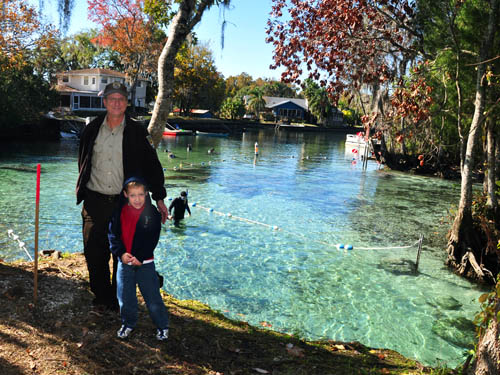
Monday and Tuesday we spent the time with our grandson. Last February we took him to the Manatee Viewing Center on Tampa Bay. Monday we went north of Tampa to Crystal River and the Chassahowitzka National Wildlife Refuge. My former student and friend, Michael Lusk, is the Refuge Manager. He took us into some areas not normally accessible to the public.

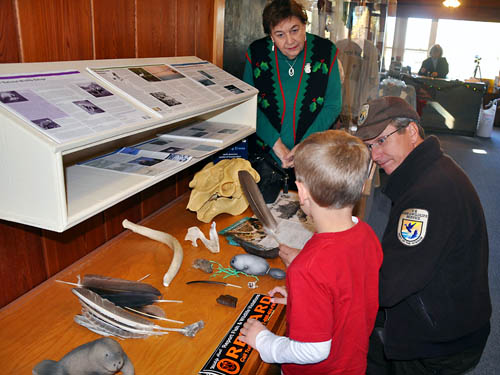
We started our visit at the Visitor’s Center, where we learned about the manatees and others animals that visit the refuge center or make it their home.

Visitors Center Chassahowitzka National Wildlife Refuge

Visitors Center at Chassahowitzka National Wildlife Refuge.

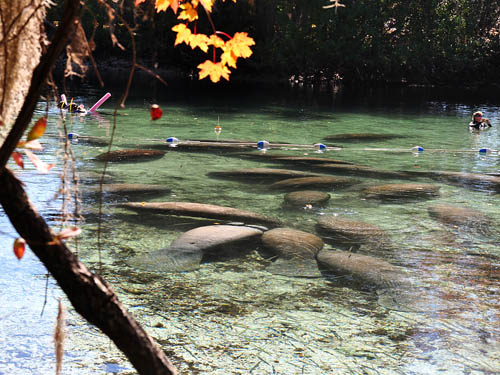
Because the water was at low tide it appears that the manatees are resting on the bottom of the inlet. People are allowed to swim with the manatees, but not in the roped off area.

Manatees at Chassahowitzka National Wildlife Refuge. Photo by Ferrell Jenkins.

Manatees at Chassahowitzka National Wildlife Refuge. Photo by Ferrell Jenkins

From another point we have a clearer view of the manatees.

Manatees at Chassahowitzka National Wildlife Refuge

Manatees at Chassahowitzka National Wildlife Refuge. Photo by Ferrell Jenkins.

We wrote about the manatees here, and called attention to the claim that they are related to the elephant and the hydrax.

“The closest animal relative to the manatee is the elephant and the hydrax (a small gopher-size mammal).”

The hydrax or Rock Badger is mentioned in the book of Proverbs among things that are small, but exceedingly wise. There is a great lesson here. Even though they are not mighty, they build their homes in secure places. This is similar to the teaching of Jesus in Matthew 7:24-25. Notice the reading of  Proverbs 30:26 in a few of the English translations:

The shephanim are not mighty people, Yet they make their houses in the rocks; (NAU)

rock badgers are creatures with little power, but they make their homes in the crags; (NET)

the rock badgers are a people not mighty, yet they make their homes in the cliffs; (ESV)

hyraxes are not a mighty people, yet they make their homes in the cliffs; (CSB)

Rock Badger at En Gedi. Photo by Ferrell Jenkins.

Rock Badger at En Gedi. Photo by Ferrell Jenkins.

Opportunity to win Pictorial Library

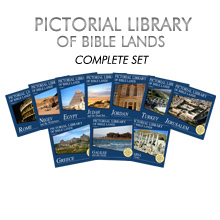
We have repeatedly recommended the Pictorial Library of the Bible Lands. Todd Bolen is giving away two 10-volume sets of this valuable resource. You have until Sunday at 5 p.m. to enter the drawing.

The Pictorial Library is being offered at a 20% discount for the first time. This offer extends through Sunday.

Full details are available at the Bible Places Blog here.

Storm uncovers beautiful sculpture

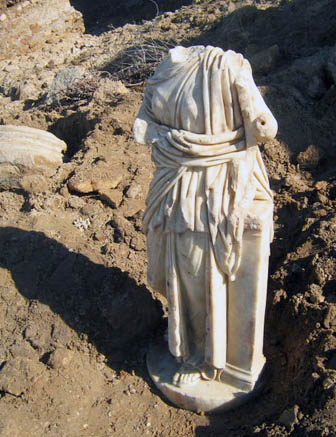
The recent storms in the eastern Mediterranean have caused considerable damage along the coast. At Ashkelon, located on Israel’s southern Mediterranean coast, the high waves uncovered a Roman-era statue.

Roman-era statue uncovered by storm at Ashkelon. Photo: IAA.

Roman-era statue uncovered by storm at Ashkelon. Photo courtesy of Israel Antiquities Authority.

France 24 International News reports here,

A massive storm that battered the eastern Mediterranean caused the collapse of a cliff in the southern Israeli city of Ashkelon, revealing a rare Roman-era marble statue, officials said on Tuesday.

“The big storm earlier this week caused the cliff to collapse and a statue from Roman times was found by a passer-by,” said Yoli Schwartz, spokeswoman for the Israel Antiquities Authority.

The white marble statue of a woman, which weighs about 200 kilogrammes (440 pounds) and stands 1.2 metres (nearly four feet) tall, has been removed from the site by the authority, which is studying it, she said.

The statue was missing its head and arms, apparently from earlier damage, but had “delicately carved sandals,” Schwartz told AFP.

The storm that hit the eastern Mediterranean earlier in the week with winds of over more than 100 kilometres per hour (62 miles per hour) whipped up enormous waves, some as high as 12 metres (40 feet), that caused widespread damage.

While the collapse of the cliff in Ashkelon led to the discovery of the statue, the storm also endangered other important archaeological sites along the coast.

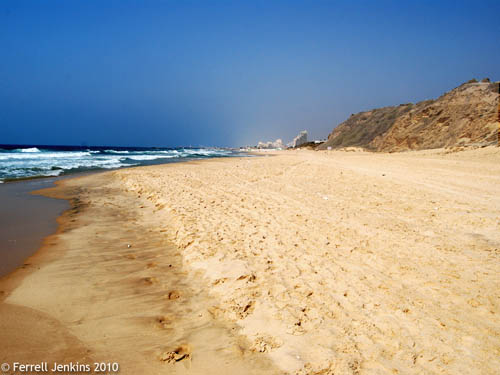
The reports I have read do not make it clear if this discovery was made at Tel Ashkelon. The port is mentioned. Damage to archaeological sites, both natural and man-made, are not uncommon. In fact Tel Ashkelon has been severely eroded by the wind and the waves over the years. This photo shows the location of the tel as we look north. Some of the buildings of modern Ashkelon may be seen in the distance.

Tel Ashkelon and the Mediterranean Sea. Photo by Ferrell Jenkins.

Ashkelon and the Mediterranean Sea. Photo by Ferrell Jenkins.

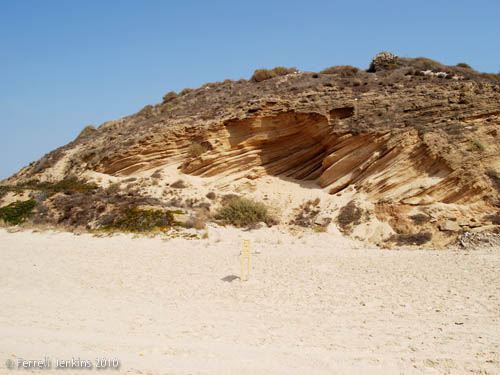
Take a look at the erosion in the west side of the tel. Shards of pottery may be seen in the exposed portion of the tel and along the beach. Some shards show evidence of having been repeatedly washed out and in.

Erosion visible in Tel Ashkelon. Photo by Ferrell Jenkins.

Erosion visible in Ashkelon. Photo by Ferrell Jenkins.

Ashkelon was one of the main cities of the Philistines. The LORD spoke against the Philistine cities through the prophet Jeremiah (ch. 47). These verses caught my attention.

How long will you cry out, ‘Oh, sword of the LORD, how long will it be before you stop killing? Go back into your sheath! Stay there and rest!’ But how can it rest when I, the LORD, have given it orders? I have ordered it to attack the people of Ashkelon and the seacoast. (Jeremiah 47:6-7 NET)

HT: Joseph I. Lauer

Scholar claims evidence for Toi king of Hamath

King Toi of Hamath is mentioned in two Biblical texts.

Now when Toi king of Hamath heard that David had defeated all the army of Hadadezer, Toi sent Joram his son to King David to greet him and bless him, because he had fought against Hadadezer and defeated him; for Hadadezer had been at war with Toi. And Joram brought with him articles of silver, of gold and of bronze. (2 Samuel 8:9-10 NAU)

See also 1 Chronicles 18:9-10 where he is mentioned under the name Tou.

Prof. Aren Maeir reports on his Gath blog that Prof. Itamar Singer called his attention to an article by “C. Steitler (“The Biblical King Toi of Hamath and the Late Hittite State of ‘P/Walas(a)tin’”. Biblische Notizen 146 [2010]: 81-99) in which the author claims that one can identify the recently identified King Tatais, king of P/Walas(a)tin (from new inscriptions in Syria), with Toi, king of Hamath, mentioned in II Sam 8, 9-10; I Chr 18, 9-10.”

Maeir gives this brief summary of the article:

“David’s alliance with Toi, king of Hamath (2Sam 8,9-10) can be anchored in the historical context of Syria. Recent archaeological and philological studies have demonstrated the continuity between the Hittite Great Empire and the late Hittite kingdom, P/Walas(a)tin, to which Hamath belonged. Based on historical and onomastic analyses, the biblical Toi should be identified with a king of P/Walas(a)tin, Taitas.”

Take a look at Prof. Maeir’s observations here. This will be a great story to follow.

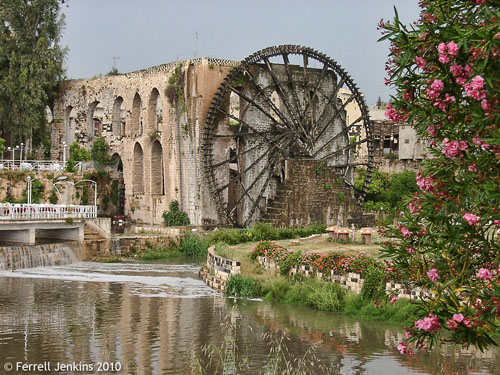
Hamath is associated with the modern city of Hama on the Orontes River in Syria. The city is noted for its norias. These waterwheels were used for several centuries to divert water from the river for agricultural purposes. Today those that remain are mostly decorative.

One of the Norias on the Orontes River at Hama, Syria. Photo by Ferrell Jenkins.

One of the norias on the Orontes River at Hama, Syria. Photo by Ferrell Jenkins.

Sunset on the Nile

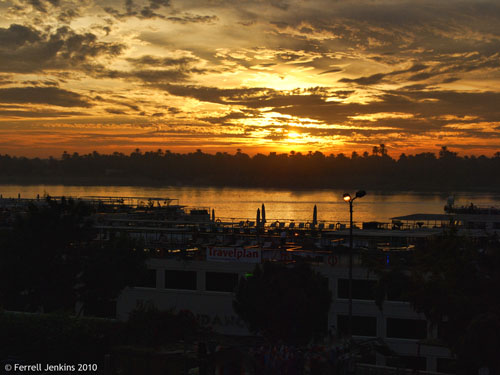
Our photo today was made from the temple at Kom Ombo overlooking the Nile River. The temple here was built by the Ptolemies in the 4th century B.C.

Sunset on the Nile at Kom Ombo. Photo by Ferrell Jenkins.

Sunset on the Nile at Kom Ombo. Photo by Ferrell Jenkins.

The biblical prophets warned that ancient Egypt would come to an end. By the time of the Ptolemies, successors to Alexander the Great, the power of the ancient empire was slowly slipping away.

This is what the Lord God says: I will destroy the idols and put an end to the false gods in Memphis. There will no longer be a prince from the land of Egypt. So I will instill fear in that land. (Ezekiel 30:13 CSB)

Sharks at Sharm el-Sheikh in the Sinai

Even our local TV news is reporting on the shark attacks at Sharm el-Sheikh in Egypt. Sharm el-Sheikh is located  on the tip of the Sinai Peninsula. The Huffington Post includes numerous links for those who have an interest in this subject here.

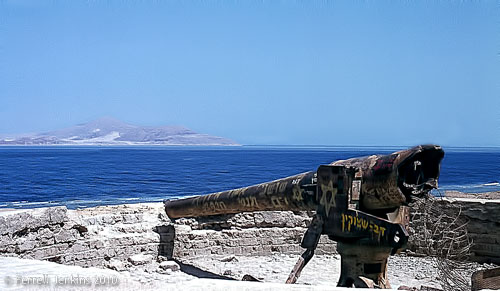
I have been in the Sinai peninsula several time, but have visited Sharm el-Sheikh only once in 1973. At that time the Sinai was under Israeli control. The site played an important role in the June War of 1967. The United Arab Republic closed the Straits of Tiran to Israeli shipping and blockaded all ships headed for Eilat. This narrow waterway and one of the Egyptian guns is seen in the old photo I made. Today Israel and Egypt share diplomatic relations and the Sinai is under Egyptian control. Sharm el-Sheikh is one of Egypt’s most popular resorts.

Egyptian gun taken by Israel at the Straits of Tiran in 1967. Photo by Ferrell Jenkins.

Egyptian gun taken by Israel at the Straits of Tiran in 1967. Photo by Ferrell Jenkins.

The Sinai is significant in biblical history because the traditional location of Mount Sinai is located there, equated with Jebel Musa.

The glory of the LORD settled on Mount Sinai, and the cloud covered it for six days. On the seventh day He called to Moses from the cloud. (Exodus 24:16 CSB)

Scholars are not in agreement on the location of Mount Sinai. In the beautiful revised edition of the Zondervan Atlas of the Bible, geographer Carl G. Rasmussen says,

… there are at least twelve different candidates for Mount Sinai: five in the southern part of the peninsula, four in the north, one in the center, one in Midian (Saudia Arabia), and another in Edom (southern Transjordan). — page 103

Uriah’s trip from Jerusalem to Rabbah

Last evening I was looking at the biblical account of David’s battles against the Ammonites (2 Samuel 10-11).

In the spring of the year, at the time when kings normally conduct wars, David sent out Joab with his officers and the entire Israelite army. They defeated the Ammonites and besieged Rabbah. But David stayed behind in Jerusalem. (2 Samuel 11:1 NET)

You probably know the rest of the story. David is attracted to Bathsheba, commits adultery, learns Bathsheba is pregnant, calls Uriah home in hope that he will spend the night with Bathsheba. Uriah acted in the true warrior way by not enjoying the benefits of the marriage bed while his companions were camping in the open field. David sent Uriah back to the battle with a letter to Joab to put Uriah in the forefront of the battle.

Have you thought about the journey made by Uriah and the other Israelite soldiers as they traveled from Jerusalem to Rabbah and back? You know where Jerusalem is located. It is situated on the eastern side of the water parting ridge of Israel at an elevation of about 2400 feet above sea level. Numerous times we have discussed the journey from Jerusalem to the Jordan Valley. See here and here.

The distance from Jerusalem to the Dead Sea is not more than 20 miles. The elevation drops from about 2600 feet at the Mount of Olives to (currently) about 1384 feet below sea level at the surface of the Dead Sea. The point of crossing at the Jordan River would be a little higher. From there one must go up into the Transjordan Tableland to reach Rabbah. The general elevation of the Transjordan Tableland is about 3000 feet above sea level. Amman is about 2500 feet above sea level. That makes this a difficult route of travel.

Rabbah (Rabbath), the capital of ancient Ammon, is the site we now know as Amman, capital of Jordan. During the Hellenistic period the city was renamed Philadelphia.

The total distance from Jerusalem to Rabbah is about 40 miles as the crow flies. Men rarely travel like crows. The distance by road is longer and more difficult.

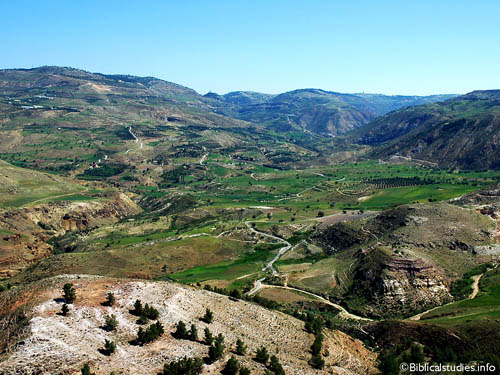
The photo I wish to share today was made in early April. It was made along a road a little east of the Jordan Valley and the Plains of Moab. From here you can see the terrain David’s men, including Joab and Uriah, had to travel on their way from Jerusalem to Rabbah. Modern Amman is located in the mountains we see on the horizon.

View looking east toward Amman. Photo by Ferrell Jenkins.

View looking east toward Amman. Photo by Ferrell Jenkins.

Learning routes of travel is one of the most important values in visiting the Bible lands. I hope this photo will help you with your study of the biblical account.

More about the first preaching on Pentecost

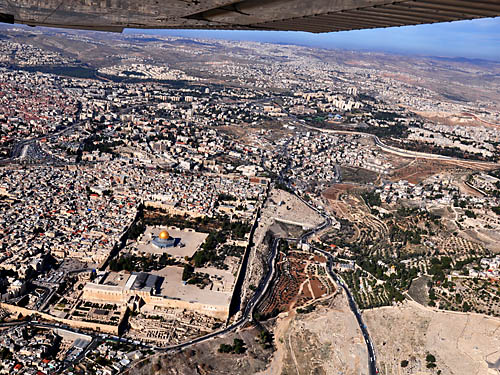
In this aerial view of Jerusalem you can see the Temple Mount enclosure and most of the Old City of Jerusalem. The Kidron Valley and the western slope of the Mount of Olives is visible on the right of the photo.

Aerial view of Jerusalem looking NE. Photo by Ferrell Jenkins.

Aerial view of Jerusalem looking NE. Photo by Ferrell Jenkins.

The photo below is a cropped portion of the image with emphasis on the Temple Mount.

The Temple Mount enclosure from the south. Photo by Ferrell Jenkins.

A closer view of the Temple Mount enclosure from the south. Photo by Ferrell Jenkins.

Herod the Great began to rebuild the existing postexilic temple on a grander scale about 20 B.C. Work had been going on for 46 years in the early days of the ministry of Jesus.

Then the Jewish leaders said to him, “This temple has been under construction for forty-six years, and are you going to raise it up in three days?” (John 2:20 NET)