Category Archives: Old Testament

Exploits of Samson

The exploits of Samson are well known to Bible students. Samson was a strong man who was unable to control his own desires. One of the best known stories about him is recorded in Judges 15.

So Samson went and caught 300 foxes and took torches. And he turned them tail to tail and put a torch between each pair of tails.  And when he had set fire to the torches, he let the foxes go into the standing grain of the Philistines and set fire to the stacked grain and the standing grain, as well as the olive orchards. (Judges 15:4-5 ESV)

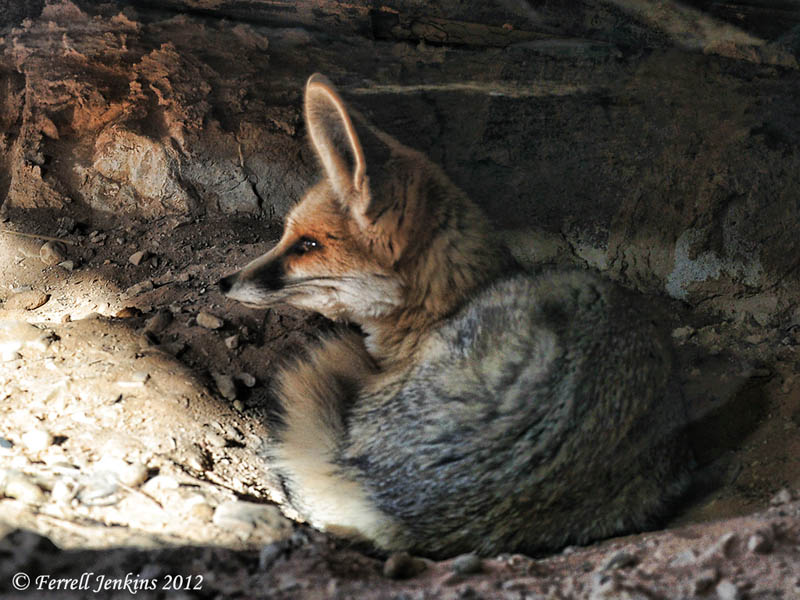
The photo below is of a Sand Fox. Samson used 300 similar foxes to destroy the wheat fields of the Philistines.

A Sand Fox at the Hai Bar Reserve, north of Eilat. Photo by Ferrell Jenkins.

A Sand Fox at the Hai Bar Reserve, north of Eilat. Photo by Ferrell Jenkins.

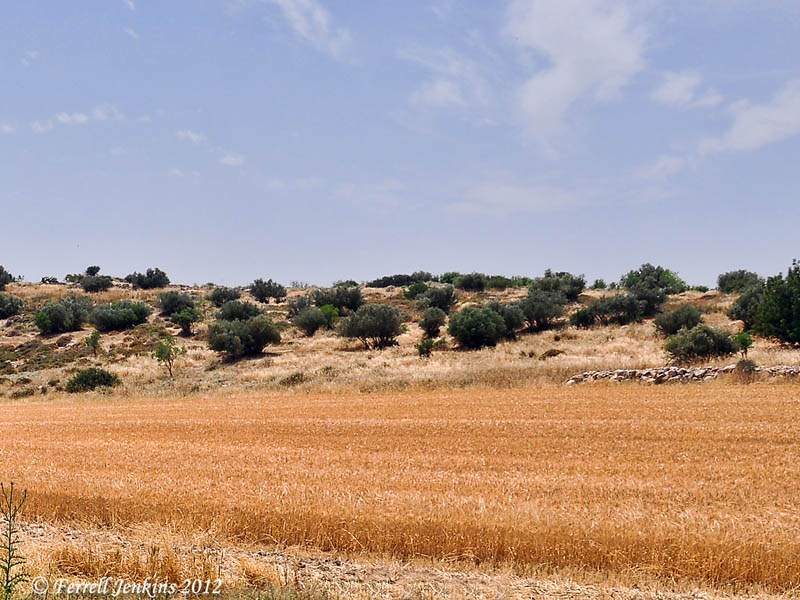
Our next photo is of a wheat field near Maresha, not far from the Sorek Valley, and typical of many fields in the Shephelah. It is typical in modern Israel for an area between the road and the field to be cleared. This is done to protect the grain from fire in the event that someone tosses a lighted cigarette along the edge of the road. Imagine the damage of the 150 pair of foxes in the ripe grain as they tried to release themselves from the burning torches.

Wheat field near Maresha in the Shephelah. Photo by Ferrell Jenkins.

Wheat field near Maresha in the Shephelah. Photo by Ferrell Jenkins.

I enjoy hearing from teachers who find this material helpful in their classes.

Mary and Joseph went a day’s journey. Where did they stop?

After his presentation in the Temple, there is no record of Jesus returning to Jerusalem until he is 12 years of age.

Now his parents went to Jerusalem every year at the Feast of the Passover.  And when he was twelve years old, they went up according to custom.  (Luke 2:41-42 ESV)

When the Feast of the Passover ended, his parents began the return to Nazareth. We can easily imagine that a large caravan of people were traveling together on this trip that would take several days. Jesus stayed behind in Jerusalem spending time among the teachers, “listening to them and asking them questions.” Because Mary and Joseph had relatives and acquaintances in the caravan they assumed that Jesus was among them until the end of the first day.

Keener provides some background on caravan travel.

Caravans, which afforded protection from robbers, were common on pilgrimages for the feasts in Jerusalem. Traveling with a caravan, in which neighbors from their town would watch the community children together, Mary and Joseph might assume that the near-adult Jesus was with companions, especially if by now they had younger children to attend to. If we assume a pace of twenty miles per day (though perhaps slower, depending on transportation and the children), Nazareth would be a little over three days’ journey along the shortest route. (Keener, C. S., The IVP Bible background commentary : New Testament)

Where did Mary and Joseph stop at the end of that first day of travel? We can not be certain of the route taken from Jerusalem to Nazareth. Travel from Galilee to Jerusalem was often through Perea on the eastern side of the Jordan Valley. We later find Jesus traveling north along the central mountain range through Samaria (John 4).

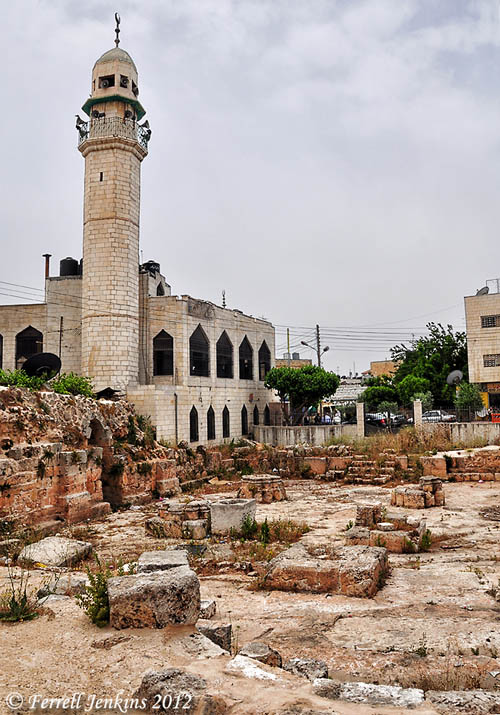
Ruins of medieval church beneath a Mosque in El Bireh. Photo by Ferrell Jenkins.

Ruins of medieval church beneath a Mosque in El Bireh. Photo by Ferrell Jenkins.

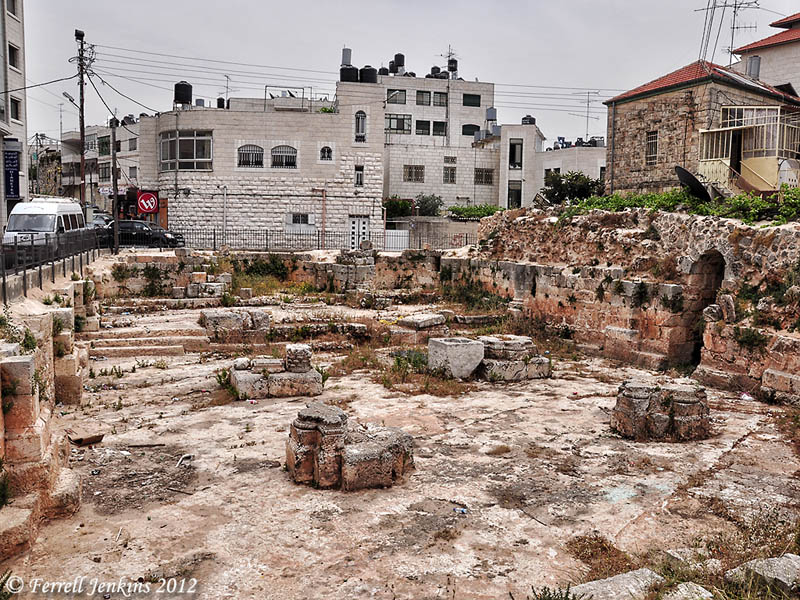
Tradition identifies the stop at El Bira. Tradition has it that the first day’s stop after leaving Jerusalem was at a place now known as El Bira (or Bireh) east of Ramallah. El Bira is an Arab town. There is a spring and ruins of a medieval church. The Hachette World Guides: The Middle East (1966) says that the tradition associating this event with El Bireh dates to the 16th century. Eugene Hoade says it is probable that this church was built in 1146 “in memory of” the event mentioned in Luke 2 (Guide to the Holy Land). The apse of the church is visible in the photo below. The Hachette World Guide says the building was destroyed in 1915 and the stones were used for building bridges along the mountain route.

This site is only about 8 miles north of Jerusalem, but with a large caravan including women and children it is possible that a short distance was covered the first day. It was necessary to stop where water and various food supplies were available (John 4:6-8; Luke 9:51-53).

Ruins of the medieval church in El Bireh. Photo by Ferrell Jenkins.

Ruins of the medieval church in El Bireh. Photo by Ferrell Jenkins.

Is this Beeroth? Since the time of explorer Edward Robinson (1867), some scholars have identified El Bireh with the Old Testament Gibeonite city of Beeroth. The word Beeroth indicates the presence of a well. Biblical references include Joshua 9:17, 18:25, Ezra 2:25, and Nehemiah 7:29. Beeroth was considered part of the tribe of Benjamin (2 Samuel 4:2).

David Dorsey, after surveying the scholarship on the matter, says,

At present, therefore, the site of biblical Beeroth remains a matter of dispute. The most likely candidate would still seem to be the one originally proposed by Robinson, i.e., el-Bireh. (The Anchor Yale Bible Dictionary)

John wore a garment of camel’s hair

Now John wore a garment of camel’s hair and a leather belt around his waist, and his food was locusts and wild honey.  (Matthew 3:4 ESV)

Emmerson comments on the type of garment worn by John:

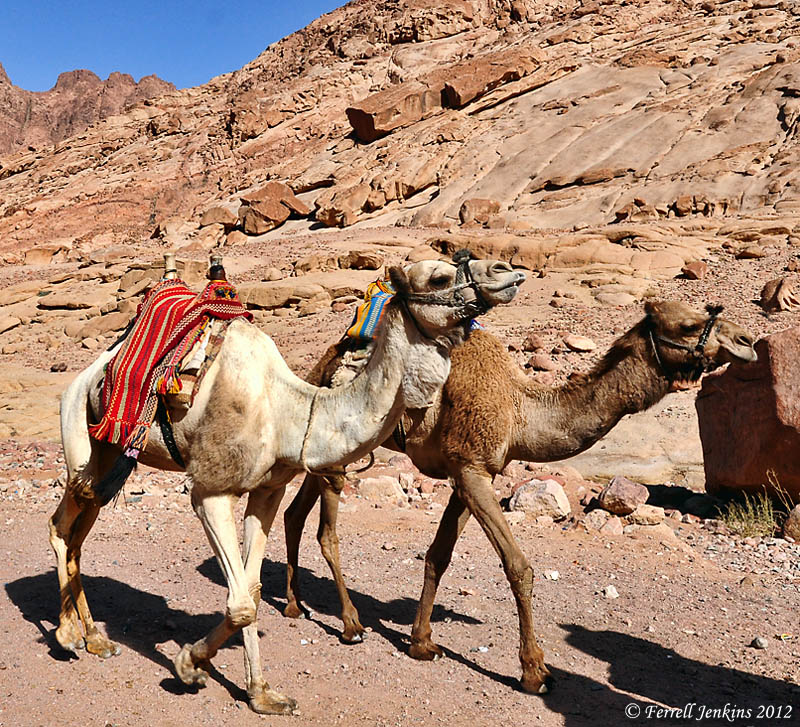
Hair from the back and hump of the camel was woven into a harsh material, and a softer cloth was produced from the finer hair taken from underneath the animal. The natural variations in the color of the hair could be woven into a pattern. (The International Standard Bible Encyclopedia Revised, 1:584).

Camels in the Sinai Peninsula. Photo by Ferrell Jenkins.

Camels in the Sinai Peninsula. Photo by Ferrell Jenkins.

John did not wear the soft clothing typical of those who dwell in royal palaces.

What then did you go out to see? A man dressed in soft clothing? Behold, those who are dressed in splendid clothing and live in luxury are in kings’ courts. (Luke 7:25 ESV)

Bible students immediately remember similarities between John and the prophet Elijah (2 Kings 1:8; cf. Luke 1:7).

John was a voice in the wilderness

There may be some question about the location of the wilderness mentioned in Luke 3:2. The term wilderness (eremos) is described by BDAG as “an uninhabited region or locality, desert, grassland, wilderness (in contrast to cultivated and inhabited country).” The same term is translated deserts in Luke 1:80, where it seems to refer to an isolated area of Judah.

When John begins his ministry, it is clear that he was working in the wilderness between Jerusalem and the Jordan River/Dead Sea.

And he went into all the region around the Jordan, proclaiming a baptism of repentance for the forgiveness of sins.  As it is written in the book of the words of Isaiah the prophet, “The voice of one crying in the wilderness: ‘Prepare the way of the Lord, make his paths straight. (Luke 3:3-4 ESV)

Matthew’s account names the area of John’s preaching as “the wilderness of Judea” (Matthew 3:1).

This stretch of wilderness is well known as a region of rugged and desolate badlands. Our first photo shows a portion of the wilderness in bright sunlight on the way from Jerusalem to Jericho. The view is toward the west. Peter Walker describes the Judean Desert:

It is a place of austere beauty and an almost deafening silence; a place where human beings are acutely conscious of their frailty and utter dependence on water for brute survival. And yet in biblical times it was also a place where people went to find solitude and space, to hear the voice of God addressing them above the cacophony of other competing demands and voices. John the Baptist had begun his ministry here, ‘a voice of one calling in the desert’ (Isaiah 40:3).… (In the Steps of Jesus, Zondervan: 52)

Wilderness of Judea on way from Jerusalem to Jericho. Photo by Ferrell Jenkins.

Wilderness of Judea on way from Jerusalem to Jericho. Photo by Ferrell Jenkins.

One of the fascinating things about the wilderness is the constant change of the view, especially as clouds move over it from West to East

Wilderness of Judea. View toward east with rain clouds on mountain range. Photo by Ferrell Jenkins.

Wilderness of Judea. View west with clouds on the mountain range. Photo: F. Jenkins.

The road from Jerusalem to Jericho and the Jordan River was used even by pilgrims coming from Galilee for the various feast days in Jerusalem. Luke’s parable of the good Samaritan speaks of a man “going down from Jerusalem to Jericho” (Luke 10:30). Luke also records that Jesus traveled this way in the opposite direction (Luke 19). John records that Jesus traveled this way from Bethany beyond the Jordan to the Bethany near Jerusalem (John 11).

Men who honor themselves. Exhibit one: Absalom

Both Old Testament and New Testament provide illustrations of men who honor themselves, and the folly of doing so. The elder John wrote of a man named Diotrephes “who loves to be first” among his brethren (3 John 1:9).

In the Old Testament no case is more prominent than that of Absalom the rebellious son of David.

Now Absalom in his lifetime had taken and set up for himself a pillar which is in the King’s Valley, for he said, “I have no son to preserve my name.” So he named the pillar after his own name, and it is called Absalom’s Monument to this day. (2 Samuel 18:18 NAU)

In earlier times it was common for pilgrims to the Holy Land to be told that this or that structure belonged to a certain Biblical character or event.  I will show you one such example.

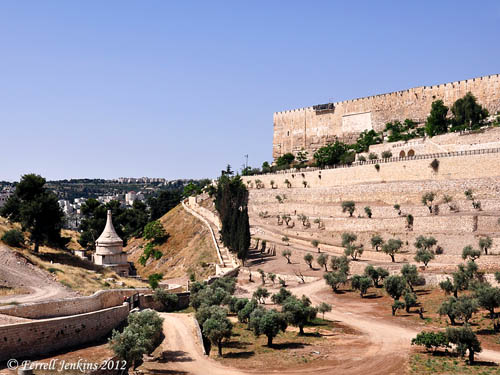
The photo below was made in the Kidron Valley with a view to the south. On the right you see the eastern wall of the Old City of Jerusalem. On the left of the photo, where the valley becomes narrow, you can see the top of the monument called Absalom’s Pillar. An image suitable for presentations is available here. This photo would look good in PowerPoint. There is room on the upper left side sky to include appropriate scriptures.

Kidron Valley View South. Absalom's Pillar on left. Wall of Jerusalem on right. Photo by Ferrell Jenkins.

Kidron Valley view to the south. Photo by Ferrell Jenkins.

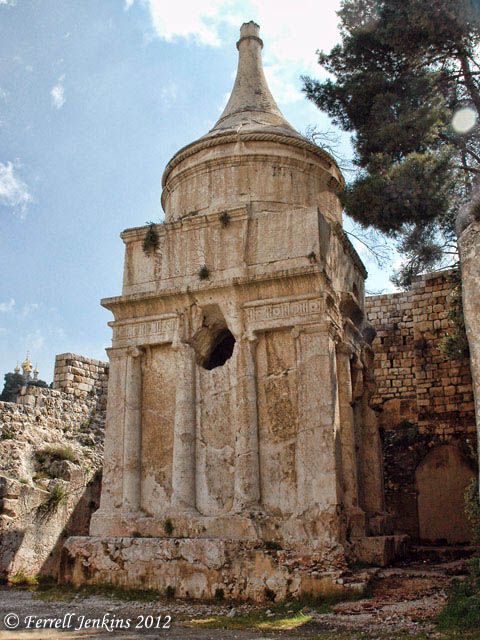
In AD 1170 Benjamin of Tudela associated this monumentsin the Kidron Valley with the monument of Absalom. The monument actually belongs to the early first century B.C., and not to the time of Absalom. It is a funerary monument in front of an eight-chambered tomb.

A closeup view of the monument may be seen in the following photo.

Absalom's Pillar. Photo by Ferrell Jenkins.

Absalom's Pillar. Photo by Ferrell Jenkins.

Soon I plan to explain what this monument might have to do with Zacharias, the father of John the Baptist.

Bread stamp with Temple Menorah discovered near Acco

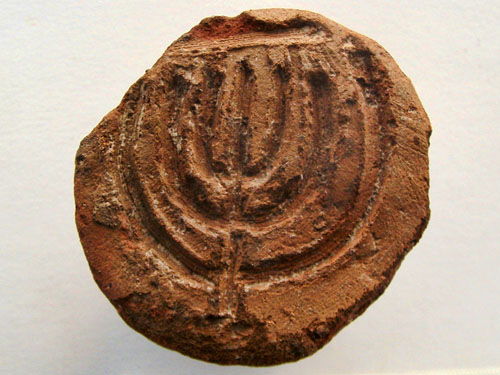
The Israel Antiquities Authority announces the discovery of a stamp used to identify baked products from an excavation near the coastal town of Acco (Akko; Acre). The stamp dates to the 6th century A.D. (the Byzantine period). The suggestion is made that it may have been used by a baker who made kosher bread for the Jews in the area.

Bread stamp discovered at Acco. Photo: Dr. Danny Syon, courtesy IAA.

Bread stamp discovered near Acco. Photo: Dr. Danny Syon, courtesy IAA.

The IAA news release says,

According to Gilad Jaffe and Dr. Danny Syon, the directors of the excavation on behalf of the Israel Antiquities Authority, “A number of stamps bearing an image of a menorah are known from different collections. The Temple Menorah, being a Jewish symbol par excellence, indicates the stamps belonged to Jews, unlike Christian bread stamps with the cross pattern which were much more common in the Byzantine period”. According to Syon, “This is the first time such a stamp is discovered in a controlled archaeological excavation, thus making it possible to determine its provenance and date of manufacture. The stamp is important because it proves that a Jewish community existed in the settlement of Uza in the Christian-Byzantine period. The presence of a Jewish settlement so close to Akko — a region that was definitely Christian at this time — constitutes an innovation in archaeological research”. The excavators add, “Due to the geographical proximity of Horbat Uza to Akko, we can speculate that the settlement supplied kosher baked goods to the Jews of Akko in the Byzantine period”.

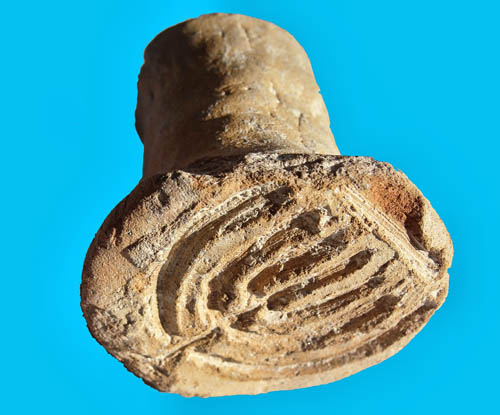
The stamp is engraved with a seven-branched menorah atop a narrow base, and the top of the branches forms a horizontal line. A number of Greek letters are engraved around a circle and dot on the end of the handle. Dr. Leah Di Segni, of the Hebrew University of Jerusalem suggested this is probably the name Launtius. This name was common among Jews of the period and also appears on another Jewish bread stamp of unknown provenance. According to Dr. Syon and Gilad Jaffe, “This is probably the name of the baker from Horbat Uza.”

Bread stamp discovered at Acco. Photo: Dr. Danny Syon, courtesy IAA.

Bread stamp discovered at Acco. Photo: Dr. Danny Syon, courtesy IAA.

Dr. David Amit, who has made a study of bread stamps, adds,

“A potter engraved the menorah image in the surface of the stamp prior to firing it in a kiln, whereas the owner’s name was engraved in the stamp’s handle after firing. Hence we can assume that a series of stamps bearing the menorah symbol were produced for Jewish bakers, and each of these bakers carved his name on the handle, which also served as a stamp. In this way the dough could be stamped twice before baking: once with the menorah — the general symbol of the Jewish identity of Jewish bakeries, and the private name of the baker in each of these bakeries, which also guaranteed the bakery’s kashrut.

The full IAA report is available at a temporary link here.

English Bible versions commonly translate the Hebrew menorah by the word lampstand. The King James Version’s candlestick is no longer used because we know that candles were not in use in Bible times (cf. Revelation 1:12).

The seven-branched lampstand is probably the best known symbol of the tabernacle and temple, and of Jews generally. The first biblical reference to the menorah is in the account of the building of the tabernacle.

“Then you shall make a lampstand of pure gold. The lampstand and its base and its shaft are to be made of hammered work; its cups, its bulbs and its flowers shall be of one piece with it.  “Six branches shall go out from its sides; three branches of the lampstand from its one side and three branches of the lampstand from its other side.  (Exodus 25:31-32 NAU)

As a parallel, one might think of the hot cross buns commonly eaten on Good Friday in many Christian communities.

HT: Joseph Lauer

Jesus and the funeral procession at Nain

The town of Nain is mentioned only once in the New Testament.

Soon afterward Jesus went to a town called Nain, and his disciples and a large crowd went with him. (Luke 7:11 NET)

In the full account, Luke (7:11-17) reports that as Jesus approached the town gate a funeral procession was in progress. When Jesus saw the widow He had compassion and told her to stop weeping. Luke, the physician (Colossians 4:14), reports that Jesus touched the bier and said, “Young man, I say to you, get up!” Then, as a simple matter of fact, Luke says,

So the dead man sat up and began to speak, and Jesus gave him back to his mother. (verse 15)

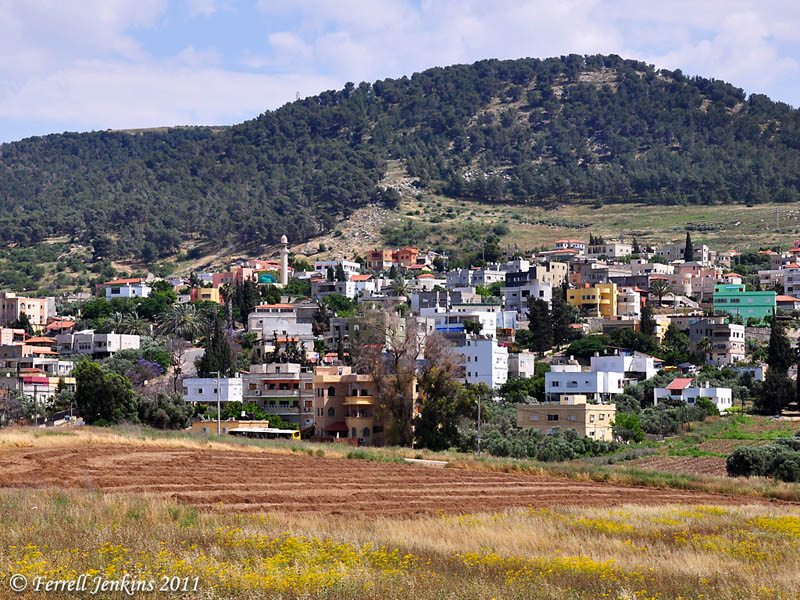
Nain is identified with the Arab village of Nein on the north slope of the Hill of Moreh. Nein is said to mean pleasant. Nain was a city of Issachar in Old Testament times. Here is a photo I made of the little Arab village last May.

The Village of Nain on the north slope of the Hill of Moreh. Photo by Ferrell Jenkins.

The Village of Nein on the north slope of the Hill of Moreh. Photo by Ferrell Jenkins.

Ralph Earle describes the pleasant location of Nain.

The town of Jesus’ day may have stood higher on the hill than the present village. It probably was named for the pleasant view that the site affords across the plain of Esdraelon. To the west one can see Mt. Carmel, and to the north the hills behind Nazareth stand out, about 9½ km [6 mi] away. To the northeast one can look past nearby Tabor (3 km [2 mi] away) to snowcapped Mt. Hermon in the distance. Southward lies Mt. Gilboa. (The International Standard Bible Encyclopedia, Revised, 3:480)

Our new header, which we will use for a while, is a 3-image panorama of Nain and the north side of the Hill of Moreh.

Five Day Bible Reading Program for 2012

Mark Roberts (the Irving, TX one) is making his Five Day Bible Reading Program for 2012 available free of charge this year. This is an excellent program for reading through the entire Bible in a year. For a copy of the schedule that you can print on a single sheet of paper (front and back), click here.

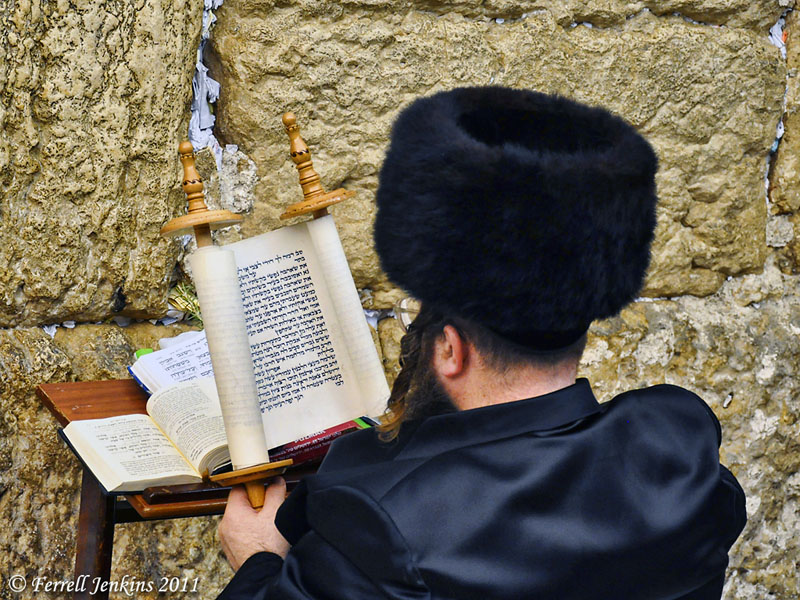
Reading the Bible at the Western Wall. Photo by Ferrell Jenkins.

Reading the Bible at the Western Wall. Photo by Ferrell Jenkins.

A few Scriptures on the subject of Bible reading seem appropriate:

…and the scroll of the prophet Isaiah was given to him [Jesus]. He unrolled the scroll and found the place where it was written…, (Luke 4:17 NET)

…and [the Ethiopian court official] was returning home, sitting in his chariot, reading the prophet Isaiah. (Acts 8:28 NET)

You [Timothy], however, must continue in the things you have learned and are confident about. You know who taught you  and how from infancy you have known the holy writings, which are able to give you wisdom for salvation through faith in Christ Jesus.  Every scripture is inspired by God and useful for teaching, for reproof, for correction, and for training in righteousness,  that the person dedicated to God may be capable and equipped for every good work. (2 Timothy 3:14-17 NET)

The Reading Program is also available for the Kindle (or iPad) this year. Details are on the page linked above.

While you are in the neighborhood, take a look at some of the material at Mark’s BibleClassMaterial.com.

“Gibeon, for the king” bulla discovered

The Temple Mount Sifting Project, Jerusalem, announced yesterday the discovery of a clay bulla bearing the name of the biblical city of Gibeon. The name of Gibeon (GB’N) occurs with LMLK (for the king).
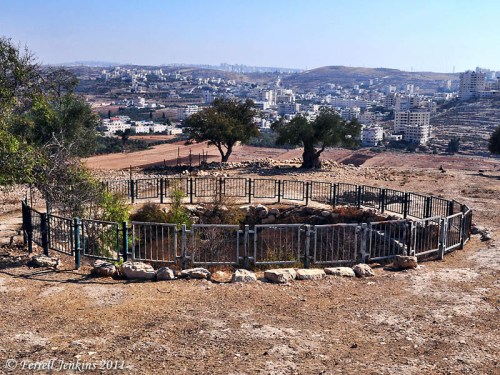
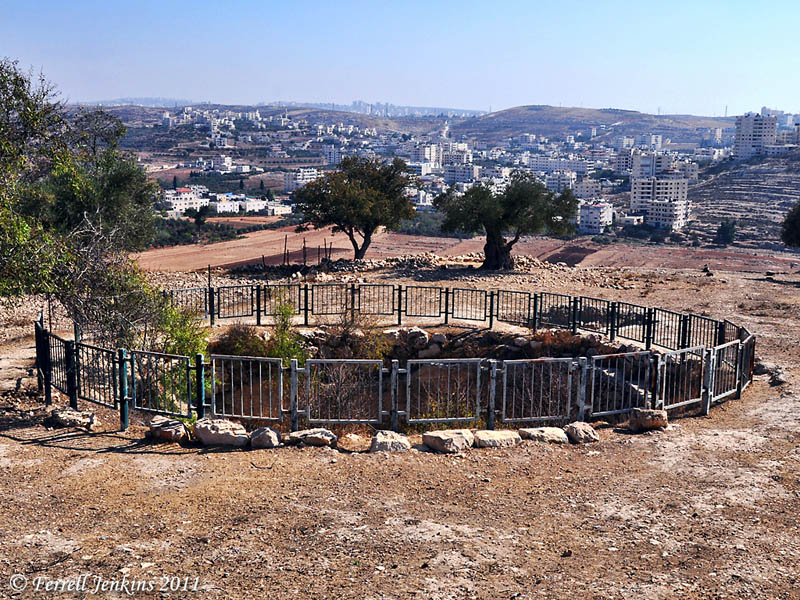
The Pool of Gibeon. Photo by Ferrell Jenkins in 2011.

The Pool of Gibeon at El-Jib. Photo by Ferrell Jenkins in 2011.

Gabriel Barkay summarizes his report of this discovery.

A small fragment of a clay bulla was discovered in the wet sifting carried out at Tzurim Valley National Park, the site of the Temple Mount Sifting Project. The bulla carries an Ancient Hebrew inscription: “[g]b’n/lmlk“, i.e. “Gibeon, for the King”. The bulla originates from the eastern slope of the Temple Mount, descending into the Kidron Valley. The bulla belongs to a group of bullae which were called by N. Avigad “Fiscal Bullae”.

Presently we know more than 50 bullae of this type. They comprise two groups, one with names of cities in the kingdom of Judah, and the other with names of royal officials. All the fiscal bullae known until now come from the antiquities market, and our bulla is the first one to come from a controlled archaeological project. This bulla enables us to fully illuminate and discuss the entire phenomenon of the fiscal bullae.

Barkay says the known bullae,

include names of 19 different cities of Judah, and dates of the reign of one of the Judean kings, usually in hieratic numerals, as well as the particle lmlk, “for the king”.

He says,

The fiscal bullae represent a taxation system from the different Judean cities, based on yearly taxes, which probably replaced the previous one, reflected in the royal Judean jars and their seal impressions, from the time of King Hezekiah.

The discovery of the fiscal bulla with the name of Gibeon from the slope of the Temple Mount, authenticates all the other fiscal bullae, and enables us to study a variety of subjects connected to the history of Judah in the 7th century BCE.

Two brief reports on the Project may be read here.

Name of Gibeon is not new. This is not the first time the name of Gibeon has been discovered from the past. During the excavations conducted by James Pritchard for the Museum of the University of Pennsylvania and the Church Divinity School of the Pacific between 1956 and 1962, over 25 inscription were found with the name Gibeon. In fact, this is how Pritchard first knew with certainy that the Arab town El Jib was to be identified as Gibeon.

Some of the inscribed jar handles discovered by Pritchard’s excavation at El Jib are displayed at the University of Pennsylvania Archaeological Museum in Philadelphia.

Gibeon is an important town in Biblical history. The first Biblical reference is in Joshua 9.

Recently I have been scanning a few slides I made at Gibeon in 1970 and 1976. Hopefully I will be able to provide some comparison photos for you to see the vast difference between then and now.

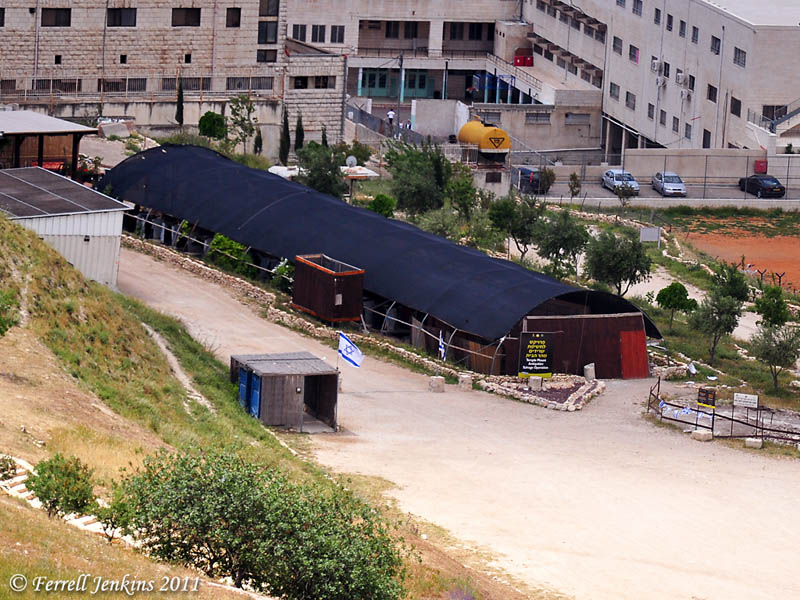
The Temple Mount Sifting Project began after it was discovered that the Moslems in control of the Temple Mount, where the Dome of the Rock is located, were dumping debris from work they were doing on the Temple Mount. This project has been underway for more than two years. A temporary building has been erected in Tzurim Valley National Park for the sifting project.

The photo below was made from Mount Scopus. Here we see the temporary building of the Temple Mount Sifting Project in the foreground. The slope of the Mount of Olives is on the left (east). The Kidron Valley begins to the right of the buildings in the center of the photo and continues south under the eastern wall of the Old City of Jerusalem which you can see clearly in this photo. Click on the photo for a larger image.
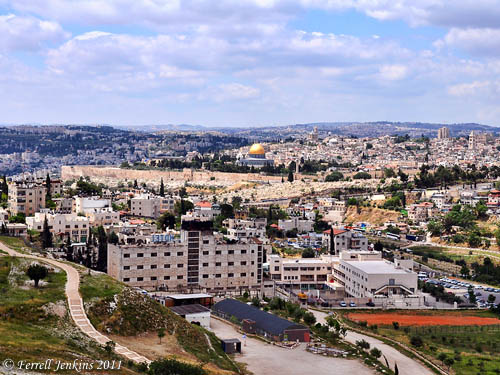
Jerusalem from Mount Scopus. The Temple Mount Sifting Project building is in the foreground. Photo by Ferrell Jenkins.

Jerusalem from Mount Scopus. The Temple Mount Sifting Project building is in the foreground. Photo by Ferrell Jenkins.

The next photo is a closeup of the building used by The Temple Mount Sifting Project. Some wonderful pieces have been discovered from the first temple period, as well as other periods, as a result of the work done here.
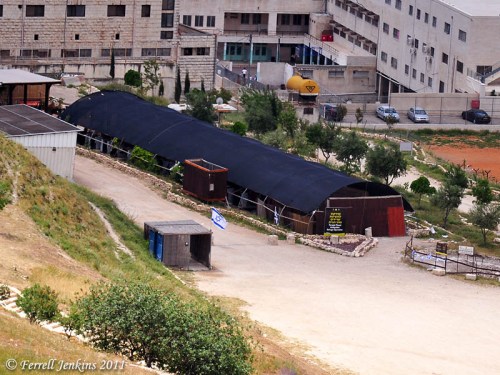
View from Mount Scopus of the Temple Mount Sifting Project building. Photo by Ferrell Jenkins.

View from Mount Scopus of The Temple Mount Sifting Project building. Photo by Ferrell Jenkins.

Gordon Franz has an interesting article by Stephanie Hernandez about participation in the TMSP on his Life and Land site here.

Perhaps in the days to come we will be favored with a photo of the new bulla with the name of Gibeon on it. In the mean time, see how many times you can find the word Gibeon or Gibeonite/s in the Bible.

Previous posts relating to the birth of Jesus and Christmas

Thanks for the good response to our posts on frankincense and myrrh. Over the past 4+ years I have written several posts about Christmas, the birth of Jesus, and Bethlehem, in hope that they would be beneficial to Bible students and teachers.

Here are links to some of the more significant articles, usually with photos.

If you have more interest in learning about the origin of the celebration of the birth of Christ, take a look here. A more detailed study of the historical aspects of the celebration is available in PDF here.

For the next couple of days I plan to spent some (read, total) time with my grandson. I trust you will enjoy quality time with your family and friends.

I see that Leon Mauldin has a post about the manger at Leon’s Message Board here, and another about the traditional site of Jesus’ birth in Bethlehem here.

Todd Bolen has a list of his Christmas-Related Posts at Bible Places Blog here.