Category Archives: Old Testament

2008 Five Day Bible Reading Program

Mark and Dena Roberts prepared a Bible Reading Program a few years ago that allows one to read through the Bible in a year by reading the assignment for five days each week. This is practical, as many find they are unable to maintain a daily schedule. It allows for the reading of both the Old Testament and the New Testament.

You may download a free copy of the program by clicking here. Churches may purchase the right to duplicate multiple copies.

Today is Yom Kippur

Today is Yom Kuppur, the Day of Atonement, for those who follow the Mosaic system. Information may be found in Leviticus 16 (NET Bible) in the Old Testament (Hebrew Bible). If you would like to read a modern Jewish description of the day read Judaism 101.

Christians who follow the New Testament believe that the Mosaic system has been removed and superseded by the gospel of Christ. Various New Testament writers have spoken on these matters. Here are a few significant references: Ephesians 2:14-16; Colossians 2:11-14; 2 Corinthians 3. Three entire New Testament epistles are devoted to discussions of the subject: Romans, Galatians, Hebrews. Hebrews 9:22-28 indicates that the offering of Christ is a one-time event, and sufficient to cover the sins of man.

Notice a few comments.

Hebrews 10:1-4 For the Law, since it has only a shadow of the good things to come and not the very form of things, can never, by the same sacrifices which they offer continually year by year, make perfect those who draw near. 2 Otherwise, would they not have ceased to be offered, because the worshipers, having once been cleansed, would no longer have had consciousness of sins? 3 But in those sacrifices there is a reminder of sins year by year. 4 For it is impossible for the blood of bulls and goats to take away sins (NASB).

Contrast this with the great proclamation of John the Baptist in the Gospel of John 1:29: “Behold, the Lamb of God who takes away the sin of the world”

Last year Todd Bolen posted a blog, with photos, of some residents of Jerusalem who “In the absence of a temple and the blood sacrifices that provide atonement for sins, some Jews today observe a sacrificial ceremony with a chicken.” You can find the full post here. I learned of a similar annual practice (not associated with Judaism) on a visit to Nepal a few years ago. Didn’t work before; won’t work now.

Temple Mount controversies

On recent tours to Israel we have been unable to visit the Temple Mount. The Islamic buildings there, the Mosque of Omar (Dome of the Rock) and the Al Aksa Mosque, have no spiritual significance for us. The site, however, is very important biblically. It was likely here on Mount Moriah that Abraham offered Isaac (Genesis 22). It is where David placed the ark of the covenant, and where the Temple was built by Solomon in 966 B.C. ( 2 Chronicles 3). That temple was destroyed by the Babylonians in 597 B.C.. After the return from captivity, the Jews rebuilt the temple with the help of the Persian king Darius in 520-516 B.C. Herod the Great more or less replaced this structure with his magnificent temple beginning in 19 B.C. Jesus visited this temple numerous times (John 2:19). In this area the gospel was preached for the first time on the Pentecost of Acts 2.

In the late 7th century A.D., a Muslim ruler constructed the building we now commonly call the Dome of the Rock.

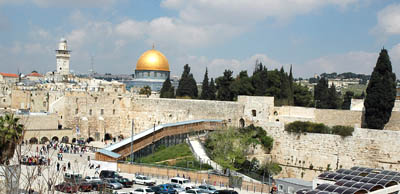
The Temple Mount in Jerusalem

The photo above, made April 3, 2006, shows the Western Wall of the temple enclosure built by Herod. The temple platform, where you see the golden dome, is where the biblical temple once stood. Many news items have been written about the temporary bridge leading to the Temple Mount, and the removal of the earth by archaeologists to reveal more of the Western Wall. There has also been considerable controversy over repairs being made by the Muslims on the Temple Mount.

One good source to help you keep up with this controversy is Dr. Leen Ritmeyer’s blog. There you will find pictures of the terrible destruction taking place. Ritmeyer has drawn many of the excellent plans you may have seen published in various books.

Weeping for the Jordan

“Weeping for the Jordan” is the title of a short news item in Christianity Today, Sept., 2007, p. 17. The article from the RNS says the lower portion of the Jordan River “is so polluted that the World Monuments Fund (WMF) has designated it an Endangered Cultural Heritage Site.”

We often point out to audiences that the Jordan has much less water flowing through it now than it did even 50 years ago. This is because Israel uses much of the water of the Jordan and its tributaries for water and agricultural irrigation. Jordan has dams on the Yarmuk and Jabbok rivers, tributaries from the east.

There is not full agreement among scholars, but many believe that the site where Jesus was baptized by John is a few miles north of the Dead Sea. In 1967 I was able to visit that site. Since the 1967 war it has not been possible for tourists to visit there. A few years back a site was excavated in Jordan that has been claimed to be Bethany Beyond the Jordan (Jn. 1:28).

The CT article points out that the Jordan River is “highly polluted with sewage and agricultural runoff” near Bethany Beyond Jordan, but that some tourists do not realize this and wade in the water.

In 2006 I was able to take my group to Bethany Beyond Jordan and visit the Jordan River. Here is one of the photos made at that time.
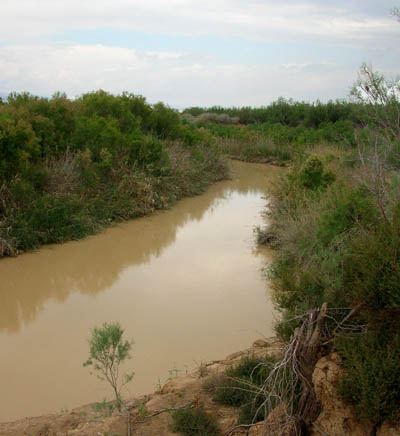
Jordan River at Bethany Beyond the Jordan.

We are hopeful of visiting this site again in 2008. Perhaps it is in the area where John did some of his baptizing (cf. Jn. 10:40). The Israelites crossed the Jordan somewhere near here (Josh. 3), and the prophets Elijah and Elisha crossed in the opposite direction near here (2 Kings 3).

This photo was made on the West side of the Jordan River, in the country of Jordan, in 1967. This is directly across from the Bethany Beyond Jordan site.
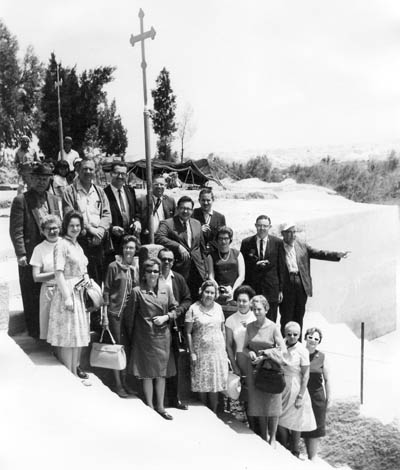
1967 Bible Land Group led by Ferrell Jenkins and William E. Wallace.

The photo was made on or about May 5, 1967. Notice the attire. Women wore hosiery and other items to help their body hold an ideal shape. Most men wore a coat, and many wore ties on the plane and throughout the entire trip, even in hot weather. Some hotels would not allow a man in the dining room unless he was wearing a coat. Were these the good old days?

The UP Museum of Archaeology

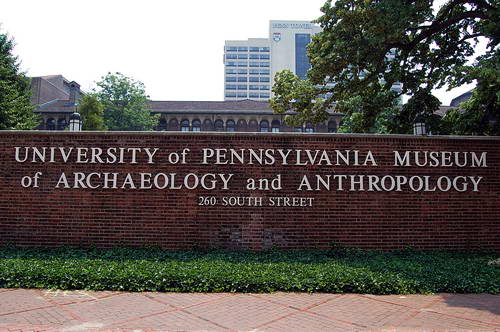
Tuesday I spent some time in the University of Pennsylvania Museum of Archaeology and Anthropology, Philadelphia. The museum has a nice collection of artifacts of interest to the student of the Bible. One of the best known names associated with the museum in the field of biblical archaeology is that of James Pritchard. Professor Pritchard edited The Ancient Near East Texts and The Ancient Near East in Texts and Pictures. He was also well known for his work at Gibeon and the book, Gibeon, Where the Sun Stood Still.

The museum has a nice collection from Egypt, Canaan, and Mesopotamia. The section on Mesopotamia is now closed with many of the items included as part of a traveling exhibit. One of the retired professors at UP told me 4 years ago that the museum has 40,000 clay cuneiform tablets, but I saw none of them on display during this visit. Currently there is an exhibit on Amarna, but I did not find it especially impressive after having visited museums in Egypt, London, and Berlin.

There is a good section on Rome, especially dealing with Emperor Worship. This is a helpful resource in studying Revelation.

University of Pennsylvania Musem of Archaeology and Anthropology

The Museum does not permit copies of photos made in the museum to be posted on other web sites (without some special permission, perhaps). If you are in the area, it is a worthwhile visit.

Regarding Your Emails; Euphrates River.

Even though we are in a very nice hotel in Gaziantep, the wireless connection has been less than ideal. That gets time consuming and a bit frustrating. Thanks for writing about tours and other things you want me to take care of. I would like to do so but do not have the time. This is a study tour and we stay busy.

If you have written about one of the future tours I will keep your Email and respond when I can back at home.

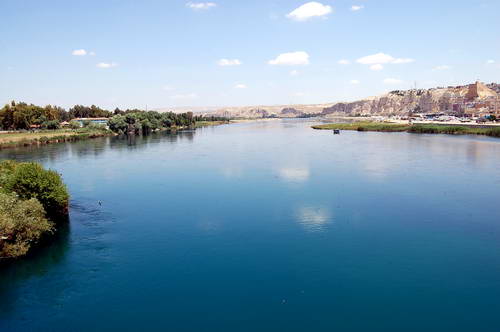
Here is a photo of the Euphrates River that I made yesterday. Read an article I have written on the Euphrates with a photo of the river I made in 1971 near the Persian Gulf. Note the difference in the color of the water in the mountainous region and in the flat area in the south of Iraq.

Euphrates River in southeastern Turkey. Photo by Ferrell Jenkins.

Today we are going to Mount Nemrut (Nemrut Dagi) after a visit to the Gaziantep Museum.

We had a good visit to the museum and have now arrived at Katha. At 4 p.m. we will begin the trip to Nemrut Dagi in time for sunset photos.

Harran – Home of Abraham

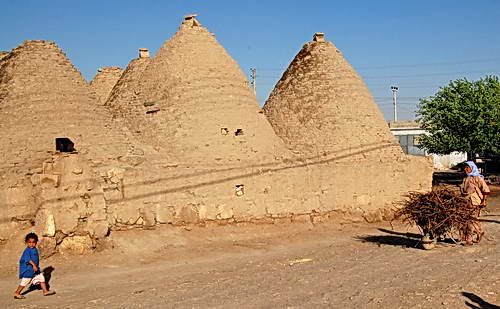
Yesterday afternoon we visited Harran (some English Bible versions use Haran). Harran is located in biblical Padan-Aram (Genesis 25:29, et al). Abraham and his family lived in the area (Genesis 11:21). The city has a long history which I will not go into now. For the past two hundred years the people who live here have built mud brick conical, beehive-shaped houses. We also see some of these houses in northern Syria. Here is a photo showing one of the houses. Due to the heat in this area we waited until late in the afternoon to visit. The lines you see going across the buildings are made by the shadow from the power lines. An oven can be seen to the right of the boy. The woman is bringing a load of pruned grape vines to be used in her oven.

Beehive Type Houses in Harran.

Today we visit Sanliurfa, claimed by the Muslims to be the birthplace of Abraham, and the Euphrates River.

Safely in Sanliurfa

We had a long day driving from Batman to Sanliurfa. We visited the museum here and then went to Harran before returning to Sanliurfa for the evening. I probably will not be able to get anything else posted tonight, but wanted those who are following our journey to know that we are o.k.

Van to Batman

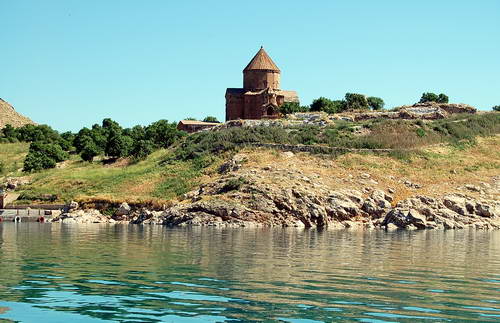
We left Van this morning and drove along the lake to the place where we could take a boat to Akdamar Island in Lake Van. This is where we find an early 10th century Armenian church. The church has undergone an expensive restoration and reopened by the Turkish government a little over two months ago as a museum. Too much to explain about the Armenians and this church at this time. There are some marvelous paintings and carvings of Bible stories inside and outside the church. Here is a photo I made this morning as we approached the island.

Akdamar Armenian Church on an island in Lake Van. Photo by Ferrell Jenkins.

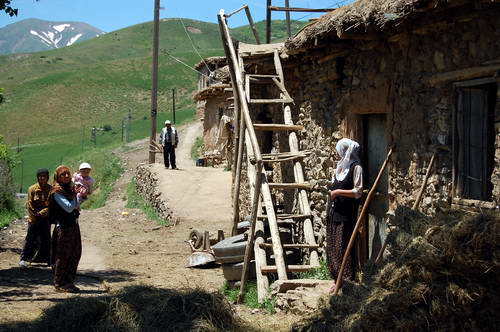
Later we enjoyed one of those unexpected moments when we saw a group of men adding a room to a typical (of the area southwest of Van) stone house. There are many similarities between this house and those of Bible times in Israel. This photo shows the steps (ladder) going up to the roof that is made of timbers covered with earth. The people here were absolutely thrilled that we stopped to visit a while.

House south of Lake Van in Turkey. Photo by Ferrell Jenkins.

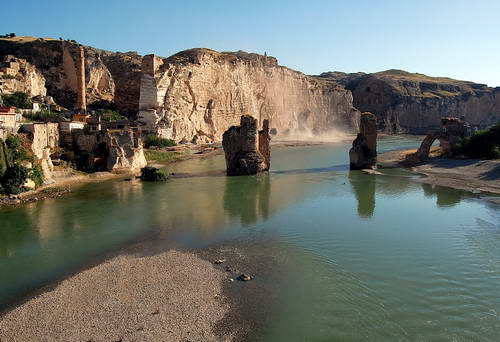
We arrived at Batman by about 4 p.m. and headed south to Hasankeyf. This is the area of Southeast Anatolia. Batman is a center of oil production. It is a thriving Kurdish town. Our hotel is probably 3-star. It is nice and clean and the staff is very helpful. There is a new mall across the street with a large grocery, and Burger King, and several other stores. Hasankeyf has a history associated with the Seljuks and the Ottoman Empire. I still need to spend some time studying about the site. There are old cave dwellings similar to those one sees in Cappadocia.The guard at one of the archaeological sites told me that Hasankeyf is an Arab town. He said that Batman (only about 20 miles away is a Kurdish town. My main interest in the old city is that it is built on the Tigris River (call Dicle in Turkish). The Tigris begins in the mountians of ancient Ararat and flows into the Persian Gulf. The Tigris is mentioned twice in the Bible. It is said to be the third of the rivers flowing out of the garden of Eden. It flows on the east side of Assyria (Genesis 2:14). The river is also mentioned in Daniel 10:4. The prophet stood beside “the great river, the Tigris.” This likely would have been far south of here. Ancient Nineveh was built on the Tigris.

Hasankeyf on the Tigris (Dicle) River in southeastern Turkey. Photo by Ferrell Jenkins.

The building of a dam on the Tigris threatens the existence of Hasankeyf. It is difficult to stop “progress,” but it is a shame to see history like this flooded. It has happened to other sites in Turkey such as Zugma on the Euphrates.

Tomorrow we head for Sanliurfa and Harran.

Van and the Urartuans

Lake Van is a large inland body of water of about 1400 square miles at an elevation of 5737 feet. The lake is fed by a number of rivers and is highly alkaline. It is said that folks sometimes wash their clothes in the lake. Our hotel is located on the lake side and the view is beautiful.

In Assyrian records this area was called Urartu. In the Bible it is called Ararat. The English term Ararat is a transliteration of the Hebrew term. The four references where the term appears are Gen. 8:4, 2 Kings 19:37 = Isa. 37:38, and Jer. 51:27. The King James version uses the term Armenia in 2 Kings 19:37 and Isaiah 37:38 because that is what the territory was later called. The Septuagint uses Armenia only in Isaiah 37:38.

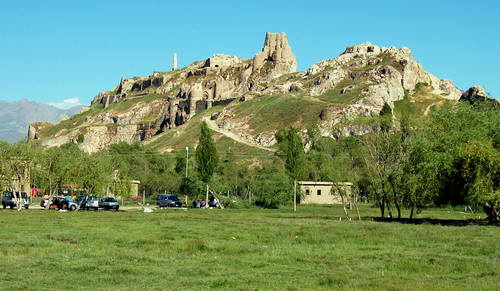
The photo below shows the castle or rock of Van.

The Castle or Rock in Van, Turkey, once the Urartuan capital called Tushpa. Photo by Ferrell Jenkins.

Tushpa, the ancient city of the Urartians, was built on this rock, which provides a commanding view over the lake, and at the base of the rock. At the beginning of the 20th century the city of Van was built over the ancient ruins, but was destroyed by the Russians in 1916. The area now is nothing more than a grassy knoll. On the side of the rock and at the top there are inscriptions, the tombs of eighth and ninth century B.C. Urartian kings, and ruins of a temple. A short distance from Van is another site called Toprakkale which marks the Urartian fortress of Rusahinili.

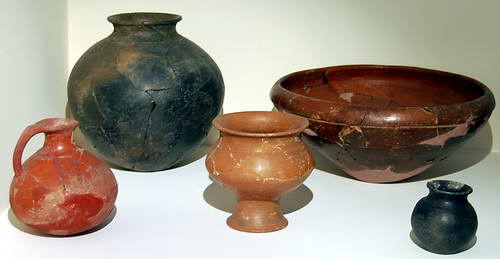
Here is a photo of some Urartuan pottery from the Museum at Ankara.

Urartuan Pottery in Ankara Museum of Anatolian Civilization. Photo by Ferrell Jenkins.

Tomorrow night we will be staying at Batman. Really!