Category Archives: New Testament

The Magdala synagogue and table

Several times in the past few years we have called attention to the site of Magdala (Migdal). In September, 2009, we noted the announcement by the Israel Antiquities Authority of the discovery of a synagogue from the Second Temple period (50 BCE—100 CE).

A synagogue from the Second Temple period (50 BCE—100 CE) was exposed in archaeological excavations the Israel Antiquities Authority is conducting at a site slated for the construction of a hotel on Migdal [Magdala] beach, in an area owned by the Ark New Gate Company. In the middle of the synagogue is a stone that is engraved with a seven-branched menorah (candelabrum), the likes of which have never been seen. The excavations were directed by archaeologists Dina Avshalom-Gorni and Arfan Najar of the Israel Antiquities Authority.

The town of Magdala is not mentioned in the Bible, but Mary Magdalene is mentioned a total of 12 times in the four gospels. This place may have been her birthplace or her home. A few late manuscripts mention Magdala (Matthew 15:39 KJV), but earlier manuscripts read Magadan. Magdala is located about 4 miles north of Tiberias on the western shore of the Sea of Galilee.

The Hebrew word Magdala means tower. In New Testament times the city had become Hellenized and bore the Greek name Tarichea because of the importance of the salted-fish industry there. Mendel Nun located a harbor at the site. He says,

“In ancient times, pickled sardines were an important element of diet throughout the country–especially for those who lived near the lake” (BAR, Nov/Dec 1993).

Josephus had his headquarters at Magdala during the first Jewish Revolt against Rome (A.D. 66-70). He was able to get a group of at least 230 boats to go from Magdala to Tiberias (Jewish Wars 2.635-637). Vespasian attacked the town from the sea and destroyed it.

We visited the site on the most recent tour, but everything is covered in a way that make it difficult or impossible to make sense of it. We are fortunate to have a photo made by Jim Joyner a few years ago.
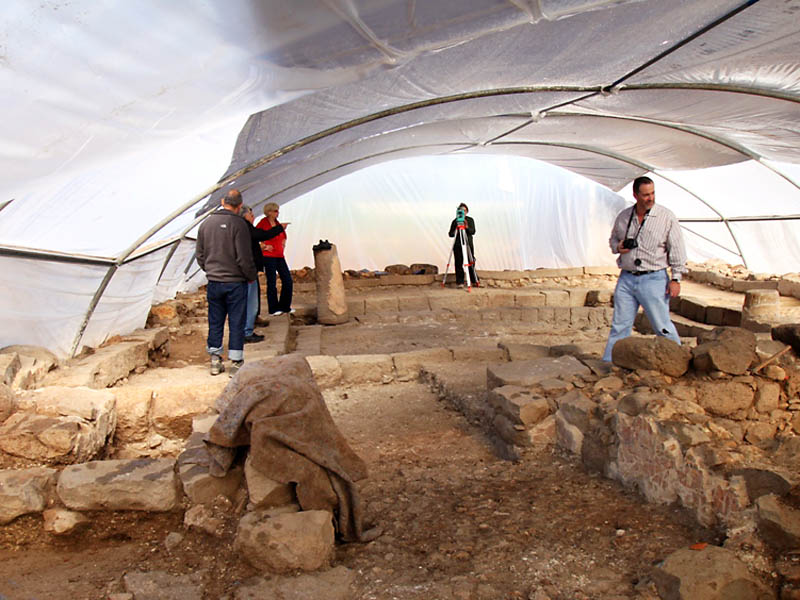
The Magdala/Migdal Synagogue. Photo by Jim Joyner.

The Magdala/Migdal Synagogue. Photo by Jim Joyner.

There is a replica of the “table” that was found in the synagogue at the site. The glare on the case was bad, but I followed the tip of Dr. Carl Rasmussen (Holy Land Photo’s Blog), I went to the Notre Dame Hotel and made a photo of the replica there. Since his photo, the table has been put in a case. Notice the menorah.
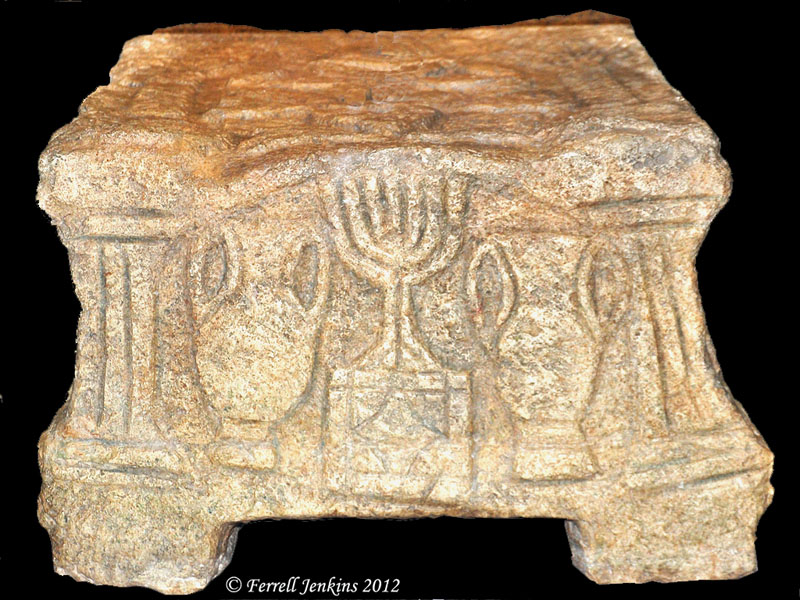
Magdale Synagogue Table - Notre Dame Hotel, Jerusalem.

Magdala Synagogue Table – Notre Dame Hotel, Jerusalem. Photo by Ferrell Jenkins.

We were told at the site that the original is now in the Rockefeller Museum. Whether on display or being examined by the IAA, I do not know.
The “wife of Christ”

Reminds me of a preaching brother in the Ohio Valley a few decades back who had trouble pronouncing the letter “L”. As a result, he often spoke of the “wife of Christ.” True story. Like the Europeans who says “elewator” in stead of “elevator.”

Having been out of the country for three weeks and still delayed in New York, I have been unable to mention the recent spate of media attention to the claim of a document in which Jesus mentions His wife.

For those who are interested in reading some reliable responses to this nonsense, I call attention to two posts by Todd Bolen at the Bible Places Blog.

In the first one, Bolen briefly summarizes his response to the story under the title “Somebody Once Believed That Jesus Had a Wife” here.

In the second one, here,  he lists a summary of more than a dozen articles worth reading.

Don’t go to church Sunday morning without being prepared. Someone is sure to mention one of the brief reports they heard on TV.

Visiting Mount Gerizim

Today we rented a car that could be driven in the West Bank and drove north to Nablus (site of ancient Shechem) and Mount Gerizim, the home of the Samaritans. Samaritans believe the temple was to be built on Mount Gerizim rather than Jerusalem. They think Abraham offered Isaac on the mountain. They accept only the first five books (the Pentateuch) of the Old Testament.

The blessings and curses of the Mosaic Law were to be read on Mount Gerizim and Mount Ebal once the children of Israel crossed into the promised land.

“It shall come about, when the LORD your God brings you into the land where you are entering to possess it, that you shall place the blessing on Mount Gerizim and the curse on Mount Ebal.” (Deuteronomy 11:29 NAU) cf. Joshua 8:33-35.

It is fairly easy to get to the new archaeological park except for a few bad places in the road in the modern Samaritan village of Kiryat Luza.

Rather than deal with the archaeological information, I thought I would share a couple of photos of some places of significant to the Samaritans. These are within the park.

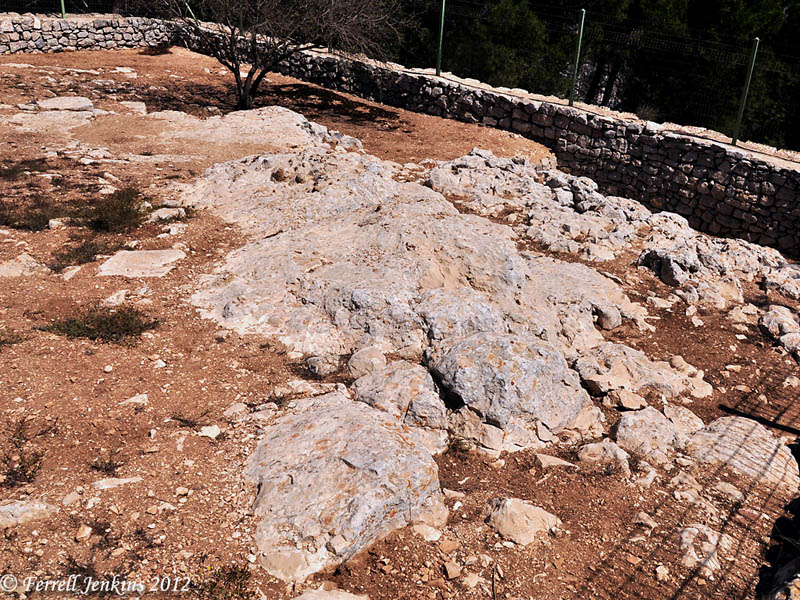
The first photo shows what according to Samaritan tradition is the altar on which Abraham was commanded to offer Isaac (Genesis 22:1-3). Remember that the Samaritans believe that this is Mount Moriah.

Altar of Isaac on Mt. Gerizim (Samaritan View). Photo by Ferrell Jenkins.

Samaritan tradition identifies this rock as the Altar of Isaac where Abraham began to offer Isaac. Photo by Ferrell Jenkins.

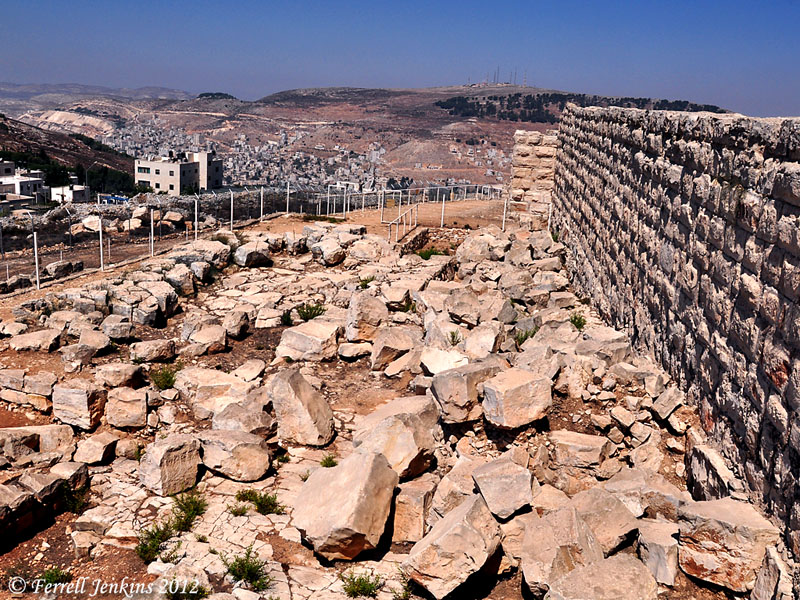
The next photo shows what the Samaritans call the “Twelve Stones.” Samaritans says that the Israelites built the altar they were commanded to built when they crossed the Jordan (Deuteronomy 27:4).

The Twelve Stones, according to Samaritan tradition. Photo by Ferrell Jenkins.

The Twelve Stones, according to Samaritan tradition. Photo by Ferrell Jenkins.

For more information about the archaeological park and the Samaritans see here. The park is under the direction of the Judea and Samaria Civil Administration and the (or of the) Israel Nature and Park Authority.

If you have an interest in the historical information about the temples on Mount Gerizim, check this article by Yitzhak Magen, the recent excavator, here. An attractive brochure is available at the entrance to the park with text by Magen. It is a pleasure to see a brochure written by a knowledgeable person.

The Shephelah and the Coastal Plain

Today was an easy day of travel, but an extremely important one.We left Jerusalem headed for the Shephelah (lowland; Deuteronomy 1:7). We made a brief stop at Beth-shemesh where the ark of the covenant was returned from the Philistines to Israel (1 Samuel 6). This was also the territory of Samson (Zorah and Esthaol (Judges 13).

We drove through the Valley of Elah (1 Samuel 17) and called attention to the sites located in the area (Socoh, Azekah, and Khirbet Qeiyafa). We made a stops at Tel Goded, Maresha, Tel Burna, Lachish, and Tell es-Safi/Gath for photographs.

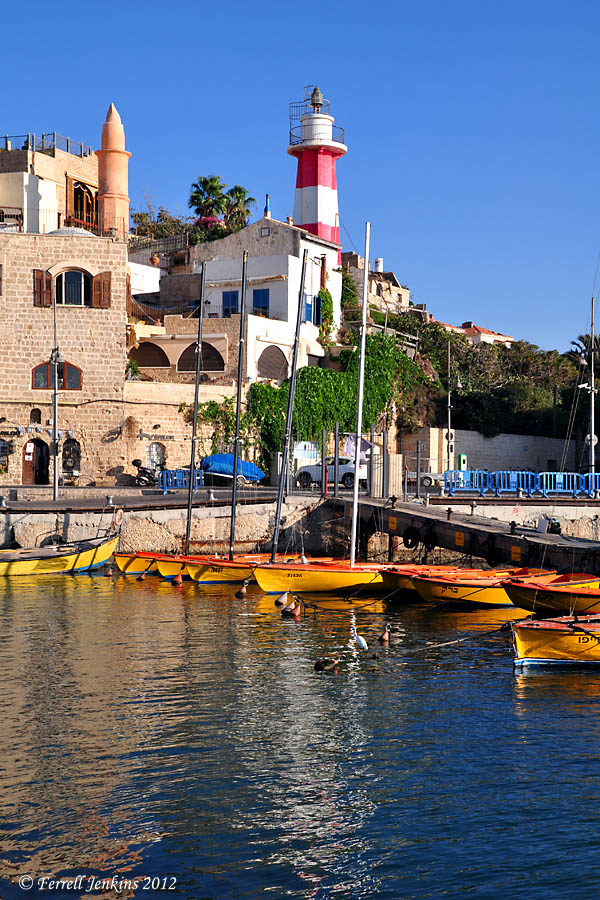
Our final stop was at Joppa (Yaffo). This is the site we intended to begin with, but our flight was delayed leaving New York and we were not able to go there on the first day of the tour. The photo below is of the fishing port and lighthouse at Old Joppa.

The fishing port and lighthouse at Old Joppa. Photo by Ferrell Jenkins.

The fishing port and lighthouse at Old Joppa. Photo by Ferrell Jenkins.

Joppa is located in the Plain of Sharon and served as the seaport for Jerusalem which is about 35 miles away. The city is now called Jaffa, or Yafo. Joppa was a walled town as early as the reign of Pharaoh Thutmose III (1490-1435 B.C.) who mentions Joppa in his town lists.

Here are a few of the biblical highlights for Joppa.

  • Joppa was assigned to the tribe of Dan, but was not controlled by the Israelites till the time of David (Joshua 19:46).
  • Hiram of Tyre floated cedar from Lebanon to Joppa for Solomon’s Temple (2 Chronicles 2:16).
  • Jonah sought a ship for Tarshish at Joppa to avoid going to Nineveh (Jonah 1:3).
  • Cedars from Lebanon again were floated to Joppa for the rebuilding of the temple (520-516 B.C.; Ezra 3:7). The port of the city is behind St. Peter’s Church.
  • Tabitha (Dorcas) lived in Joppa. When she died the disciples sent for Peter who was a Lydda. He came to Joppa and raised Dorcas (Acts 9:36-42). (Acts 10:6).
  • Peter stayed many days in Joppa with Simon the tanner (Acts 9:43). His house was by the sea (Acts 10:6). A house near the port is shown as the house of Simon, but there is no way to know this with certainty.
  • Peter received the housetop vision and learned that he was to go to Caesarea to preach the gospel to the Gentiles at the house of the Roman centurion Cornelius (Acts 10:23).

Benjamin plateau, Israel Museum, and the Garden Tomb

This morning we went out to Nebi Samwil [prophet Samuel], a site suggested as the location of Mizpah by some scholars. Others suggest Tell en-Nasbeh, a mound located at Al Bira in the West Bank. (See Jeffrey Zorn, “Mizpah: Newly Discovered Stratum Reveals Judah’s Other Capital.” BAR 23:05 (Sep/Oct 1997).

  • Samuel, the last judge of Israel, called all of the people of Israel to Mizpah and judged them (1 Samuel 7:5-6).
  • Samuel also anointed Saul to be the first king of Israel at Mizpah (1 Samuel 10:1).
  • Mizpah became the headquarters of Gedaliah as governor of Judah after the Babylonian destruction of Jerusalem  (2 Kings 25:23).

From the hill, we were able to look north to the Benjamin plateau. Both King Saul and Saul of Tarsus (Paul) were from the tribe of Benjamin. El Jib, the tell of Gibeon, is also visible from Nebi Samwil.

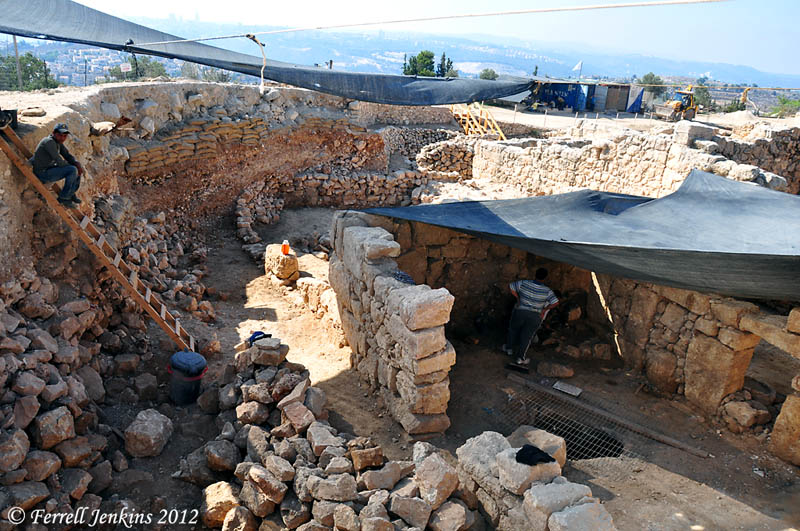
Some new excavations were underway under the direction of the National Parks Authority. We were told that Hasmonean ruins has been excavated, and there was some evidence from the Persian and Babylonian periods.

Excavations at Nebi Samwil - Sept. 13, 2012. Photo by Ferrell Jenkins.

Excavations at Nebi Samwil – Sept. 13, 2012. Photo by Ferrell Jenkins.

After Nebi Samwil we went to the Israel Museum campus for a visit of the Second Temple Model, the Shrine of the Book, and the Israel Museum. This is the first time I have been in the Museum since photos (without flash) have been allowed.

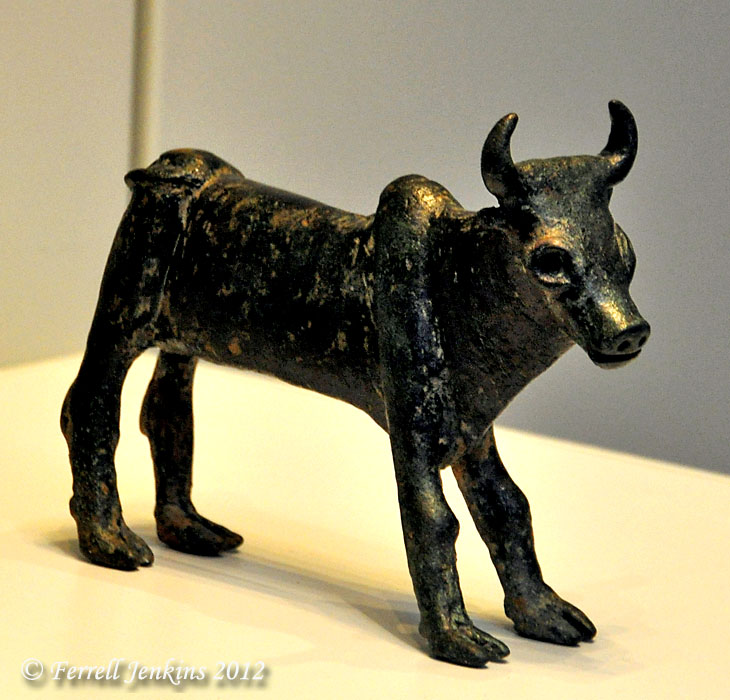
I will share one photo that I am pleased to have in my collection. It shows a bronze bull, dating to the 12th century B.C., found in the Samaria region.

Bronze Bull from Samaria Region - Israel Museum. Photo by Ferrell Jenkins.

Bronze Bull from Samaria Region – Israel Museum. Photo by Ferrell Jenkins.

This bull, and others those that have been found at Ashkelon and Hazor, remind us of the calf at Sinai (Exodus 32:24) and the calves set up by Jeroboam at Dan and Bethel (2 Kings 10:29).

The information posted with the statuette says,

Canaanite in inspiration, it attests to Israelite adoption of Canaanite motif. For the Israelites it may have symbolized God, or the pedestal of an unseen God.

Thank you, Israel Museum, for allowing photos.

In the late afternoon we visited The Garden Tomb. While this tomb is clearly not the tomb of Jesus, it provides a good illustration in a natural setting — far different from the Holy Sepulcher.

Visiting the Old City of Jerusalem

We left the hotel this morning at 7:15 in order to be at the security line going to the Temple Mount platform as soon as it opened. After that visit we followed the traditional Via Dolorosa. After a visit to the Church of the Holy Sepulchre we went to the Jewish Quarter to see the Broad Wall, the Burnt House (from A.D. 70), and the Herodian Mansion (or perhaps the house of priests).

We came down to the Western Wall Plaza to visit the Western Wall, then the Davidson Center excavations.

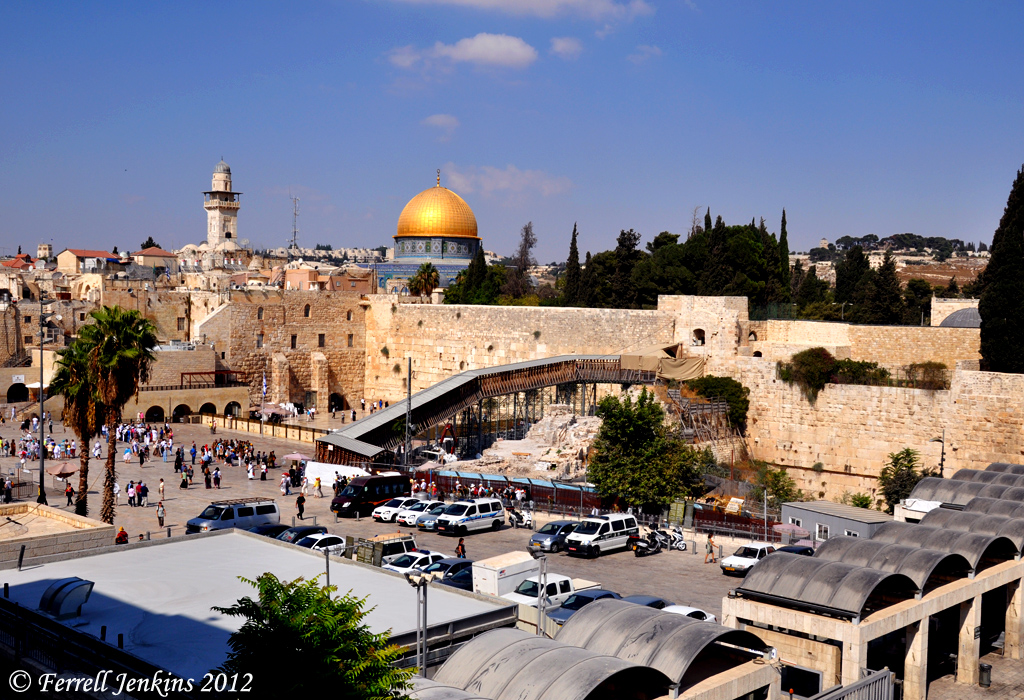
This photo of the Western Wall and Temple Mount platform was made from the southwest. You can see a portion of the Western Wall, the Mughrabi (temporary) Bridge, and the Dome of the Rock (where the biblical Temple once stood).

Temple Mount in Jerusalem from the SW. Photo by Ferrell Jenkins.

Temple Mount in Jerusalem from the SW. Photo by Ferrell Jenkins.

On the right side of the photo, in the distance, can be seen the hill between Mount Scopus and the Mount of Olives. I think this is where the Augusta Victoria Hospital is located.

It was a full day.

Visiting the Jordan River

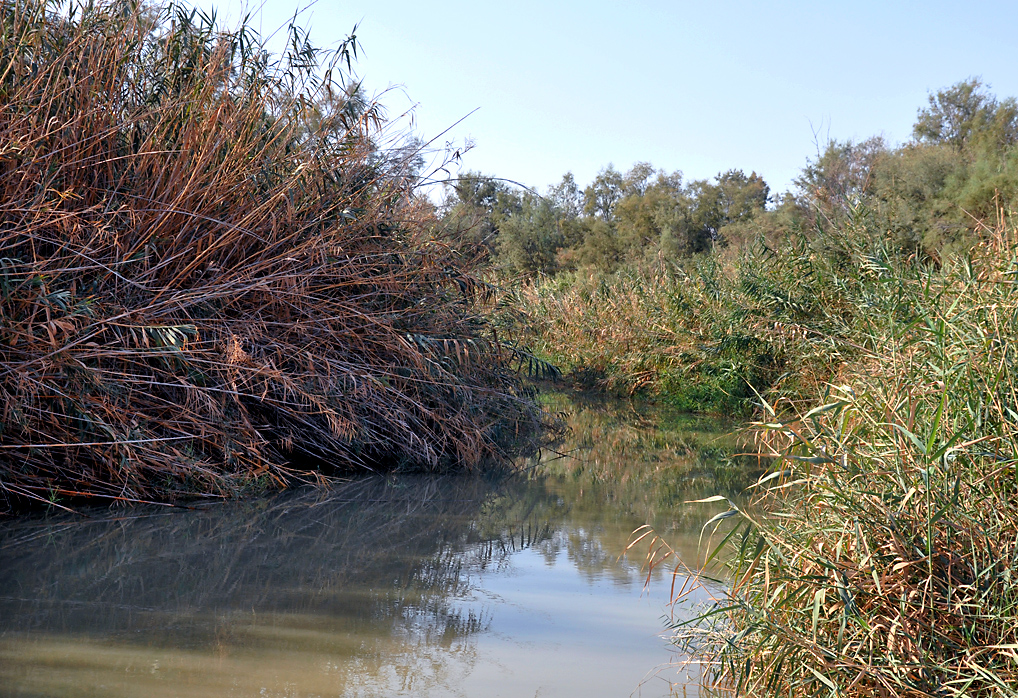
Israel has opened access to the Jordan River at the traditional site of the baptism of Jesus.

Bible students enjoy visiting this site for several reasons.

  • Ancient Israel crossed the Jordan to enter the promised land (Joshua 3).
  • Elijah and Elisha crossed the river (2 Kings 2).
  • John baptized in the Jordan (Matthew 3:6ff.; Mark 1:5-9; John 1:28; 10:40).
  • Jesus was baptized in the Jordan (Matthew 3:13).
  • Naaman dipped in the Jordan at a site further north (2 Kings 5).

We were able to visit the site this morning.

The Jordan River at the site of the baptism of Jesus. View south. Photo by Ferrell Jenkins.

Jordan River at the site of the baptism of Jesus. View south. Photo by Ferrell Jenkins.

We also visited Masada, Qumran, and Jericho.

Jacob’s Well — from Jacob to Jesus

Jesus came to Sychar, a city of Samaria, near the piece of land Jacob had owned (John 4:5; Genesis 33:19). The territory was apportioned to the descendants of Joseph, and Joseph was buried there at Shechem (Joshua 24:32). It was a place of great historic importance.

We are not able to speak with certainty regarding the location of Sychar. Some scholars associate the site with Shechem; others think it should be identified with the village of Askar which is located a short distance north. The traditional Jacob’s Well is located at Shechem in the valley between Mount Gerizim and Mount Ebal. The modern town of Nablus now fills this valley.

André Parrot says,

“Of all the ‘holy places’ of Palestine, none has more reason to be considered authentic than Jacob’s well. Indeed, there is no reason why its authenticity should be questioned” (Land of Christ 65).

Parrot describes the water as “cool and pleasant-tasting…drawn from a depth of 128 feet.” I have drunk the water several times, but in the past couple of decades my guides have advised against it due to pollution in the area.

The Samaritan woman said, “the well is deep” (John 4:11). Parrot reports the well is 128 feet deep. Murphy-O’Connor says it is 22.5 meters deep (about 74 feet). McGarvey cites several measurements mentioned in 19th century writers and reminds us that the well became filled with stones cast in by travelers trying to hear how long it would take a stone to hit the bottom (Lands of the Bible 283). He reports that the well was often dry.

There are numerous springs in the area of Shechem. Jacob, as a late-comer to the region, might have found it necessary to dig a well to assure water for his family and cattle.

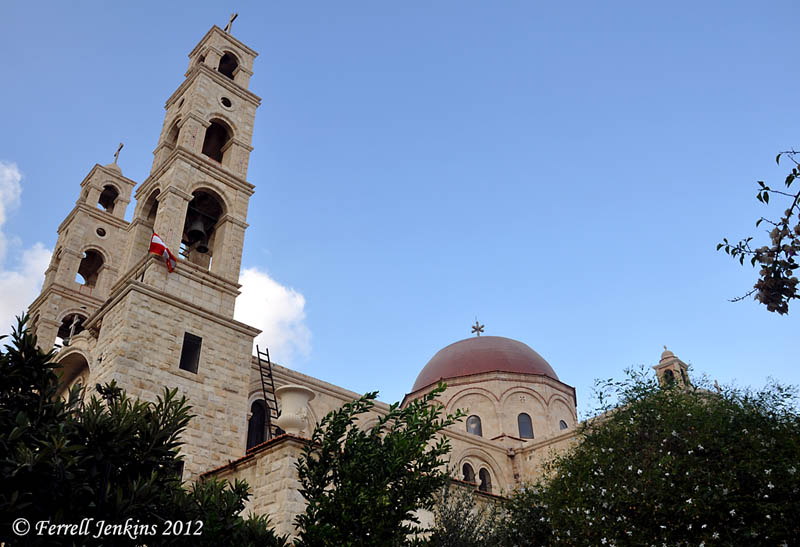
A church was erected over the well about A.D. 380. The Crusaders built another church on the site in the 12th century. The property came under the control of the Greek Orthodox church in 1860. By the end of the 19th century the Greeks began a new church, but construction was halted during World War I. The new building was completed in 2007. This photo shows the towers and dome of the church today.

New Greek Orthodox Church covering Jacob's Well. Photo by Ferrell Jenkins.

New Greek Orthodox Church covering Jacob’s Well. Photo by Ferrell Jenkins.

It has been difficult for groups to visit Jacob’s Well in recent years due to the situation in Nablus and the West Bank. Today we were able to visit the church and make photos.

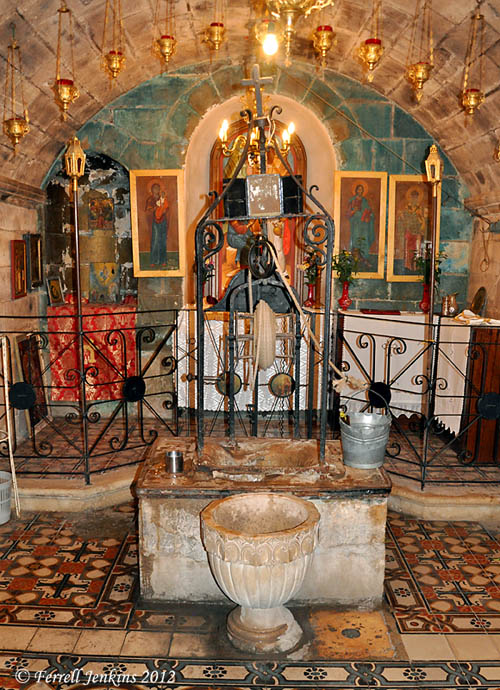
Jacob's Well. Photo by Ferrell Jenkins.

Jacob’s Well. in a Greek Orthodox Setting. Photo by Ferrell Jenkins.

We had a nice day visiting Beth Shean, Spring of Harod (it was dry); Jezreel, Samaria, as well as Jacob’s Well.

Around the Sea of Galilee

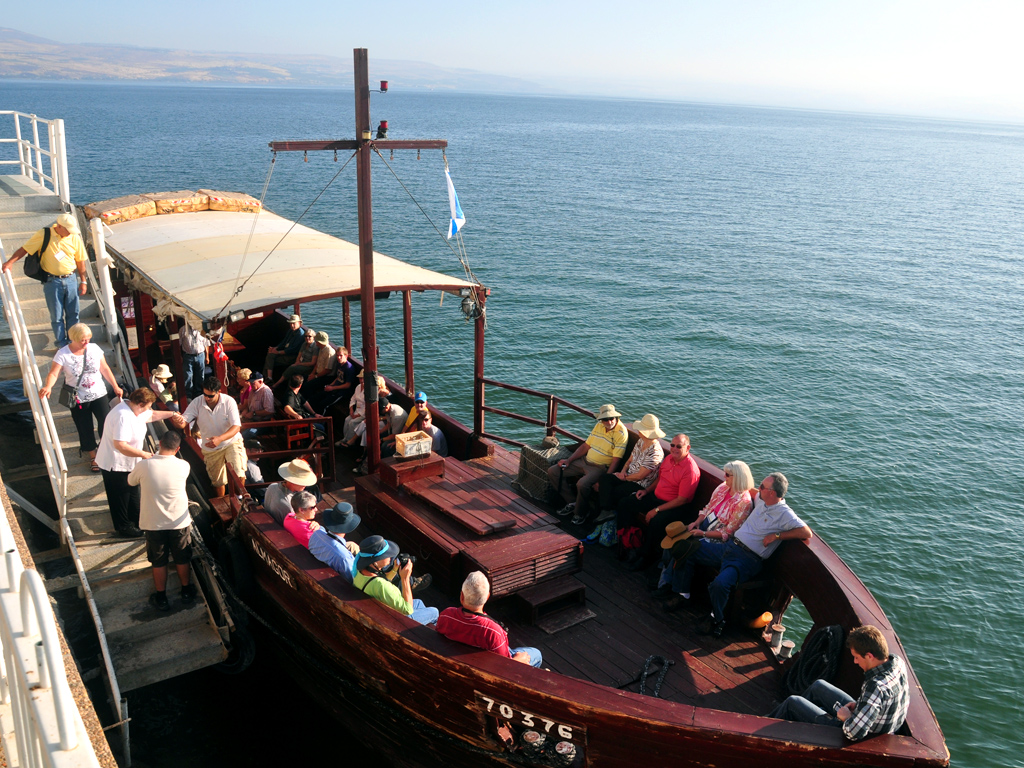
Our great little hotel in Tiberias, the Ron Beach, has its own boarding dock. I was delighted when I learned that the water level was high enough that this could be done. This morning we stepped out of our rooms and walked a few yards to boarded our boat for a ride on the Sea of Galilee.

We board our boat from the Ron Beach Hotel in Tiberias. Photo by Ferrell Jenkins.

We board our boat from the Ron Beach Hotel in Tiberias. Photo by Ferrell Jenkins.

After an orientation from the Sea, we visited major sites around the Sea of Galilee. These included the Roman Boat, Magdala (we actually entered the site, but were not allowed to make photos of the new excavations; it is not ready for tourist yet), Chorzain, Capernaum, the Mount of Beatitudes, the Cove of the Sower, Bethsaida/Geshur, Kursi, and a view of Hippos.

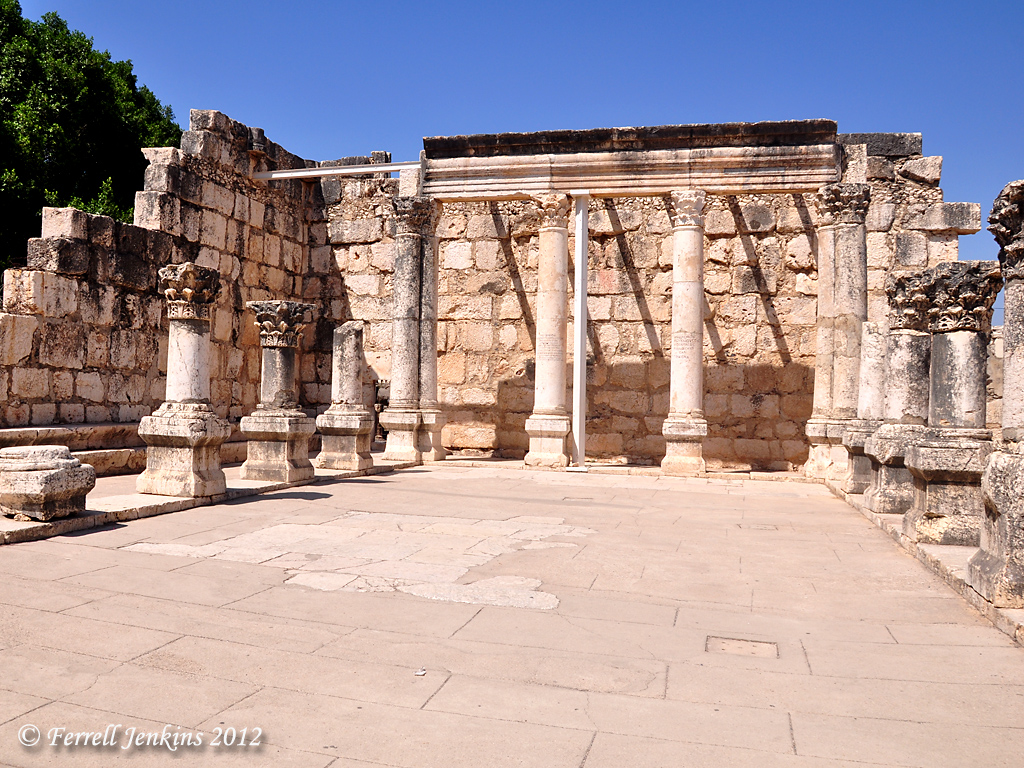
At Capernaum I waited with patience until I was able to get this photo of the interior of the 4th century (reconstructed) synagogue without a tourist in attendance. Not easy, I can tell you.

Interior of the Capernaum Synagogue. Photo by Ferrell Jenkins.

Interior of the Capernaum Synagogue. Photo by Ferrell Jenkins.

To my knowledge everyone in our group is well and enjoying this wonderful educational and spiritual experience.

Peter confesses Jesus to be “the Christ” at Caesarea Philippi

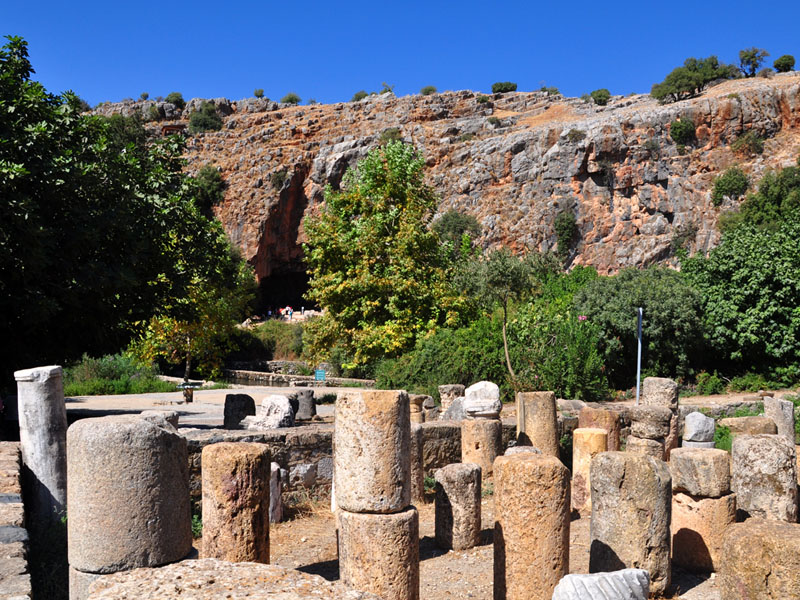
The major sites we visited today included Hazor, Dan, Caesarea Philippi, the Golan Heights, and the Jordan River. Here is a new photo I made at Caesarea Philippi. In the foreground there are broken columns discovered in the excavations at the site. The Banias (or Hermon) River, a major source of the Jordan River,  is hidden by the plants in this photo.

Caesarea Philippi. Photo by Ferrell Jenkins.

Caesarea Philippi. Photo by Ferrell Jenkins.

The Caesarea Philippi of the ministry of Jesus is also known as Banias (Matthew 16:13-19).

Caesarea Philippi is located on the eastern side of the Beka or Hula Valley.  The valley is called the Beka in Lebanon, and a little further south the Hula Valley. The elevation is about 1150 feet above sea level in the foothills of Mount Hermon.

Matthew uses the term district or region to describe the area Jesus visited with His disciples (Matthew 16:13). The King James Version coasts is misleading. Mark’s term is villages (Mark 8:27). It was not far from here that Jesus was confessed as the Christ by Peter.

Jesus went out, along with His disciples, to the villages of Caesarea Philippi; and on the way He questioned His disciples, saying to them, “Who do people say that I am?”  They told Him, saying, “John the Baptist; and others say Elijah; but others, one of the prophets.” And He continued by questioning them, “But who do you say that I am?” Peter answered and said to Him, “You are the Christ.” (Mark 8:27-29 NASB; also read Matthew’s account)