Category Archives: New Testament

From the Highlands to the Lowlands

We left Inverness about 8 a.m. this morning headed south for Edinburgh. I began to notice road signs pointing to Elgin. This was the birth place of the late New Testament scholar, F. F. Bruce (1910-1990). He taught at Edinburgh, Leeds, Sheffield, and closed his academic career as Rylands Professor of Biblical Criticism and Exegesis at the University of Manchester. I have been greatly helped by the writings of Bruce, and was delighted to have the opportunity to meet him at a professional meeting in 1975. He was very gracious to an insignificant young teacher, and I have since appreciated that meeting.
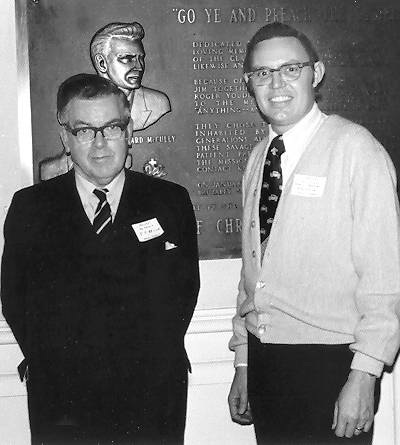
F. F. Bruce and Ferrell Jenkins in 1975.

Elgin, Scotland, has a nice web page with a list of Famous Children. Alexander Graham Bell is listed among the famous from Elgin. (Poor guy never had to drive in front of a teenage girl with a cell (mobile  here) phone to her ear!). But F. F. Bruce, author of more than 30 books, is not listed among the Famous Children. Perhaps that will be corrected.

By the time we reached the area around Balmoral, summer residence of Queen Elizabeth and the Royal Family, the weather was very cold and windy. About the time we stopped at a ski lift snow flakes began to fall. The workers in the restaurant said it was the first snow of the season. Here is a photo I took. What appears to be white strips are actually snow flakes that were falling close to the camera.
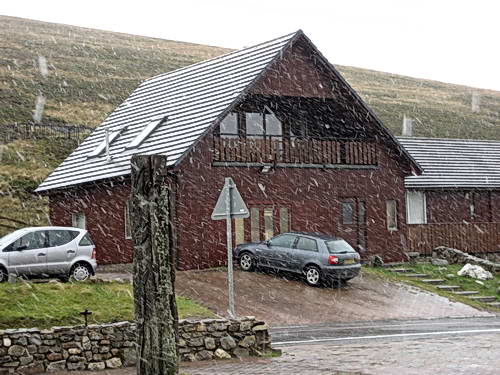
Snow in the area of Balmoral. Sept. 17, 2007. Photo by Ferrell Jenkins.

Because the Queen is at Balmoral we were not permitted to visit the estate. We did visit the Presbyterian church where the Queen, head of the Church of England, attends when she is in Scotland. Not enough time to tell you about this. If you saw The Queen, staring Helen Mirren, you saw scenes typical of this region. Here is a photo of our coach coming over a one lane bridge.
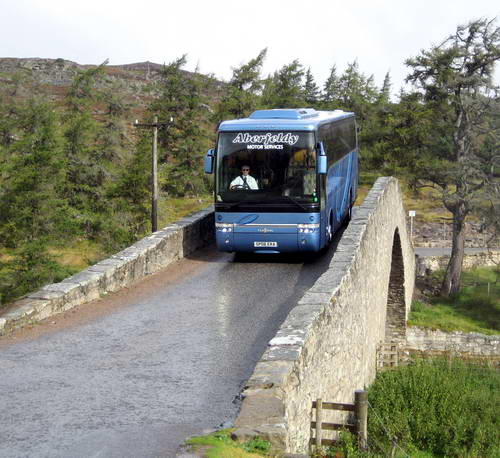
Coach coming over bridge near Balmoral. Photo by Ferrell Jenkins.

Heather is in abundance on the hills of the Highlands. Here is a close up.
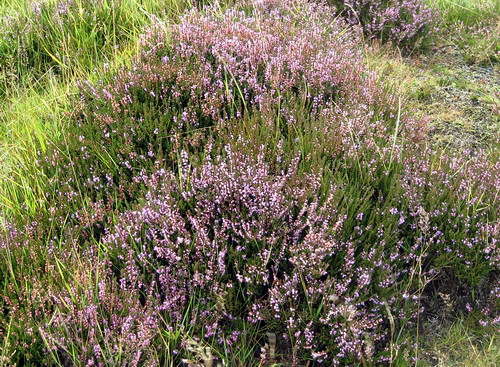
Heather near Balmoral. Photo by Ferrell Jenkins.

After lunch in Braemor we continued to St. Andrews, famous to all golfers as the birthplace of golf. We made a group photo here. The 18th hole is to the left.
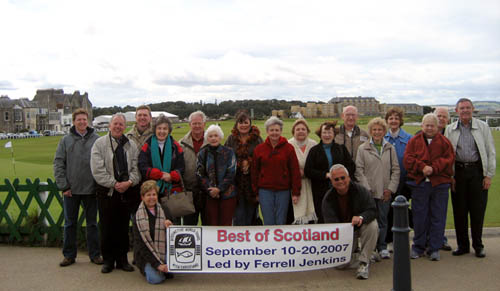
Best of Scotland Group Led by Ferrell Jenkins.

St. Andrews is home to one of the oldest universities. One of the blogs I read regularly is PaleoJudaica, a weblog by Jim Davila of St. Andrews University. St. Andrews has an important place in the Reformation Movement. John Knox preached here. At least four leaders of the Reformation, including Patrick Hamilton and George Wishart, were martyred in St. Andrews. I suspect that not many people who visit the Old Course know that the monument on the hill overlooking the course is a Martyrs Monument.
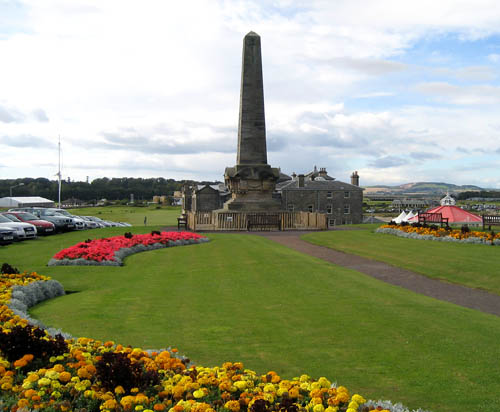
Martyrs Monument at St. Andrews. The Old Course in the distance. Photo by Ferrell Jenkins.

This golfer was having a little problem with the rough. That’s the North Sea in the distance. We had sun most of the time while here, but the wind was high and cold.
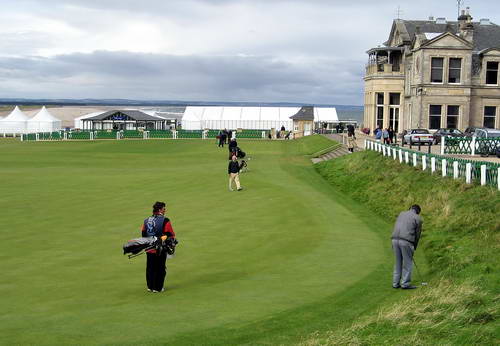
In the Rough at St. Andrews. Photo by Ferrell Jenkins.

We arrived in Edinburgh by 6:30 p.m. after an eventful day of beautiful scenery and unusual weather.
A cold, but enjoyable weekend in Inverness

Yesterday was Saturday, the Sabbath, the day of rest of the ancient Israelites (Ex. 20:8).. Today is Sunday, the Lord’s Day (Rev. 1:10; Acts 20:7). This day commemorates the resurrection of the Lord Jesus Christ. Christians of New Testament times gathered on this day to worship the Lord.

To a Floridian it has been cold here in Inverness, Scotland. Yesterday morning it was about 44 degrees. The forecast for this morning is 42, with a high of 50 for the day. The rain and wind makes it even colder in the northeast of Scotland. It is not raining at the moment and the wind is calm.

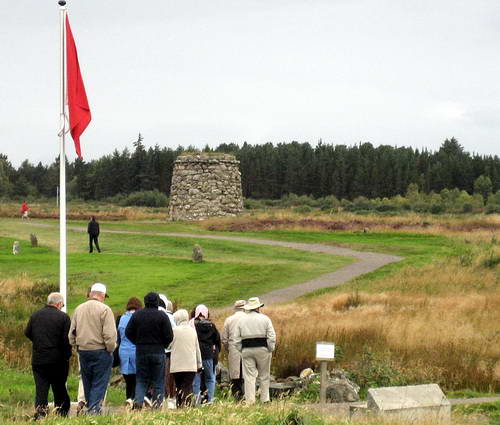
Yesterday we went to a famous battlefield nearby called Culloden. Here in 1746 the Jacobites (those who favored the kings named James) were defeated by the Government Army. This was the last battle fought on British soil.

Culloden Battlefield, Inverness, Scotland. Photo by Ferrell Jenkins.

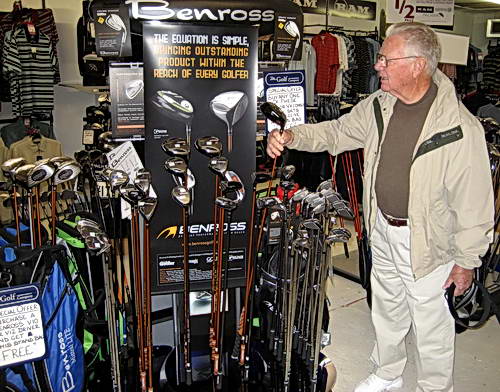
Later we made the perfunctory stop at a woolen mill. Actually, many of the folks on the tour enjoy this. It gives them a chance to pick up a souvenir. Not everyone is looking at the clothing, as this picture of Herbert shows.

Gold at the Woolen Mill

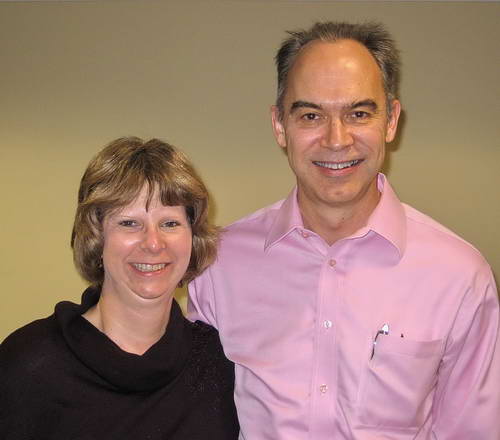
The weather was much better today. It was still cold, but the wind was calm even during periods of showers. Tim and Ann Byers, now living in Aberdeen, came to worship with us. It was a pleasure to see them. Both had been among my students at Florida College. Tim is now on work assignment in Scotland. He has produced a computer program called Everyone’s Guide to the Bible. I suggest you look into this good program. The web site is http://christianfriendssoftware.com. Here is a photo of Tim and Ann that I made this morning. They joined us for the afternoon sightseeing and we had a good visit.

Tim and Ann in Scotland.

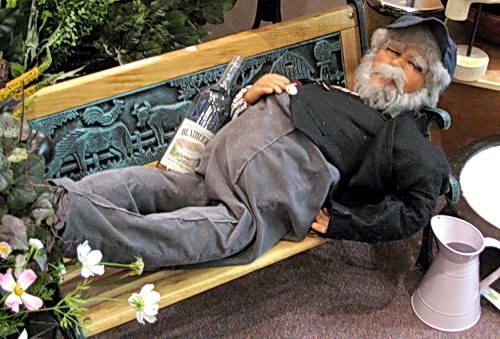
In the afternoon we went a few miles from Inverness to the Spreyside Heather center where we enjoyed a nice lunch. They even had jewelry made from heather. After that we continued to Cairngorm Mountains and took the funicular railway to near the top. The highest peak of the mountain, the highest in the UK, is 4,296 feet above sea level. Haze covered the top of the mountain, but we enjoyed the train ride and a cup of hot chocolate at the restaurant. There were some neat displays at the Spreyside Heather center. I suspect this one below illustrates the danger of Scotch Whiskey.

Scotch Whiskey. Display at the Spreyside Heather Center. Photo by Ferrell Jenkins.

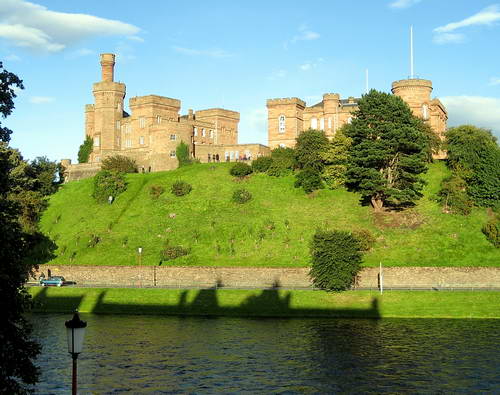
Our hotel in Inverness is situated directly across from the Inverness Castle. It is a fairly new construction that serves as the town center (city hall, etc.). The river in the foreground is the Ness River. It flows east from Loch Ness to the North Sea.

Inverness Castle. Photo by Ferrell Jenkins.

Tomorrow we leave early for St. Andrews and Edinburgh. Thanks for dropping by.

Temple Mount controversies

On recent tours to Israel we have been unable to visit the Temple Mount. The Islamic buildings there, the Mosque of Omar (Dome of the Rock) and the Al Aksa Mosque, have no spiritual significance for us. The site, however, is very important biblically. It was likely here on Mount Moriah that Abraham offered Isaac (Genesis 22). It is where David placed the ark of the covenant, and where the Temple was built by Solomon in 966 B.C. ( 2 Chronicles 3). That temple was destroyed by the Babylonians in 597 B.C.. After the return from captivity, the Jews rebuilt the temple with the help of the Persian king Darius in 520-516 B.C. Herod the Great more or less replaced this structure with his magnificent temple beginning in 19 B.C. Jesus visited this temple numerous times (John 2:19). In this area the gospel was preached for the first time on the Pentecost of Acts 2.

In the late 7th century A.D., a Muslim ruler constructed the building we now commonly call the Dome of the Rock.

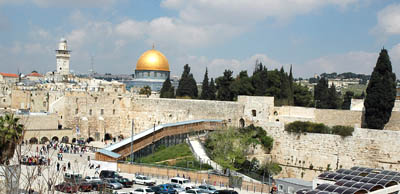
The Temple Mount in Jerusalem

The photo above, made April 3, 2006, shows the Western Wall of the temple enclosure built by Herod. The temple platform, where you see the golden dome, is where the biblical temple once stood. Many news items have been written about the temporary bridge leading to the Temple Mount, and the removal of the earth by archaeologists to reveal more of the Western Wall. There has also been considerable controversy over repairs being made by the Muslims on the Temple Mount.

One good source to help you keep up with this controversy is Dr. Leen Ritmeyer’s blog. There you will find pictures of the terrible destruction taking place. Ritmeyer has drawn many of the excellent plans you may have seen published in various books.

Weeping for the Jordan

“Weeping for the Jordan” is the title of a short news item in Christianity Today, Sept., 2007, p. 17. The article from the RNS says the lower portion of the Jordan River “is so polluted that the World Monuments Fund (WMF) has designated it an Endangered Cultural Heritage Site.”

We often point out to audiences that the Jordan has much less water flowing through it now than it did even 50 years ago. This is because Israel uses much of the water of the Jordan and its tributaries for water and agricultural irrigation. Jordan has dams on the Yarmuk and Jabbok rivers, tributaries from the east.

There is not full agreement among scholars, but many believe that the site where Jesus was baptized by John is a few miles north of the Dead Sea. In 1967 I was able to visit that site. Since the 1967 war it has not been possible for tourists to visit there. A few years back a site was excavated in Jordan that has been claimed to be Bethany Beyond the Jordan (Jn. 1:28).

The CT article points out that the Jordan River is “highly polluted with sewage and agricultural runoff” near Bethany Beyond Jordan, but that some tourists do not realize this and wade in the water.

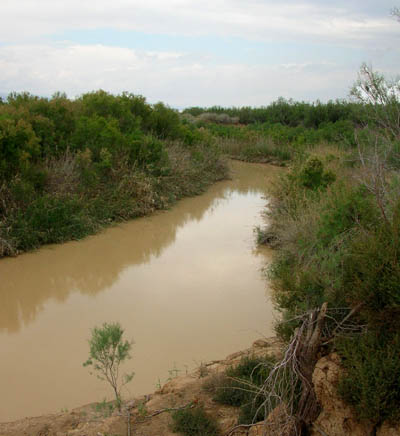
In 2006 I was able to take my group to Bethany Beyond Jordan and visit the Jordan River. Here is one of the photos made at that time.

Jordan River at Bethany Beyond the Jordan.

We are hopeful of visiting this site again in 2008. Perhaps it is in the area where John did some of his baptizing (cf. Jn. 10:40). The Israelites crossed the Jordan somewhere near here (Josh. 3), and the prophets Elijah and Elisha crossed in the opposite direction near here (2 Kings 3).

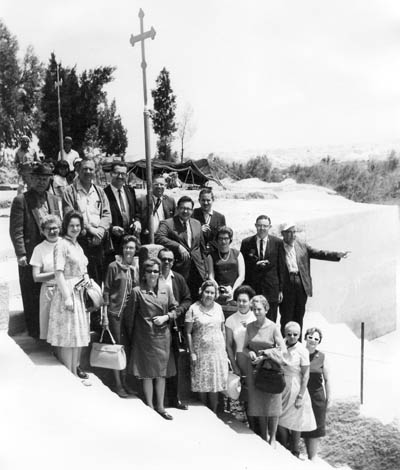
This photo was made on the West side of the Jordan River, in the country of Jordan, in 1967. This is directly across from the Bethany Beyond Jordan site.

1967 Bible Land Group led by Ferrell Jenkins and William E. Wallace.

The photo was made on or about May 5, 1967. Notice the attire. Women wore hosiery and other items to help their body hold an ideal shape. Most men wore a coat, and many wore ties on the plane and throughout the entire trip, even in hot weather. Some hotels would not allow a man in the dining room unless he was wearing a coat. Were these the good old days?

Psychological Study of Herod the Great

A historian from Tel Aviv University (Kasher) and a psychiatrist from Ben-Gurion Uniersity of the Negev (Witztum) have written King Herod: A Persecuted Persecutor: A Case Study in Psychohistory and Psychobiography. This book sells for $193, so I suspect that most of us will be satisfied to read a good review. Magen Broshi, a well-known Israeli archaeologist, has a review in Haaretz. Don’t expect this review to stay online very long. I suggest you go immediately and copy this good review.

With the recent interest in Herod due to the discovery of his tomb at the Herodium, this book is timely. If you had thought Herod was cruel, just wait till you read this.

I copy (print) article like the one mentioned above in Adobe PDF, and then save them in the appropriate folder on my computer (the new filing cabinet!).

HT: Paleojudaica.

Ben Witherington at Mount Nemrud [Nemrut]

Ben Witherington recently visited Mount Nemrud [or Nemrut] and has posted several good photos.  Note his point about the Greek of Ephesians and 2 Peter, and his theological comments on heaven and hell. Click here to go to the Ben Witherington blog.

And while looking at Ben’s blog, you might want to check his excellent stormy night photos of the Library of Celsus at Ephesus.  Click here.

Arrival in Istanbul on Saturday

Our flight from Antalya to Istanbul was delayed by a little over an hour. We felt right at home! Istanbul was formerly known as Byzantium and Constantinople. This is where Europe meets Asia. We enjoyed a boat ride along the Bosphorus, vital waterway linking the Black Sea to the Mediterranean Sea. The Asian side was known as Bythinia in Roman times. Peter addressed his epistles to the saints in various parts of modern Turkey (1 Peter 1:1). We made a short visit to the Grand Bazaar. This bazaar is made up of 4,000 little shops. The prices are not that great and one must be able to bargain or else be ripped off.

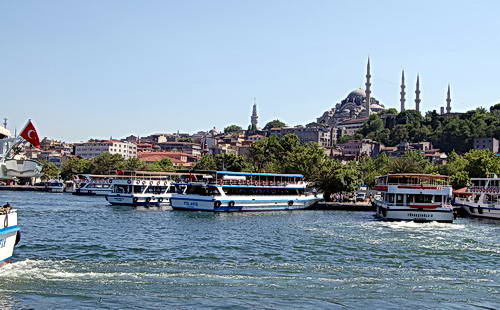
The Golden Horn in Istanbul. Photo by Ferrell Jenkins.

This photo shows the Golden Horn in Istanbul, Turkey. Here is located the Suleymaniye Mosque, the Hagai Sophia, and Topkapi Palace.

Perga and Attalia in Pamphylia

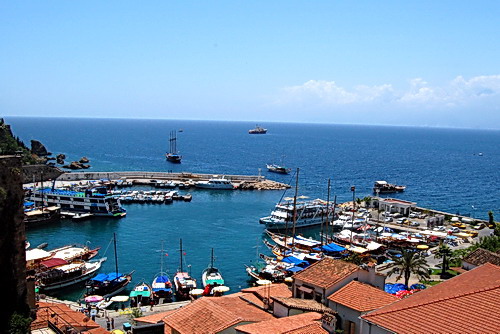
Friday we visited the historic ruins of ancient Pamphylia: Antalya (biblical Attalia, Acts 14:25) and Perge. Antalya is the modern name for Attalia which served as the port of entry from Egypt and Syria to the interior of Asia. From here Paul sailed back to Antioch (Acts 14:25). Our visit included the harbor, and Hadrian’s Gate, The photo below is of the harbor in Antalya (biblical Attalia).

The Harbor of Antalya, Turkey. This was the city of Attalia in New Testament times. Photo by Ferrell Jenkins.

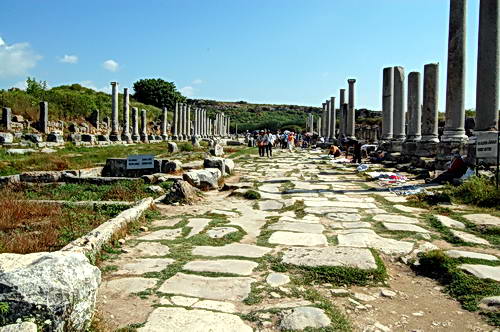
We enjoyed the visit to Perga very much. There are impressive Hellenistic and Roman ruins. Most of the Roman structures date to the second century A.D. This is where John Mark turned back from the work (Acts 13:13-14; 15:37-39). On his return from the first journey, Paul spent some time preaching here (Acts 14:25).

The Roman City of Perga in Pamphylia. Photo by Ferrell Jenkins.

The museum in Antalya is one of the nicest regional museums I have visited. Many of the artifacts, especially the statuary, are from the second century Roman city of Perga. Here is a photo of an Imperial Priest. A knowledge of the Roman Cult is important when one begins to study the book of Revelation. These were the men who gave the certificates to those who had worshiped the Emperor.

Second century Roman Imperial Priest in the Antalya, Turkey, Museum. Photo by Ferrell Jenkins.

Antalya is a popular Mediterranean resort town with many nice hotels. I would have enjoyed a few days just to relax. Next is Istanbul.

Iconium, Pisidian Antioch, Attalia

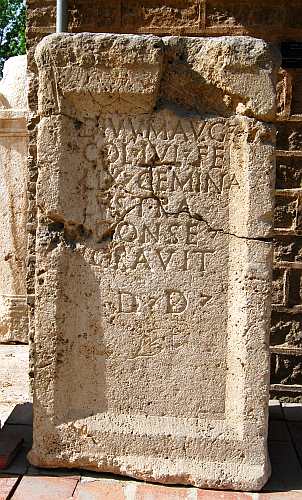
Konya is the site of ancient Iconium, one of the oldest cities of Anatolia. Paul and Barnabas encountered much opposition in this city (Acts 14:1-6). Konya is best known today as the home of the Whirling Dervishes. We made a brief visit of Konya including the Archaeological Museum. The museum contains three inscribed stone monuments of interest. One mentions Derbe, another one mentions Iconium, and the third one mentions Lystra (photo below). No ruins of Iconium have been excavated. The legendary second century Acts of Paul, telling about a convert by the name of Thecla, takes it setting in Iconium.

Lystra Inscription. Photo by Ferrell Jenkins.

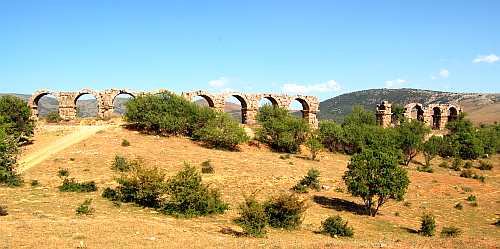
We continued west to Yalvac for a visit to the site of Pisidian Antioch. Yalvac is located on a plateau at an elevation of about 3600 feet above sea level. The nearby mound of Pisidian Antioch marks the spot where Paul presented a lesson summarizing the history of the Jewish nation, especially as it related to the Messianic promise (Acts 13:14-41). It was from this city that Paul announced that he would turn to the Gentiles (13:44-52). We also made a short stop at the archaeological museum in Yalvac and then continued through the beautiful mountains and valleys, and past Lake Egridir, to the Pamphylian coast to Antalya (Attalia) for overnight. Here is a photo of the Roman aqueduct that supplied water to the city of Antioch.

Roman aqueduct at Pisidian Antioch. Photo by Ferrell Jenkins.

Friday we visited Perga, Attalia, and the Archaeological Museum. Check back later to see the photos.

Derbe and Lystra

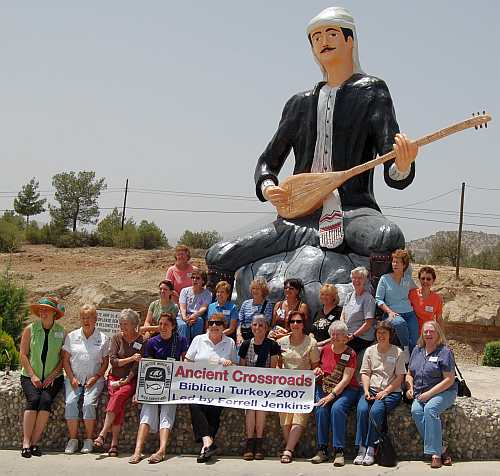
We left Adana and traveled along the beautiful Tuquoise Coast passing Mersin, Pompeipolis, Corycos and Silifke. The Mediterrenean coast is the real fruit bowl of Turkey. At Silifke we headed north and drove through another of the important passes in the Taurus Mountain highest point was about 5000 feet above sea level. We saw some Cedars of Lebanon growing in the area. That is about the same altitude of the great Cedars in Lebanon. Near Karaman we stopped for a lunch break. The ladies of the group posed under an image of one of Turkey’s famous folk musicians from the area.

The Ancient Crossroads Women near Karaman, Turkey. Photo by Ferrell Jenkins.

We visited the tell of Derbe (Kerti Huyuk; Acts 14:20-21; 16:1; 20:4). We made a short stop at the Museum in Karaman to see one of the inscriptions which helped to identify the site of Derbe. After that we headed for the mound of Lystra (Zordula) of Lycaonia near the village of Hatunsaray. It was here that the priest of Zeus wanted to offer a sacrifice to Paul and Barnabas (Acts 14:6-20). This was the home of Lois, Eunice, and young Timothy (Acts 16:1-4). These cities were in the province of Galatia (Gal. 1:2) in New Testament times. Both Derbe and Lystra await the archaeological spade.

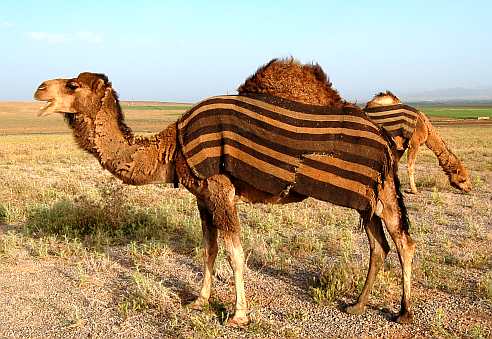
Along the way we saw a large flock of goats (several hundred) and some camels grazing in a field. The nomad family, consisting of a mother and three or four girls, had brought the animals from the Coast over a two month period. The young lady watching the camels did not know her age. She might have been between 14 and 16 told our guide they would go back “when the first snow flakes fall.” This was a good reminder of Patriarchal days of the Bible.

Migratng camels with nomads near ancient Lystra in Turkey. Photo by Ferrell Jenkins.

Thursday we plan to visit the archaeological museum in Iconium (Konya) and Pisidian Antioch before heading for Antalya (Attalia of the New Testament).