Category Archives: Israel

Safe arrival home

John Howard Payne (1791-1852) said it well, if not best, in “Home, Sweet Home.”

Mid pleasures and palaces though we may roam,
Be it ever so humble, there’s no place like home;
A charm from the sky seems to hallow us there,
Which, seek through the world, is ne’er met with elsewhere.
Home, home, sweet, sweet home!
There’s no place like home, oh, there’s no place like home!

I arrived on time this morning in Atlanta  non-stop from Tel Aviv after almost 13 hours. After clearing customs and the USA security I waited for my flight to Tampa. It was a little strange going through security in Atlanta and watching how the agents acted. I don’t recall hearing anyone in Israel yelling at the passengers or being rude to them. Neither belts not shoes had to be removed in Tel Aviv.

Waiting at Tampa International for my wife to meet me. I did not intend to be traveling on Sunday, but got mixed up on the 11:20 p.m. flight and the 12:05 a.m. flight. By the time I discovered it I did not have opportunity to make the change. I got an extra day in Israel to rest a little before departure.

Now I have to sort the nearly 4700 hi-res digital photos I made. Half of those were made in three hours on the flight over Galilee.
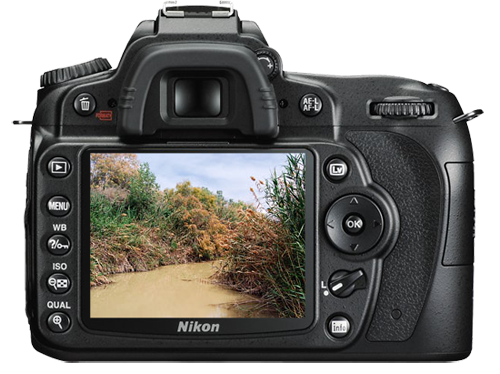
Nikon D90 showing photo of the Jordan River. Photo by Ferrell Jenkins.

My Nikon D90 showing photo of the Jordan River.

Several requests for info on a variety of subjects went unanswered. If you don’t receive a reply within a week or two please write again. To paraphrase the statement of Jesus about the evil or trouble of each day, “Sufficient unto the day are the Emails thereof.” 🙂

Take therefore no thought for the morrow: for the morrow shall take thought for the things of itself. Sufficient unto the day is the evil thereof. (Matthew 6:34 KJV)

“So do not worry about tomorrow; for tomorrow will care for itself. Each day has enough trouble of its own. (Matthew 6:34 NAU)

Thanks for following this recent trip. Hopefully we can continue to share important biblical information with you on a regular basis.

I learned by Email this morning that Larry completed his first day of the Jesus Trail o.k.
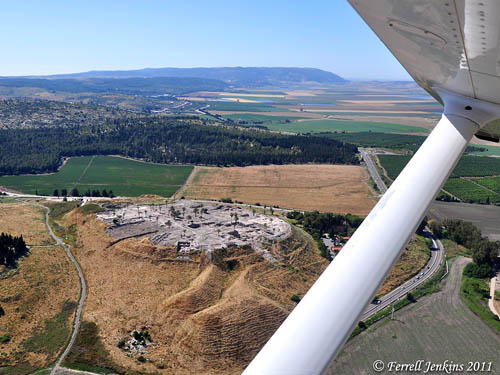
Aerial view of Megiddo

It is the Sabbath here in Israel and rather quiet. Israeli families fill the hotels on Friday night and do not leave until the afternoon of the Shabat. Some do not leave until sunset. Of course, there are many who are out hiking and engaging in other non-religious activities.

For this quiet day I wanted to share another of the aerial photos I made earlier in the week. In the photo below Megiddo looks like the model displayed in the tiny visitor’s center at the site. In the distance to the southwest we see Mount Carmel. A small portion of the Jezreel Valley (or Esdraelon) is also in view.

Aerial view of Megiddo and Mount Carmel. Photo by Ferrell Jenkins.

Aerial view of Megiddo and Mount Carmel. Photo by Ferrell Jenkins.

Notice just two of the significant biblical references to Megiddo.

And this is the account of the forced labor that King Solomon drafted to build the house of the LORD and his own house and the Millo and the wall of Jerusalem and Hazor and Megiddo and Gezer.  (1 Kings 9:15 ESV)

In his days Pharaoh Neco king of Egypt went up to the king of Assyria to the river Euphrates. King Josiah went to meet him, and Pharaoh Neco killed him at Megiddo, as soon as he saw him. (2 Kings 23:29 ESV)

A Roman Road in Galilee

Larry Haverstock was part of our tour group in 2010 and again in 2011. He and I have been traveling in Israel for the past week. He divides his time here this year into three journeys. The two week tour was the first journey.The past week was his second journey, and the next week will be his third journey. The third journey he will be all alone to walk the Jesus Trail from Nazareth to Bethsaida. This is a five day trek.

On our way from Tiberias to Nazareth, with several other stops here and there, we stopped at the area near Golani Junction to locate the stretch of Roman road that is part of the Jesus Trail. While we were looking for the road a strong rain came. We fled to the nearby McDonald’s and then decided that the trail would be too slick to return. Later in the day we returned and found the road without difficulty.

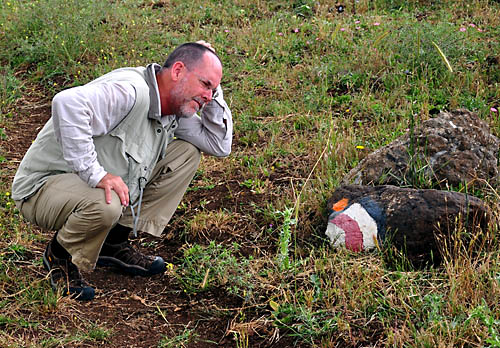
In this photo Larry pretends that he does not understand the trail markings. I would say he is well prepared in every way.

Larry tries to figure out the traill markings. Photo by Ferrell Jenkins.

Larry tries to figure out the trail markings. Photo by Ferrell Jenkins.

Since ordering Hiking the Jesus Trail and Other Biblical Walks in the Galilee I have wanted to see the Roman road which is part of the Trail between Cana and Capernaum.

The Jesus Trail web site describes the Roman road:

About 100 m past Golani Junction, you will come to a ridge with the remains of an ancient Roman road that linked Acre and Tiberias.  Jesus likely used this road on his journey from Nazareht to the Sea of Galilee, as it was a major east-west thoroughfare during his time.

Exquisite roads were one of the hallmarks of the Roman Empire.  the Romans were the first to create a comprehensive system of paved roads over such a large territory.  The roads served the primary purpose of supporting military and trade development.  The road networks also facilitated the movement of ideas and technology and allowed foods, fashions and other cultural artifacts to spread. As the Internet became the “information superhighway” of the 21st century, so were Roman roads at the time of the Roman empire.

The info in the guidebook is similar. This is just an excerpt.

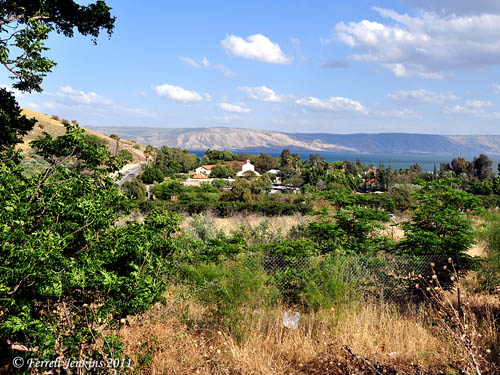
Here is one of the photos I made this afternoon. The view is east toward the Sea of Galilee.

Roman Road near Golani Junction. Photo by Ferrell Jenkins.

Roman Road near Golani Junction. Photo by Ferrell Jenkins.

Information about the Jesus Trail is available from the web site here. Info on ordering the attractive guidebook for $24.95 (postpaid many places) is available here.

In the late afternoon I dropped Larry in Nazareth about 2 blocks from where he would check in and stay for the night. After a soft drink at Tishreen restaurant near Mary’s Well we said good bye to each other. That was as close as I could get to his overnight hotel in the car. Tomorrow Larry will hike from Nazareth to Sepphoris (Zippori) and then to Cana. I understand that the hiking time for that portion of the trip takes six hours.

Hopefully we will have some reports from along the way.

In the parable of the great dinner Jesus said,

And the master said to the servant, ‘Go out to the highways and hedges and compel people to come in, that my house may be filled. (Luke 14:23 ESV)

He also speaks of being forced (by Roman soldiers?) to go a mile.

And if anyone forces you to go one mile, go with him two miles. (Matthew 5:41 ESV)

Tabgha on the Sea of Galilee

Sacred Destinations describes Tabgha in these words:

Tabgha (also spelled Tabhka) is not a city, but a small area on the northwest shore of the Sea of Galilee, not far from Capernaum. In ancient times, Tabgha was known as Heptapegon – “Place of the Seven Springs.” These seven springs produce warm water, which increases the production of algae in this part of the lake, which attracts more fish. Fisherman have thus flocked to Heptapegon for thousands of years.

By the 4th century AD, Heptapegon had become a popular place for Byzantine pilgrims to rest and have their picnics, thanks to its shady trees and excellent fishing. It is probably not coincidence that two of the three pilgrimage destinations in this relate to abundant food: the miracle of the loaves and fishes during Jesus’ Galilean ministry and a lakeside fish breakfast after Jesus’ resurrection.

For more information read here. Sacred Destination is a nice site to use in locating brief info about biblical sites in Israel and other countries.

Today we spent some time again in the Hula Valley. This time on the ground instead of in the air. As we returned to Tiberias we noted that the air around the Sea of Galilee had cleared considerably since this morning. A wonderful scene presented itself as we approached Tabgha.

The view in our photo shows the church at Tabgha from the North West. Look carefully and you will see the Northeastern portion of the Sea of Galilee, the shore, and the biblical area known as Bashan. In New Testament times the region was known as the land of the Gerasenes.

Then they sailed to the country of the Gerasenes, which is opposite Galilee. (Luke 8:26 ESV)

Then all the people of the surrounding country of the Gerasenes asked him to depart from them, for they were seized with great fear. So he got into the boat and returned. (Luke 8:37 ESV)

Tabgha on the NW corner of Sea of Galilee. Photo by Ferrell Jenkins.

Tabgha on the NW corner of Sea of Galilee. Photo by Ferrell Jenkins.

High over Galilee

Today we spent three hours in the air flying from Tel Aviv. Major sites we photographed included Appolonia, Caesarea Maritima, Tel Dor, Haifa, Plain of Acco, Acco, Aphek (in the north), Hazor, Dan, Hula Valley, Jordan Valley, areas around the Sea of Galilee, Beth Shan, Jezreel Valley, and Megiddo.

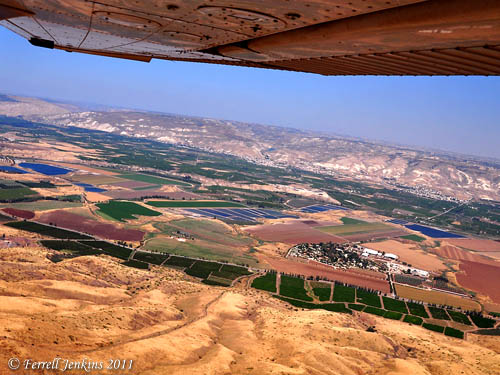
I made almost 2400 images. Hopefully I will have a few dozen good photos. The one I wish to share tonight shows the Jordan Valley between the Sea of Galilee and Beth Shan. The view is from West to East, looking to Jordan and the mountains of Gilead.

Jordan Valley between Sea of Galilee & Beth Shan. Photo by Ferrell Jenkins.

Jordan Valley between Sea of Galilee & Beth Shan. Photo by Ferrell Jenkins.

From Med to Dead

Larry and I saw the Mediterranean Sea (the Great Sea of the Bible, Numbers 34:6; Joshua 1:4) at Ashkelon, and the Dead Sea in the distance from the Herodion (Herodium).

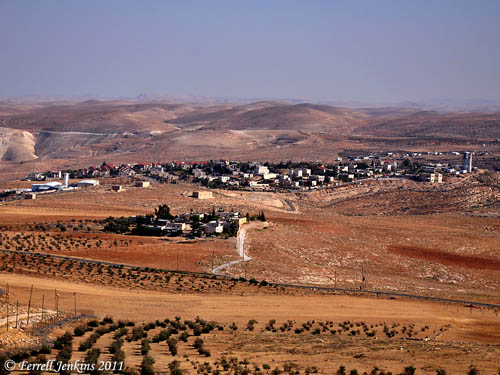
The photo below was made from the Herodium. The view is south toward the modern Arab town of Tekoah (Tekoa). The biblical tel of Tekoah is visible in the distance beyond the city, a little to the left of center.

View south from the Herodium to Tekoah. Photo by Ferrell Jenkins.

View south from the Herodium to Tekoah. Photo by Ferrell Jenkins.

Joab called a wise woman of Tekoah (Tekoa) to help him convince David to send for the banished Absalom who was in Geshur. This interesting story is recorded in 2 Samuel 14.

Rehoboam built a fortified city at Tekoah (2 Chronicles 11:5-12).

There is a reference to the desert (wilderness) of Tekoah (2 Chronicles 20:20).

Amos the prophet lived at Tekoah (Amos 1:1) on the edge of the Judean wilderness. He spoke of working as a herdsman and taking care of the sycamore trees.

Amos replied to Amaziah, “I was not a prophet by profession. No, I was a herdsman who also took care of sycamore fig trees. (Amos 7:14, NET Bible).

New photos of the pinnacle of the temple

A few months ago we wrote about the pinnacle of the temple here and here. At that time I included comments by William Barclay, Benjamin Mazar, William Hendriksen, and Josephus, Leen Ritmeyer, and Mackowski.

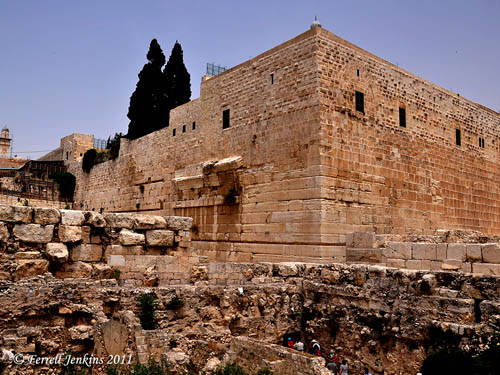
Today I made a new photo of the southeast corner of the Herodian temple precinct.

The southeast corner of the temple precinct. Photo by Ferrell Jenkins.

The southeast corner of the temple precinct. Photo by Ferrell Jenkins.

Here is a new photo of the southwest corner of the temple precinct. Notice the people at the bottom of the photo.

Southwest corner of the Herodian temple precinct. Photo by Ferrell Jenkins.

Southwest corner of the Herodian temple precinct. Photo by Ferrell Jenkins.

And he led Him to Jerusalem and had Him stand on the pinnacle of the temple, and said to Him, “If You are the Son of God, throw Yourself down from here; (Luke 4:9 NAU)

See also Matthew 4:5.  Be sure to read or review the previous posts.

A day in the Shephelah

Today proved to be an exciting and profitable one for Larry Haverstock and me. We traveled south along highway 60 from Jerusalem, past Bethlehem, and almost to Hebron before turning back and heading west to the Elah Valley. On the way to Hebron one sees many examples of terraced farming, and vineyards in wadis.

In the Elah Valley vicinity we stopped at Socoh, the Brook Elah, and the Elah Fortress at Khirbet Qeiyafa. We also had a nice view of Azekah. This area is associated with the events of 1 Samuel 17 (David and Goliath).

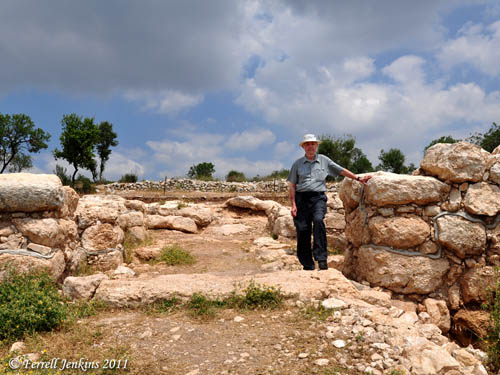
The photo below shows the Iron Age, four chamber gate at the Elah Fortress. This is the northern gate which faces Azekah. This scene is reminiscent of the reference to the worthy woman in Proverbs 31.

Her husband is known in the gates when he sits among the elders of the land. (Proverba 31:23 ESV)

Ferrell Jenkins in the Gate at Elah Fortress at Khirbet Qeiyafa

Ferrell Jenkins in the Gate at Elah Fortress at Khirbet Qeiyafa.

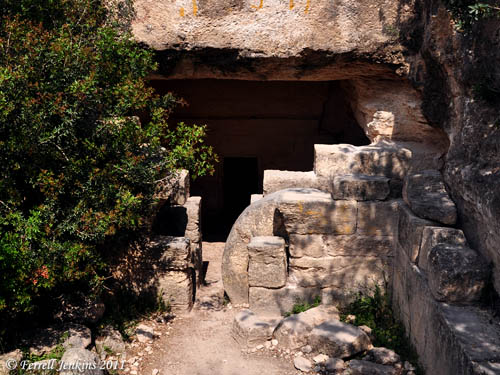
Next we went to the Midras Ruins to see the Roman period tomb with a rolling stone. This is the tomb that was vandalized more than 15 years ago. (At the moment the photo below is not showing when I preview it, but it is visible when I click on the link.)

Roman Period Tomb at Midras Ruins in the Shephelah. Photo by Ferrell Jenkins.

Roman Period Tomb at Midras Ruins in the Shephelah. Photo by Ferrell Jenkins.

The Midras Ruins (Horvat Midras) in Israel are part of the Adulam Grove Nature Reserve east of Hwy 38 between the Elah Valley and Beit Guvrin. According to the Parks department sign at the site, the ruins are part of an ancient settlement including caves, pits, and other installations. The Carta touring atlas says the area was continuously inhabited from the time of the Kings of Judah to the Roman period.

For a more complete discussion of the Midras Ruins tomb, along with links to photos before the tomb was vandalized, read here.

We made a few photos of Tel Burna. This tel is often identified with Moresheth Gath, the home of the prophet Micah. The current excavators think it may prove to be biblical Libnah. One of the significant events that took place at Libnah is recorded here:

The Rabshakeh returned, and found the king of Assyria fighting against Libnah, for he heard that the king had left Lachish. (2 Kings 19:8 ESV)

The Tel Burna Archaeological Excavation is under the direction of Itzhaq Shai and Joe Uziel. Check their web site here.

Our last stop was for a photo of nearby Tel Zayit. The archaeologists who have worked there suggest that it may be Libnah or Ziklag. Hopefully we will learn something more definitive in the years to come. Ron E. Tappy is director of the Zeitah Excavations. Check their web site here.

We visited Lachish and Gath last Friday with our group. All in all, it was a wonderful day.

Visiting Nebi Samwil (Prophet Samuel)

There was some rain in Jerusalem sometime between the time we returned from the airport and the time we got up. When we went out we noticed that a cold front had come in and the entire day was much cooler than it had been earlier in the week. This made the sky more clear with beautiful clouds.

We could see Nebi Samwil (Prophet Samuel) from our hotel window. This is a site suggested as the location of Mizpah by some scholars. Others suggest Tell en-Nasbeh, a mound located at Al Bira in the West Bank.

Samuel, the last judge of Israel, called all of the people of Israel to Mizpah and judged them (1 Samuel 7:5-6). Samuel also anointed Saul to be the first king of Israel at Mizpah (1 Samuel 10:1). Mizpah became the headquarters of Gedaliah as governor of Judah after the Babylonian destruction of Jerusalem  (2 Kings 25:23).

The photo shows how clear the view was on the southern side of the ridge where Nebi Samwil sits. The view on the north side of the territory of Benjamin was also clear. Specifically we enjoyed seeing the site of Gibeon.

View of Nebi Samwil from the south. Photo by Ferrell Jenkins.

View of Nebi Samwil from the south. Photo by Ferrell Jenkins.

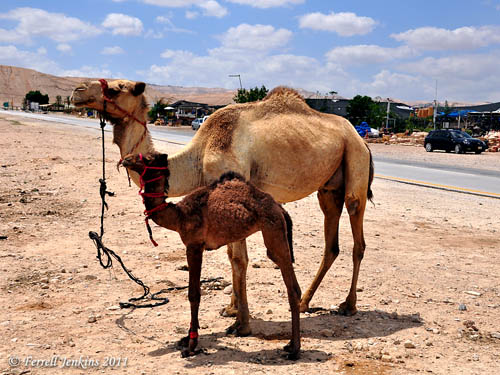
We also did some photography in the Wilderness of Judea and in the Jordan Valley. I made a picture of a baby camel for my grandson. Perhaps other kids might enjoy seeing it.

Baby camel and mother near Jericho. Photo by Ferrell Jenkins.

Baby camel and mother near Jericho. Photo by Ferrell Jenkins.

We have learned this afternoon that our group arrived safely back in Atlanta where the tour started. Hopefully everyone will be at their own home by the evening. We had a great tour. Thanks for taking time to follow along.

Shepherd with sheep and goats at Socoh

Today we visited sites in the Shephelah (lowlands, foothills, Deuteronomy 1:7). We discussed the importance of the Sorek Valley, Beth Shemesh, Timnah, Eshtaol, Zorah. Think of Samson. We noted the important sites associated with the Valley of Elah: Azekah, Khirbet Queiyafa (the Elah Fortress), and Socoh. Think of David and Goliath.

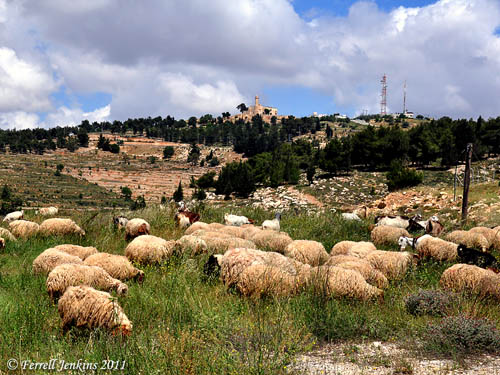
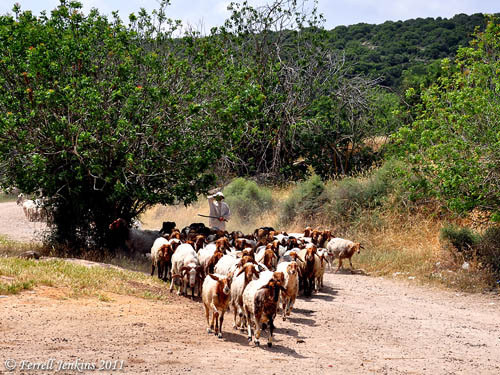
At Socoh (1 Samuel 17:1) we had one of those nice moments on tour when something unexpected comes along. We saw two shepherds bringing their sheep and goats to water. The photo below is one of several that I made.

Shepherd with sheep and goats at Soccoh. Photo by Ferrell Jenkins.

Shepherd with sheep and goats at Socoh. Photo by Ferrell Jenkins.

I am reminded of the teaching of Jesus about the importance of the shepherd.

When he saw the crowds, he had compassion on them because they were bewildered and helpless, like sheep without a shepherd. Then he said to his disciples, “The harvest is plentiful, but the workers are few. Therefore ask the Lord of the harvest to send out workers into his harvest.” (Matthew 9:36-1 NET)

We also made stops at Lachish and Gath before dinner along the Mediterranean Sea at Joppa, and then heading for the airport.

Our group is scheduled to depart for the USA shortly after midnight. Six tour members are staying over for varying length to pursue additional visits throughout the area.

Thank you for following the blog these past two weeks. I have written less than usual due to the demands of the tour, and this will continue for another week as I spend time in additional study here. Stay with me.