Category Archives: Culture

Internet router down

My Internet router is down. It will likely be Tuesday before I have the new replacement. How did we ever get by with dial-up?
One sows and another reaps

Jesus took advantage of the opportunity to teach the woman of Samaria at the well where they met (John 4). She went into the city and told the men about Jesus (John 4:28-29). When the disciples of Jesus returned from the city where they had gone to buy food they encouraged Jesus to eat. He said, “I have food to eat that you do not know about.” The disciples misunderstood this, thinking He had reference to material food. This conversation led Jesus to say,

Do you not say, ‘There are yet four months, then comes the harvest’? Look, I tell you, lift up your eyes, and see that the fields are white for harvest. Already the one who reaps is receiving wages and gathering fruit for eternal life, so that sower and reaper may rejoice together. For here the saying holds true, ‘One sows and another reaps.’ I sent you to reap that for which you did not labor. Others have labored, and you have entered into their labor.” (John 4:35-38 ESV)

The disciples apparently did not know that Jesus had been teaching the woman, and that she had gone into the city to tell others about Him. Jesus is reminding the disciples of a common thing in the agricultural practices of that time. One sows and another reaps. It may have been sowing time, but some were ready to be reaped. The fields were ready to be harvested.

The words of the prophet Amos provide insight into this episode. He said,

“Behold, days are coming,” declares the LORD, “When the plowman will overtake the reaper And the treader of grapes him who sows seed; When the mountains will drip sweet wine And all the hills will be dissolved. (Amos 9:13 ESV)

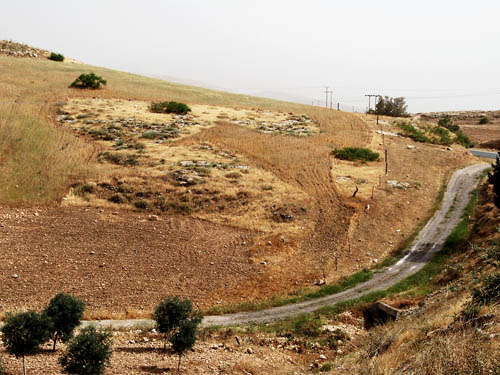
In modern times, with the use of some mechanical farm equipment, it is becoming difficult to find scenes exactly like the practices of the time of Jesus. But we still see things that remind us of these teachings. The photo below shows a field in Jordan just above the Jordan valley floor near Deir Allah. On a clear day one could see the valley.

The field has been plowed while grain grows nearby. Photo by F. Jenkins.

The field has been plowed while grain grows nearby. Photo by F. Jenkins.

Notice the rocks in the field. The plowman has worked around them. In the days of broadcast sowing, like in the parable of the sower (Luke 8), this scene has all of the elements. Good soil, rocky soil, road, and certainly thorns.

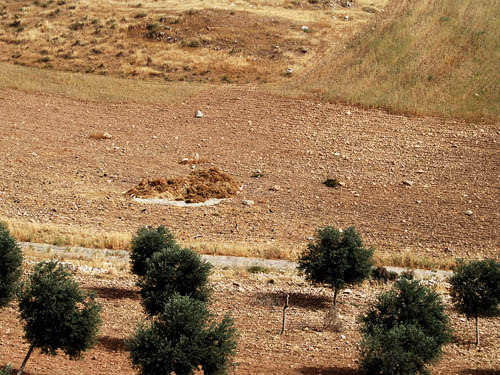
Extend our view to the left in the photo above. You will see, in the photo below, sheaves in the field that has been plowed. Indeed, the plowman overtakes the reaper.

Harvested grain in a field already plowed for sowing. Photo by Ferrell Jenkins.

Harvested grain in a field already plowed for sowing. Photo by Ferrell Jenkins.

It is true today in the preaching of the gospel. One plows and another reaps. Paul says, “I planted, Apollos watered, but God was causing the growth” (1 Corinthians 3:6).

If we had more sowing, there would be more reaping.

The carpenter in New Testament times

Jesus is called a carpenter in Mark 6:3. In Matthew’s account He is called the carpenter’s son. The study note in the NET Bible suggests that this was probably a derogatory term. Those who used the term thought of Him as “a common laborer like themselves.”

Lane says the term carpenter (Greek tekton) “commonly designates a worker in any hard material: wood, metal or stone, and so comes to mean a builder.”

Louw-Nida says,

There is every reason to believe that in biblical times one who was regarded as a tekton would be skilled in the use of wood and stone and possibly even metal.

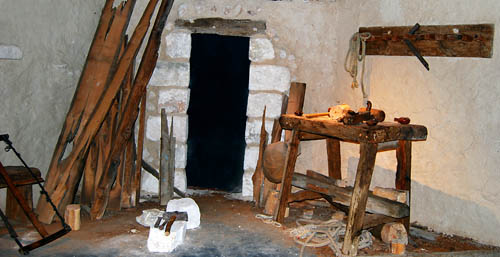
A carpenter’s shop is exhibited at Nazareth Village. It is correct in showing tools for stone cutting as well as wood working.

Carpenter shop at The Nazareth Village. Photo by Ferrell Jenkins.

Carpenter shop at Nazareth Village. Photo by Ferrell Jenkins.

The Nile canals

The prophet Ezekiel  foretold the fall of Egypt at the hand of Nebuchadnezzar, king of Babylon (Ezekiel 30:10). Nebuchadnezzar defeated Pharaoh Neco at the battle of Carchemish in 605 B.C.

The prophet said,

“Moreover, I will make the Nile canals dry And sell the land into the hands of evil men. And I will make the land desolate And all that is in it, By the hand of strangers; I the LORD have spoken.” (Ezekiel 30:12 NAS)

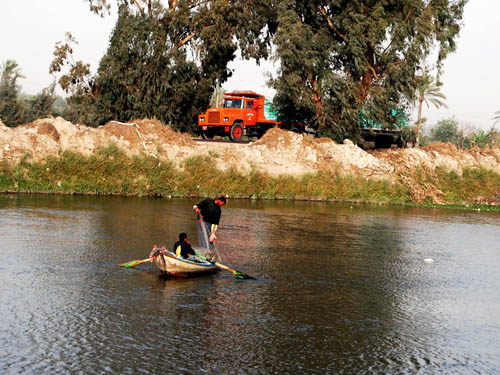
Over a period of time the branches of the Nile in Lower Egypt (the Nile Delta) dried up. The course of the Pelusiac branch is known, but much of it is replaced by a canal running northeast from the area of Cairo to the Suez Canal.

This photo shows a man fishing with a net in the Pelusiac branch which runs through the biblical land of Goshen (Genesis 45:10).

Fishing in the Pelusiac Branch of the Nile. Photo by Ferrell Jenkins.

Fishing in the Pelusiac Branch of the Nile. Photo by Ferrell Jenkins.

A land of fig trees

The land promised to the descendants of Abraham is described in Deuteronomy 8:8 as,

a land of wheat and barley, of vines and fig trees and pomegranates, a land of olive oil and honey.

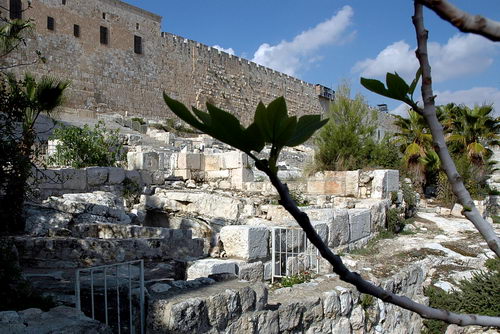
Figs at the Temple Mount excavation. Photo by Ferrell Jenkins.

Figs at the Temple Mount excavation. Photo by Ferrell Jenkins.

Figs were important because they could be eaten when ripe, or prepared as fig cakes and eaten later. In the account of David avenging the destruction of Ziklag, an Egyptian was found in the field and brought to David. He was given bread and water. The text says,

They gave him a piece of fig cake and two clusters of raisins, and he ate; then his spirit revived. For he had not eaten bread or drunk water for three days and three nights. (1 Samuel 30:12 NAS)

I am not sure how the fig cakes were prepared and preserved. Today it is common to see dried figs in Israel. The photo shows dried figs purchased in the Palestinian Authority territory at Jericho.

Dried figs from Jericho. Photo by Ferrell Jenkins.

Dried figs from Jericho. Photo by Ferrell Jenkins.

They were fishermen

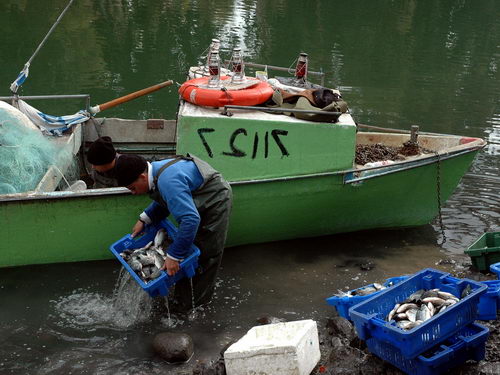
The first disciples called by Jesus were fishermen. In the previous post we indicated the significance of fishing on the Sea of Galilee. The best time to see fishermen on the Sea is early in the morning. The photo below was made early one morning where the Jordan River exits from the Sea of Galilee. These fishermen have been fishing with nets and have brought in a nice catch.

Fishermen on the Sea of Galilee bringing in the catch. Photo by Ferrell Jenkins.

Fishermen on the Sea of Galilee bringing in the catch. Photo by Ferrell Jenkins.

This reminds us of the call Jesus gave to the disciples one day in ancient Galilee.

Now as Jesus was walking by the Sea of Galilee, He saw two brothers, Simon who was called Peter, and Andrew his brother, casting a net into the sea; for they were fishermen. And He said to them, “Follow Me, and I will make you fishers of men. Immediately they left their nets and followed Him.” (Matthew 4:18-20 NAS)

Taxes the easy way

Working on tax return preparation for the past two days got me to thinking about this episode from the ministry of Jesus:

24 When they came to Capernaum, the collectors of the two-drachma tax went up to Peter and said, “Does your teacher not pay the tax?” 25 He said, “Yes.” And when he came into the house, Jesus spoke to him first, saying, “What do you think, Simon? From whom do kings of the earth take toll or tax? From their sons or from others?” 26 And when he said, “From others,” Jesus said to him, “Then the sons are free. 27 However, not to give offense to them, go to the sea and cast a hook and take the first fish that comes up, and when you open its mouth you will find a shekel. Take that and give it to them for me and for yourself.” (Matthew 17:24-27 ESV).

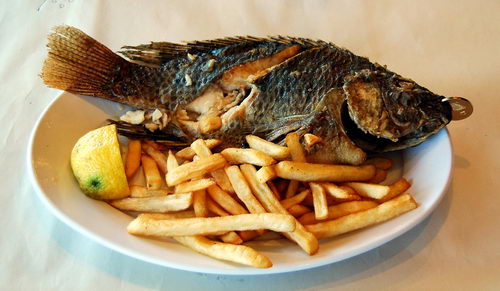
Fishing is still important on the Sea of Galilee. Our groups usually have at least one meal of the famous St. Peter’s Fish when we are in the Galilee.

A fish from the Sea of Galilee with a coin in its mouth. Photo by F.Jenkins.

A fish from the Sea of Galilee with a coin in its mouth. Photo by Ferrell Jenkins.

Mendel Nun spent more than 50 years fishing the Sea of Galilee. He became an expert in the history of fishing on the Sea.  His article, “Cast Your Net Upon the Waters: Fish and fishermen in Jesus’ Time” (Biblical Archaeology Review, 19:06), includes information on this episode. Because this is a lengthy quotation I will leave it full width for easier reading.

– – – – – –

The musht is the only large fish in the lake that moves in shoals, which of course is a key to the identification of the fish in the story in Luke, although not the only one.

The flat shape of the musht makes it especially suitable for frying. The skeleton consists of an easily detachable backbone and relatively few small bones, and thus it is easy to eat. It has long been known as St. Peter’s fish. Recently, it has even been exported under this name. But, alas, the name is a misnomer.

Presumably the fish got its name because of an incident recorded in the Gospel of Matthew (Matthew 17:24–27). In this episode, the tax collectors come to Capernaum to collect the half-shekel Temple tax that each Jew was required to pay annually. Jesus tells Peter, “Go to the sea and cast a hook, and take the first fish that comes up, and when you open its mouth you will find a shekel; take that and give it to them for me and yourself.”

The musht was probably given the name St. Peter’s fish because of this miracle. However, this cannot have been the fish Peter caught with a hook and line. The reason is simple: Musht feeds on plankton and is not attracted by other food. It is therefore caught with nets, and not with hook and line. The fishermen on the lake have, since time immemorial, used a hook baited with sardine to fish for barbels, which are predators and bottom feeders. Peter almost surely caught a barbel. There can be only one explanation for the confusing change of name. It was good for tourism! The Sea of Galilee has always attracted pilgrims; musht (today raised mostly in ponds) is part of the unique local cuisine. It is delicious, especially when freshly fried. In ancient times, just as today, the fishing boats delivered their catch to the eating places on shore. Indeed, the proverbial metaphor for speed in the Talmud is “as from the sea into the frying pan.” This expression was part of daily speech in Tiberias and clearly refers to musht and not barbels; the latter are best when boiled.

The first Christians were local people and were therefore familiar with the various fish. They of course knew that the fish Peter caught could only have been a barbel and not a musht. However, as pilgrims began to come from distant regions, it no doubt seemed good for business to give the name “St. Peter’s fish” to the musht being served by the early lakeside eating houses. The most popular and easily prepared fish acquired the most marketable name! But even if Peter did not catch a musht, he deserves to have his name associated with the best fish in the lake.

The empty tomb

The women who came to the tomb of Jesus on the first day of the week found the stone rolled away from the tomb. When they entered the tomb the body was not there (Luke 24:1-3).

The two men (Matthew says angel) said,

He is not here, but has risen. Remember how he told you, while he was still in Galilee, that the Son of Man must be delivered into the hands of sinful men and be crucified and on the third day rise.” (Luke 24:6-7 ESV)

Several tombs of the type in which Jesus was buried have survived the centuries. This one was discovered during road construction a few years ago near Mount Carmel.

A Roman Period tomb with a rolling stone. Photo by Ferrell Jenkins.

A Roman Period tomb with a rolling stone. Photo by Ferrell Jenkins.

The women told the apostles what happened when they went to the tomb.

1 Now on the first day of the week Mary Magdalene came to the tomb early, while it was still dark, and saw that the stone had been taken away from the tomb. 2 So she ran and went to Simon Peter and the other disciple, the one whom Jesus loved, and said to them, “They have taken the Lord out of the tomb, and we do not know where they have laid him.” (John 20:1-2 ESV)

The Gospel of John records the reaction of Peter and the other disciple [John]:

3 So Peter went out with the other disciple, and they were going toward the tomb. 4 Both of them were running together, but the other disciple outran Peter and reached the tomb first. 5 And stooping to look in, he saw the linen cloths lying there, but he did not go in. 6 Then Simon Peter came, following him, and went into the tomb. He saw the linen cloths lying there, 7 and the face cloth, which had been on Jesus’ head, not lying with the linen cloths but folded up in a place by itself. 8 Then the other disciple, who had reached the tomb first, also went in, and he saw and believed; 9 for as yet they did not understand the Scripture, that he must rise from the dead. 10 Then the disciples went back to their homes. (John 20:1-10 ESV)

I asked Frank and Norm, two living disciples, to stoop and look into an empty tomb much the way Peter and John did on that first day of the week.

Two disciples look into an empty tomb. Photo by F. Jenkins.

Two disciples look into an empty tomb. Photo by F. Jenkins.

The tomb of Jesus

The New Testament describes the tomb and burial of Jesus:

When it was evening, there came a rich man from Arimathea, named Joseph, who also was a disciple of Jesus. He went to Pilate and asked for the body of Jesus. Then Pilate ordered it to be given to him. And Joseph took the body and wrapped it in a clean linen shroud and laid it in his own new tomb, which he had cut in the rock. And he rolled a great stone to the entrance of the tomb and went away. Mary Magdalene and the other Mary were there, sitting opposite the tomb. (Matthew 27:57-61 ESV)

The Church of the Holy Sepulchre likely contains the empty tomb of Jesus. Since 1810 the tomb has been covered by a monument that hides the original appearance of the tomb. In fact, even in the 4th century Constantine changed the natural appearance of the area by cutting away some of the natural stone.

The tomb is similar to other tombs from the first century. This one is small, but that would be consistent with the fact that it was the personal tomb of Joseph of Arimathea. The museum of the Studium Biblicum Franciscanum in the Old City has a model of the tomb showing a side view. From right to left one enters the tomb when the rolling stone is moved away. The first room serves as a vestibule. The second room contains a bench or shelf cut into the rock. This was called the arcosolium. The wrapped body would be placed on this bench.

Model of the tomb in the Church of the Holy Sepulchre. Photo by F. Jenkins.

Model of the tomb in the Church of the Holy Sepulchre. Photo by F. Jenkins.

Believers appreciate the loving care Joseph gave the body of Jesus.

My Father

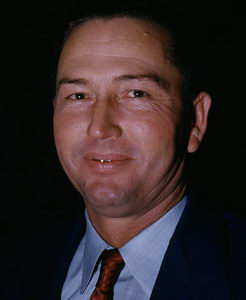
Last night was the 30th anniversary of my father’s death. I have been thinking about him quite a bit lately.

B. M. Jenkins

B. M. Jenkins

It took me about six months to get over being downcast after his death. It wasn’t that I did not not have hope. There were two major factors. (1) It was just the sense of loss that I felt. I could recall our time together, but we would no longer be able to talk and discuss matters of common interest. (2) I began to think of my life. If I lived only to the age of 65 what would I do with these few remaining years? Even though I have passed 65 by several years, I still think about this question.

My father was an intelligent man, but not an educated man. He finished the eighth or ninth grade, but he knew how to work and make sound financial decisions for his family. My father spent my earliest years living on the farm where my grandfather was a share-cropper. It was hard on farms in those post-depression years. My father was a good mechanic and carpenter. In 1943 he drove about 60 miles each week from Harvest, Alabama, to Tullahoma, Tennessee. There was some type of building project in progress. After his death I found a receipt showing that he had earned about $13 for the week. From that he paid his gas expenses, stayed in a boarding house for four nights, and paid 13 cents in Old-Age Benefits. This program, now called Social Security, was set up by the Federal government in 1937 to provide retirement benefits. He evidently had enough left to provide whatever store-bought food, and other things, our family needed.

My paternal grandfather was named Joseph Frank. My grandmother was named Mary Magdalene. They had 12 children, and each of them was given a Bible name. My father’s name was Bartholomew (Matthew 10:3). He had no middle name, so he just made up the middle initial when he needed a middle name. His friends called him B.M., or Barley, or Bolly. And, yes, he had brothers named Philip, Thomas, James, Matthew, and John. He had sisters named Ruth, Mary Magdalene, Eunice, Naomi, and Elizabeth. One sibling died young. Only three are still living. My grandfather heard my second sermon. (It was the same as my first one.)

Most of the members of this family had a spirit of independence and entrepreneurship. Several of them ran small businesses and none of them ever got involved with “big business.”

My Father set a good spiritual example for his family. Sometime when I was between six and ten we walked about two miles on a country road to meet with other Christians to worship. One Sunday morning some family members drove up about the time we were to leave for church. They had come from across the county to see us. My Dad invited them to go to church with us. When they demurred, he told them to make themselves at home until we got back. The next time they came in the afternoon.

Dad served for a short time as an elder in a local church, but when the others began to advocate practices he thought were wrong, he resigned and began to worship with brethren who thought as he did.

Perhaps I should somehow relate this post to travel. I was able to take my mother to the Bible lands twice after my Father’s death. About the time I told them that I was going a third time, my Dad said, “Don’t you think you have been enough?” I wish he could have gone with me.

He taught me a lot. I think of him almost daily.