Category Archives: Culture

Fisherman in Egypt

A fisherman brings in a large catch of fish in a lake on the outskirts of Alexandria, Egypt.

Fisherman Near Alexandria, Egypt. Photo by Ferrell Jenkins.

Fisherman Near Alexandria, Egypt. Photo by Ferrell Jenkins.

The wise writer of Ecclesiastes likened the unfortunate things that happen in life to fish being caught in a net.

Surely, no one knows his appointed time! Like fish that are caught in a deadly net, and like birds that are caught in a snare– just like them, all people are ensnared at an unfortunate time that falls upon them suddenly. (Ecclesiastes 9:12 NET)

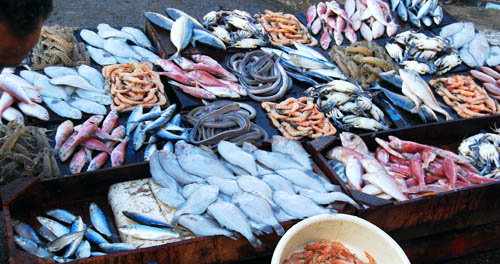
This photo was made in the street fish market along the pier in Alexandria.

The Fish Market at Alexandria, Egypt. Photo by Ferrell Jenkins.

The Fish Market at Alexandria, Egypt. Photo by Ferrell Jenkins.

The prophet Isaiah (about 725 B.C.) spoke of a time that was coming upon Egypt in these words.

The fishermen will mourn and lament, all those who cast a fishhook into the river, and those who spread out a net on the water’s surface will grieve. (Isaiah 19:8 NET)

Veterans Day – November 11, 2009

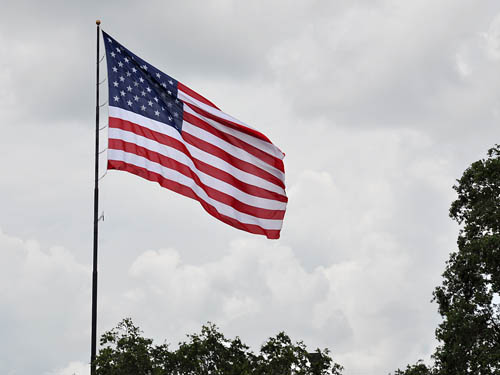
Flag of the United States of America

Flag of the United States of America. Photo by Ferrell Jenkins.

The history of Veterans Day is available here.

The fall of the Berlin Wall

Twenty years ago today the Berlin wall began to come down. The wall had been a vivid symbol of the Iron Curtain and of the Cold War.

The phrase Iron Curtain came into common use after the speech by Winston Churchill at Westminster College, Fulton College, March 5, 1946.

From Stettin in the Baltic to Trieste in the Adriatic an iron curtain has descended across the Continent. Behind that line lie all the capitals of the ancient states of Central and Eastern Europe. Warsaw, Berlin, Prague, Vienna, Budapest, Belgrade, Bucharest and Sofia, all these famous cities and the populations around them lie in what I must call the Soviet sphere, and all are subject in one form or another, not only to Soviet influence but to a very high and, in some cases, increasing measure of control from Moscow.

My first visit to Berlin was March 25, 1978. I took a group there to be able to visit the fabulous Pergamum Museum. In my tour brochure I had included this statement from one of Arthur Frommer’s books. He says that the entire trip to East Berlin “is worthwhile just to see the Pergamon Altar…not even in Greece itself does one get a more solid idea of the glory of Greek civilization.”

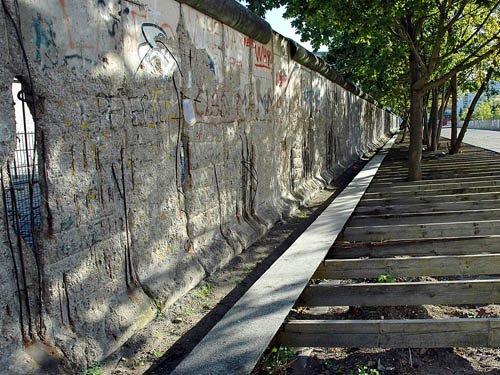
I went back to Berlin several times prior to the fall of the Wall, and I have been back several times since then. This photo shows a small portion of the Wall that remains as a reminder of the previous division.

A remnant of the Berlin Wall. Photo by Ferrell Jenkins.

A remnant of the Berlin Wall. Photo by Ferrell Jenkins.

What is in the basement of the Cairo Museum?

Tourists who visit the Egyptian Museum in Cairo are overwhelmed at the large collection of Egyptian artifacts. In fact, most folks just see a few of the displayed items. Have you ever thought about the basement. Take a look at this video featuring Dr. Zahi Hawass, the flamboyant director of antiquities in Egypt.


Now, if they would only allow the taking of photos in the galleries!
HT: Biblical Paths

Something lite for October 31

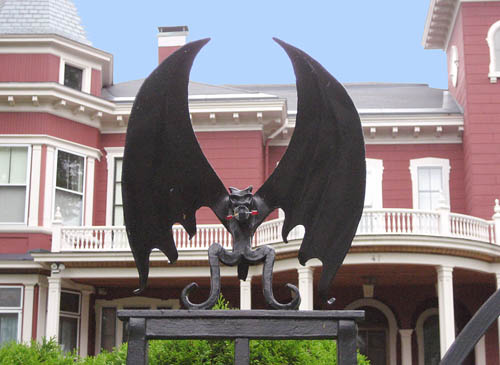
This is a photo I made in front of Stephen King’s house in Bangor, Maine.
Stephen King House in Bangor, Maine.

Bok Tower in Florida

This week, through Wednesday, I am presenting a series of lectures at the Lake Wales (Florida) Church of Christ. When I drove into the parking lot yesterday morning I looked to a distant hill and saw Bok Tower. I recall visiting Bok Tower one time as much as 5 decades ago. It is certainly a place to remember.

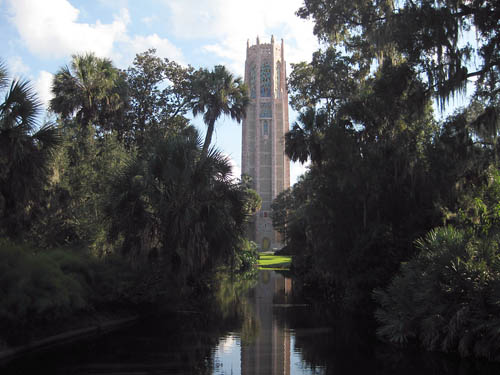
The tower and gardens were envisioned in the 1920s by Dutch immigrant and humanitarian Edward W. Bok. This site, set among orange groves, is one of the highest spots in Florida. The National Historic Landmark was dedicated by President Calvin Coolidge in 1929. In the afternoon we went by Tower so I could capture a photo.

Bok Tower Gardens, Lake Wales, FL. Photo by Ferrell Jenkins.

Bok Tower Gardens, Lake Wales, FL. Photo by Ferrell Jenkins.

According to the brochure available at the entry this tower houses one of the world’s finest carillons. Concerts are presented daily.

Wasting time with technology

Donovan Palmer calls attention to this video by Phil Gons. It is well worth the time you waste watching it!

A little sleep, a little slumber, a little folding of the hands to rest, and poverty will come upon you like a robber, and want like an armed man. (Proverbs 24:33-34 ESV)

Be careful where you start a fire

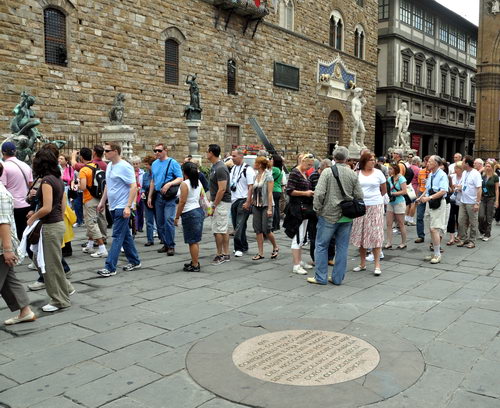
Piazza della Signoria in Florence with Savonarola marker showing. Photo by Ferrell Jenkins.

Piazza della Signoria in Florence with Savonarola marker showing. Photo by Ferrell Jenkins.

Yesterday morning I visited the Piazza della Signoria in Florence, Italy. I think many people walk through this Piazza to get to the Uffizi Gallery and never notice the plaque about Savonarola. Sometimes groups of people were standing on the plaque. When it was clear, one man walked up and said to his companions “Who’s that?” The group walked on without an answer.

Daniel M. Madden says,

In the lovely Piazza della Signoria, the political forum of Florence in all ages, Savonarola arranged a huge bonfire in 1497 so that penitents won over by his words could do away with their wigs, perfumes, lotions, powers and other accouterments of an easy way of life. He himself was burned to death in the same piazza a year later as a heretic. The spot where he died is marked with a plaque. It is not far from the copy of Michelangelo’s statue of “David.” (A Religious Guide to Europe)

One may say anything he wishes as long as he does not step on the toes of those in authority. Jesus faced this problem when He dealt with the Jewish leaders in Jerusalem.

“If we let him go on like this, everyone will believe in him, and the Romans will come and take away both our place and our nation.” (John 11:48 ESV)

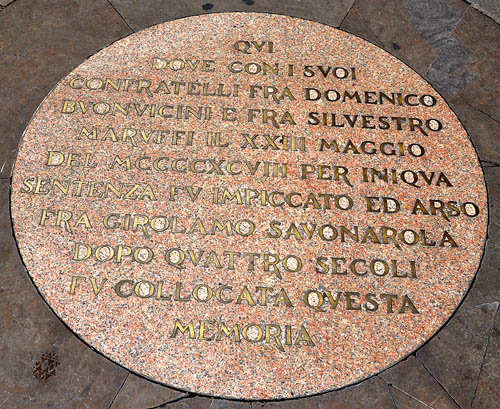
Here is a closeup of the plaque marking the spot where Savonarola died.

Plaque marking spot where Savonarola died. Photo by Ferrell Jenkins.

Plaque marking spot where Savonarola died. Photo by Ferrell Jenkins.

The background of the Protestant Reformation

Dr. Dan Petty, chair of Biblical Studies at Florida College, gave me permission to post some of his information about the Reformation Movement on the blog. Dan has some other material on church history at Lessons on Line. The following section, without indentation, is by Dr. Petty.

-o-o-o-o-

The Protestant Reformation began in 1517, when Martin Luther posted his Ninety-five Theses in Wittenberg, Germany. The background of the movement is complex. The movement was conditioned by political, social, economic, moral and intellectual factors. But it was above all a religious movement led by men interested in a genuine reform of Christianity.

The Decline of Papal Power
The rise of national monarchies in the thirteenth through the fifteenth centuries came at the expense of the power of the papacy. This fact is illustrated by Pope Boniface VIII’s struggle with the king of France, which resulted in the pope’s humiliation and untimely death in 1303. The papacy was subsequently located in Avignon, France for an approximately seventy-year period known in history as the Avignon Papacy or the Babylonian Captivity of the Papacy (1303-77). During that time the papacy was dominated by the French monarchy. Efforts to restore the papacy to Rome at first only resulted in a division, known as the Great Schism. Rival popes claimed legitimacy until the situation was finally resolved in 1417.

Such scandalous affairs in the highest leadership of the Roman Catholic Church led to increasing corruption and a loss of confidence in the church. Many questioned the absolute authority claimed for the pope. Others increasingly called for a reform of the church in “head and members.”

Moral Corruption in the Leadership of the Church
The years leading up to the Protestant Reformation were also plagued by moral corruption and abuse of position in the Roman Catholic Church. The priesthood was guilty of several abuses of privilege and responsibility, including simony (using one’s wealth or influence to purchase an ecclesiastical office), pluralism (holding multiple offices simultaneously) and absenteeism (the failure to reside in the parish where they were supposed to minister). The practice of celibacy which was imposed by the church on  the priesthood was often abused or ignored, leading to immoral conduct on the part of the clergy. Secular-minded, ignorant priests corrupted their position by neglect or abuse of power.

During the fifteenth century the worldliness and corruption in the church reached its worst. The problem of corruption reached all the way to the papacy.

Among those who spoke out for a reform of the church was the Dominican Giralamo Savonarola (1452-1498) of Florence, Italy. This fiery preacher spoke out against the corrupt morals of the city’s leaders and the abuses of the papacy. The people were won over to Savonarola’s cause in Florence, but because of religious rivalries and political circumstances, the movement was short-lived. Savonarola was hanged and burned for heresy in 1498.

-o-o-o-o-

Here is a photo of the Piazza della Signoria in Florence, Italy. This is where Savonarola preached and died. In the next post we will show a photo of the plaque marking the place where Savonarola was martyred in 1498.
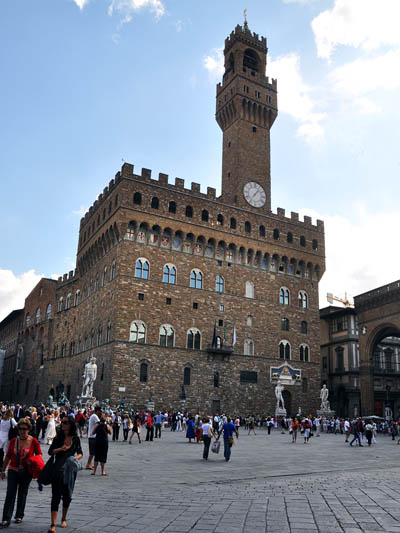
Piazza della Signoria in Florence, Italy. Photo by Ferrell Jenkins.

Piazza della Signoria in Florence, Italy. Photo by Ferrell Jenkins.
Remembering Black Tuesday: 9-11

ribbon911

The little ribbon was used by many immediately after the events of 9-11, but I haven’t seen it much lately.

David West, a minister in Florida, presented a lesson on the Sunday following 9-11 entitled “Black Tuesday: Reflections on Another Day of Infamy.” I think you might enjoy taking a look the full speech. The link is here.

It is only by remembering such horrific events that we will be able to avoid similar ones in the future.