Category Archives: Bible Study

“Gibeon, for the king” bulla discovered

The Temple Mount Sifting Project, Jerusalem, announced yesterday the discovery of a clay bulla bearing the name of the biblical city of Gibeon. The name of Gibeon (GB’N) occurs with LMLK (for the king).
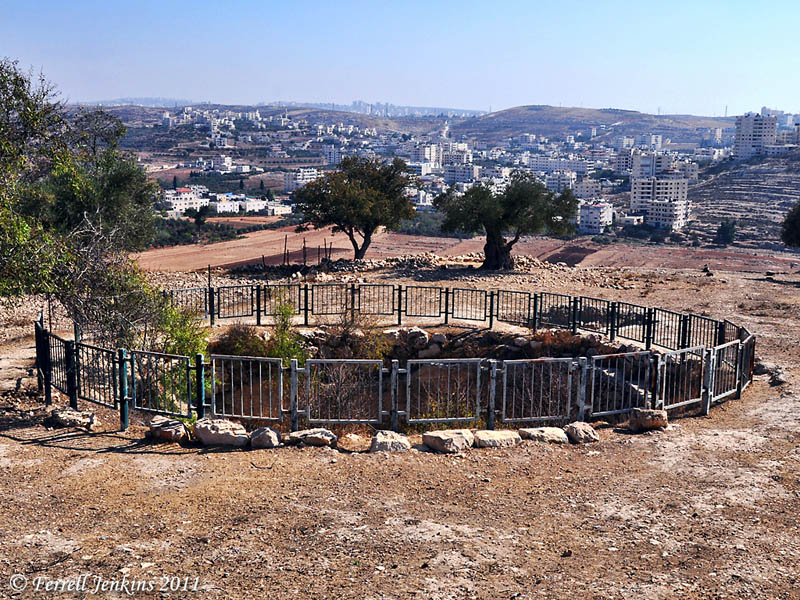
The Pool of Gibeon. Photo by Ferrell Jenkins in 2011.

The Pool of Gibeon at El-Jib. Photo by Ferrell Jenkins in 2011.

Gabriel Barkay summarizes his report of this discovery.

A small fragment of a clay bulla was discovered in the wet sifting carried out at Tzurim Valley National Park, the site of the Temple Mount Sifting Project. The bulla carries an Ancient Hebrew inscription: “[g]b’n/lmlk“, i.e. “Gibeon, for the King”. The bulla originates from the eastern slope of the Temple Mount, descending into the Kidron Valley. The bulla belongs to a group of bullae which were called by N. Avigad “Fiscal Bullae”.

Presently we know more than 50 bullae of this type. They comprise two groups, one with names of cities in the kingdom of Judah, and the other with names of royal officials. All the fiscal bullae known until now come from the antiquities market, and our bulla is the first one to come from a controlled archaeological project. This bulla enables us to fully illuminate and discuss the entire phenomenon of the fiscal bullae.

Barkay says the known bullae,

include names of 19 different cities of Judah, and dates of the reign of one of the Judean kings, usually in hieratic numerals, as well as the particle lmlk, “for the king”.

He says,

The fiscal bullae represent a taxation system from the different Judean cities, based on yearly taxes, which probably replaced the previous one, reflected in the royal Judean jars and their seal impressions, from the time of King Hezekiah.

The discovery of the fiscal bulla with the name of Gibeon from the slope of the Temple Mount, authenticates all the other fiscal bullae, and enables us to study a variety of subjects connected to the history of Judah in the 7th century BCE.

Two brief reports on the Project may be read here.

Name of Gibeon is not new. This is not the first time the name of Gibeon has been discovered from the past. During the excavations conducted by James Pritchard for the Museum of the University of Pennsylvania and the Church Divinity School of the Pacific between 1956 and 1962, over 25 inscription were found with the name Gibeon. In fact, this is how Pritchard first knew with certainy that the Arab town El Jib was to be identified as Gibeon.

Some of the inscribed jar handles discovered by Pritchard’s excavation at El Jib are displayed at the University of Pennsylvania Archaeological Museum in Philadelphia.

Gibeon is an important town in Biblical history. The first Biblical reference is in Joshua 9.

Recently I have been scanning a few slides I made at Gibeon in 1970 and 1976. Hopefully I will be able to provide some comparison photos for you to see the vast difference between then and now.

The Temple Mount Sifting Project began after it was discovered that the Moslems in control of the Temple Mount, where the Dome of the Rock is located, were dumping debris from work they were doing on the Temple Mount. This project has been underway for more than two years. A temporary building has been erected in Tzurim Valley National Park for the sifting project.

The photo below was made from Mount Scopus. Here we see the temporary building of the Temple Mount Sifting Project in the foreground. The slope of the Mount of Olives is on the left (east). The Kidron Valley begins to the right of the buildings in the center of the photo and continues south under the eastern wall of the Old City of Jerusalem which you can see clearly in this photo. Click on the photo for a larger image.
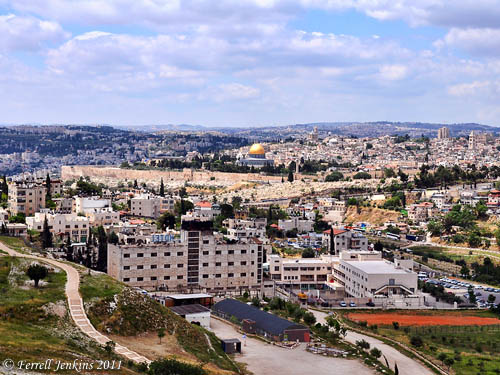
Jerusalem from Mount Scopus. The Temple Mount Sifting Project building is in the foreground. Photo by Ferrell Jenkins.

Jerusalem from Mount Scopus. The Temple Mount Sifting Project building is in the foreground. Photo by Ferrell Jenkins.

The next photo is a closeup of the building used by The Temple Mount Sifting Project. Some wonderful pieces have been discovered from the first temple period, as well as other periods, as a result of the work done here.
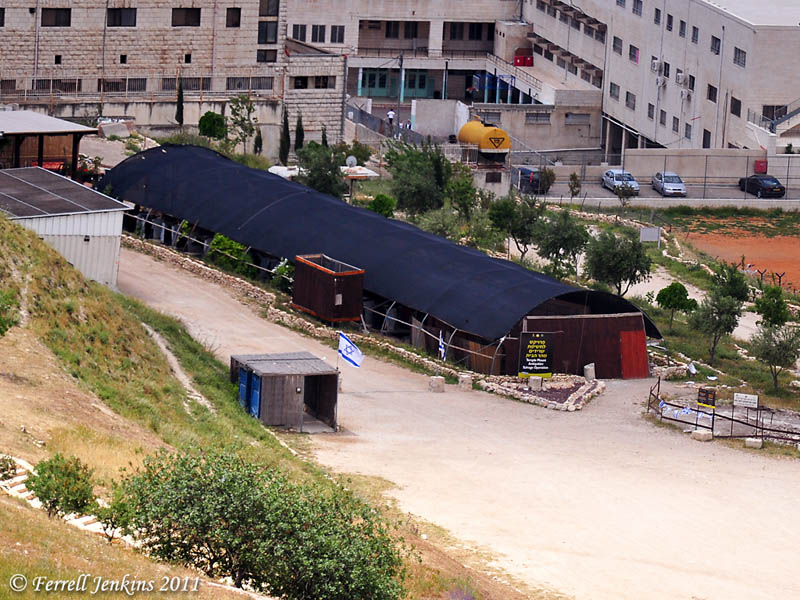
View from Mount Scopus of the Temple Mount Sifting Project building. Photo by Ferrell Jenkins.

View from Mount Scopus of The Temple Mount Sifting Project building. Photo by Ferrell Jenkins.

Gordon Franz has an interesting article by Stephanie Hernandez about participation in the TMSP on his Life and Land site here.

Perhaps in the days to come we will be favored with a photo of the new bulla with the name of Gibeon on it. In the mean time, see how many times you can find the word Gibeon or Gibeonite/s in the Bible.
Was Jesus born in winter?

One of my readers left a comment on facebook saying the Bible indicates that Jesus was “born in winter.” She added, “That could be anytime between mid-October and mid-March.” Another reader said, ” I didn’t know the Bible said he was born in winter — I know shepherds were grazing their sheep when he was born…does this happen in winter in that part of the world?”

I am not aware of any suggestion in the Bible regarding the time of the year when Jesus was born. Luke tells us that shepherds were out in the field at the time.

And in the same region there were shepherds out in the field, keeping watch over their flock by night. (Luke 2:8 ESV)

Some writers have suggested that the birth was not likely in December. They say that shepherds did not watch flocks by night during December. In my outline study about Christmas, available here, I have a quotation by the late Dr. William Arndt, (of Bauer, Danker, Arndt, Gingrich fame) replying to this suggestion:

“Scholars have pointed out that the considerably lower altitude of the field may not be without significance, but may explain why even in winter shepherds would not find these fields too cold for their flocks.”  (From the Nile to the Waters of Damascus, p. 52)

In fact, when I first began traveling to Israel and Jordan in the mid-60s it was common for Bedouin shepherds to move with the seasons. In the summer we would see them in the mountains of Lebanon. In winter months they would move to warmer, desert areas. Today, we find many Bedouin shepherds watching their sheep on the eastern slopes year round, including the winter months.

The temperature around Jerusalem and Bethlehem is fairly temperate in the winter. Only a small amount of rain falls on the eastern slopes of the central mountain range. Both Jerusalem and Bethlehem are located on this ridge. We have written about the watershed ridge here and here.

The average monthly temperature for Jerusalem ranges from 47° to 56°. Rain can make it chilly.

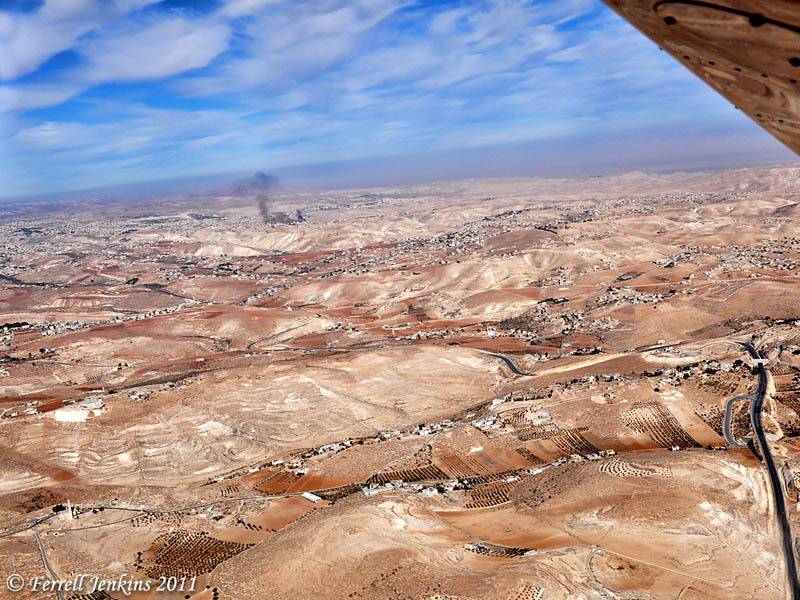
The photo below provides an aerial view from over the Herodium (about 3 miles east of Bethlehem). This illustrates the terrain where shepherds might care for their flocks.

View east toward the Dead Sea and the the land of Moab in Jordan from over the Herodium. Photo by Ferrell Jenkins.

View east toward the Dead Sea and the the land of Moab in Jordan from over the Herodium. Photo by Ferrell Jenkins.

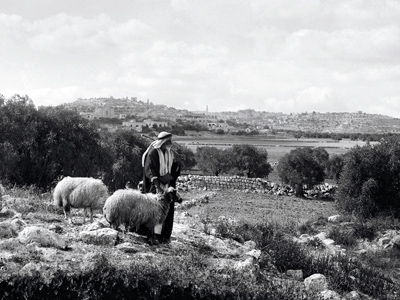
The American Colony and Eric Matson Collection of photos includes some photos of shepherds with their flocks in the Bethlehem area on Christmas day. (Information about the collection is available at LifeintheHolyLand.com.) The photo below was made sometime between 1898 and 1946. It was taken either by the American Colony Photo Department or its successor, the Matson Photo Service.

Shepherds with sheep on Christmas day. Bethlehem on the ridge. Photo: LifeintheHolyLand.com.

Shepherds with sheep on Christmas day. Bethlehem is on the ridge. Photo: LifeintheHolyLand.com.

I am not saying that Jesus was born in December. Only that the common misunderstanding about Bethlehem winters is based on our lack of knowledge about the local terrain.

Jesus visited Jerusalem during Hanukkah

The Gospel of John records more visits to Jerusalem by Jesus than any other of the Gospels. John is the only one to record the visit during the Feast of Dedication.

At that time the Feast of Dedication took place at Jerusalem. It was winter,  and Jesus was walking in the temple, in the colonnade of Solomon. (John 10:22-23 ESV)

BDAG translates the Greek term egkainia as “festival of rededication.” The feast is also known as Hanukkah and the Feast of Lights.

What is he Feast of Dedication? This feast, observed on the 25th of Kislev (roughly our December), had its origin in the period between the testaments. The desecration of the temple by the Seleucid ruler Antiochus Epiphanes took place in 168 B.C. The climax of the Maccabean revolt was the removal of all evidences of pagan worship from the temple. An eight day feast of dedication was observed in 165 B.C., and continued to be observed annually by the Jews.

At Modin, a village north-west of Jerusalem, on the way from Jerusalem to Lod, the Syrians tried to force an old priest by the name of Mattathias to offer a pagan sacrifice. The priest refused but another Jew volunteered to offer the sacrifice. Mattathias killed his fellow Jew and the Syrian officer. As word spread, Mattathias became a national hero. He was of the family of Hasmon (or Asmoneus). Thus began the Hasmoneans.

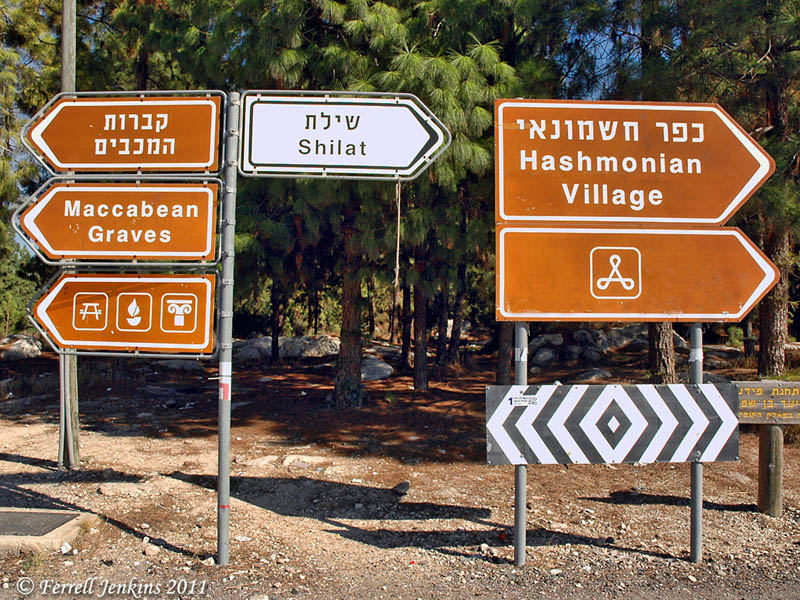
The discovery of a burial cave at Modin thought to have been used by the Maccabees and/or their descendants was reported in November, 1995. There are Israeli scholars who argue that this is not the true grave of the Maccabees. A recent article in Haaretz says,

Amit Re’em, an archaeologist of the Israel Antiquities Authority says all the evidence points to the fact that these graves are of Christians and pagans and that this burial site actually belongs to an ancient monastery.

Read the Haaretz article here.

Near Modin, signs point to the Maccabean Graves. Photo by Ferrell Jenkins.

Near Modin, signs point to the Maccabean Graves. Photo by Ferrell Jenkins.

Even though the Feast of Dedication was not a feast authorized by the Mosaic Law, it became part of the Jewish heritage, and Jesus came to Jerusalem at that time — at least once.

Jesus cleansed the Temple on two distinct occasions. The first time is recorded in John 2:14-22. The second account is recorded in Matthew 21:12-13; Mark 11:15-18; and Luke 19:45-48.

Interesting Nativity Scenes

It is true that no date for the birth of Jesus is given in the New Testament. The celebration of his birth arose centuries after the actual birth. Many traditions have arisen as men seek to honor Christ. The Nativity Scene is one of those traditions.

Earlier this week my wife and I enjoyed a few days at the Gaylord Palms hotel in the Disney World area with our grandson. We took him to see the ICE creations and the Dream Works Experience.

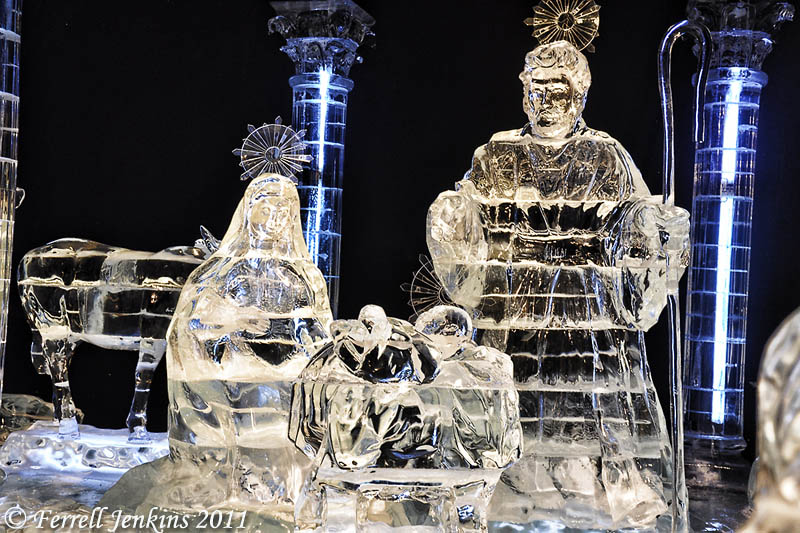
In addition to the Dream Works characters (Shrek, Fiona, Donkey, Alex, Julian, Po, et al.) carved in ICE, we were surprised to see a large nativity scene of ICE. I thought you might enjoy seeing a small portion of the scene. To see all of the characters, animals, etc., you must visit ICE.

Portion of the Nativity Scene at ICE, Gaylord Palms. Photo by Ferrell Jenkins.

Portion of the Nativity Scene at ICE, Gaylord Palms. Photo by Ferrell Jenkins.

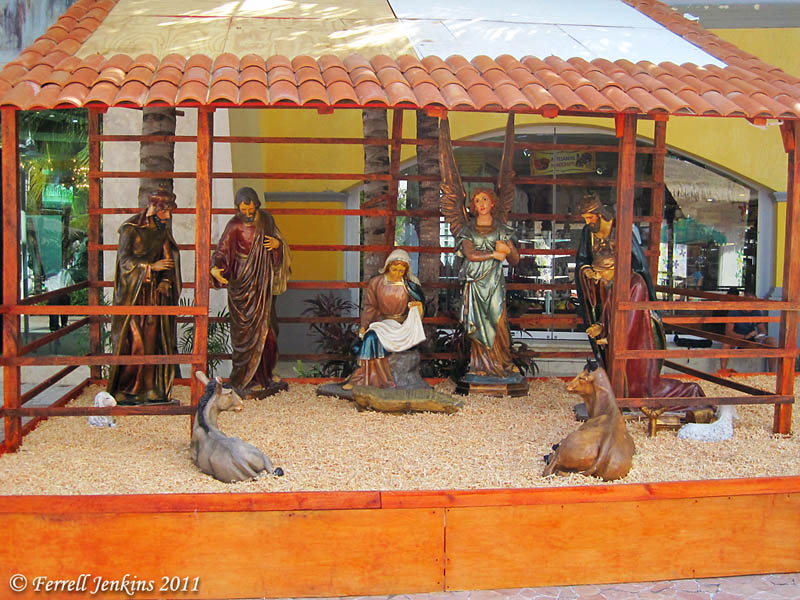
Last month my wife and I took a cruise in celebration of our 57th wedding anniversary. The Nativity Scene was already displayed in the market square at Cozumel, Mexico.

Nativity Scene at Cozumel. Photo by Ferrell Jenkins.

Nativity Scene at Cozumel. Photo by Ferrell Jenkins.

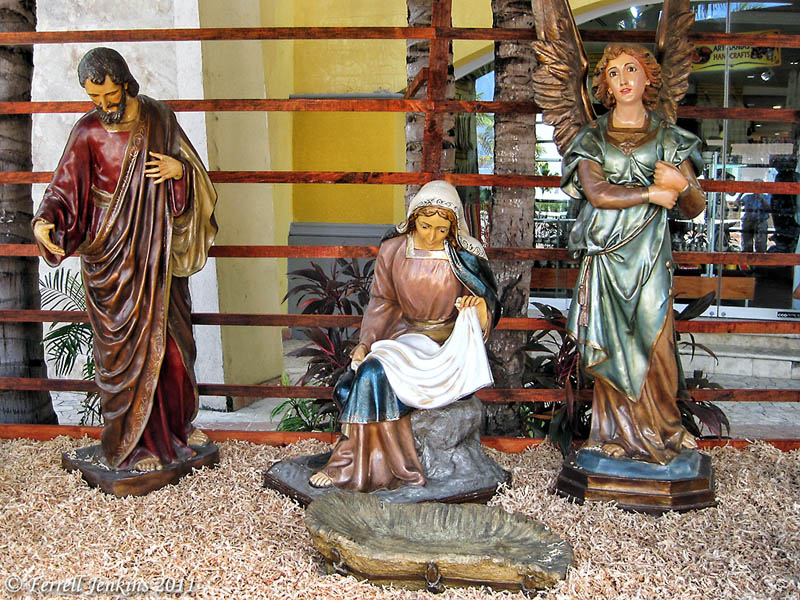
Do you detect anything wrong in the traditional scene? Take a closer look.

Cozumel Nativity Scene. Photo by Ferrell Jenkins.

Cozumel Nativity Scene without Jesus. Photo by Ferrell Jenkins.

Perhaps they got the account of the birth of Jesus (Luke 2: 1-20) confused with Jesus being left behind in the temple (Luke 2:41-52). Or, maybe it was just vandalism by a modern day Herod.

The specific date (month and day) for the birth of Jesus is not important. The Apostle Paul stated the importance of His birth in the Epistle to the Galatians.

But when the fullness of time had come, God sent forth his Son, born of woman, born under the law,  to redeem those who were under the law, so that we might receive adoption as sons. (Galatians 4:4-5 ESV)

Herod the Small

It is true that we refer to him as Herod the Great because of the power he exerted, his long reign, the sons he appointed as rulers, and the massive buildings and fortresses he constructed.

In character he was small or little.Notice the account of the birth of Jesus in Matthew 2, and Herod’s reaction to the news of the wise men from the east.

 1 Now after Jesus was born in Bethlehem of Judea in the days of Herod the king, behold, wise men from the east came to Jerusalem,  2 saying, “Where is he who has been born king of the Jews? For we saw his star when it rose and have come to worship him.”  3 When Herod the king heard this, he was troubled, and all Jerusalem with him;  4 and assembling all the chief priests and scribes of the people, he inquired of them where the Christ was to be born.  5 They told him, “In Bethlehem of Judea, for so it is written by the prophet:  6 “‘And you, O Bethlehem, in the land of Judah, are by no means least among the rulers of Judah; for from you shall come a ruler who will shepherd my people Israel.'” 7 Then Herod summoned the wise men secretly and ascertained from them what time the star had appeared.  8 And he sent them to Bethlehem, saying, “Go and search diligently for the child, and when you have found him, bring me word, that I too may come and worship him.” (Matthew 2:1-8 ESV)

When Herod learned that he had been tricked he was outraged, and made plans to kill not only Jesus but all of the male children in the Bethlehem region that were under two years of age.

Then Herod, when he saw that he had been tricked by the wise men, became furious, and he sent and killed all the male children in Bethlehem and in all that region who were two years old or under, according to the time that he had ascertained from the wise men. (Matthew 2:16 ESV)

I have found it ironic that one of the most important of Herod’s building programs was the fortress known as the Herodium built within sight of Bethlehem. Nonetheless, this king feared an infant. Little men always fear those who threaten their power.

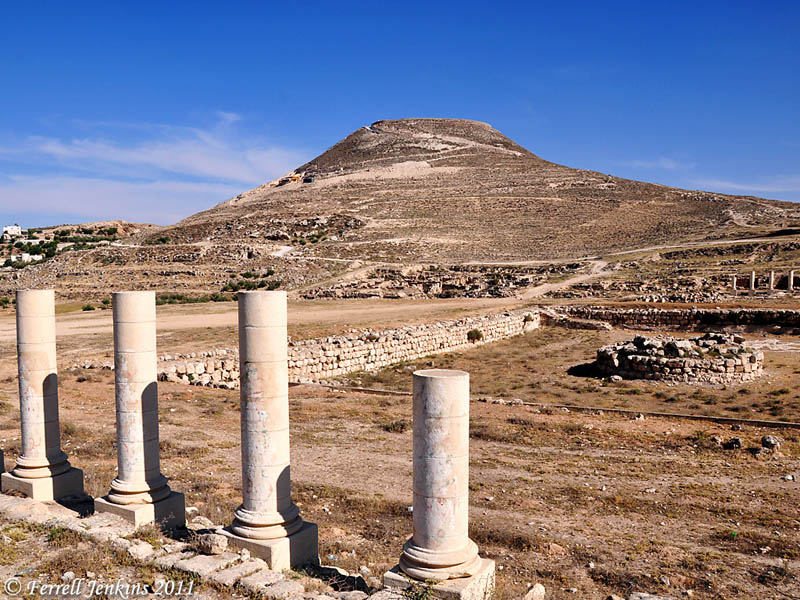
Here is a photo of the Herodium with some of the ruins of the lower Herodium in the foreground.

The Herodium with ruins of Herodia in the foreground. Photo by Ferrell Jenkins.

The Herodium with ruins of lower Herodium in the foreground. Photo by Ferrell Jenkins.

The artificial conical structure was built by Herod as one of his fortresses. This fortress is located about 8 miles south of Jerusalem, 3 1/2 miles east of Bethlehem, on the western edge of the Wilderness of Judea.

The tomb of Herod the Great was discovered about half way up the north side in 2007 by the late Prof. Ehud Netzer. You may use the search box to locate other articles about the Herodium, including some aerial photos.

A few years ago I called attention to a psychological study of Herod. I see the review of the scholarly book is still available at Haaretz here. If you have thought or read that he was cruel, just wait till you read this.

Previous posts relating to the birth of Jesus and Christmas

Thanks for the good response to our posts on frankincense and myrrh. Over the past 4+ years I have written several posts about Christmas, the birth of Jesus, and Bethlehem, in hope that they would be beneficial to Bible students and teachers.

Here are links to some of the more significant articles, usually with photos.

If you have more interest in learning about the origin of the celebration of the birth of Christ, take a look here. A more detailed study of the historical aspects of the celebration is available in PDF here.

For the next couple of days I plan to spent some (read, total) time with my grandson. I trust you will enjoy quality time with your family and friends.

I see that Leon Mauldin has a post about the manger at Leon’s Message Board here, and another about the traditional site of Jesus’ birth in Bethlehem here.

Todd Bolen has a list of his Christmas-Related Posts at Bible Places Blog here.

Some things you may not hear about Myrrh in a sermon

Myrrh is described in Fauna and Flora of the Bible, a publication of the United Bible Societies, as follows:

Myrrh is a dark-red gum with a strong aroma and a bitter taste. It exudes from a bush or tree belonging to a family of the burseraceæ which grows in Arabia, Abyssinia and on the Somali coast of East Africa. It is not native to Palestine. This tree or bush has a great number of knotted branches. The gum exudes from the branch as a thick light-coloured paste which, when exposed to the atomsphere, soon hardens and takes on a brownish colour. The finest myrrh was the resin secreted of itself (rather than by artificial incision) through the bark… (147)

When the secretion is collected directly from the bark it can be used as an ingredient in ointments.

When Ismaelites (Midianites) came from Gilead into the Dothan valley on their way to Egypt, Joseph’s brothers sold him to them (Genesis 37:27, 36). The Bible describes the caravan and the goods the Midianites were transporting.

a caravan of Ishmaelites was coming from Gilead, with their camels bearing aromatic gum and balm and myrrh, on their way to bring them down to Egypt. (Genesis 37:25 NAU)

In previous posts we have written about the Incense Route which was used by the Nabateans. This event was much earlier, and we see the caravan coming from the east (Gilead). The famous King’s highway ran through Gilead.

Myrrh is listed as a product of the land of Canaan when Jacob prepares his gift basket to be taken to Joseph (Genesis 43:11). This differs from what we normally read about myrrh. I do not know the solution to the problem at the moment. Perhaps it had been purchased from traveling merchants and was included with local products in the gift basket.

Myrrh could be in a liquid form. The ointment used in the anointing of priests had myrrh in it (Exodus 30:23). Oil of myrrh was in the cosmetics used by Esther (Esther 2:12). See also Song of Solomon 5:5.

The young man is advised to avoid the prostitute. He is told that she will entice him by saying,

I have sprinkled my bed
With myrrh, aloes and cinnamon. (Proverbs 7:17 NAU)

The young lady in the Song of Solomon thinks of her lover as a pouch or sachet of myrrh that lies all night between her breasts (1:13). She thinks of his lips as dripping with liquid myrrh (5:13).

The young man dreams of the time when he can approach her, and perhaps thinks of her breasts as the mountain of myrrh and the hill of frankincense.

Until the day breathes and the shadows flee, I will go away to the mountain of myrrh and the hill of frankincense. (Song of Solomon 4:6 ESV)

Myrrh displayed at Avdat, a stop on the Incense Route. Photo by Ferrell Jenkins.

Myrrh displayed at Avdat, a stop on the Incense Route. Photo by Ferrell Jenkins.

The wine offered to Jesus on the cross was mixed with myrrh (Mark 15:23).

Nicodemus brought about 75 pounds (= 100 Roman pounds) of myrrh and aloe for the burial of Jesus (John 19:39). We may conclude from this that Nicodemus, like Joseph of Arimathea (Matthew 27:57 NAU), was a wealthy man.

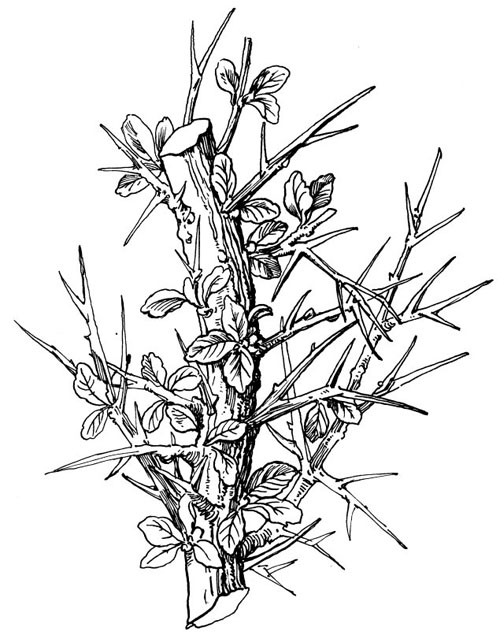
Myrrh branch. From 1000 Bible Images (Logos digital edition).

Myrrh branch. From 1000 Bible Images (Logos digital edition).

The wise men brought rare and expensive gifts to Jesus (Matthew 2:11). I trust that this brief discussion over the past three days has enhanced your understanding and appreciation of those gifts. What have we to give Him?

J. P. Van de Giessen has an article on Myrrh here, and a photo of the tree here.

Frankincense comes from a tree

In the previous post we looked at a few Biblical references that mention both frankincense and myrrh. We called attention to the Incense Route which ran from Arabia through Petra (now in Jordan) and Avdat in the Negev. In New Testament times this route was controlled by the Nabateans.

Frankincense is described in the Fauna and Flora of the Bible:

Frankincense is a balsamic gum exuding from the wood of different species of shrubs and trees belonging to the genus Boswellia. The bark is incised, and the finest quality of resin is obtained if this is done not too early in the year. The different species of Boswellia are native to India, the Somali coast and Arabia; the Midianites imported frankincense from Ephah and Sheba, Is 60:6; Jer. 6:20. Whether the Boswellia was grown in Palestine is rather doubtful. (121-122)

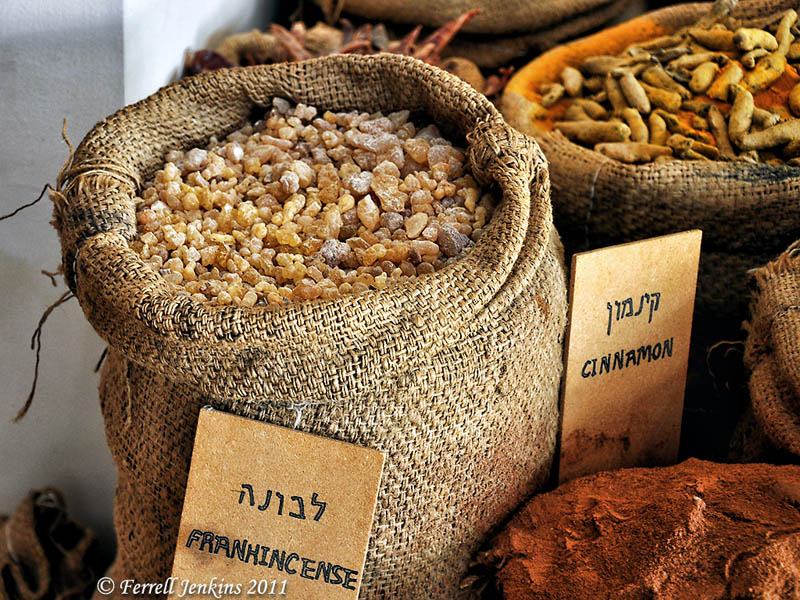
Frankincense is displayed at Avdat, stop number 62 on the famous Incense Route. Click on the photo for a larger image.

Frankincense at Avdat on the Incense Route. Photo by Ferrell Jenkins.

Frankincense at Avdat on the Incense Route. Photo by Ferrell Jenkins.

The Bible indicates several uses for frankincense.

  • Used in the incense associated with the anointing of the priests (Exodus 30:32).
  • Placed on a grain offering (Leviticus 2:1-2).
  • Placed on the bread for the tabernacle (Leviticus 24:7).

Levites were appointed to take care of the frankincense used in the temple (1 Chronicles 9:29). Eliashib the priest hid Tobiah in a large room where frankincense and other sacrificial items were stored (Nehemiah 13:5, 9).

Gold is mentioned with frankincense in Isaiah 60:6 and Matthew 2:11. Both are mentioned among the goods the merchants could no longer sell because of the fall of Babylon (Revelation 118:11-13).

The illustration showing the frankincense tree comes from 1000 Bible Images (Logos digital edition).

Frankincense Tree. 1000 Bible Images.

Frankincense Tree. 1000 Bible Images.

Our current header photo was made at Avdat, and indicates the importance of the city as an important stop on the Incense Route.

Frankincense and Myrrh

Frankincense and myrrh are mentioned together in the Song of Solomon and in the account of the visit of the magi from the east to see Jesus. Several significant things can be learned from these Biblical verses.

Look first at Song of Solomon 3:6.

“What is this coming up from the wilderness Like columns of smoke, Perfumed with myrrh and frankincense, With all scented powders of the merchant? (Song of Solomon 3:6 NAU)

  • Myrrh and frankincense are associated with the wilderness (desert; Hebrew, midbar).
  • Perhaps incense used in sacrifice or offering, “like columns of smoke.”
  • Associated with perfume and scented or fragrant powders.
  • Something traveling merchants would bring from the wilderness.

Song of Solomon 4:13-14 provides more insights.

“Your shoots are an orchard of pomegranates With choice fruits, henna with nard plants,  Nard and saffron, calamus and cinnamon, With all the trees of frankincense, Myrrh and aloes, along with all the finest spices. (Song of Solomon 4:13-14 NAU)

  • Associated with trees, and classified with spices.

The reference in the New Testament is in the account of the birth of Jesus (Matthew 2:1-11).

  • Frankincense and myrrh are in the category with gold, and offered as gifts to one who is considered a king and is being worshiped.
  • The magi have come from east of Jerusalem and Bethlehem.
  • Gold, frankincense, and myrrh are considered treasures.

All of these tips harmonize with what is known about frankincense and myrrh. The plants or trees from which these come are known to grow in the desert regions. They are not native to Biblical Israel. Traveling merchants from Arabia traveled long distances across the desert, making stops at Petra, Avdat, and other places on their way to Gaza and other Mediterranean ports where the products could be shipped throughout the Mediterranean world.

The photo below was made at Avdat, a Nabatean site in the Negev. The city was especially significant in the first century B.C. and the first century A.D. Avdat was stop number 62 on the famous Incense Route. It is now part of Israel’s National Park system, and a World Heritage Site. A display at the ticket office and shop explains about the Incense Route and shows some of the goods that were transported across the desert. This photo shows little packets of frankincense and myrrh that may be bought as souvenirs of your visit. Gold is still costly, but the market for frankincense and myrrh has fallen drastically since Bible times. The price in New Israeli Shekels is less than $4.

Frankincense and myrrh on the Incense Route at Avdat. Photo by Ferrell Jenkins.

Frankincense and myrrh on the Incense Route at Avdat. Photo by Ferrell Jenkins.

More to follow, hopefully.

Dead Sea Scrolls exhibition in Times Square, New York

Are you traveling to New York in the next few months? The Dead Sea Scrolls: Life and Faith in Biblical Times exhibition at the Discovery Times Square building in New York City is worth a visit.

Gordon Franz, a Bible teacher and archaeologist, has written about the exhibition on his Life and Land blog here. Gordon is known to the regular readers of this blog. We have called attention to several of his articles, especially those about “cracked pot archaeology.”

In addition to giving the details about the exhibition and how to get a $5 discount on your ticket, Franz tells you how to access his 39-page guide which he has written specifically from a Christian perspective. Actually, it should be helpful for any serious student of the Bible.

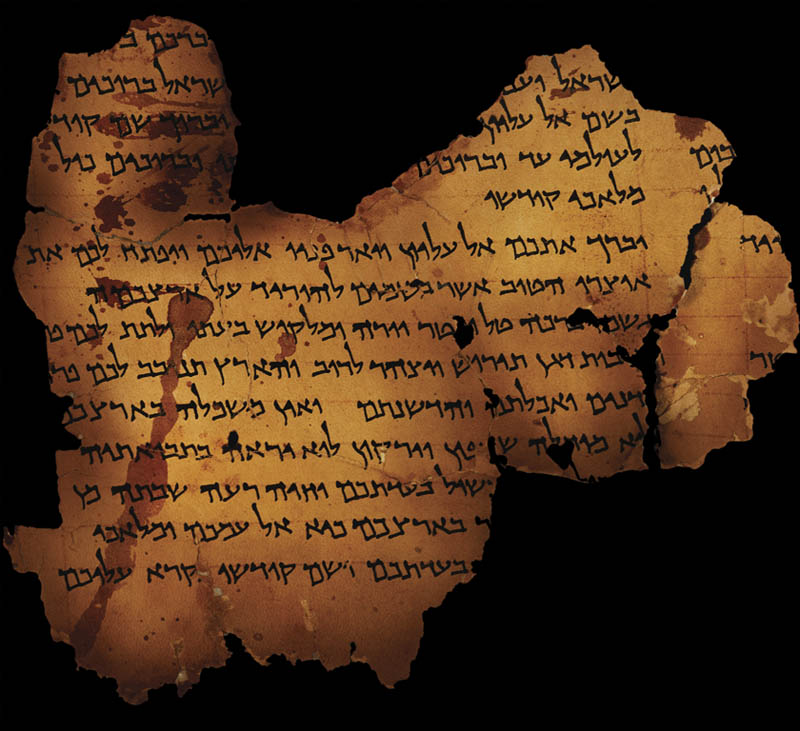
War Scroll displayed at the Discovery Times Square in New York City.

War Scroll displayed at the Discovery Times Square in New York City.

This exhibition is much more than a few fragments of the Dead Sea Scrolls. Artifacts, ossuaries, pottery, lamps, seals, and a stone from the wall build around the Temple Mount are included among the 500 items on display. The exhibition is on loan from the Israel Antiquities Authority. The exhibition runs until April 15, 2012. After that it moves to Philadelphia’s Franklin Institute for a few months beginning in May.

Dead Sea Scrolls - Life and Faith in Biblical Times display

Dead Sea Scrolls - Life and Faith in Biblical Times display.

If you have the opportunity to visit this exhibition, you should read Gordon’s guide written from a Christian perspective. His guide will be helpful to anyone interested in Bible life and times, even if you don’t get to visit the exhibition. The link to the guide is located at his Life and Land website here.

Thanks to Gordon Franz for giving me a heads-up on his guide.