Category Archives: Bible Places

The Basilica Julia in the Roman Forum

Paul had come to Rome as a prisoner. While at Caesarea he exercised his right as a Roman citizen to appeal to Caesar (Acts 25:11; 28:19).

If then I am a wrongdoer and have committed anything for which I deserve to die, I do not seek to escape death. But if there is nothing to their charges against me, no one can give me up to them. I appeal to Caesar. (Act 25:11 ESV)

Only the large platform of the Basilica Julia remains in the Roman Forum. The building was not completed when it was dedicated by Julius Caesar in 46 B.C. The building burned and was reconstructed by Augustus in A.D. 12. Amanda Claridge, Rome: An Oxford Archaeological Guide, describes the Basilica Julia in the following words:

The basilica was the seat of the Court of the Hundred (the centumviri), a special civil court which generally dealt with matters of inheritance and actually numbered 180 judges when they all sat together at an important trial. Pliny the Younger describes the scene at one where he pleaded on behalf of a senatorial lady suing her 80-year-old father, who had disinherited her ten days after he took a new wife. In addition to the judges the place was packed with onlookers. Both parties had brought in large numbers of seats for their supporters, behind which were rows of people standing as far as the outer walls, and the crowd spilled upwards in the galleries, hanging over the rails in their efforts to hear the proceedings. (89-90)

Some scholars suggest that this is where Paul’s appeal before Caesar would have been heard (Wycliffe Historical Geography 545).
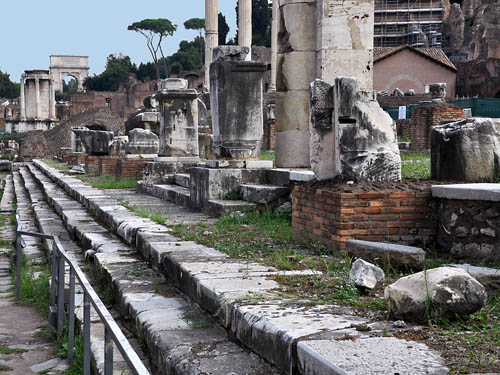
The steps leading to the Basilica Julia in Roman Forum. Photo by Ferrell Jenkins.

The steps leading to the Basilica Julia in Roman Forum. Photo by Ferrell Jenkins.

The information above describing the crowds that came to the court might provide some understanding of Paul’s statement to Timothy.

Do your best to come to me soon. For Demas, in love with this present world, has deserted me and gone to Thessalonica. Crescens has gone to Galatia, Titus to Dalmatia. Luke alone is with me. Get Mark and bring him with you, for he is very useful to me for ministry. Tychicus I have sent to Ephesus. When you come, bring the cloak that I left with Carpus at Troas, also the books, and above all the parchments. Alexander the coppersmith did me great harm; the Lord will repay him according to his deeds. Beware of him yourself, for he strongly opposed our message. At my first defense no one came to stand by me, but all deserted me. May it not be charged against them! But the Lord stood by me and strengthened me, so that through me the message might be fully proclaimed and all the Gentiles might hear it. So I was rescued from the lion’s mouth. The Lord will rescue me from every evil deed and bring me safely into his heavenly kingdom. To him be the glory forever and ever. Amen. (2 Timothy 4:9-18 ESV)
The Brethren, the Roman Forum and the Palatine Hill

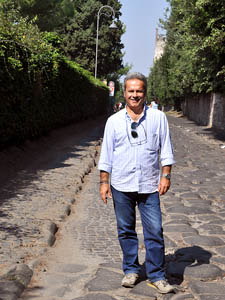
Stefano Corazza on the Appian Way

Stefano Corazza on the Appian Way

This morning I spoke again for La Chiesa di Christo in Rome. Stefano Corazzo translated my lesson on the subject “Can I trust my Bible?” I used PowerPoint slides with both English and Italian captions. Several of the brothers and sisters speak English at well as Italian.

Saturday and Sunday were beautiful sunny days in Rome. I tried to take advantage of the light to make some photos that would be helpful in teaching various New Testament subjects, especially pertaining to the book of Acts, the epistle to the Romans, the Prison Epistles (Ephessians, Colossians, Philemon, and Phillippians), and 2 Timothy, which seems to be the last prison epistle.

When I decided to return to the Roman Forum I did so at an entry with immediate access to the Palatine Hill. When I reached the ticket window I was told that tickets were free for Saturday and Sunday. Then I noticed that this included the Colosseum as well as the Palatine Hill and Forum. That was a saving of €12, about $18. My lucky day!

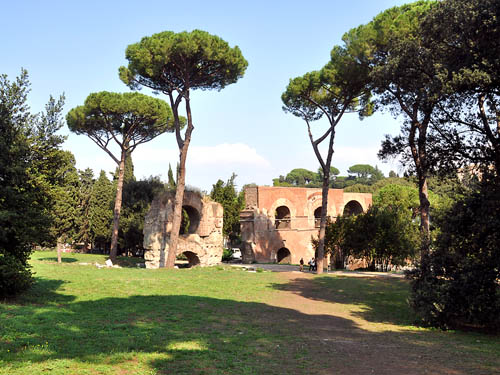
The Palatine Hill is a flat top hill of about 25 acres. Palatial residences of the emperors were built here during the Imperial period. Some of the structures date to a period after the time of Paul. Domitian (A.D. 81–96) modified the hill with new buildings. Two great complexes, called the House of Flavia and the House of Augustus grace the hill. A Stadium was used for minor games and entertainment.

The Palatine Hill in Rome. Photo by Ferrell Jenkins.

The Palatine Hill in Rome. Photo by Ferrell Jenkins.

The Roman Forum was the hub of Roman life — religious, political, economic, social. One structure of significance for the study of the life and work of Paul is the Julian Basilica — the seat of the tribunal of the centumiri, who judged civil cases. Here between the Palatine and Capitoline hills Paul probably stood trial before Caesar.

“And thus we came to Rome”

Luke records that he and Paul found some brethren at Puetoli and remained for seven days. By this time the prisoner on behalf of the Gentiles had made such a good impression that he is allowed considerable freedom. Then he says, “and thus we came to Rome” (Acts 28:14 NAU). He hastens to add that brethren from Rome came south to meet them.

And the brethren, when they heard about us, came from there as far as the Market of Appius and Three Inns to meet us; and when Paul saw them, he thanked God and took courage. When we entered Rome, Paul was allowed to stay by himself, with the soldier who was guarding him. (Acts 28:15-16 NAU)

Under considerably different circumstances we came back to Rome yesterday after being away for five days. The brethren here invited me to speak last Sunday and again on September 27.  Yesterday and today we had wonderful sunny weather for photographs. I will share a few of the photographs that we were able to make.

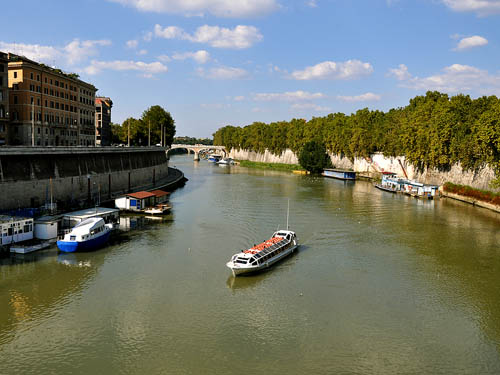
Rome was founded about 753 B.C. on the banks of the Tiber River. Here is one of the many views of the Tiber that one may see in Rome.

The Tiber River in Rome. Photo by Ferrell Jenkins.

The Tiber River in Rome. Photo by Ferrell Jenkins.

Rome once ruled the world. In the days of Caesar Augustus something happened in far away Palestine that would really change the Roman world and more.

Now in those days a decree went out from Caesar Augustus, that a census be taken of all the inhabited earth. (Luke 2:1 NAU)

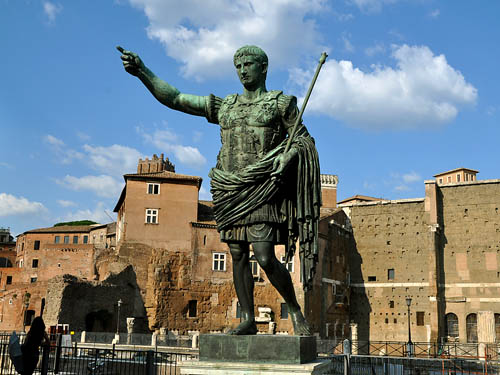
Statues of Roman Emperors may be seen all over the city of Rome. This one shows Emperor Augustus across from the Roman Forum.

The Emperor Augustus. Photo by Ferrell Jenkins.

The Emperor Augustus. Photo by Ferrell Jenkins.

This morning I visited with my friend and former student,  Stefano, as we had opportunity to visit the Appian Way and a few other sites in Rome. Stefano grew up in Rome. He spoke about how, as a kid, he played ball beside the ancient walls of Rome with no thought of the historical importance of the ruins. Now, of course, it is different. We thought about the Apostle Paul and the difficulties he faced in coming to Rome. And we discussed the work of the Lord in Italy and in America. I had lunch with Stefano and his parents, Sandro and Elisabetta.

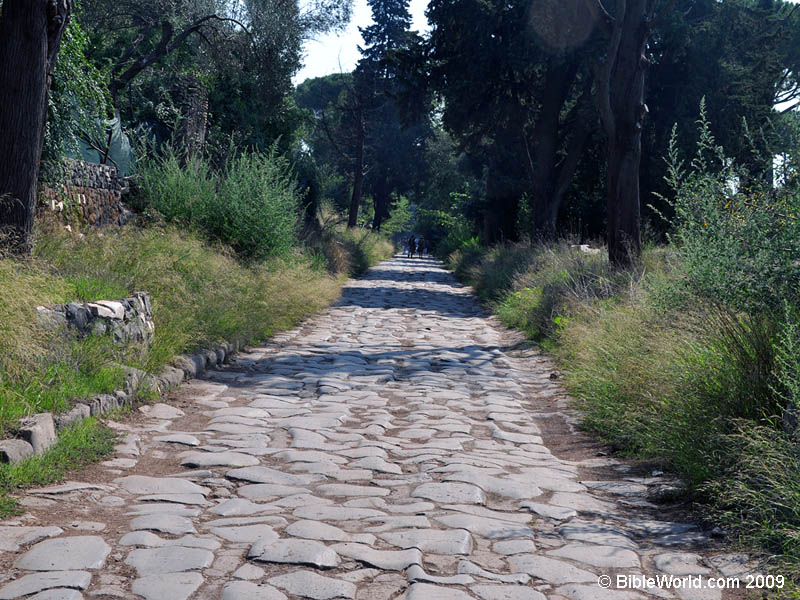
Here is a view of the Appian Way south of Rome. There is every reason to believe that Paul traveled this road. I have made this photo a little larger because I know that many teachers and preachers would like to use it in teaching the book of Acts. Just click on the photo for the larger version.

Paul traveled the Ancient Appian Way to get to Rome. Photo by Ferrell Jenkins.

Paul traveled the Ancient Appian Way to get to Rome. Photo by Ferrell Jenkins.

Map showing Rhegium and Syracuse

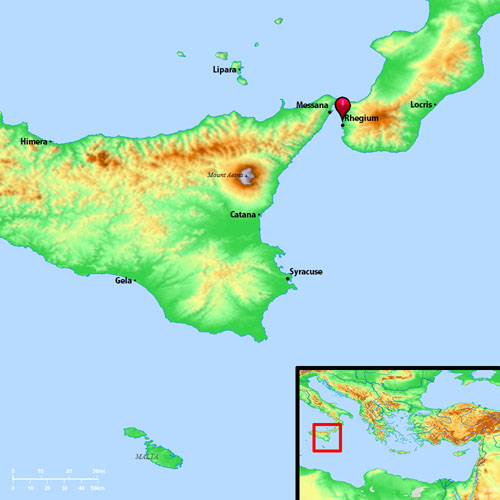
Here is a nice map from BibleAtlas showing the location of Rhegium on the toe of Italy, and Syracuse along the eastern coast of Sicily. Check BibleAtlas.org for more information, a larger copy of this map, and other maps.

The location of Rhegium and Syracuse. BibleAtlas.org.

The location of Rhegium and Syracuse. BibleAtlas.org.

Reggio di Calabria is Rhegium of Acts 28:13

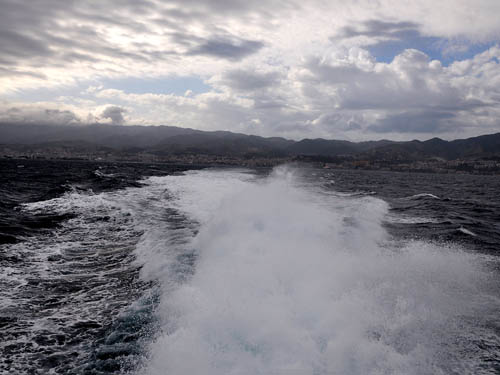
Yesterday I mentioned crossing the Strait of Messina by hydrofoil. Here is a rather unusual photo that I made from the stern of the hydrofoil as we left Messina, Sicily, toward Reggio di Calabria in Italy.

Crossing the Strait of Messina by hydrofoil. Photo by Ferrell Jenkins.

Crossing the Strait of Messina by hydrofoil. Photo by Ferrell Jenkins.

Once we arrived in Reggio we walked a few meters to our 3-star hotel. This little hotel, the Continental, has been recently refurbished. The elevator was new, and everything in the room, including the bathroom, was also new. The biggest disadvantage is that they did not have any Internet connection. I think this is the first hotel on this entire trip that did not provide some kind of access to the Internet. Eventually I paid 5 Euro (about $7.50) for one hour on the Internet at another hotel. But that is a good price compared to the hotel I am in tonight in Rome. The charge for one hour is 10 Euro (about $15.00).

We walked into town to visit the Archaeological museum and find something to eat. The museum, like the one in Syracuse, had nice displays of small items. I did not see anything of great helpfulness.

Reggio is situated along the strait and up the slope of a mountain. Only the main street and the promenade is level. Local advertising says that the area has been described as “the most beautiful kilometer in Italy.” From my limited experience in Italy, I would agree.

According to Luke, the Alexandrian ship Paul was on stayed only one day in Rhegium before a south wind allowed them to sail north through the Strait of Messina. It must have been a good wind. The next stop was Puteoli which is located in the Naples area.

We put in at Syracuse and stayed there three days. From there we cast off and arrived at Rhegium, and after one day a south wind sprang up and on the second day we came to Puteoli. (Acts 28:12-13 NET)

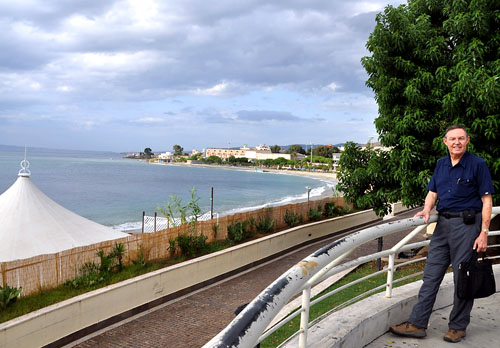
The modern port at Reggio is an artificial one. I tried to get some photos to illustrate where the natural port might have been. Elizabeth made this photo, look north along the Italian coast.

Looking north along the Italian coast at Reggio. Photo by Elizabeth Jenkins.

Looking north along the Italian coast at Reggio. Photo by Elizabeth Jenkins.

This morning we got up early and took the 6:46 a.m. Eurostar train from Reggio to Rome. The trip took a little over 5 and one half hours. We had about 6 brief stops between Reggio and Naples. From there it was non-stop to Rome. Mount Vesuvius was visible from the window of the train. Obviously I wished that time would permit a stop in Naples to visit Puteoli, Pompeii, and Mount Vesuvius.

Elizabeth and I enjoyed the Eurostar trip. Photo by Ferrell Jenkins.

Elizabeth and I enjoyed the Eurostar trip. Photo by Ferrell Jenkins.

This afternoon we were able to visit several sites in Rome with good sunshine and clouds. Maybe tomorrow we will be able to share some of those photos.

Thanks for following along with us on this journey.

St. Paul’s Bay in Malta

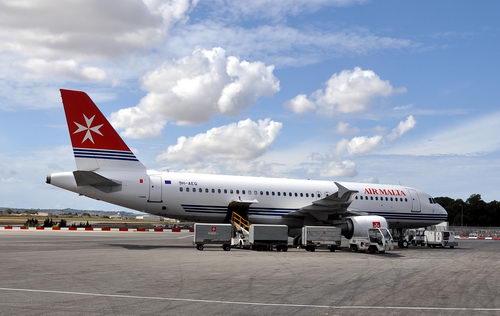
We said goodbye to our group early this morning at the Rome airportas they prepared to depart for the USA. Elizabeth and I went to another terminal to wait for our noon flight to Malta.This was my first time to fly Air Malta. The planes bear the distinctive Maltese Cross on the tail.Malta is renowned for its association with the 12th century Knights of Malta (also know as the Knghts of Rhodes, and the Knights of St. John). They were also called the Hospitalers. I think they built the first hospital in Jerusalem at a site now near the Church of the Holy Sepulcher.

Air Malta planes display the Maltese Cross. Photo by Ferrell Jenkin in Malta.

Air Malta planes display the Maltese Cross. Photo by Ferrell Jenkin in Malta.

Malta is a popular resort and is still in the high season. We are staying at a hotel on the southern side of St. Paul’s Bay. My purpose in coming here is to photograph possible sites associated with Paul’s shipwreck.

After we had safely reached shore, we learned that the island was called Malta.  2 The local inhabitants showed us extraordinary kindness, for they built a fire and welcomed us all because it had started to rain and was cold. (Acts 28:1-2).

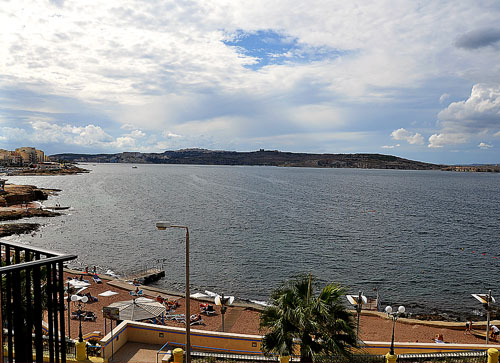
This is one of the first photos I made from our hotel balcony.

View of St. Paul's Bay. Photo by Ferrell Jenkins.

View of St. Paul's Bay. Photo by Ferrell Jenkins.

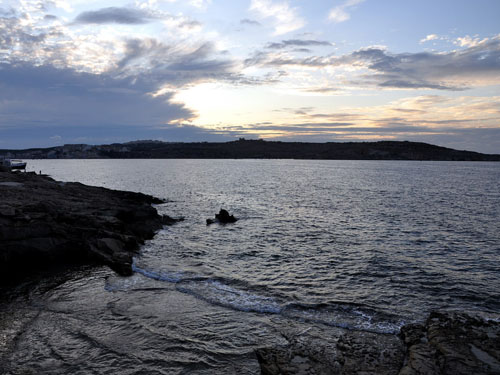
The next photo was made at sunset and shows a portion of the rocky coast even in an area now filled with shops and seaside restaurants.

The rugged coast of St. Paul's Bay at Sunset. Photo by Ferrell Jenkins.

The rugged coast of St. Paul's Bay at Sunset. Photo by Ferrell Jenkins.

Todd Bolen’s new collection of old photos

Todd Bolen has produced a new collection of photos. These are not his photos. They are the famous photos of The American Colony and Eric Matson Collection. This set of 8 volumes features 4,000 high-resolution photographs taken by resident photographers in the Holy Land from 1898 to the 1940s.

Every Bible student who has been using Bible study resources for several years has seen the photographs of The American Colony photographers and Eric Matson. When I edited the Truth in Life Bible class literature in the early 1970s we purchased and obtained permission to use several of the photographs in the literature.

The American Colony in Jerusalem was founded in 1881 by Horatio Spafford (author of the famous hymn, It is Well With My Soul). Eric Matson, one of the photographers inherited the collection, added his own work, and later donated his negatives to the Library of Congress. These photos have been available to the public for some time, but it has been difficult to locate a particular photo. And the quality of some of them, after so many years, is not good.

Bolen describes the collection:matson_dvd_front_200

This collection includes more than 4,000 selected photographs of sites and scenes from Palestine, Lebanon, Syria, Jordan, and Egypt. All of the images are included in pre-made PowerPoint® files for quick and easy use, as well as in high-resolution jpg format, suitable for projecting or printing. Quotations from 19th-century travelers give additional context to many of the photographs.

The Collection Includes:

  • Volume 1: Northern Palestine
  • Volume 2: Jerusalem
  • Volume 3: Southern Palestine
  • Volume 4: Lebanon, Syria, and Jordan
  • Volume 5: Egypt and Sinai
  • Volume 6: Traditional Life and Customs
  • Volume 7: Early 20th-Century History
  • Volume 8: People of Palestine

The first volume has been released on CD. Other volumes are being released one CD a month. The complete 8-volume set is available now on 2 DVDs.

In recent weeks Todd has written about Shechem, Samaria, and Beth Shean. Almost every tour group visits Beth Shean, but many are unable to go to the other sites. Take a look here at the way Beth Shean looks now and the way it looked in the 1920s.

Complete information on this set is available at Life in the Holy Land.

Impressive Canaanite fortification in “City of David”

According to a press release from the Israel Antiquities Authority, “An Enormous 3,700 Year Old Fortification was Exposed in the City of David.”

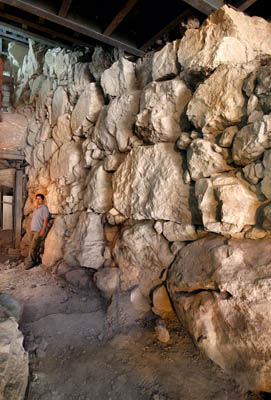
The fortification rises to a height of c. 8 meters [about 26+ feet], and it seems that the Canaanites used it to defend the path that led to the spring.

The excavations are being conducted by the Israel Antiquities Authority in the “Walls Around Jerusalem National Park and are underwritten by the ‘Ir David Foundation.

A huge fortification more than 3,700 years old, which is ascribed to the Canaanites (Middle Bronze Age 2 [2000-1500 BC]), was uncovered in archaeological excavations the Israel Antiquities Authority is currently conducting in the “Walls Around Jerusalem National Park” in the City of David, with funding provided by the ‘Ir David Foundation.

According to the director of the excavation, Professor Ronny Reich of the University of Haifa, together with Eli Shukron on behalf of the Israel Antiquities Authority, “This is the most massive wall that has ever been uncovered in the City of David, and it rises to a height of 8 meters. We are dealing with a gigantic fortification, from the standpoint of the structure’s dimensions, the thickness of its walls and the size of the stones that were incorporated in its construction. The walls appear to be a protected, well-fortified passage that descends to the spring tower from some sort of fortress that stood at the top of the hill. The construction of a protected passage such as this is a plausible solution that explains the innate contradiction of the situation whereby the spring – which is a source of life from the standpoint of the fortress’ inhabitants in time of emergency – is located in the weakest and most vulnerable place in the area. The construction of a protected passage, even though it involves tremendous effort, is a solution for which there are several parallels in antiquity, albeit from periods that are later than the remains described here. A small section of the fortification was discovered in 1909, and it has been ascertained in the present excavations that it was part of an enormous wall. This is the first time that such massive construction that predates the Herodian period has been discovered in Jerusalem.”

During this period Jerusalem and the fields around it were an independent political entity with self-rule, similar to its neighbors Shechem to the north and Jericho to the east. Massive walls resembling the one that was just exposed in Jerusalem are known from Canaanite Hebron (Tel Rumeida), Shechem (Tell Balata) and Gezer.

Middle Bronze II Fortification. Photo: Vladimir Naiahin, IAA.

Middle Bronze II Fortification. Photo: Vladimir Naiahin, IAA.

Professor Reich comments on the fortification:

“Even though it would seem we are dealing with impressive fortifications, the walls were after all primarily used to defend against marauding desert nomads who wanted to rob the city. These are the earliest fortifications in the region and they bear witness to the fact that from this point on the settlement had became an urban entity with a ruler who had the capability and resources to build such a structure. A small settlement would have been unsuccessful in organizing such construction”.

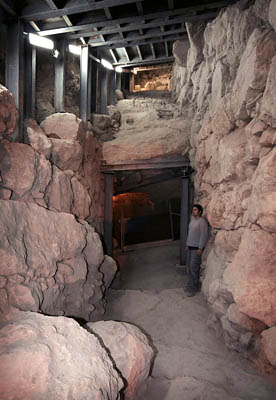
The known section of the fortification is 24 meters long; however, it is thought the fortification is much longer because it continues west beyond the part that was exposed, at the top of the hillside. Professor Reich adds, “The new discovery shows that the picture regarding Jerusalem’s eastern defenses and the ancient water system in the Middle Bronze Age 2 is still far from clear. Despite the fact that so many have excavated on this hill, there is a very good chance that extremely large and well-preserved architectural elements are still hidden in it and waiting to be uncovered”.

Middle Bronze II Fortification. Photo: Vladimir Naiahin, IAA.

Middle Bronze II Fortification. Photo: Vladimir Naiahin, IAA.

The public will be able to visit the fortification for the first time today, September 3. I would like to be there.

What does this mean for the Bible student? The Middle Bronze II period is the period of the Biblical Patriarchs. It was possibly during that period when Melchizedek, king of Salem and priest of God Most High, went out to bless Abraham after his return from rescuing Lot (Genesis 14:18). We have no way to know if this fortification was in existence at that time.

Assuming this fortification was still in use at the time when David captured the stronghold of Zion from the Jebusites, it helps explain the arrogance of the local residents (2 Samuel 5:6-7).

Take a look at the City of David website here.

HT: Joseph I. Lauer

Tel Dor

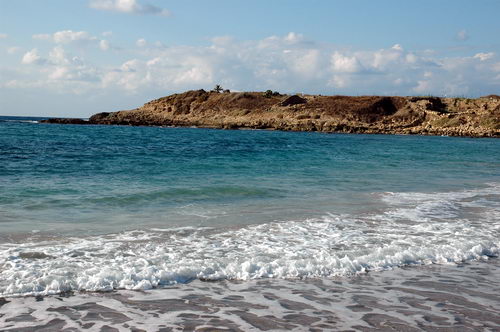
Tel Dor sits on a promontory on the Mediterranean coast between Caesarea Maritima and Mount Carmel.

View of Tel Dor from the south. Photo by Ferrell Jenkins.

View of Tel Dor from the south. Photo by Ferrell Jenkins.

The site of Dor seems to have been inhabited at least from the Late Bronze Age (1550-1200 B.C.). The Tel Dor Excavation site says,

The documented history of the site begins in the Late Bronze Age (though the town itself was founded in the Middle Bronze Age, c. 2000 BCE), and ends in the Crusader period.

Here is what we know about Dor from the biblical accounts:

  • The king of Dor joined the coalition of Jabin, king of Hazor, to fight unsuccessfully against Joshua and the Israelites (Joshua 11:1-2; 12:23).
  • Dor seems to have been allotted to the tribe of Manasseh within the territory of Asher (Joshua 17:11). It appears that Manasseh was unable to maintain control of the city (Judges 1:27).
  • Ben-abinadab, one of Solomon’s deputies, was responsible for the “height of Dor” when Solomon set up his administrative centers  (1 Kings 4:7-11).

Miniature carving of Alexander the Great

Israel National News reports the discover of a rare miniature carving of Alexander the Great. The article by Nissan Ratzlav-Katz says,

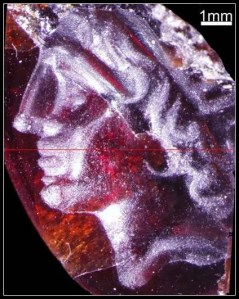
Excavations in Tel Dor have turned up a rare and unexpected work of Hellenistic art: a precious stone bearing the miniature carved likeness of Alexander the Great. Archaeologists are calling it an important find, indicating the great skill of the artist.

The Tel Dor dig, under the guidance and direction of Dr. Ayelet Gilboa of Haifa University and Dr. Ilan Sharon of Jerusalem’s Hebrew University, has just ended its summer excavation season. For more than 30 years, scientists have been excavating in Tel Dor, identified as the site of the Biblical town of Dor. The town’s location, on Israel’s Mediterranean Sea coast some 30 kilometers south of Haifa, made it an important international port in ancient times.

“Despite the tiny proportions – the length of the gemstone (gemma) is less than a centimeter and its width less than half a centimeter – the artist was able to carve the image of Alexander of Macedon with all of his features,” Dr. Gilboa said. “The king appears as young and energetic, with a sharp chin and straight nose, and with long, curly hair held in a crown.”

According to the archaeologists involved in the Tel Dor excavations, the discovery of the miniature Alexander gemstone carving in Israel is fairly surprising. The Land of Israel was not, for the Greek Empire, a central or major holding.

The article concludes,

Historically, Alexander himself passed through Dor in 332 BCE, during his voyage to Egypt. It appears that the city fell to him without resistance. Since that time until its conquest by the Hasmonean Jewish King Alexander Yannai around 100 BCE, Dor served as a stronghold of non-Jewish Hellenists in the Land of Israel.

The full article may be read here.

Miniature carving of Alexander from Tel Dor.

Carving of Alexander from Tel Dor.

Dor is mentioned in several Old Testament references including Joshua 17:10-11.

HT: Joseph I. Lauer