Author Archives: Ferrell Jenkins

Scientific study of “headless” gladiators

Discovery News reports here on a new study about the “headless” gladiators found in a cemetery at York, England, a few years ago.

Britain’s enigmatic “headless Romans” lost their heads far away from home, according to a multi-isotopic analysis of the 1,800-year-old skeletal remains.

Unearthed between 2004 and 2005 in a cemetery in York, England, the remains belong to 80 individuals, almost all males, who died violently at ages ranging between 19 and 45.

At least 46 of them had been carefully decapitated, with their heads placed by or between their legs or pelvis.

Believed by some to be gladiators, losing their heads after their last fight, the heavily built men were buried in one of the most prestigious cemeteries of York during the 2nd and 3rd century A.D.

A new scientific “multi-isotopic analysis of the skeletal remains” has shown that many of the men were from other parts of Britain and the Roman Empire. It is a fascinating technical study.
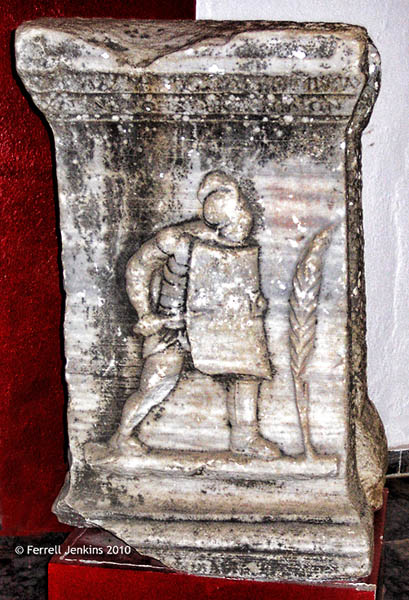
Gladiator at Ephesus. Photo by Ferrell Jenkins.

Gladiator at Ephesus. Photo by Ferrell Jenkins.

The Science Channel web site has a nice video in which Dr. Karl Großschmidt, Medical University of Vienna, discusses the discovery at Ephesus of skeletons belonging to 70 gladiators. Click here to view the video and a second one discussing the weapons used by the gladiators.  Großschmidt thinks that most of the men died in combat before the age of 35.

HT: David Padfield

In a post to follow I will discuss Paul’s use of the gladiator in one of his epistles.

A report today says that Pompeii’s house of gladiators collapsed Saturday morning. Check CNN.
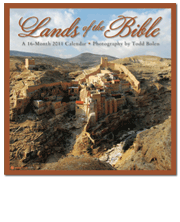
“Lands of the Bible” 2011 calendar

Lands of the Bible 2011 CalendarEveryone who has visited Israel, or those who wish they had, enjoy seeing good pictures of the lands of the Bible. Orange Circle Studio, a leading calendar publisher, produced a beautiful calendar for 2011 using the photographs of Todd Bolen.

A friend sent me a copy of the calendar as a gift. I enjoyed it as soon as I browsed through it, and expect to enjoy it for the next 14 months. I thought some of our readers who appreciate good photos of the Bible land would enjoy the calendar. Todd has a few of the calendars available at a discount price (postpaid). For more information go to the Bible Places Blog, or directly to the order page here.

Attention: Logos users. Please read and help.

Logos Bible Lands collectionIf you use Logos software you are probably aware of pre-publication specials, and community pricing. Please read what Todd Bolen has written here about the Travel Through Bible Lands Collection. Then, help us get enough orders for community pricing to get these books at a reasonable price. I would really like to have the volumes by Tristram.

Royal gardens at Ramat Rachel

Archaeologists working at Ramat Rachel, between Jerusalem and Bethlehem, say they have uncovered an ancient royal garden. They say this will be “the first full-scale excavation of this type of [an] archaeological site anywhere in the pre-Hellenistic Levant.”

According to Prof. Oded Lipschits and graduate student Boaz Gross of Tel Aviv University’s Department of Archaeology, this dig is an unparalleled look into the structure and function of ancient gardens. “We have uncovered a very rare find,” says Prof. Lipschits, who believes that this excavation will lead to invaluable archaeological knowledge about ancient royal gardens in the Middle East.

The discovery, which dates back to the 7th century B.C.E., was recently reported in Quadmoniot, the journal of the Israel Exploration Society, and another paper on the dig is forthcoming in Near Eastern Archaeology.

Read the news release in its entirety here.

The identity of Ramat Rachel with a specific Bible city is not known.

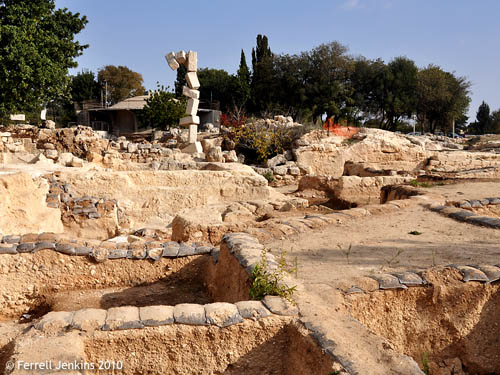
This photo shows some of the excavation area at Ramat Rachel after the 2009 season.

Excavation at Ramat Rachel. Photo by Ferrell Jenkins.

Excavation at Ramat Rachel. Photo by Ferrell Jenkins.

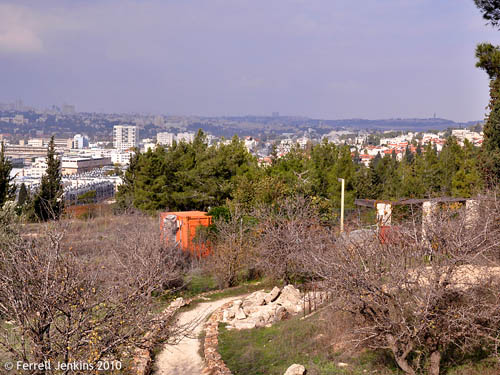
The elevation of Ramat Rachel is about 2684 feet above sea level. This gave the inhabitants a view of the ancient city of Jerusalem which was about 200 feet lower. Even on a less than clear day, you can see the Old City of Jerusalem on the far right of the photo below.

View to north of Jerusalem from Ramat Rachel. Photo by Ferrell Jenkins.

View to the north of the city of Jerusalem from Ramat Rachel. Photo by Ferrell Jenkins.

Ramat Rachel was inhabited from “the last century of the kingdom of Judah (7th century BCE) until the early Muslim reign in Palestine (10th century CE).” The excavators think the royal palace at Ramat Rachel was first built in the days of King Hezekiah (2 Kings 18-20).  More information is available at the excavation web site here.

Sea of Galilee now more than 701 feet below sea level

Arutz Sheva reports that the Sea of Galilee fell 20 centimeters last month.

Despite several periods of rain during the month, the Kinneret’s level fell 20 centimeters [7.87 inches] in October, the Hydrological Service of the Israel Water Authority said Tuesday. The lake’s level is now 213.88 [701.71 ft.] meters below sea level. According to the Service, the Kinneret lost 72 centimeters [28.35 in.] between July and September.

A lone fisherman on the Sea of Galilee at sunrise. View east. Photo by Ferrell Jenkins.

A lone fisherman on the Sea of Galilee at sunrise. View east. Photo by Ferrell Jenkins.

The Sea of Gailee/Kinneret played an important role in the ministry of Christ and His disciples.

When He heard that John had been arrested, He withdrew into Galilee. He left Nazareth behind and went to live in Capernaum by the sea, in the region of Zebulun and Naphtali. This was to fulfill what was spoken through the prophet Isaiah: Land of Zebulun and land of Naphtali, along the sea road, beyond the Jordan, Galilee of the Gentiles! The people who live in darkness have seen a great light, and for those living in the shadowland of death, light has dawned. From then on Jesus began to preach, “Repent, because the kingdom of heaven has come near!” (Matthew 4:12-17 CSB)

HT: Biblical Paths.

New website on biblical archaeology

Rob Bradshaw, in the United Kingdom, adds another website where he provides out-of-print books and periodical articles. This time the subject matter is biblical archaeology. I expect that we will see it grow in helpfulness as has been true of his other sites. Here is his own announcement.

I am very pleased to announce that my new website aimed at providing resources for those studying the archaeology of the Bible lands is officially launched today.

Over the last few months it became apparent that the range of material relating to archaeology would no longer fit within the structure of the biblicalstudies.org.uk website. The new site will eventually offer detailed coverage of all aspects of biblical archaeology from artefacts to bibliographies of noteable archaeologists. Collapsible menus will be added once the site structure is finalised.

Click here to visit the new site.

Model shrines from biblical sites

Model shrines have been uncovered in numerous excavations of biblical cities, but they are common throughout the Ancient Near East. Ziony Zevit says,

Some model shrines were found to contain built-in images of deities while others were empty. In the latter case, some scholars assume that a small portable image was placed inside when the shrine was in use. (The Religions of Ancient Israel, 328).

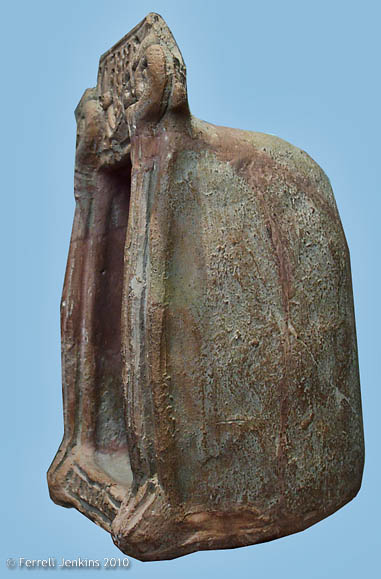
The model shrines come in a variety of sizes. Here is one excavated at Tell el-Farah, the biblical site of Tirzah.

Model shrine from Tell el Farah. The Louvre. Photo by Ferrell Jenkins.

Model shrine from Tell el Farah. The Louvre. Photo by Ferrell Jenkins.

Tirzah served as the capital of the northern kingdom of Israel during the reigns of Baasha (1 Kings 15:21) Elah and Zimri (1 Kings 16:17-18). Omri reigned six years in Tirzah before he purchased the hill of Samaria and moved the capital of Israel there (1 Kings 16:24).

The shrine discovered at Ashkelon is significant because it included a silver plated bull. See a low quality photo here.

Luke Chandler reports on the 2010 discovery of a shrine at Khirbet Qeiyafa, and includes two nice photos here.

Decorations from Herod’s tomb

Joseph I. Lauer calls attention to a photo-essay of the announcement of the discovery of Herod’s tomb at the Herodium. This essay dates back to May 10, 2007, but there may be new readers who have not seen this. Check here.

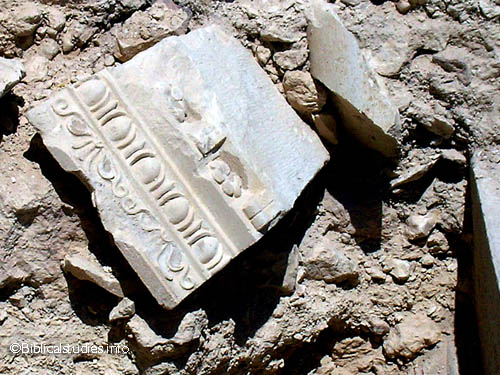
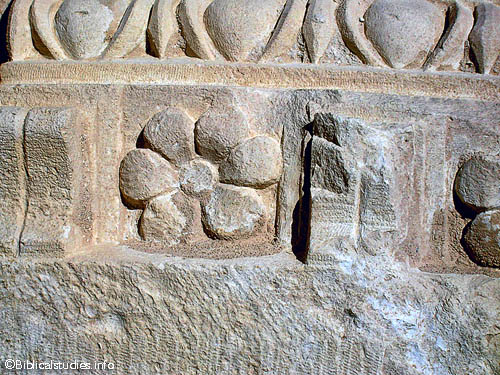
Shortly after the announcement, Elie Ben Meir, a guide/friend of mine in Israel, shared a few of his photos made at the Herodium on June 24, 2007. I had intended to publish, with his permission, some of these earlier but overlooked it. You might enjoy these closeup of some of the stone decorations found at the site.

Herodium tomb ornament. Photo by Elie Ben Meir.

Herodium tomb ornament. Photo by Elie Ben Meir.

Notice the beautiful carvings.

Decoration of Herod's tomb at the Herodium. Photo by Elie Ben Meir.

Decoration of Herod's tomb at the Herodium. Photo by Elie Ben Meir.

I found Leen Ritmeyer’s post about the passing of Prof. Netzer interesting. Check it here.

Herod the Great was the “king of Judea” from 37 to 4 B.C. Near the close of his reign Jesus was born in Bethlehem.

After Jesus was born in Bethlehem of Judea in the days of King Herod, wise men from the east arrived unexpectedly in Jerusalem, (Matthew 2:1 CSB)

Archaeologist Netzer dies after fall

The Jerusalem Post reported here this afternoon that Prof. Netzer succumbed to the injuries sustained during his fall at the Herodium.

Renowned archaeologist Ehud Netzer died of his wounds at the Hadassah Ein Kerem hospital in Jerusalem Thursday night, days after he fell during an excavation.

On Monday Prof. Netzer was hospitalized in critical condition after a wooden railing he leaned on gave way, at the Herodion archeological site in the West Bank.

Jim West was kind enough to leave a comment on our blog this  morning once he was certain that Prof. Netzer had died.

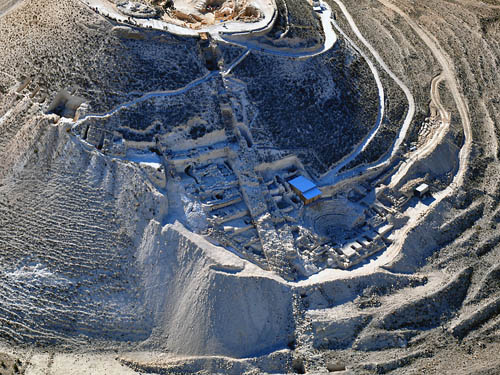
Recently we discussed here some of the work at the Herodium. Below I am including a closer view of the area where Prof. Netzer was working. This aerial photo shows a clear view of the theater. The roofed structure covers the royal theater box.

The Herodium excavation. Photo by Ferrell Jenkins, Dec. 15, 2009.

The Herodium excavation. Photo by Ferrell Jenkins. Dec. 15, 2009.

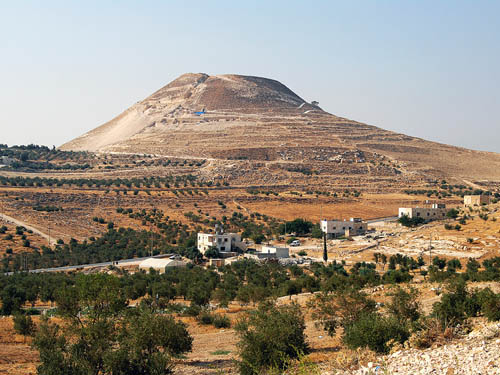
Without the determination of Ehud Netzer the north side of the Herodium would still look like the view below, and we would still be wondering about the location of Herod’s burial place.

The Herodium from the north. Photo by Ferrell Jenkins, Aug. 23, 2008.

The Herodium from the north. Photo by Ferrell Jenkins, Aug. 23, 2008.

The Herodium is located a few miles east of Bethlehem, the birthplace of Jesus (Matthew 2).

Prof. Ehud Netzer critically injured at Herodium

According to The Jerusalem Post, well known archaeologist Ehud Netzer has been critically injured in a fall at the Herodium (Herodion). The full report by Ben Hartman may be read here.

Well-known Israeli archeologist Ehud Netzer remained in critical condition Wednesday at Hadassah-University Medical Center, Ein Kerem, two days after he suffered a serious fall during a dig at the Herodion archeological site in the West Bank.

Netzer was reportedly leaning against a wooden railing on Monday when it gave way. He fell nearly 10 feet before landing – only to roll and fall an additional 10 feet. He suffered fractures in his cranium and vertebrae and was rushed to Hadassah in critical condition.

The 76-year-old archeologist is one of the foremost experts on Herodion, a man-made mountain built by King Herod near Bethlehem. Netzer has carried out digs at the site for more than three decades; three years ago, he found the site of Herod’s grave – a discovery that was considered the pinnacle of his career.

Digs he performed in 1968 in Jericho unearthed a Hasmonean winter palace that sported bathing pools and gardens, widely considered the most significant archeological site dealing with that period in Jewish history. The digs also unearthed the Jericho synagogue, considered the largest Jewish house of worship ever discovered.

In 1978, Netzer finished his PhD dissertation at Hebrew University, which focused on Herod’s palaces at Herodion and Jericho. He became a senior lecturer at the university in 1981, where he has taught ever since.

There were blog reports yesterday that Netzer had died, but these are being corrected this morning.