
The unseasonably warm weather here in Florida has already begun to affect allergy sufferers, including yours truly. The pollen is not as high as it will be, but high enough to cause sniffling, sneezing and stuffiness. That’s nothing new. Keep reading.
The excavations at Ramat Rachel, between Jerusalem and Bethlehem, reveal evidence of etrogs and myrtle from the ancient royal garden. A word of explanation might be appropriate for some readers. English readers know Sukkot as the Feast of Booths, Tabernacles, or Temporary Shelters – Leviticus 23:34).
Ha’aretz reports here today:
The earliest evidence of local cultivation of three of the Sukkot [commonly know to English readers as the Feast of Booths or Tabernacles, holiday’s traditional “four species” has been found at the most ancient royal garden ever discovered in Israel.
The garden, at Kibbutz Ramat Rachel in Jerusalem, gave up its secrets through remnants of pollen found in the plaster of its walls.
The garden was part of an Israelite palace at Ramat Rachel that has been excavated for many years, most recently in a joint dig by Prof. Oded Lipschits and Dr. Yuval Gadot of Tel Aviv University and Prof. Manfred Oeming of Heidelberg University. The palace existed from the time of King Hezekiah until the Hasmonean period in the second century B.C.E.
The excavations revealed that the garden must have had a beautiful – and strategic – view, but it lacked its own water source. Thus the ancient landscape architects had to build channels and pools to collect rainwater for irrigation.
The archaeologists discovered that the garden’s designers had removed the original hard soil and replaced it with suitable garden soil. But until recently, they had no idea what was grown there.
Then, Lipschits said, he and his colleagues had a “wild thought”: If plasterers had worked on the garden walls in springtime, when flowers were blooming, breezes would have carried the pollen to the walls, where it would have become embedded in the plaster.
Enlisting the aid of Tel Aviv University archaeobotanist Dr. Daphne Langot, they carefully peeled away layers of the plaster, revealing pollen from a number of plant species.
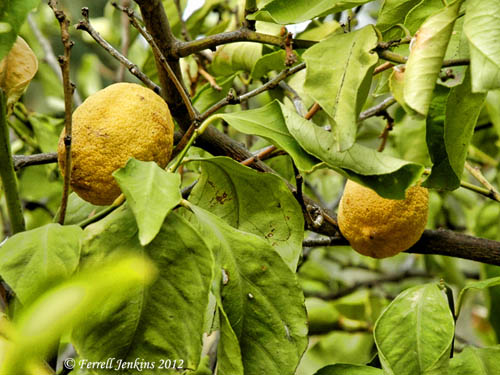
Etrog late in the season at Qatzrin. Photo by Ferrell Jenkins.
The article continues,
Most of the plants were wild, but in one layer of plaster, apparently from the Persian period (the era of the Jewish return from the Babylonian exile in 538 B.C.E. ) they found pollen from ornamental species and fruit trees, some of which came from distant lands.
The find that most excited the scholars was pollen from etrogs, or citrons, a fruit that originated in India. This is the earliest botanical evidence of citrons in the country.
Scholars believe the citron came here via Persia, and that its Hebrew name, etrog, preserves the Persian name for the fruit – turung. They also say royal cultivation of the exotic newcomer was a means of advertising the king’s power and capabilities.
The garden at Ramat Rachel is also the first place in the country to yield evidence of the cultivation of myrtle and willow – two more of the four species used in Sukkot rituals.
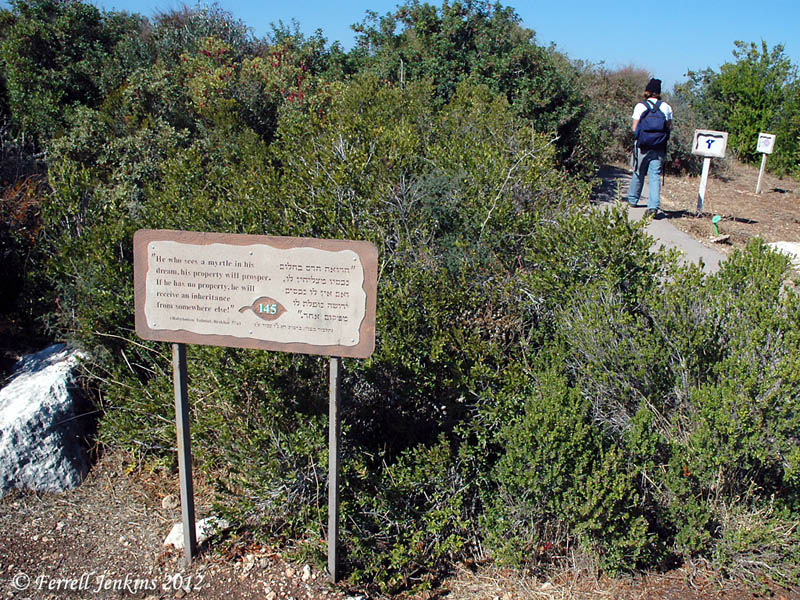
Myrtle growing at Neot Kedumim in Judean Hills. Photo by Ferrell Jenkins.
For an earlier post on the royal garden at Ramat Rachel, read here.
HT: Joseph Lauer


 Ferrell's Travel Blog
You must be logged in to post a comment.