
Travel in Egypt is sometimes hindered by small amounts of rain. In flat areas such as the delta an inch of rain can flood the area and make automobile travel impossible, or at least impractical. In early March, 2005, Elizabeth and I had remained in Egypt for a few days after the tour group returned home. We planned one day to go to Goshen. That morning when we looked from the hotel window in Heliopolis we observed rain. The guide scheduled to go with us on the excursion arrived, but explained that we would not be able to go due to the 1/2 to 1 inch of rain that had fallen during the night. The annual rainfall in the Cairo area is 1 1/2 to 2 inches. In Upper Egypt years may pass with no rainfall.
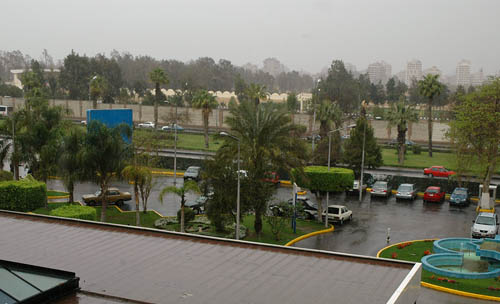
Rain in Cairo - March 9, 2005. Photo by Ferrell Jenkins.
Egypt is less prepared for an inch of rain than many southern USA cities are for an inch of snow.
On another excursion we went to Jebel Musa, the traditional Mount Sinai, in the Sinai Peninsula. As we traveled through the Wadi el-Tor (el-Tur or al-Tur) shortly before arriving at Feiran, I noted that there had been a flash flood in the wadi. Our guide explained that this typically happened at least once each winter. He said that the asphalt paved road could be washed out by less than an inch of rain.

Wadi el Tor in the Sinai Peninsula after a flash flood. Photo by Ferrell Jenkins.
Rocks polished by the winter flood were strewn across the wadi. These stones show the different rocks found in the Sinai. The red stones indicate iron. The green is copper. The black is basalt, indicating a volcanic area.

Rocks in Wadi el Tor of the Sinai Peninsula. Photo by Ferrell Jenkins.
Let us recall that the normally dry wilderness (midbar, desert) once flowed with water for the Israelites.
“He led you through the great and terrible wilderness, with its fiery serpents and scorpions and thirsty ground where there was no water; He brought water for you out of the rock of flint. (Deuteronomy 8:15 NAU)
He split the rocks in the wilderness And gave them abundant drink like the ocean depths. (Psalm 78:15 NAU)





 Ferrell's Travel Blog
You must be logged in to post a comment.