Yearly Archives: 2010

Kinneret Regional Project uncovers synagogue

Several weeks ago I added a link to the Kinneret Regional Project on the Bible Places page of the Biblical Studies Info Page. My intention was to write about the project and show a photo of Tel Kinneret (Kinrot; Arabic Tell el-‘Oreme) on the northwestern shore of the Sea of Galilee.

Now word comes of the discovery of a fourth century synagogue at Horvat Kur, about a mile northwest of Tel Kinneret. The press release here says that the discovery “adds new evidence [along with the synagogues at Capernaum, Chorazin, Kh. Hammam, and Magdala] for a very tight net of synagogues in a relatively small area on the Northwestern shores of the Lake of Galilee.”

Todd Bolen created a map using Google Earth to identify Horvat Kur, Tel Chinnereth (Kinneret), Tabgha, Mount of Beatitudes, Cove of the Sower, and Capernaum. This great resource for studying the ministry of Christ may be accessed at the Bible Places Blog.

Earlier I mentioned that the day in early May when my group took a boat ride on the Sea of Galilee was a great one for making photos. I caught this wonderful view of Tel Kinneret from the boat. The buildings on the shore below the tel belong to Pilgerhaus Tabgha, a guesthouse operated by the German Association of the Holy Land.
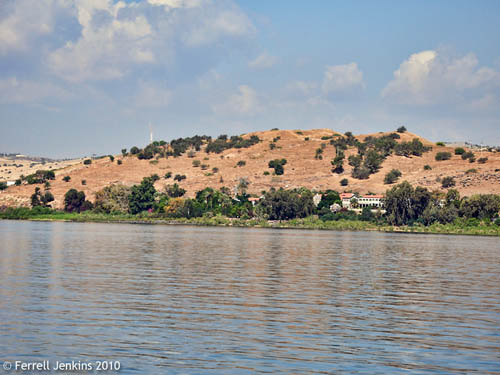
Tel Kinerot from the Sea of Galilee. Photo by Ferrell Jenkins.

Tel Kinneret from the Sea of Galilee. Photo by Ferrell Jenkins.

From the Kinneret Regional Project site you may download several good resources. The 2004 report by Pakkala, et al., begins with this description of Tel Kinneret.

The site boasts remains from the Chalcolithic to the Ottoman period. In its heyday in the Early Iron Age, i.e. the 11th/early 10th century BCE, Kinneret developed into a regional center, controlling the surrounding region and becoming one of the most important urban sites of the country.

The body of water that we commonly call the Sea of Galilee is known as the Sea of Chinnereth in the Old Testament (Numbers 34:11; Joshua 13:27). Chinnereth is listed as one of the fortified cities of the tribe of Naphtali in Joshua 19:35.

I think most tourists to Galilee overlook Tel Kinneret. They are excited about having seen the Roman boat at Nof Ginosaur, and the guide is beginning to tell them about Taghba, Capernaum, or the Mount of Beatitudes. Or it may be because the site is obscured from the highway by the electric power station below it.

HT: Joseph I. Lauer
Headed for the Elah Fortress

Luke Chandler is traveling in Israel in advance of participation in the Khirbet Qeiyafa (the Elah Fortress) Excavation. He is posting some comments and photos of the places he is visiting. Take a look at Luke Chandler’s Blog.

Reaching 400,000

Moments ago someone recorded hit number 400,000 for this blog. Your words of appreciation are greatly appreciated. In the past few weeks, while traveling on the West Coast, numerous people told me they found the posts helpful. The comments left on the blog, and the Emails received are also appreciated.

400,000 hits at ferrelljenkins.wordpress.com.

Ferrell's Travel Blog recorded his number 400,000 this evening.

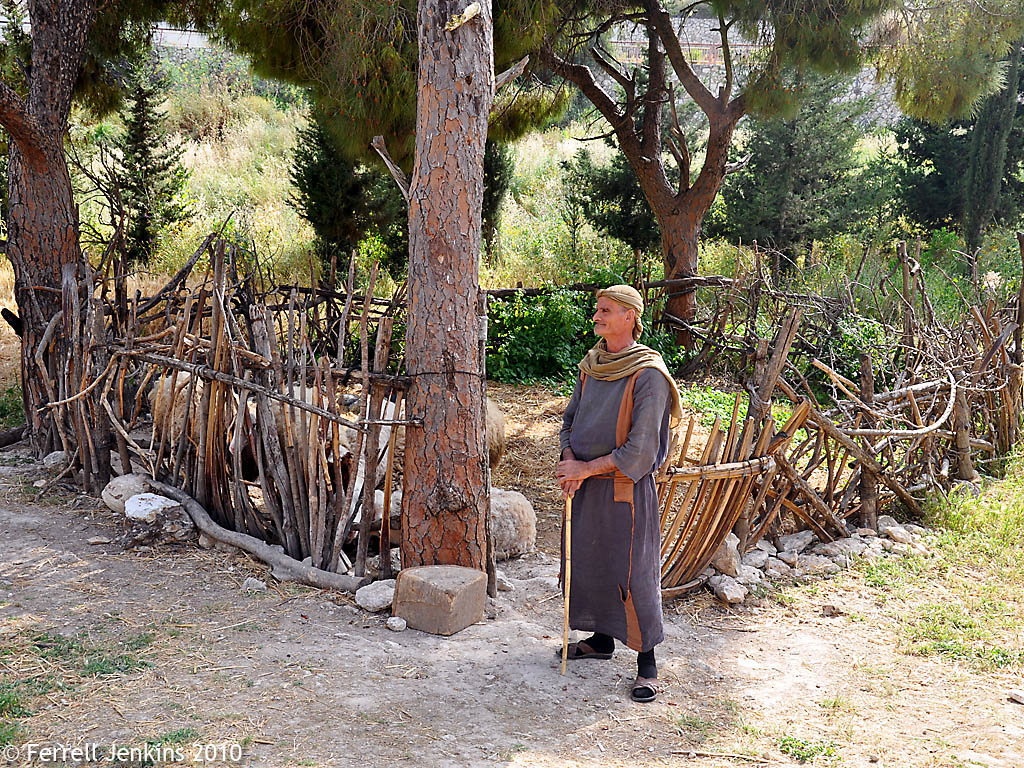
As a marker of this milestone I am posting a photo I think many of you will be able to use in the Bible classes you teach. Click on the photo for a larger image suitable for use in PowerPoint.

Shepherd and sheepfold at Nazareth Village. Photo by Ferrell Jenkins.

Shepherd and sheepfold at Nazareth Village. Photo by Ferrell Jenkins.

This photo might be used in teaching any of the texts mentioning the sheepfold (Genesis 49:14; Numbers 32:16; Judges 5:16; 1 Samuel 24:3; 2 Chronicles 32:28; Psalm 28:13; Psalm 78:70).

It provides a good illustration of the teaching of Jesus in John 10.

“Truly, truly, I say to you, he who does not enter by the door into the fold of the sheep, but climbs up some other way, he is a thief and a robber.  “But he who enters by the door is a shepherd of the sheep. “To him the doorkeeper opens, and the sheep hear his voice, and he calls his own sheep by name and leads them out. (John 10:1-3 NAU)

Second century A.D. gold coin found at Bethsaida

“Rare coin bears good tidings for UNO’s Israeli excavations” is the headline for an article by John Keenan in the Omaha World-Herald.

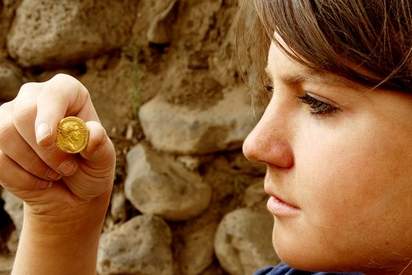
Dr. Rami Arav, of the University of Nebraska Omaha, is the director of the excavation at et-Tell in Galilee. I’m sure it wasn’t necessary for the reporter to say that Arav was excited when Alexis Whitley, one of the volunteers at the dig, found a gold coin dating to the mid-second century A.D.

Alexis Whitley - a volunteer from West Virginia University.

Alexis Whitley - a volunteer from West Virginia University.

The coin, which weighs 7 grams, is 97.6 percent gold, Arav said.

The find was unexpected because Bethsaida primarily was home to humble fishermen, he said. Arav said somebody must have been doing good business a little more than 100 years after the birth of Christ.

The gold coin, about three-quarters of an inch in diameter, carries the image of Antoninus Pius, the 15th Roman emperor, who reigned between A.D. 138 and 161.

“Before newspapers, coins fulfilled the job of disseminating information. In our case, Antoninus wanted to announce that the Senate designated him to the position of a consul for the second time. This position was among the highest at Rome.”

Arav thinks this is the first Antoninus Pius gold coin excavated in Israel. I like the fact that he gave credit to the young volunteer who discovered the coin.

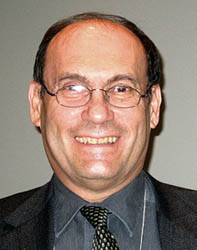
Prof. Rami Arav. Photo by Ferrell Jenkins.

Rami Arav. Photo: F. Jenkins.

“This type of a coin was never sold in the market because it is so rare,” he said. “It may go for as much as people will be able to pay for it.”

For now, the coin — along with the rest of the Bethsaida finds, considered to be the heritage of the State of Israel — will go to the Israel Antiquities Authority. Its ultimate destination probably will be the Israel Museum in Jerusalem, Arav said.

“Bethsaida has already enriched the Israel Museum with a few other outstanding and rare finds.”

The article in its entirety may be read here.

Bethsaida is mentioned in the New Testament as the place where Jesus healed a blind man (Mark 8:22-25). Not everyone agrees with Dr. Arav’s identification of et-Tell as Bethsaida, where he has been working for nearly a quarter of a century. See a previous post about Bethsaida here.

A report of the Bethsaida 2010 excavation is posted here. Photos of coins, including the gold coin, and items associated with fishing are posted under Special Pics. Shai Schwartz has posted 234 photos from the recent excavation in his Picasa album here.

HT: Joseph Lauer, Paleojudaica, Bible Places Blog.

Featured on The Book & The Spade program

“The Sewers of Jerusalem” is featured as the lead to program #1235 on The Book & The Spade radio program. This long-running radio program providing backgrounders on the Bible through Biblical archaeology is hosted by Gordon Govier and Professor Keith Schoville. Govier is the archaeology correspondent for Christianity Today magazine. Professor Schoville is retired professor of Hebrew and Semitic Studies at the University of Wisconsin, Madison. His book, Biblical Archaeology in Focus, has been used by many students of archaeology.

The link to the newly designed blog of The Book & the Spade is here. You may listen to the entire radio broadcast, or download it in MP3 format, here. I think you will need to use Internet Explorer to be able to save the program. The current program remains available for free download for only a few weeks. The programs produced by Govier and Schoville are always interesting and informative. I keep a permanent link to the site at the Biblical Studies Info Page (under Scholarly).

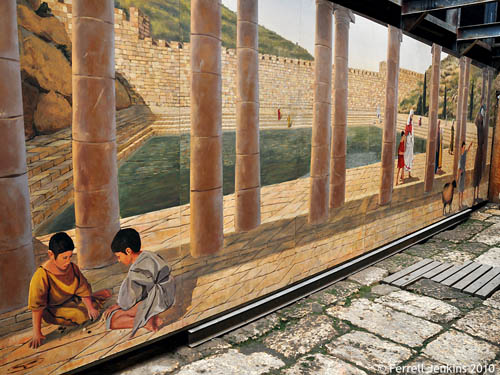
Our post on “The sewers of first century Jerusalem” may be read here. There are four recent photos with the post. Here is a photo of Roman street and mural of the Pool of Siloam as it is thought to have looked. This is where we expected to turn back and leave the area when one of the booksellers told us the sewer was open.

Perhaps the Pool of Siloam looked like this in the time of Jesus. Photo by Ferrell Jenkins.

Perhaps the Pool of Siloam looked like this in the time of Jesus. Photo by Ferrell Jenkins.

Lighting up the sky

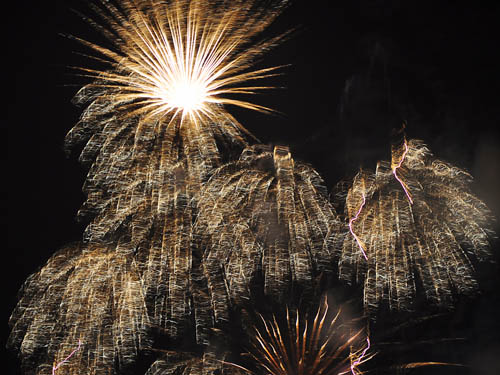
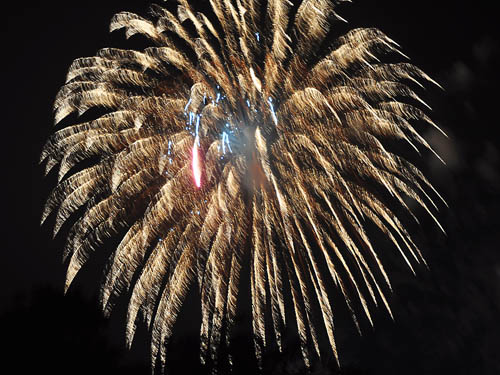
We enjoyed the fireworks in Temple Terrace, Florida, with our grand son Saturday evening.

Firewords in Temple Terrace, FLorida, July 3, 2010.

Firewords in Temple Terrace, Florida, July 3, 2010.

The camera was hand held, but the results were interesting.

Firewords in Temple Terrace, Florida. Photo by Ferrell Jenkins.

Firewords in Temple Terrace, Florida, July 3, 2010.

As the floodlights were dimmed I said to my 5½ year old grandson, “It looks like they are ready to begin. Are you ready.” He said, “I am soooo ready!”

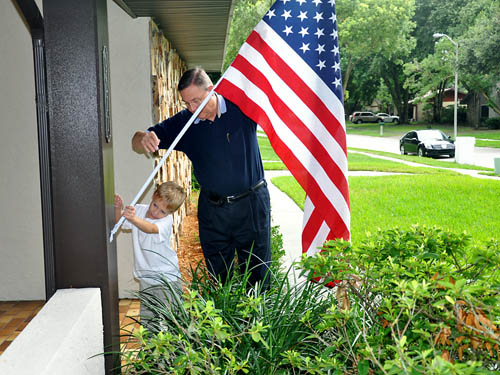
Freedom is precious

Putting up the flag for July 4, 2010.

Putting up the flag for July 4, 2010.

“I believe we have found Ai…”

“I believe we have found Ai…” These are the words of Dr. Bryant Wood regarding the excavation at Khirbet el-Maqatir, a few miles east of the West Bank town of Ramallah.

You will be able to see this video clip and another one describing the activities of a day at a dig on the ABR blog here.

Many scholars have long said that the Bible is wrong in saying that Ai was destroyed by Joshua and the Israelites. Other scholars, associated with the Associates for Biblical Research have been suggesting for several decades that the current location of Ai is incorrect. Now Dr. Wood and his team are able to conduct excavations at an alternative site. Good reading. Take it seriously.

Read Joshua 8 for the biblical account of the capture of Ai.

Posted from AA 1086 over Wyoming.

Go Southeast, Old Man!

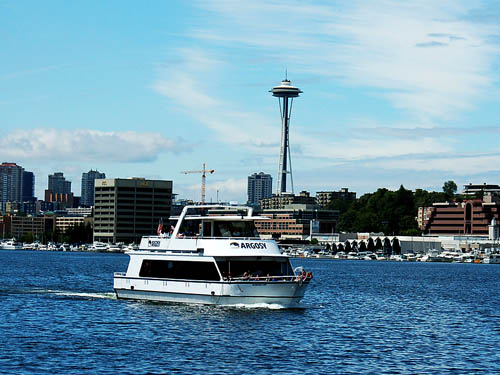
The mountains and lakes of the Northwest are a pleasure to behold. A friend took me for a cruise on Lake Washington where he pointed out the houses of the rich and famous of the business, sports, and entertainment world.

Seattle. Photo by Ferrell Jenkins.

Seattle. Photo by Ferrell Jenkins.

I enjoyed speaking to appreciative audiences at the Kirkland Church of Christ Sunday and Monday evenings. The illustrated lessons included discussions of Bible history, archaeology, and the Bible world. Quite a few friends from the past were present.

Thanks to those of you who check the blog regularly. Hopefully by the first of the week I can get back to posting some photos of the Bible world.

Moving on to the Northwest

Stop blogging? Not yet. We just had an extremely busy week in San Jose. Now I am on my way to the Seattle area where I will be speaking for a couple of days.