
Monthly Archives: November 2008

Ask in the next village

Once while visiting the site of Lystra our group enjoyed some time with local farmers who were working the fields below the tell (huyuk, in Turkey). I asked our guide to ask the men if they had heard of the apostle Paul. When he asked them, a puzzled look came over the face of the farmer who was doing most of the talking. He said, “No, but you might ask in the next village.”
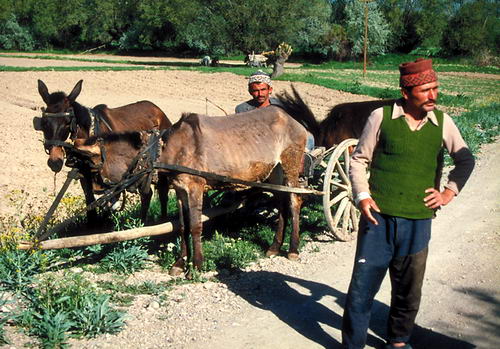
The farmer said, "Ask in the next village." Photo by Ferrell Jenkins.

The farmer said, "Ask in the next village." Photo by Ferrell Jenkins.

Paul visited Lystra on his first journey (Acts 14). On the second journey he came through Lystra where Timothy lived. From that point on Timothy remained a faithful companion and co-worker with Paul in the spread of the gospel throughout the Roman Empire.

Paul came also to Derbe and to Lystra. And a disciple was there, named Timothy, the son of a Jewish woman who was a believer, but his father was a Greek,  2 and he was well spoken of by the brethren who were in Lystra and Iconium.  3 Paul wanted this man to go with him; and he took him and circumcised him because of the Jews who were in those parts, for they all knew that his father was a Greek.  (Acts 16:1-3 NASB)

Is the Apostle Paul known in your village? I mean, is the teaching of Christ and Him crucified known there? (1 Corinthians 2:2).
What shall we do now?

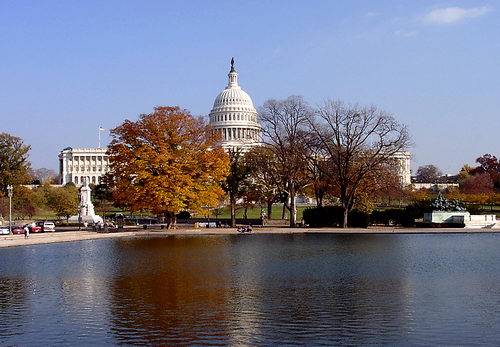
United States capitol in Washington, DC. Photo by Ferrell Jenkins.

United States capitol in Washington, DC. Photo by Ferrell Jenkins.

Paul’s Admonition to Christians
About Their Responsibility to Those in High Positions

1 Timothy 2:1-7

First of all, then, I urge that supplications, prayers, intercessions, and thanksgivings be made for all people, for kings and all who are in high positions, that we may lead a peaceful and quiet life, godly and dignified in every way.

This is good, and it is pleasing in the sight of God our Savior, who desires all people to be saved and to come to the knowledge of the truth.

For there is one God, and there is one mediator between God and men, the man Christ Jesus,  who gave himself as a ransom for all, which is the testimony given at the proper time.

For this I was appointed a preacher and an apostle (I am telling the truth, I am not lying), a teacher of the Gentiles in faith and truth. (ESV)

A beautiful photograph for election day

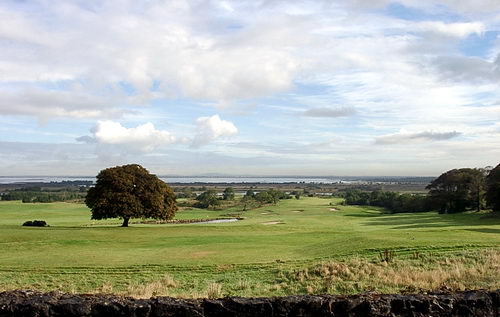
Here is a peaceful photo I made near Galway, Ireland.

A tranquil scene in the Emerald Isle. Photo by Ferrell Jenkins.

A tranquil scene in the Emerald Isle. Photo by Ferrell Jenkins.

Khirbet Qeifaya (Elah Fortress) summary

The Hebrew University of Jerusalem has posted a nice summary of the information about what they are calling the Elah Fortress at Khirbet Qeifaya here.

The article title is “Earliest Known Hebrew Text in Proto-Canaanite Script Discovered.” Every indication from this release is that the site is considered as a Judeah fortress. Here are three paragraphs from the release.

How do we know this is a Judean fortress?
The early Hebrew ostracon, Judean pottery similar to that found at other Israelite settlements, and the absence of pig bones among the animal bones found at the site all point to this fortress being a city of the Kingdom of Judea.

Elah Fortress proof of United Monarchy
The Elah Fortress archaeological site could prove the existence of the United Monarchy, which scholars often question ever existed. The artifacts found at the site thus far all indicate that there was most likely a strong king and central government in Jerusalem – earlier than any discovered until now – rather than a number of small villages scattered throughout Judea. This would verify descriptions and narratives found in Samuel and Chronicles.

Over 100 jar handles bear distinct impressions which may indicate a link to royal vessels. Such a large quantity of this feature found in one small locale is unprecedented.

Archaeo-politics run deep in Israel! I suggest you read the entire article.

HT: Joseph I. Lauer

Assyria in Boston

The British Museum probably has the best collection of Assyrian artifacts in the world. The Louvre has a good collection, too. Currently 250 artifacts from the British Museum are on exhibit at the Museum of Fine Arts in Boston. The exhibition runs through January 4. This exhibition was likely timed to coincide with the meetings of the Society of Biblical Literature and the American Schools of Oriental Research in mid-November.

Even if you can’t make it to Boston you might find the web page of interest. Check mfa.org.

The Assyrian Empire ruled the ancient near east from the battle of Qarqar (853 B.C.) till the battle of Carchemish (605 B.C.) when they were defeated by the Babylonians. Nineveh had fallen seven years earlier. This was the time of the Divided Kingdom period in Israelite history, and Assyria had contact with a numerous biblical kings. Ahab, for example, fought against the Assyrians at Qarqar.

One of the famous Assyrian kings was Sargon II. He is mentioned only once in the Bible.

In the year that the commander came to Ashdod, when Sargon the king of Assyria sent him and he fought against Ashdod and captured it. (Isaiah 20:1)

For many years there was no known reference to Sargon II in the Assyrian records. Yet, the prophet Isaiah, writing at the time of the Assyrian captivity of the northern kingdom of Israel, mentions Sargon at Ashdod.

The palace of Sargon was discovered by Emile Botta at Khorsabad in 1843. This was the period of “momumental” discoveries in archaeology. The photo below shows the top half of Sargon (on the left) receiving his minister. I think you will have to go to London to see this one.

Sargon II receives his minister. From the palace in Khorsabad. British Museum. Photo by Ferrell Jenkins.

Sargon II receives his minister. From the palace in Khorsabad. British Museum. Photo by Ferrell Jenkins.

Khirbet Qeifaya Inscription

Khirbet Qeifaya is a fortified site overlooking the Valley of Elah where the great battle between Israel and the Philistines (David and Goliath) took place. A broken shard of pottery bearing an inscription was discovered during the excavation this year. There have been a lot of teasers going around about what the inscription may say.

The best summarized updates on this inscription that I have seen are the ones posted by Todd Bolen at Bible Places Blog. I suggest you go there and scroll back to these postings during the last days of October. If you would like to go to the specific posts, here are the links:

Be aware that many newspaper articles about archaeological discoveries are often exaggerated. There are NO specifics about David and Goliath. We don’t even have a translation of the inscription at this point. And, by the way, Noah’s ark has not been found, either!