Monthly Archives: September 2008

Roman army photos

A large number of visitors to this blog have looked at the post on the Roman soldiers and chariot races at Jerash, Jordan. Photos of Roman soldiers can be helpful in illustrating Bible class lessons and sermons. Think of a few of the texts.

  • The Centurion at Capernaum (Matthew 8:5).
  • Cornelius, the first Gentile convert to Christ (Acts 10:1).
  • “Whoever forces you to go one mile, go with him two” (Matthew 5:41).
  • Soldiers who mocked Jesus (Luke 23:36).
  • Soldiers and centurions who rescued Paul from the mob (Acts 21:32).
  • Paul’s figurative reference to fellow-workers in the Kingdom as soldiers (2 Timothy 2:4; Philemon 1:2).
  • The praetorian guard (Philippians 1:13).
  • The full armor of God (Ephesians 6:10).

David Padfield has prepared 15 photos from the RACE (Roman Army and Chariot Experience) program at Jerash, Jordan, under the title Bible Times: Roman Army Enactment. All of these photos are prepared in 1024 x 768 size, suitable for PowerPoint presentations. Here is a small photo from the collection.

Roman Army in Battle Gear. Photo by David Padfield.

Roman Army in Battle Gear. Photo by David Padfield.

Take a look at all of the photos here. From this page you can locate other sets of photos that David has prepared for use in teaching the Word.

Cappadocian sunrise

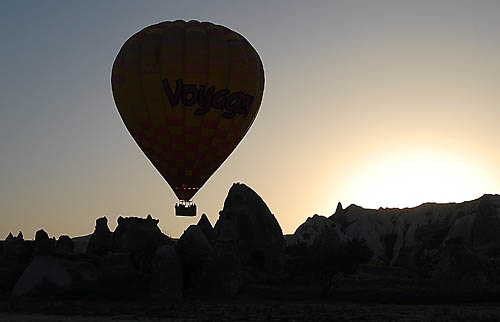
He is a photograph I made at sunrise in the Cappadocian region of Turkey.

Cappadocian sunrise. Photo by Ferrell Jenkins.

Cappadocian sunrise. Photo by Ferrell Jenkins.

The Bible tells us that Jews of Cappadocia were present in Jerusalem on the day of Pentecost (Acts 2:9). Peter wrote his epistles to saints scattered throughout Cappadocia and other places in Roman Asia Minor (modern Turkey).

Peter, an apostle of Jesus Christ, To those who are elect exiles of the dispersion in Pontus, Galatia, Cappadocia, Asia, and Bithynia,  2 according to the foreknowledge of God the Father, in the sanctification of the Spirit, for obedience to Jesus Christ and for sprinkling with his blood: May grace and peace be multiplied to you. (1 Peter 1:1-2)

Second Temple wall of Jerusalem uncovered

The Israel Antiquities Authority announced last week the discovery of a wall below modern “Mount Zion” that dates from the time of the Hasmonean kings to the destruction about A.D. 70. Here are a few comments in the official press release.

An exciting discovery in Jerusalem constituting extraordinary remains of the wall of the city from the time of the Second Temple (second century BCE-70 CE) that was built by the Hasmonean kings and was destroyed during the Great Revolt, and also the remains of a city wall from the Byzantine period (324-640 CE) which was built on top of it, were uncovered in an extensive excavation that is currently underway on Mount Zion. The lines of these fortifications delineated Jerusalem from the south in periods when the ancient city had reached its largest size.

The new finds were presented today (Wednesday) at a press conference that was held on Mount Zion. The excavation has been in progress for the past year and a half, under the direction of archaeologist Yehiel Zelinger of the Israel Antiquities Authority, in cooperation with the Nature and Parks Authority and with financial support provided by the Ir David Foundation.

You may read the entire news release at the IAA web page.

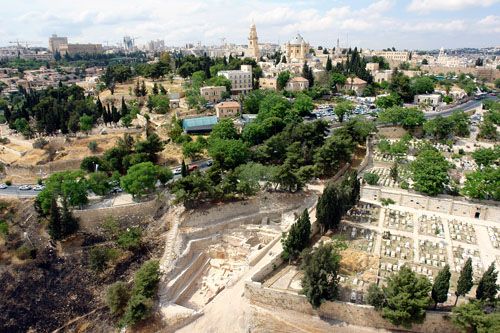
Here is an aerial photograph of the excavation, Mount Zion Valley. Photograph: Skyview, courtesy of the Israel Antiquities Authority.

Aerial photo of Mount Zion valley. Skyview. Courtesy of Israel Antiquities Authority.

Aerial photo of Mount Zion valley. Skyview. Courtesy of Israel Antiquities Authority.

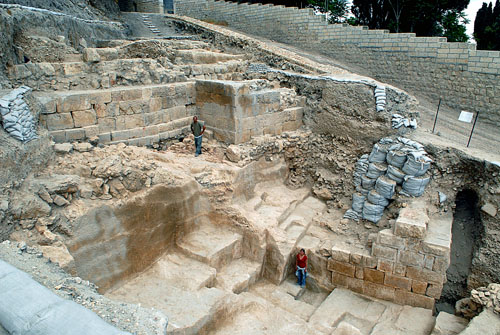
This pictures shows the excavation area.

Tsilla Sagiv. Courtesy of the IAA.

The excavated area. Photo: Tsilla Sagiv. Courtesy of the IAA.

Todd Bolen provides a concise summary of the information on this discovery at his BiblePlaces Blog.

Israel trip comments

Elizabeth and I returned last Thursday from a two week trip to Israel. We hosted our first tour in 1967. Since that time I have been to Israel nearly forty times. We have been privileged to show hundreds of Bible students the land of the Bible. Of course, there are also tours to Greece, Turkey, and Egypt, that also visited Bible sites.

We made the recent trip to visit some places we had not been, and also to make digital photographs at some places, both Old Testament and New Testament, we had not been able to visit with a good digital camera. We were able to get to a great percentage of the sites we intended to visit. A few eluded us, mostly due to a lack of time. There were also some surprises along the way that allowed us to visit a few sites that were not on our list.

August is not the ideal time to visit Israel due to the heat. If you followed our blog you know that we encountered temperatures of 113 degrees Fahrenheit some days. Of course, we had an air conditioned car and nice air conditioned hotels. We used Delta Reward Miles for our flights. Considering my schedule and the available Reward dates, it was the best we could do. Having visited Israel in March, April, May, June, July and November, it was good to add August to the list. In many cases I think the 2600+ high resolution photos we made were good. We made our overseas flight from Detroit on Air France via Paris. The return was on Delta’s non-stop flight from Tel Aviv to Atlanta (12 hours and 45 minutes). We had enough points to fly business. Getting back to coach will be difficult!

One advantage of traveling in the summer is that the days are longer for making photos. In the winter the daylight hours are much shorter, and you face the likelihood of rain and larger crowds.

Driving in Israel is little different from driving in the USA, but the cities are not laid out in the neat western way of avenues and streets. Parking is difficult in most of the cities. The day we visited the Old City of Jerusalem we took a taxi to the Dung Gate, and then another taxi at the end of the day from Jaffa Gate. We rented from Eldan, and also rented a GPS unit from the company that supplies the units for all car rental agencies. We received a defective unit that was a real pain for four days until we were back near the airport to replace it. We rented a cell phone from Travel Cell before leaving the USA that allowed free incoming calls.

Gasoline costs about $8 per gallon, and prices for food are about double what we would expect to pay in the USA. The water in Israel is good, but we bought bottled water for our daily travel. The hotels had small refrigerators for our use. Internet connections cost as high as $20 per day. Most were $12 a day. One hotel, the Ron Beach in Tiberias, charged only $2 per day. The $12 and $20 rates are really tough when we think of getting free Internet connections in most American hotels. By the way, the Ron Beach is an ideal hotel for individuals traveling. It is away from the the hustle and bustle of Tiberias and is situated on the shore of the Sea of Galilee.

Plastic water bottles and cigarette butts abound everywhere Israelis hike. The area around the Sea of Galilee is especially bad. If I could give the officials some advice it would be to declare a clean up day.

We do not advise the first or second time traveler to try it on your own. You need to be with a group and a competent guide.

Perhaps the biggest danger we faced was at the Hai-Bar Nature Reserve. I let down the car window to make a photo of one of the ostriches and almost lost a lens. See for yourself.
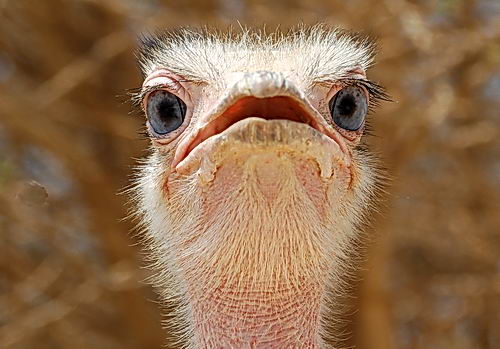
Ostrich at the Hai-Bar Nature Reserve. Photo by Ferrell Jenkins.

Ostrich at the Hai-Bar Nature Reserve. Photo by Ferrell Jenkins.

The ostrich is listed among the unclean birds for the Israelites in Leviticus 11:16 and Deuteronomy 14:15.

We drove almost 1900 miles, traveled from Dan to Beersheba, even from the border of Egypt on the Gulf of Eilat (Aqaba) on the Red Sea to the border with Lebanon at Metulla. We drove along the Lebanon border in the mountains of Upper Galilee from Kedesh to Akko. We were close to the Gaza strip when we visited Ashkelon. We drove from the Mediterranean Sea on the West to the border with Jordan in the Arabah, and along the Jordan River valley. Some of the sites along the central mountain range (read West Bank) are not easily accessible.

Israel has a good National Parks system. When we travel with a group the guide buys an entry card for the sites we will visit. This was what we intended to do, but our first stop was at Bet Guvrin/Maresha. We bought a pass, good for a year, to visit all of the parks. This was a good purchase, and we still have time to get back and visit some other sites. 🙂 There were a few other places we visited that were not part of the national parks network (e.g., Timna Park, and the Tabernacle Model).

Both of us stayed healthy the entire tour and arrived home safely. Every flight was on time. We are thankful to the Lord for this wonderful opportunity and look forward to using what we learned and photographed in teaching others.

Home! Sweet Home!

We arrived safely at our Florida home this morning after two weeks visiting Bible sites in Israel. I will try to write a few more posts about the trip after a little catching up. Thanks for your interest in Ferrell’s Travel Blog. We had a marvelous trip, but I am reminded of the words of John Howard Payne (1823):

Mid pleasures and palaces though we may roam,
Be it ever so humble there’s no place like home!
A charm from the skies seems to hallow us there,
Which, seek through the world, is ne’er met with elsewhere:
Home! Home! sweet, sweet Home
There’s no place like Home!

Shiloh – the place of the tabernalce

Shiloh (Shilo) was the site of the tabernacle for many years (Joshua 18:1), until the Israelites took it with them into battle against the Philistines at Ebenezer. The ark was captured by the Philistines (1 Samuel 4).

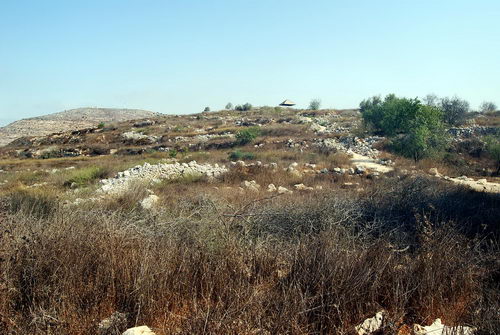
I don’t have time to tell you more about our experience, or to fully explain the photo, but I wanted to share this one with you. The suggested site for the tabernacle is on the north side of the tel.

Tel Shilo. Photo by Ferrell Jenkins.

Tel Shilo. Photo by Ferrell Jenkins.

Soon we will be headed for the airport to return to our home.

A day in the old city of Jerusalem

Elizabeth and I have been visiting sites in Israel for the past two weeks. We are delighted to be going home to see Drew, but I wish we had another week or two. I would say that I have been successful in seeing 80 to 90 percent of the places I had hoped to visit. Well, there is always a reason for another visit.

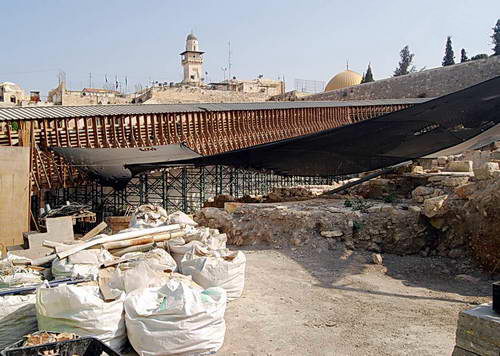
We entered the Old City through the Dung Gate this morning and went immediately to the Temple Mount. Everyone who had visited Jerusalem and the Western Wall should remember that the entrance into the Temple Mount is through the Mugrabi Gate. For years this had been a mount of earth. At first if overlooked the Western Wall to the north. Later, after excavations leading to the pre-70 A.D. street, only a narrow mound of earth led up to the Temple Mount. In recent years Israel has erected a new entrance, and at the same time they have conducted excavations in the previous earth mound. There is considerable conflict between Israeli and Muslim authorities over this matter.

Here is a view of the Mugrabi Gate today and just a glimpse of the excavations.

Mugrabi Gate leading to the Temple Mount. Photo by Ferrell Jenkins.

Mugrabi Gate leading to the Temple Mount. Photo by Ferrell Jenkins.

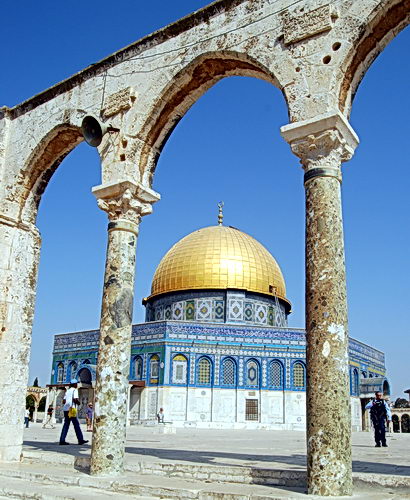
In recent years it has not always been possible to visit the Temple Mount because it is under the control of Muslim authorities. The present Dome of the Rock sits on (or very near) the site of the biblical temple. I was delighted to get some good morning shots of the Dome of the Rock and the Al Aqsa mosque. Here is one of those photos.

The Dome of the Rock. Photo by Ferrell Jenkins.

The Dome of the Rock. Photo by Ferrell Jenkins.

We made a stop at the Pool of Bethesda because the sun was in the east. This provided perfect lighting for the site. Then we went along the Way of the Cross. At the first stop I was able to make arrangements to visit the museum of the Studium Biblicum Franciscanum. I had been there many years ago and it was good to have a reminder of the collection. SBF has conducted archaeological excavations at Cana, Capernaum, Nazareth, Mount Nebo, and other places.

Our next stop was at the Sisters of Zion. This was once the site of the Fortress of Antonio. Many have visited it thinking that it was where Jesus appeared before Pilate. It may have been, but the beautiful Roman street and pavement apparently date to a time after the destruction of the temple in A.D. 70. Nice visit. Very few tourist were at these sites, so we had freedom to enjoy and make photos.

Numerous stops were made along the way to the Church of the Holy Sepulchre. We arrived in time for one of the religious ceremonies involving the tomb of Jesus. From there we visited the nearby Russian church to see walls believed to be from the first century. This indicates that the Church of the Holy Sepulchre was built outside the wall of the city at the time of Jesus.

I revisited the roof of the Petra Hotel where one has a view of the so-called pool of Hezekiah, and of several important area landscapes. We stopped by the Church of St. James in the Armenian Quarter, and then made some photos of Jaffa (Joppa) Gate.

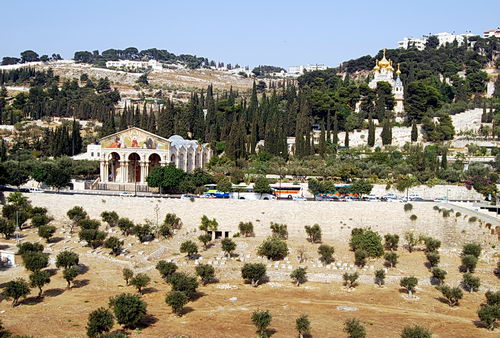
By this time we were ready to head to the hotel. We used a taxi today due to the fact that the entire day was spent in the Old City. We passed along the Kidron Valley and the afternoon sun was on the Mount of Olives. I asked the driver if he would be able to stop at this point so I could make a photo. He agreed. Here is one of the photos. It shows the Church of All Nations. The Garden of Gethsemane is to the left. The “onion top” building to the right is the Russian Orthodox Church of Mary Magdalene.

Garden of Gethsemane on the Mount of Olives. Photo by Ferrell Jenkins.

Garden of Gethsemane on the Mount of Olives. Photo by Ferrell Jenkins.

Up to Jerusalem again

The Bible speaks of going up to Jerusalem and down from Jerusalem. Certainly the main reason for this is the elevation of Jerusalem. It is located in the central mountain region of Judea at an elevation of about 2400 to 2500 feet above sea level.

We left Tiberias and the Sea of Galilee (Kinneret) this morning, spent some time in the Jezreel Valley, stopped by Caesarea Maritima, and then drove up to Jerusalem.

Here is a photo I made this morning at sunrise from my window on the shore of Galilee. I had in mind a photo that would be suitable for a presentation background. It reminded me of the fact that some of the disciples were fishermen, and were called by the Jesus to leave that work and accept His offer to become fishers for men.

Going on from there He saw two other brothers, James the son of Zebedee, and John his brother, in the boat with Zebedee their father, mending their nets; and He called them.  Immediately they left the boat and their father, and followed Him.  (Matthew 4:21-22)

A fisherman on the Sea of Galilee at sunrise. Photo by Ferrell Jenkins.

A fisherman on the Sea of Galilee at sunrise. Photo by Ferrell Jenkins.