My first visit to Colossae was with two friends and teaching colleagues at Florida College. I was concluding a Bible Land tour in Rome. Melvin Curry and Phil Roberts agreed to meet me in Athens, Greece. I arrived in Athens after they had already turned in for the night, but early the next morning we took a short flight to the island of Samos, and from there we boarded a ferry to Turkey. We visited the area of the Seven churches addressed in the book of Revelation as well as other sites in the general area.
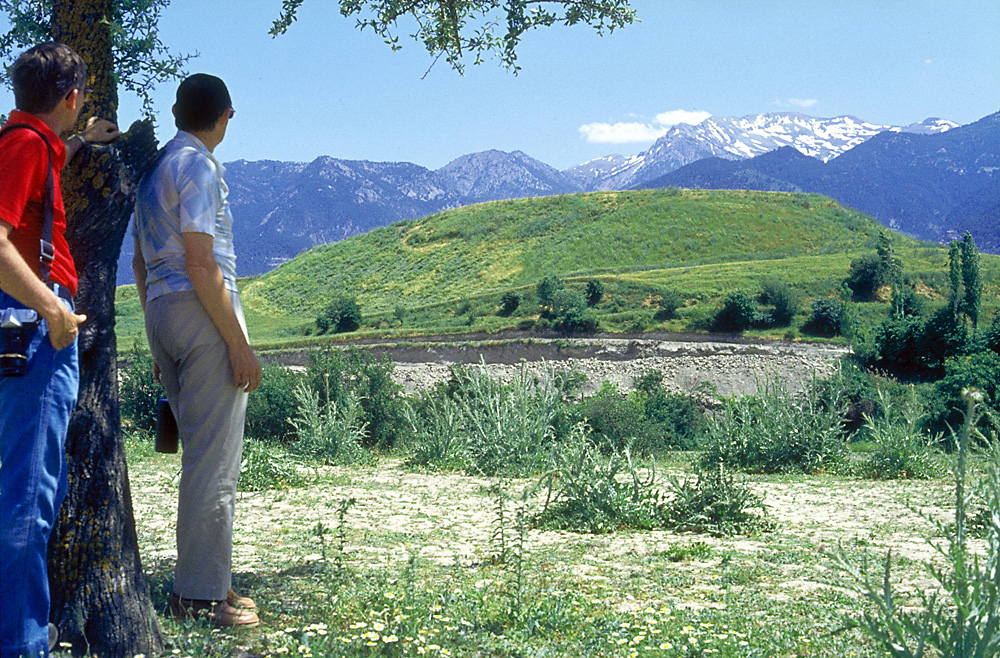
Colossae is not one of the Seven churches mentioned in the Apocalypse but it is a short distance from Laodicea. Our photo was made with a view of the tell or huyuk of ancient Colossae. We went near the site on a dirt road. The road to get to the mound is now paved.
I am in the blue shirt. Melvin Curry is standing behind me, and Phil Roberts snapped the photo.
Because of the Apostle Paul’s letter to the church many scholars hoped for an excavation. We all wanted to know more about the city that was home of the church we read about in Colossians. Timothy joins Paul in the address to the saints at Colossae.
The modern city known as Honaz stands in the shadow of Mount Cadmus. In this photo the town is hidden by the mound of Colossae.
Anarchaeological excavation of the site is now in progress under the direction of Dr. Barış Yener of nearby Pamukkale University. Good news.
Tell your friends about our blog and encourage them to sign up to receive each blog when it is posted. If the pictures we use are credited to the author you may use them freely in your teaching and preaching. Use for publications, etc. requires purchasing the right. Follow the link at the top of the page for details.
Every time I think of working on tax preparation I think about this episode from the ministry of Jesus:
24 When they came to Capernaum, the collectors of the two-drachma tax went up to Peter and said, “Does your teacher not pay the tax?” 25 He said, “Yes.” And when he came into the house, Jesus spoke to him first, saying, “What do you think, Simon? From whom do kings of the earth take toll or tax? From their sons or from others?” 26 And when he said, “From others,” Jesus said to him, “Then the sons are free. 27 However, not to give offense to them, go to the sea and cast a hook and take the first fish that comes up, and when you open its mouth you will find a shekel. Take that and give it to them for me and for yourself.” (Matthew 17:24-27 ESV).
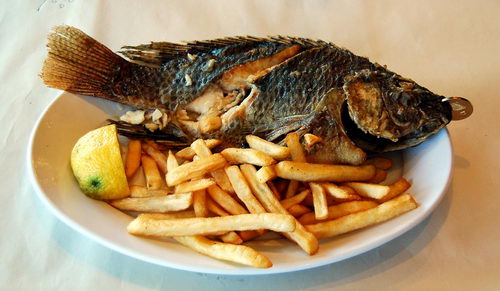
Fishing is still important on the Sea of Galilee. Tour groups to Israel usually have at at least one meal of the famous St. Peter’s Fish when we are in the Galilee.
Mendel Nun spent more than 50 years fishing the Sea of Galilee. He became an expert in the history of fishing on the Sea. His article, “Cast Your Net Upon the Waters: Fish and fishermen in Jesus’ Time” (Biblical Archaeology Review, 19:06), includes information on this episode. Because this is a lengthy quotation I will leave it full width for easier reading.
— • —
The musht is the only large fish in the lake that moves in shoals, which of course is a key to the identification of the fish in the story in Luke, although not the only one.
The flat shape of the musht makes it especially suitable for frying. The skeleton consists of an easily detachable backbone and relatively few small bones, and thus it is easy to eat. It has long been known as St. Peter’s fish. Recently, it has even been exported under this name. But, alas, the name is a misnomer.
Presumably the fish got its name because of an incident recorded in the Gospel of Matthew (Matthew 17:24–27). In this episode, the tax collectors come to Capernaum to collect the half-shekel Temple tax that each Jew was required to pay annually. Jesus tells Peter, “Go to the sea and cast a hook, and take the first fish that comes up, and when you open its mouth you will find a shekel; take that and give it to them for me and yourself.”
The musht was probably given the name St. Peter’s fish because of this miracle. However, this cannot have been the fish Peter caught with a hook and line. The reason is simple: Musht feeds on plankton and is not attracted by other food. It is therefore caught with nets, and not with hook and line. The fishermen on the lake have, since time immemorial, used a hook baited with sardine to fish for barbels, which are predators and bottom feeders. Peter almost surely caught a barbel. There can be only one explanation for the confusing change of name. It was good for tourism! The Sea of Galilee has always attracted pilgrims; musht (today raised mostly in ponds) is part of the unique local cuisine. It is delicious, especially when freshly fried. In ancient times, just as today, the fishing boats delivered their catch to the eating places on shore. Indeed, the proverbial metaphor for speed in the Talmud is “as from the sea into the frying pan.” This expression was part of daily speech in Tiberias and clearly refers to musht and not barbels; the latter are best when boiled.
The first Christians were local people and were therefore familiar with the various fish. They of course knew that the fish Peter caught could only have been a barbel and not a musht. However, as pilgrims began to come from distant regions, it no doubt seemed good for business to give the name “St. Peter’s fish” to the musht being served by the early lakeside eating houses. The most popular and easily prepared fish acquired the most marketable name! But even if Peter did not catch a musht, he deserves to have his name associated with the best fish in the lake.
Returning to the miracle of the fish caught in Luke (5:1–7), additional clues that the fish were musht are the kind of net referred to and the place and the time of the event. Several kinds of nets were used in the Sea of Galilee. The most important were the seine, the cast net and the trammel net.
— • —
For some time the most searched for article on this blog has been Fish of the Sea of Galilee. If you have not read the article and enjoy the photos I urge you to do so now.
Here is one of the photos from that post.
A fisherman unloading his catch early in the morning at a dock at Tiberias, Israel.
Use this shortlink to go to the article with more information about the fish of the Sea of Galilee: https://wp.me/p1zOp-42k
If you use our SEARCH box and insert the word fish you will locate many articles about fish and fishing on the Sea. If you search for Mendel Nun you will find several more helpful articles about fishing and the harbors of the Sea of Galilee.
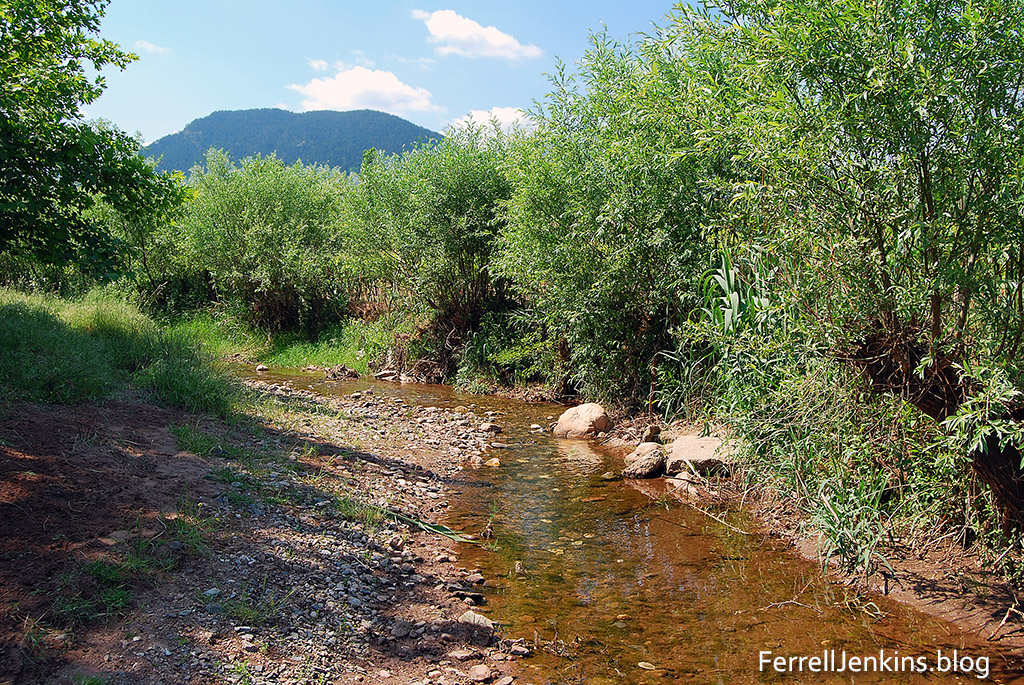
The city of Sardis is located on the banks of the Pactolus river in the Hermus Valley remained important for many centuries. The river may not look very impressive when compared to the Euphrates, the Thames or the Mississippi but its importance lies in the fact that it was panned for gold. The Lydians lived here as early as the 13th century B.C. and were the first to mint coins of gold in the 7th century B.C. The last and most famous king of the Lydians was Croesus (560-546 B.C.). King Croesus gave his name to the Greek language to the precious metal refined at the site (chrusos).
The Pactolus River at Sardis. The Lydians panned gold from the river.
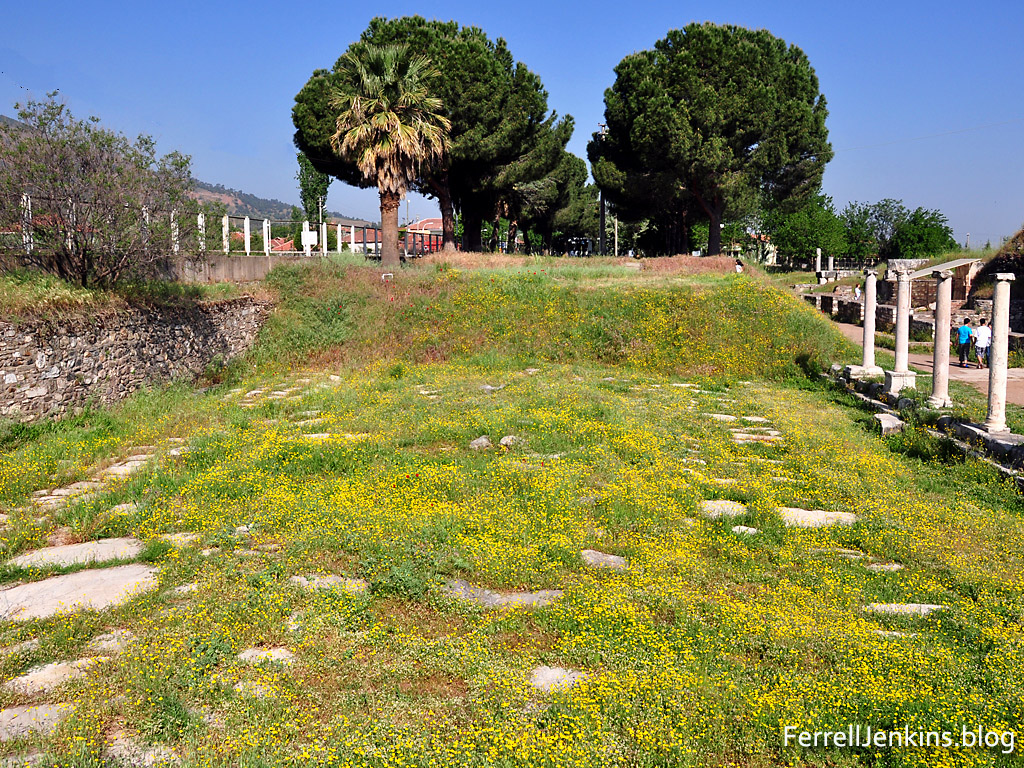
Later the Persians traveled through Sardis. In fact, the Royal Road that ran through the city was used by the famous Persian post. It is no wonder that Alexander the Great came to Sardis.
Ruins of the famous Persian Royal Road that ran through Sardis.
In The Campaigns of Alexander, Arrian records the visit of the Macedonian warrior to Sardis. He says that when Alexander came to Sardis he agreed to exact the same tribute which they had paid to the Persian king Darius. He determined to build a temple to Zeus at the same place where the palaces of the Lydian kings had stood.
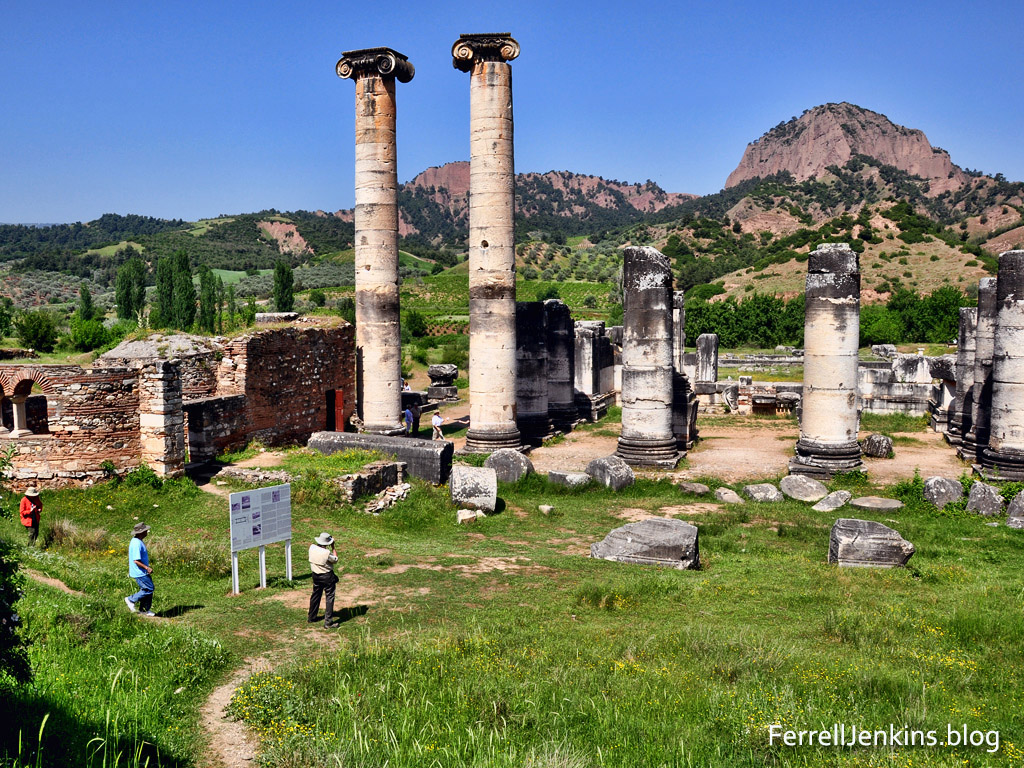
The Temple of Artemis at Sardis. In the distance may be seen the citadel of the city.
Leaving Sardis under the control of his officers Alexander continued to Ephesus, arriving there on the fourth day.
The Problems in the Church at Sardis
There seem to be two problems mentioned in the letter to the church at Sardis. The edict to the church begins,
“And to the angel of the church in Sardis write: ‘The words of him who has the seven spirits of God and the seven stars. “‘I know your works. You have the reputation of being alive, but you are dead. Wake up, and strengthen what remains and is about to die, for I have not found your works complete in the sight of my God.” (Rev. 3:1-2 ESV)
The church had a reputation for being alive but they were dead and none of their works has been completed.
The saints at Sardis needed constantly to be watching. Wake up or else! The Lord will come like a thief and catch them unprepared. This warning would have special meaning to a city which had been caught off guard on at least two important occasions. The city was located in the Hermas Valley on the banks of the Pactolus River (a tributary to the Hermas). The acropolis of the city was built on a spur of Mount Tmolus about 1500 feet above the plain. Mount Tmolus is 5,800 feet high. The acropolis was difficult to reach and was considered unassailable by an enemy. The city spread until it soon had an upper city and a lower city.
In 546 BC the Lydian king Croesus and city of Sardis fell to Cyrus and the Persians. Remember the attitude of the Sardians that the fortress city was unassailable. Herodotus (Book I) tells the story of the fall. The Persians were in the valley below the citadel. A Lydian soldier dropped his helmet over the city wall and scurried down the rock to get it. A Persian carefully marked this in his memory and afterward scaled the city wall, with other soldiers, to capture the city for Cyrus. Croesus was taken prisoner. The confident city had fallen.
In 334 BC Sardis surrendered willingly to Alexander the Great. The city became the administrative center for the Seleucid Dynasty. In 214 BC the city fell to Antiochus Epiphanes through the use of tactics almost identical to those which caused its fall to the Persians more than three centuries earlier. The admonition to watch finds parallel in the teaching of Jesus (Matthew 24:42-43; 25: 13; Luke 12:39; cf. 1 Thessalonians 5:2). We must be on watch at our weak point, and at our strongest point. We need to be especially careful if we say, “that’s the one thing I would never do.”
The citadel of Sardis was built on Mount Tmolus, but the rock naturally flaked off and did not provide a firm foundation for the walls. Our photo was made in the late afternoon before sunset by Dr. Mark Wilson, author of Biblical Turkey, in October, 2020. Photo used by permission.
The city that thought it was secure was actually vulnerable to the attacking enemies. The letters to the seven churches are replete with allusions to local customs and history. We see this in the letter to Sardis. Too many churches of our own time rely on their past achievements of famous meetings, well known preachers, big crowds, or numerous conversions. They started great projects, first ever, annual this or that, but they never finished them. Think about this on a personal basis also.
The problems faced by the Seven Churches of the Book of Revelation are the same or similar to those faced by churches today. Let us listen and learn.
A personal note to our readers: This short series of lessons was begun last November. A brief word of explanation about the delay in completing them might seem appropriate. My wife of 66 years has been dealing with dementia, medically diagnosed by her neurologist as Alzheimer’s Disease, since 2013. This has not been an easy road for her or the man who promised to love her in sickness and in health. Our doctors told me long ago that I would not be able to care for her on my on, but I did so as long as possible. In mid-April we moved her to a nearby assisted living memory care center. She has adapted well but my work is not complete. This task as caregiver still requires a considerable amount of time and your interest in our well being is appreciated.



 Ferrell's Travel Blog
You must be logged in to post a comment.