Tag Archives: Apostle Paul

Let the Lower Lights be Burning

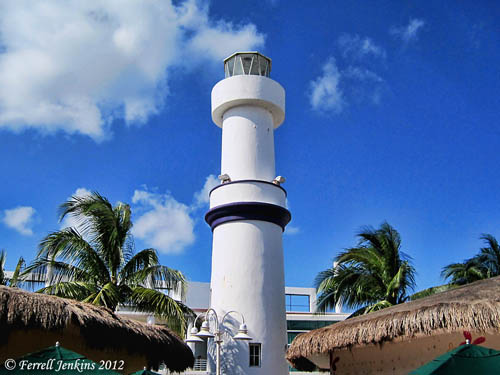
Lighthouse at Cozumel, Mexico. Photo by Ferrell Jenkins.

Lighthouse at Cozumel, Mexico. Photo by Ferrell Jenkins.

One of the great gospel songs that I remember from my childhood is Let the Lower Lights Be Burning (or Brightly Beams our Father’s Mercy). I understood the song even before I saw a lighthouse.

The song was written by a talented young musician names Philip P. Bliss in 1871. Osbeck tells the story of the writing of the hymn. Bliss was traveling with Dwight L. Moody and was impressed by an illustration about a violent storm on Lake Erie that was often used by Moody.

On a dark, stormy night, when the waves rolled like mountains and not a star was to be seen, a boat, rocking and plunging, neared the Cleveland harbor. “Are you sure this is Cleveland?” asked the Captain, seeing only light from the lighthouse.
“Quite sure, sir,” replied the pilot.
“Where are the lower lights?”
“Gone out, sir!”
“Can you make the harbor?”
“We must, or perish, sir.”

With a strong hand and a brave heart, the old pilot turned the wheel, But alas, in the darkness he missed the channel, and, with a crash upon the rocks, the boat was slivered and many a life lost in a watery grave.

“Brethren,” concluded Mr. Moody, “the Master will take care of the great lighthouse. Let us keep the lower lights burning.”

Osbeck, K. W. (1985). 101 more hymn stories (175). Grand Rapids, Mich.: Kregel Publications.

Here are the words of the hymn.

Brightly beams our Father’s mercy from His lighthouse evermore,
But to us He gives the keeping of the lights along the shore.
Let the lower lights be burning! Send a gleam across the wave!
For to us He gives the keeping of the lights along the shore.
[or Some poor struggling, sinking sailor you may rescue, you may save.]

Dark the night of sin has settled, loud the angry billows roar;
Eager eyes are watching, longing, for the lights, along the shore.
Let the lower lights be burning! Send a gleam across the wave!
Eager eyes are watching, longing, for the lights, along the shore.

Trim your feeble lamp, my brother, some poor sailor tempest tossed,
Trying now to make the harbor, in the darkness may be lost.
Let the lower lights be burning! Send a gleam across the wave!
Trying now to make the harbor, some poor sailor may be lost.

I located the lyrics to this old hymn at hymnlyrics.org.

The next photo is of the lighthouse at the Crusader city of Akko on the Mediterranean. Akko (Acre) was known as Ptolemais in New Testament times. The Apostle Paul stopped at the city on the return from his third preaching journey (Acts 21:7).
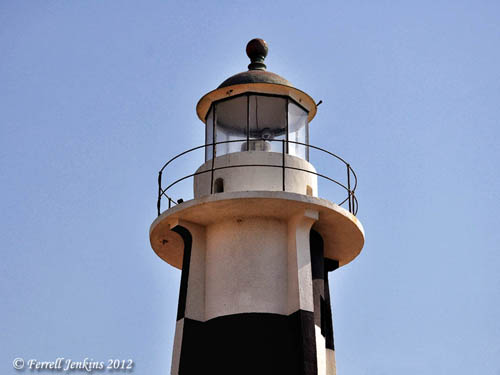
The Akko Crusader lighthouse. Photo by Ferrell Jenkins.

The Akko Crusader City lighthouse. Photo by Ferrell Jenkins.

Utilizing the power of some of the photo tools I use, I thought about what this lighthouse might look like if the lights did not burn at night. Add a heavy fog and it would be impossible for the captain (pilot) of the ship to see it, let alone the “lights along the shore.”
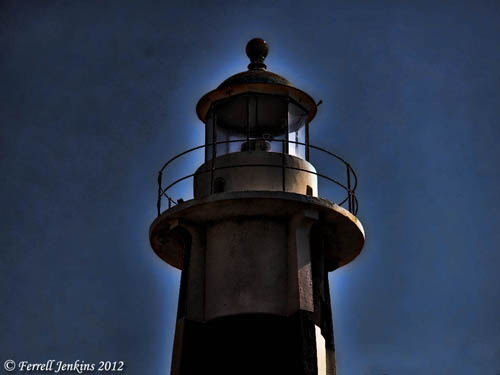
Akko Crusader lighthouse as it might appear at night. Photo by Ferrell Jenkins.

Akko Crusader City lighthouse as it might appear at night. Photo by Ferrell Jenkins.

Two great New Testament texts come to mind:

“Let your light shine before men in such a way that they may see your good works, and glorify your Father who is in heaven. (Jesus; Matthew 5:16 NAU)

… so that you will prove yourselves to be blameless and innocent, children of God above reproach in the midst of a crooked and perverse generation, among whom you appear as lights in the world, (Apostle Paul; Philippians 2:15 NAU)

Thinking that some readers might like to use this illustration in a lesson, I have provided hi-res images. Just click on the images above.
Free Ebook on Ephesians

Baker Academic announces a series of ebook shorts from Robert H. Gundry. Last week the Commentary on Mark was given away. Today only, the Commentary on Ephesians is available free. Baker Academic E-NOTES says,

Baker Academic is proud to announce new ebook shorts from Robert H. Gundry.

In these verse-by-verse commentaries taken from Commentary on the New Testament, Robert Gundry offers a fresh, literal translation and a reliable exposition of every book of the New Testament.

Students and scholars will welcome Gundry’s nontechnical explanations and clarifications, and readers at all levels will appreciate his sparkling interpretations. Priced from $1.99 to $5.99 these affordable and convenient resources are available wherever ebooks are sold.

As we celebrate the release of this series, Baker Academic will be making selected entries from this commentary series free for one day only.

This will be followed by other selections for free download on January 16th and 23rd.

Here is the direct link to the free ebook.

Do you need a Kindle? Click on the link below to check the selections.
Kindle Fire, Full Color 7″ Multi-touch Display, Wi-Fi.

Paul quotes hometown poet in Athens speech

As Paul taught the Areopagus about the God that could be known, he cited two Greek poets who had indicated belief in a supreme being.

for in Him we live and move and exist, as even some of your own poets have said, ‘For we also are His children.’  “Being then the children of God, we ought not to think that the Divine Nature is like gold or silver or stone, an image formed by the art and thought of man.  (Acts 17:28-29 NAU)

The first quotation is attributed to the Cretan poet Epimenides. The second quotation is attributed to Aratus of Cilicia, which was also Paul’s home (Acts 21:39). These poets certainly did not have in mind the same God that Paul was preaching, but they acknowledged that there was a supreme power back of the universe.

The photo below shows a bust of Aratus displayed in the British Museum.

The Cilician poet Aratus. British Museum. Photo by Ferrell Jenkins.

Cilician poet Aratus. British Museum. Photo: Ferrell Jenkins.

If Paul needed a weather report in Athens

The Roman Forum is located north of the Acropolis in Athens. If you are walking in the ancient Agora you could wander into the Roman Forum without realizing the difference. The Tower of the Winds in the Roman Forum might have been seen by the Apostle Paul during his stay in Athens (Acts 17:15-34).

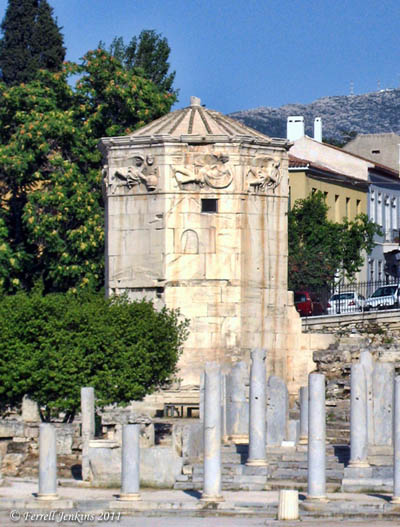
The Tower of the Winds was built about 40 B.C. by Andronicus to serve as a sundial, water-clock, and weather-vane. Fant and Reddish describe the structure this way:

… the Tower of the Winds on the east side of the forum, named for the reliefs of the Eight Winds on the frieze about the top of the tower. Originally the tower was a complete ancient weather station, designed by a famous Macedonian astronomer, Andronikos of Kyrrhos. Sundials were mounted on the exterior sides of the building, a water clock operated inside the tower, and the bronze weather vane on top indicated the wind direction over the applicable image of one of the Eight Winds. (A Guide to Biblical Sites in Greece and Turkey, 32)

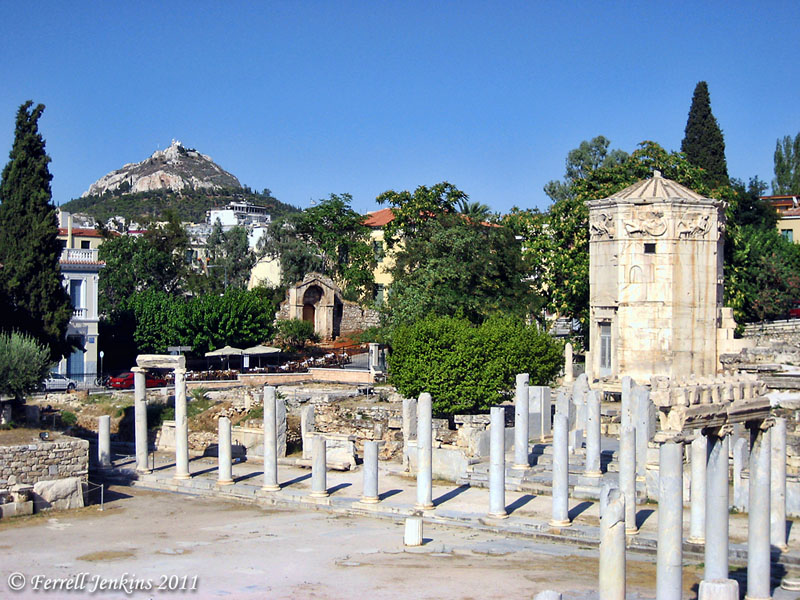
In the photo below you will see the Tower of the Winds on the right in the Roman Forum. The hill in the distance is known as Mount Lycabetus. It is the highest point in the city of Athens.

Tower of the Wind. Mount Lycabetus in distance. Photo by Ferrell Jenkins.

Tower of the Wind in Roman Forum. Mt. Lycabetus in distance. Photo by Ferrell Jenkins.

Here is a larger image of the Tower of the Winds.

Tower of the Winds in the Roman Forum of Athens. Photo by Ferrell Jenkins.

Tower of the Winds in the Roman Forum. Photo by Ferrell Jenkins.

Athens — the Agora and the Areopagus

A few days ago we discussed Paul’s appearance in the midst of the Areopagus here. We noted that several classical and New Testament scholars indicate that the Areopagus (the court) of Athens originally met on the hill commonly called Mar’s Hill or the Areopagus, but that the court later met in the agora.

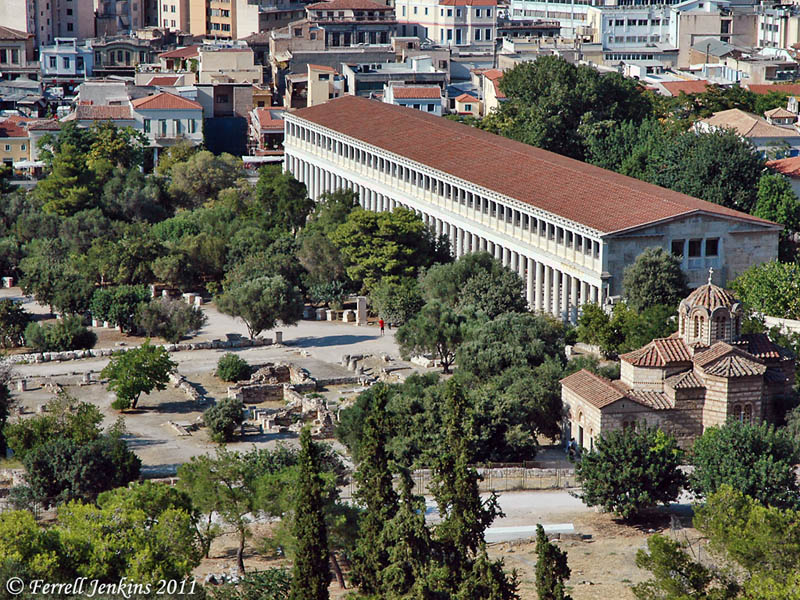
Our photo below was made from atop the Areopagus. It shows a small part of the ancient agora and the Stoa of Attalus in the center of the city of Athens.

View from Mars Hill (Areopagus) of the agora and the Stoa of Attalus in Athens. Photo by Ferrell Jenkins.

View showing a portion of the agora and the Stoa of Attalus. Photo by Ferrell Jenkins.

The Stoa of Attalus was built by King Attalos II of Pergamum (159-138 B.C.). It has been reconstructed and now serves as the Agora Museum.

In Roman times the court held most of its meetings in the Royal Portico (stoa basileios) in the agora, but we still don’t know whether Paul addressed the court in the Royal Portico or on the Areopagus (Bruce, Paul: Apostle of the Heart Set Free, 238).

The Parthenon — in Athens, Greece, and in Athens of the South

The Parthenon in Athens, Greece, is one of the most famous architectural landmarks on earth. The building was erected on the Acropolis in the fifth century B.C. According to Fant and Reddish, “the cult statue of Athena stood in the east cella, surrounded by a colonnade of twenty-three columns and an entrance portico with six columns.”

Completed in 438 B.C.E. the statue of Athena was designed and constructed by Phidias himself. On its base it stood nearly 40 feet tall, supported by a massive post. The face and hands were of ivory. According to Thucydides, more than 40 talents of gold (approximately 250 lbs.) were used to plate the remainder of the enormous statue. These plates were removable so that the weight of the gold could be checked periodically. The goddess stood upon a large platform upon which the Pandora myth was depicted. Her left hand rested upon her shield, her spear leaned against her left shoulder, and in her right hand she held a small image of Nike. The statue eventually was carried off to Constantinople and destroyed there in 1203 C.E. (Fant and Reddish, A Guide to Biblical Sites in Greece and Turkey, Oxford, 30-31)

Nashville, Tennessee, had nicknamed itself the Athens of the South by the mid 19th century. In 1897 a replica of the Greek Parthenon was built in Nashville’s Centennial Park. After yesterday’s post about the original Parthenon, my friend Ken Green, who lives in Nashville, wrote that he was sure I had seen the Parthenon, but wondered if I had seen the 42-foot statue of Athena which was unveiled to the public in 1990. In earlier years I have lived in Alabama and Kentucky, with frequent trips through Nashville, but I have not seen the Athena statue. Fortunately, my friend David Padfield visited Nashville last year and made some nice photos (as usual). He has graciously allowed me to share a couple of these photos with our readers.

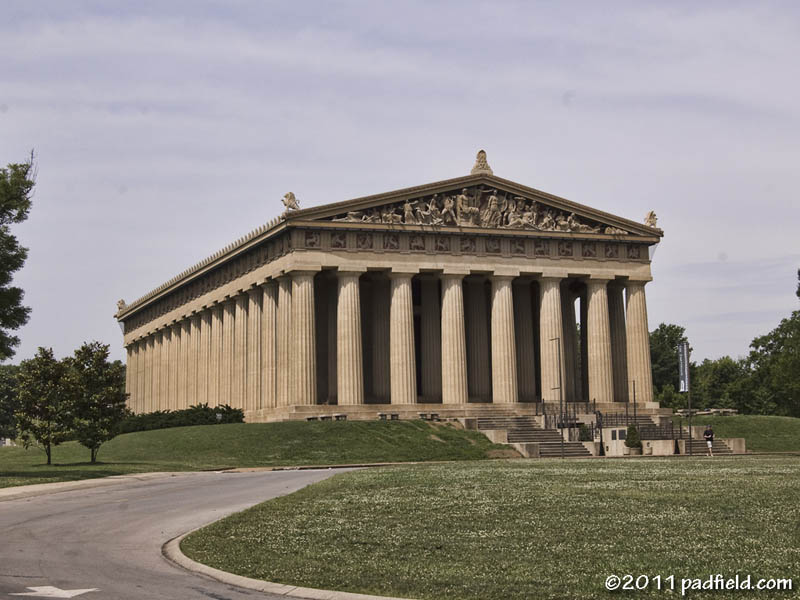
The first photo shows the exterior of the Nashville Parthenon.

The Parthenon in Nashville, Tennessee. Photo by David Padfield.

The Parthenon in Nashville, Tennessee. Photo by David Padfield.

The next photo shows the statue of Athena as it is displayed in the Parthenon.

Athena in the Parthenon in Nashville, Tennessee. Photo by David Padfield.

Athena in the Parthenon in Nashville, Tennessee. Photo by David Padfield.

Think of the glory of the original Parthenon and the statue of Athena on the Acropolis in Athens. Paul certainly saw the building and may have seen the statue of Athena that was then inside the building.

Now while Paul was waiting for them at Athens, his spirit was being provoked within him as he was observing the city full of idols. (Acts 17:16 NAU)

“Being then the children of God, we ought not to think that the Divine Nature is like gold or silver or stone, an image formed by the art and thought of man. (Acts 17:29 NAU)

You may read more about the Nashville Parthenon at the official city website here.

Athens — a “city full of idols”

While the Apostle Paul waited for his companions to come from Macedonia his spirit was provoked or upset because he observed “the city full of idols” (Acts 17:16).

There were many idols in Athens, but none more impressive than those on the Acropolis. The word acropolis means the “high point of the city.” The name was applied to any fortified strong hold or citadel overlooking a populated area. It served as a place of refuge and defense. The Acropolis is 512 ft. high.

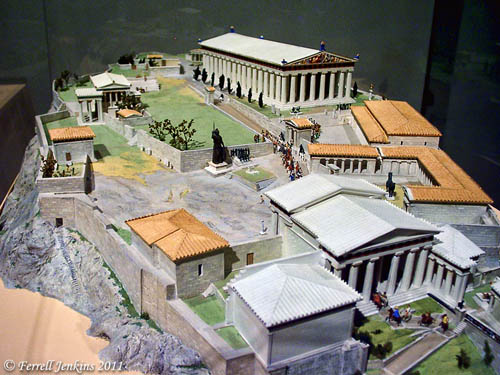
The Royal Ontario Museum in Toronto has a nice exhibit of Greek artifacts and a helpful model of the Acropolis with its magnificent buildings. Click on the photo for an image suitable for use in teaching.

Athens - Acropolis - ROM, Toronto.

Model of the Acropolis at Royal Ontario Museum. Photo by Ferrell Jenkins.

Here is a list of significant monuments Paul might have visited:

  1. The Parthenon where the goddess Athena was worshiped was built between 447 and 438 B.C.
  2. Temple of Athena Nike (Wingless Victory, 5th cent. B.C.).
  3. The Erechtheion with its porch of Caryatids was built between 421 and 406 B.C. An olive tree beside the building commemorates the first olive tree planted by Athena.
  4. Temple of Rome and Augustus.

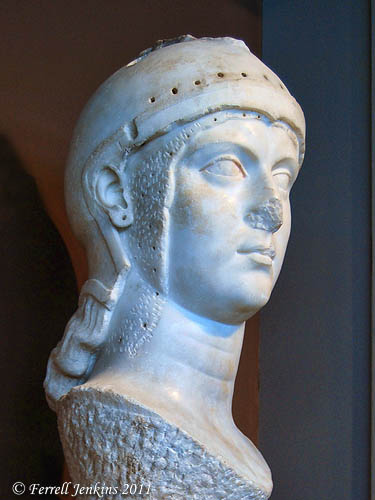
Temples were built to Athena all over the Roman Empire. This photo of a bust of Athena was made in the Archaeology Museum of Thessalonica (Thessaloniki, Greece).

Athena. Archaeology Museum of Thesaloniki, Greece. Photo by Ferrell Jenkins.

Athena. Archaeology Museum of Thesaloniki. Photo by Ferrell Jenkins.

Paul described gods and goddesses like Athena as having been formed by man.

Being then the children of God, we ought not to think that the Divine Nature is like gold or silver or stone, an image formed by the art and thought of man. (Acts 17:29 NAU)

As Paul writes to the Corinthians, he says,

For even if there are so-called gods whether in heaven or on earth, as indeed there are many gods and many lords,  yet for us there is but one God, the Father, from whom are all things and we exist for Him; and one Lord, Jesus Christ, by whom are all things, and we exist through Him. However not all men have this knowledge;  (1 Corinthians 8:5-7a NAU)

Paul in the midst of the Areopagus in Athens

When Paul arrived in Athens, the intellectual capital of his day, he had some time alone in the city to view its monuments.

So Paul, standing in the midst of the Areopagus, said: “Men of Athens, I perceive that in every way you are very religious. For as I passed along and observed the objects of your worship, I found also an altar with this inscription, ‘To the unknown god.’ What therefore you worship as unknown, this I proclaim to you. (Acts 17:22-23 ESV)

Luke tells us that Paul stood in the midst of the Areopagus which was the most venerable of Athenian institutions (Bruce, Paul: Apostle of the Heart Set Free, 238). It derived its name from the original meeting place on the Areopagus, the hill of Mars (Ares), west of the Acropolis. Tenney says,

Whether the `areopagus’ of Acts 17 referred to the hill or to the court which in Paul’s day met in one of the colonades near the Agora cannot be determined exactly (Tenney, New Testament Times, 265).

In Roman times the court held most of its meetings in the Royal Portico (stoa basileios) in the agora, but we don’t know whether Paul addressed the court in the Royal Portico or on the Areopagus (Bruce 238).

Blaiklock says,

the Court of the Areopagus seems to have exercised some supervision over itinerant preachers, and the invitation to Paul was by way of being a courteous command (Cities of the New Testament, 52).

The first recorded convert in Athens was Dionysius the Areopagite (a member of the court) (17:34). Tradition has it that Dionysius became bishop of Athens and suffered martyrdom during the persecutions of Domitian. He is today venerated as the patron saint of Athens by the Eastern Greek Orthodox Church.

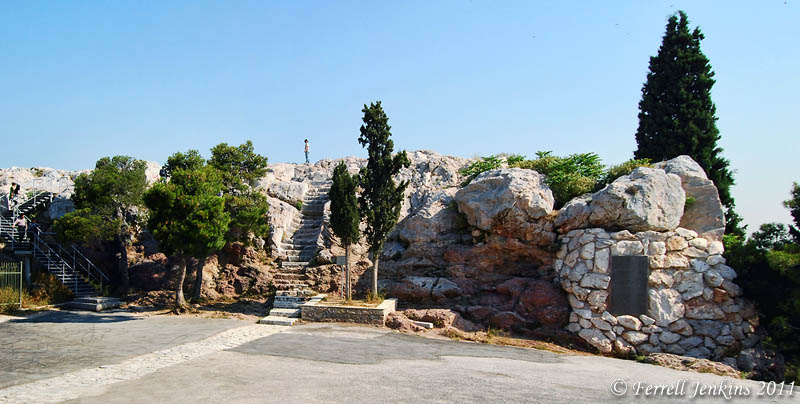
Our photo shows the traditional Areopagus at the base of the Acropolis. From the top of the hill there is a wonderful view of the buildings of the Acropolis and of the agora where Paul may have spoken.

The traditional Areopagus at the base of the Acropolis in Athens. Photo by Ferrell Jenkins.

Traditional Areopagus at the base of the Acropolis in Athens. Photo by Ferrell Jenkins.

On the right side of the photo you will see a bronze plaque in the rocks with Paul’s speech in Greek.

Plan to sacrifice to Paul and Barnabas at Lystra

It is often been pointed out that the common designation of The Acts of the Apostles is a bit of an overstatement. Primarily the book of Acts is the story of some of the acts of the apostles Peter and Paul. Luke seems to be telling us that Paul is every bit as genuine an apostle as Peter. Peter can heal a man lame from his mother’s womb (Acts 3:2). So can Paul (Acts 14:8-10).

When the Lystrans saw the healing of the lame man they began to call Barnabas, Zeus, and Paul, Hermes. Luke’s account says that the priest of Zeus prepared to offer sacrifices with the crowds.

13 The priest of Zeus, whose temple was just outside the city, brought oxen and garlands to the gates, and wanted to offer sacrifice with the crowds. 14 But when the apostles Barnabas and Paul heard of it, they tore their robes and rushed out into the crowd, crying out (Acts 14:13-14 NAU)

The photo below provides a good illustration of what happened at Lystra. It is an architectural relief fragment showing preparation for a sacrifice. The large marble fragment belongs to the early part of the second century. It comes from Rome, but is now displayed in the Louvre.

The bull is being brought for sacrifice. It is thought that this represents only part of the original scene. A panel to the right should show the priest and the altar. Perhaps the laurel wreaths worn by the two characters on the left indicates the departure or return of the Roman emperor.

Roman architectural relief shows preparation for sacrifice. Louvre. Photo by Ferrell Jenkins.

Roman relief shows preparation for sacrifice. Louvre. Photo by Ferrell Jenkins.

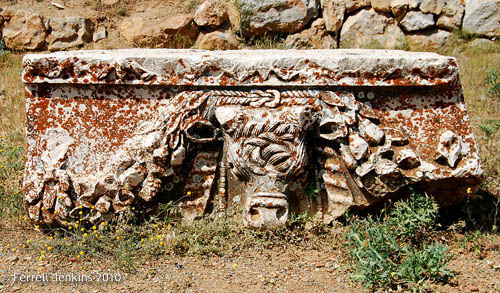
The motif on this altar is common in the Greco-Roman world. The photo below shows a similar bull’s head on what appears to be part of an architectural frieze in the Augustan Imperial Sanctuary at Pisidian Antioch.

Frieze from the Augustan Imperial sanctuary at Pisidian Antioch. Photo by F. Jenkins.

Frieze from the Augustan Imperial sanctuary at Pisidian Antioch. Photo by F. Jenkins.

Lystra — Barnabas is Zeus and Paul is Hermes

G. Walter Hansen comments on the religious life of Galatia and the importance of Zeus and Hermes to the people who lived there.

Zeus was the most widely worshipped god in Galatia; temples to Zeus were ubiquitous. Zeus was often linked with other gods. In the territory of Lystra there are carvings and inscriptions which show Zeus accompanied by Hermes. An inscription found near Lake Sugla is a dedication to Zeus of a sundial and a statue of Hermes. The names of the dedicators are Lycaonian. A stone altar near Lystra is dedicated to “the Hearer of Prayer [presumably Zeus] and Hermes.” A relief near Lystra depicts Hermes with the eagle of Zeus. In Lystra a stone carving shows Hermes with two other gods, G and Zeus. (Gill and Gempf, The Book of Acts in its First Century Setting, Vol. 2: Graeco-Roman Setting, 393)

This evidence, says Hansen, provides the setting for the events of Paul and Barnabas at Lystra. Luke describes the reaction of the Lystrans when they saw Paul heal a lame man.

When the crowds saw what Paul had done, they raised their voice, saying in the Lycaonian language, “The gods have become like men and have come down to us.”  And they began calling Barnabas, Zeus, and Paul, Hermes, because he was the chief speaker.  The priest of Zeus, whose temple was just outside the city, brought oxen and garlands to the gates, and wanted to offer sacrifice with the crowds.  (Acts 14:11-13 NAU)

Bruce reminds us that “Zeus was the chief god in the Greek pantheon; Hermes, the son of Zeus by Maia, was the herald of the gods” (The Book of the Acts, NICNT, 292).

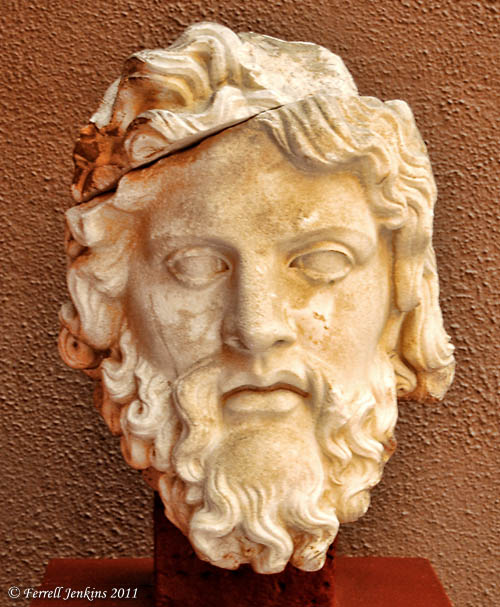
Our photo of Zeus is of a bust displayed in the archaeological museum at Ephesus.

Bust of Zeus in the Ephesus Museum. Photo by Ferrell Jenkins.

Bust of Zeus in the Ephesus Museum. Photo by Ferrell Jenkins.

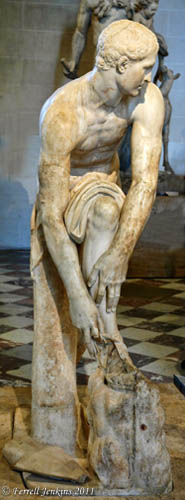
Paul was called Hermes because he was the chief speaker. Hermes was the messenger of the gods. How appropriate that our word hermeneutics, coming from the name Hermes, is used to describe the important work of interpreting the Scriptures. I have heard some speakers make fun of the word and then proceed to say that a certain phrase in the Scripture means … ! The photo below shows Hermes tying on his sandal in preparation for delivering a message. Some may recognize Hermes as the Latin Mercury, who is used as the symbol for the floral industry.

Hermes Putting on Sandal. Louvre. Photo by Ferrell Jenkins.

Hermes Putting on Sandal. Displayed in the Louvre. Photo by Ferrell Jenkins.

The King James Version used the Latin terms Jupiter and Mercurius in Acts 14:12. Bruce says this is “due to an old and foolish fashion of replacing Greek proper names by their Latin equivalents in English translations from the Greek.”