Category Archives: Travel

Medinet Habu in the Valley of the Kings

It is easy to bypass he temple at Medinet Habu when visiting the Valley of the Kings at Thebes (Luxor), Egypt. The site is definitely worth a visit.
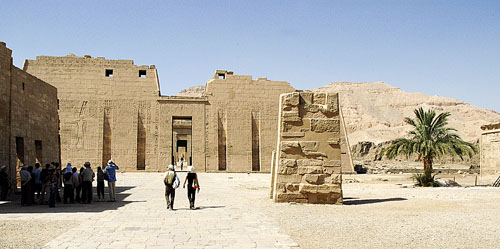
Entrance to Medinet Habu temple. Photo by Ferrell Jenkins.

Entrance to Medinet Habu temple. Photo by Ferrell Jenkins.

Rameses III reigned from 1186 to 1155 B.C. Structures built by the Pharaoh to serve as an administrative complex and funerary temple may still be visited today at Medinet Habu. The most interesting aspects of the temple to me are the reliefs of the Sea Peoples that the king claims to have subjugated. We usually understand that the Philistines of the Old Testament were Sea People. The five major cities of the Philistines were Ashdod, Gaza, Ashkelon, Gath, and Ekron (1 Samuel 6:17).

This photo from the British Museum is a cast of one of the Sea Peoples (Philistines).

British Museum cast of one of the Sea People. Photo by Ferrell Jenkins.

British Museum cast of one of the Sea People. Photo by Jenkins.
118th Pyramid Found at Saqqara

A pyramid believed to be the tomb of Queen Sesheshet, the mother of Pharaoh Teti, has been discovered below 23 feet of sand near Saqqara. The pyramid, dating to about 2300 B.C., is the second pyramid found this year. It is the 118th pyramid discovered in Egypt.

Read a news release here. National Geographic News includes photos and a video here. Zahi Hawass, secretary general of Egypt’s Supreme Council on Antiquities is quoted as saying, “I always say you never know what the sands of Egypt might hide.”

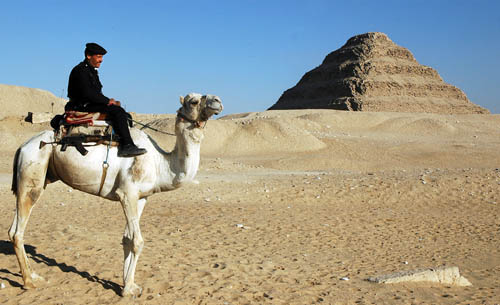
Tourists typically visit the Step Pyramid of Zoser (or Djoser) at Saqqara. This oldest freestanding stone building in the world is dated to about 2600 B.C., and is the work of the vizier and physican Imhotep.

Step Pyramid of Zoser at Saqqara. Photo by Ferrell Jenkins.

Step Pyramid of Zoser at Saqqara. Photo by Ferrell Jenkins.

These pyramids, and those of Giza, were built long before any of the biblical characters made their way to Egypt. It is conceivable that Joesph and Moses would have been familiar with these pyramids.

Then Pharaoh named Joseph Zaphenath-paneah; and he gave him Asenath, the daughter of Potiphera priest of On, as his wife. And Joseph went forth over the land of Egypt. (Genesis 41:45 NASB)

Moses was educated in all the learning of the Egyptians, and he was a man of power in words and deeds. (Acts 7:22 NASB)

“Honor to whom honor” on Veteran’s Day

After a significant battle some of David’s men suggested that those who were not actually in the battle should not share any of the spoils that were recovered. David responded this way:

“You shall not do so, my brothers, with what the LORD has given us. He has preserved us and given into our hand the band that came against us.Who would listen to you in this matter? For as his share is who goes down into the battle, so shall his share be who stays by the baggage. They shall share alike.” (1 Samuel 30:23-24 ESV)

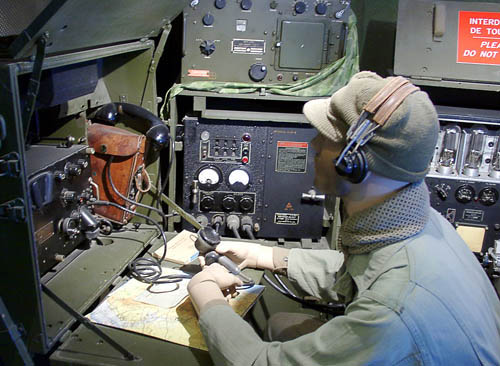
Our photo shows the latest in communication equipment used at Normandy in 1944.

Communications was important in World War II. Photo by Ferrell Jenkins.

Communications was important in World War II. Photo by Ferrell Jenkins.

Alexandria Troas # 3

For # 1 scroll down to November 7, or click here. For # 2 scroll down to November 10, or click here.

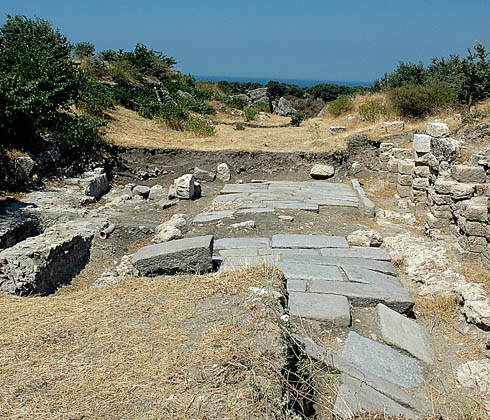
Recent excavations by the University of Münster have uncovered a portion of the Roman road at Troas. A member of the staff said, “We like to think that this is the road traveled by the apostle Paul when he entered the city.” Perhaps this photo helps illustrate the statement in Acts 16:8 which says “they came down to Troas.” The Aegean Sea is visible in the distance.

Recently excavated Roman road at Troas. Photo by Ferrell Jenkins 2006.

Recently excavated Roman road at Troas. Photo by Ferrell Jenkins 2006.

Alexandria Troas # 2

For # 1 scroll down to November 7, or click here.

Paul visited Troas on the return from his third journey. His companions, including the men who were taking the contribution to the poor among the saints at Jerusalem arranged time to be with the disciples on the first day of the week. When they met to break bread Paul spoke for a long time and raised Eutychus (Acts 20:4‑12). After the raising of Eutychus, Paul’s companions set sail for Assos, but Paul decided to travel about 20 miles south by land from Troas to Assos and meet the ship there (Acts 20:13‑14).

On another occasion, while awaiting the return of Titus from Corinth, Paul was very discouraged during his stay at Troas (2 Cor. 2:12ff.). He did not write a letter to the church at Troas, but in his last letter he requested Timothy to bring the cloak, the books, especially the parchments, which he had left at Troas with Carpus (2 Tim. 4:13).

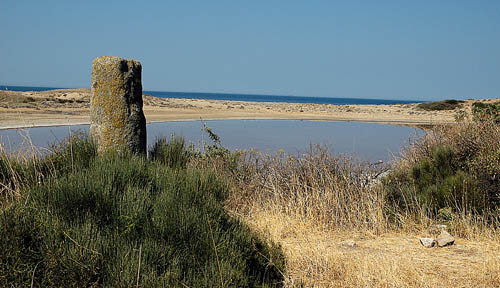
The inner harbor at Troas. Photo by Ferrell Jenkins.

The inner harbor at Troas. Photo by Ferrell Jenkins.

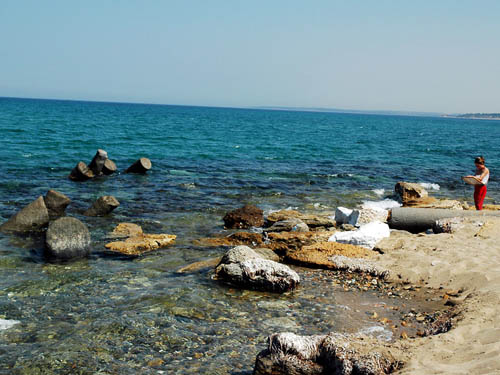
Earlier visits to Troas have allowed us to see only a few exposed ruins and a pathetic looking artificial harbor. The entry to the harbor is now clogged up; water flows into the harbor from the Aegean Sea, but none flows out. Over the past ten years archaeologists from the University of Münster and other institutions have been excavating in Troas. We will show some of the new discoveries in the next post.

The outter harbor at Troas. Photo by Ferrell Jenkins.

The outter harbor at Troas. Photo by Ferrell Jenkins.

Along the Lewis and Clark Historic Trail

Most of this week was spent in Columbia, Missouri, where I presented lessons on Christian apologetics under the title of Evidences for Faith at the Eastside Church of Christ. A good number of students from the University of Missouri are members of the church. It was a pleasure to be with them and the rest of the church, including some former students and long-time friends.

Highway 63, leading south from Columbia to Jefferson City, is part of the Lewis and Clark Historic Trail. The National Park Service web page gives this brief statement about the Trail.

Between May 1804 and September 1806, 31 men, one woman, and a baby traveled from the plains of the Midwest to the shores of the Pacific Ocean. They called themselves the Corps of Discovery. In their search for a water route to the Pacific Ocean, they opened a window onto the west for the young United States.

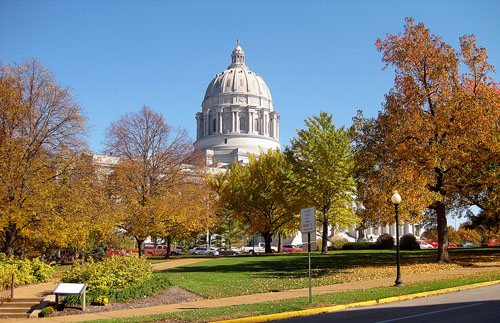
On election day, having already cast an absentee ballot in Florida, I drove to Jefferson City to make a few photos. Here is one I made of the state capitol building.

Missouri State Capitol, Jefferson City. Photo by Ferrell Jenkins.

Missouri State Capitol, Jefferson City. Photo by Ferrell Jenkins.

New photo header

The new header shows one of the streets in the temple area at the ancient Hittite capital of Hattusas (now Bogazkale in Turkey). The Hittites are mentioned more than 40 times in the Old Testament.

Alexandria Troas

The terms Troy, Troas, and Troad were derived from the name of the ancient people known as the Troes. The Troes lived in the Troad. This region became part of the Roman province of Asia, and was a substantial portion of the area known as Mysia which included the cities of Troas, Assos and Pergamum.

The term Troas or Troad was used to describe the region where Alexander first defeated the Persians in the Battle of Granicus. The city of Alexandria Troas, located about 10 miles from ancient Troy was first called Antigonia. Lysimachus changed the name to Alexandria in about 300 B.C., but there were many cities named for Alexander, so this one came to be called Alexandria Troas.

Colin Hemer points out that “Troas was a nodal point on what became a sophisticated system of international routes, organized functionally with regard to complex variables of speed and safety, of season and weather and conditions by land and sea.” Troas was, therefore, an ideal place from which the Gospel would spread into Europe.

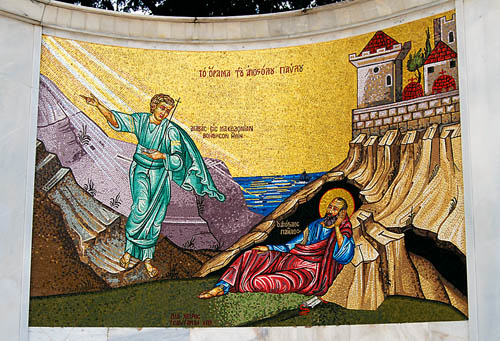
Troas was made a Roman colony by Augustus, and became one of the important cities of northwest Asia. A man of Macedonia appeared in a night vision to Paul at Troas and immediately his traveling party sailed for Macedonia (Acts 16:8‑11). Timothy, Silas, Luke, and perhaps others, were with Paul at Troas.

This photo from Berea illustrates the vision of the man of Macedonia calling on Paul to come over into Macedonia.

A man of Macedonia appears to Paul at Troas. Photo by Ferrell Jenkins.

A man of Macedonia appears to Paul at Troas. Photo by Ferrell Jenkins.

Ask in the next village

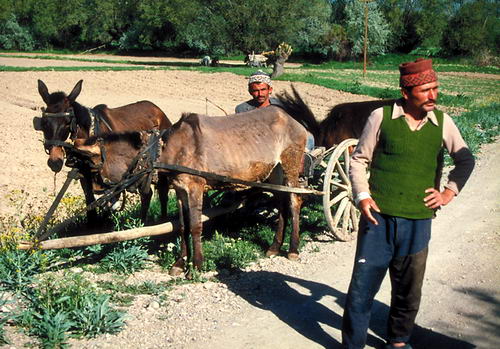
Once while visiting the site of Lystra our group enjoyed some time with local farmers who were working the fields below the tell (huyuk, in Turkey). I asked our guide to ask the men if they had heard of the apostle Paul. When he asked them, a puzzled look came over the face of the farmer who was doing most of the talking. He said, “No, but you might ask in the next village.”

The farmer said, "Ask in the next village." Photo by Ferrell Jenkins.

The farmer said, "Ask in the next village." Photo by Ferrell Jenkins.

Paul visited Lystra on his first journey (Acts 14). On the second journey he came through Lystra where Timothy lived. From that point on Timothy remained a faithful companion and co-worker with Paul in the spread of the gospel throughout the Roman Empire.

Paul came also to Derbe and to Lystra. And a disciple was there, named Timothy, the son of a Jewish woman who was a believer, but his father was a Greek,  2 and he was well spoken of by the brethren who were in Lystra and Iconium.  3 Paul wanted this man to go with him; and he took him and circumcised him because of the Jews who were in those parts, for they all knew that his father was a Greek.  (Acts 16:1-3 NASB)

Is the Apostle Paul known in your village? I mean, is the teaching of Christ and Him crucified known there? (1 Corinthians 2:2).

A beautiful photograph for election day

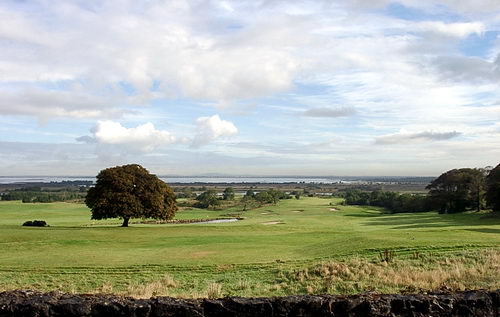
Here is a peaceful photo I made near Galway, Ireland.

A tranquil scene in the Emerald Isle. Photo by Ferrell Jenkins.

A tranquil scene in the Emerald Isle. Photo by Ferrell Jenkins.