Category Archives: Culture

Earthquake hits Eastern Turkey

The earth seems to be shaking a lot in recent months. This morning we have reports of an earthquake which measured 6.0 on the Richter scale hit the mainly Kurdish region of eastern Turkey.

A powerful earthquake in eastern Turkey on Monday buried villagers as they slept in mud-brick houses, killing at least 57 and injuring dozens more, officials said.

The quake, which measured 6.0 on the Richter scale, struck at 4:32 am (0232 GMT) at a depth of five kilometres, with an epicentre near the Karakocan town in Elazig province, the Istanbul-based Kandilli observatory said.

Rescuers struggled to dig survivors from the rubble after the quake tore down mud-brick houses in several mountainous villages in the mainly Kurdish area, killing whole families in their sleep.

The report may be read in its entirety here.

In January I wrote about some preparations for earthquakes that I saw in eastern Turkey here.
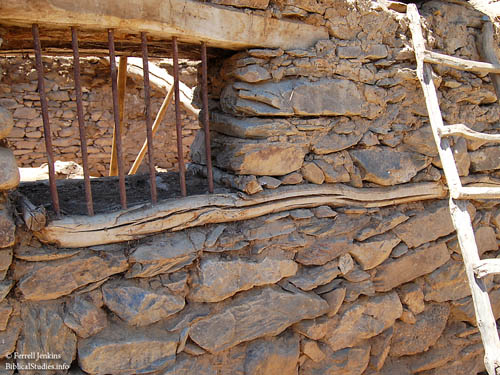
Preparations for earthquake in Eastern Turkey

Preparing for an earthquake in Eastern Turkey. Photo by Ferrell Jenkins.

Several other blogs about earthquakes and the Bible World are here, and here, and here.

  • Earthquakes common in the Bible World here.
  • Earthquakes still a problem in the Middle East here.
  • Philadelphia (Revelation 3) – Church with an open door here.
  • Earthquake felt in Israel, Syria, and Lebanon here.

Earthquakes were so common in the Bible World that they are often used to provide imagery for the direct action of God. John uses this symbolism to describe what happened when the Lamb (Christ) broke the sixth seal (Revelation 6:12-17). A few words from the Dictionary of Biblical Imagery will give us something to think about today.

Some references to earthquakes appear to be bald statements of historic fact and seem to have little, if any, symbolic value (Amos 1:1, cf. Zech 14:5; Acts 16:26). Most references, however, particularly in the poetic parts of the Bible, accord a high degree of symbolism to earthquakes. Earthquakes in Scripture are often seen as manifestations of the direct action of God’s power. The example that is probably alluded to most is the earthquake at the giving of the law at Sinai (Ex 19:18). In their poetic reviews of the Exodus, later writers seem to have emphasized this element (Ps 68:8; 77:18; 114:4–7) and broadened its scope to cover the whole exodus event. Matthew’s linkage of the earthquake at Jesus’ crucifixion with the rending of the temple veil (Mt 27:54) is thus far more than a statement of physical cause and effect: it is profoundly symbolic. (225)
Palestinian archaeology gets a boost at Shechem

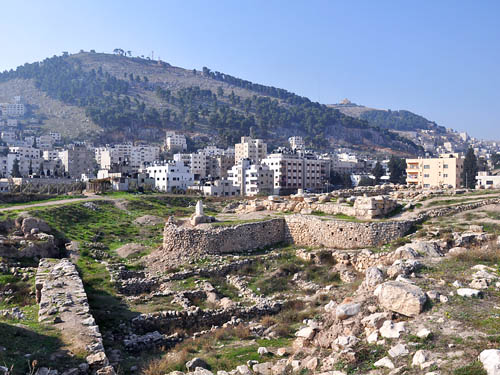
Ha’aretz reports that the Dutch government has donated 300,000 euros (about $408,000) to the Palestinian Authority to finance the excavation and conservation of Tell Balata in Nablus. This is the biblical city of Shechem. The full account is here.

The site, according to the Ma’an report, is listed by UNESCO in the Inventory of Cultural and Natural Heritage Sites of Potential Outstanding Universal Value in Palestine, with experts estimating some of its towers and buildings from the Chalcolithic and Bronze Age dating back 5,000 years.
The Netherlands’ representative to the PA, Jack Twiss Quarles van Ufford, said the initiate was meant to bolster PA Prime Minster Salam Fayyad’s plan to work toward a unilateral declaration of Palestinian by 2011.
“The creation of institutions can only be sustainable if it goes hand in hand with the strengthening of the cultural identity of the Palestinian people,” Twiss told Ma’an, adding that “sites like Tell Balata are simply too important to be neglected.”
The photo shows the previously excavated ruins of Tell Balata (Shechem) in the valley below Mount Gerizim.
Ruins of Tell Balata (Shechem) below Mount Gerizim. Photo by Ferrell Jenkins.

Ruins of Tell Balata (Shechem) below Mount Gerizim. Photo by Ferrell Jenkins.

In the next post we will note the importance of Shechem in biblical history.

HT: Joseph I. Lauer

Larger photo of the Sorek wine press

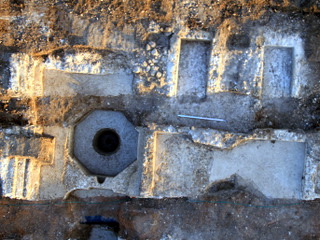
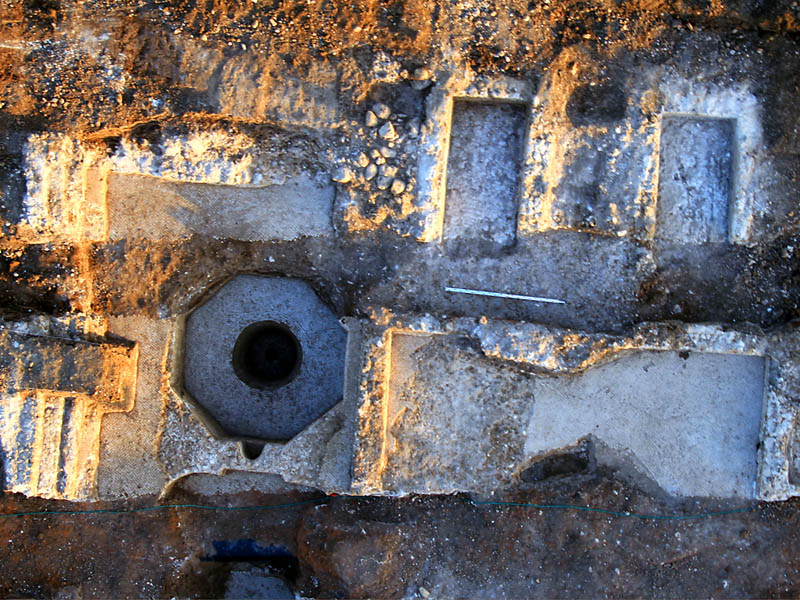
The Israel Antiquities Authority has provided a higher resolution photo of the Byzantine-period wine press found in the Sorek Valley. Click for a larger image.

Sorek Wine Press. Aerial view courtesy of IAA.

Sorek Wine Press. Aerial view courtesy of IAA.

Todd Bolen calls attention to an article in the Jerusalem Post with a better photo (here).  It certainly provides a better view of the octagonal collecting vat. Take a look.

1,400 year old wine press discovered in Sorek Valley

The wine press was found during an excavation by the Israel Antiquities Authority in an agricultural area in the vicinity of Nahal Soreq [English, Sorek]

One of the largest wine presses ever revealed in an archaeological excavation in the country, which was used to produce wine in the Late Byzantine period (sixth-seventh centuries CE), was recently exposed in excavations conducted by the Israel Antiquities Authority. The excavation was carried out in a region that will be the farmland of Ganei Tal, a new settlement slated to be built for the evacuees from Gush Katif.

The impressive wine press is 1,400 years old and measures 6.5 x 16.5 meters [c. 21 x 54 feet]. It was discovered southwest of Kibbutz Hafetz-Haim and was partly damaged during the installation of the infrastructure there.

According to Uzi Ad, excavation director on behalf of the Israel Antiquities Authority, “What we have here seems to be an industrial and crafts area of a settlement from the sixth-seventh century CE, which was situated in the middle of an agricultural region. The size of the wine press attests to the fact that the quantity of wine that was produced in it was exceptionally large, and was not meant for local consumption. Instead it was intended for export, probably to Egypt, which was a major export market at the time, or to Europe.

wine-press from Sorek Valley

Aerial view of wine press from Sorek Valley. Photo: IAA.

The excavation director says,

“This is a complex wine press that reflects a very high level of technology for this period, which was acquired and improved on from generation to generation”.

According to the press release,

Rectangular surfaces were also discovered around the treading floor. These too were originally paved with a mosaic floor and were connected to the treading floor by way of a hole in the wall they shared with it. The grapes were probably placed on these surfaces before being trod on, and sometimes the initial fermentation process of the grapes would begin.

A spokesman for the Nahal Soreq Regional Council says the Council will converse the site and open it to the public.

The full press release may be read here. I am hopeful that later in the day we will have a better photo to share.

Wine presses were in common use throughout biblical times, and we learn that some of them were large. One, during the period of the Judges, is described as large enough to use for a threshing floor for wheat.

The LORD’s angelic messenger came and sat down under the oak tree in Ophrah owned by Joash the Abiezrite. He arrived while Joash’s son Gideon was threshing wheat in a winepress so he could hide it from the Midianites. (Judges 6:11 NET)

We posted an aerial view of the Sorek Valley here.

HT: Joseph I. Lauer

Exposé of top 50 biblical history list

Perhaps you have seen several blogs claiming to be listed in the Top 50 Biblical History Blogs. Todd Bolen, whose ranking needs no such help, thinks he has figured out how this list works. If interested, read here.

Professors often receive notification that they have been named to a certain biographical book. The notice is from an unknown organization, but the intent is to sell a copy of the book and a framed certificate to the pride-filled recipient. Tricky, eh?

Planning for earthquakes in Eastern Turkey

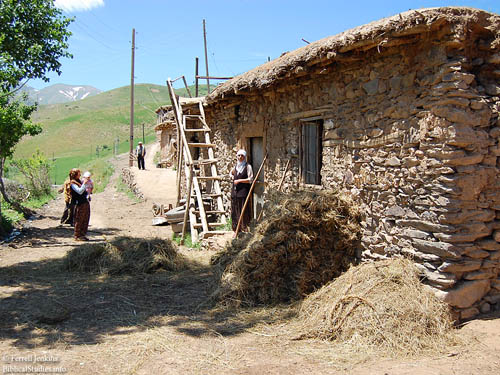
Last week I wrote about references to earthquakes in the Bible. In 2007 I traveled in Eastern Turkey, in the Biblical land of Ararat (Urartu) (2 Kings 19:37). Along the road between Van and Batman we saw a group of men adding a room to a house.

Notice that the house is built of field stones. Above the window there is a lintel of wood. To the right side of the window you may also see a long piece of wood. I will come back to that later. Notice the roof. It is made of timber, straw, and mud.

House between Van and Batman in Eastern Turkey. Photo by Ferrell Jenkins.

House between Van and Batman in Eastern Turkey. Photo by Ferrell Jenkins.

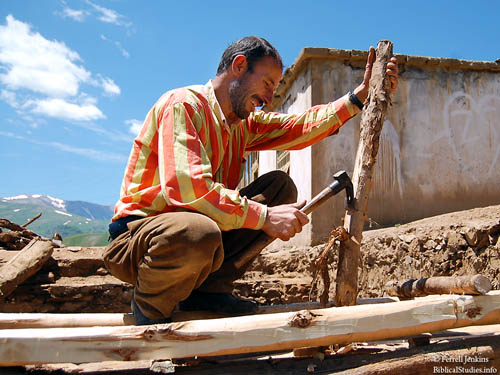
The photo below shows one of the men working on the roof of the new room. Notice the mud roof of the existing room.  The worker is preparing a piece of timber with a simple hand tool similar to those used three to four thousand years ago.

Adding a new room in the land of Ararat. Photo by Ferrell Jenkins.

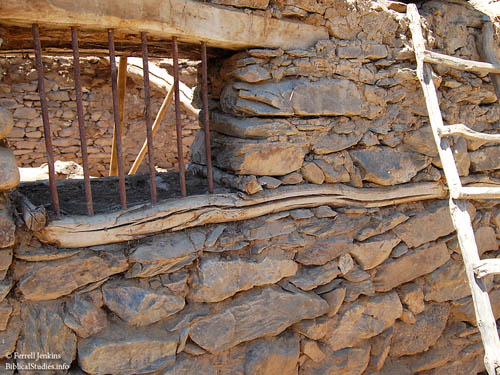
Here we see part of the new wall. Notice the field stone filled with smaller stones. A wooden lintel is used over the window. That might not be unusual to us. Look below the window. The timber is not only under the window, but also extends several feet to the right.

Preparing for an earthquake in Eastern Turkey. Photo by Ferrell Jenkins.

Preparing for an earthquake in Eastern Turkey. Photo by Ferrell Jenkins.

My friends and I spoke only a few words in Turkish. The men building the house spoke no English. I pointed to the wood below the window and did my imitation of the shaking of an earthquake. This evoked a good smile from one of the Turkish men. He nodded to indicate that I had the right idea. The wood helps to absorb the shock of an earthquake.

In our modern housing we use rebar to strengthen our buildings. This, along with metal ties help reinforce our buildings to resist the damage from hurricanes, tornadoes, and earthquakes. If an earthquake similar to the one in Haiti had hit southern California there likely would have been little loss of life. The buildings in Haiti were made of concrete blocks without any reinforcement. Ancient people knew they had to find ways to cushion the shock. The people of Eastern Turkey have learned the same.

In principle, Jesus taught the same thing about building.

“Everyone then who hears these words of mine and does them will be like a wise man who built his house on the rock. And the rain fell, and the floods came, and the winds blew and beat on that house, but it did not fall, because it had been founded on the rock. And everyone who hears these words of mine and does not do them will be like a foolish man who built his house on the sand. And the rain fell, and the floods came, and the winds blew and beat against that house, and it fell, and great was the fall of it.” And when Jesus finished these sayings, the crowds were astonished at his teaching, for he was teaching them as one who had authority, and not as their scribes. (Matthew 7:24-29 ESV)

Are you building on the rock?

Christmas article gets attention in London

Clay Harris, formerly (perhaps, still) with the Financial Times, calls attention to “The Truth About Christmas” which is posted on our Biblical Studies Info Page here, and at Bible World. Harris argues for an appropriate secular observance of Christmas in his post in The London Echo here.

Two years ago I wrote about the origin of the legend about Santa Claus in a post on “Christmas, St. Nicholas, and Myra” here.

Take a look at all of this material.

Thanksgiving Day – 2009

Oh give thanks to the LORD, for he is good, for his steadfast love endures forever! (Psalm 107:1 ESV)

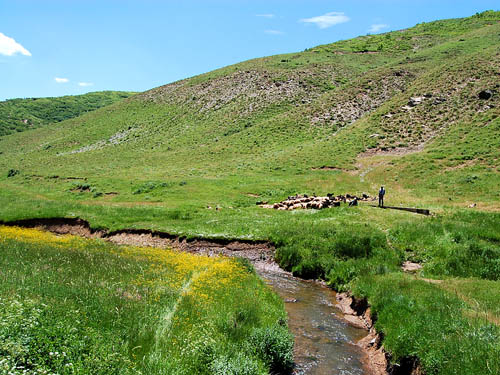
Shepherd with sheep in the Land of Ararat. Photo by Ferrell Jenkins.

Shepherd with sheep in the Land of Ararat. Photo by Ferrell Jenkins.

An aerial view of Tel Dor

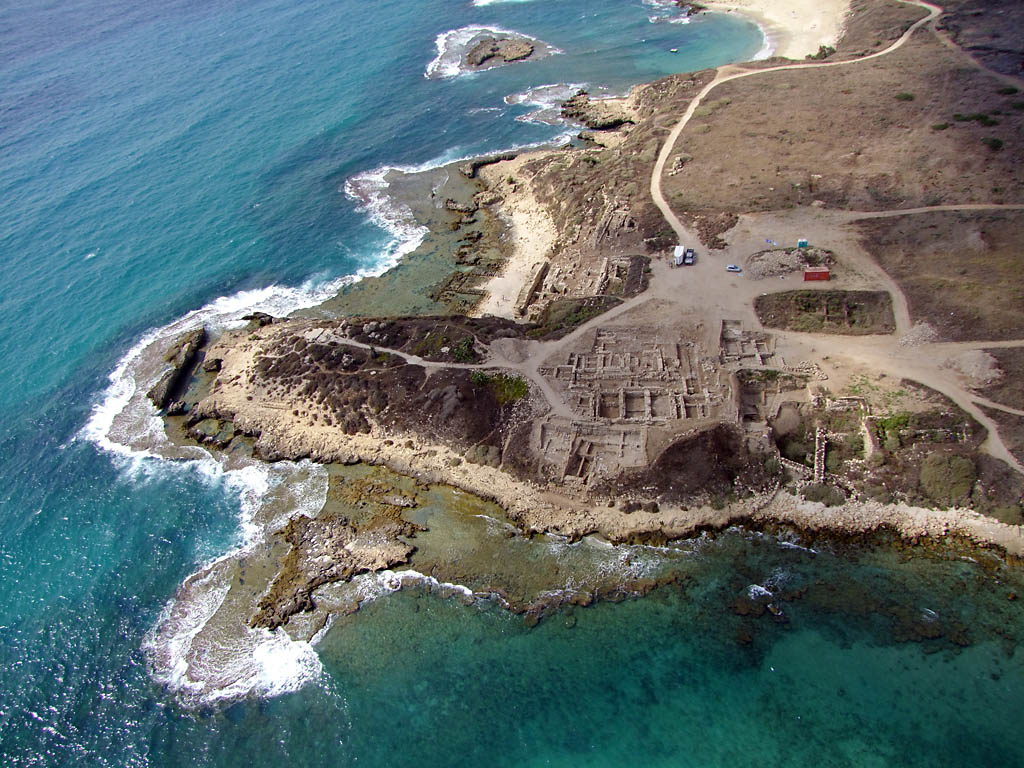
Earlier we wrote about the excavation at Tel Dor here. Dr. Ayelet Gilboa, chair of the Department of Archaeology at the University of Haifa, and the co-director of the Tel Dor Excavation Project, was kind enough to provide us with one of the wonderful aerial photos of Tel Dor.

Aerial view of Tel Dor looking northeast. Photo courtesy: Dr. Ayelet Gilboa.

Aerial view of Tel Dor looking northeast. Photo courtesy: Dr. Ayelet Gilboa.

Click on the image for a photo suitable for use in a PowerPoint presentation.

Dor has a long history extending from the Canaanite period around the 20th century B.C. It was also controlled by the Phoenicians, the Sea People, the Israelites, the Assyrians, the Babylonians, the Persians, the Greeks, and the Romans. Dor was abandoned in the third century A.D. (Biblical Archaeology Review, Nov./Dec. 2002).

Dor is mentioned only a few times in the Old Testament Scriptures.

  • When Jabin, king of Hazor, heard of the victories of Joshua and the Israelites he put together a confederacy of armies including the king of the “heights of Dor on the west” (Joshua 11:2).
  • Joshua conquered “the king of Dor in the heights of Dor” (Joshua 12:32).
  • Dor was allotted to the tribe of Manasseh (Joshua 17:11). The writer of Joshua quickly acknowledges that Manasseh could not take possession of these cities, “because the Canaanites persisted in living in that land” (Joshua 17:12; see Judges 1:27).
  • Solomon appointed his son-in-law Ben-abinadad over the height of Dor (1 Kings 4:11).
  • Ephraim’s territory extended to the border of Manasseh, including “Dor with its towns” (1 Chronicles 7:29).

For more information about the 2010 excavation season at Tel Dor check the official web site here.

Moussaieff called “The genuine article”

The Jerusalem Post Online Edition Magazine ran a feature article November 12 here about Shlomo Moussaieff here. Moussaieff, 86, is known for many things. He is a billionaire, but he is also a collector of archaeological artifacts, Torah scrolls, cuneiform inscriptions, and other significant items.

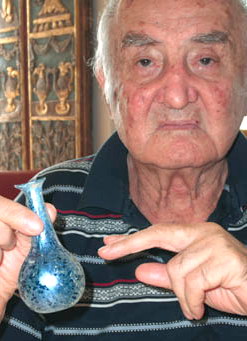
Shlomo Moussaieff

Shlomo Moussaieff

Moussaieff has received renewed attention in connection with the recent law suit accusing antiquities experts of forgery. Here are a few comments by Lauren Gelfond Feldinger, author of the magazine feature.

His stories, like his collections, are often considered controversial. In the antiquities world, he is especially renowned for often turning his nose up at the accepted logic that artifacts should be documented in situ by archeologists to make the most of their historical meaning. Moussaieff bah-humbugs traditional thinking, arguing, like his old friend Moshe Dayan, that so-called looters are also salvaging history by bringing it into the light and keeping it out of the dusty cellars of antiquities authorities.

In court I showed them how to know if the clay is genuine – I lick it. I know the taste. After so many years in the business, just looking, you also know. Everyone who is jealous says that I have some fakes. I spend a lot of money to double-check, and so far in four years of court cases they haven’t been able to prove any one of them is a fake. I have been collecting for 65 years and have 60,000 items in my collection. It is possible I have made a mistake, but if I have made a mistake, nobody can prove it. (Laughs.)

When asked why he snubs Israel’s antiquities laws, Moussaieff said,

These are ridiculous laws from the time of the Turks. The Antiquities Authority should be teaching and not torturing. They should ignite history. Instead, they find Arab shepherds and beat them and take what they have. What do they have, broken clay pieces? Bravo. All day they sit with a telescope to see who is going in the field to look for something, it’s ridiculous. For a 500-millimeter piece of parchment, they will put a man in jail.

If you build a building, you have to stop work, you have to pay for the excavation – not them. This is torture. The laws don’t make any sense. This is what they do with their budget? The law should allow more freedom, let anybody display anything in his house, and not make a coin collection worth $10 illegal. They have 600,000 coins in storage, what do they display? A few pieces.

I have artifacts from the time of Abraham. I have artifacts from the second our people were born. They call me a looter. They call me an antiquities thief. Nobody wanted to publish my things [that were not found in situ]. But the museums could only pray to have such a collection as I have. Now that they realize that how much I have and that it is not fake, they all love me, they all want my collections.

HT: Joseph I. Lauer