Category Archives: Archaeology

Vandalism of the Midras Ruins rolling stone tomb

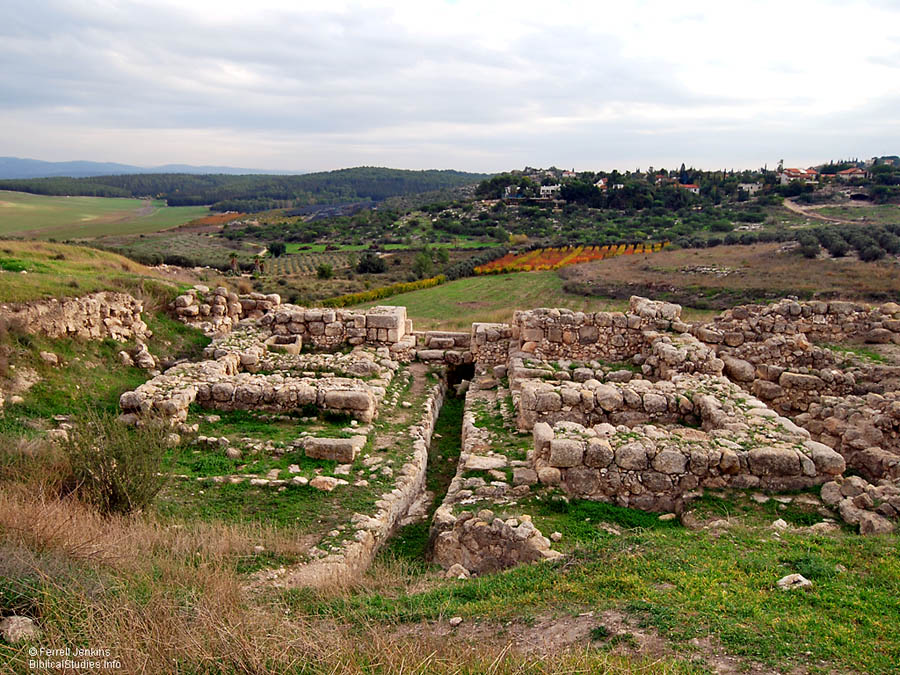
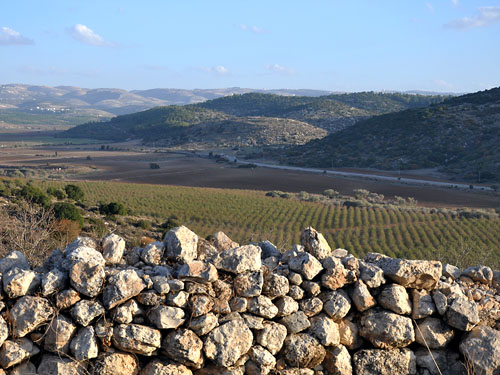
The Midras Ruins (Horvat Midras) in Israel are part of the Adulam Grove Nature Reserve east of Hwy 38 between the Elah Valley and Beit Guvrin. According to the Parks department sign at the site, the ruins are part of an ancient settlement including caves, pits, and other installations. The Carta touring atlas says the area was continuously inhabited from the time of the Kings of Judah to the Roman period.

For several years I had wanted to visit the Midras Ruins. In August, 2008, I went there for the first time. It was hot, and the hour was late. Elizabeth and I looked for the burial cave with a rolling stone from the Roman period, but were not able to locate it. We spoke with some visitors from near Tel Aviv who had been crawling through the tunnels, but they were unable to help. Earlier this month Leon and I went to Midras and spent a lot of time searching for the burial cave. There are no signs pointing specifically to this burial site. As we searched the area we called a guide friend who told us we should go to the right of the entry. We tried that without success.

On another day our guide friend went with us. He said he had been there since the burial cave was restored. After we got to the site he called a friend who lives in the nearby village. He assured us that the cave was to the right of the entry. After more searching we noted that the older entry from the main road (Hwy 38) had been closed. Now the parking and entry is from the side road about a mile from the main road. Instead of the cave being to the right of the entry, it is to the left of the end of the trail. Here is the sign you need to look for.
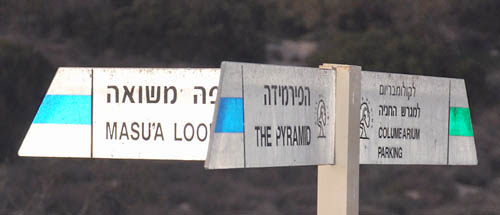
Midras Ruins sign. Go toward Pyramid Tomb. Photo by Ferrell Jenkins.

Midras Ruins sign. Go toward Pyramid Tomb. Photo by Ferrell Jenkins.

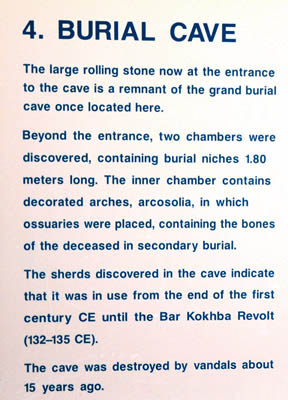
Go toward the Pyramid Tomb. The burial cave is marked as number 4 on the left side of the trail. The sign at the cave indicates that it was in use from the first century B.C. until the Bar Kochba revolt (about A.D. 135). The site was vandalized about 15 years ago.
Midras Ruins Burial Cave. Photo by Ferrell Jenkins.

Midras Ruins Burial Cave.

It was getting dark by the time we located the tomb, but I had a good flash attachment with me that allowed some fairly good photos.
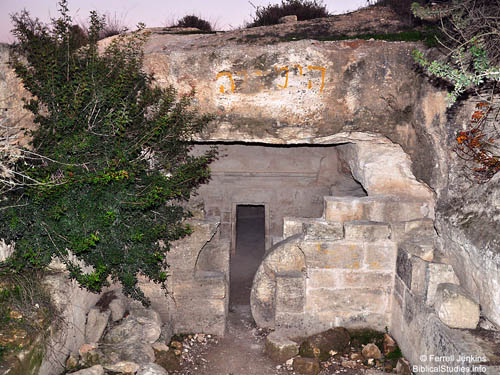
Midras Ruins Burial Cave 4. Photo by Ferrell Jenkins 2009.

Midras Ruins Burial Cave 4. Photo by Ferrell Jenkins 2009.

I am not able to make out the graffiti above the tomb. Here is a closer view of the rolling stone.
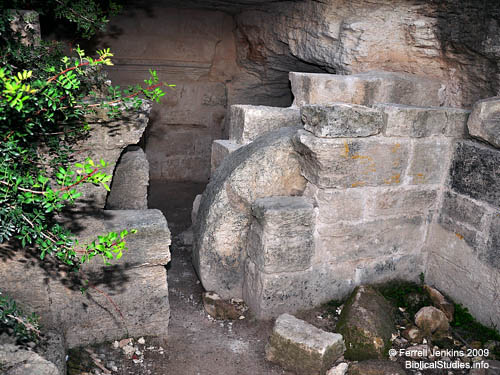
Midras Ruins Burial Cave 4 with rolling stone. Photo by Ferrell Jenkins.

Midras Ruins Burial Cave 4 with rolling stone. Photo by Ferrell Jenkins.

This tomb is supposed to have been restored. Compare the way it looks now with the way it looked before the vandalism. There are two sources that I know about.

Dr. Carl Rasmussen, Holy Land Photos, says,

In 1976 part of the cemetery was excavated. Several tombs were uncovered, including, in my estimation, THE BEST ROLLING STONE TOMB in the country. Unfortunately in the late 1990’s the tomb site was totally destroyed by vandals.  BUT it has been reconstructed and is now visible in the Adullam Park!

Carl has six photos of the tomb here. Open a new browser and compare the tomb now with the photos he made earlier.

Todd Bolen, BiblePlaces Blog, has an excellent photo of the tomb before and after it was vandalized here. Here you may see the original photo with some restoration photos by A.D. Riddle. I think you will agree that the restoration is not very good.

Why is this tomb important enough that I would go to so much trouble to locate and photograph it? It is because this illustrates the type of tomb in which Jesus was buried.

And Joseph [from Arimathea] took the body and wrapped it in a clean linen shroud and laid it in his own new tomb, which he had cut in the rock. And he rolled a great stone to the entrance of the tomb and went away. (Matthew 27:59-60 ESV)

Why would anyone want to vandalize this tomb? Probably the same reason!

Several other tombs with a rolling stone are known in the Bible lands.
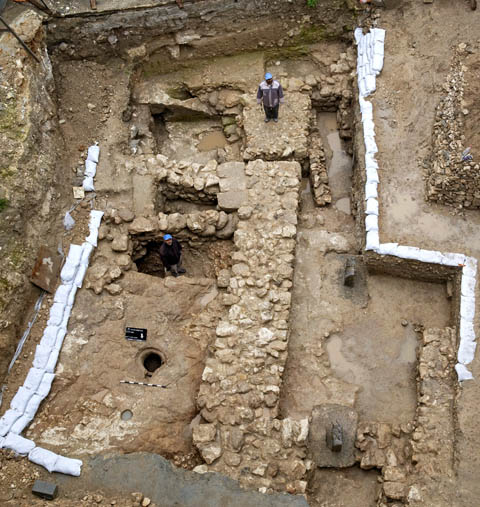
First century residence uncovered in Nazareth

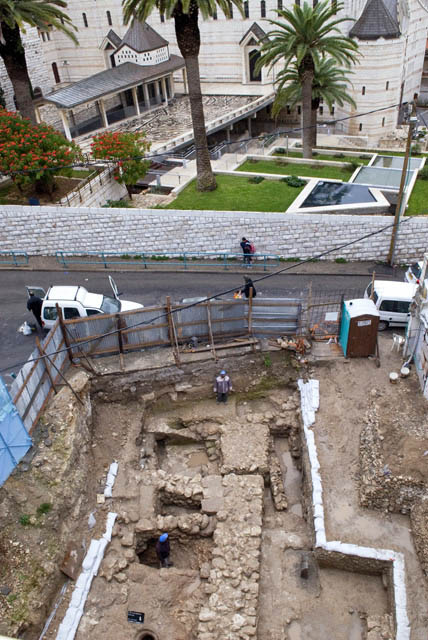
A simple Jewish residence from the first century has been unearthed in Nazareth, according to an announcement made by the Israel Antiquities Authority today.

Excavation of first century Nazareth residence. Photo courtesy IAA.

Excavation of first century Nazareth residence. Photo courtesy IAA.

An archaeological excavation the Israel Antiquities Authority recently conducted has revealed new information about ancient Nazareth from the time of Jesus. Remains of a dwelling that date to the Early Roman period were discovered for the first time in an excavation, which was carried out prior to the construction of the “International Marian Center of Nazareth” by the the Association Mary of Nazareth, next to the Church of the Annunciation.

According to the New Testament, Mary, the mother of Jesus, lived in Nazareth together with her husband Joseph. It was there that she also received the revelation by the Angel Gabriel that she would conceive a child to be born the Son of God. The New Testament mentions that Jesus himself grew up in Nazareth.

In 1969 the Church of the Annunciation was erected in the spot that the Catholic faith identified with the house of Mary. It was built atop the remains of three earlier churches, the oldest of which is ascribed to the Byzantine period (the fourth century CE). In light of the plans to build there, the Israel Antiquities Authority recently undertook a small scale archaeological excavation close to the church, which resulted in the exposure of the structure.

According to Yardenna Alexandre, excavation director on behalf of the Israel Antiquities Authority, “The discovery is of the utmost importance since it reveals for the very first time a house from the Jewish village of Nazareth and thereby sheds light on the way of life at the time of Jesus. The building that we found is small and modest and it is most likely typical of the dwellings in Nazareth in that period. From the few written sources that there are, we know that in the first century CE Nazareth was a small Jewish village, located inside a valley. Until now a number of tombs from the time of Jesus were found in Nazareth; however, no settlement remains have been discovered that are attributed to this period”.

In the excavation a large broad wall that dates to the Mamluk period (the fifteenth century CE) was exposed that was constructed on top of and “utilized” the walls of an ancinet building. This earlier building consisted of two rooms and a courtyard in which there was a rock-hewn cistern into which the rainwater was conveyed. The artifacts recovered from inside the building were few and mostly included fragments of pottery vessels from the Early Roman period (the first and second centuries CE). In addition, several fragments of chalk vessels were found, which were only used by Jews in this period because such vessels were not susceptible to becoming ritually unclean.

Another hewn pit, whose entrance was apparently camouflaged, was excavated and a few pottery sherds from the Early Roman period were found inside it. The excavator, Yardenna Alexandre, said, “Based on other excavations that I conducted in other villages in the region, this pit was probably hewn as part of the preparations by the Jews to protect themselves during the Great Revolt against the Romans in 67 CE”.

In a few of the archaeological excavations that were carried out in this crowded city, a number of burial caves dating to the Early Roman period were exposed that are situated close to the inhabited area. The modern Church of the Annunciation was constructed in the heart of Nazareth, above the Crusader Church of the Annunciation and atop the ruins of a church from the Byzantine period. In the middle of these churches is a cave that was already ascribed in antiquity to the house of Jesus’ family. Many storage pits and cisterns, some of which date to the Early Roman period, were found in the compound of the Church of the Annunciation.

Excavation of Nazareth residence and Church of Annuciation. Photo: IAA.

Excavation of Nazareth residence and Church of Annuciation. Photo: IAA.

The Ha’aretz article includes several additional photos here. The article in the London Telegraph includes a photo of the excavation director Yardenna Alexandre here.

Attempts to link this house to Joseph, Mary, and Jesus are unfounded at this time.

But when he heard that Archelaus was reigning over Judea in place of his father Herod, he was afraid to go there, and being warned in a dream he withdrew to the district of Galilee. And he went and lived in a city called Nazareth, that what was spoken by the prophets might be fulfilled: “He shall be called a Nazarene.” (Matthew 2:22-23 ESV)

The Herodian Family Tomb

In the morning we visited Nabi Samwil, the traditional tomb of the prophet Samuel. Some scholars think this may be the biblical Mizpah. Others believe that Mizpah should be identified by Tell en-Nahbeh.

Now Samuel called the people together to the LORD at Mizpah. (1 Samuel 10:17 ESV)

The site at Nabi Samwil provides a great view of the biblical territory of Benjamin.

Later we went to the traditional family tomb of Herod the Great (37 – 4 B.C.) which is located on the west side of the Old City, and behind the famous King David Hotel. We know from Josephus that Herod buried certain family members in Jerusalem (Wars 1:581). Herod was buried at the Herodium near Bethlehem.

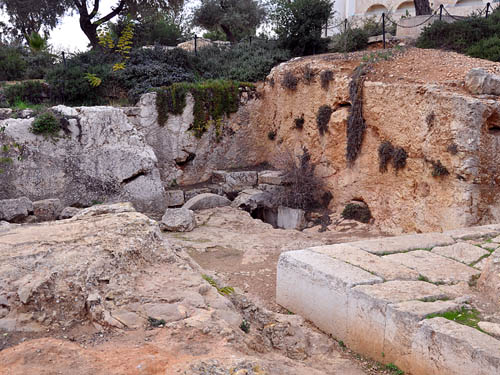
This first photo shows the general area of the tomb which is cut from solid rock.

Herodian Family Tomb in Jerusalem. Photo by Ferrell Jenkins 2009.

Herodian Family Tomb in Jerusalem. Photo by Ferrell Jenkins 2009.

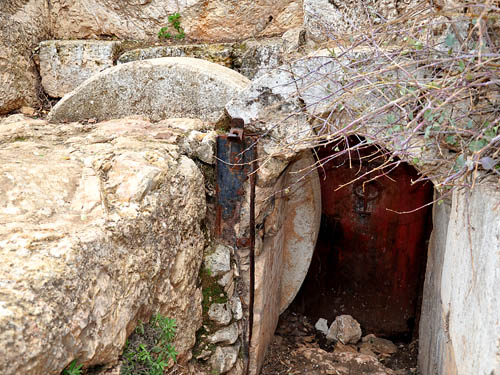
The photo below shows the rolling stone. In more recent time a door has been places at the opening of the tomb. Murphy-O’Connor says the tomb was found empty because robbers got there before the archaeologists (The Holy Land).

Herodian Family Tomb in Jerusalem. Photo by Ferrell Jenkins 2009.

Herodian Family Tomb Rolling Stone. Photo by Ferrell Jenkins 2009.

We also visited the Skirball Museum at the Hebrew Union College. Some artifacts from Gezer and Dan have been displayed at this small museum. Today we learned that the museum is closed. The lady at the reception desk said she did not know when or if it would be opened. She allowed us to look at a few items displayed in cases along a corridor among the offices. This was a disappointment. One item of interest that is in the poorly lit cases is a replica of the inscription from Dan that mentions the “god” who is in Dan.

Museums and Tels

It was cloudy this morning, so we decided to visit the Eretz Israel Museum on our way from the coastal plain to Jerusalem. The Eretz Israel Museum on the campus of Tel Aviv University is built around Tel Qasile, a Philistine city established in the mid-12th century B.C. A sign at the site calls this the port city of the period of the kings and judges of Israel.

The excavation of Tel Qasile, Israel’s first archaeological dig, began in 1949 under Prof. Benjamin Mazar and uncovered three stages in the city’s history (strata XII-X). During the 10th cent. B.C.E. conquest of the region by King David, the city was destroyed by fire. Later rebuilt. It became part of the kingdom of David and Solomon (strata IX-VIII). Lebanese cedars, used to build the temple in Jerusalem, may have been transported via Tel Qasile.

Abandoned during the divided kingdom period, Tel Qasile was settled during the time of King Josiah (stratum VII) and from the Persian period to the Middle Ages (strata VI-I).

The Bible indicates that the Cedar was brought by sea to Joppa, but perhaps Tel Qasile was close enough to Joppa to have been used. It is near the Yarkon River. King Hiram is quoted as saying,

And we will cut whatever timber you need from Lebanon and bring it to you in rafts by sea to Joppa, so that you may take it up to Jerusalem. (2 Chronicles 2:16 ESV; cf. Ezra 3:7)

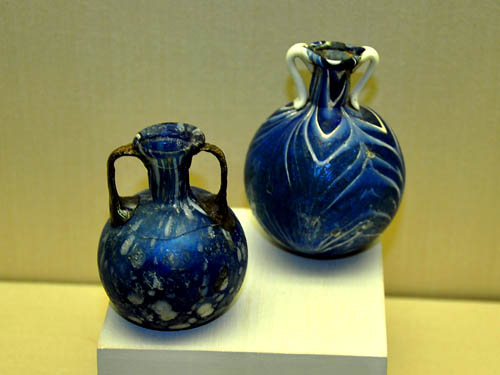
The museum is composed of several buildings. One has a good section on copper mining at Timna, north of Eilat. There are buildings devoted to glass, coins and stamps. Several examples of winepresses are located on the grounds. The glass museum has the finest collection of first century glass that I have seen.

Free-blown perfume bottles from 1st century A.D. Photo by Ferrell Jenkins 2009.

Free-blown perfume bottles from 1st century A.D. Photo by Ferrell Jenkins 2009.

On the way to Jerusalem we stopped by Gezer. The tel is visible from a good highway, but it is difficult to reach. It is another of those tels that can not be reached without taking dirt roads through fields. Gezer was  discovered by Clermont-Ganneau in 1871. It was first excavated by R.A.S. Macalister between 1902 and 1905. A major excavation was carried out from 1964-1974. The most recent excavation began in 2007.

This photo shows what is often called the Solomonic Gate. It is a six-chambered gate similar to those discovered at Hazor and Megiddo. You may click on the photo for a larger image suitable for use in teaching presentations.

"Solomon's Gate" at Gezer. Photo by Ferrell Jenkins.

"Solomon's Gate" at Gezer. Photo by Ferrell Jenkins 2009.

And this is the account of the forced labor that King Solomon drafted to build the house of the LORD and his own house and the Millo and the wall of Jerusalem and Hazor and Megiddo and Gezer. (1 Kings 9:15 ESV)

The mountains of Judea are visible in the distance. Photograhically, it was a good day.

In the Galilee

We spent two days at Tiberias on the Sea of Galilee at a lovely smaller hotel called Ron Beach Hotel. I had stayed there once before and wanted to return. It is family owned and operated. The staff is friendly and the meals are good. The hotel is situated on the north side of Tiberias as you head toward Magdala and Tabgha.

Thursday morning heavy clouds covered the Sea of Galilee. Only occasionally the sun broke through to provide a glimmer across the water. We went to a few places where we could make photos on the shore of Galilee. We visited the Church of the Primacy. This is the traditional site where Jesus met with the disciples after the resurrection. The events are recorded in John 21. The disciples had fished during the night and caught nothing. At day break Jesus invited them to “Come and have breakfast.”

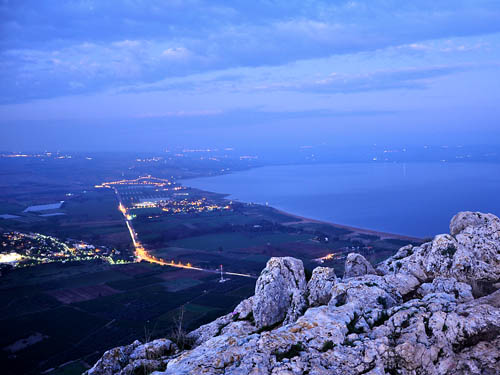
We also visited Hazor and Kedesh. In the late afternoon we went to Mount Arbel for a magnificent view of the northern portion of the Sea of Galilee. We were a little late. The photo you see below was made in the dark with a long exposure and the use of a tripod. The land below is known in the New Testament as the Land of Gennesaret.

And when they had crossed over, they came to land at Gennesaret. (Matthew 14:34)

The Sea of Galilee from Mount Arbel at night. Photo by Ferrell Jenkins.

The Sea of Galilee from Mount Arbel at night. Photo by Ferrell Jenkins.

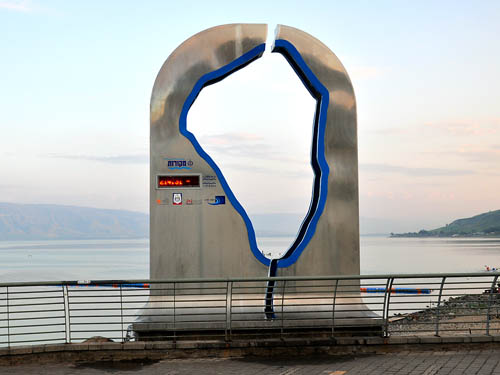
When we mentioned rain to the locals, they spoke of how badly they needed rain. There was evidence of rain in several of the places we visited. Due to drought conditions the Sea of Galilee is extremely low. This sea level indicator at Tiberias shows the level to be 214.31 meters below sea level. That is 703.12 feet.

Sea of Galilee Level Indicator at Tiberias

Sea of Galilee Level Indicator at Tiberias. Photo by Ferrell Jenkins.

The Israel Ministry of Environmental Protection has determined if the Sea of Galilee drops below 214.87 meters [704.95 feet] below sea level “the pumps in the lake can no longer operate.”

The risks associated with reduced water levels are formidable: ecosystem instability and deterioration of water quality, damage to nature and landscape assets, receding shorelines and adverse impacts on tourism and recreation. When the black line is reached, the pumps in the lake can no longer operate.

According to the Water Authority, Lake Kinneret lost 5.13 meters [16.83 feet] since the spring of 2004, equivalent to some 850 million cubic meters of water.

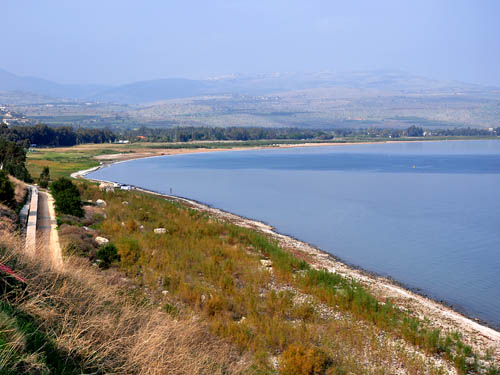
Everywhere around the lake one can see evidence that the water level is low.

The NW area of the Sea of Galilee. Photo by Ferrell Jenkins.

The NW area of the Sea of Galilee. Photo by Ferrell Jenkins.

Water once covered the area where you see grass. You may know that there are brackish springs at Taghba. This water is channeled around the sea to the Jordan River, so the sea remains fresh water. The concrete channel may be seen in the left of the picture.

Perhaps tomorrow I will have time to tell you about the little storm we saw on the sea this morning.

A day in the Negev

Today we spent most of the time in the area of Israel known as the Negev (Negeb, or South). This area was home to Abraham (Genesis 12:9; 13:1) and Isaac (Genesis 24:62). Our first stop as we left the Dead Sea area was Arad (Numbers 21). We continued to Beersheba. This was the home of Abraham (Genesis 21-22). He dug a well and planted a Tamarisk tree here.

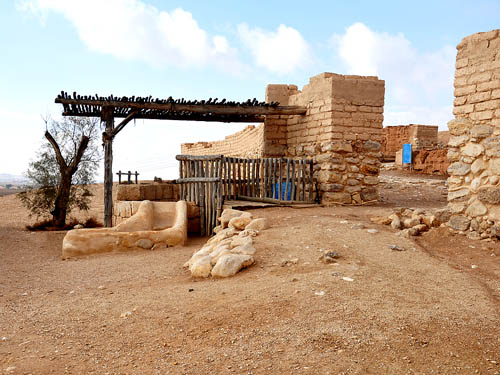
The excavation at Beersheba has been skillfully reconstructed to reveal the layout of the city. The photo shows the outer gate, the well, and a tamarisk tree.

The outer gate at Beersheba. Photo by Ferrell Jenkins 2009.

Tamarisk Tree and Well at the Outer Gate of Beersheba. Photo by Ferrell Jenkins.

We devoted about 3 hours trying to locating Ziklag. The city is mentioned no less than 15 times in the Old Testament. One of the most significant references is in1 Samuel 27. Achish, king of Gath, gave Ziklag to David.

Then David said to Achish, “If I have found favor in your eyes, let a place be given me in one of the country towns, that I may dwell there. For why should your servant dwell in the royal city with you?” So that day Achish gave him Ziklag. Therefore Ziklag has belonged to the kings of Judah to this day. And the number of the days that David lived in the country of the Philistines was a year and four months. (1 Samuel 27:5-7 ESV)

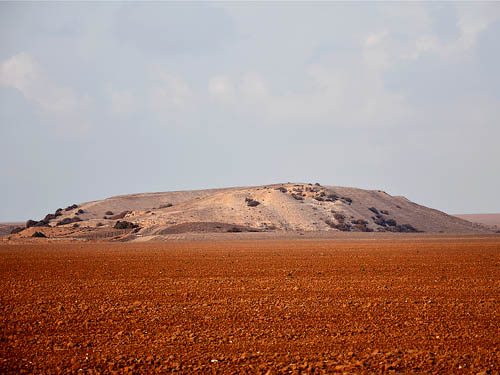
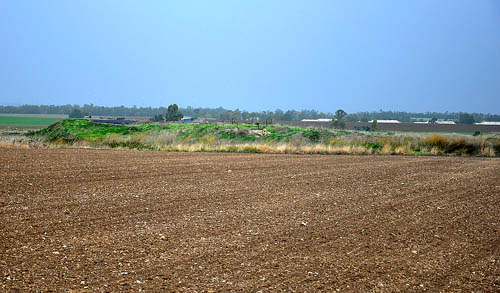
Scholars are not certain about the identification of Ziklag. The site pictured here is known as Tel esh-Sharieh (Tel Sera in Hebrew) which is a possible candidate for Ziklag. This photo shows that Tel Sera is located in an agricultural area of the Negev. The Wadi Gerar lies on the south side of the tel, but the wadi is not visible in this photo because it is now below the present ground level of the field.

Tel Shera, possible site of Ziklag. Photo by Ferrell Jenkins 2009.

Tel Sera, possible site of Ziklag. Photo by Ferrell Jenkins 2009.

Instead of the typical dry water bed, Wadi Gerar is filled with reeds. At least this is true in the area around Ziklag.

Wadi Gerar near Ziklag. Photo by Ferrell Jenkins 2009.

Wadi Gerar near Ziklag. Photo by Ferrell Jenkins 2009.

Locating the Philistine city of Ekron

It was a rainy day and we barely stayed ahead of the showers. The overcast sky had some affect on the photos.

We visited Ekron today. I had attempted two other times to visit the site. On both occasions I ran out of time in my search. Today I stopped by Kibbutz Revadim to visit the museum, but soon learned that the museum had been closed. One person told me it had been moved to Ashdod. Another said she did not know if it would open again. A lady at the Kibbutz office gave us a map and some instruction about how to reach the tel. It involves driving about 4 to 5 miles on dirt roads through fields. It is certainly among the places most difficult to locate.

The photo below is made on the tel. The field is in the middle of the tel. The mound you see is the acropolis of the city. I understood the lady at the Kibbuz to say that the inscription identifying the site as Ekron was found in this area.

The Acropolis of Ekron. Photo by Ferrell Jenkins 2009.

The Acropolis of Ekron. Photo by Ferrell Jenkins 2009.

My time is limited while traveling, so I am copying a few words from Dothan and Gittin, excavators of Ekron, to describe the site.

Ekron is identified with Tel Miqne (Khirbet el-Muqanna … 35 km SW of Jerusalem and 4.5 km E of Kibbutz Revadim. The tel is situated on the W edge of the inner Coastal Plain, the natural and historical frontier zone that separated Philistia and Judah, overlooking the ancient network of highways leading NE from ASHDOD to GEZER and inland via the Nahal Soreq to BETH-SHEMESH. One of the largest Iron Age sites in Israel, Tel Miqne is composed of a 40-acre lower tel and a 10-acre upper tel…. The lower tel is flat, almost square, and at its N end has a 2.5-acre mound-shaped acropolis. A 10-acre settlement exists off its NW slope. The tel’s low profile rises 108.25 m above sea level, only 7 m above the surrounding plain. The true height of the tel is masked by a heavy buildup at its base of post-Byzantine alluvium from the downflow of the Nahal Soreq. (Anchor Bible Dictionary)

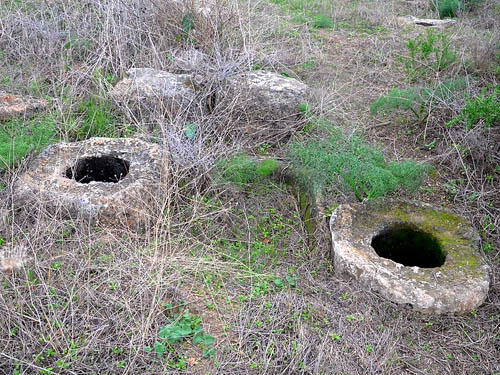
Ekron was noted for the olive press installations in the area. The photo below shows two of the vats and one of the stone pans for collecting the oil as it is being pressed. Except for the portion of the tel that has been cultivated, the site is overgrown with weeds.

Olive press installation at Ekron. Photo by Ferrell Jenkins 2009.

Olive press installation at Ekron. Photo by Ferrell Jenkins 2009.

Ekron was one of the five important cities of the Philistines in Bible times (1 Samuel 6:17). The ark of the covenant resided at the city for a short time.

So they sent the ark of God to Ekron. And as the ark of God came to Ekron the Ekronites cried out, saying, “They have brought the ark of the God of Israel around to us, to kill us and our people.” (1 Samuel 5:10).

A model of a day

After worship this morning we went to Ein Kerem, the traditional home of Zechariah and Elizabeth, the parents of John the Baptist. The surrounding area in the hill country of Judea is beautiful.

In those days Mary arose and went with haste into the hill country, to a town in Judah (Luke 1:39 ESV)

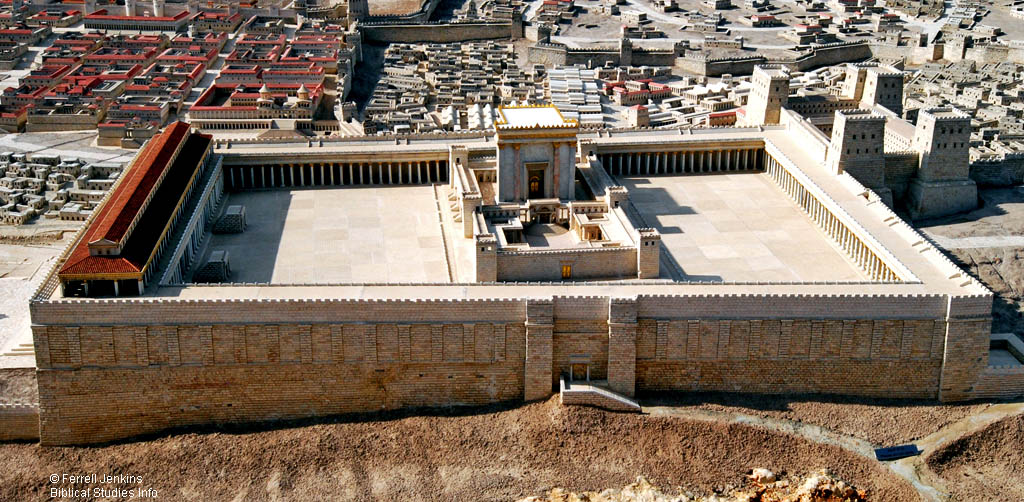
Next we went to the Israel Museum. The Museum is closed for renovation, but the Shrine of the Book and the Second Temple Model are open for visits. I am including a photo of the Herodian Temple and the Antonia. This photo is large enough for presentation. Just click on it.

The Second Temple Model. Photo by Ferrell Jenkins 2009.

The Temple Model from the time of Jesus. Photo by Ferrell Jenkins 2009.

We drove from the Bethlehem area along the route most likely used by David when he went to visit his brethren in the Valley of Elah.

Now the Philistines gathered their armies for battle. And they were gathered at Socoh, which belongs to Judah, and encamped between Socoh and Azekah, in Ephes-dammim. (1 Samuel 17:1 ESV)

We made some photos of Socoh, and then went to the new excavation of Khirbet Qeiyafa (the Elah Fortress) which overlooks the Valley of Elah. The site has a view of Azekah and Socoh. It was a clear day and the light was such a way that we were able to get this photo from the Khirbet Qeiyafa across the Valley of Elah toward Socoh.

A view from Khirbet Qeifaya across the Valley of Elah to Socoh. Photo by Ferrell Jenkins.

A view from Khirbet Qeiyafa across the Valley of Elah to Socoh. Photo by Ferrell Jenkins.

Thanks for sharing this journey with us. A trip like this is not a vacation, but a study and research oppotunity to learn more about the land of the Bible. And the purpose of that is to be able to better teach the Word.

A visit to Nablus and Samaria

If you have traveled to Israel in the past decade you likely were not able to visit the region of biblical region of Samaria. Since the beginning of the Second Intifada that area, known as the West Bank, has been tightly controlled by Israel. Several of the folks we have talked with here spoke about how condition have eased in the past few months.

We have a rental car, but it is not to be taken into the West Bank. We had arranged through a reliable travel operator here for a driver and car to take us to several places in the West Bank. We left our hotel in Jerusalem about 8:30 a.m. this morning and got back a little after 4:30 p.m. as the sun was dropping beyond the horizon.

Our first stop was at Jacob’s well in Nablus. There is a piece of land here once owned by Jacob (Genesis 33:19). The territory was apportioned to the descendants of Joseph, and Joseph was buried there at Shechem (Joshua 24:32). It was a place of great historic importance. Jesus came to Sychar, a city of Samaria, near the piece of land Jacob had owned (John 4:5).

The traditional Jacob’s Well is located at Shechem in the valley between Mount Gerizim and Mount Ebal. The modern town of Nablus now fills this valley.

André Parrot says,

“Of all the ‘holy places’ of Palestine, none has more reason to be considered authentic than Jacob’s well. Indeed, there is no reason why its authenticity should be questioned” (Land of Christ 65).

Parrot describes the water as “cool and pleasant-tasting…drawn from a depth of 128 feet.” I have drunk the water several times, but in the few decades my guides have advised against it due to pollution in the area.

A church was erected over the well about A.D. 380. The Crusaders built another church on the site in the 12th century. The property came under the control of the Greek Orthodox church in 1860. By the end of the 19th century the Greeks began a new church, but construction was halted during World War I. The last time I was at Jacob’s well (2000) construction had resumed and the building was completed in 2007. Here is a photo of the interior. The building is unlike most of the Greek Orthodox churches in this part of the world. Instead of being dark and dismal, this one is bright and cheery.

The interior of the Greek Orthodox church covering Jacob's Well. Photo by Ferrell Jenkins 2009.

The interior of the Greek Orthodox church covering Jacob's Well. Photo by Ferrell Jenkins 2009.

Those of you who have visited Jacob’s well in the past will recognize the entry to the steps going down to the well.

After Jacob’s Well we visited the nearby site of Shechem and made photos of the ruins and of Mount Ebal and Mount Gerizim. These mountains are where the blessings and curses of the Law were read by the Israelites after they entered the land (Deuteronomy 11:29). It was here in this valley that the land promise was made to Abraham (Genesis 12:6-7).

We continued to the modern village of Sebastiye and the site of biblical Samaria. The hill Samaria was bought by Omri, king of Israel, to serve as the capital of the Northern Kingdom of Israel (1 Kings 16:23-24). We visited the ruins and then had a good lunch at the Samaria Restaurant. I had eaten at this restaurant several times in the past. The food and service were good. Sari and his uncle were gracious to us and told us how they wished for more tourists to come to the site. We told them that we would certainly like to see that, too. Several good things are going on at Sebastiye which we may be able to comment on later.

Samaria was destroyed by the Assyrians in 721 B.C. By New Testament times Samaria had been rebuilt by Herod the Great, and was visited by Peter and John (Acts 8).

I wanted to share a photo of the hill of Samaria. The tell is on the top of the hill. The village of Sebastiye can be seen to the right. There are ancient ruins under the village.

The Hill of Samaria. Photo by Ferrell Jenkins.

The Hill of Samaria. Photo by Ferrell Jenkins.

I am rather sure that Bible teachers and preachers among our readers would like a copy of this photo to use in presentations. All you need to do is click on the photo for a larger image suitable for use in PowerPoint. I rented an expensive wide-angle lens, to go along with my not-quite-as-expensive camera, to be able to get high quality photos like the one above.

On the return to Jerusalem we drove up to the Samaritan village on Mount Gerizim. We had intended to visit the museum, but just about everything was closed because the Sabbath was being observed.

The weather was great today and we had plenty of sunshine for all of the photography. Thanks for reading. Leave us a comment if you find this material helpful.

Friday in Jerusalem (and environs)

Today we spent a full day in and around the city of Jerusalem. There was plenty of sunlight for good photos almost all day. The days are short at this time of the year. Photography dependent on good sunlight is over by about 4 p.m.

We went to an overview on Mount Scopus for some photos of Jerusalem. Then we continued to the Mount of Olives for another view of the city.

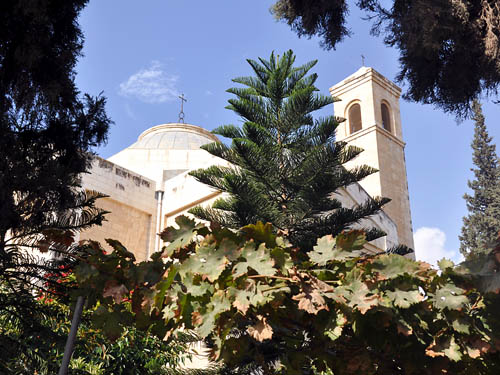
In years past it was easy to drive over the southern end of the Mount of Olives to Bethany. Now, due to the fence (wall) built by Israel it is more difficult. Bethany was the home of Mary, Martha, and Lazarus (John 11). It is known that there has been a church at Bethany associated with Lazarus since Byzantine times. Ths photo show a portion of the exterior of a fairly new church built in the early 1950s.

Church dedicated to Lazarus at Bethany. Photo by Ferrell Jenkins.

Church dedicated to Lazarus at Bethany. Photo by Ferrell Jenkins.

We visited a site called St. Peter in Gallicantu, considered by the owners as the house of the Jewish High Priest in the time of Jesus. Then we made some photos of the Valley of Hinnom and stopped by the Ketef Hinnom excavation. This site revealed tombs dated to the period before the destruction of Jerusalem by the Babylonians (586 BC). This is where the silver amulet inscribed with a portion of the Priestly Blessing (Number 6) was discovered.

Ferrell Jenkins at the Jewish Burial Tombs from the Iron Age. Photo by Leon Mauldin.

Jenkins at the Jewish Burial Tombs from the Iron Age. Photo by Leon Mauldin.

We went to the Herodium for some photos. On the return to Jerusalem we stopped for a photo of the Tower of David. It is actually part of the Turkish wall, but the lower portion of the wall was built by Herod the Great. This view, showing the golden glow of the late afternoon sun, reminded me of the beautiful song, Jerusalem of Gold, that became so popular after the June was of 1967.

The Tower of David in the afternoon golden glow. Photo by Ferrell Jenkins.

The Tower of David in the afternoon golden glow. Photo by Ferrell Jenkins.

Each of these places deserve more attention, but it is time to get some rest for another exciting day Saturday.