CNN posted a nice, short video on the Canaanite fortification we reported on yesterday. The link is here.
HT: Dan

CNN posted a nice, short video on the Canaanite fortification we reported on yesterday. The link is here.
HT: Dan
Posted in Archaeology, Israel, Old Testament
According to a press release from the Israel Antiquities Authority, “An Enormous 3,700 Year Old Fortification was Exposed in the City of David.”
The fortification rises to a height of c. 8 meters [about 26+ feet], and it seems that the Canaanites used it to defend the path that led to the spring.
The excavations are being conducted by the Israel Antiquities Authority in the “Walls Around Jerusalem National Park and are underwritten by the ‘Ir David Foundation.
A huge fortification more than 3,700 years old, which is ascribed to the Canaanites (Middle Bronze Age 2 [2000-1500 BC]), was uncovered in archaeological excavations the Israel Antiquities Authority is currently conducting in the “Walls Around Jerusalem National Park” in the City of David, with funding provided by the ‘Ir David Foundation.
According to the director of the excavation, Professor Ronny Reich of the University of Haifa, together with Eli Shukron on behalf of the Israel Antiquities Authority, “This is the most massive wall that has ever been uncovered in the City of David, and it rises to a height of 8 meters. We are dealing with a gigantic fortification, from the standpoint of the structure’s dimensions, the thickness of its walls and the size of the stones that were incorporated in its construction. The walls appear to be a protected, well-fortified passage that descends to the spring tower from some sort of fortress that stood at the top of the hill. The construction of a protected passage such as this is a plausible solution that explains the innate contradiction of the situation whereby the spring – which is a source of life from the standpoint of the fortress’ inhabitants in time of emergency – is located in the weakest and most vulnerable place in the area. The construction of a protected passage, even though it involves tremendous effort, is a solution for which there are several parallels in antiquity, albeit from periods that are later than the remains described here. A small section of the fortification was discovered in 1909, and it has been ascertained in the present excavations that it was part of an enormous wall. This is the first time that such massive construction that predates the Herodian period has been discovered in Jerusalem.”
During this period Jerusalem and the fields around it were an independent political entity with self-rule, similar to its neighbors Shechem to the north and Jericho to the east. Massive walls resembling the one that was just exposed in Jerusalem are known from Canaanite Hebron (Tel Rumeida), Shechem (Tell Balata) and Gezer.
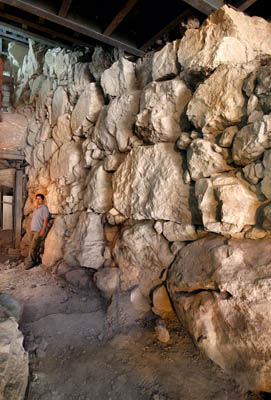
Middle Bronze II Fortification. Photo: Vladimir Naiahin, IAA.
Professor Reich comments on the fortification:
“Even though it would seem we are dealing with impressive fortifications, the walls were after all primarily used to defend against marauding desert nomads who wanted to rob the city. These are the earliest fortifications in the region and they bear witness to the fact that from this point on the settlement had became an urban entity with a ruler who had the capability and resources to build such a structure. A small settlement would have been unsuccessful in organizing such construction”.
The known section of the fortification is 24 meters long; however, it is thought the fortification is much longer because it continues west beyond the part that was exposed, at the top of the hillside. Professor Reich adds, “The new discovery shows that the picture regarding Jerusalem’s eastern defenses and the ancient water system in the Middle Bronze Age 2 is still far from clear. Despite the fact that so many have excavated on this hill, there is a very good chance that extremely large and well-preserved architectural elements are still hidden in it and waiting to be uncovered”.
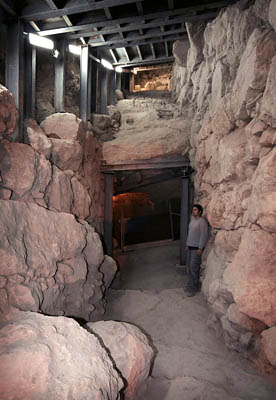
Middle Bronze II Fortification. Photo: Vladimir Naiahin, IAA.
What does this mean for the Bible student? The Middle Bronze II period is the period of the Biblical Patriarchs. It was possibly during that period when Melchizedek, king of Salem and priest of God Most High, went out to bless Abraham after his return from rescuing Lot (Genesis 14:18). We have no way to know if this fortification was in existence at that time.
Assuming this fortification was still in use at the time when David captured the stronghold of Zion from the Jebusites, it helps explain the arrogance of the local residents (2 Samuel 5:6-7).
Take a look at the City of David website here.
HT: Joseph I. Lauer
Posted in Archaeology, Bible Places, Bible Study, Israel, Old Testament
Tel Dor sits on a promontory on the Mediterranean coast between Caesarea Maritima and Mount Carmel.
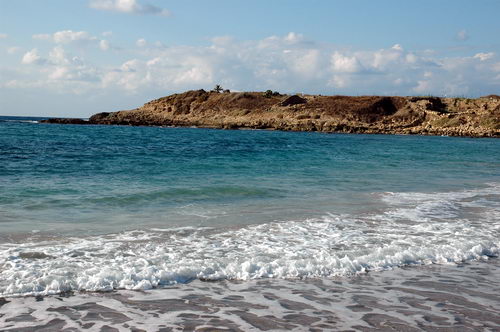
View of Tel Dor from the south. Photo by Ferrell Jenkins.
The site of Dor seems to have been inhabited at least from the Late Bronze Age (1550-1200 B.C.). The Tel Dor Excavation site says,
The documented history of the site begins in the Late Bronze Age (though the town itself was founded in the Middle Bronze Age, c. 2000 BCE), and ends in the Crusader period.
Here is what we know about Dor from the biblical accounts:
Posted in Archaeology, Bible Places, Bible Study, Israel, Old Testament
This morning I wanted to share a photo made from Qumran on the western shore of the Dead Sea. Weather conditions were fairly good that day. You can see across the Dead Sea to the mountains of Moab.
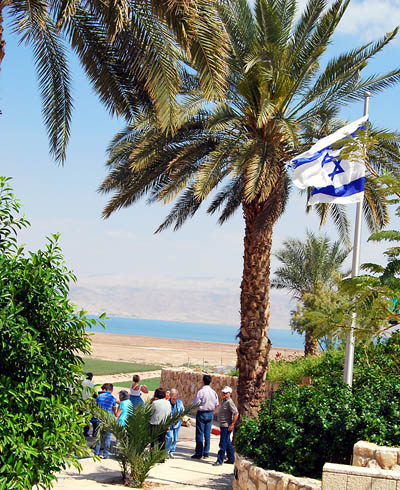
View east across the Dead Sea to Moab. Photo by Ferrell Jenkins.
We associate the land of Moab with Ruth the grandmother of King David.
So Naomi returned, and with her Ruth the Moabitess, her daughter-in-law, who returned from the land of Moab. And they came to Bethlehem at the beginning of barley harvest. (Ruth 1:22)
Posted in Bible Places, Bible Study, Israel, Jordan, Old Testament
The land captured by Joshua and the Israelites included “Baal Gad in the valley of Lebanon at the foot of Mount Hermon” (Joshua 11:17). Today we call this valley to the east of Mount Hermon the Beka Valley. Some have suggested that Baal Gad might be the site later known as Paneas (now Banias), and later Caesarea Philippi. Dan is another important biblical town located at the foothills of Mount Hermon.
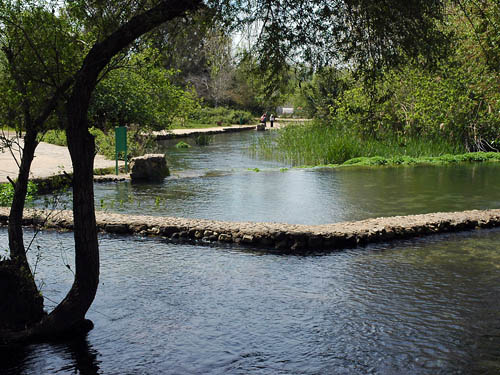
Source of the Jordan River at Caesarea Philippi. Photo by Ferrell Jenkins.
Brethren dwelling together in unity is said to be “like the dew of Hermon Coming down upon the mountains of Zion” (Psalm 133:3). Mount Hermon receives an annual average of about 60 inches of precipitation. In the winter the mountain is usually fully covered with snow.
The proximity of Mount Hermon to Caesarea Philippi, where Jesus was confessed to be the Christ, and where he promised to build the church, causes many scholars to suggest it as the “high mountain” of the transfiguration (Matthew 16:13 – 17:1-9).
Posted in Bible Study, Israel, New Testament, Old Testament
Tagged Ministry of Jesus, Photos
From time to time I order Bible software from Rejoice Christian Software. I have no stock in the company, but am delighted to recommend some of their deals to others.
 Rejoice has Zondervan’s Understanding the Bible Library 6.0 available as a special for only $35.95, less than the price of two volumes in print. You may read about the program details here, but you must go to a special link which I received by Email for the low price. Click here. The Email says it is o.k. to email it to a friend. This is my Email to you.
This program is published by Zondervan. Therefore it uses the Pradis format. This is the only way to get some of the Zondervan titles in digital format.
Here are a few of the significant titles in this program.
It is unfortunate that I have to open my Libronix program and my Pradis program when I am researching something, but that’s the way it is. Yes, I already have most of these in print, but I love being able to search the entire book on the computer.
The offer is valid through August 22, 2009.
Posted in Archaeology, Bible Study, Books, New Testament, Old Testament
Rob Bradshaw, over in the UK, has a passion for making available good, scholarly articles from old periodicals. This isn’t as easy as it may sound. He must know the literature, be able to locate a copy of the journal, obtain permission from the author or publisher, scan it, OCR, put into Word format, put it into a portable format such as PDF, post it online, etc.
Most recently I have downloaded J. A. Thompson’s 1964 booklet, The Ancient Near Eastern Treaties and the Old Testament. It is true that I have a copy of this booklet in my library, but I like having the material on my computer for easy searching. A couple of evenings ago I noticed that John R. W. Stott’s The Preacher’s Portrait. Some New Testament Word Studies was available. Now I have a copy on my computer. Did I mention that Rob sometimes scans books? Recently he has made available Carl F. H. Henry’s Revelation and the Bible. There are some great chapters in that book.
Use the search box to locate authors in which you may be interested. There is material by Edward J. Young, F. F. Bruce, et al.
Follow the link to this treasure of significant material: BiblicalStudies.org.uk. Thanks Rob.
Posted in Bible Study, Biblical Studies, Books, New Testament, Old Testament
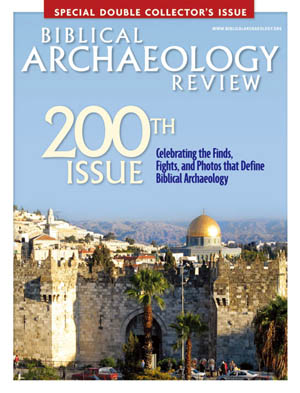 Yesterday I received the 200th issue of Biblical Archaeology Review. I have all issues of the magazine since that first small single color issue in March, 1975. When I bought the earlier issues in Libronix format for the computer I gave my paper copies to a young teacher.
Not everyone likes BAR. It has been a controversial magazine. No wonder. Editor Herschel Shanks has been controversial. But, I have enjoyed it all the way. I first met Herschel and his right hand gal, Suzanne Singer, at the ASOR meeting in New Orleans in 1979. I ate at the same round table with them, Prof. David Ussishkin, and Prof. William Sanford LaSor. Still, every time I see Herschel. I have to go through the introduction process.
Before BAR, unless we attended the annual meeting of the American Schools of Oriental Research, we had to depend on the reports in Biblical Archaeologist for popular articles on archaeology. My recollection is that the magazine was often late and the photography poor. Agree or disagree about Shanks and the magazine, one thing is for sure. It has made biblical archaeology a popular topic.
More information about this issue, with an opportunity to buy and subscribe, may be found at the magazine web site: Biblical Archaeology Review.
This special issue of BAR contains the following features:
In typical Shanks fashion, we are told that “The best is yet to come!”
Posted in Archaeology, Book Review, Old Testament
Tagged Biblical Archaeology Review
Over the past month we have called attention to Luke Chandler’s Blog while he was working as a volunteer at the Khirbet Qeiyafa excavation in Israel. Others have taken notice of his blog. Now Gordon Govier of The Book & the Spade radio program has interviewed Luke. There are two parts to the interview. Part one is already available on The Book & the Spade web site here. Part 2 will be available next week.
Luke’s report about the interview is here. Luke describes the interview:
The Book and Spade program is in its 26th year and has featured many well-known archaeologists and scholars, including Yossi Garfinkel (chief excavator of Khirbet Qeiyafa) who was interviewed on the program from Harvard last Fall. To put it in archaeological terms, I am not in the same stratum with these eminent scholars. I was invited to share my perspective as a volunteer excavator who participated in one of the hottest current digs.
The interview discussed a range of topics, from the experiences of a first-time excavator to the relevance of the site. It will be broadcast in two parts. Part 1 is freely available now, and for the duration of this week (August 11th and following). Part 2 of the interview will be broadcast next week.
Luke has been kind enough to supply me with several photos during his time at Khirbet Qeifaya. The photo below was made from Khirbet Qeiyafa (the Elah Fortress). Notice the bridge in the extreme right of the photo. That bridge is build over the bed of the Brook of Elah. The brook is dry except during the rainy season.
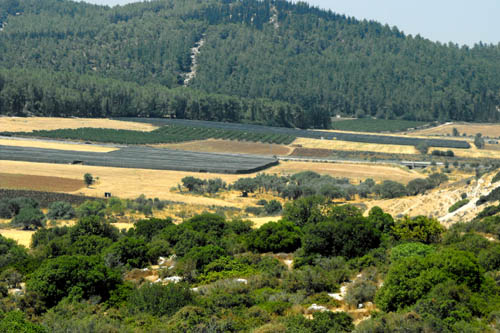
Elah Valley from Khirbet Qeiyafa. Photo by Luke Chandler.
For the background of this whole story read 1 Samuel 17.
Posted in Archaeology, Bible Lands, Old Testament
The Times Online recently carried an article by Hannah Devli about a dig in southeastern Turkey under this headline: “Desperate plea for help came too late for ancient Assyrian leader.”
A letter scratched into a clay tablet reveals a desperate plea for reinforcements that came just too late. Alone, petrified and facing almost certain death, the ancient Assyrian leader Mannu-ki-Libbali scrawled a call for help to his commander, but his cry for extra troops came too late.
Soon after it was sent, the ancient city of Tushan was overrun by Babylonian invaders, its temples and palaces pillaged, then torn down or set aflame.
The letter, scratched into a clay tablet in 630BC, may never have reached its intended recipient. But more than 2,500 years later it has been unearthed almost intact by archaeologists, offering an unprecedented glimpse into the downfall of the one of the most powerful empires of the ancient world.
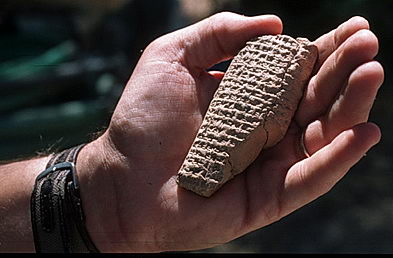
Assyrian tablet with plea of Mannu-ki-Libabli. Photo: Times Online.
The archaeologists working at the site say that the author of the letter was a city treasurer who was responsible for building an army to defend the city of Tushan. The article continues…
John MacGinnis, an archaeologist from the University of Cambridge who led the excavation, said: “The letter is written during the process of downfall. The chances of finding something like this are unbelievably small.” Mannu-ki-Libbali laments that he has neither the equipment nor the troops needed for the onerous task ahead. He lists cohort commanders, craftsmen, coppersmiths, blacksmiths, bow makers and arrow makers as essential to building a resistance.
It is apparent that all of the above have already fled the city and that he has been left with a near-impossible task. “Nobody mentioned in this letter, not one of them is there!” he writes. “How can I command?”
He also lacked horses, containers, bandage boxes and chariots.
Expecting the imminent arrival of the Babylonians, armed with arrows, spears, boulders and battle rams, the letter ends with the despairing declaration: “Death will come out of it! No one will escape. I am done!”
Irving Finkel, a British Museum specialist in Assyrian history, said that the tablet captured an epic event. “It has almost a Hollywood quality, this sense of the enemy are coming. I can hear their hooves,” he said.
The Times Online article only mentions Cambridge archaeologist Dr. John MacGinnis as being involved in the dig. Checking on the web I discovered that this project has been carried out by teams from Akron University, Cambridge, Johannes Gutenberg University in Mainz, Marmara University in Istanbul, University of Helsinki, University of Copenhagen, University of Munich, and Sweet Briar College.
The site is known today as Ziyaret Tepe.
Here are some important links:
The cuneiform tablet is now in the Diyarbakir Museum. I had the opportunity to visit this small Museum in 2007.
This photo from the Johannes Gutenberg University shows the “discovery of a rare treasure trove of more than 20 bronze vessels under the paving stones in the courtyard.” Photo courtesy of the Ziyaret Tepe Archaeological Project. This discovery seems to have been in 2008.
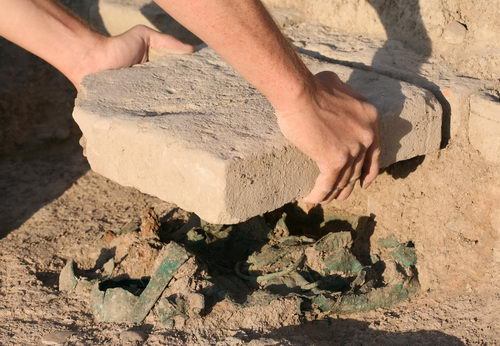
Bronze vessels under paving stones at Ziyaret Tepe in SE Turkey.
Why is this of interest to our readers? The Assyrians dominated the politics of the Middle East, including Israel and Judah, between 853 B.C. and 605 B.C. Numerous of the biblical kings had contact with the Assyrians. The Judean king at 630 B.C., the time of the cuneiform plea for help, was Josiah (2 Kings 22-23). Josiah was killed at Megiddo by Pharaoh Neco who was on his way to assist the Assyrians at Carchemish in 609 B.C. (2 Kings 23:28-30).
———–
HT: J. P. van de Giessen, Aantekeningen bij de Bijbel.
 Ferrell's Travel Blog
You must be logged in to post a comment.